
Asuras and Daevas the Indo Iranian Connection
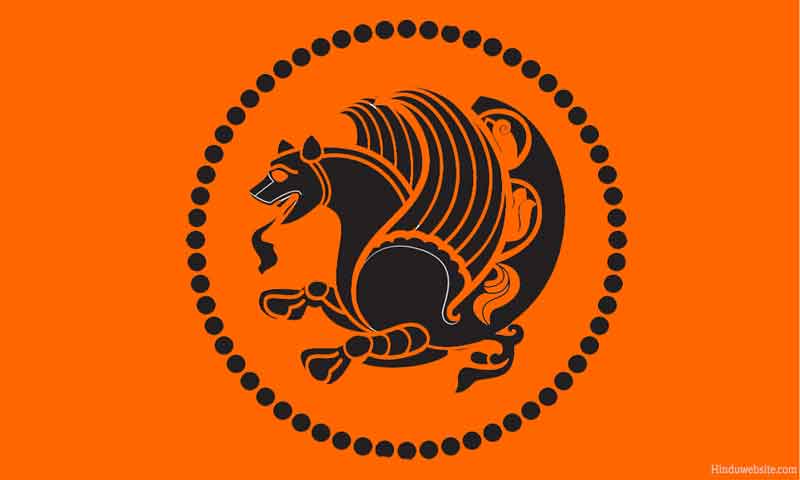
Simorgh or Senmurv, The Sassanian Royal Symbol and the Mythology of Persia
The ancient Indians and ancient Iranians had many in things in common. They worshipped many identical gods, spoke languages of common origin, performed rituals that had many things in common both in the method and manner in which they were performed and the purpose for which they were performed. Their religious beliefs and practices drew inspiration from similar sources. The ancient Iranians spoke Avestan which was a sister language of Sanskrit, spoken by the vedic Indians.
Both groups worshipped several gods and performed elaborate sacrificial rituals (yagnas or yasnas) at the end of which they feasted and drank an intoxicating drink called Soma in India or Haoma in Iran. The Iranians recited verses to invoke ancient gods just as the Indians performed rituals to invoke the deities of the heavenly region. Some of the deities they worshipped had similar names, such as Airyaman, apam Napat, Atharvan/Atar/Agni, Sraosa/Brihapsati, Mitra/Mithra, Vauy/Wayu, Tvastar/Thworeshter, Datar/dadar, Indra/Werethragna, Varuna/Rashnu. Usha/Usa, Yama/Yima, Vayu/Vay, and so on. Both groups believed in the existence of a three tier cosmos consisting of an upper heavenly region, a middle atmospheric region and the earth. Some of the terminology they used in the practice of rituals was also similar such as zaotar and hotar, athaurwan and atharvan, manthra and mantra, asha and arta and so on.
Incidentally, at some stage in their development, both groups parted their ways and developed differences. Some of the differences may be attributed to the geography and some to the new political and social developments that took place in the respective regions. They also came into contact with new religions and new religious ideas of other traditions that came from across the borders through conquests or through traders, merchants and immigrants or grew indegenously.
While the vedic Indians interacted with the pre-vedic traditions of India, dating back to the Indus period and even earlier, the ancient Iranian religion which was rooted in the vedic beliefs, faced opposition from Zoroastrianism, which was gradually emerging in the region as the most organized and appealing religion of ancient Iran, backed by the support of some rulers and the teachings of Zoroaster who clamed he had a direct communication with God and obtained the seal of approval to spread the new ideas. Zoroaster elevated Ahura Mazda as the highest God and introduced the element of monotheism in an otherwise polytheistic religion of ancient Iran. He introduced the practice of worshipping one God, (Madayasna), in contrast to the vedic practice of worshipping multiple divinities (devayagna). He laid more emphasis on ethical living rather than on ritual purity and sacrificial ceremonies as the dominant theme of religious practice.
There was no place in his teachings for the old practice of sacrificial rituals involving animal and human sacrifices, which were deemed agonizing and cruel and antithetical to the revelations received by him. He brought into focus a dynamic universal God as a protector of the righteous and opposed to evil, in place of an enigmatic and passive God who remained in the background while the divinities battled with various dark forces and claimed divine authority to themselves. However he did not discard old religion entirely. He retained those ideas, divinities, practices and doctrines that fitted well in his new teachings and declared the rest to be antithetical to the new dogma. As a result most of the erstwhile devas, who were found to be in direct opposition to the principles represented by God, were categorized as demonic spirits and unworthy of honor and worship.
Zoroaster brought into focus the ethical dualism perceived in the entire creation as an ongoing conflict between the forces of good and evil, a conflict that was already perceived in the ancient religion but interpreted rather anecdotally. He shifted the focus of the religion from ritual purity to ethical purity and from individual divinities to a central God, who combined within Himself all the qualities represented by them as their lord, creator and sustainer. His teachings portrayed the conflict between good and evil beyond the known theological speculation, as an ethical battle of universal proportions between the creative forces of good led by God and the destructive forces of evil led by an anti-God principle. This ethical view of religion as the means to maintain the spiritual purity of not just men but the entire creation, resulted in the polarization of the classical deities into two groups, the followers of Truth (ashawan) and the followers of falsehood (drugwant), the former portrayed as benign and beneficial, representing the ideals to be cultivated by men; and the latter as evil, harmful and destructive forces, representing the dangers to which humanity might succumb if they were careless. What the ancient Iranians practiced was a tradition that was grounded in the history of their ancestors and their beliefs, without being inimical to new ideas. What the new prophet taught was an uncompromising new dogma that had elements of intolerance and rigidity, which was so characteristic of the new religions that descended upon earth a few centuries later in the Mediterranean and engulfed nation after nation obliterating all traces of ancient religions.
In the process of this social and religious churning in the ancient Iran, some well known popular divinities of the ancient world, like Indra, Natasya (Naonhaitya) and Rudra (Saurva) lost their status as recipients of ritual honors. The reasons are not difficult to find. All the gods, who lost their status as divinities in the new religion, possessed qualities and indulged in actions that could not be categorized strictly as pure and virtuous according to Zoroastrian values. From a purely ethical point of view, they had qualities with shades of gray, suggestive of contamination, which would disqualify them, in the new religion, as beings of pure light or forces of a just and righteous God. In a religion that rested on the foundation of uncompromising purity and an unambiguous approach towards good and evil, it was not possible to continue their worship and still convince the new converts about the importance of purity and righteousness. So all the popular divinities of the old tradition that seemingly possessed questionable qualities were pushed into the dark side and disqualified from receiving sacrificial offerings. Those who fitted into the new pantheon with their exemplary qualities, such as Mithra and Yama (Yima), continued to receive the honors as forces of light. In a move that smacked of religious intolerance, but for reasons understandable from a Zoroastrian perspective, Zoroaster declared that impure gods should not be worshipped and no sacrifices should be offered to them. He introduced new rules for the sacrificial rituals, prohibiting certain old methods and practices which were used to invoke them, such as the haoma rituals involving intoxicating drinks, which were pleasing to the daevas.
The Indo Iranian connection in a different perspective
Subhash K. Kak, a noted Indologist, draws some parallels between the Indian and Iranian religions and presents the developments in Zoroastrianism in a new perspective. In his research paper entitled, "Vedic Elements in Ancient Iranian Religion," he provides a comprehensive list of deities present in both traditions who had identical names with some phonetic variations to present the view that both religions had many things in common. He then goes on to argue that the Vedic and the Zarathushtrian systems were much less different than was generally supposed and that the three way division of devas, asuras and daevas was not an entirely unknown classification to the Indian tradition as it was familiar to the inhabitants of Kashmir who had contacts with both. He believes that subsequently the Indian writers brought into focus the same dichotomy between the divine and evil forces in the Puranas, with Vishnu or Siva as a Supreme Being, acting as an adjudicator between the two, in a terminology that was familiar to the Indians. Before concluding that the even after the Zoroastrian reform, the basic system in ancient Iran remained unchanged, he makes the following observations.
"The list of common deities and concepts will make it clear that the Zoroastrian system is essentially the same as the Vedic one. The presence of Indra in the list of the daevas seems to mirror the relegation of Indra that started in the Puranic times where instead of connecting to Svar through the intermediate region of which Indra is lord, a direct worship of the Great Lord (Vishnu or Siva) was stressed. This innovation is not counter to the Vedic system since the triple division is a recursive order. The devas are a part of the good forces in the Zoroastrian system under the label of yazata (yajatra, the adored- ones).
"The Zoroasatrian mythology remembers the Vedic sages and heroes such as Kavi Susravah (Kay Khosrau), Kavi Usanas (Kay Us). The names Ksatra Virya (Shahriyar) and Suvarn ah (Khwarrah, Farrah) helped the logic of late Persian names. The daeva in modern Persian are known as deev.
"The commonality of the fire ritual is well known. Less known is the ritual of the nine-nights (barashnom i noshab) which is like the Indian ritual of the same name (navaratri). The No Roz occurs on the day of the spring equinox just as the festival of Indra."
Conclusion
Due to the geographical proximity, there was a regular exchange of ideas and practices between India and Iran from the early vedic period till the Mughal period. As early as 1400 BC, the Hittites and the Mittanis were familiar with the Sanskrit names of many Indian gods. Their kings bore Sanskrit names. Like the ancient Iranians, they probably followed a religion that bore many resemblances with the vedic religion of ancient Indians. Afghanisthan and Baluchistan acted as the connecting link between the two regions. India was known to the Persians, in the Avestan, as Hapta Hindu (Sapta Sindhu), a land that existed beyond Kubha (Kabul), Kurmu (Kurrum) and Gomti (Gomal. King Darius ruled an empire which included parts of India. He employed an Indian army that was well equipped and fit to fight, with infantry, archers, cavalry and chariots. The Persians continued to hold their sway on parts of India till Darius III (300 BC). The invasion of Alexander contributed further to the cultural exchanges. The continued presence of Persians on the Indian soil led to the intermingling of ideas and practices. Indian goods were popular in Persia. So was the knowledge of metallurgy and other sciences, while elements of Persian architecture found their way into many monuments constructed curing the Mauryan rule. The Mauryan emperor Chandragupta employed women bodyguards of probably Persian origin and adapted the hair washing ceremony of the Persian kings. In the religious sphere a number of new developments took place in the Indian subcontinent. The vedic religion transformed itself into a complex religion incorporating the best of all the prevailing ideas of the time, challenged by Buddhism and Jainism and other rival traditions. In Persia the opposite happened. Zoroastrianism developed into an organized religion. Its strict adherence to the teachings of Zoroaster, intolerance of other religions and puritanical approach to religious practice, made any changes in its basic fabric impossible, till it met its own match in Islam several centuries later and was completely wiped out from Iran.
Suggestions for Further Reading
- Zoroastrianism, Life After Death And The Nature of Heaven and Hell
- Zoroastrianism, The Battle Between Good and Evil
- Ahura Mazda Or Ohrmazd, the Zoroastrian God
- Amesha Spentas or Ameshaspands
- Asha, The Zoroastrian Concept of Truth and Universal Order
- Important Beliefs of Zoroastrianism
- The Old Iranian Calendars, Part 1
- Zoroastrianism - Main Concepts
- Zoroastrianism, Cosmogony Or Theories of Creation
- The Zoroastrian Cosmology
- Zoroastrinaism - The Zoroastrian Creed - An Overview
- Zoroastrianism - Genesis and Zoroastrian Calendar
- Zoroastrianism - Overview Of The Zoroastrian Doctrine
- Untitled 1
- Zoroastrianism - Important Zoroastrian or Parsi Festivals
- Funeral Ceremonies, Death and Disposal Of The Dead in Zoroastrianism
- Zoroastrianism - The Funeral Ceremonies of the Parsees, Part 1
- Gender Equality and Status Of Women In Zoroastrianism
- Zoroastrianism, On Good and Bad Religions
- The History of Zoroastrianism
- Asuras and Daevas the Indo Iranian Connection
- Zoroastrianism Links, Resources and Websites
- The Sacred Literature Of Zoroastrianism
- An Overview Of Zoroastrian Religion
- Important Practices of Zoroastrian Religion
- Zoroastrian Priests
- The Nature of Sin, Types of Sin and Expiation of Sin
- Space And Time In Zoroastrianism
- Life and works of Zarathushtra
- Zoroastrianism Main Beliefs
- Zarathushtra - Zoroaster
- Zoroastrianism, Zoroastrian, Links and Web Resources
- Zoroaster, Zarathushtra, Zarathustra
- Essays On Dharma
- Esoteric Mystic Hinduism
- Introduction to Hinduism
- Hindu Way of Life
- Essays On Karma
- Hindu Rites and Rituals
- The Origin of The Sanskrit Language
- Symbolism in Hinduism
- Essays on The Upanishads
- Concepts of Hinduism
- Essays on Atman
- Hindu Festivals
- Spiritual Practice
- Right Living
- Yoga of Sorrow
- Happiness
- Mental Health
- Concepts of Buddhism
- General Essays
Image Attribution: The image of Sassanid Royal Symbol used for this essay has been adapted with alterations from Wikimedia Commons under GNU Free Documentation License, Version 1.2 or later