
Zoroastrianism - The Funeral Ceremonies of the Parsees, Part 1
Next >> Page1 | Page2
Though a long period, of at least three thousand years has elapsed since the time when most of the religious commandments of the Parsis were first issued, and though the community has, during that interval, seen many vicissitudes of fortune, they have adhered well-nigh faithfully to many of their ancient religious customs. Among these, is their custom of the disposal of the dead, which, however peculiar it may appear to the followers of other religions, appears to them to he the most natural and acceptable, supported as it is, even now, by the best scientific test of advanced sanitary science.
At the bottom of their custom of disposing of the dead, and at the bottom of all the strict religious ceremonies enjoined therewith, lies the one main principle, viz., that preserving all possible respect for the dead, the body, after its separation from the immortal soul, should be disposed of in a way the least harmful and the least injurious to the living. The object of this paper is to give a brief description of the funeral ceremonies of the Parsis, a description that may interest not only the ordinary seekers after oriental knowledge, but also the students, who strive to find, for most of the present customs, an origin in the commandments of the original Avesta Scriptures. The ceremonies an observances can be divided into two parts:
I. Those that relate to the disposal of the body.
II. Those that relate to the good of the soul.
For a proper appreciation of the ceremonies of the first kind, one has to look to the Zoroastrian or Parsi ideas of sanitation, segregation, purification, and cleanliness, as expressed in the Vendidad, one of their Avesta Scriptures.[1] To these must be added the idea of simplicity observed in these ceremonies which inculcates a lesson in the mind of the survivors, that, as the Persian poet sings:--
"Death levels everybody, whether he dies as a king on the throne or as a poor man without a bed on the ground."
To understand clearly the funeral ceremonies pertaining to the soul, one must look to the notions of the Zoroastrian belief about the future of the soul. These ideas and notions will be explained in this paper at their proper places. We will first speak of the ceremonies and observances that relate to the disposal of the body.
I.
From the moment that a man's case is given up as hopeless, and he is found to be on the point of death, preparations are made for the disposal of the body. The apartment in the house, where it is intended to place the body before its removal to its last resting place, is washed clean with water. The shroud or the dress in which the body is to be clothed is also washed beforehand in the house.
When a man is on the point of death his relations send for two or more priests, who assemble round the sick bed of the dying person and say for his benefit the Patet [2], which a prayer for the repentance of one's sins. The priests are paid in money and corn for their attendance. If the person dying is able to join the priest in saying his last repentance-prayer, or if he is able to say it himself alone, so much the better. A person who has said his repentance prayers a short time before his death is considered happier in his death than one who has not been so able. If not the whole Patet, at least, the recital of the short formula of 'Ashem Vohu' [3] a short time before death, is considered very meritorious. The Hadokht Nask (I, 14-15) says: "Which is the one recital of Ashem, which in greatness, goodness, and excellence is equal in value to the whole of the region of Khanirath with its cattle and its leading men? Ahura Mazda replied to him, O Holy Zarathushtra, truly that Ashem; which a man recites at the very end of his life, praising good thoughts, good words, and good deeds and condemning bad thoughts, bad words and bad deeds."
In the Vendidad (Chapter 12, 1-19), a longer period of mourning is enjoined to the surviving relations of a "Tanu-peretha" (i.e., the sinful) than to those of a "Dahma" (i.e., the righteous). According to tradition, the Tanu-peretha in this case is one who has not, at the time of his death, said his Patet or repentance-prayer or has not recited the Ashem Vohu. The Dahma is one who has said his repentance-prayer or recited the Ashem Vohu.
A short time before death, the dying person is sometimes made to drink a few drops of the consecrated Haoma water. Haoma being a plant emblematic of immortality, a few drops of the water prepared with its juice by the priests performing the Haoma ceremony in the Fire-temples, are gently thrown into the mouth of the dying person.[4] Sometimes the juice of a few grains of pomegranate, which is considered essential in some of the Parsi ceremonies, is dropped into the mouth of the dying person. [5] A short time after death, the body of the deceased is washed whole throughout with water, and a white clean suit of cotton clothes is put over him.
This suit of clothes is not washed by the washerman, but is, as we said above, generally, washed beforehand at home by some members of the family, when it is seen that death is imminent, It is afterwards destroyed and never used again for any other purpose. The "Kusti" or sacred thread is then girded round the body by some relative reciting the "Ahura-Mazda Khodâi" prayer. The deceased is then placed on a white clean sheet of cotton cloth spread over the ground. Then two persons keeping themselves in touch with him sit by his side and somebody recites an Ashem Vohu very close to his ear. The relations of the deceased now meet him for the last time.
After this time, nobody is allowed to touch or come into contact with the body, which, it is supposed, now begins to fall under the influence of the "Druj-i Nasu," i.e., the evil influence of decomposition. It is considered unsafe to touch the body which now begins to be decomposed, lest the touch may spread contagion and disease among the living. Only those who put on the clothes over the body and the corpse-bearers are allowed to come into contact with the body. If somebody happens to touch by mistake the dead body, he is, lest he spread contagion; prohibited from touching other person; before he purifies himself by the process of "Rimani," which consists in washing himself by a particular method.
The body is then entrusted to two persons who are generally trained to this work. They have, at first washed themselves, put on clean suits of clothes, performed the Kusti [6] and said the "Srosh Baj" prayer up to the word "Ashahê". Then holding a "paywand" [7] between them they enter into the house. The two relations who are sitting by the side of the body now leave their places and entrust it to these two persons who now place the corpse on the ground on a white sheet of cloth and proceed to cover the whole body with cloth. The only portion kept uncovered is the face. In some parts of Gujarat, even the face is covered with a "padan". [8] The body is then lifted from its place by these two persons and put on slabs of stone placed in a corner of the room. The hands are arranged upon the chest crosswise. The body is never placed with its head towards the North [9] In some towns of Gujarat, the old Avestan method of placing the dead body on the ground is still in practice. The ground is dug out a few inches in depth and a layer of sand is spread over it. The dead body is then placed on the spot thus prepared. (Vendidad 5.11; 8.8.)
After placing the body on the slabs of stone or on the ground dug and prepared as above, one of the two persons draws with a metallic bar or nail three "kashas" or deep circles. This is intended to show that the ground within the circle is the ground temporarily set apart for the dead body and that nobody was to go to that part of the ground lest he catch infection. [10]
After having thus placed the body on one side of the room [11] the two persons leave the house still holding the "paywand" and finish the rest of the "Srosh Baj".
The next process is that of making the "sagdid" (lit., the seeing of the dog). This consists of making a "sag" or a dog see the dead body. A four-eyed dog is spoken of in the Avesta in connection with the ceremonies of the dead. By the four-eyed dog is meant a dog with two eyes-like spots just above the two eyes. [12] The sagdid is repeated is every "Gah" [13] as long as the body is in the house. It is performed just as the new "Gah" begins. [14] It is enjoined that in case a dog is not procurable, the "sagdid" of flesh-devouring birds like the crows and vultures should be allowed, that is to say, it will do, if a flesh-eating bird happens to pass and see the corpse from above, "Or the flesh-eating birds fly in the direction." (Vend. 7.3.)
After the "sagdid," fire is brought into the room and is kept burning in a vase with fragrant sandal and frankincense. It is believed that the burning of fragrant wood over the fire destroys the invisible germs of disease in the direction in which the wind carries the fragrance.
"O Holy Zarathushtra! If one carries with purity (for the fire) the Aêsma (i.e., the wood) of the plant Urvâsana or Vohugaôna or Vohukereti or Hadhânaepata [15] or any other fragrant tree, the fire of Ahura-Mazda goes to fight a thousand times against the invisible evil Daevas [16] in all the directions in which the wind spreads the fragrance of the fire." (Vend. 8.79-80.)
A priest sits before the fire and recites the Avesta till the time of the removal of the body to the Tower of Silence. It is enjoined that the priest and all persons should sit at a distance of at least three paces from the dead body. This is to ensure the health and safety of the living survivors in case the deceased had died of an infectious disease.
"O Creator of the material world, at what distance from the holy man (should the place for the dead body be)?"
Ahura Mazda replied: "Three paces from the holy man." (Vend. 8.6-7.)
The body is removed to the Tower of Silence any time during the day. As it is essential that the body should be exposed to the sun; it is strictly forbidden to carry it at night.
"The Mazdayasnians should expose the body to the sun". (Vend. 5.13)
If death takes place early at night the body is removed the next morning, but if it takes place late at night or early in the morning it is removed in the evening. In the case of an accidental death, a long interval is generally allowed. The Vendidad says that in such a case the decomposition commences after one Gah (Vd7.4-5), and therefore it is not detrimental to the health of the living to keep the body some time longer.
About an hour before the time fixed for the removal of the body to the tower, two Nasâsâlârs, i.e. corpse-bearers, [17] clothed in perfect white, enter into the house, having performed the kusti beforehand. They have all parts of their body well covered; on their hands also, they put on what is called dastânâ, i.e., a cover for the hand. The only part of their body left uncovered is their face. This is to ensure their safety against catching any infection, through the uncovered part of their body, should the deceased have died of an infectious disease. They enter into the house holding a "paywand" between them, and carry an iron bier called "gehân" on which the body is removed. Wood being porous, and therefore likely to carry and spread germs of disease and infection, its use is strictly prohibited in the funeral ceremonies. The corpse-bearers must be at least two, even if the deceased were a mere infant that could be carried by one man. It is strictly prohibited that the body be removed by one. The body must be carried by two, four, six, or any such even number according to the weight of the deceased. "Nobody should carry the dead alone." (Vend. 3.14.)
A pair or the number two plays a prominent part in all the ceremonies for the disposal of the dead body; and that pair always holds a "paywand" between them. After death, the body must never be left alone or in the company of only one person. After washing it, there must be always two persons sitting by its side. Again, the persons who put on the clothes and place it on the slabs of stone must be two. The corpse-bearers must be two. We will see further on that the priests who say the last funeral prayers are also two in number. The persons who attend the funeral procession to the Tower also go in pairs holding a "paywand" in the form of a handkerchief between them. A single individual can never attend the funeral procession. The injunction of having pairs in all these funeral ceremonies is intended to create a view of sympathy and mutual assistance.
The corpse-bearers place the bier by the side of the dead body and take the Baj. [18] They then recite the following in a suppressed tone:
'Be dasturi-i Dâdâr Ahura Mazda, be dasturi-i Amshaspandân, be dasturi-i Sraosh asho, be dasturi-i Âderbâd Mahraspand, be dasturi-i Dasturi-i in Zamân,' i.e., "(We do this) according to the dictates of Ahura Mazda, the dictates of the Amahraspands, of the holy Srosh, of Adarbad Mahraspandan, and the dictates of the dastur of the age."
Then they sit silent by the side of the dead body. If they have at all any occasion to speak, they speak with a kind of suppressed tone without opening the lips, which is said to be speaking in Baj.
Then follows the "geh-sarnu" ceremony, i.e., the recital of Gathas which is intended to give moral courage to the survivors to bear up with fortitude the misfortune of the loss of the deceased.
"Zarathushtra asked Ahura Mazda: 'O Ahura Mazda! Most beneficent Spirit! Holy Creator of the material world! How are we to stand against the druj (evil influence), which runs from the dead to the living? How are we to stand against the nasu (evil influence) which carries infection from the dead to the living?'
"Then Ahura- Mazda replied: 'Recite those words which are spoken twice in the Gathas'" (Vend. 10.1-2)
The passage referred to is a passage in the beginning of the Ahunawad Gatha.
Two priests perform the kusti and after reciting the prayers for the particular Gah go to the chamber where the dead body is placed, and standing at the door or at some distance from the body and holding a paywand between them, put on the padan over their face, take the Baj and recite the Ahunawad Gatha (Yasna 28-34) which treats of Ahura Mazda, His Amesha Spentas or immortal archangels, the future life, resurrection, and similar other subjects. When they recite nearly half of the Gatha up to Ha 31.4, they cease reciting for some time. Then the Nasâsâlârs lift the body from the slabs of stone and place it over the iron bier. Then the two priests turn to the bier and commence to recite the remaining half of the Gatha.
When the recital of the Gatha is finished, a sagdid is performed once more, and then the relations and friends of the deceased, who have by this time assembled at the house, have a last look at the deceased. They, out of respect, bow before the body, which process is called sijda.
When all have had their last look and paid their respects, the corpse-bearers cover up with a piece of cloth the face of the deceased which was up to now open, and with a few straps of cloth secure the body to the bier so that it may not fall down while being lifted or carried. Then they lift up the bier and getting out of house entrust it to other corpse-bearers who wait outside the house. The number of these carriers vary according to the weight of the body to be lifted up. Before lifting up the body, the carriers also take the "Baj" and arrange themselves in pairs of two, holding the "paywand" between them. Immediately after the body is removed from the house, "Nirang," or the urine of the cow, is besprinkled over the slabs of stone on which the body was placed and over the way by which the corpse-bearers carried the body out of the house. It is believed that the "Nirang" possesses some disinfecting properties, and that therefore it destroys the germs of impurity and disease, if any, at the place where the decomposing body was placed so long. [19] For this reason "Nirang" plays a prominent part in cleaning impurities attached to things that have come into contact with the decomposing body of men and animals. These things are asked to be first purified or washed with the "Nirang" and then with water (Vend. 7.74-75). Utensils or articles of furniture made of wood, clay, or porcelain, that have come into contact with a decomposing body, are condemned altogether. Being porous they are held to have caught the germs of impurity or infection from the dead body and are therefore unsafe for domestic purpose. (Vend. 7.75.)
When the bier leaves the house, out of respect for the deceased, the whole assembly or generally the elders follow the bier for some distance from the house or up to the end of the street. There they make a last bow to the deceased and stand by the side of the road. Those relatives and friends who wish to accompany the funeral procession to the "Tower of Silence" follow the bier at a distance of at least thirty paces, and the rest return to the house. Immediately, the family priest and other priests and sometimes the head of the family make salutations to the assembly by way of thanking them for their presence. The assembly then disperses.
All those who follow the bier to the Tower are clothed in white full-dress They arrange themselves in pairs of two, hold a paywand between them, take "Baj "and silently march to the Tower. The procession is headed by two priests.
"Oh Holy Creator of the material world, how does the road from which a dead man or a dead dog is carried become passable for cattle, etc.?" . . . "First the athrawan (i.e., the priest) should pass by the road reciting the victorious words (of Yatha Ahu Vairyo and Kem na Mazda) "(Vend. 7.14, 19-21.)
When the bier reaches the Tower, it is put on the ground and the Nasâsâlârs uncover the face of the body. Those who have accompanied the funeral procession pay their last respects and have a last look from a distance of at least three paces. Then the Sag-did is once more performed. In the meantime, the gate of the Tower, which. is closed with an iron lock, is opened. The two Nasâsâlârs, who had at first brought out the bier from the house, now lift up the bier and carry it into the Tower. They remove the body from the bier and place it on one of the "pavis". [20] They then remove the clothes from the body of the deceased and leave the body there.
"Two powerful persons may carry him and place him naked without any clothes on this earth, on clay, bricks, stone and mortar." (Vend. 8.10.)
The body must be exposed and left without clothes as to draw towards it the eye of the flesh-devouring birds and may fall an easy prey to them, so that, the sooner it is devoured the lesser the chance of further decomposition and the greater the sanitary good and safety.
The clothes thus removed are never used for any purpose whatever, but are thrown in a pit outside the Tower where they are destroyed by continued action of heat, air and rain. In Bombay they are also destroyed by sulfuric acid. The corpse-bearers are not allowed to remove the clothes from the body of the deceased with their hands, lest they may catch contagion from the decomposing body and he the means of spreading it in the town. They are enjoined to do so by means of metallic hooks and instruments with which they are provided.
We may us well say here that the Nasâsâlârs, who come into contact with the dead body and carry it into the Tower, are generally provided with separate buildings to stay in. (Vend. 3.19.) They do not go to the Atash Bahrams, i.e., the chief Fire-temples, which are frequented by a large number, until they purify themselves by a "barashnom," which requires several washings and segregation and retreat for nine days and nights. In public feasts they generally do not take their meals with the rest.
When the Nasâsâlârs have done their work in the Tower they get out and lock the gate which is always made of iron. On a notice being given to all those, who have accompanied the funeral procession, and who have by this time taken their seats at some distance from the Tower, that the Nasâsâlârs have finished their work, all get up from their seats and finish the "Baj," i.e., recite the rest of the Srosh Baj," which, while taking the "Baj," they had recited only up to the word "Ashahê". The pairs now leave off the "paywands" and recite a short prayer which says:--
"We repent of all our sins. Our respects to you (the souls of the departed). We remember here the souls of the dead who have the spirits of the holy."
They then take the "Nirang," wash their faces and the exposed portion of their body, perform the "Kusti "and say the "Patet" or the repentance prayer; mentioning the name of the deceased in the last portion of the prayer and thus ask the forgiveness of God upon the deceased. This being done, all return home and take a bath before following their ordinary avocations.
The Towers of Silence are generally built on tops of hills or on an elevated ground.
"O Holy Creator of the material world! where are we to carry the bodies of the dead? O Ahura Mazda! where are we to place them?' Ahura Mazda replied 'O Spitama Zarathushtra, on the most elevated place.'" (Vend. 7.44-45)
On such an elevated place a spot apart from human dwellings is chosen for the Tower.
A short description of the Tower will not be out of place here. Its construction all along is just in accord with the view held in the performance of the ceremonies for the disposal of the dead, viz., the sanitary view, which enjoins, that while disposal of the dead body with all respect due to the deceased, no injury or harm should be done to the living, The Tower is a round massive structure built throughout of solid stone. A few steps from the ground lead to an iron gate which opens on a circular platform of solid stone with a circular well in the center. The following is a short description of the tower with a plan as given by Mr. Nusserwanjee Byrawjee, the late energetic Secretary of the public charity funds and properties of the Parsi community.
"The circular platform inside the Tower, about three hundred feet in circumference, is entirely paved with large stone slabs well cemented, and divided into three rows of shallow open receptacles, corresponding with the three moral precepts of the Zoroastrian Religion -- 'good deeds,' 'good words,' 'good thoughts'. (Vide plan attached.)
[figure 1]
"First row for corpses of males (marked A).
"Second row for corpses of females (marked B).
"Third row for corpses of children (marked C).
The clothes wrapped round the corpses are removed and destroyed immediately after they are placed in the Tower -- 'Naked we came into this world and naked we ought to leave it.'
"Footpaths for corpse-bearers to move about (marked D). A deep central well in the Tower, 150 feet in circumference (the sides and bottom of which are also paved with stone slabs), is used for depositing the dry bones. The corpse is completely stripped of its flesh by vultures within an hour or two, and the bones of the denuded skeleton, when perfectly dried up by atmospheric influences and the powerful heat of the tropical sun, are thrown into this well, where they gradually crumble to dust, chiefly consisting of lime and phosphorus; -- thus the rich and the poor meet together on one level of equality after death.
"There are holes in the inner sides of the well through which the rain water is carried into four underground drains (marked F), at the base of the Tower, These drains are connected with four underground wells (marked G), the bottoms of which are covered with a thick layer of sand. Pieces of charcoal and sandstone are also placed at the end of each drain, which are renewed from time to time. These double sets of filters are provided for purifying the rain water passing over the bones, before it enters the ground thus observing one of the tenets of the Zoroastrian religion that 'The Mother Earth shall not be defiled.'
"The vultures (nature's scavengers) do their work much more expeditiously than millions of insects would do, if dead bodies were buried in the ground. By this rapid process, putrefaction with all its concomitant evils, is most effectually prevented. According to the Zoroastrian religion, Earth, Fire, and Water are sacred and very useful to mankind, and in order to avoid their pollution by contact with putrefying flesh, the Zoroastrian religion strictly enjoins that the dead bodies should not be buried in the ground, or burnt, or thrown into seas, rivers, etc.
"In accordance with their religious injunctions, the Parsis build their Towers of Silence on the tops of hills if available. No expense is spared in constructing them of the hardest and the best materials, with a view that they may last for centuries without the possibility of polluting the earth or contaminating any living beings dwelling thereon.
Next >> Page1 | Page2
Suggestions for Further Reading
- Zoroastrianism, Life After Death And The Nature of Heaven and Hell
- Zoroastrianism, The Battle Between Good and Evil
- Ahura Mazda Or Ohrmazd, the Zoroastrian God
- Amesha Spentas or Ameshaspands
- Asha, The Zoroastrian Concept of Truth and Universal Order
- Important Beliefs of Zoroastrianism
- The Old Iranian Calendars, Part 1
- Zoroastrianism - Main Concepts
- Zoroastrianism, Cosmogony Or Theories of Creation
- The Zoroastrian Cosmology
- Zoroastrinaism - The Zoroastrian Creed - An Overview
- Zoroastrianism - Genesis and Zoroastrian Calendar
- Zoroastrianism - Overview Of The Zoroastrian Doctrine
- Untitled 1
- Zoroastrianism - Important Zoroastrian or Parsi Festivals
- Funeral Ceremonies, Death and Disposal Of The Dead in Zoroastrianism
- Zoroastrianism - The Funeral Ceremonies of the Parsees, Part 1
- Gender Equality and Status Of Women In Zoroastrianism
- Zoroastrianism, On Good and Bad Religions
- The History of Zoroastrianism
- Asuras and Daevas the Indo Iranian Connection
- Zoroastrianism Links, Resources and Websites
- The Sacred Literature Of Zoroastrianism
- An Overview Of Zoroastrian Religion
- Important Practices of Zoroastrian Religion
- Zoroastrian Priests
- The Nature of Sin, Types of Sin and Expiation of Sin
- Space And Time In Zoroastrianism
- Life and works of Zarathushtra
- Zoroastrianism Main Beliefs
- Zarathushtra - Zoroaster
- Zoroastrianism, Zoroastrian, Links and Web Resources
- Zoroaster, Zarathushtra, Zarathustra
- Essays On Dharma
- Esoteric Mystic Hinduism
- Introduction to Hinduism
- Hindu Way of Life
- Essays On Karma
- Hindu Rites and Rituals
- The Origin of The Sanskrit Language
- Symbolism in Hinduism
- Essays on The Upanishads
- Concepts of Hinduism
- Essays on Atman
- Hindu Festivals
- Spiritual Practice
- Right Living
- Yoga of Sorrow
- Happiness
- Mental Health
- Concepts of Buddhism
- General Essays
NOTES
1.Prof. D armesteter says on this point "Toutes les cérémonies de cet ordre peuvent se résumer en deux mots, ceux-la même qui résument aujourd'hui toutes les mesures prophylactiques en cas d'épidémie: 1o interrompre les communications des vivants avec le centre d'infection réel ou supposé; 2o détruire ce centre même (Le Zend Avesta II, p.147.)
2. 'Patet' is Av. paitita from paiti and i to go; lit. going back; hence, repentance.
3. As Dr. West says it is like the Pater Noster of some Christians. It may be thus translated "Piety is the best good and happiness. Happiness to him who is pious for the best piety."
4. A plant called Haoma-i Saphid, i.e., white Haoma, is held to be the emblem of the immortality of the soul. This plant reminds one of the "Tree of Life" of the Christian Scriptures (Genesis II, 9) in the Garden of Eden, and of the Sidra or Lotus of the Mahomedan Scriptures in heaven near the seat of the Almighty (The Quran LIII, 14-29, Sacred Books of the East, Vol. IX, page 252). As the "Tree of Life" is guarded by the Cherubim and the Sidra by 70,000 angels, so is the plant Haoma-i Saphid guarded by 99,999 Fravashis or the guardian spirits.
5. Now a days these ceremonies before death are not performed by all.
6. The ceremony of performing the "Kusti" consists of three processes: (a) To wash with water the uncovered portions of the body such as face and hands, ant the feet if uncovered; (b) To ungird the "Kusti" or the sacred thread from the waist after the recital of a prayer called "Kem na Mazda" (Yasna Ha. 46.7, Ha 44.16, Vendidad 8.31, and Yasna 49.10); and then (c) to put it on again with the recital of "Ahura Mazda Khodai" and "Jasa me avanghe Mazda (Yasht 1.27) Mazdayasno ahmi" (Yasna Ha 12.8) prayers. It is essential to perform the Kusti before saying a prayer before meals, and after answering the calls of nature.
7. To hold a "paywand" means to be in close contact or touch. This is done by holding a piece of cloth or cotton tape by two persons to show that they are associated or joined in doing a thing.
8. "Padân" is Av. "paitidâna." It is a piece of white cotton cloth which the Parsi priests put on suspending from the bridge of the nose, when they go before the sacred fire or when they say their prayers before the fire or other sacred things. This is intended to prevent the small particles of saliva of the mouth defiling the sacred things before them.
9. In all the ceremonies of the Parsis, the North side is, as a rule, generally avoided. The children in the initiating navjote ceremony (i.e., the ceremony for the investiture of the sacred shirt and thread), the marrying couple at the time of the Ashirvâd or marriage-blessing ceremony, and the priests in all their religious ceremonies never sit with their faces turned towards the Worth. The old Iranians had a natural hatred for the North side from which proceeded all kinds of dangers and evil, whether climatic, physical or mental.
"This Druj-Nasu runs from the northern directions in the form of a fly." (Vend. 7.2.)
"To him blows the wind from the northerly direction from the more northern sides, stinking, more stinking than other winds." (Hadokht Nask III, 25.)
The winds from the Northern cold regions brought sickness and death. Again the marauders from Mazendaran and other adjoining regions in the North brought destruction and death in many Iranian families. These people of the North were depraved in many moral qualities. On the other hand, the South was considered a very auspicious side. The winds from the South were healthy and invigorating. Coming from the Southern seas they brought rain and plenty.
"As the wind blowing hard from the South purifies the atmosphere all round." (Vend. 3.42.)
The wind blowing towards the soul of a virtuous man, when it passes on the dawn of the third night after death to heaven, is said to come from the South and is sweet-scented and fragrant.
"To him the wind blows from the southerly direction, from the more southern sides, sweet-scented, more sweet-scented than other winds." (Yasht Frag. 22, Hadokht Nask II,7.)
10. It appears from the Avesta, that in ancient Persia every house was provided with a separate apartment for placing the dead body before its removal to the Tower of Silence. Again every street had a house for the common use of all the poor residents of the street. The inmates of the houses in the street which had no special convenient apartments for placing the dead bodies, carried them to this house set apart for the common use of all the residents of the street.
"Then Ahura Mazda said, in every house, in every street, they should make three 'Katas' (separate parts) for the dead." (Vend. 5.10.)
It is said, that even now, such separate houses are provided in Persia in the Parsi quarters, where every family removed the dead relation before carrying him to the Tower of Silence. The place is known as Margzâd. It is said that even in India, in the mofussil towns of Gujarat, such separate houses were provided in the Parsi streets. These houses were known as Nasâ-Khânâs, i.e., houses for the corpse. Every Parsi town has even now a Nasâ-Khânâ, but it is generally now used as a depot for keeping the biers for carrying the dead upon, the slabs of stone on which the body is placed before its removal, and as the residence of the corpse-bearers.
11. It is enjoined that the place to be chosen for such apartments or houses of the dead, should be free from dampness and should be the least frequented by men and animals and be far away from where the religious ceremonies are performed.
"Then Ahura Mazda said that (they must choose) in this house of a Mazdayasna, the most clean and the most dry place which is the least frequented by cattle and beasts of burden, by the fire of Ahura-Mazda by the Barsom spread through piety and by the holy man." (Vend. 8.5.)
12. Compare the four-eyed dog of the Avesta with the "four-eyed" dogs of the Rig Veda 10th Mandala which guarded the way to Yama's abode. "Fear not to pass the guards-
The four-eyed brindled dogs that watch for the departed."
Mon. William's Indian Wisdom, (1876), page 22.
13. "Gahs" are the five different periods of the day. The first Gah, Hawan, begins with the dawn of the day and ends at twelve at midday. The second, Rapithwin, runs from twelve in the noon to three P.M. The third, Uzerin from three P.M. to nightfall. The fourth, Aiwisruthrem, from nightfall to midnight. The fifth, Ushahin, from midnight to the dawn of the next day.
14. It appears from the customs of several ancient nations that the "dog" played a prominent part in the funeral ceremonies of many ancient nations.
(a) As said above, as in the Avesta so in the Vedas, we have a mention of two four-eyed dogs guarding the way to the abode of Yama, the ruler of the spirits of the dead. (b) Among the ancient Romans the Lares of the departed virtuous were represented in pictures with a dog tied to their legs. This was intended to show that as the dogs watched faithfully at the door of their masters, so the Lares watched the interests of the family to which they belonged. (c) The people of the West Indies have a notion among them of the dogs accompanying the departed dead. Compare the following lines of Pope:--
"Even the poor Indian whose untutored mind
"
Sees God in clouds or hears him in the wind
* * * * * *
thinks, admitted to you equal sky
His faithful dog shall bear him company.
As to the purpose, why the "sagdid" is performed, several reasons are assigned: (a) Some say that the spotted dog was a species of dog that possessed the characteristic of staring steadily at a body, if life was altogether extinct, and of not looking to him at all, if life was not altogether extinct. Thus the old Persians ascertained by the "sagdid", if the life was really extinct. (b) Others, as Dr. Haug says, attributed the "sagdid" to some magnetic influence in the eyes of the dog. (c) Others again connected the "Sag-did" of a dog, which, of all animals, is the most faithful to his master, with the idea of loyalty and gratitude that must exist between the living and deceased departed ones. (d) Others considered a dog to be symbolical of the destruction of moral passions. Death put an end to all moral passions so the presence of a dog near the dead body emphasized that idea. Cf. Dante's Divine Comedy (Hell. C.I. 94-102. Dr. Plumpter.)
"For that fell beast whose Spite thou wailest o'er,
Lets no man onward pass along her way
Many the creatures are that with her wed,
And will be more until the Greyhound come,
Who with sharp agony shall smite her dead."
Here the Greyhound is considered as the deliverer of Italy. He is the symbol of the destroyer of the passions of sensual enjoyment, pride and avarice which are represented by the leopard, the lion and the wolf.
15. All these are species of fragrant plants.
16. The word daeva is used in the Avesta for all evil influences whether physical, mental or moral.
17. Generally there are two classes of the corpse-bearers: (a) the Nasâsâlârs who enter into the Tower with the corpse. They also go into the house to place the corpse on the bier: (b) the Khandhias who are mere carriers; their business is to carry the corpse from the house to the Tower in the inside of which it is carried by the Nasâsâlârs.
18. To take the Baj is to recite the Srosh-Baj prayer up to the word "Ashahê" in the Kem-na-Mazda prayer which forms a part of the Srosh-Baj. When the particular work in connection with the dead body is finished the Baj is also then finished, i.e., the remaining portion of the Srosh-Baj is recited. This Baj is taken by the priests on certain occasions at the time of bathing and in the barashnom ceremony.
19. According to Dr. Eugene Wilhelm, many other ancient nations, besides the Persians, used cow's urine as a disinfectant. Vide "On the use\ of Beef's Urine according to the precepts of the Avesta and on similar customs with other nations" by Dr. Eugene Wilhelm. According to Dr. Haug, the peasants of several parts of Europe even now use it (Haug's Essays, 2nd ed, p. 286).
20. "Pâvi" is a portion separated for different bodies.
This is a reproduction of the paper "The Funeral Ceremoniesof the Parsees Their origin and explanation by Jivanji Jamshedji Modi, B.A., Ph.D., C.I.E. Fourth Edition Bombay, 1928."
This paper was read before the Anthropological Society of Bombay, at its Monthly Meeting of Wednesday, the 30th September 1891. It was at first reprinted from the Journal of the Society in 1892. The second edition was published with a few alterations in 1905. The third edition was published with the omission of the quotations given in the earlier editions in the Avesta character in 1923.
Colaba, 8thAugust 1928.
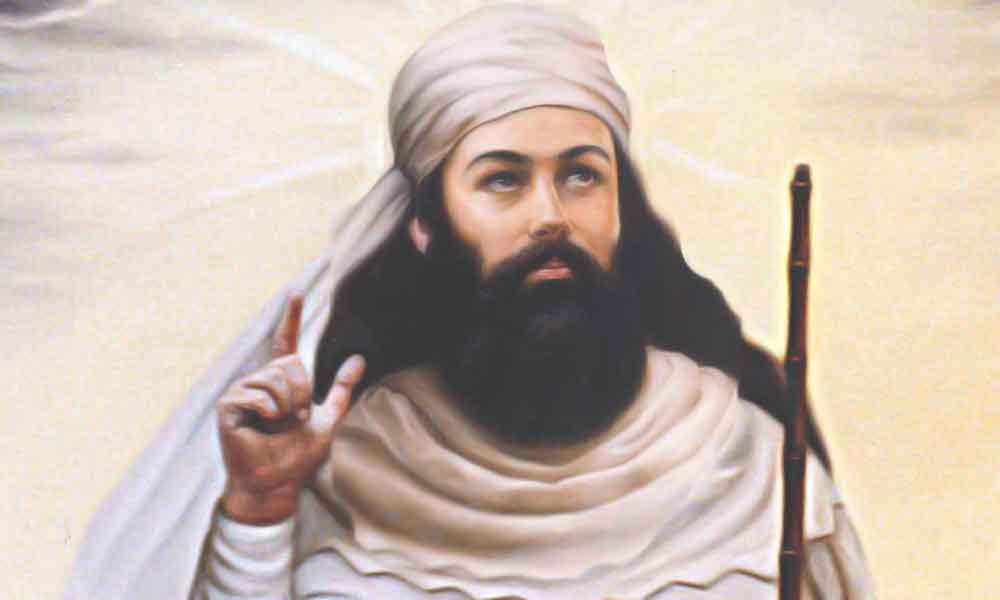
Image Attribution: The image of Zoroaster used for this essay has been adapted with alterations from Wikimedia Commons under GNU Free Documentation License, Version 1.2 or later