
Dhamma for Everyone by Ajaan Lee Dhammadharo
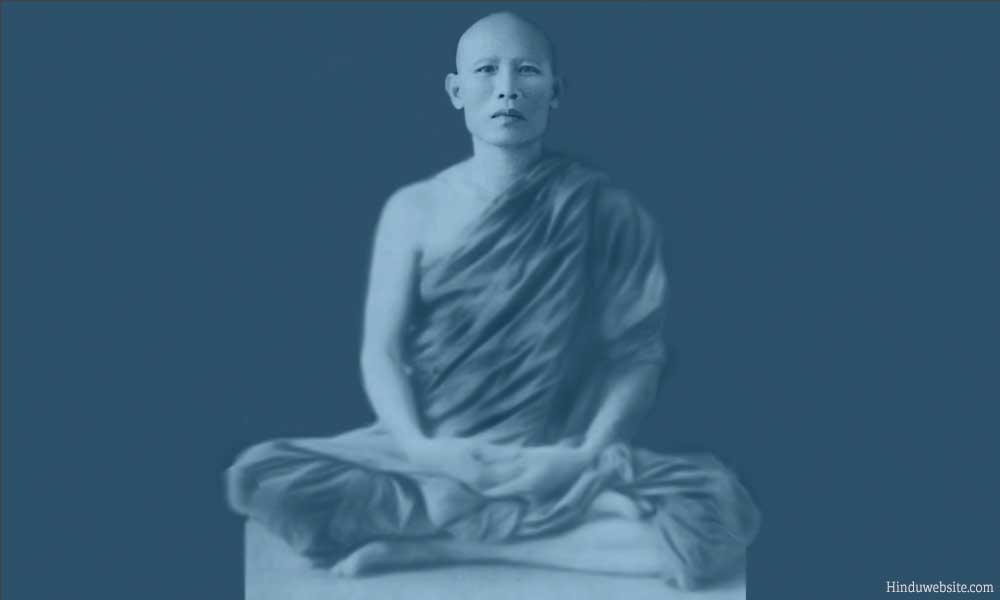
Talk given on October 5, 1960 by Ajaan Lee Dhammadharo (Phra Suddhidhammaransi Gambhiramedhacariya) Translated from the Thai by Thanissaro Bhikkhu
Now I'm going to remind you of some of the Buddha's teachings as a way of encouraging you to be intent on practicing correctly in line with the Buddha's instructions. These teachings are called Dhamma. The Dhamma is an ornament for the mind. It's also a means for developing the faculties of the mind. The teachings I'm about to discuss come in the Ovada-Patimokkha, the Patimokkha Exhortation. This is a talk that deals with the duties of those who have ordained in line with the Buddha's instructions, but these practices also apply to lay people as well. Lay people can take these practices and train themselves to be good people, so that they can be eyes and ears, legs, feet, and hands, to help look after the work of the religion and to help it prosper.
These guidelines, which apply to all of us, fall under six headings:
| anupavado | not disparaging |
| anupaghato | not injuring |
| patimokkhe ca samvaro | restraint in line with the Patimokkha |
| mattaññuta ca bhattasmim | moderation in food |
| pantañca sayanasanam | dwelling in seclusion |
| adhicitte ca ayogo: etam buddhana-sasanam. |
commitment to the heightened mind: this is the Buddhas' instruction. |
The first guideline: anupavado. Don't go finding fault with one another. In other words, don't say evil things about one another, don't misrepresent one another, don't say anything that will cause people to fall apart from one another. Don't start false reports about one another, and don't encourage them. Don't curse or yell at one another. Instead of finding fault with one another, each of us should look at his or her own faults. This is what's meant by anupavado. You can use this principle anywhere, whether you're ordained or not.
Anupaghato: Don't allow yourself to hate one another. It's only normal that when people live together, their behavior isn't going to be on an equal level. Some people have good manners, some people have coarse manners — not evil, mind you, just that their manners are coarse. Physically, some people are energetic, industrious, and strong; others are weak and sickly.
Verbally, some people are skilled at speaking, others are not. Some people talk a lot, some people hardly talk at all; some people like to talk about worldly things, some people like to talk about the Dhamma; some people speak wrong, some people speak right. This is called inequality. When this is the case, there are bound to be conflicts and clashes, at least to some extent. When these things arise among us while we live together within the boundaries of the same Dhamma, we shouldn't hold grudges.
We should forgive one another and wash away that stain from our hearts. Why? Because otherwise it turns into animosity and enmity. The act of forgiving is called the gift of forgiveness. It turns you into the sort of person who doesn't hold onto things, doesn't carry things around, doesn't get caught up on things — the sort of person who doesn't bear grudges. Even when there are missteps or mistakes from time to time, we should forgive one another. We should have a sense of love, affection, and kindness for everyone around us, as much as we can. This is called anupaghato. It's a part of our training as Buddhists, both for householders and for contemplatives.
Patimokkhe ca samvaro: Act in a way that keeps you near the entrance to nibbana. What's the entrance to nibbana? The Patimokkha. Mukha means mouth or entrance. Mokkha means liberation. Sit close to your food so that your mouth is near liberation. Don't sit far away, or you'll have trouble eating. Sit close enough so that liberation is within reach and you can stick it right in your mouth. In other words, whatever behavior is near the ways of the religion, that's the behavior you should follow. To be near the religion means following the holy life. Lay people have their holy life, too, you know, just as monks have theirs. Lay people follow the holy life in two ways. The first is observing the first five of the eight precepts: no killing; no stealing; no sex — this is what makes it the holy life; no telling lies; and no intoxicants. This is one form of holy life, near the entrance to nibbana. The second way for lay people to follow the holy life is by observing all eight precepts.
As for novices and monks, they should maintain restraint in line with the ten or 227 precepts. At the same time, they shouldn't omit any of the good types of behavior that they should follow. This is called acara-gocara-sampanno. Don't go wandering around in areas that are out of bounds and can harm you. In other words, don't let your body go there, don't let your speech dwell on those places, and don't let your mind go there, either. Don't associate with immoral people who are coarse in their habits. Don't ask advice from unvirtuous people. Don't let your mind get entangled with them. Try to keep in mind people who are good, together with the goodness that you yourself are trying to develop. This is called the holy life. Whoever behaves in this way is said to be restrained in line with the Patimokkha, right next to nibbana.
Mattaññuta ca bhattasmim: Have a sense of moderation in the food you eat. Here I'll talk about physical food. People eat in three ways, and the first is eating greedily. Even though the stomach is full, the mind isn't full. The mouth is full, you can't swallow what you've got, the stomach is full, and yet the mind still wants to eat more. This is called eating greedily. Don't let this greed take charge of the heart.
The second type is eating contentedly. You're content with what you have in your alms bowl, and don't eat anything outside your bowl. Or you're content with the food within reach. You don't ask for anything out of reach. You don't give any sign with your hand, your eyes, or your expression that you'd like more to eat. You eat only what's on your plate, what's in your bowl. This is called eating contentedly.
The third type is eating modestly. This type of eating is very good, both in terms of the world and of the Dhamma. Take Ven. Sivali as an example. He ate modestly. How did he eat modestly? All that most of us know about Ven. Sivali is that he was wealthy in terms of the donations he received. But where did that wealth come from? It comes from eating modestly. Eating modestly is the source that gives rise to wealth. What Ven. Sivali did was this: whenever he received cloth, if he didn't then give a gift of cloth, he wouldn't wear what he had received. When he received food in his bowl, he wouldn't eat until he had given some of it as a gift to someone else. No matter which of the four requisites he received — food, clothing, shelter, or medicine, no matter how much or how little — once it was in his possession, he wouldn't use it until he had shared some of it with those around him. When he received a lot, he would make a large gift to benefit many people. When he received just a little, he'd still try to benefit others. This gave rise to all sorts of good things. His friends loved him, his community loved him, and they were kind to him. This is why being generous is said to tie the knot of friendship and to wipe out your enemies.
So that's what Ven. Sivali did. When he passed away from that lifetime and was reborn in his last lifetime, he gained all kinds of wealth and never had to go hungry. Even when he went to live in places where food should have been scarce, he never suffered from scarcity, never had to do without...
What this means for us is that, whatever we get, we eat only a third and give the other two thirds away. The parts appropriate for animals, we give to animals. The parts appropriate for human beings, we give to human beings. The parts we should share with our fellows in the holy life, we give with a clear heart. This is what it means to be modest in our consumption. We feel ease of heart and ease of body. When we die, we won't be poor.
This principle is something very good not only in terms of the religion, but also in terms of the modern world at large. It's a great means for subduing terrorism. How does it subdue terrorism? When people aren't poor, they don't get stirred up. Where does terrorism come from? It comes from people having nowhere to live, nothing to eat, no one to look after them. When they're poor and starving like this, they think, "As long as I'm suffering, let's have everyone else suffer all the same. Don't let there be any private property. Let everything be owned in common." This kind of thinking comes from poverty and deprivation. And why is there poverty? Because some people eat all alone. They don't share with people at large. Then when people at large suffer and feel revenge, they turn into communists and terrorists.
So terrorism comes from greed and selfishness, from not sharing what we've got. If we get ten baht, we can give away nine and eat what we can get for the one baht remaining. That way we'll have lots of friends. There will be love and affection, peace and prosperity. How can that come about? When people have places to live and food to eat, when they can eat their fill and can sleep when they lie down, why would they want to bother their heads with the confusion of politics?
This is why the Buddha taught us that modesty in our consumption is something good, something noble and outstanding. When we practice in this way, we're in line with the phrase, mattaññuta ca bhattasmim. We'll be practicing right, practicing properly, for the benefit of ourselves and others.
Pantañca sayanasanam: Don't be a busy-body. Wherever you live, try to be quiet and at peace. Don't get entangled or "play the gongs" with the other members of the group. Don't get involved in issues unless it really can't be helped. When you've studied and understand your duties, look for quiet, solitary places to live and to meditate. When you live with others, look for quiet groups to live with. When you live alone, in physical seclusion, be a quiet person. Even when you live with the group, be a secluded person. Take only the good, peaceful things the group has to offer. When you live alone, don't get involved in a lot of activity. Be quiet in your actions, quiet in your speech, quiet in your mind. When you live in a group — either two or three people — don't get involved in quarrels, for when there's quarreling there's no peace. Your actions aren't peaceful, for you have to get up and storm around. Your words aren't peaceful. Your mind — with its thoughts of anger, revenge, and ill will — isn't peaceful. And this gives rise to all sorts of bad karma. When you live in a community — anywhere from four on up to 99 — you have to make sure that the community is at peace, that there's no conflict, no quarreling, no hurting one another's feelings or doing one another harm. The community should be a cooperative for training peacefully in virtue and the Dhamma. That's when it's a good community, orderly and civilized, fostering progress for all its members. This is one of our duties as part of the Buddha's following, in line with the Buddha's instructions. It's called patañca sayanasanam: creating a quiet place to live, at your ease in both body and mind.
Adhicitte ca ayogo: Don't be complacent. Be diligent in practicing concentration to the level of adhicitta, or the heightened mind. Practice concentration frequently, sit in concentration frequently as an example to the rest of the community. When you talk, seek advice in how to develop your meditation theme. Discuss the rewards of concentration. Practice ridding the heart of its hindrances. When you do this, you're acting in line with the principle of heightened mind.
Another level of heightened mind is when the mind has been freed from its hindrances and has entered concentration, without any ups or downs. It's solid, stalwart, and strong, with nothing defiling it. This is called adhicitte ca ayogo, commitment to the heightened mind. So don't be complacent. Keep working at this always.
Etam buddhanasasanam: When you do this, you're acting in line with the Buddhas' instructions. These are the Buddha's words, straight from his mouth.
So we should all work at giving rise to these principles within ourselves. If you establish yourself in these teachings, in all honesty and integrity, then even if you can't liberate your mind totally from suffering, at the very least you'll be developing yourself in the right direction. Your bad habits will disappear day by day, and the good habits you've never had before will arise in their place. As for the good habits you already have, they'll prosper and flourish.
So now that you've listened to this, take it and put it into practice. Train yourself to behave in line with the Buddha's exhortation. When you do that, you'll meet with happiness and prosperity as you flourish in line with his instructions.
Suggestions for Further Reading
- Buddhism - The Concept of Anatta or No Self
- Anatta or Anatma in Buddhism
- Anicca or Anitya in Buddhism
- The Buddha on God
- The Buddha on Avijja or Ignorance and on the Origin of Life
- The Eightfold Path Of Buddhism
- The Four Noble Truths of Buddhism
- Buddhism - Right Living On The Eightfold Path
- Handbook for the Relief of Suffering by Ajaan Lee
- Meat Eating or Vegetarianism in Buddhism
- The Agendas of Mindfulness
- Meditation on Anicca or Impermanence in Buddhism
- A Sketch of the Buddha's Life
- What is Ignorance And Cessation Of Ignorance
- The Meaning of the Buddha's Awakening
- Basic Breath Meditation Practice
- Buddha's Teachings on Kamma or Karma
- Affinities Of Buddhism And Christianity
- Death and Dying in Buddhism
- Buddhism In A Nutshell
- The Buddha on Ignorance or Avijja
- Dhamma for Everyone by Ajaan Lee Dhammadharo
- Advaita Vedanta and Buddhism
- Four Discourses of the Buddha on Everyman's Ethics
- The Five Aggregates A Study Guide
- The Healing Power of the Five Buddhist Percepts
- The Working of Maya or Illusion - A Buddhist Perspective
- Buddhism - Kamma (Karma) and its Fruit
- Buddhism - Kamma (Karma) A Study Guide
- Buddhism - Living the Dhamma A Practice Guide
- What Anatta or No-Self is All About
- Buddhism - The Middle Way
- The Buddhist Monastic Code, Dhamma-Vinaya
- Nibbana, or Nivranva in Buddhsim
- Why The Buddha Taught the Anatta or Not-Self Doctrine
- The Status of Women in Buddhist Societies
- Buddhism - The Practice of Loving-Kindness (Metta)
- Buddhism - Does Rebirth Make Sense
- Buddhism - Right Concentration
- Buddhism - Intentions and Nirvana
- The Round of Rebirth - Samsara
- The Role of Samavega in Buddhism
- The Chaos Theory and Nirvana in Buddhism
- A Christian's Journey Into Buddhism
- A Simple Guide to Buddhism
- Buddhist Cosmology - The Thirty one Realms of Existence
- Buddhism and the concept of renunciation
- Sankharas (Samskaras) in Buddhism
- Vedanta and Buddhism A Comparative Study
- Buddhism - Vipansana or Insight Meditation
- The Right Approach To End Suffering in Buddhismm
- Essays On Dharma
- Esoteric Mystic Hinduism
- Introduction to Hinduism
- Hindu Way of Life
- Essays On Karma
- Hindu Rites and Rituals
- The Origin of The Sanskrit Language
- Symbolism in Hinduism
- Essays on The Upanishads
- Concepts of Hinduism
- Essays on Atman
- Hindu Festivals
- Spiritual Practice
- Right Living
- Yoga of Sorrow
- Happiness
- Mental Health
- Concepts of Buddhism
- General Essays
Source: Copyright © 2003 Metta Forest Monastery Reproduced and reformatted from Access to Insight edition © 2003 For free distribution. This work may be republished, reformatted, reprinted, and redistributed in any medium. It is the author's wish, however, that any such republication and redistribution be made available to the public on a free and unrestricted basis and that translations and other derivative works be clearly marked as such.