
Basic Breath Meditation Practice
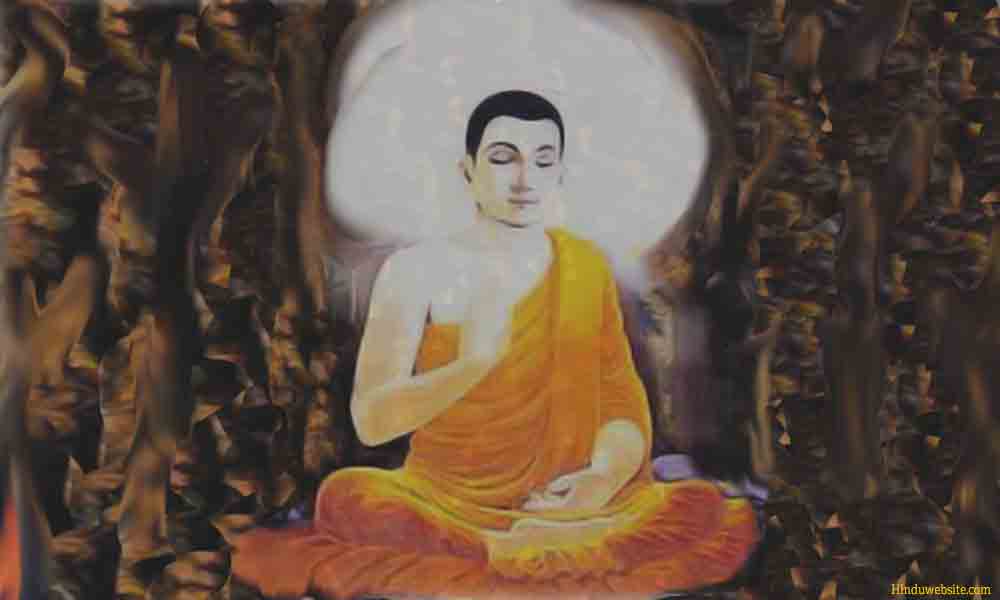
The technique I'll be teaching is breath meditation. It's a good topic no matter what your religious background. As my teacher once said, the breath doesn't belong to Buddhism or Christianity or anyone at all. It's common property that anyone can meditate on. At the same time, of all the meditation topics there are, it's probably the most beneficial to the body, for when we're dealing with the breath, we're dealing not only with the air coming in and out of the lungs, but also with all the feelings of energy that course throughout the body with each breath. If you can learn to become sensitive to these feelings, and let them flow smoothly and unobstructed, you can help the body function more easily, and give the mind a handle for dealing with pain.
So let's all meditate for a few minutes. Sit comfortably erect, in a balanced position. You don't have to be ramrod straight like a soldier. Just try not to lean forward or back, to the left or the right. Close your eyes and say to yourself, 'May I be truly happy and free from suffering.' This may sound like a strange, even selfish, way to start meditating, but there are good reasons for it. One, if you can't wish for your own happiness, there is no way that you can honestly wish for the happiness of others. Some people need to remind themselves constantly that they deserve happiness -- we all deserve it, but if we don't believe it, we will constantly find ways to punish ourselves, and we will end up punishing others in subtle or blatant ways as well.
Two, it's important to reflect on what true happiness is and where it can be found. A moment's reflection will show that you can't find it in the past or the future. The past is gone and your memory of it is undependable. The future is a blank uncertainty. So the only place we can really find happiness is in the present. But even here you have to know where to look. If you try to base your happiness on things that change -- sights, sounds, sensations in general, people and things outside -- you're setting yourself up for disappointment, like building your house on a cliff where there have been repeated landslides in the past. So true happiness has to be sought within. Meditation is thus like a treasure hunt: to find what has solid and unchanging worth in the mind, something that even death cannot touch.
To find this treasure we need tools. The first tool is to do what we're doing right now: to develop good will for ourselves. The second is to spread that good will to other living beings. Tell yourself: 'All living beings, no matter who they are, no matter what they have done to you in the past -- may they all find true happiness too.' If you don't cultivate this thought, and instead carry grudges into your meditation, that's all you'll be able to see when you look inside.
Only when you have cleared the mind in this way, and set outside matters aside, are you ready to focus on the breath. Bring your attention to the sensation of breathing. Breathe in long and out long for a couple of times, focusing on any spot in the body where the breathing is easy to notice, and your mind feels comfortable focusing. This could be at the nose, at the chest, at the abdomen, or any spot at all. Stay with that spot, noticing how it feels as you breathe in and out. Don't force the breath, or bear down too heavily with your focus. Let the breath flow naturally, and simply keep track of how it feels. Savor it, as if it were an exquisite sensation you wanted to prolong. If your mind wanders off, simply bring it back. Don't get discouraged. If it wanders 100 times, bring it back 100 times. Show it that you mean business, and eventually it will listen to you.
If you want, you can experiment with different kinds of breathing. If long breathing feels comfortable, stick with it. If it doesn't, change it to whatever rhythm feels soothing to the body. You can try short breathing, fast breathing, slow breathing, deep breathing, shallow breathing -- whatever feels most comfortable to you right now...
Once you have the breath comfortable at your chosen spot, move your attention to notice how the breathing feels in other parts of the body. Start by focusing on the area just below your navel. Breathe in and out, and notice how that area feels. If you don't feel any motion there, just be aware of the fact that there's no motion. If you do feel motion, notice the quality of the motion, to see if the breathing feels uneven there, or if there's any tension or tightness. If there's tension, think of relaxing it. If the breathing feels jagged or uneven, think of smoothing it out... Now move your attention over to the right of that spot -- to the lower right-hand corner of the abdomen -- and repeat the same process... Then over to the lower left-hand corner of the abdomen... Then up to the navel... right... left... to the solar plexus... right.. left... the middle of the chest... right... left... to the base of the throat... right... left... to the middle of the head...[take several minutes for each spot]
If you were meditating at home, you could continue this process through your entire body -- over the head, down the back, out the arms & legs to the tips of your finger & toes -- but since our time is limited, I'll ask you to return your focus now to any one of the spots we've already covered. Let your attention settle comfortably there, and then let your conscious awareness spread to fill the entire body, from the head down to the toes, so that you're like a spider sitting in the middle of a web: It's sitting in one spot, but it's sensitive to the entire web. Keep your awareness expanded like this -- you have to work at this, for its tendency will be to shrink to a single spot -- and think of the breath coming in & out your entire body, through every pore. Let your awareness simply stay right there for a while -- there's no where else you have to go, nothing else you have to think about... And then gently come out of meditation.
Suggestions for Further Reading
- Buddhism - The Concept of Anatta or No Self
- Anatta or Anatma in Buddhism
- Anicca or Anitya in Buddhism
- The Buddha on God
- The Buddha on Avijja or Ignorance and on the Origin of Life
- The Eightfold Path Of Buddhism
- The Four Noble Truths of Buddhism
- Buddhism - Right Living On The Eightfold Path
- Handbook for the Relief of Suffering by Ajaan Lee
- Meat Eating or Vegetarianism in Buddhism
- The Agendas of Mindfulness
- Meditation on Anicca or Impermanence in Buddhism
- A Sketch of the Buddha's Life
- What is Ignorance And Cessation Of Ignorance
- The Meaning of the Buddha's Awakening
- Basic Breath Meditation Practice
- Buddha's Teachings on Kamma or Karma
- Affinities Of Buddhism And Christianity
- Death and Dying in Buddhism
- Buddhism In A Nutshell
- The Buddha on Ignorance or Avijja
- Dhamma for Everyone by Ajaan Lee Dhammadharo
- Advaita Vedanta and Buddhism
- Four Discourses of the Buddha on Everyman's Ethics
- The Five Aggregates A Study Guide
- The Healing Power of the Five Buddhist Percepts
- The Working of Maya or Illusion - A Buddhist Perspective
- Buddhism - Kamma (Karma) and its Fruit
- Buddhism - Kamma (Karma) A Study Guide
- Buddhism - Living the Dhamma A Practice Guide
- What Anatta or No-Self is All About
- Buddhism - The Middle Way
- The Buddhist Monastic Code, Dhamma-Vinaya
- Nibbana, or Nivranva in Buddhsim
- Why The Buddha Taught the Anatta or Not-Self Doctrine
- The Status of Women in Buddhist Societies
- Buddhism - The Practice of Loving-Kindness (Metta)
- Buddhism - Does Rebirth Make Sense
- Buddhism - Right Concentration
- Buddhism - Intentions and Nirvana
- The Round of Rebirth - Samsara
- The Role of Samavega in Buddhism
- The Chaos Theory and Nirvana in Buddhism
- A Christian's Journey Into Buddhism
- A Simple Guide to Buddhism
- Buddhist Cosmology - The Thirty one Realms of Existence
- Buddhism and the concept of renunciation
- Sankharas (Samskaras) in Buddhism
- Vedanta and Buddhism A Comparative Study
- Buddhism - Vipansana or Insight Meditation
- The Right Approach To End Suffering in Buddhismm
- Essays On Dharma
- Esoteric Mystic Hinduism
- Introduction to Hinduism
- Hindu Way of Life
- Essays On Karma
- Hindu Rites and Rituals
- The Origin of The Sanskrit Language
- Symbolism in Hinduism
- Essays on The Upanishads
- Concepts of Hinduism
- Essays on Atman
- Hindu Festivals
- Spiritual Practice
- Right Living
- Yoga of Sorrow
- Happiness
- Mental Health
- Concepts of Buddhism
- General Essays
Source: © 1997 Thanissaro Bhikkhu. The author gives permission to re-format and redistribute his work for use on computers and computer networks, provided that you charge no fees for its distribution or use. Otherwise, all rights reserved.