
Why The Buddha Taught the Anatta or Not-Self Doctrine
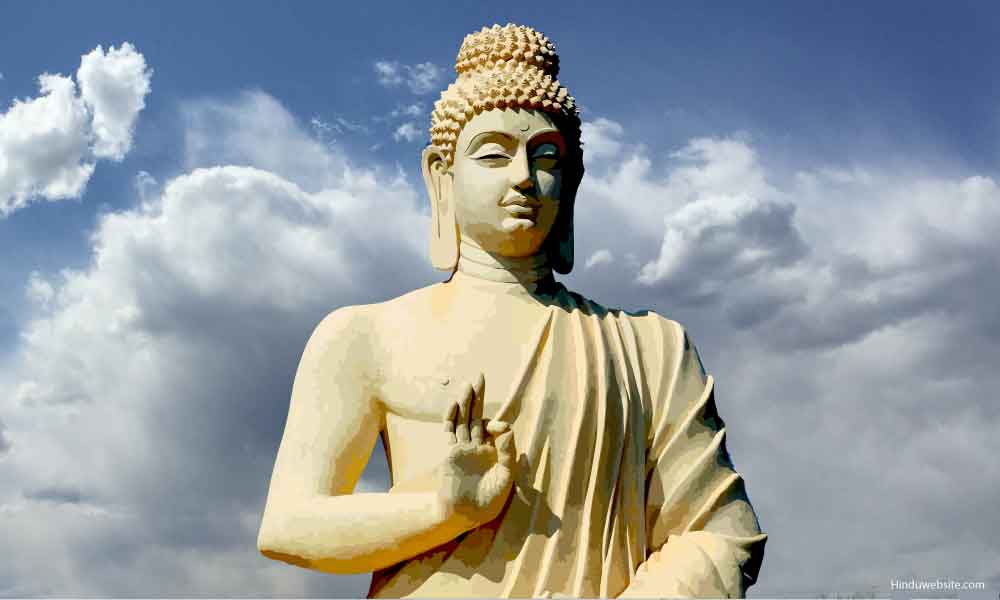
Books on Buddhism often state that the Buddha's most basic metaphysical tenet is that there is no soul or self. However, a survey of the discourses in the Pali Canon -- the earliest extant record of the Buddha's teachings -- suggests that the Buddha taught the anatta or not-self doctrine, not as a metaphysical assertion, but as a strategy for gaining release from suffering:
If one uses the concept of not-self to dis-identify oneself from all phenomena, one goes beyond the reach of all suffering & stress. As for what lies beyond suffering & stress, the Canon states that although it may be experienced, it lies beyond the range of description, and thus such descriptions as "self" or "not-self" would not apply.
The evidence for this reading of the Canon centers around four points:
1. The one passage where the Buddha is asked point-blank to take a position on the ontological question of whether or not there is a self, he refuses to answer.
2. The passages which state most categorically that there is no self are qualified in such a way that they cover all of describable reality, but not all of reality which may be experienced.
3. Views that there is no self are ranked with views that that there is a self as a "fetter of views" which a person aiming at release from suffering would do well to avoid.
4. The person who has attained the goal of release views reality in such a way that all views -- even such basic notions as self & no-self, true & false -- can have no hold power over the mind.
What follows is a selection of relevant passages from the Canon. They are offered with the caveat that in ultimate terms nothing conclusive can be proved by quoting the texts. Scholars have offered arguments for throwing doubt on almost everything in the Canon -- either by offering new translations for crucial terms, or by questioning the authenticity of almost every passage it contains -- and so the only true test for any interpretation is to put it into practice and see where it leads in terms of gaining release for the mind.
* * *
1. Compare the following two dialogues.
Having taken a seat to one side, Vacchagotta the wanderer said to the Master, 'Now then, Venerable Gotama, is there a self?' When this was said, the Master was silent.
'Then is there no self?' For a second time the Master was silent.
Then Vacchagotta the wanderer got up from his seat and left.
Then, not long after Vacchagotta the wanderer had left, the Venerable Ananda said to the Master, 'Why, sir, did the Master not answer when asked a question asked by Vacchagotta the wanderer?'
'Ananda, if I, being asked by Vacchagotta the wanderer if there is a self, were to answer that there is a self, that would be conforming with those priests & contemplatives who are exponents of eternalism (i.e., the view that there is an eternal soul). And if I... were to answer that there is no self, that would be conforming with those priests & contemplatives who are exponents of annihilationism (i.e., that death is the annihilation of experience). If I... were to answer that there is a self, would that be in keeping with the arising of knowledge that all phenomena are not-self?
'No, Lord.'
'And if I... were to answer that there is no self, the bewildered Vacchagotta would become even more bewildered: "Does the self which I used to have, now not exist?"'
-- S xliv.10
Mogharaja:
In what way does one view the world
so that
the King of Death does not see one?
The Buddha:
Having removed any view
in terms of self,
always mindful, Mogharaja,
view the world as void.
This way
one is above & beyond death.
This is the way one views the
world
so that the King of Death does not see one.
-- Sn v.16
The first passage is one of the most controversial in the Canon. Those who hold that the Buddha took a position one way or the other on the question of whether or not there is a self have to explain the Buddha's silence away, and usually do so by focusing on the his final statement to Ananda. If someone else more spiritually mature than Vacchagotta had asked the question, they say, the Buddha would have revealed his true position.
This interpretation, though, ignores the Buddha's first two sentences to Ananda: No matter who asks the question, to say that there is or is not a self would be to fall into one of the two philosophical positions which the Buddha avoided throughout his career. As for his third sentence, he was concerned not to contradict "the arising of knowledge that all phenomena are not-self" not because he felt that this knowledge alone was metaphysically correct, but because he saw that its arising could be liberating. (We will deal further with the content of this knowledge below in Point 2.)
This point is borne out if we make a comparison with the second passage. The fundamental difference between the two dialogues lies in the questions asked: In the first, Vacchagotta asks the Buddha to take a position on the question of whether or not there is a self, and the Buddha remains silent. In the second, Mogharaja asks for a way to view the world so that one can go beyond death, and the Buddha speaks, teaching him to view the world without reference to the notion of self. This suggests that, instead of being an assertion that there is no self, the teaching on not-self is more a technique of perception aimed at leading beyond death to Nibbana -- a way of perceiving things with no self-identification, no sense that 'I am', no attachment to 'I' or 'mine' involved.
Thus it would seem most honest to take the first dialogue at face value, and to say that the question of whether or not there is a self is one on which the Buddha did not take a position, regardless of whether he was talking to a spiritually confused person like Vacchagotta, or a more advanced person like Ananda. For him, the doctrine of not-self is a technique or strategy for liberation, and not a metaphysical or ontological position.
* * *
2. The following two passages, taken together, are often offered as the strongest proof that the Buddha denied the existence of a self in the most uncertain terms. Notice, however, how the terms "world" & "All" are defined.
Ananda:
It is said that the world is void, the world is void,
venerable sir. In what respect is it said that the world is void?
The Buddha:
Insofar as it is void of a self or of anything
pertaining to a self: Thus it is said that the world is void. And
what is void of a self or of anything pertaining to a self? The
eye is void of a self or of anything pertaining to a self. Forms...
Visual consciousness... Visual contact is void of a self or of anything
pertaining to a self.
The ear...
The nose...
The tongue...
The body...
The intellect is void of a self or of anything pertaining to a self. Ideas... Mental consciousness... Mental contact is void of a self or of anything pertaining to a self. Thus it is said that the world is void.
-- S xxxv.85
What is the All? Simply the eye & forms, ear & sounds, nose & odors, tongue & flavors, body & tactile sensations, intellect & ideas. This, monks, is termed the All. Anyone who would say, 'Repudiating this All, I will describe another,' if questioned on what exactly might be the grounds for his statement, would be unable to explain, and furthermore, would be put to grief. Why? Because it lies beyond range.
-- S xxxv.23
Now, if the six senses & their objects -- sometimes called the six spheres of contact -- constitute the world or the All, is there anything beyond them?
MahaKotthita:
With the remainderless stopping & fading
of the six spheres of contact (vision, hearing, smell, taste, touch, &
intellection) is it the case that there is anything else?
Sariputta:
Do not say that, my friend.
MahaKotthita:
With the remainderless stopping & fading
of the six spheres of contact, is it the case that there is not
anything else?
Sariputta:
Do not say that, my friend.
MahaKotthita:
...is it the case that there both is & is
not anything else?
Sariputta:
Do not say that, my friend.
MahaKotthita:
...is it the case that there neither is nor
is not anything else?
Sariputta:
Do not say that, my friend.
MahaKotthita:
Being asked... if there is anything else, you
say 'Do not say that, my friend'. Being asked... if there is not
anything else... if there both is & is not anything else...
if there neither is nor is not anything else, you say, 'Do not say
that, my friend'. Now, how is the meaning of this statement to be
understood?
Sariputta:
Saying... is it the case that there is anything
else... is it the case that there is not anything else... is it
the case that there both is & is not anything else... is it
the case that there neither is nor is not anything else, one is
differentiating non-differentiation. However far the six spheres
of contact go, that is how far differentiation goes. However far
differentiation goes, that is how far the six spheres of contact
go. With the remainderless fading & stopping of the six spheres
of contact, there comes to be the stopping, the allaying of differentiation.
-- A iv.173
The dimension of non-differentiation, although it may not be described, may be realized through direct experience.
Monks, that sphere is to be realized where the eye (vision) stops and the perception (mental noting) of form fades. That sphere is to be realized where the ear stops and the perception of sound fades... where the nose stops and the perception of odor fades... where the tongue stops and the perception of flavor fades... where the body stops and the perception of tactile sensation fades... where the intellect stops and the perception of idea/phenomenon fades: That sphere is to be realized.
-- S xxxv.116
Although this last passage indicates that there is a sphere to be experienced beyond the six sensory spheres, it should not be taken as a "higher self". This point is brought out in the Great Discourse on Causation, where the Buddha classifies all theories of the self into four major categories: those describing a self which is either (a) possessed of form (a body) & finite; (b) possessed of form & infinite; (c) formless & finite; and (d) formless & infinite. The text gives no examples of the various categories, but we might cite the following as illustrations: (a) theories which deny the existence of a soul, and identify the self with the body; (b) theories which identify the self with all being or with the universe; (c) theories of discrete, individual souls; (d) theories of a unitary soul or identity immanent in all things. He then goes on to reject all four categories.
Another passage often quoted to the effect that the Buddha taught that there is no self is the following verse from the Dhammapada, especially the third stanza, in which the word dhamma refers both to conditioned & to unconditioned things. Notice, though, what the verse says as a whole: These insights are part of the path, and not the goal at the end of the path.
'All conditioned things are inconstant' --
When one sees this
with discernment
And grows disenchanted with stress,
This
is the path to purity.
'All conditioned things are stressful' --
When one sees with
discernment
And grows disenchanted with stress,
This is the
path to purity.
'All dhammas are not-self' --
When one sees with discernment
And grows disenchanted with stress,
This is the path to purity.
-- Dhp 277-79
As we will see in a passage below, the Buddha states that the meditator attains Awakening by seeing the limits of all things conditioned, by seeing what lies beyond them, and clinging to neither. In the following verse, the Buddha's questioner refers to the goal as a dhamma, while the Buddha describes it as a removing or doing away of all dhammas -- and thus it goes beyond "all dhammas" and any possible statement that could be made about them. Once the meditator has done this, no words -- being, not-being, self, not-self -- can apply.
Upasiva:
One who has reached the end:
Does he not exist,
Or is he for eternity free from affliction?
Please, sage, declare
this to me
as this dhamma has been known by you.
The Buddha:
One who has reached the end has no criterion
By which anyone would say that --
it does not exist for him.
When all dhammas are done away with
All means of speaking are
done away with as well.
-- Sn v.6
* * *
3. Although the concept "not-self" is a useful way of disentangling oneself from the attachments & clingings which lead to suffering, the view that there is no self is simply one of many metaphysical or ontological views which bind one to suffering.
There is the case where an uninstructed, run-of-the-mill person... does not discern what ideas are fit for attention, or what ideas are unfit for attention. This being so, he does not attend to ideas fit for attention, and attends (instead) to ideas unfit for attention... This is how he attends inaptly: 'Was I in the past? Was I not in the past? What was I in the past? How was I in the past? Having been what, what was I in the past? Shall I be in the future? Shall I not be in the future? What shall I be in the future? How shall I be in the future? Having been what, what shall I be in the future?' Or else he is inwardly perplexed about the immediate present: 'Am I? Am I not? What am I? How am I? Where has this being come from? Where is it bound?'
As he attends inaptly in this way, one of six kinds of view arises in him: The view I have a self arises in him as true & established,
or the view I have no self...
or the view It is precisely because of self that I perceive self...
or the view It is precisely because of self that I perceive not-self...
or the view It is precisely because of not-self that I perceive self arises in him as true & established,
or else he has a view like this: This very self of mine -- the knower which is sensitive here & there to the ripening of good & bad actions -- is the self of mine which is constant, everlasting, eternal, not subject to change, and will endure as long as eternity.
This is called a thicket of views, a wilderness of views, a contortion of views, a writhing of views, a fetter of views. Bound by a fetter of views, the un-instructed run-of-the-mill person is not freed from birth, aging & death, from sorrow, lamentation, pain, grief & despair. He is not freed from stress, I say.
The well-taught disciple of the noble ones... discerns what ideas are fit for attention, and what ideas are unfit for attention. This being so, he does not attend to ideas unfit for attention, and attends (instead) to ideas fit for attention... He attends aptly, This is stress... This is the origin of stress... This is the stopping of stress... This is the way leading to the stopping of stress. As he attends aptly in this way, three fetters are abandoned in him: identity-view, uncertainty and adherence to precepts & practices.
-- M 2
* * *
4. Thus although the person on the Path must make use of Right View, he or she goes beyond all views on reaching the goal of release. For a person who has attained the goal, experience occurs with no 'subject' or 'object' superimposed on it, no construing of experience or thing experienced. There is simply the experience in & of itself.
Monks, whatever in this world -- with its gods, Maras & Brahmas, its generations complete with contemplatives & priests, princes & men -- is seen, heard, sensed, cognized, attained, sought after, pondered by the intellect: That do I know. Whatever in this world... is seen, heard, sensed, cognized, attained, sought after, pondered by the intellect: That I directly know. That is known by the Tathagata, but the Tathagata has not been obsessed with it...
Thus, monks, the Tathagata, when seeing what is to be seen, does not construe an (object as) seen. He does not construe an unseen. He does not construe an (object) to-be-seen. He does not construe a seer.
When hearing... When sensing... When cognizing what is to be cognized, he does not construe an(object as) cognized. He does not construe an uncognized. He does not construe an (object) to-be-cognized. He does not construe a cognizer.
Thus, monks, the Tathagata -- being such-like with regard to all phenomena that can be seen, heard, sensed & cognized -- is 'Such.' And I tell you: There is no other 'Such' higher or more sublime.
Whatever is seen or heard or sensed
and fastened onto as true
by others,
One who is Such -- among those who are self-bound
--
would not further assume to be true or even false.
Having
seen well in advance that arrow
where generations are fastened &
hung
-- 'I know, I see, that's just how it is!' --
There is
nothing of the Tathagata fastened.
-- A iv.24
A view is true or false only when one is judging how accurately it refers to something else. If one is regarding it simply as a statement, an event, in & of itself, true & false no longer apply. Thus for the Tathagata, who no longer imposes notions of subject or object on experience, and regards sights, sounds, feelings & thoughts purely in & of themselves, views are neither true nor false, but simply phenomena to be experienced. With no notion of subject, there is no grounds for "I know, I see;" with no notion of object, no grounds for, "That's just how it is." Views of true, false, self, no self, etc., thus lose all their holding power, and the mind is left free to its Suchness: untouched, uninfluenced by anything of any sort.
That, say the wise, is a fetter,
In dependence on which
One sees others as inferior.
-- Sn iv.5
Whoever construes
'equal'
'superior' or
'inferior',
by that he would dispute;
Whereas to one unaffected by these
three,
'equal'
'superior'
do not occur.
Of what would
the Brahman (arahant) say 'true'
or 'false',
disputing with
whom,
he in whom 'equal' & 'unequal' are not...
As the
prickly lotus
is unsmeared by water & mud,
So the sage,
an exponent of peace,
without greed,
is unsmeared by sensuality &
the world.
An attainer-of-wisdom
is not measured
made proud
by views or by what is thought,
for he is not altered by them.
Not by rituals is he led, nor by traditional lore,
nor with reference
to dogmas.
For one dispassionate towards perception
there
are no ties;
for one released by discernment,
no delusions.
Those who seize at perceptions & views
go about disputing
in the world.
-- Sn iv.9
'Does Master Gotama have any position at all?'
'A "position", Vaccha, is something which a Tathagata has done away with. What a Tathagata sees is this: "Such is form, such its origin, such its disappearance; such is feeling, such its origin, such its disappearance; such is perception... such are mental processes... such is consciousness, such its origin, such its disappearance." Because of that, I say, a Tathagata, -- with the ending, fading out, stopping, renunciation & relinquishment of all construings, all excogitations, all I-making & mine-making & obsession with conceit -- is, through lack of clinging/sustenance, released.'
-- M 72
This, monks, the Tathagata discerns. And he discerns that these standpoints, thus seized, thus held to, lead to such & such a destination, to such & such a state in the world beyond. And he discerns what surpasses this. And yet discerning that, he does not hold to it. And as he is not holding to it, unbinding (nibbuti) is experienced right within. Knowing, for what they are, the origin, ending, allure & drawbacks of feelings, along with the emancipation from feelings, the Tathagata, monks -- through lack of clinging/sustenance -- is released.
-- D 1
Whether or not these four arguments are in fact true to the Buddha's teachings, it is important to remember his primary aim in presenting the doctrine of not-self in the first place: so that those who put it to use can gain release from all suffering & stress.
'Monks, do you see any clinging/sustenance in the form of a doctrine of self which, in clinging to, there would not arise sorrow, lamentation, pain, grief & despair?'
'No, Lord.'
'...Neither do I... How do you construe this, monks: If a person were to gather or burn or do as he likes with the grass, twigs, branches & leaves here in Jeta's Grove, would the thought occur to you, "It's us that this person is gathering, burning or doing with as he likes"?'
'No, sir. Why is that? Because those things are not our self, and do not pertain to our self.'
'Even so, monks, whatever is not yours: Let go of it. Your letting go of it will be for your long-term happiness & benefit. And what is not yours? Form (body) is not yours... Feeling is not yours... Perception... Mental processes... Consciousness is not yours. Let go of it. Your letting go of it will be for your long-term happiness & benefit.'
-- M 22
Sariputta: Friends, there is the monk who, on going to foreign lands, is questioned by learned nobles & priests, laypeople & contemplatives. Learned & discriminating people say (to him), "What is your teacher's doctrine? What does he teach?" Thus asked, you should answer, "My teacher teaches the subduing of passion & desire."
"...passion & desire for what?"
"...passion & desire for physical form, feeling, perception, mental processes & consciousness."
"...seeing what danger (or drawback) does your teacher teach the subduing of passion & desire for physical form, feeling, perception, mental processes & consciousness?"
"...when a person is not free from passion, desire, love, thirst, fever & craving for physical form, etc., then from any change & alteration in that physical form, etc., there arise sorrow, lamentation, pain, grief & despair."
"...and seeing what benefit does your teacher teach the subduing of passion & desire for physical form, etc.?"
"...when a person is free from passion, desire, love, thirst, fever & craving for physical form, etc., then from any change & alteration in that physical form, etc., sorrow, lamentation, pain, grief & despair do not arise."
-- S xxii.2
Both formerly & now, Anuradha, it is only stress (suffering) that I describe, and the stopping of stress.
-- S xxii.86
Suggestions for Further Reading
- Buddhism - The Concept of Anatta or No Self
- Anatta or Anatma in Buddhism
- Anicca or Anitya in Buddhism
- The Buddha on God
- The Buddha on Avijja or Ignorance and on the Origin of Life
- The Eightfold Path Of Buddhism
- The Four Noble Truths of Buddhism
- Buddhism - Right Living On The Eightfold Path
- Handbook for the Relief of Suffering by Ajaan Lee
- Meat Eating or Vegetarianism in Buddhism
- The Agendas of Mindfulness
- Meditation on Anicca or Impermanence in Buddhism
- A Sketch of the Buddha's Life
- What is Ignorance And Cessation Of Ignorance
- The Meaning of the Buddha's Awakening
- Basic Breath Meditation Practice
- Buddha's Teachings on Kamma or Karma
- Affinities Of Buddhism And Christianity
- Death and Dying in Buddhism
- Buddhism In A Nutshell
- The Buddha on Ignorance or Avijja
- Dhamma for Everyone by Ajaan Lee Dhammadharo
- Advaita Vedanta and Buddhism
- Four Discourses of the Buddha on Everyman's Ethics
- The Five Aggregates A Study Guide
- The Healing Power of the Five Buddhist Percepts
- The Working of Maya or Illusion - A Buddhist Perspective
- Buddhism - Kamma (Karma) and its Fruit
- Buddhism - Kamma (Karma) A Study Guide
- Buddhism - Living the Dhamma A Practice Guide
- What Anatta or No-Self is All About
- Buddhism - The Middle Way
- The Buddhist Monastic Code, Dhamma-Vinaya
- Nibbana, or Nivranva in Buddhsim
- Why The Buddha Taught the Anatta or Not-Self Doctrine
- The Status of Women in Buddhist Societies
- Buddhism - The Practice of Loving-Kindness (Metta)
- Buddhism - Does Rebirth Make Sense
- Buddhism - Right Concentration
- Buddhism - Intentions and Nirvana
- The Round of Rebirth - Samsara
- The Role of Samavega in Buddhism
- The Chaos Theory and Nirvana in Buddhism
- A Christian's Journey Into Buddhism
- A Simple Guide to Buddhism
- Buddhist Cosmology - The Thirty one Realms of Existence
- Buddhism and the concept of renunciation
- Sankharas (Samskaras) in Buddhism
- Vedanta and Buddhism A Comparative Study
- Buddhism - Vipansana or Insight Meditation
- The Right Approach To End Suffering in Buddhismm
- Essays On Dharma
- Esoteric Mystic Hinduism
- Introduction to Hinduism
- Hindu Way of Life
- Essays On Karma
- Hindu Rites and Rituals
- The Origin of The Sanskrit Language
- Symbolism in Hinduism
- Essays on The Upanishads
- Concepts of Hinduism
- Essays on Atman
- Hindu Festivals
- Spiritual Practice
- Right Living
- Yoga of Sorrow
- Happiness
- Mental Health
- Concepts of Buddhism
- General Essays
Copyright © 1993 Thanissaro Bhikkhu. Reproduced and reformatted from Access to Insight edition © 1993 For free distribution. This work may be republished, reformatted, reprinted, and redistributed in any medium. It is the author's wish, however, that any such republication and redistribution be made available to the public on a free and unrestricted basis and that translations and other derivative works be clearly marked as such.