
Buddhism - Vipansana or Insight Meditation
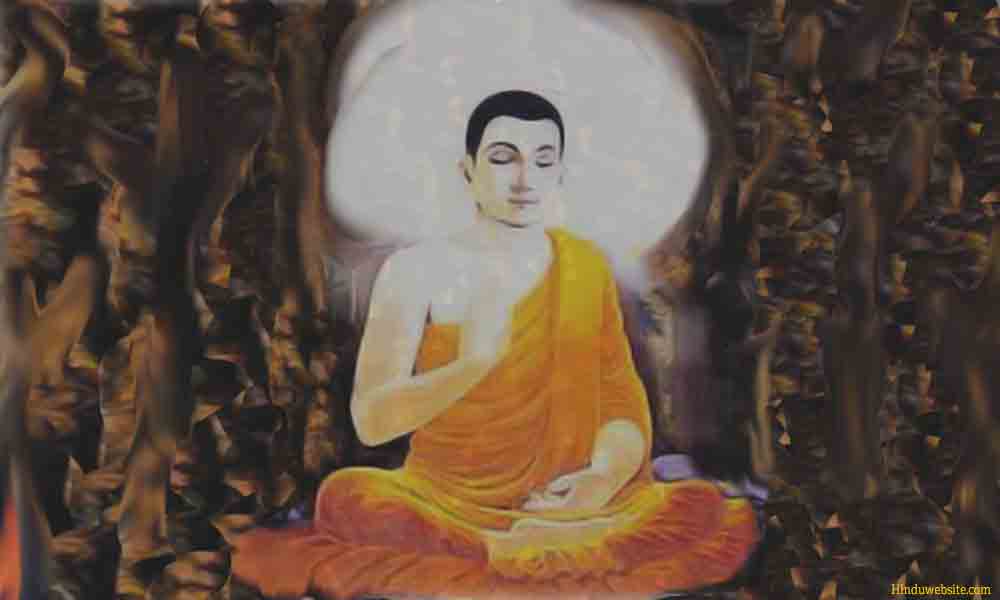
What exactly is vipassana?
Almost any book on early Buddhist meditation will tell you that the Buddha taught two types of meditation: samatha and vipassana. Samatha, which means tranquillity, is said to be a method fostering strong states of mental absorption, called jhana. Vipassana -- literally "clear-seeing," but more often translated as insight meditation -- is said to be a method using a modicum of tranquillity to foster moment-to-moment mindfulness of the inconstancy of events as they are directly experienced in the present.
This mindfulness creates a sense of dispassion toward all events, thus leading the mind to release from suffering. These two methods are quite separate, we're told, and of the two, vipassana is the distinctive Buddhist contribution to meditative science. Other systems of practice pre-dating the Buddha also taught samatha, but the Buddha was the first to discover and teach vipassana. Although some Buddhist meditators may practice samatha meditation before turning to vipassana, samatha practice is not really necessary for the pursuit of Awakening. As a meditative tool, the vipassana method is sufficient for attaining the goal. Or so we're told.
But if you look directly at the Pali discourses -- the earliest extant sources for our knowledge of the Buddha's teachings -- you'll find that although they do use the word samatha to mean tranquillity, and vipassana to mean clear-seeing, they otherwise confirm none of the received wisdom about these terms. Only rarely do they make use of the word vipassana -- a sharp contrast to their frequent use of the word jhana. When they depict the Buddha telling his disciples to go meditate, they never quote him as saying "go do vipassana," but always "go do jhana."
And they never equate the word vipassana with any mindfulness techniques. In the few instances where they do mention vipassana, they almost always pair it with samatha -- not as two alternative methods, but as two qualities of mind that a person may "gain" or "be endowed with," and that should be developed together. One simile, for instance (SN XXXV.204), compares samatha and vipassana to a swift pair of messengers who enter the citadel of the body via the noble eightfold path and present their accurate report -- Unbinding, or nibbana -- to the consciousness acting as the citadel's commander. Another passage (AN X.71) recommends that anyone who wishes to put an end to mental defilement should -- in addition to perfecting the principles of moral behavior and cultivating seclusion -- be committed to samatha and endowed with vipassana. This last statement is unremarkable in itself, but the same discourse also gives the same advice to anyone who wants to master the jhanas: be committed to samatha and endowed with vipassana. This suggests that, in the eyes of those who assembled the Pali discourses, samatha, jhana, and vipassana were all part of a single path. Samatha and vipassana were used together to master jhana and then -- based on jhana -- were developed even further to give rise to the end of mental defilement and to bring release from suffering. This is a reading that finds support in other discourses as well.
There's a passage, for instance, describing three ways in which samatha and vipassana can work together to lead to the knowledge of Awakening: either samatha precedes vipassana, vipassana precedes samatha, or they develop in tandem (AN IV.170). The wording suggests an image of two oxen pulling a cart: one is placed before the other or they are yoked side-by-side. Another passage (AN IV.94) indicates that if samatha precedes vipassana -- or vipassana, samatha -- one's practice is in a state of imbalance and needs to be rectified. A meditator who has attained a measure of samatha, but no "vipassana into events based on heightened discernment (adhipañña-dhamma-vipassana)," should question a fellow meditator who has attained vipassana: "How should fabrications (sankhara) be regarded? How should they be investigated? How should they be viewed with insight?" and then develop vipassana in line with that person's instructions. The verbs in these questions -- "regarding," "investigating," "seeing" -- indicate that there's more to the process of developing vipassana than a simple mindfulness technique. In fact, as we will see below, these verbs apply instead to a process of skillful questioning called "appropriate attention."
The opposite case -- a meditator endowed with a measure of vipassana into events based on heightened discernment, but no samatha -- should question someone who has attained samatha: "How should the mind be steadied? How should it be made to settle down? How should it be unified? How should it be concentrated?" and then follow that person's instructions so as to develop samatha. The verbs used here give the impression that "samatha" in this context means jhana, for they correspond to the verbal formula -- "the mind becomes steady, settles down, grows unified and concentrated" -- that the Pali discourses use repeatedly to describe the attainment of jhana. This impression is reinforced when we note that in every case where the discourses are explicit about the levels of concentration needed for insight to be liberating, those levels are the jhanas.
Once the meditator is endowed with both samatha and vipassana, he/she should "make an effort to establish those very same skillful qualities to a higher degree for the ending of the mental fermentations (asava -- sensual passion, states of being, views, and ignorance)." This corresponds to the path of samatha and vipassana developing in tandem. A passage in MN 149 describes how this can happen. One knows and sees, as they actually are, the six sense media (the five senses plus the intellect), their objects, consciousness at each medium, contact at each medium, and whatever is experienced as pleasure, pain, or neither-pleasure-nor-pain based on that contact. One maintains this awareness in such a way as to stay uninfatuated by any of these things, unattached, unconfused, focused on their drawbacks, abandoning any craving for them: this would count as vipassana. At the same time -- abandoning physical and mental disturbances, torments, and distresses -- one experiences ease in body and mind: this would count as samatha. This practice not only develops samatha and vipassana in tandem, but also brings the 37 Wings to Awakening -- which include the attainment of jhana -- to the culmination of their development.
So the proper path is one in which vipassana and samatha are brought into balance, each supporting and acting as a check on the other. Vipassana helps keep tranquillity from becoming stagnant and dull. Samatha helps prevent the manifestations of aversion -- such as nausea, dizziness, disorientation, and even total blanking out -- that can occur when the mind is trapped against its will in the present moment.
From this description it's obvious that samatha and vipassana are not separate paths of practice, but instead are complementary ways of relating to the present moment: samatha provides a sense of ease in the present; vipassana, a clear-eyed view of events as they actually occur, in and of themselves. It's also obvious why the two qualities need to function together in mastering jhana. As the standard instructions on breath meditation indicate (MN 118), such a mastery involves three things: gladdening, concentrating, and liberating the mind. Gladdening means finding a sense of refreshment and satisfaction in the present. Concentrating means keeping the mind focused on its object, while liberating means freeing the mind from the grosser factors making up a lower stage of concentration so as to attain a higher stage. The first two activities are functions of samatha, while the last is a function of vipassana. All three must function together. If, for example, there is concentration and gladdening, with no letting go, the mind wouldn't be able to refine its concentration at all. The factors that have to be abandoned in raising the mind from stage x to stage y belong to the set of factors that got the mind to x in the first place (AN IX.34). Without the ability clearly to see mental events in the present, there would be no way skillfully to release the mind from precisely the right factors that tie it to a lower state of concentration and act as disturbances to a higher one. If, on the other hand, there is simply a letting go of those factors, without an appreciation of or steadiness in the stillness that remains, the mind would drop out of jhana altogether. Thus samatha and vipassana must work together to bring the mind to right concentration in a masterful way.
The question arises: if vipassana functions in the mastery of jhana, and jhana is not exclusive to Buddhists, then what is Buddhist about vipassana? The answer is that vipassana per se is not exclusively Buddhist. What is distinctly Buddhist is (1) the extent to which both samatha and vipassana are developed; and (2) the way they are developed -- i.e., the line of questioning used to foster them; and (3) the way they are combined with an arsenal of meditative tools to bring the mind to total release.
In MN 73, the Buddha advises a monk who has mastered jhana to further develop samatha and vipassana so as to master six cognitive skills, the most important of them being that "through the ending of the mental fermentations, one remains in the fermentation-free awareness-release and discernment-release, having known and made them manifest for oneself right in the here and now." This is a description of the Buddhist goal. Some commentators have asserted that this release is totally a function of vipassana, but there are discourses that indicate otherwise.
Note that release is twofold: awareness-release and discernment-release. awareness-release occurs when a meditator becomes totally dispassionate toward passion: this is the ultimate function of samatha. Discernment-release occurs when there is dispassion for ignorance: this is the ultimate function of vipassana (AN II.30). Thus both samatha and vipassana are involved in the twofold nature of this release.
The Sabbasava Sutta (MN 2) states that one's release can be "fermentation-free" only if one knows and sees in terms of "appropriate attention" (yoniso manasikara). As the discourse shows, appropriate attention means asking the proper questions about phenomena, regarding them not in terms of self/other or being/non-being, but in terms of the four noble truths. In other words, instead of asking "Do I exist? Don't I exist? What am I?" one asks about an experience, "Is this stress? The origination of stress? The cessation of stress? The path leading to the cessation of stress?" Because each of these categories entails a duty, the answer to these questions determines a course of action: stress should be comprehended, its origination abandoned, its cessation realized, and the path to its cessation developed.
Samatha and vipassana belong to the category of the path and so should be developed. To develop them, one must apply appropriate attention to the task of comprehending stress, which is comprised of the five clinging-aggregates -- clinging to physical form, feeling, perception, mental fabrications, and consciousness. Applying appropriate attention to these aggregates means viewing them in terms of their drawbacks, as "inconstant, stressful, a disease, a cancer, an arrow, painful, an affliction, alien, a dissolution, an emptiness, not-self" (SN XXII.122). A list of questions, distinctive to the Buddha, aids in this approach: "Is this aggregate constant or inconstant?" "And is anything inconstant easeful or stressful?" "And is it fitting to regard what is inconstant, stressful, subject to change as: 'This is mine. This is my self. This is what I am'?" (SN XXII.59). These questions are applied to every instance of the five aggregates, whether "past, future, or present; internal or external; blatant or subtle, common or sublime, far or near." In other words, the meditator asks these questions of all experiences in the cosmos of the six sense media.
This line of questioning is part of a strategy leading to a level of knowledge called "knowing and seeing things as they actually are (yatha-bhuta-ñana-dassana)," where things are understood in terms of a fivefold perspective: their arising, their passing away, their drawbacks, their allure, and the escape from them -- the escape, here, lying in dispassion.
Some commentators have suggested that, in practice, this fivefold perspective can be gained simply by focusing on the arising and passing away of these aggregates in the present moment; if one's focus is relentless enough, it will lead naturally to a knowledge of drawbacks, allure, and escape, sufficient for total release. The texts, however, don't support this reading, and practical experience would seem to back them up. As MN 101 points out, individual meditators will discover that, in some cases, they can develop dispassion for a particular cause of stress simply by watching it with equanimity; but in other cases, they will need to make a conscious exertion to develop the dispassion that will provide an escape. The discourse is vague -- perhaps deliberately so -- as to which approach will work where. This is something each meditator must test for him or herself in practice.
The Sabbasava Sutta expands on this point by listing seven approaches to take in developing dispassion. Vipassana, as a quality of mind, is related to all seven, but most directly with the first: "seeing," i.e., seeing events in terms of the four noble truths and the duties appropriate to them. The remaining six approaches cover ways of carrying out those duties: restraining the mind from focusing on sense data that would provoke unskillful states of mind; reflecting on the appropriate reasons for using the requisites of food, clothing, shelter, and medicine; tolerating painful sensations; avoiding obvious dangers and inappropriate companions; destroying thoughts of sensual desire, ill will, harmfulness, and other unskillful states; and developing the seven factors for Awakening: mindfulness, analysis of qualities, persistence, rapture, serenity, concentration, and equanimity.
Each of these approaches covers a wide subset of approaches. Under "destroying," for instance, one may eliminate an unskillful mental state by replacing it with a skillful one, focusing on its drawbacks, turning one's attention away from it, relaxing the process of thought-fabrication that formed it, or suppressing it with the brute power of one's will (MN 20). Many similar examples could be drawn from other discourses as well. The overall point is that the ways of the mind are varied and complex. Different fermentations can come bubbling up in different guises and respond to different approaches. One's skill as a meditator lies in mastering a variety of approaches and developing the sensitivity to know which approach will work best in which situation.
On a more basic level, however, one needs strong motivation to master these skills in the first place. Because appropriate attention requires abandoning dichotomies that are so basic to the thought patterns of all people -- "being/not being" and "me/not me" -- meditators need strong reasons for adopting it. This is why the Sabbasava Sutta insists that anyone developing appropriate attention must first must hold the noble ones (here meaning the Buddha and his awakened disciples) in high regard. In other words, one must see that those who have followed the path are truly exemplary. One must also be well-versed in their teaching and discipline. According to MN 117, "being well-versed in their teaching" begins with having conviction in their teachings about karma and rebirth, which provide intellectual and emotional context for adopting the four noble truths as the basic categories of experience. Being well-versed in the discipline of the noble ones would include, in addition to observing the precepts, having some skill in the seven approaches mentioned above for abandoning the fermentations.
Without this sort of background, meditators might bring the wrong attitudes and questions to the practice of watching arising and passing away in the present moment. For instance, they might be looking for a "true self" and end up identifying -- consciously or unconsciously -- with the vast, open sense of awareness that embraces all change, from which it all seems to come and to which it all seems to return. Or they might long for a sense of connectedness with the vast interplay of the universe, convinced that -- as all things are changing -- any desire for changelessness is neurotic and life-denying. For people with agendas like these, the simple experience of events arising and passing away in the present won't lead to fivefold knowledge of things as they are. They'll resist recognizing that the ideas they hold to are a fermentation of views, or that the experiences of calm that seem to verify those ideas are simply a fermentation in the form of a state of being. As a result, they won't be willing to apply the four noble truths to those ideas and experiences. Only a person willing to see those fermentations as such, and convinced of the need to transcend them, will be in a position to apply the principles of appropriate attention to them and thus get beyond them.
So, to answer the question with which we began: Vipassana is not a meditation technique. It's a quality of mind -- the ability to see events clearly in the present moment. Although mindfulness is helpful in fostering vipassana, it's not enough for developing vipassana to the point of total release. Other techniques and approaches are needed as well. In particular, vipassana needs to be teamed with samatha -- the ability to settle the mind comfortably in the present -- so as to master the attainment of strong states of absorption, or jhana. Based on this mastery, samatha and vipassana are then applied to a skillful program of questioning, called appropriate attention, directed at all experience: exploring events not in terms of me/not me, or being/not being, but in terms of the four noble truths. The meditator pursues this program until it leads to a fivefold understanding of all events: in terms of their arising, their passing away, their drawbacks, their allure, and the escape from them. Only then can the mind taste release.
This program for developing vipassana and samatha, in turn, needs the support of many other attitudes, mental qualities, and techniques of practice. This was why the Buddha taught it as part of a still larger program, including respect for the noble ones, mastery of all seven approaches for abandoning the mental fermentations, and all eight factors of the noble path. To take a reductionist approach to the practice can produce only reduced results, for meditation is a skill like carpentry, requiring a mastery of many tools in response to many different needs. To limit oneself to only one approach in meditation would be like trying to build a house when one's motivation is uncertain and one's tool box contains nothing but hammers.
Abbreviations:
A = Anguttara
Nikaya;
M = Majjhima Nikaya;
S = Samyutta Nikaya
Suggestions for Further Reading
- Buddhism - The Concept of Anatta or No Self
- Anatta or Anatma in Buddhism
- Anicca or Anitya in Buddhism
- The Buddha on God
- The Buddha on Avijja or Ignorance and on the Origin of Life
- The Eightfold Path Of Buddhism
- The Four Noble Truths of Buddhism
- Buddhism - Right Living On The Eightfold Path
- Handbook for the Relief of Suffering by Ajaan Lee
- Meat Eating or Vegetarianism in Buddhism
- The Agendas of Mindfulness
- Meditation on Anicca or Impermanence in Buddhism
- A Sketch of the Buddha's Life
- What is Ignorance And Cessation Of Ignorance
- The Meaning of the Buddha's Awakening
- Basic Breath Meditation Practice
- Buddha's Teachings on Kamma or Karma
- Affinities Of Buddhism And Christianity
- Death and Dying in Buddhism
- Buddhism In A Nutshell
- The Buddha on Ignorance or Avijja
- Dhamma for Everyone by Ajaan Lee Dhammadharo
- Advaita Vedanta and Buddhism
- Four Discourses of the Buddha on Everyman's Ethics
- The Five Aggregates A Study Guide
- The Healing Power of the Five Buddhist Percepts
- The Working of Maya or Illusion - A Buddhist Perspective
- Buddhism - Kamma (Karma) and its Fruit
- Buddhism - Kamma (Karma) A Study Guide
- Buddhism - Living the Dhamma A Practice Guide
- What Anatta or No-Self is All About
- Buddhism - The Middle Way
- The Buddhist Monastic Code, Dhamma-Vinaya
- Nibbana, or Nivranva in Buddhsim
- Why The Buddha Taught the Anatta or Not-Self Doctrine
- The Status of Women in Buddhist Societies
- Buddhism - The Practice of Loving-Kindness (Metta)
- Buddhism - Does Rebirth Make Sense
- Buddhism - Right Concentration
- Buddhism - Intentions and Nirvana
- The Round of Rebirth - Samsara
- The Role of Samavega in Buddhism
- The Chaos Theory and Nirvana in Buddhism
- A Christian's Journey Into Buddhism
- A Simple Guide to Buddhism
- Buddhist Cosmology - The Thirty one Realms of Existence
- Buddhism and the concept of renunciation
- Sankharas (Samskaras) in Buddhism
- Vedanta and Buddhism A Comparative Study
- Buddhism - Vipansana or Insight Meditation
- The Right Approach To End Suffering in Buddhismm
- Essays On Dharma
- Esoteric Mystic Hinduism
- Introduction to Hinduism
- Hindu Way of Life
- Essays On Karma
- Hindu Rites and Rituals
- The Origin of The Sanskrit Language
- Symbolism in Hinduism
- Essays on The Upanishads
- Concepts of Hinduism
- Essays on Atman
- Hindu Festivals
- Spiritual Practice
- Right Living
- Yoga of Sorrow
- Happiness
- Mental Health
- Concepts of Buddhism
- General Essays
Source: Copyright © 1997 Thanissaro Bhikkhu. The author gives permission to re-format and redistribute his work for use on computers and computer networks, provided that you charge no fees for its distribution or use. Otherwise, all rights reserved.