
The Right Approach To End Suffering in Buddhism
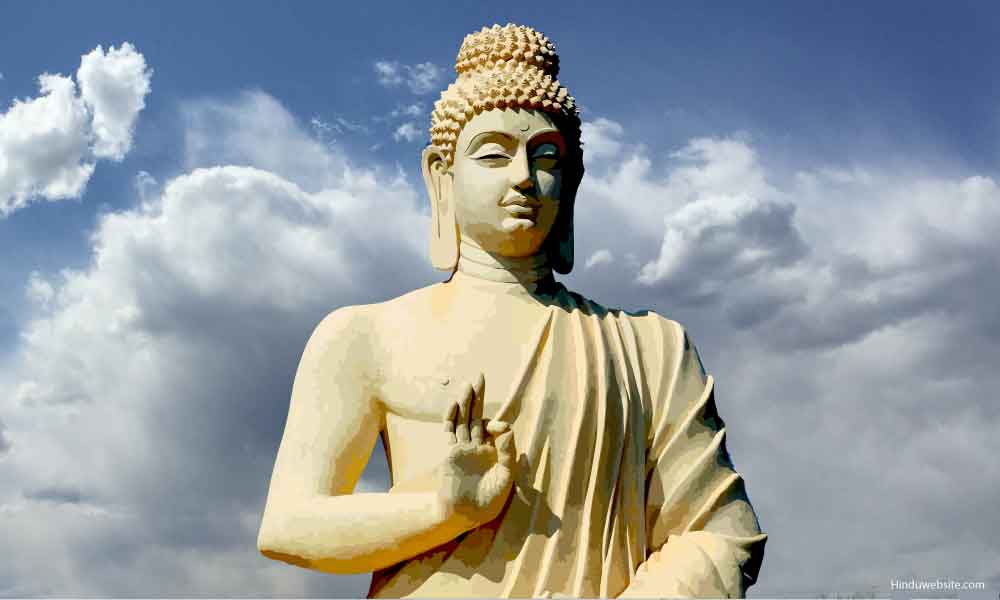
The Buddha declares that he teaches the Dhamma for the sole purpose of leading beings to freedom from suffering. If, moved by that teaching, we resolve to make an end of suffering, it is of prime importance that we understand the problem of suffering clearly in its true width and depth. If our grasp of the problem is too glaringly incomplete, our endeavors to eliminate it will also be incomplete, incapable of garnering the strength needed to yield fully satisfactory results.
When asked "Why end suffering?" the obvious answer is that one wishes to end suffering because it is the natural innermost urge of one's being to be free from affliction. However, in aspiring to the extinction of suffering, we should think not only of our own affliction, but also of the pain and sorrow we inflict upon others as long as we have not reached the perfect harmlessness of a passion-free heart and the clear vision of a liberated mind. If we regularly recollect the fact that, on our way through samsaric existence, we inevitably add to the suffering of others too, we shall feel an increased urgency in our resolve to enter earnestly the path leading to our own liberation.
The suffering we may inflict upon our fellow-beings includes first those cases where other beings become passive objects of our harmful actions. Our greed robs, impoverishes, deprives and detracts, soils and violates. Our hate kills and destroys, hurts and rouses fear. The turbid waters of our interfering ignorance flood and devastate the neighbor's peaceful shores; our misjudgments lead him astray and leave him in calamity.
Then there is a second and even more detrimental way our defilements may cause harm to others. Our evil or impure actions often provide in others a harmful response that entangles them still more in the meshes of their defilements. Our own greed increases the competitive greed of others; our own lust rouses in others lustful desires which might have slumbered had we not awakened them. Our own hate and anger provoke hostility in return, starting thus the endless round of mutual revenge. Our prejudices become infectious. By our own illusions we deceive others who, by believing them, lend them increased weight and influence. Our wrong judgments, false values and erroneous views, sometimes only casually expressed, are taken up and expanded by others into extensive systems of deceptive and perverted notions working untold harm on people's minds. In all these cases a good part of the responsibility will be ours. How careful we must be in what we speak and write!
A third way we may cause suffering to others is due to the limited and varying lifetime of our emotions. Our own love towards a certain person may die a natural death, while the person whom we loved still loves us, and thus suffers under our neglect. Or, in reverse, while the other's love for us has died, our own still lives and constantly urges him, encroaches upon his need for freedom, disturbs his peace and tears at his heart, causing him sorrow because he cannot help us. These are quite common situations in human relationships, and their consequences are often tragic. We feel their poignancy particularly strongly because no moral guilt seems to be involved, only the stern impassive law of impermanence impressing its painful stamp upon this scene of life.
Yet here too a moral principle applies, though it is a matter of definition whether we use the word "guilt." Understood rightly, the situation presents a case of lust, attachment or craving causing pain through lack of fulfillment. Looking at this case in this light, how clear will become the second noble truth: "Craving is the origin of suffering." And so too that seeming paradox: "From what is dear to us, suffering arises." When deeply contemplating that little specimen of life's suffering as presented here, we shall feel indeed: "Truly, this alone is enough to turn away from all forms of existence, to become disenchanted with them, to become detached from them!"
We still have not exhausted all the ways our own imperfections may draw others into the whirlpool of suffering. But it may suffice here to add a fourth and last point. Our own passions and ignorance, whether they involve another directly or only as an observer, may contribute to his harm by destroying his trust in man, his belief in high ideals, and his will to contribute to the fund of goodness in the world. Our own imperfections may thus induce him to become egocentric out of disappointment, a cynic or a misanthrope out of personal or impersonal resentment. Owing to our own imperfections, the forces of Good will again have been weakened not only in us, but in others too.
There are many who will reply to the Buddhist doctrine of suffering by saying: "We are well aware that happiness and beauty, joy and pleasure, have to be paid for by a certain amount of suffering. But we are willing to pay the price without grumbling, even the last price, death; and we think it is worth the price, and that it adds zest to our enjoyment." Before those who speak thus, we may place the facts indicated above, and ask them: "Are you aware that the price you are speaking of is paid not only by your own suffering, but also by the suffering of others? Do you think that it is right and fair for you to make others pay for your happiness? Will you still find 'added zest' if you look at your happiness from that angle?" And our partner — provided he is honest and noble-minded (and only then would it be worthwhile to speak to him) — will pensively say: "I did not think of that. It is true, I must not make others pay for my shortcomings. If I consider it unfair and ignoble to do so in my everyday dealings, should it not likewise be so in relation to these higher problems of life?" We may then be sure that we have planted the seed in his mind and conscience which will sprout in due time.
We return now to our initial line of thought. We have seen how our actions may affect others through many channels, how our shortcomings may drag others into suffering, entanglement and guilt. Thus our constantly accumulating responsibility for much of the suffering and unhappiness in the world should be an additional and powerful incentive for us to become holy and whole for the sake of others, too.
Certainly our own wholeness and health will not cure others, at least not directly and not in all cases. Our own harmlessness will only rarely keep others from doing harm. But by winning to spiritual health, we shall diminish at least by one the sources of infection in the world and our own harmlessness will lessen the fuel nourishing the fires of hate which ravage this earth.
By remaining conscious of the suffering we cause and the suffering we might prevent, we add two powerful motives to those already urging us to enter the liberating path: the challenging sense of manly responsibility, and the fullness of motherly love and compassion. These complementary ideals of duty and love, which we may call the male and the female principles, will help to keep us unswervingly on the path. Love and compassion towards those who might become the victims of our own imperfections will urge us to fulfill our duty towards them in the only way possible: by fulfilling our duty towards ourselves.
The above lines of thought are tersely expressed by a saying of the Buddha that is much too little known:
By protecting oneself, one protects others;
by protecting
others, one protects oneself.
— SN XLVII.19
In the light of the observations made above, these simple yet profound words of the Master will become still more translucent, charged with a magical power stirring the very depth of our being. By contemplating how our own defiled actions can have detrimental effects upon others, we shall still better understand that both statements in this passage are complementary: by guarding ourselves we are doing our best to protect others; wishing to protect others against the suffering we ourselves can cause, we shall do our utmost to guard ourselves.
Therefore, for our own sake and for the sake of our fellow-beings, we have to be watchful of every step we take. Only by a high degree of mindfulness shall we succeed. Thus it is said in the same discourse that the method of practicing that twofold protection is the firm establishing of mindfulness (satipatthana), which here too proves to be "the sole way" (ekayano maggo):
"I shall protect myself," thus the establishing of mindfulness has to be cultivated. "I shall protect others," thus the establishing of mindfulness has to be cultivated.
The same idea and method is expressed in a passage of the Buddha's "Advice to Rahula" (MN 61):
"After reflecting again and again, actions by deed, word and thought should be done... Before doing such actions by deed, word and thought, while doing them and after doing them, one should reflect thus: "Does this action lead to the harm of myself, to the harm of others, to the harm of both?" After reflecting again and again, one should purify one's actions by deed, word and thought. Thus, O Rahula, should you train yourself."
Again, it is said:
Thus, O monks, should you train yourselves: Considering one's own welfare, this is sufficient to strive untiringly. Considering the welfare of others, this is sufficient to strive untiringly. Considering the welfare of both, this is sufficient to strive untiringly.
— SN XII.22
These three sayings of the Master will illuminate each other. By reminding us of the right motives of our quest, and supplying us with the right methods for accomplishing our task, they will be infallible guides in treading the path.
Suggestions for Further Reading
- Buddhism - The Concept of Anatta or No Self
- Anatta or Anatma in Buddhism
- Anicca or Anitya in Buddhism
- The Buddha on God
- The Buddha on Avijja or Ignorance and on the Origin of Life
- The Eightfold Path Of Buddhism
- The Four Noble Truths of Buddhism
- Buddhism - Right Living On The Eightfold Path
- Handbook for the Relief of Suffering by Ajaan Lee
- Meat Eating or Vegetarianism in Buddhism
- The Agendas of Mindfulness
- Meditation on Anicca or Impermanence in Buddhism
- A Sketch of the Buddha's Life
- What is Ignorance And Cessation Of Ignorance
- The Meaning of the Buddha's Awakening
- Basic Breath Meditation Practice
- Buddha's Teachings on Kamma or Karma
- Affinities Of Buddhism And Christianity
- Death and Dying in Buddhism
- Buddhism In A Nutshell
- The Buddha on Ignorance or Avijja
- Dhamma for Everyone by Ajaan Lee Dhammadharo
- Advaita Vedanta and Buddhism
- Four Discourses of the Buddha on Everyman's Ethics
- The Five Aggregates A Study Guide
- The Healing Power of the Five Buddhist Percepts
- The Working of Maya or Illusion - A Buddhist Perspective
- Buddhism - Kamma (Karma) and its Fruit
- Buddhism - Kamma (Karma) A Study Guide
- Buddhism - Living the Dhamma A Practice Guide
- What Anatta or No-Self is All About
- Buddhism - The Middle Way
- The Buddhist Monastic Code, Dhamma-Vinaya
- Nibbana, or Nivranva in Buddhsim
- Why The Buddha Taught the Anatta or Not-Self Doctrine
- The Status of Women in Buddhist Societies
- Buddhism - The Practice of Loving-Kindness (Metta)
- Buddhism - Does Rebirth Make Sense
- Buddhism - Right Concentration
- Buddhism - Intentions and Nirvana
- The Round of Rebirth - Samsara
- The Role of Samavega in Buddhism
- The Chaos Theory and Nirvana in Buddhism
- A Christian's Journey Into Buddhism
- A Simple Guide to Buddhism
- Buddhist Cosmology - The Thirty one Realms of Existence
- Buddhism and the concept of renunciation
- Sankharas (Samskaras) in Buddhism
- Vedanta and Buddhism A Comparative Study
- Buddhism - Vipansana or Insight Meditation
- The Right Approach To End Suffering in Buddhismm
- Essays On Dharma
- Esoteric Mystic Hinduism
- Introduction to Hinduism
- Hindu Way of Life
- Essays On Karma
- Hindu Rites and Rituals
- The Origin of The Sanskrit Language
- Symbolism in Hinduism
- Essays on The Upanishads
- Concepts of Hinduism
- Essays on Atman
- Hindu Festivals
- Spiritual Practice
- Right Living
- Yoga of Sorrow
- Happiness
- Mental Health
- Concepts of Buddhism
- General Essays
Source: Originally published in The Vision of the Dhamma (Kandy: Buddhist Publication Society, 1994). Offered for free distribution via BuddhaNet by arrangement with the Publisher. Transcribed for Access to Insight from a file provided by BuddhaNet (BuddhaNet, P.O. Box K1020, Haymarket, NSW 2000, AUSTRALIA). Copyright © 1994 Nyanaponika Thera. Reproduced and reformatted from Access to Insight edition © 2004. BuddhaNet edition © 1996. For free distribution. This work may be republished, reformatted, reprinted, and redistributed in any medium. It is the author's wish, however, that any such republication and redistribution be made available to the public on a free and unrestricted basis and that translations and other derivative works be clearly marked as such.