
Buddhism - The Five Great Burdens of Life
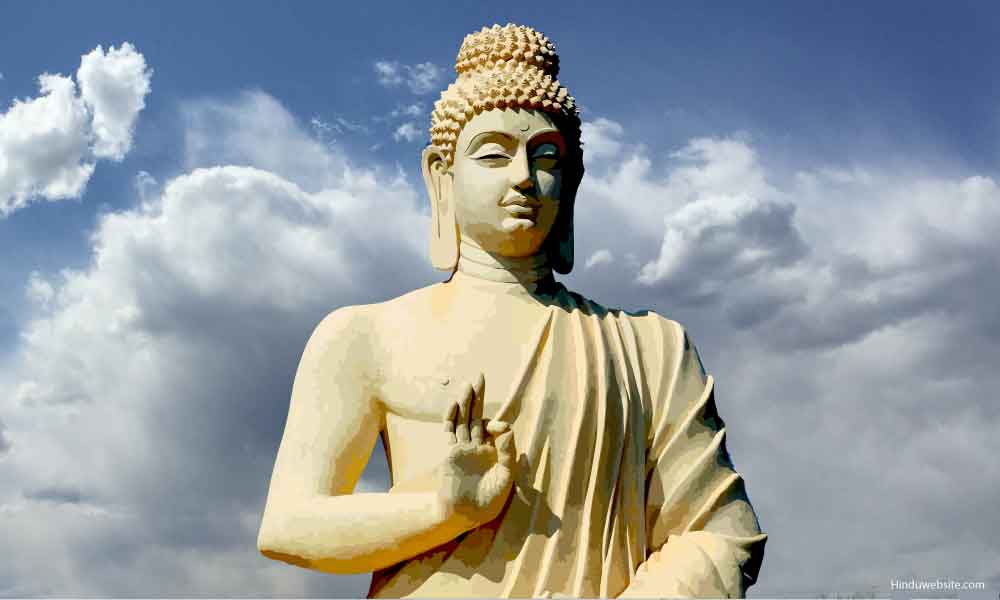
In Buddhism everything associated with our minds and bodies contributes to our suffering. The Buddhia recognized this and prescribed a pessimistic review of life to wake us up from our reveries and become mindful of the harsh realities of our existence. He wanted us not to be lost in a dreamlike existence oblivious to the suffering we cause to ourselves and others in the cycle of births and deaths. He therefore advised us to focus upon our own minds and bodies and understand how suffering would arise from the aggregates of our own bodies due to craving. That realization would lead to gradual inner awakening, dispassion, and detachment. The following short essay on the five khandas by Mahasi Sayadaw elaborates upon this theme. A mindful attention to the five aggregates in the body leads to the conclusion that every aspect of our personalities is either the cause or an effect of suffering and their rejection is the only solution to resolve it. Jayaram V
The Burden
In the womb, the five aggregates appertaining to him have to be cared for. What is the heavy burden? The khandhas are the heavy burden.
Who accepts the heavy burden? Tanha, craving, accepts the heavy burden.
What is meant by throwing down the burden? Annihilation of tanha is throwing down the burden.
Heavy is the burden of the five khandhas.
Acceptance of the burden is suffering; rejection of the burden is conducive to happiness.
When craving is uprooted from its very foundation, no desires arise. An old burden having been laid aside, no new burden can be imposed.
Then, one enters Nibbana, the abode of eternal peace.
— Discourse on the Bhara Sutta
How Heavy Is the Burden!
How heavy the burden is! When a man is conceived in his mother's The mother is to give him all necessary protection so that he may be safely born to develop well into a human being. She has to be careful in her daily pursuits, in her diet, in her sleep, etc. If the mother happens to be a Buddhist, she will perform meritorious deeds on behalf of the child to be born.
When the child is at last born, it cannot take care of itself. It is looked after by its mother and the elders. It has to be fed with mother's milk. It has to be bathed, cleansed, and clothed. It has to be carried from place to place. It takes at least two or three persons to look after and bring up this tiny burden of the five khandhas.
When a man comes of age, he will have to look after himself. He will have to feed himself two or three times a day. If he likes good food, he will have to make special efforts to get it. He must make himself clean, bathe himself, clothe himself. To tone up his body, he will have to do some daily exercise. He must do everything himself. When he feels hot, he cools himself and when he feels cold, he warms himself up. He has to be careful to keep up his health and well-being. When he takes a walk, he sees that he does not stumble. When he travels, he sees that he meets no danger. In spite of all these precautions, he may fall sick at times, and will have to take medicinal treatment. It is a great burden to tend to the welfare of his khandhas, the five aggregates of psycho-physical phenomena.
The greatest burden for a living being is to fend for himself. In the case of human beings, some have to work for a living starting from the age of twelve or thirteen, and for that purpose they have to be educated. Some can get only an elementary schooling and so they can get employment only as menials. Those who can get a good education are profitably employed in higher positions; but then they have to work day in and day out without any break.
But those who were born into this world with past good kamma do not feel the burden. A man born with the best kamma has been fed and clothed since childhood by his parents who gave him the best education as he came of age. Even when he grows to be a man they continue to give him all support to raise him up into a man of position who can fulfill his desires and wants. Such a fortunate man may not know how heavy the burden of life is.
Those whose past kamma is not good never know affluence. As children they know only hunger, not being able to eat what they would like to eat or dress in a way that they would like to dress. Now that they have grown up, they are just trying to keep their body and soul together. Some do not even have their daily quota of rice ready for the table. Some have to get up early to pound rice for cooking. Some do not even have that rice; and so they have to borrow some from their neighbors. If you want to know more about this life, go to poor men's quarters and make enquiries yourself.
— Discourse on the Bhara Sutta
Carrying the Heavy Burden
This body, one of the khandhas, is a heavy burden. Serving it means carrying the heavy burden. When we feed and clothe it, we are carrying the burden. That means we are servants to the aggregate of matter (rupakkhandha). Having fed and clothed the body, we must also see to it that it is sound and happy both in the physical and psychological sense. This is serving the aggregate of feeling (vedanakkhandha). Again, we must see that this body experiences good sights and sounds. This is concerned with consciousness. Therefore we are serving the aggregate of consciousness (viññanakkhandha).
These three burdens are quite obvious. Rupakkhandha says: "Feed me well. Give me what I like to eat; if not, I shall make myself ill or weak. Or, worse still, I shall make myself die!" Then we shall have to try to please it.
Then vedanakkhandha also says: "Give me pleasurable sensations; if not, I shall make myself painful and regretful. Or, worse still, I shall make myself die!" Then we shall have to hanker after pleasurable sensations to serve its needs.
Then viññanakkhandha also says: "Give me good sights. Give me good sounds. I want pleasant sense-objects. Find them for me; if not, I shall make myself unhappy and frightful. Eventually I shall make myself die!" Then we shall have to do its biddings.
It is as if all these three khandhas are perpetually threatening us. So we cannot help complying with their demands; and this compliance is a great burden on us.
The aggregate of volitional activities (sankharakkhandha) is another burden. Life demands that we satisfy our daily needs and desires and for that satisfaction we have to be active. We must be working all the time. This round of human activities gets encouragement from our volition prompted by desire. These activities make threatening demand on us daily, indicating that, if they are not met, trouble and even death would ensue. When human desires remain unfulfilled, they resort to crime. How heavy the burden of the sankharas rests upon us! It is because we cannot carry this load well upon our shoulders that we get demoralized into committing sin that brings shame upon us. Criminal offenses are committed mostly because we cannot carry the burden of sankharakkhandha well. When criminals die, they may fall into the nether world of intense suffering or they may be reborn as hungry ghosts or animals. Even when they are reborn as human beings, their evil actions will follow in their wake and punish them. They may be short-lived; they may be oppressed with disease all the time; they may face poverty and starvation; they may be friendless; they may be always living in danger or in troublesome surroundings.
The aggregate of perception (saññakkhandha) is also a great burden; because it is with perception that you train your faculties like memory to be able to retain knowledge and wisdom which can discern good from bad and reject from your mind unwholesome things produced by unpleasant sense-objects. If the demands of the mind for pleasant sense-objects are not met, it will take up only evil, which does nobody any good. Regrets and anxieties arise because we cannot shoulder the burden of saññakkhandha well.
For all these reasons the Buddha declared the five aggregates of clinging (upadanakkhandha) a heavy burden.
We carry the burden of our khandhas not for a short time, not for a minute, not for an hour, not for a day, not for a year, not for one life, not for one world, not for one eon. We carry the burden from the beginning of samsara, the round of rebirths, which is infinite. It has no beginning. And there is no way of knowing when it will end. Its finality can be reached only with the extermination of the defilements of the mind (kilesa), as we get to the stage of the path of the Noble Ones (arahatta magga).
— Discourse on the Bhara Sutta
Suggestions for Further Reading
- Buddhism - The Concept of Anatta or No Self
- Anatta or Anatma in Buddhism
- Anicca or Anitya in Buddhism
- The Buddha on God
- The Buddha on Avijja or Ignorance and on the Origin of Life
- The Eightfold Path Of Buddhism
- The Four Noble Truths of Buddhism
- Buddhism - Right Living On The Eightfold Path
- Handbook for the Relief of Suffering by Ajaan Lee
- Meat Eating or Vegetarianism in Buddhism
- The Agendas of Mindfulness
- Meditation on Anicca or Impermanence in Buddhism
- A Sketch of the Buddha's Life
- What is Ignorance And Cessation Of Ignorance
- The Meaning of the Buddha's Awakening
- Basic Breath Meditation Practice
- Buddha's Teachings on Kamma or Karma
- Affinities Of Buddhism And Christianity
- Death and Dying in Buddhism
- Buddhism In A Nutshell
- The Buddha on Ignorance or Avijja
- Dhamma for Everyone by Ajaan Lee Dhammadharo
- Advaita Vedanta and Buddhism
- Four Discourses of the Buddha on Everyman's Ethics
- The Five Aggregates A Study Guide
- The Healing Power of the Five Buddhist Percepts
- The Working of Maya or Illusion - A Buddhist Perspective
- Buddhism - Kamma (Karma) and its Fruit
- Buddhism - Kamma (Karma) A Study Guide
- Buddhism - Living the Dhamma A Practice Guide
- What Anatta or No-Self is All About
- Buddhism - The Middle Way
- The Buddhist Monastic Code, Dhamma-Vinaya
- Nibbana, or Nivranva in Buddhsim
- Why The Buddha Taught the Anatta or Not-Self Doctrine
- The Status of Women in Buddhist Societies
- Buddhism - The Practice of Loving-Kindness (Metta)
- Buddhism - Does Rebirth Make Sense
- Buddhism - Right Concentration
- Buddhism - Intentions and Nirvana
- The Round of Rebirth - Samsara
- The Role of Samavega in Buddhism
- The Chaos Theory and Nirvana in Buddhism
- A Christian's Journey Into Buddhism
- A Simple Guide to Buddhism
- Buddhist Cosmology - The Thirty one Realms of Existence
- Buddhism and the concept of renunciation
- Sankharas (Samskaras) in Buddhism
- Vedanta and Buddhism A Comparative Study
- Buddhism - Vipansana or Insight Meditation
- The Right Approach To End Suffering in Buddhismm
- Essays On Dharma
- Esoteric Mystic Hinduism
- Introduction to Hinduism
- Hindu Way of Life
- Essays On Karma
- Hindu Rites and Rituals
- The Origin of The Sanskrit Language
- Symbolism in Hinduism
- Essays on The Upanishads
- Concepts of Hinduism
- Essays on Atman
- Hindu Festivals
- Spiritual Practice
- Right Living
- Yoga of Sorrow
- Happiness
- Mental Health
- Concepts of Buddhism
- General Essays
Source: From the Thoughts on the Dhamma by the Venerable Mahasi Sayadaw selected from his discourses. Copyright © 1983 Buddhist Publication Society. For free distribution. This work may be republished, reformatted, reprinted, and redistributed in any medium. It is the author's wish, however, that any such republication and redistribution be made available to the public on a free and unrestricted basis and that translations and other derivative works be clearly marked as such.