
Change, Impermanence and the Yoga of Sorrow
Summary: This essay is about how change manifests in human life, how it creates sorrow and suffering, and how we can spiritually deal with the problem of change according to Hinduism
Change is the nature of life. As water is to the ocean or wind to the atmosphere, change is to our existence. The world is subject to change, so are we. Change is also the ubiquitous force of Prakriti. Without change, life would not have been possible upon earth. There would have been no evolution of intelligent life forms or consciousness. Civilization would not have happened, nor technological progress. Change made life and evolution possible upon earth. It ensured that the survival of the toughest of the species and made us highly adaptable. Through renewal, transformation and destruction, life continued upon earth and created the conditions in which we live today.
In the beginning, say the scriptures, there was nothing whatsoever. There was neither night nor day, neither the sun nor the moon nor the stars nor the earth nor the sky. There was one vast nonexistence or nothingness. Then one day from that mysterious, unmanifested deity, things emerged. The first to manifest was Isvara, the Lord of the Universe, also known as Saguna Brahman or Manifested Brahman. He was followed by other gods, many worlds, innumerable beings, wondrous objects, duality, objectivity, otherness, diversity, materiality, embodiment, and great forces of both light and darkness. All that created the otherness or the reflection of God.
Change is but a form of energy. It is a force in action. You may call it the weapon of Nature with which it creates its forms and regulates its resources. Desire is its womb and thought its guiding force. When its aims are realized and if the driving force is pure perfect, it brings forth the intended reality, or it will end up as another doomed experiment or failed expectation of Nature. Even in failure, change upholds the dynamics of impermanence The beauty or the tragedy of change is that it creates as well as destroys, gives as well as takes away and keeps our hopes and aspirations somewhere between the polarities of life.
Change is inherent to all aspects of mortal existence. It is the mother of mortality and the false god of the mortals. To them it offers hopes and of dreams but does not let them have anything forever. Time is the measure of change. Without time, it is difficult to even conceive the possibility or the idea of change. Change makes time measurable, and time makes change discernible. Both make the forward movement of the world possible. In the following discussion we will discuss how change manifests in human life, how it creates sorrow and suffering, and how we can spiritually deal with the problem of change according to Hinduism.
How change manifests
Hinduism acknowledges the impermanence of mortal life. Change is its root cause, and suffering is its effect. Change and impermanence are present in whole creation. However, they are more striking in the mortal world. They are part of Nature’s dynamism and its field of modifications. The world itself is destructible, and so are all the things, which make life here unpredictable, uncertain and a great source of suffering. All beings are subject to the modifications of birth, aging, sickness and death. Through them, Nature conserves its energies and accomplishes its aims. Change and impermanence manifest in the mortal world or the field of Nature because of the following factors.
1. Cause and effect: Changes manifest when causes become effects or when effects become causes to produce further effects or when existing causes are replaced by other causes or when some causes are suppressed. When circumstances change, the same cause can produce different results, which make impermanence even more unpredictable.
2. Dualities and pairs of opposites: The dualities and pairs of opposites are two sides of the same reality. When one is absent or weakened, the other appears. For example, heat can become cold and vice versa. Similarly, pleasure can become pain or pain can become pleasure when circumstances change.
3. Three sources of change: Three factors contribute to change and thereby to transience. They are, internal causes, external causes and acts of God or fortuitous causes. Each may have a bearing upon the other. For example, what you do or say may influence how other may treat you or respond to you. What others do may also influence your thinking and behavior.
4. Five change agents of creation: God brings forth the worlds and beings through five transformative powers. They are also responsible for change and continuity in our world. They are creation, preservation, concealment, expression, and destruction. All the changes that happen in our world involved one or more of these five processes. We too have them, but they are limited.
5. Three types of change: Change may manifest in the world from causes through projection, superimposition or transformation. The projection may be real or illusory as in case of images on a film screen. The best example of superimposition is when the sun is covered by clouds or when our minds are clouded by delusion or Maya. The best example of transformation is when a seed becomes a plant or a tree.
6. Karma and change: In the mortal world karma is a powerful agent of change and continuity. Every action has consequences, which affect our lives and the order and regularity of the world. Karma is continuous. Change arises from both individual actions and our collective actions. Therefore, nothing in this world is free from change and impermanence.
7. The powers of Prakriti: When natural objects (Prakriti) in God’s creation undergo transformation due to the powers and activities of Nature, they become distorted (vikriti) and subject to modifications. Nature has many supernatural powers (siddhis) such as making things appear or disappear, long or short, weak or strong, gross or subtle, light or dark, etc. They create the illusion of diversity and the impermanence and keep the worlds and beings in a flux.
Change and sorrow
Change and impermanence are responsible for suffering in the mortal world. We experience suffering because we are tossed up and down in the ocean of life by the waves of uncertainty and instability, whereby we experience afflictions and modifications in our minds which keep us in a state of turmoil. In the spiritual sense, suffering not only means sorrow but all modifications and states of duality which we experience and which disturb our minds and bodies and wear us out. Every change that manifests in our lives leaves its own mark for the better or the worse. Some changes are good but we cannot easily ascertain how they are going to affect our lives. Some changes create a lot of suffering especially when they expose us to unknown risks and adverse situations.
Suffering is caused not only by the changes that happen to us but also by how we respond to them according to our abilities, desires, beliefs and expectations. Thus, the same situation may produce different intensities of suffering in different people. We experience suffering mainly from two situations, which are directly related to our likes and dislikes or attraction and aversion. One is when we have to deal with things or situations which we dislike and the other is when we are separated from the things or situations which they dislike.
Thus, separation or union with our likes and dislikes, caused by our desires, expectations and attachments, amidst transience, creates or aggravates our suffering. There is a lot of truth in the saying that expectations reduce joy. Our scriptures state that our suffering arises from desires. We desire for things because we have to satisfy our needs and experience fulfillment. Desires in turn arise from our gunas, which are difficult to control. Hence, although we are chiefly responsible for our suffering, we are rarely in control of it and cannot easily resolve it.
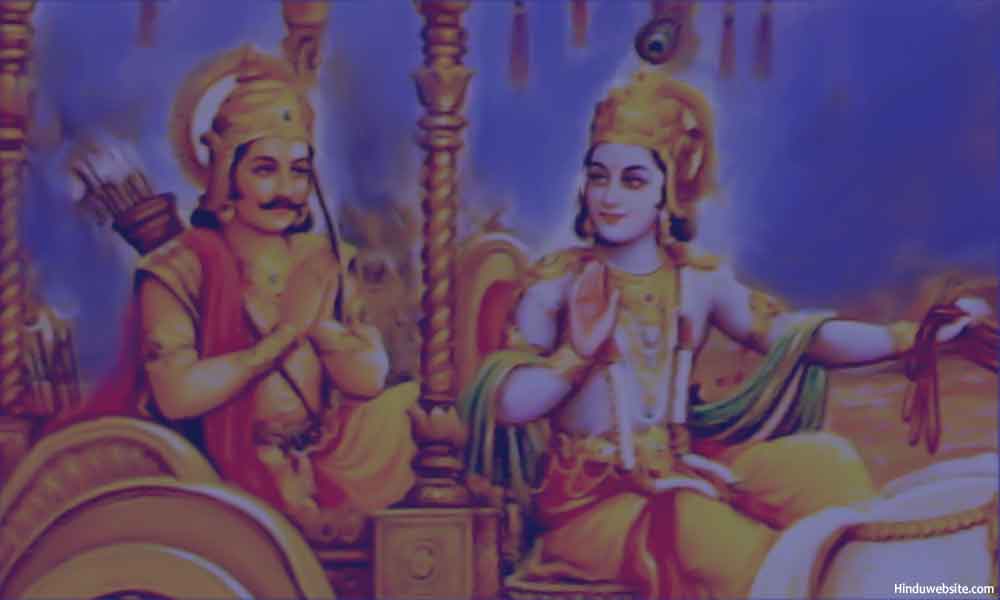
For example, Arjuna suffered from sorrow in the battlefield because he felt that his actions were going to harm his reputation and the wellbeing of his family. He used his own reasons to rationalize his argument and his exaggerated fears. In intense situations we do the same. We exaggerate our fears and rationalize our actions. We respond to the prospects of change according to our fears and expectations. We desire change when it may not be good for us or we may resist change when it may be beneficial. Since we cannot correctly predict the outcomes or estimate situations, we are bound to make mistakes and experience anxiety and uncertainty in an ever-changing world. We can avoid a lot of it if we cultivate equanimity, sharpen our intelligence and gain control over our emotions and responses. It is where spirituality comes to our rescue and gives us the tools we need to deal with it.
Coping with change through spiritual practice
The scriptures of Hinduism such as the Upanishads and the Bhagavadgita suggest many solutions to deal with the problem of existential suffering. They are not easy to practice because you need a spiritual bent of mind and faith in the idea of liberation. Some of them are meant to resolve or alleviate suffering, and some to tolerate and endure it with peace and fortitude. Since we have limited control over what happens, the solution to the problem of suffering lies mostly within yourself. The following are a few important solutions found in Hinduism which will help you cultivate the right attitude and temperament to deal with suffering.
1. Overcoming desires and attachment
We seek or resist change because of our desires and attachments. When our desire-ridden actions do not produce expected results, we experience suffering. Desires are caused by the repeated activity of the senses as they induce in us attraction and aversion, which in turn create attachments. Hence, our scriptures suggest the withdrawal of the senses and the practice of detachment and renunciation to control our desires and thereby our suffering.
2. Transcending the gunas
Desire ridden actions are induced by gunas namely sattva, rajas and tamas. They are largely responsible for our suffering. They can be suppressed through austerities and transformative practices such as the rules and observations (yamas and niyama). When the gunas are transcended or controlled, a person becomes contended. He also discerns clearly the causes and effects as his mind becomes pure. Therefore, he is no more troubled by what happens or does not happen.
3. Overcoming duality
The duality of attraction and aversion to the conditions of life is one of the major sources of suffering. The existence of dualities is also the basis of change and suffering, as things transform from one state of duality to another, or from one condition to another. We cannot control the dualities of things as much as we can control our responses or attitude towards them. Hence, our scriptures recommend the need to cultivate sameness or equanimity towards all conditions and dualities or pairs of opposites so that we can remain calm amidst chaos.
4. Developing discernment
Discernment (vivekam) gives us the ability to identify the causes that are responsible for them and thereby deal with them. We cannot discern easily because we are subject to ignorance, egoism and delusion. Discernment arises from intelligence (buddhis). If the mind is pure, intelligence will be pure and vice versa. Hence, our scriptures suggest the need to cultivate purity or sattva. With discerning wisdom, we can avoid many mistakes and errors in our thinking and judgment, and thereby avoid or minimize the suffering which may arise from them.
5. Acquiring right knowledge
Ignorance and delusion are the chief causes of suffering. When we do not know the causes of suffering, we are bound to repeat the same mistakes and the same patterns of behavior, which prolong our suffering. With right knowledge, we can identify the causes of our suffering and find right solutions. Knowledge comes from learning and observation. To acquire right knowledge, you must train your mind and senses to see clearly and learn the secrets of liberation from established sources such as the scriptures, learned masters and established institutions.
6. Cultivating faith and devotion
We do not have complete control over our lives, nor can we always find right solutions to our problems. Certain changes in our lives are beyond our knowledge and control, to which we may never find solutions. Further, we do not know how life may turn out to be. Hence, it is better to cultivate faith, humility and devotion to God and pray to him, seeking his protection and intervention. It also gives us the spiritual strength to face the problems of life with equanimity and courage.
7. Helping others
Suffering is ubiquitous in the world. Everyone suffers, including the tiniest creature. Hence, the best that we can do is not to be a source of suffering and misery to others. Violence and cruelty are the major causes of suffering in our lives. Therefore, in Hinduism nonviolence is considered the highest virtue because all other virtues lead to it. According to the Bhagavadgita nonviolence means not disturbing others and not being disturbed by others. It is best practiced through self-control, compassion, dutifulness, selflessness and sacrificial service as an offering to God.
Conclusion
All the beings in the universe have varying degrees of ability to deal with the problem of change or to change their circumstances. Even among humans, some are more capable than others. However, most of us learn to deal with change and impermanence as part of our survival. We not only view them as problems and threats but also as opportunities to learn and grow. To the extent we learn and adapt to change, we succeed in our lives or experience peace and stability. Unfortunately, we are also subject to several limitations which make our lives rather unpredictable and prone to suffering. When life springs its own surprises upon us, we fail to respond properly. At times, our thinking and judgment also become clouded by ignorance, fear, anger or irrational beliefs, which makes the task even more difficult.
When Arjuna entered the battlefield and saw both the armies, he had a similar problem. He was overcome by fear, worry and anxiety as he thought about the consequences of the war. He was unsure what changes his actions would create in his life and what destruction it would cause to him and his family. He was certain that it was not going to be a positive experience. Hence, he experienced sorrow and suffering. We face many difficult situations in life. Each time it happens, we find ourselves in the same situation as Arjuna and experience confusion and suffering as our actions may harm and hurt others or leave their permanent scars.
The world is a battlefield in which the forces of change wage a constant battle with those which are opposed to it. At each turn in our lives, we have to decide where we want to stand in that battle, whether to embrace change or oppose it. We do not always choose wisely since we lack discernment and right knowledge. We do not always know which changes are good for us or for others. Hence, as the Bhagavadgita suggests, it is better to leave the outcome of our actions to God and do our part without desires and expectations. This time-tested method has been in practice for a long time, which Hinduism recommends to its followers as a solution to the yoga (state) of sorrow or the problem of suffering.
Suggestions for Further Reading
- The Bhagavadgita On The Problem Of Sorrow
- The Yoga of Sorrow, Change and Suffering
- The Many Faces of Sorrow and Suffering
- The Causes of Sorrow in Human Life
- Suffering from a Hindu Perspective
- Suffering According to the Bhagavadgita
- When fear comes kiss its face
- Dealing with Adversity
- The Samkhya Philosophy and 24 Principles of Creation
- The Bhagavadgita On The Problem Of Sorrow
- The Concept of Atman or Eternal Soul in Hinduism
- The Practice of Atma Yoga Or The Yoga Of Self
- The Problem of Maya Or Illusion and How To Deal With It
- Belief In Atman, The Eternal Soul Or The Inner Self
- Brahman, The Highest God Of Hinduism
- The Bhagavad Gita Original Translations
- The Bhagavadgita, Philosophy and Concepts
- Bhakti yoga or the Yoga of Devotion
- Hinduism And The Evolution of Life And Consciousness
- Why to Study the Bhagavadgita Parts 1 to 4
- The Triple Gunas, Sattva, Rajas and Tamas
- The Practice of Tantra and Tantric Ritual in Hinduism and Buddhism
- The Tradition Of Gurus and Gurukulas in Hinduism
- Origin, Definition and Introduction to Hinduism
- Hinduism, Way of Life, Beliefs and Practices
- A Summary of the Bhagavadgita
- Avatar, the Reincarnation of God Upon Earth
- The Bhagavadgita on Karma, the Law of Actions
- The Mandukya Upanishad
- The Bhagavadgita On The Mind And Its Control
- Symbolic Significance of Numbers in Hinduism
- The Belief of Reincarnation of Soul in Hinduism
- The True Meaning Of Renunciation According To Hinduism
- The Symbolic Significance of Puja Or Worship In Hinduism
- Introduction to the Upanishads of Hinduism
- Origin, Principles, Practice and Types of Yoga
- Hinduism and the Belief in one God
- Essays On Dharma
- Esoteric Mystic Hinduism
- Introduction to Hinduism
- Hindu Way of Life
- Essays On Karma
- Hindu Rites and Rituals
- The Origin of The Sanskrit Language
- Symbolism in Hinduism
- Essays on The Upanishads
- Concepts of Hinduism
- Essays on Atman
- Hindu Festivals
- Spiritual Practice
- Right Living
- Yoga of Sorrow
- Happiness
- Mental Health
- Concepts of Buddhism
- General Essays