
Symbolic Significance of Numbers in Hinduism
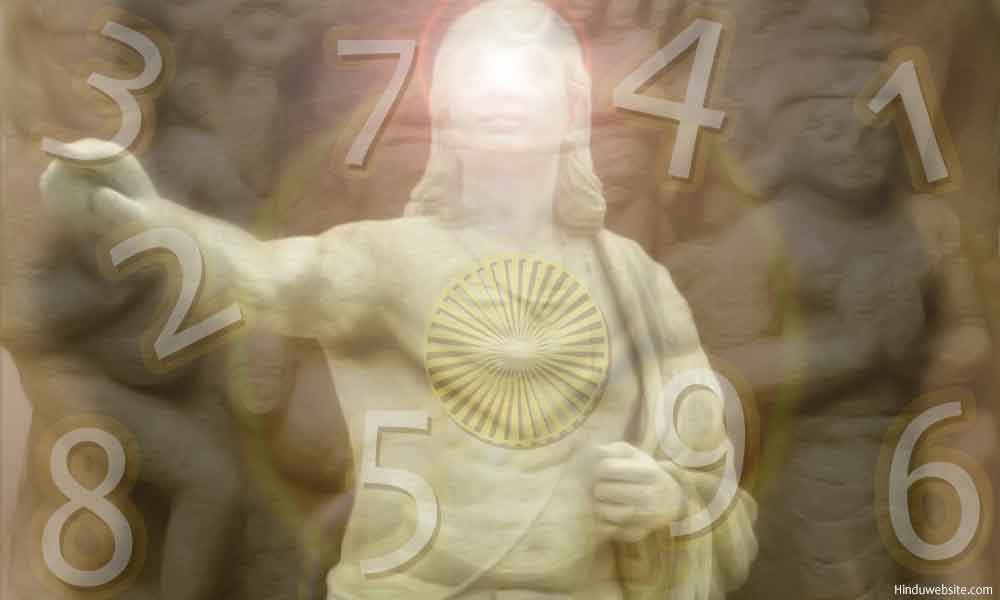
"The ingenious method of expressing every possible number using a set of ten symbols (each symbol having a place value and an absolute value) emerged in India. The idea seems so simple nowadays that its significance and profound importance is no longer appreciated. Its simplicity lies in the way it facilitated calculation and placed arithmetic foremost amongst useful inventions." Laplace, a French mathematician.
This essay attempts to explain the symbolic significance of numbers from one to ten from a Hindu perspective and their association with some important concepts and divinities of Hinduism. It also explores how ancient Indians used numbers to organize their knowledge about creation and systematically ascertain the order of divinities in a complex pantheon to envision a grand view of Hindu cosmology from a numerical perspective.
Most of the information this essay provides is a product of this writer's intuitive awareness and personal study and may not be found elsewhere. This article presents the idea that numbers were used in religious ceremonies and rituals as symbols of divinities and their energies. The ancient seers of India intuited the play of numbers in the order and regularity of the world. It was an astounding discovery for their times, which is now confirmed beyond doubt by modern science.
In ancient India, people lived very religious lives. They prayed and worshipped several divinities in whom they had faith. They believed that the purpose of human life was to achieve liberation from the cycle of births and deaths and ascend to sunlit worlds. They did not believe in withdrawing from life or abnegation of duty as a necessary condition to pursue God. Enjoyment of life and material wealth were important goals of human life but not the ultimate. The highest aim was moksha or liberation from the delusions and distractions of life through spiritual discipline and self-surrender. The best way to achieve it was through a divine-centered life, where every activity was meant to achieve inner purity and experience God as the witness, guardian, guide, and rescuer.
They reflected this attitude in many aspects of their lives. Whether it was the practice of a profession, the study of the Vedas, the tending of the cattle, or engaging in some mundane affair, they sought the intervention of divinities through the practice of dharma. They reflected the same attitude in using the numbers; and believed them to be symbols, each having a potency and symbolic significance of its own. They thought the numbers could be used in the practice of religion and spiritual discipline to reference the divinities and their attributes.
To the intuitive seekers of Brahman, the numbers offered many opportunities to meditate upon and realize the hidden symbolism. In the following paragraphs, we will explore the symbolic significance hidden in the numbers from zero to ten. And in doing so, we will also realize why the decimal system and the use of present-day symbols for numbers originated in ancient India
Zero, Shunya
Zero is a numerical or symbolic representation of Nirguna Brahman or the Brahman, who is without a form and qualities. Nirguna Brahman is an eternal mystery. Very little is known about him. He is the known unknown. So is zero. No one knows for sure what this number is, what it represents, and what its true value is. What we know about it are but assumptions. The physical laws of the universe do not apply to zero. It stands as a bridge between the physical and the metaphysical realms and between reason and faith. It is indefinable and can be explained only in terms of "not this" and "not that.” It is indivisible, without form, without qualities, without a beginning, and without an end.
It is difficult to say whether it exists or not, whether it is a number or not because no one knows for sure. It is a void where nothing else exists but itself. Finite and infinite, the first and the last, the smallest and so also the largest of all, it could neither be destroyed nor created. You can find it everywhere, hidden in every other number. Any number you try to multiply with it becomes zero, but if you know the right way, you can enhance the value of a number infinitely. Zero is thus a very apt symbol of the primal Being. No other symbol in our knowledge can represent Brahman with such clarity and simplicity.
One, Eka
One is a symbolic representation of Saguna Brahman or Brahman with qualities and form. Saguna Brahman is the awakened Brahman who projects the worlds and the entire creation out of himself. He is also called the cosmic soul or Hiranyagarbha. He creates the worlds and beings by his will and dynamic power. He is the creator of Brahma, Vishnu, Siva, and the rest of the gods. He is referred to as tadvanam. He is beyond the grasp of the senses and the mind. He is bliss consciousness who seekers in a state of samadhi experience. By realizing him, everything is realized. By knowing him, everything is known.
Like Saguna Brahman, one is the first to manifest, somehow mysteriously, from the equally mysterious zero. It is not zero that creates other numbers, but the number one. Just as Brahman exists everywhere in his entire creation, the number one exists in every other number. The value of other numbers increases significantly when you bring the number to their forefront. It is like placing God before everything else in our daily lives.
As a subjective reality, one also symbolizes atman, the individual soul. Atman is Brahman in its microcosmic aspect. Atman is the number one hidden in every other number. It is the essence of the eternal One. Hindu scholars are not unanimous about the relationship between Atman and Brahman. All agree that both share the same essence and bliss consciousness, but disagree when discussing their origin and relationship. According to monistic (Advaita) schools, Brahman and Atman are the same reality, and in the end, Atman becomes Brahman. The dualistic (Dvaita) schools believe that the two are distinct and that though they are the same, in essence, they never unite but remain distinct forever. According to them, an individual soul may achieve self-realization but would continue to exist eternally as a separate self.
The number one may not have the range of zero in symbolizing Brahman, but it has many of the latter’s qualities. Like Saguna Brahman, who is the creator of all empirical reality, the number one is truly the creator of all other numbers. As in our creation, the one becomes many by multiplying itself and then resides in them. It is also different from zero because it has the quality or value of one. However, it Is not eternal in the true sense of the word because, like Saguna Brahman it dissolves into zero or nothingness when the former is withdrawn into the latter.
The number one also symbolizes the state of nonduality, the oneness of existence hidden in all of creation beyond the veil of delusion. The oneness of being is also the subjective state of both Brahman and Atman, in which there is no experience of distinction and separation between the known and the knower, the object and the subject, the self and the non-self. One alone exists by oneself, illumined by the self, immersed in the self, permanent, unchanging, and unmoving. It is a state in which one is, the state of "I am I am" in which "I" transcends the ego to become "I" alone. Does the Self know that it exists? Perhaps not, except in a state of duality.
Two, Dvi
The number two is a symbolic representation of the state of duality, which we experience objectively through our minds and the senses. It also symbolizes Purusha and Prakriti (God and Nature), Brahman and Atman as two separate entities, the knower and the known, the subject and the object, the doer and the deed, the self and the not-self, the bhutatman (ego or physical self) and the antaratman (inner Self), Siva and Shakti, Vishnu and Lakshmi, Brahma and Saraswathi, the earth and the sky, cause and effect, the day and the night, the heaven and the hell, the good and evil, the right and wrong, knowledge and ignorance, higher knowledge and lower knowledge, life and death, illusion and illumination and mortality and immortality.
Our suffering and bondage to ignorance and mortality is symbolically represented as Adam and Eve being cast away from heaven in the Biblical story of Genesis and philosophically explained as bondage to ignorance and earthly life in our Vedanta. The creation of two from one was the wish of the Self because it wanted to amuse itself by not being alone. From that single seed of thought ensued all creation as ripples in a pond in his own waters. The emergence of two out of one is the cause of our existence and also our problems of mortality and suffering. It is a puzzle or paradox we must resolve by finding our source either by attaining the one (self-realization) or the zero (nirvana).
Three, Triah
In the grand scheme of creation, one is God, and the second is Prakriti, or nature. Together they manifest the rest of the creation. One of the things that they manifest together is Rtam, which is recognized as the universal rhythm or order and regularity. Rtam is the underlying vibrations pervading the whole creation. It manifests itself in many ways as the orderly progress of time and events.
Creation cannot be a chaotic and disorderly process. It is a projection of God, who is a perfect Being, complete in all respects. It cannot be imperfect because imperfection cannot come out of perfection. Any imperfection or failure we may discern in creation is God's willful concealment of perfection for a reason, part of a grand design, a universal Rtam or order of things, which we may not be able to understand because of our limited faculties.
We can see this regularity and orderliness (Rtam) in every aspect of creation, from the atoms to the galaxies, from the DNA to the ecosystem, from the heavens to earth, and within our minds and bodies, manifesting itself as the orderly progression of time and events, of arrangement of things and energies and as beauty, symmetry, regularity, and harmony. It is the dance of Siva in his cosmic form. Despite the seemingly chaotic process of creation and manifestation of the universe, we can discern in it an orderly progression of events, a certain rhythm, and predictability of movement and constitution of objects and beings.
And what is the first manifested Rtam or rhythm of the universe? It is the universal order of creation, preservation, and destruction. And who regulates it? The Trinity of gods, Brahma, the creator; Vishnu, the preserver and Siva, the destroyer. Their manifestation itself is an expression of Rtam, and they are also the highest and ultimate upholders of universal Rtam.
The number three is also a symbolic representation of the Trinity. The Trinity gods have one aspect of Purusha (number one), one aspect of Shakti (number two), and one aspect of their own (number three). Their third aspect is a combination of their functions, individual attributes, and place (Rtam) in the universal scheme of things. Although they are the absolute Brahman in their highest aspect (since the one and two are hidden in them), their functions and roles differ.
Brahma is the creator. He is Prajapati, the lord of beings. He creates beautiful forms through his divine mind. In him, divine will and energy work in perfect harmony to manifest divine intention instantaneously. Vishnu is the preserver. He maintains the Rtam (order, harmony, rhythm, and regularity) of the universe by helping and nourishing it. He ensures that the planets and heavenly objects stay their course and that the progress and process of creation are in harmony with the divine will. Siva is the destroyer. He ensures the Rtam of the universe by cleaning, purifying, destroying, and transforming. He destroys whatever is moving out of the course or in conflict with the Rtam. He facilitates the renewal and regeneration of the worlds and their beings and helps them in their inward journey back to their source. In the end, he dissolves everything into the vast unknown (zero).
We find reference to the number three frequently in Hinduism. The number symbolizes Siva because he is the third in the Trinity. He has three eyes (trinetra), carries a three-pronged weapon called Trishul or triayudha (trident), brings forth the triple gunas (triguna) of sattva, rajas, and tamas, and also destroys them through his grace (trident). He removes the sins of three births (tri janma papa samhara). He has three braids of hair (trijata). He is known as triloka and trikala jnani, or the knower of three worlds (higher, lower, and the middle) and three times (past, present, and future).
 The
number three also symbolically represents AUM in its vocative and
diagrammatic aspects. The Symbol of AUM consists of three curves
representing the three states of consciousness. The sound of AUM
has three hidden sounds, and the word AUM has three letters. Together
they symbolize Absolute consciousness (zero). The Mandukya Upanishad
explains this symbolism in great detail. The lower curve in the
symbol of AUM represents the outward-moving wakeful consciousness
(prvritti). The middle one represents the inner moving dream consciousness.
The upper curve represents the silent consciousness of the deep
sleep state, a condition of oneness and peace in which all desires
and dreams subside. The semi-circle above the upper curve represents
the turya or the pure consciousness of Atman itself. It is neither
inner nor outer, neither consciousness nor unconsciousness. Self-luminous,
illuminating everything else, it exists alone and beyond. These
three states of consciousness are also represented by the three
sounds A, U, and M. When we utter the word AUM as one word, it symbolizes
the fourth state of supreme consciousness.
The
number three also symbolically represents AUM in its vocative and
diagrammatic aspects. The Symbol of AUM consists of three curves
representing the three states of consciousness. The sound of AUM
has three hidden sounds, and the word AUM has three letters. Together
they symbolize Absolute consciousness (zero). The Mandukya Upanishad
explains this symbolism in great detail. The lower curve in the
symbol of AUM represents the outward-moving wakeful consciousness
(prvritti). The middle one represents the inner moving dream consciousness.
The upper curve represents the silent consciousness of the deep
sleep state, a condition of oneness and peace in which all desires
and dreams subside. The semi-circle above the upper curve represents
the turya or the pure consciousness of Atman itself. It is neither
inner nor outer, neither consciousness nor unconsciousness. Self-luminous,
illuminating everything else, it exists alone and beyond. These
three states of consciousness are also represented by the three
sounds A, U, and M. When we utter the word AUM as one word, it symbolizes
the fourth state of supreme consciousness.
The number three symbolizes many other aspects of creation:
- the triple qualities of sattva, rajas, and tamas,
- the three layers of nature, light, fire, and darkness,
- the three states of being immanent, transcendent, and the absolute,
- the triple division of time, past, present, and future,
- the three periods of the day, morning, noon, and evening,
- the three worlds of bhur, bhuva, and the swaha, or the three worlds of heaven, earth, and the hell,
- the three phases of life, young age, middle age, and old age,
- the three paths to self-realization, the path of knowledge, the path of love, and the path of action,
- the three types of breath, the in-breath, the out-breath and the held breath,
- the three steps of Vishnu in his incarnation of Vamana,
- the mystic syllable AUM consisting of three parts,
- the three duties of a Brahmin sacrifice, study of the Vedas, and charity,
- triangle or the female genital organ,
- the triple control of thought, word, and deed,
- the three staves of a sannyasin or ascetic
- the control of body, mind, and action by an ascetic
- and the three lines of ash the Saivites wear on their foreheads.
Buddhi is the third tattva. Buddhi is rationality, the discriminating power whereby we know right from wrong, the appropriate from the inappropriate.
Four, Chatur
While Rtam may bring about the orderliness of creation, by itself, it may not be effective in maintaining order in the affairs of self-willed beings. At some stage in the evolution of beings, they develop their own egos and awareness of a false sense of self. Driven by their desires and sensory inputs, deluded by maya, these beings would be driven much deeper into darkness and delusion unless they are presented with a system of values and moral percepts which would remind them of their primary purpose in their lives. By following it consciously and judiciously, they can reverse their outward journey and turn inward to their source.
Thus, Dharma becomes the fourth most important aspect of creation. Dharma is a system of religious and moral laws brought to the mortal world by gods to assist beings in their journey toward salvation. The aim of dharma is twofold: to preserve divine order and to help the beings. All the divinities in the cosmos are created to uphold dharma. We see four hands for most gods in Hindu iconography because they enforce dharma, symbolically represented as the number four. The divinities we know in Hinduism are but a small percentage of a vast multitude of gods operating in higher planes and are largely unknown. Some of them descend into our plane for a brief period for a specific purpose and then withdraw forever, leaving behind a brief reference in a long lineage of gurus and schools of thought.
Dharma is eternal (Sanatana) because whatever may be the time and space, it will always be the same. It is manifested at the beginning of creation and withdrawn at the end. Because it is not created, we always receive it as bits and pieces of revelation. What is revealed is only a part of a much greater dharma, and no one knows its full extent except Brahman himself. It is revealed by the divine intent to help the beings and guide them on the righteous path. And most important of all, it can be revealed only to those who are qualified to receive it by virtue of their knowledge and their inner purity. Dharma declines from time to time to the extent that beings move out of their paths and disturb the Rtam. Whenever there is disorder and decline of dharma, Vishnu reincarnates as a mortal being upon the earth and restores order.
The number four is thus a symbolic representation of Sanatana dharma which is the traditional name for Hinduism. It is the solution to the problem of ahamkara or ego, the fourth in the 24 tattvas (principles) of creation. Dharma has four legs. In each Maha yuga or epoch, it progressively loses one leg. Thus, in the first epoch, dharma walks on four legs, in the second on three, in the third on two, and in the last, which is the current epoch, on only one. The world will end when the fourth leg is completely lost. The Vedas, which constitute the Dharma are also four in number. The Vedas are eternal. Brahma revealed them to his mind-born sons. Lord Vishnu is their protector and preserver. And Lord Siva helps us to understand them by destroying our ignorance.
In Hinduism, the number four is also associated with many other concepts.
- The aims of life (purusharthas) are four, dharma (righteousness), artha (wealth), kama (desire), and moksha (salvation).
- The stages (ashrama) in life are four: the age of studentship (brahmacharya), the age of the householder (grihastha), the age of retirement (vanaprastha), and the age of ascetic (renunciation).
- The varnas or castes are four, based on the four levels of human activity: the pursuit of knowledge, the pursuit of selfless actions, the pursuit of selfish actions, and the pursuit of ignorance.
Besides these, we also hear of the following
- the four divisions of an army,
- the fourth great element (mahabhuta), which is identified as water,
- the four faces of Brahma,
- the four quarters of the earth,
- the four hands of gods and goddesses and
- the four means of accomplishment (friendship, charity, conflict, and aggression).
Five Panchan
Five is a symbol of the physical body and the planet Earth. The earth is the fifth element of the five great elements (mahabhutas). Ether (akasa) is the first element, the essence of God himself. Omnipresent, it has always been there and never created. None of the senses can reach it, including the mind. Air (vayu) is the next element. Closer to ether in some respects but still within reach of most sense organs. Agni (fire) is the third element. Similar to vayu in some respects, but its body (flames) has color, heat, and smell. Both vayu and agni belong to the mid-region (bhur), while ether belongs to the higher region (suva). Water (jalam) is the fourth element. It is the most important element as far as the earth is considered because life upon earth originated from it. Earth is the fifth element. It is the densest and the grossest of the five.
Our earthly bodies are mostly composed of earth and water, which are the densest of the five. Hence, we have limitations in movements, awareness, and experience. The physical body is called annamaya kosa because it is created entirely by food (annam). It is our outermost sheath and depends exclusively upon the senses for nourishment and contact with sense objects. Because we are gross, we identify with our gross bodies and depend upon food and water for our survival and existence. Ascetics who transcend the limitations of the body through austerities and spiritual discipline can survive without food for long because they know how to nourish their bodies through other means of taking in the energies of other elements.
The earth-body is, therefore, wedded to the senses. The senses are five in number: skin, eyes, nose, ears, and tongue. These are considered to be the five external or physical senses and the five means to know. We function through them to interact with the objects of our world. Corresponding to the five external senses are the five organs of action or karmendriyas, hands, legs, genitals, larynx, and anus. These five perform the five functions of grasping, walking, generating, speaking, and excreting. They are the five means to do. In addition, there are five subtle or internal sense organs known as tanmantras: touch, form, smell, sound, and taste. They are the five means to experience.
Human beings have all the external and internal sense organs, but subtle beings will have only the subtle senses or the tanmatras, which means they can experience what we experience but without dependence on the sense organs and without the means to know or do. People who practice asceticism and yoga can awaken their subtle senses and experience the world through their extraordinary siddhis or supernatural powers without the need to know or do.
Number five is thus a symbolic representation of the earth and the earthy body. We also find that the number is being associated with many other concepts of Hinduism.
- In Saivism, we have the fivefold manifestation of Paramasiva or Parameswara (the primal being): Brahma (creator), Vishnu (preserver), Rudra (destroyer), Maheswara (concealer), and Sadasiva (revealer).
- In Vaishnavism, we have the five aspects of Vishnu as Isvara: para (transcendent), vyuha (emanating), vibhava (incarnating), antaryami (immanent), and archavatara (consecrated image).
- In the Vedanta, we have the five qualities of the Supreme Being (Saguna Brahman): truth (satyam), knowledge (jnanam), infinity (anantam), bliss (anandam), and purity (amalatvam).
- In the Vedas, we find the mention of five sacred fires.
- In the devotional literature, we find references to five types of devotion.
- In the traditional form of Hindu worship, we see five types of worship being performed in front of an idol, each corresponding to a specific sense organ (fan, water, flame, incense, food).
- The Hindu calendar is called panchang because it has five angas (parts).
- They are tithi (date or position of the sun), vara (day of the week), nakshatra (position of the stars), karan (position of the moon) and yoga (auspicious moment).
- In the Svetasvatara Upanishad 1 , we come across five kinds of errors, five breathing winds, five-fold fountain of consciousness, the river of life and its five whirlpools, five violent waves of sorrows, five stages of pain and five dangerous windings and turnings.
- In the Hindu temples, deities are offered food made of five sweet things called panchamrutam.
- When a person dies, he is considered to be in the fifth state (panchama avastha) because the other four elemental bodies have left this world.
- Manmadha, the god of love, is known as pancheshu because he carries five arrows (corresponding to the five senses) with which he pierces the hearts of lovers.
We also find references to
- five digestive powers in the body,
- five methods of treatment (Vaman- administering emetics- rechan, purging, nasya- giving sternutatories, anuvasa- giving oily anima, and niruhan- giving an ordinary enema),
- five products of a cow, milk, curds, clarified butter, ghee, and urine,
- five classes of beings, gods, men, Gandharvas, serpents, and ancestors,
- five tantric substances. wine, meat, fish, mudra or gesture and intercourse,
- five breaths of life, prana, apana, vyana, udana, and samana,
- five great sins (panchamahapatakam),
- five daily sacrifices of a Brahmin,
- five topics of the Puranas,
- five types of salts five types of vata (fig) trees (panchavati) and
- five Pandavas of the Mahabharata epic pitted against 100 jealous cousins filled with pride.
Six, Shashtan
The number six is a symbolic representation of the human mind. The mind is the sixth sense organ, with six faculties: reason, emotion, thought, awareness, knowledge, and intelligence, and six enemies or impurities: lust, anger, greed, pride, delusion, and envy. The most powerful organ of the human body is the seat of our knowledge and ignorance and the cause of our bondage and liberation. A mind that is out of control or under the control of the six impurities mentioned above is the cause of our bondage and suffering. A mind that is pure and withdrawn from the senses into itself is an ideal means for achieving self-realization. The Upanishads repeatedly emphasize the importance of having a pure mind in the realization of Brahman. So does the Bhagavadgita. So declares the Mundaka Upanishad:
All mind is woven with the senses, but in a pure mind shines the radiance of Atman.
In the Maitri Upanishad, we come across the following verses:
Samsara, the duality of life, happens in the mind. Let therefore one keep ones mind pure, for what a man thinks so he becomes. This is the mystery of eternity.
The mind of man is of two kinds, pure and impure, impure when it is bound to the desire and pure when it is free.
This purity is attained by the practice of yoga, self-discipline, control of the senses, devotion, selfless actions, contemplation, and meditation. The Supreme Path to self-realization begins only when the mind and the five senses are still, and the reason (buddhi) becomes seated in silence (Katha Upanishad). Through the mind, a person experiences three states, the wakeful state (jagrata), the dream state (svapna), and the deep sleep state (susupti). Beyond these three states is the pure (turiya) state of Atman, which is "neither outer consciousness nor inner consciousness, neither semi-consciousness nor sleeping consciousness, neither consciousness nor unconsciousness." It is experienced only by transcending the mind and entering into a state of samadhi, by becoming pure in thought and deed through yoga and spiritual discipline and under the guidance of a master. So declares the Maitri Upanishad:
When the mind is silent, beyond weakness or non-concentration, it can enter into a world far beyond the mind, which is the highest end.
We find the use of the number six in connection with other subjects.
- The Vedangas known as the limbs of the Vedas are six in number (sikhsa, kalpa, vyakarna, nirukta, chandasa and chitihi.
- The Tantras are also six.
- In the Brahmanas, a Brahman is ordained to perform sixfold duties: teaching, studying, performing sacrifice, offering sacrifice, and charity: For his survival he was allowed six vocations, including begging, commerce, farming, etc.
- A king in ancient India was allowed to receive one-sixth of produce from the farmers as his share.
- Ancient magicians performed six acts of magic: creating peace, deluding, immobilizing, creating enmity, ruining an enemy, and causing death.
- There are six Hindu schools of philosophy: Samkhya, Yoga, Nyaya, Vaisheshik, Purva and Uttara Mimansa, and Vedanta.
- The six-sided hexagon is a symbol of Durga and is used in the tantric symbols.
- Katyayani, an aspect of Durga is known as Shashti.
- Married couple perform shastipurthi, almost another marriage function when the husband attains 60 years of age while the wife is still alive.
Seven Saptan
The number seven is a symbolic representation of the earthly plane. Hindu scriptures declare that our earth is one in a series of several planes of existence, some belonging to the higher regions and some to the lower. In all, there are said to be 14 planes or worlds, of which six are above the Earth and seven below it. Above the 14th is the highest and the unknown or the zero plane. If we include it, there are 15 planes in all. Our planet is believed to be in the middle, with seven above (including the zero plane) and seven below.
Our knowledge of the different planes of existence has evolved in the Hindu world over time. In the Chandogya Upanishad and also in the shortened version of the Gayatri mantra, we find reference to only three worlds:
- the earth (bhur or bhuloka) inhabited by mortal beings,
- the middle world of air (bhuvarloka) is inhabited by celestial beings,
- and the heavenly world of the sky (suva, svara, or svargaloka) is inhabited by devas or gods ruled by Indra.
This is the most traditional view of Hindu cosmology in the early literature of the Vedic people. However, in the Puranas and the more extended version of the Gayatri mantra, we find descriptions of the remaining four worlds above Indra’s heavenly world. They are
- Maharloka (the world of radiant beings),
- Janaloka (the world of deities),
- Tapoloka (the world of pure souls) and
- Satyaloka or Brahmaloka (the world of Truth).
These seven worlds are also said to correspond to the seven planes of consciousness or sheaths in our bodies: the physical plane (annamaya) with earth, the breath plane (pranamaya) with bhuva, the mental plane (manomaya) with svarga, the plane of intelligence (vijnanamaya) with Mahar, the plane of latent divinities with janah, the radiant plane of spiritual fire with tapa and the supreme consciousness of Atman itself with Brahma.
While there are six planes above the earth, there are seven below: atala, vitala, sutala, mahatala, tatatala, rasatala and patala. These are darker worlds inhabited by demons and dark forces. In the human body, which is considered a symbolic representation of the earth itself, we can find these 14 planes. The higher seven planes also correspond with the seven chakras in the body and seven planets in the solar system. We can see this relationship in the following table:
| Higher Organ | Higher World | Chakra | Body Sheath | Lower Organ | Lower World |
| Navel | Earth | Muladhara | Anna | Hips | Atala |
| Abdomen | Bhuvah | Svadhishtana | Prana | Thighs | Vitala |
| Heart | Suvah | Manipura | Mano | Knees | Sutala |
| Throat | Mahar | Anahata | Vignana | Calves | Talatala |
| Mouth | Jana | Visuddha | Janah | Ankles | Rasatala |
| Brain | Tapah | Ajna | Tapo | Feet | Mahatala |
| Top of the skull | Satya | Sahasrara | Brahma | Soles of the feet | Patala |
On our planet itself there are said to be seven spheres each recognized as a particular dvipa or island (jambu, shaka, kusha, krauncha, shalmali, pluksha and pushkara) and seven seas (kara, ksheera, sura, ghrita, rusa, dahi and jala).
The number seven appears very frequently in Hindu scriptures. The Mundaka Upanishad refers seven tongues (sapta jivhas) or seven flames of Agni, which are kali (black), karali (fierce), manojava (swift as mind), sulohita (red as iron), sudhumravarna (smoke-colored), visharuch-devi (universally pleasing) and sphulingini (cracking). They are depicted as the seven hands in the iconography of Agni and probably correspond to the seven dhatus (saptadhatus) of the human body and seven energies that awaken during our spiritual practice.
Surya, the sun god rides on a chariot yoked by seven horses each corresponding to a particular color, energy and day in the week.
According to the Durgasapthashati, during a fight with one of the demons by name Raktabija, the Mother Goddess, Durga manifested herself into seven forms who are popularly known as saptamatrikas or seven little mothters. They are Brahmani, Maheswari or Sivani, Kaumari, Vaishnavi, Varahi, Chamundi or Narasimhi, and Aindri. As their names suggest they are the energies of Brahma, Siva, Skanda, Vishnu, Varaham, Narasimha and Indra respectively.
According to the tantras these seven shaktis correpond to seven subtle energies in our beings. They are shown below
| Deity or Shakti | Energy Form |
| Brahmi | The awakening power that is latent in the Pranava Nada or the primal sound AUM |
| Vaishnavi | The organizing power that creates beauty and symmetry in the beings |
| Maheswari | The concealing power that creates the sense of individuality in the beings |
| Kaumari | The awakening power that creates aspiration for spiritual liberation in the beings and leads them to a guru for enlightenment |
| Varahi | The assimilating power that lets beings enjoy foods and energies of all kinds |
| Aindri | The conscientious power that destroys all the sensory opposition to the perceived moral code |
| Chamundi | The controlling power that destroys all distractions of the mind and facilitates withdrawal and inward concentration. |
The seven sages of Hinduism, known as saptarishis played an important role in bringing the Vedas and other texts into our earthly consciousness. They are considered as the mind born sons of Brahma himself, who descended from the stars in the constellation called Ursa Major to teach the knowledge of the Vedas to human beings.
The key musical notes are seven corresponding to the seven planes of consciousness both within and without.
The number seven plays an important role in Hindu marriage which is consecrated only after the newly married couple walk seven steps together around the fire.
According to tradition, once married, the marriage bond between a couple lasts for seven lives
Besides these, we also hear of
- Sapta-puris or seven holy cities: kashipuri, kanchipuruam, mayapuri, ayodhyapuri, dwarakapuri, mathurapuri, and avantikapuri;
- Sapta-badris or seven sacred places: Sri Badrinath Dham, Adi Badri, Vriddha Badri, Yoga Badri, Tibetan Badri, and Nrisinga Badri;
- Sapta-nadis or seven sacred rives: Ganga, Yamuna, Godavari, Saraswathi, Narmada, Sindhu and Kaveri and
- Sapta-kshetras or seven battle fields: Kurukshetra, Hariharakshetra, Prabhakshetra, Ramkshetra, Bhungakshetra, Purushottamakshetra and Sukarkshetra.
Eight, Ashtan
The number eight symbolizes the division of space and divinities into their constituent parts. In the Brahmanas, we find references to Adityas or solar gods. They are the sons of Aditi, the Primal Goddess, and their number vary from 7 to 12. In the earliest Vedic texts, we find references to eight Adityas: Mitra, Varuna, Aryaman, Amia, Bhaga, Dhatar, Indra, and Vivsvant.
In the Vedas, we find reference to Rudras, whose number also varies from eight to eleven. The eight Rudras are Bhava, Sarva, Isana, Pasupathi, Bhima, Ugra, Mahadeva and Rudra. They are the gods of thunder and rain, the monsoon gods whom the Vedic people feared to be the harbingers of sickness and death because the monsoon rains brought all kinds of problems with them, from diseases and infections to floods and destruction of the cattle, crops, and other properties.
The Goddess Lakshmi, the consort of Vishnu, has eight forms, Adi Lakshmi (primal), Dhanya Lakshmi (wealth of grains), Dhairya Lakshmi (wealth of courage), Gaja Lakshmi (wealth of elephants), Santana Lakshmi (wealth of children), Vijaya Lakshmi (wealth of success). Vidya Lakshmi (wealth of knowledge) and Dhana Lakshmi (monetary wealth).
Corresponding with these eight Lakshmis are the eight shaktis of Lord Vishnu: Sridevi (goddess of money), Bhudevi (goddess of land), Saraswathi (goddess of knowledge), Priti (goddess of happiness), Kirti (goddess of fame), Santi (goddess of peace), Tusti (goddess of pleasure) and Pusti (goddess of health). Corresponding with them again are the eight consorts of Lord Krishna.
The attendants of Indra, known as Vasus, who are mentioned in the Vedas, are also eight in number. They are Dhara (the earth), Anala (the fire), Apa (waters), Anila (the wind), Dhruva (the north star), Soma (the moon), Prabhasa (the dawn), and Pratyusa (the light).
The astadikpalas are lords of heaven who rule the eight directions of space, each in the capacity of a Lord. They are Indra (eastern Lord), Varuna (western Lord), Kubera (northern Lord), Yama (Southern Lord), Agni (southeastern Lord), Niruthi (southwestern Lord), Isana (northeastern Lord), and Vayu (northwestern Lord). These Vedic gods were subsequently relegated to the level of space deities, with the emergence of newer manifestations and the rising popularity of Vaishnavism, Saivism, and Shaktism. The qualities of these deities and their respective directions play an important role in the Hindu Vaastu shastra (architecture) and temple construction.
The best form of salutation to a personal deity is the eightfold salutation (shashtanga namaskaram), performed with eight limbs of the body as a mark of total respect, obedience, and surrender.
The science of yoga is known to have eight limbs, hence the name Ashtanga yoga or eight-limbed yoga. They are yama (control), niyama (rules), asana (postures), pranayama (breathing practice), pratyahara (withdrawal of senses), dharana (concentration), dhyana (meditation) and samadhi (state of self-absorption).
In the ancient texts, we also find the mention of
- eight types of sexual enjoyment, eight duties of a king,
- eight qualities of a Brahman, eight ears of Brahma,
- eight elephants guarding the eight quarters,
- ashtadhatu, an alloy made of eight metals,
- eight auspicious encounters or visions,
- eight rasas or emotions of a drama (love, humor, sadness, anger, courage, fear, horror, and wonder) 2,,
- eight methods of worship (water, sandal paste, flowers, incense, light, grains, sweets, and fruit),
- eight types of misfortunes and
- eight forms of Ganesha (Maha-ganapati, Varada-Vinayaka, Chintamani-Vinayaka, Girijatmaja-Vinayaka, Vghneswara, Bala-Vinayaka and Siddhi-Vinayaka).
Lord Siva is known as Ashamurthi. Descriptions of Shivaling refer to it as being surrounded by eight petals (ashta dalo pariveshtitha lingam) which are considered to be symbols of consciousness and awareness. In the descriptions of Siva, we also find reference to his eight peaceful and eight terrible forms. The eight peaceful forms are
- Saumya Or Anugraha Murthi,
- Ugra Or Rudra Or Samhara Murthi,
- Nritta Or Tandava Murthi,
- Dakshinamurthi,
- Lingodbhava Murthi,
- Bhikshatana Murthi,
- Haryardha Murthi and
- Ardhanariswara Murthi.
The eight terrible forms are:
- Kankala Bhairava,
- Gajasuravadha murthi,
- Tripurantaka murthi,
- Sarabhesara murthi,
- Kalari murthi,
- Kamantaka murthi and
- Andhakasura-vadha murthi.
Nine, Navan
Nine is the last of the single-digit numbers and also the highest. In Hindu tradition, this number is used to express many concepts and practices. We are mentioning a few below.
The Bhagavatapurana mentions nine forms of devotion: sravanam (hearing about God), kirtanam (singing the praise of God), mananam (remembering God), padaseva (serving the feet of God), archanam (worshiping God), mantram (offering prayers to God), seva (serving the cause of God), maitri (friendship with God) and saranam (surrender to God).
In Hindu astronomy, we recognize nine planets, collectively known as navagrahas, whose movements and configuration we believe would affect the lives and destinies or the state (graham) of beings in different worlds. These nine planets are the Sun (Surya), the Moon (Chandra), Mars (Mangala), Mercury (Budha), Jupiter (Brihaspathi), Venus (Sukra), Saturn (Sani), Rahu, and Ketu. The names of the seven days in a week are derived from the first seven planets. The last two are not considered planets but only in relation to their influence on the moon. However, in the temples, they are all worshipped collectively or as a group and rarely alone.
The human body is considered a city of nine gates corresponding with the nine openings (two eyes, two ears, two nostrils, navel, and two excretory openings). Because atman or the self resides in it, it is also called a temple with nine gates.
Lord Kubera is described as possessing nine treasures: mahapadma, padma, shankha, makara, kacchapa, mukunda, kunda, nila and kharva. We find different interpretations of these nine treasures and will not go into detail. We also find mention of nine jewels or precious stones (mukta, manikya, vajra, vaidhurya, gomedhika, vidruma, padmaraga, marakantna, and nila), which are probably related in some way to the nine treasures of Kubera. In the foundation laying ceremony of temple construction, it is a tradition to place nine jewels and nine forms of grains (navadhanyas) in the earth where the foundation stone is laid, and the idols are installed.
According to tantric tradition, the goddess Durga is worshipped for nine days and nights during the Dussehra festival. During this period, devotees of the goddess observe a nine-day fast.
Ten, Dasan
Ten is the first double-digit number formed by the union of one and zero. The zero stands for nirguna Brahman. The one stands for both Saguna Brahman and the individual Atman. In the number 10, thus, we find a profound symbolic significance. The number symbolically represents the incarnation of God, the conscious and willful coming together of the transcendent and the immanent, of the mortal and the immortal, with God manifesting himself fully in earthly form with his splendor and energies. In a less significant way, it also symbolizes a self-realized yogi who has experienced Brahman or Atman in the human body. An awakened being is complete and different from an ordinary mortal because she has the internal awareness of 10, while the latter has only that of 01.
The extraordinary thing about incarnation is that the conflict between duality and unity is perfectly resolved in it. Outwardly an incarnation may lead an ordinary life and go through the motions of life like any other earthly being. Still, inwardly he always remains completely conscious of his true nature and the purpose of his incarnation. An incarnation is not an emanation or projection of God but God himself in human or earthly form. In the first, God manifests himself with his full powers, but in the latter, he manifests himself partially as divinities or godheads. So while the incarnations are few, the emanations are many.
An incarnation comes to the earth for the specific purpose of restoring dharma and protecting the righteous. Once the task is accomplished, the incarnation withdraws, leaving behind a glorious chapter of deeds, revelations, and miracles for humanity to remember and serve as guidance.
According to Hindu tradition, Lord Vishnu’s incarnations are ten, of which nine have already taken place, and the tenth is yet to come. The ten number of incarnations alludes to the symbolic mystery associated with the number ten. Lord Vishnu is known as Dasarupabhuta, and Lord Rama as Dasaripu as he killed the ten-headed demon king Ravana in the battle. The story is probably an allegory of an egoistic man (01) trying to compete with an incarnation (10) with the strength and knowledge of ten egoistic individuals but without the aid of the inner self (one) and God (zero).
Numbers above Ten
In Hinduism, some numbers higher than 10 are also considered sacred. For example, numbers 12, 15, 18, 27, 60, 100, 108, and 1000 are also used in ritual worship, astronomy and literary compositions. We will discuss about them in a separate essay.
Conclusion
We can see from the above that numbers play an important role in Hinduism as symbols of divinities and energies and serve the same purposes as the idols and mantras. Under the guidance of a guru, the numbers can serve as a means of concentration and meditation and help the seekers find the divinities hidden in each number. The material world we experience through the senses is a projection of numbers hidden in its design. These are the footprints that the divine has left in the layers of his manifestation for us to meditate upon and realize. They are the stepping stone to higher awareness and self-realization. We have the choice to move back towards zero and eternity or into infinity and relativity.
Suggestions for Further Reading
- The Mathematical Basis of Life As a Play of Numbers and Equations
- The Enigma of the Universe and the Quantum Reality
- Grimm's Law - Indo-European Languages
- Quantum Reality in Daily Life
- The Zodiac and Its Antiquity
- The Concept of Kalachakra in Hinduism
- Secret Significance of Numbers and Pythagorean Mathematics
- Hinduism and Creation of Life By Extraterrestrial Aliens
- Maslow's Hierarchy Of Needs And Purusharthas of Hinduism
- The Symbols of Pythagoras
- The Symbols of Hinduism and Their Symbolism
- The Symbolism of Mahishasura Mardini
- Symbolism and Significance of Vibhuthi in Hinduism
- Symbolism of Meerkat Island in the Life of PI
- Symbolism of the Vedas
- The Seven Creations
- Navagrahas, the Planetary deities
- Brahma, Vishnu, Siva, the trinity of Hinduism
- Belief In Atman, The Eternal Soul Or The Inner Self
- Brahman, The Highest God Of Hinduism
- The Bhagavad Gita Original Translations
- The Origin and Development of Siddhas and Siddha Tradition
- Beware the Gods are Here
- Shedding Light on Atman, the True Self
- Brahman according to Advaita and Dvaita schools of thought
- Aspects,
Emanations, Incarnations and Forms
of God in Vaishnava Tradition - The Samkhya Philosophy and 24 Principles of Creation
- The Symbolic Significance of Puja Or Worship In Hinduism
- Introduction to the Upanishads of Hinduism
- Hinduism and the Belief in one God
- Essays On Dharma
- Esoteric Mystic Hinduism
- Introduction to Hinduism
- Hindu Way of Life
- Essays On Karma
- Hindu Rites and Rituals
- The Origin of The Sanskrit Language
- Symbolism in Hinduism
- Essays on The Upanishads
- Concepts of Hinduism
- Essays on Atman
- Hindu Festivals
- Spiritual Practice
- Right Living
- Yoga of Sorrow
- Happiness
- Mental Health
- Concepts of Buddhism
- General Essays