Project Management Tools and Techniques
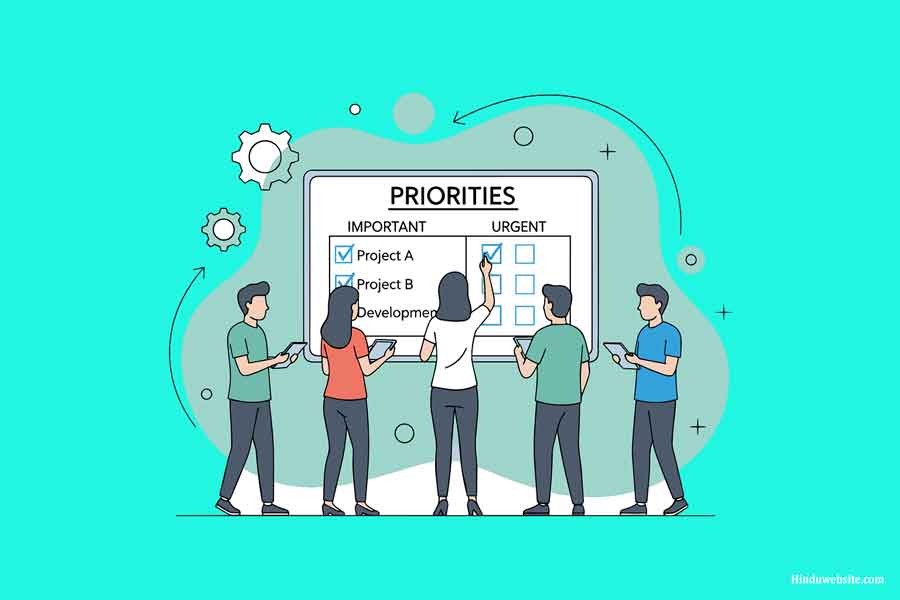
Summary: An overview of project management principles, methodologies, and modern tools — covering Agile, Scrum, and leading PM software for teams of all sizes.
Project management is the discipline of planning, organizing, and guiding a defined body of work toward a specific outcome within constraints of time, budget, and quality. Unlike ongoing operational work, a project has a clear beginning and end, a defined scope, and a goal that did not previously exist. Effective project management reduces the risk of failure, keeps teams aligned, and ensures that resources are used efficiently throughout the life of the project.
Core Project Management Activities
Regardless of the methodology or tools used, project management involves a consistent set of core activities: defining the scope and objectives, planning the work and its sequence, estimating the time and resources required, assigning tasks to the right people, monitoring progress against the plan, managing risks as they emerge, communicating status to stakeholders, and formally closing the project with a review of what was achieved and what was learned. Each of these activities requires ongoing judgment — project management is as much a human skill as a technical one.
The Five Control Variables
Project management seeks to maintain control over five interconnected variables. Time is the duration available to complete the project, broken down into milestones and individual task schedules. Cost is determined by the time required multiplied by the cost of the people and resources involved. Quality refers to the standard of the final deliverable — more time generally allows for higher quality, but increases cost. Scope defines what the project is meant to deliver; changes to scope during a project are a leading cause of schedule and budget overruns. Risk covers the potential points of failure that could prevent the project reaching its goals. These five variables are interdependent: changing one will always affect at least one other, which is why project managers must continuously balance competing pressures rather than optimizing for any single variable in isolation.
Project Management Methodologies
The traditional waterfall approach organizes a project into sequential phases — initiation, planning, execution, monitoring, and closure — where each phase must be substantially complete before the next begins. This works well for projects with stable, well-defined requirements and predictable deliverables. Agile methodologies take a different approach, treating the project as a series of short iterative cycles called sprints, typically lasting one to four weeks. Each sprint delivers a working increment of the product, allowing requirements to evolve and teams to respond to feedback quickly. Scrum is the most widely used Agile framework, defining roles (Product Owner, Scrum Master, development team), ceremonies (daily standups, sprint reviews, retrospectives), and artifacts (product backlog, sprint backlog). Kanban is a more lightweight approach that visualizes work as cards moving across columns — typically To Do, In Progress, and Done — and limits how much work can be in progress at any one time to prevent bottlenecks.
Modern Project Management Tools
A range of software tools has emerged to support project planning, task tracking, and team collaboration. Jira, developed by Atlassian, is the dominant tool for software development teams using Agile and Scrum, offering detailed backlog management, sprint planning, and reporting. Asana provides a flexible task management interface used by teams across many industries for tracking work and coordinating across departments. Monday.com and ClickUp offer highly customizable workspaces that can adapt to many different working styles. For simpler projects or smaller teams, Trello's Kanban-style boards offer a fast, visual way to organize work without the complexity of enterprise tools. Microsoft Project remains widely used in large organizations for traditional project planning with Gantt charts and resource allocation. Notion has gained popularity as a combined workspace that handles project tracking, documentation, and team wikis in a single tool.
Choosing the Right Approach
The best methodology and tool set depend on the nature of the project, the size of the team, and the degree to which requirements are likely to change. Software and digital product development generally benefits from Agile approaches because user needs are rarely fully understood at the outset and iterative delivery allows course correction. Construction, engineering, and compliance-heavy projects often require waterfall planning because the sequence of work is fixed and changes are costly. Many teams today use hybrid approaches — applying Agile principles at the team level while maintaining overall project structure and reporting through more traditional milestone frameworks.
This article was written with AI assistance and reviewed for accuracy. Image for the topic of this page created with images from Pixabay.