
Bhagavadgita: 13. The Yoga of the Distinction of the Field and the Knower of the Field
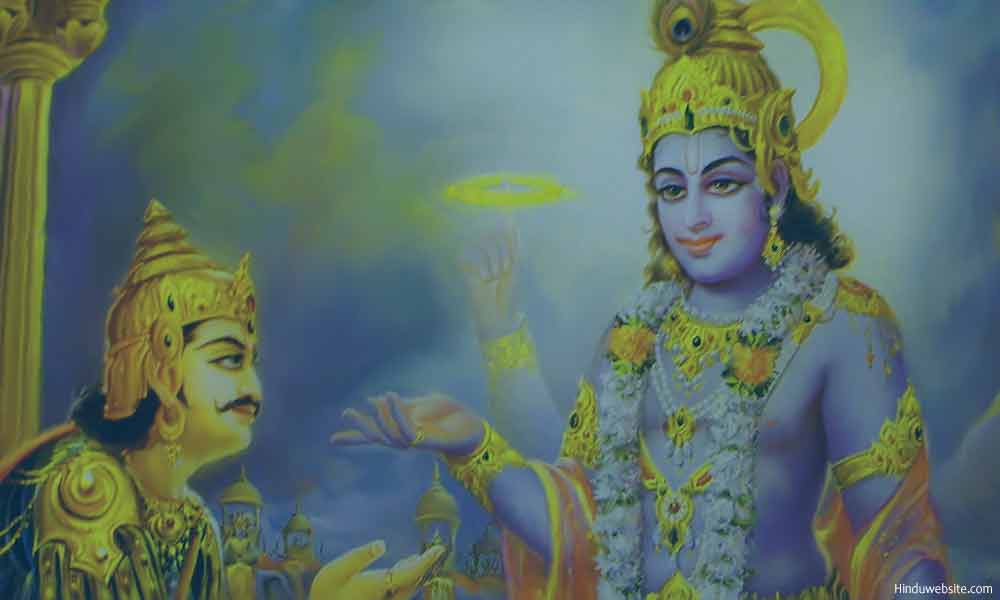
Summary: This chapter deals with the distinction between the body and the Self, or the field (kshetra) and the lord of the field (kshetrajna), also known as Nature (Prakriti) and Person (Purusha). Creation happens when Purusha is established in Prakriti. The whole diversity manifests from the union, and Purusha is their support.
Kshetra Kshetrajna Vibhaga Yoga
1. Said Arjuna, O Kesava, I wish to know about Purusha (the pure consciousness) and Prakriti (the creative energy), kshetram (field, matter or the body) and kshetragna (Self, pure awareness or consciousness), knowledge and purpose of knowledge.
2. Said Lord Supreme, This body, O Arjuna, is called kshetra (matter or the body). He who knows thus is called kshetragna ( the knower of kshetra ) by the knowledgeable.
3. O Bharata, I am kshetragna (pure consciousness) in all the kshetras (all material objects). The knowledge of what is the body and who is knower of the body, in My opinion is true knowledge.
4. Now understand from Me briefly what matter is, what are its variations, from where it is, who the knower (consciousness) is and what are his powers.
5. (This knowledge) is described in (the from of ) songs variously by the seers and in many vedic hymns and also in the verses of Brahmasutras with in-depth analysis.
6. The Mahabhutas (the five great elements), the ego, the discriminating intelligence, the invisible (self), the ten senses (ears, skin, tongue, nose, hands, feet, mouth, anus, and the sexual organs) and the five objects of the senses ( sound, taste, touch, smell and the forms).
7. Desire, repulsion, happiness, sorrow, the aggregate, dynamic awareness, decisiveness, all these are briefly the various aspects of the kshetra (body)
8. Without pride, without pomposity, absence of cruelty, tolerance, straight forwardness, service to Acharya (the spiritual master), cleanliness, stability (of the mind), self-control.
9. Vairagya (absence of any feeling) towards the objects of the senses, absence of egoism, constant reflection of the pain and drawbacks inherent in the birth, death, old age and disease.
10. Disinterested, detached from the son, wife, home and the like, always even minded in both desirable and undesirable conditions.
11. Devoted to Me only without engaging in other yogas (activities) and evil pursuits, living in solitary places, disinterested in seeking the company of people.
12. Always absorbed in self knowledge, engaged in the study of philosophy and spirituality; all this is declared as knowledge and the rest is ignorance.
13. That which is to be known I will now declare to you by knowing which immortality is attained. The eternal Supreme Brahman is neither sat nor asat it is said.
14. Everywhere hands and feet It has, Everywhere eyes, heads and faces, everywhere in the world ears. Everything It envelops sitting.
15. Source of all the senses and qualities, but devoid of any senses, detached but bearing all, without qualities but partaker of the qualities.
16. Outside and inside of all beings, moving and non moving, and also very subtle and incomprehensible, far away but also very nearer
17. Undivided but situated in the beings divided, bearer of beings but also to be known as the devourer and illuminator.
18. Among the illuminated the very illumination , beyond the darkness It is said to be. Knowledge, to be known and the end of all knowledge, It is in the hearts of all.
19. Thus the body (the matter) and also the knowledge and the knowable all explained briefly. My devotee who knows all this by that understanding attains My State.
20. Prakriti (the Creative energy) and Purusha (the pure consciousness) know that they had certainly no beginning . All distortions and qualities know for certain arise out of Prakriti only.
21. For the purpose of performing actions only is said to be Prakriti. Purusha is for pleasure and pain to enjoy only, it is also said.
22. Purusha alone seated in Prakriti enjoys the qualities produced by Prakriti. Because of association with the gunas (qualities), the division of reality and unreality take birth.
23. The Overseer, Regulator, Bearer, Enjoyer, the Great Lord, the Supreme Soul indeed is said to be. In the body (he is) Purusha, the transcendental.
24. Any one who knows thus Purusha and also Prakriti with the Gunas (qualities), in spite of his present ways, shall never born again.
25. By dhyana (meditation) atma (soul) is experienced. Some the Super soul by the lower self. Others through Yoga of Knowledge. The rest through the Yoga of Action.
26. Others without knowing (these methods), hearing from others worship (Me). They also transcend death through constant hearing.
27. Whatever that takes birth even minutely, pure, moving and non-moving, is due to the union of the Kshetra (matter) and Kshetragna (consciousness). Know it thus, O Best of Bharatas.
28. The Lord of the Universe is established equally in all living beings, as the indestructible in the destructible. He who sees thus does really see.
29. Seeing Him equally everywhere, the Lord situated equally in all, he does not degrade his Self by his self and he will reach the transcendental state.
30. He who sees Prakriti alone performing all the actions and the Self as the Non-doer does actually see.
31. When he sees the multitude of diverse beings united in One and spread there from, he attains Brahman.
32. Because He is eternal, without qualities, this transcendental and inexhaustible soul, while dwelling in the body, neither does any thing nor gets entangled, O Son of Kunti.
33. As the omnipresent sky, because of its subtle nature, does not get entangled, the Soul also is not entangled in the body though present every where.
34. Just as the sun illuminates the whole wide world, the Soul illuminates the whole body, O Bharata.
35. The difference between Kshetra (matter) and Kshetragna (consciousness), whoever perceives with his eyes of wisdom and also the liberation of the being from the hands of Prakriti, know that they go the Supreme only.
Thus, ends the thirteenth chapter named The Yoga of the Field and the Knower of the Field in the Upanishad of the divine Bhagavad-Gita , the knowledge of the Absolute, the yogic scripture, and the debate between Arjuna and Lord Krishna.
Suggestions for Further Reading
- The Samkhya Philosophy and 24 Principles of Creation
- The Bhagavadgita On The Problem Of Sorrow
- The Concept of Atman or Eternal Soul in Hinduism
- The Practice of Atma Yoga Or The Yoga Of Self
- The Problem of Maya Or Illusion and How To Deal With It
- Belief In Atman, The Eternal Soul Or The Inner Self
- Brahman, The Highest God Of Hinduism
- The Bhagavad Gita Original Translations
- The Bhagavadgita, Philosophy and Concepts
- Bhakti yoga or the Yoga of Devotion
- Hinduism And The Evolution of Life And Consciousness
- Why to Study the Bhagavadgita Parts 1 to 4
- The Triple Gunas, Sattva, Rajas and Tamas
- The Practice of Tantra and Tantric Ritual in Hinduism and Buddhism
- The Tradition Of Gurus and Gurukulas in Hinduism
- Origin, Definition and Introduction to Hinduism
- Hinduism, Way of Life, Beliefs and Practices
- A Summary of the Bhagavadgita
- Avatar, the Reincarnation of God Upon Earth
- The Bhagavadgita on Karma, the Law of Actions
- The Mandukya Upanishad
- The Bhagavadgita On The Mind And Its Control
- Symbolic Significance of Numbers in Hinduism
- The Belief of Reincarnation of Soul in Hinduism
- The True Meaning Of Renunciation According To Hinduism
- The Symbolic Significance of Puja Or Worship In Hinduism
- Introduction to the Upanishads of Hinduism
- Origin, Principles, Practice and Types of Yoga
- Hinduism and the Belief in one God
- Essays On Dharma
- Esoteric Mystic Hinduism
- Introduction to Hinduism
- Hindu Way of Life
- Essays On Karma
- Hindu Rites and Rituals
- The Origin of The Sanskrit Language
- Symbolism in Hinduism
- Essays on The Upanishads
- Concepts of Hinduism
- Essays on Atman
- Hindu Festivals
- Spiritual Practice
- Right Living
- Yoga of Sorrow
- Happiness
- Mental Health
- Concepts of Buddhism
- General Essays
Copyright: All rights are reserved. No part of this publication may be reproduced stored in a retrieval system, or transmitted in any form or by any means, electronic, mechanical, photocopying, recording, scanning or otherwise, except for your personal use, without the prior written permission of Hinduwebsite.com or the author Jayaram V. If you want to publish the FREE Translation of the Bhagavad gita on your website please contact us and take our prior and written approval.