
Jabali Upanishad
|| Advaya Taraka|| The Atharvasikha|| The Atharvasiras|| Brihad Jabala|| The Importance of Breath in Yoga Practice || Morals From the s || Dakshinamurthy || Untitled 2 || Hayagriva || Jabala Darsana|| Jabali || Krishna|| Kshurika || Mahavakya|| Narayana || Nrisimha Poorva and Uttara Tapaniya|| The Paingala|| Pancha Brahma || Pasupata Brahmana|| The Pranagnihotra|| Rama Rahasya|| Rama Poorva and Uttara Tapaniya|| Sarabha|| Trisikhi Brahmana || Vasudeva|| Yoga Chudamani || Yoga Sikha ||
Introduction by Jayaram V
The Jabali Upanishad belongs to the Sama Veda. It deals with many concepts of Saivism, presented as a conversation between Sage Pippalada and Sage Jabali. Sage Pippalada raises questions regarding the absolute philosophy of Brahman, referring to the fundamental concepts of Saivism such as Pati, pasu, pasa, jiva and the liberation of jiva. In the very beginning of the Upanishad a jiva, living being, is equated with Shiva.
A jiva is Shiva with egoism or the notion of individuality. A jiva is a pasu, an animal with ego, desires and attachments, who can attain Shiva through discriminating knowledge (viveka) and inner transformation. Shiva enacts the five roles of creation, preservation, concealment, destruction and suppression. Sambava penance is described as the means for the liberation of the jivas, which involves ritual chanting of five mantras using the holy ash. The importance of wearing holy ash is also explained. It removes the sins and makes one fit for worship. For liberation one should wear the holy ash and chant three specific mantras. They are equal to the three domestic fires maintained by the householders, namely Garhapatya, Dakshinagni and Ahavaniya with which the daily domestic sacrifices are performed. The following is an original translation of the Jabali Upanishad by P.R. Ramachander. Hope it will help you to understand the meaning and significance of tattvas, jiva, Shiva, Pati, Pasu and other important concepts of Saivism.
Translation
Aum ! Let my limbs and speech, Prana, eyes, ears, vitality
And all the senses grow in strength.
All existence is the Brahman of the Upanishads.
May I never deny Brahman, nor Brahman deny me.
Let there be no denial at all:
Let there be no denial at least from me.
May the virtues that are proclaimed in the Upanishads be in
me,
Who am devoted to the Atman; may they reside in me.
Aum ! Let there be Peace in me !
Let there be Peace in my environment !
Let there be Peace in the forces that act on me !
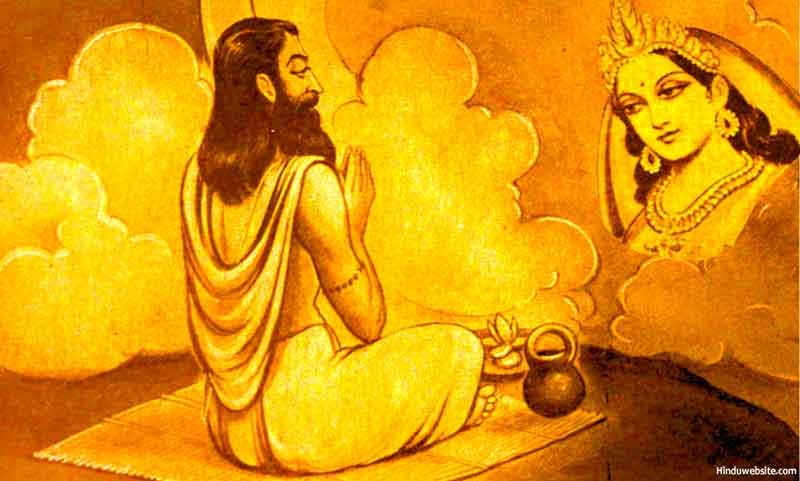
The Sage Pippalada approached Sage Jabali and asked him, “Oh God like sage, please teach me the secret of the absolute philosophy. What is Tattva (principle)? Who is Jiva (being)? What is Pasu? Who is Isvara? And what is the method for salvation?” Thus asked sage Jabali explained to him everything as follows:
Jiva (being) is nothing but God (the Lord of all beings - Pasupathi) himself who is acting the role of egoism. That Jiva (being) is the Pasu. Pasupathi is he who knows everything, who does the five jobs like creation, and who is the Lord of all beings. Pasu (in common parlance) are those animals which eat grass, which do not have viveka (knowledge to differentiate), which are driven by others, which are made to work in jobs like agriculture and which undergo lot of sufferings. Similar to the owner of such animals is the God Pasupathi who rules over all beings.
To the question, “What trick is there to acquire such knowledge?“. Jabali replied, “By wearing of the holy ash". He further told, “After taking the holy ash in hand by reciting the five Brahma mantras starting with ‘Sathyojatham’, and chanting “Agnirithi Bhasma (Hoy ash is fire)”, mix it with water by chanting, “Manasthoke” and then wear the holy ash in head, forehead and shoulders in sets of three lines chanting the three mantras “trayayusham”. Further wear these by chanting the three mantras starting with “Trayayusham” and the mantra “Tryambakam” is called Sambhava penance. Those with knowledge of Veda say that this has been told in all Vedas. For avoiding rebirth, the people with eternal wisdom, should adopt this.
Among the three lines, the first one is Garhapathya (the domestic fire), the letter Aa, the quality of Rajas, earth, Jivathma (soul of beings), the power of creation, Rigveda, time of dawn and its God is Lord Brahma. The second line is Dakshinagni (Fire of the south), the letter Uu, the quality of Sathva, atmosphere, the soul inside the body, the power of desire, Yajurveda, the time of noon, and its God is Lord Vishnu. The third line is the Ahavaneeya agni (the fire of the Sun), the letter Ma, the quality of Tamas, the place of Gods, the Paramatma, the power of knowledge, Samaveda, the time of dusk and its God is Shiva. That individual, who wears holy ash, whether he is a Brahmachari or Sanyasi, gets rid of great as well as minor sins. He becomes fit to worship all gods; he becomes one who has taken bath in all holy waters and the one who has chanted all the Rudra mantras. He does not have rebirth. This Upanishad tells that, it is sworn that he will not have rebirth.
Aum ! Let my limbs and speech, Prana, eyes, ears, vitality
And all the senses grow in strength.
All existence is the Brahman of the Upanishads.
May I never deny Brahman, nor Brahman deny me.
Let there be no denial at all:
Let there be no denial at least from me.
May the virtues that are proclaimed in the Upanishads be in
me,
Who am devoted to the Atman; may they reside in me.
Aum ! Let there be Peace in me !
Let there be Peace in my environment !
Let there be Peace in the forces that act on me !
Here ends the Jabali Upanishad, included in the Sama-Veda.
Suggestions for Further Reading
- The Wisdom of the Upanishads, Main Page
- Upanishad Miscellany
- The Brihadaranyaka Upanishad - Translation by Jayaram V
- Symbolism Miscellany
- The Upanishads Translated by Max Muller
- Brahman, The Highest God Of Hinduism
- Atman, Soul or the Eternal Self
- List of 108 Upanishads According To The Muktikopanishad
- Translation Of Various Upanishads
- Introduction to the Upanishads of Hinduism
- Essays on The Upanishads
- Translations of Upanishads - Links
- Essays On Dharma
- Esoteric Mystic Hinduism
- Introduction to Hinduism
- Hindu Way of Life
- Essays On Karma
- Hindu Rites and Rituals
- The Origin of The Sanskrit Language
- Symbolism in Hinduism
- Essays on The Upanishads
- Concepts of Hinduism
- Essays on Atman
- Hindu Festivals
- Spiritual Practice
- Right Living
- Yoga of Sorrow
- Happiness
- Mental Health
- Concepts of Buddhism
- General Essays