
Dakshinamurthy Upanishad
|| Advaya Taraka|| The Atharvasikha|| The Atharvasiras|| Brihad Jabala|| The Importance of Breath in Yoga Practice || Morals From the s || Dakshinamurthy || Untitled 2 || Hayagriva || Jabala Darsana|| Jabali || Krishna|| Kshurika || Mahavakya|| Narayana || Nrisimha Poorva and Uttara Tapaniya|| The Paingala|| Pancha Brahma || Pasupata Brahmana|| The Pranagnihotra|| Rama Rahasya|| Rama Poorva and Uttara Tapaniya|| Sarabha|| Trisikhi Brahmana || Vasudeva|| Yoga Chudamani || Yoga Sikha ||
Introduction by Jayaram V
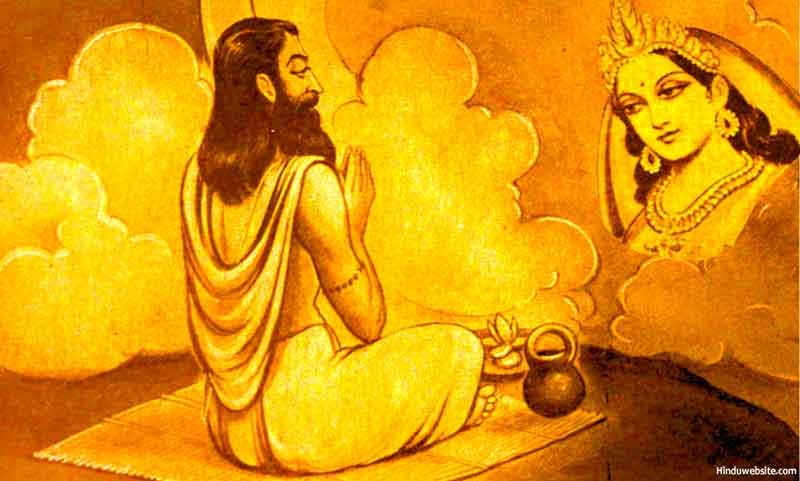
Dakshinamurthy (also spelled as Dakshinamurti) Upanishad belongs to the Krishna (black) Yajurveda. It is a Saiva Upanishad, which extols Lord Shiva in his aspect as Dakshinamurthy, the world teacher. The theme of the Upanishad is that the knowledge of Shiva is liberating and blissful. Such knowledge is revealed to the qualified ones by Shiva himself in his aspect as Dakshinamurthy, the World Teacher. The Upanishad is presented to us as a conversation between sage Markandeya and some pious people, including Saunaka, in the land of Brahma (probably western India) during a fire sacrifice.
Markandeya explains to the gathering that the cause of his blissful state was the knowledge of Shiva, the Supreme Self. That knowledge came to him through Shiva only as Dakshinamurthy. While everything is dissolved or withdrawn into himself at the time of the dissolution of the world, Shiva would remains blissfully self-absorbed, containing everything within himself. The sage then reveals three secret mantras of varying lengths associated with Lord Shiva to attain the blissful state. He suggests that they should be chanted during meditation keeping the form of Shiva in the mind. Regular mediation with these mantras would lead to the knowledge of Shiva and liberation. The knowledge of Shiva is the knowledge of the Self and with that comes liberation. The following is an original translation of the Dakshinamurti Upanishad by P.R. Ramachander. Hope it will help you to understand the significance of Shiva as world teacher and source of liberation.
Translation
Aum ! May He protect us both together; may He nourish
us both together;
May we work conjointly with great energy,
May our study be vigorous and effective;
May we not mutually dispute (or may we not hate any).
Aum ! Let there be Peace in me !
Let there be Peace in my environment !
Let there be Peace in the forces that act on me !
1 Aum. In Brahma Vartha (Land of Brahma), under a banyan tree called Maha Bandira, many sages including Sounaka had assembled to perform a Sathra fire sacrifice. They approached sage Markandeya wearing samiths (dried twigs of banyan tree) as gloves and asked him, “How do you manage to be a Chiranjeevi (One who does not have death) and how are you always in the happy state?"
2 He replied, “This is because of the knowledge of the most secret philosophy of Shiva. This very secret Shiva philosophy by which Shiva who is the Dakshinamurthy, becomes some thing which is not visible to others. He is that God who at the time of final deluge, who keeps every thing else within himself and shines because of the pleasure of his own spirit. The secret mantras about him are as follows: Brahma is the sage, the meter is Gayathri and the god is Dakshinamurhy for this mantra.
First Mantra of 24 letters: After telling “ Aum”, tell “Namo” and then “Bhagavathe Dakshinamurthaye”, then the fourth form of “asmad” viz “Mahyam”, then “medham Pragnam”, then the root of wind “ya”, added with “chcha”, followed by the name of wife of fire God “swaha”. This is the mantra with 24 letters. That is “ Aum Namo Bhagwathe Dakshinamurthaye Mahyam, Medham Pragnam Prayacha Swaha!”
3 Then Dhyanam (thinking abut the form in the mind, when mantra is chanted). I salute him who is white like a crystal, who holds in his hands, a chain of pearl beads, the pot of nectar which is the form of knowledge, and the mudhra (symbol) of wisdom, who ties himself with a snake, who wears the moon on his head and who wears different type of ornaments.
4 Second Mantra of nine letters: First Say “ Aum”, then the first vowel with the visarga and in the end ell Panchakshari with visarga in the end, and this gives the Navakshari mantra (nine letters mantra). That is “ Aum Aam Aa Sivaya Nama Aum!”
5 Then Dhyanam. Let the three eyed god who does only good, who has in his three hands, the sign of protection, deer and axe in three hands and fourth hand kept on his knee, who has tied a snake on his body, who shines white like milk, who sits below a banyan tree and who is surrounded by sages like Shuka, gives us pure thoughts.
[Slokas 6 is not available.]
7 Third Mantra: Add Broom Nama, Maya Bheeja, Vagbhava Bheeja, Dakshinamurthaye and Jnanam dehi Swaha to Aum. The mantra would be “ Aum Broom, Namo Hreem Im Dakshinamurthaye Jnanam Dehi Swaha!”
8 Then Dhyanam: Let the God Dakshinamurthy, who has a white body due to application of holy ash, who wears the crescent moon on his head, who holds in his hands, Jnana mudra (symbol of wisdom), beaded chain, Veena and books, who wears all ornaments, who wears the elephant hide, who resembles the meditating Rama, who sits on the throne of explanation and who is being served by great sages protect us always.
9 We have to see that lamp of wisdom, which burns with renunciation as oil, devotion as wick and which shines in the full vessel of wake up state.
10 In the beginning of creation, Lord Brahma prayed this Dakshinamurthy, and obtained the capacity of creating beings and became very happy. He became blessed after getting what he desired. That Brahma therefore has become a devotee as well as somebody who deserves our devotion.
11 The one who reads this philosophy of Shiva with understanding, would get rid of all his sins. The ones who know this truly will attain salvation.
Aum ! May He protect us both together; may He nourish
us both together;
May we work conjointly with great energy,
May our study be vigorous and effective;
May we not mutually dispute (or may we not hate any).
Aum ! Let there be Peace in me !
Let there be Peace in my environment !
Let there be Peace in the forces that act on me !
Here ends the Dakshinamurti Upanishad belonging to the Krishna-Yajur-Veda.
Suggestions for Further Reading
- The Wisdom of the Upanishads, Main Page
- Upanishad Miscellany
- The Brihadaranyaka Upanishad - Translation by Jayaram V
- Symbolism Miscellany
- The Upanishads Translated by Max Muller
- Brahman, The Highest God Of Hinduism
- Atman, Soul or the Eternal Self
- List of 108 Upanishads According To The Muktikopanishad
- Translation Of Various Upanishads
- Introduction to the Upanishads of Hinduism
- Essays on The Upanishads
- Translations of Upanishads - Links
- Essays On Dharma
- Esoteric Mystic Hinduism
- Introduction to Hinduism
- Hindu Way of Life
- Essays On Karma
- Hindu Rites and Rituals
- The Origin of The Sanskrit Language
- Symbolism in Hinduism
- Essays on The Upanishads
- Concepts of Hinduism
- Essays on Atman
- Hindu Festivals
- Spiritual Practice
- Right Living
- Yoga of Sorrow
- Happiness
- Mental Health
- Concepts of Buddhism
- General Essays