
The Svetasvatara Upanishad, An Introduction
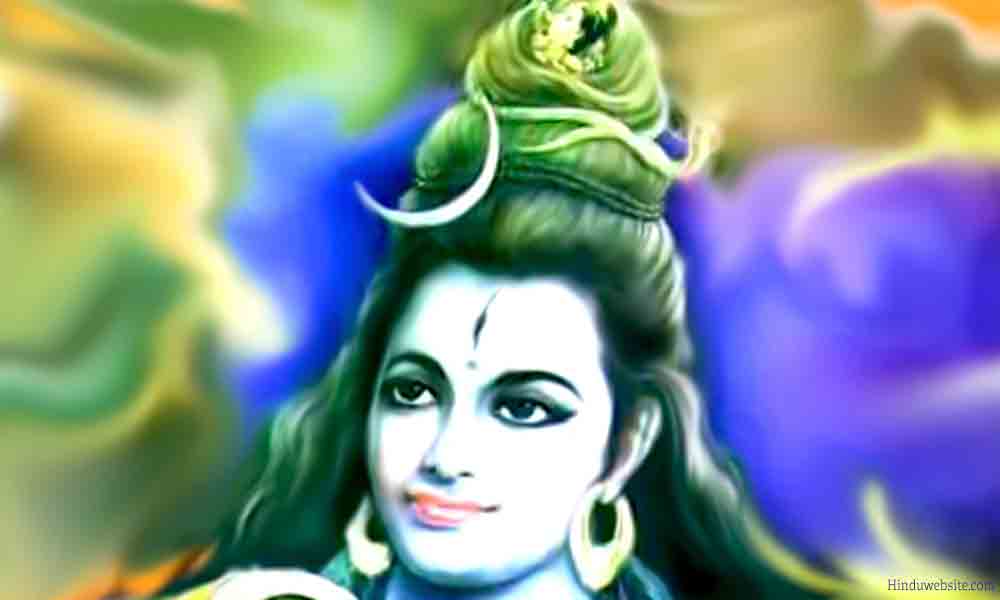
The Svetasvatara Upanishad derives its name from the name of the sage who composed it. It belongs to the Taittiriya school of the Yajurveda. It can be classified as a Shaiva Upanishad. It is not only a major Upanishad but also considered one of the earliest, with its emphasis upon Shiva and in some respects with a subtle hint of devotional theism.
From a historical perspective it has a great significance, because it contributed to the rise of Saivism as a major Hindu religious sect and the popularity of Lord Siva, who was once feared and revered alike by the Rigvedic Indians, as a part of the Hindu Trinity. The Upanishad is divided into six chapters and contains in all 113 verses.
The significance of the Svetasvatara Upanishad lies in the fact that in it we come across almost all the basic teachings and concepts of the Bhagavad-Gita. The difference is basically in names only. In the Bhagavad-Gita, Lord Krishna describes Himself as Bhagavan, the Supreme Lord of the universe, where as here it is Lord Siva, who is the Lord of all, the master of the immanent and transcendent reality, by knowing whom one can attain Brahman. Lord Siva is referred especially as Iswara, who is the awakened Brahman, the Being, the universal soul, who initiates the process of creation, having woken up.
We have all the basic concepts of Saivism here: the pasu, the pasa and the pati. Pasu is the individual soul. Pasa is the bond that keeps him chained to the world of illusion and mortality, and pati is Lord Siva Himself, the controller of the universe who ultimately delivers his dear devotee from bondage.
We also come across the elements of bhakti or devotion here. We are told that Brahman can be realized through the mind as well through ones heart, the latter signifying the importance of feeling in the form of devotion or love as the means to self-realization.
Iswara, Prakriti and the individual soul are the triad in which Iswara is above all, while the latter two engage themselves in enacting their respective roles. Freedom from the hold of Prakriti is possible for the individual soul only through the grace of God.
We also come across reference to the wheel of creation, in which the hub and the circumference are Brahman, while the middle part is the manifestation of prakriti with all its diversity.
The law of karma is also dealt with in some detail. The individual soul having come into this world wanders about according to the nature of its deeds assuming various forms in various conditions. (V.7-11). He is bound to the world because he becomes the enjoyer and assumes responsibility for his actions without recognizing the invisible hand of God in his life.
We are also introduced to the concept of breath control and some techniques of yogic meditation. There are verses extolling the significance of syllable AUM and the greatness of Savitr, the sun god, as an acknowledgement of the fact that the science of self-realization was pioneered by him among the mortals.
The translation of the Svertasvatara Upanishad is made available at this site for the benefit of our readers. It is divided into six chapters and links are available to each chapter from here as well as from each chapter.
We dedicate this translated work to Lord Siva, the Supreme Iswara, who is the real doer hidden in all our deeds.
- The Svetasvatara Upanishad Chapter 1
- The Svetasvatara Upanishad Chapter 2
- The Svetasvatara Upanishad Chapter 3
- The Svetasvatara Upanishad Chapter 4
- The Svetasvatara Upanishad Chapter 5
- The Svetasvatara Upanishad Chapter 6
Suggestions for Further Reading
- The Samkhya Philosophy and 24 Principles of Creation
- The Bhagavadgita On The Problem Of Sorrow
- The Concept of Atman or Eternal Soul in Hinduism
- The Practice of Atma Yoga Or The Yoga Of Self
- The Problem of Maya Or Illusion and How To Deal With It
- Belief In Atman, The Eternal Soul Or The Inner Self
- Brahman, The Highest God Of Hinduism
- The Bhagavad Gita Original Translations
- The Bhagavadgita, Philosophy and Concepts
- Bhakti yoga or the Yoga of Devotion
- Hinduism And The Evolution of Life And Consciousness
- Why to Study the Bhagavadgita Parts 1 to 4
- The Triple Gunas, Sattva, Rajas and Tamas
- The Practice of Tantra and Tantric Ritual in Hinduism and Buddhism
- The Tradition Of Gurus and Gurukulas in Hinduism
- Origin, Definition and Introduction to Hinduism
- Hinduism, Way of Life, Beliefs and Practices
- A Summary of the Bhagavadgita
- Avatar, the Reincarnation of God Upon Earth
- The Bhagavadgita on Karma, the Law of Actions
- The Mandukya Upanishad
- The Bhagavadgita On The Mind And Its Control
- Symbolic Significance of Numbers in Hinduism
- The Belief of Reincarnation of Soul in Hinduism
- The True Meaning Of Renunciation According To Hinduism
- The Symbolic Significance of Puja Or Worship In Hinduism
- Introduction to the Upanishads of Hinduism
- Origin, Principles, Practice and Types of Yoga
- Hinduism and the Belief in one God
- Essays On Dharma
- Esoteric Mystic Hinduism
- Introduction to Hinduism
- Hindu Way of Life
- Essays On Karma
- Hindu Rites and Rituals
- The Origin of The Sanskrit Language
- Symbolism in Hinduism
- Essays on The Upanishads
- Concepts of Hinduism
- Essays on Atman
- Hindu Festivals
- Spiritual Practice
- Right Living
- Yoga of Sorrow
- Happiness
- Mental Health
- Concepts of Buddhism
- General Essays