
The Samkhya Yoga of the Bhagavadgita, An Analysis
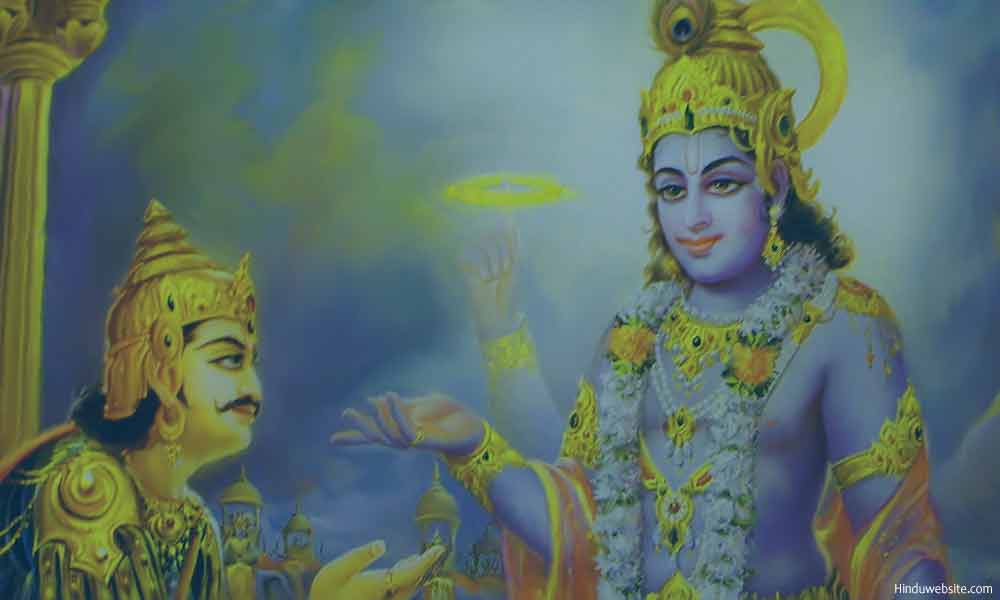
Summary: A comparative analysis of the Samkhya Yoga of the Bhagavadgita and the Classical Samkhya Philosophy of Kapila and Isvara Krishna.
The second chapter in the Bhagavadgita is titled, “Samkhya Yoga.” Samkhya or Sankhya means number. Yoga means union. Samkhya Yoga means the union of numbers. The numbers are with regard to the number of realities (tattvas) that are present in existence. Samkhya Yoga deals with the union or the combination of a number of hidden realities, which manifest the existential reality. Those who are familiar with the Indian philosophies know that the Samkhya Philosophy is one of the six schools (Darshanas) of Hinduism. It is said to have been founded by Kapila and expounded by Isvara Krishna (6th Century AD) in his work, the Samkhya Karika.
The classical Samkhya system identifies two eternal realities, the Individual souls and Prakriti (Nature). Individual souls are eternal, indivisible, indestructible and numerous. Prakriti is one, divisible and mutable. However, it is further divided into multiple, finite realities (tattvas), which combine in various permutations and combinations to produce the diversity of the worlds, beings and objects. Samkhya yoga essentially deals with these finite and infinite realities of existence (Sat) and explains how the perceptible world manifests through effects that are already hidden in their causes.
Samkhya in Vedic tradition
The Samkhya philosophy may have its origin in the Upanishads. However, unlike the Upanishadic philosophy, its early proponents seem to have taken it in the opposite direction as a non-theistic school. The original Samkhya school did not believe in a Cosmic Being, or a creator God. Creation according them was an effect hidden in Prakriti, the primal cause. When right conditions manifested, Prakriti brought forth the worlds and beings using the individual souls as the catalysts. Thus, the original Samkhya school fundamentally followed the same line of thought as the modern theories of evolution, which consider the world and life as the products of chance. According to them just as the seed transformed into a plant in a favorable environment and with right conditions, life manifested in the world when right conditions presented themselves.
Although the Samkhya school digressed from the Upanishadic thought in its earlier days, subsequently the essential doctrine of the Samkhya school and many of its concepts and beliefs found their way into Vedic tradition and became associated with the theistic beliefs of present day Hinduism. Vedism, Saivism and Vaishnavism adapted the essentials of Samkhya and integrated them into their own theistic philosophies, acknowledging God as the creator, the individual souls as his aspects and Prakriti as his dynamic force. Hence, today you can see the pervasive influence of Kapila's Classical Samkhya throughout Hinduism.
Samkhya in the Bhagavadgita
The Bhagavadgita stands testimony to the importance of Samkhya philosophy in ancient India. It is difficult to accept that the name would adorn the title of the most important chapter of the Bhagavadgita, unless it had widespread recognition and prevailed as a predominant philosophy. The Samkhya philosophy was undoubtedly one of the most well known philosophies of ancient India. Its influence has been pervasive in many sectarian traditions of Hinduism. As we will see later, the Bhagavadgita has nicely blended the predominant elements of the classical Samkhya Yoga of Isvara Krishna into its own teachings without compromising its theistic inclinations or its essential doctrine. It is highly possible that since the Bhagavadgita was much earlier to the work (Karika) of Isvara Krishna, the Samkhya Yoga of the Bhagavadgita might have been drawn from earlier works. In the following discussion we will focus upon the essential doctrine of Samkhya as suggested in the Bhagavadgita.
If you analyze the second chapter, you will notice that the first ten verses describe the disturbed state of Arjuna’s mind and his emotional arguments. Verses 11 to 39 contain the elements of Samkhya yoga while 40 to 72 deal with the practice of Buddhi yoga or the yoga of intelligence. Since intelligence (buddhi) is an aspect of Prakriti only, we may consider it an extend explanation of Samkhya yoga only or its applied doctrine. It is particularly emphasized in the chapter, because Krishna wanted Arjuna to know the reason for his unstable mind, and how he could cultivate equanimity using his intelligence.
The tattvas of the Bhagavadgita
From a philosophical perspective, the Samkhya Yoga of the Bhagavadgita lists the following realities (tattvas) of existence. They are, God (Isvara Tattva), Soul (Atma tattvas), body, senses, mind, ego, and intelligence. Of them, the first two are pure (suddha) and eternal realities (nitya tattvas), and the rest are impure (asuddha) and finite (anitya). The chapter also briefly mentions the gunas or modes of Nature which determine the behavior, states, attitudes and actions of beings. Let us examine each of the tattvas according to the second chapter and the teachings of the Bhagavadgita.
God (Brahman or Isvara)
God is the Isvara tattva, who is known as the ruling, controlling, manifesting, absolute Reality. He is not bound by Nature, but distinct and separate from it. He is not mentioned as a tattva, in the classical Samkhya. In the Bhagavadgita he is the center and source of everything. You cannot miss him because he is present in the scripture throughout as the subject, the object, the source, the purpose, and the teaching itself. In the second chapter he is addressed by Arjuna as Madhusudhana (destroyer of honey or delusion), Bhagavan (resplendent God), and Hrisikesa (lord of the organs of senses). He is also indirectly mentioned in the verse 16 as the imperishable, eternal reality (sat) which was witnessed by seers (drastah), and in the 17 as the all-pervading, imperishable That (tat). In the verse 72 the highest state of Brahman is mentioned, by entering which one becomes completely free from delusion and attains absorption into Brahman (brahma-nirvanam).
The Soul (Atman)
The soul or the Self is mentioned in the verse 18 as the one who resides in the body and who is eternal, indestructible and immeasurable. Like Brahman, the Self is also a pure, eternal and infinite reality. However, unlike the former he becomes subject to the cycle of births and deaths in the mortal world. In the verse 19, he is described as the one who neither kills nor is killed. In the next verse, he is described as one who is neither born nor subject to death, who was never non-existent in the past, nor will ever be in future. He is unborn, eternal, permanent and the most ancient, who is not killed when the body is killed. In the subsequent verses, the idea is further expanded and the soul is described as the indweller (dehi), who is impenetrable, incombustible, insoluble and who moves on from one birth to another and changes bodies in each birth, without undergoing any change.
The body (Sariram)
The body is not a tattva, but a composite of several tattvas. It is the abode of the soul (dehi). In a subsequent chapter it is described as the field of Prakriti (Kshetra), which is subject to modifications. Elsewhere it is also described as a city of nine doors in which the soul resides as its lord and controller. Unlike the Self, the body is impure, destructible and subject to change, aging, sickness and death. Hence, Lord Krishna compares it to a cloth worn by the soul at the time of each birth and discarded at the end of it. The body is unmanifested in the beginning, manifests in the middle, when the Self remains embodied, and becomes unmanifested again when he attains liberation. In the mortal world it is unmanifested before birth, manifests during the soul’s existence upon earth as a being and becomes unmanifested again when it perishes upon death. The moral is since the body is perishable and the soul is imperishable one should neither fear death nor grieve for those who die.
Intelligence, Buddhi
The Samkhya doctrine of Kapila recognizes buddhi as the highest tattva of Prakriti, which manifests in the world as Mahat and in the individual body of a being as buddhi or discriminating intelligence. It is said that intelligence is the closest to the Self in the realm of Prakriti. It is in intelligence that the light of soul shines. The Bhagavadgita does not describe intelligence as the highest tattva, but gives it a lot of importance in several chapters. When intelligence is pure with the predominance of sattva, the light of the Self shines brightly without any discoloration or disfiguration. Hence, Lord Krishna dedicates half of the second chapter to teach Arjuna how to use his intelligence to stabilize his mind and see things clearly, so that he can overcome the delusion, sorrow and duality and do his duty with equanimity.
The ego (aham)
The ego is the self-sense or the feeling that “I am this or that” or “I have this or that.” The pure Self is without attributes. The ego arises from it as a projection and acquires attributes such as name and form. The self-consciousness is pure, whereas ego consciousness is filled with delusion, desires and attachments. In the classical Samkhya Yoga, the ego is identified as part of the internal organ, along with the mind and intelligence. It constitutes the higher tattva, next to intelligence. In second chapter, ego is not directly mentioned but egoism is mentioned in verse 71 in reference to the person who has stabilized his mind and intelligence and entered the highest state (Brahma sthiti).
The mind
The mind is the source of all disturbances and instability. As the lord of the senses, it is also responsible for the activities of the senses. Indeed, the central purpose of the Bhagavadgita is how to stabilize the mind and engage it in spiritual liberation. Classical Samkhya Yoga regards the mind (manas) as the repository of thoughts, impressions and memories, while rationality belongs to the higher mind or intelligence. The second chapter of the Bhagavadgita begins with Arjuna’s sorrowful state of mind. The purpose of Krishna’s teaching is to help him stabilize his mind and free it from desires, attachments, passions, dualities and delusion so that he can resolve the problem of karma, rebirth and suffering. According to the original Samkhya, the mind is the third highest tattva in the body. The Yogasutras define the purpose of yoga as the suppressions of the modifications of the mind. The purpose of Krishna’s discourse in the Bhagavadgita is also the same, to help Arjuna stabilize his mind and focus upon his duty. He suggests that the mind can be stabilized and freed from modifications by cultivating the discerning wisdom to distinguish the soul from the body and by overcoming desires and attachments.
The senses
The senses are part of the body. In the body they reside as divinities. They are briefly discussed in the second chapter, but they are not separately listed. However, we know from the context of the teachings that the senses mean the five organs of action, the five organs of perception and the five subtle senses. In the verse 14, Lord Krishna says that contact with the sense-objects result in feelings of cold and heat, pleasure and pain, which are impermanent and fleeting. Hence, one should bear with them. Verses 62-63 describe how the senses lead to one’s downfall. By dwelling upon sense-objects one develops attachment. From attachment arises desire, and from desire anger. From anger develops delusion, from delusion the confusion of memory, and from the confusion of memory arises loss of intelligence (buddhi). When buddhi is lost, life becomes lost. Hence, in verse 58 Krishna suggests that to control the mind one should withdraw the senses from the sense objects, just as a tortoise withdraws its limbs, and stabilize the mind. When the mind is free from attraction and aversion, it remains tranquil even when the senses wander among sense objects (verse 64).
The elements
According to the original Samkhya, the elements (mahabhutas) are five namely the earth, fire, water, air, and space. They provide the materiality to the objects in the world. The human body is made up of them. They are part of the 23 tattvas of Prakriti which are identified by the school. Indeed, the human body is said to be combination of five sheaths or bodies namely the food body, the air body, the mental body, the intelligence body and the bliss body. Each of them is made up of one predominant element. In the second chapter of the Bhagavadgita the elements are mentioned only once in the verse 24 in reference to the indestructibility of the Self, which is impenetrable by earth objects, incombustible by fire, insoluble by water, and cannot be dried by air. All these can destroy the body, but not the Self
The gunas
The gunas are three, sattva, rajas and tamas. They are not tattvas, but aspects of Prakriti which are responsible for desires and desire-ridden actions. Our attitude, thinking, actions, likes and dislikes arise from them. The second chapter does not speak much about the triple gunas, but makes a passing reference to them in a few verses. Verse 45 suggests that the Vedas contain the knowledge of the gunas. Such knowledge is not very helpful to stabilize the mind or overcome desires and attachments. Therefore, through discernment one should transcend them to overcome duality and cultivate equanimity.
Buddhi yoga as adjunct of Krishna’s Samkhya
Traditionally, the Samkhya Darshana of Kapila is associated with the Yoga philosophy, which like the Samkhya system is also considered a Darshana of Hinduism. In the traditional classification of Hindu philosophies, both go together. If Samkhya is the theoretical foundation for the school, Yoga is its applied discipline. In the second chapter of the Bhagavadgita also we find a similar approach. If the first half of the verses in it are devoted mostly to Samkhya, the second half (from verse 39 onwards) are dedicated to Buddhi Yoga, which serves as the applied science of Krishna’s Samkhya.
The purpose of Buddhi Yoga is to attain absorption in Brahman (brahma nirvana) by cultivating stable intelligence (sthitha prajna or samatva buddhi), whereby a person remains untouched by the dualities of life such as cold and heat or pleasure and pain, and becomes stable and self-absorbed. Such a state of stability is achieved by withdrawing the senses from the sense-objects, controlling desires and cultivating detachment and dispassion. When a person remains satisfied by himself and in himself only, then he is said to be a person of stable intelligence. In the verse 50 Krishna suggests that with the help of stable intelligence one should engage desireless actions and defines yoga as skill (kausalam) in action.
Conclusion
Thus, we can see that the Samkhya Yoga of the Bhagavadgita has many parallels with the original Samkhya philosophy of Kapila. In the subsequent chapter, we will also find that with regard to the practice of detachment, dispassion, sameness, concentration, cultivation of sattva, self-purification, meditation, stabilizing the mind in the Self, and self-absorption, etc., the Yoga philosophy of Krishna bears close resemblance to similar ideas that are present in Patanjali’s Yogasutras. Although the second chapter of the Bhagavadgita is rather erroneously titled as the Yoga of Knowledge by many scholars, it is but a theistic version of the classical Samkhya Yoga only in its essential doctrine, practice and purpose. Truly, it is not the yoga of knowledge. Rather, it is the yoga of the mind and body, the battlefield where a war is continuously waged between the stabilizing and destabilizing forces of Nature and God.
Suggestions for Further Reading
- The Samkhya Philosophy and 24 Principles of Creation
- The Bhagavadgita On The Problem Of Sorrow
- The Concept of Atman or Eternal Soul in Hinduism
- The Practice of Atma Yoga Or The Yoga Of Self
- The Problem of Maya Or Illusion and How To Deal With It
- Belief In Atman, The Eternal Soul Or The Inner Self
- Brahman, The Highest God Of Hinduism
- The Bhagavad Gita Original Translations
- The Bhagavadgita, Philosophy and Concepts
- Bhakti yoga or the Yoga of Devotion
- Hinduism And The Evolution of Life And Consciousness
- Why to Study the Bhagavadgita Parts 1 to 4
- The Triple Gunas, Sattva, Rajas and Tamas
- The Practice of Tantra and Tantric Ritual in Hinduism and Buddhism
- The Tradition Of Gurus and Gurukulas in Hinduism
- Origin, Definition and Introduction to Hinduism
- Hinduism, Way of Life, Beliefs and Practices
- A Summary of the Bhagavadgita
- Avatar, the Reincarnation of God Upon Earth
- The Bhagavadgita on Karma, the Law of Actions
- The Mandukya Upanishad
- The Bhagavadgita On The Mind And Its Control
- Symbolic Significance of Numbers in Hinduism
- The Belief of Reincarnation of Soul in Hinduism
- The True Meaning Of Renunciation According To Hinduism
- The Symbolic Significance of Puja Or Worship In Hinduism
- Introduction to the Upanishads of Hinduism
- Origin, Principles, Practice and Types of Yoga
- Hinduism and the Belief in one God
- Essays On Dharma
- Esoteric Mystic Hinduism
- Introduction to Hinduism
- Hindu Way of Life
- Essays On Karma
- Hindu Rites and Rituals
- The Origin of The Sanskrit Language
- Symbolism in Hinduism
- Essays on The Upanishads
- Concepts of Hinduism
- Essays on Atman
- Hindu Festivals
- Spiritual Practice
- Right Living
- Yoga of Sorrow
- Happiness
- Mental Health
- Concepts of Buddhism
- General Essays