
Chapter VIII - THE NYÂYA-VAIS'ESIKA PHILOSOPHY
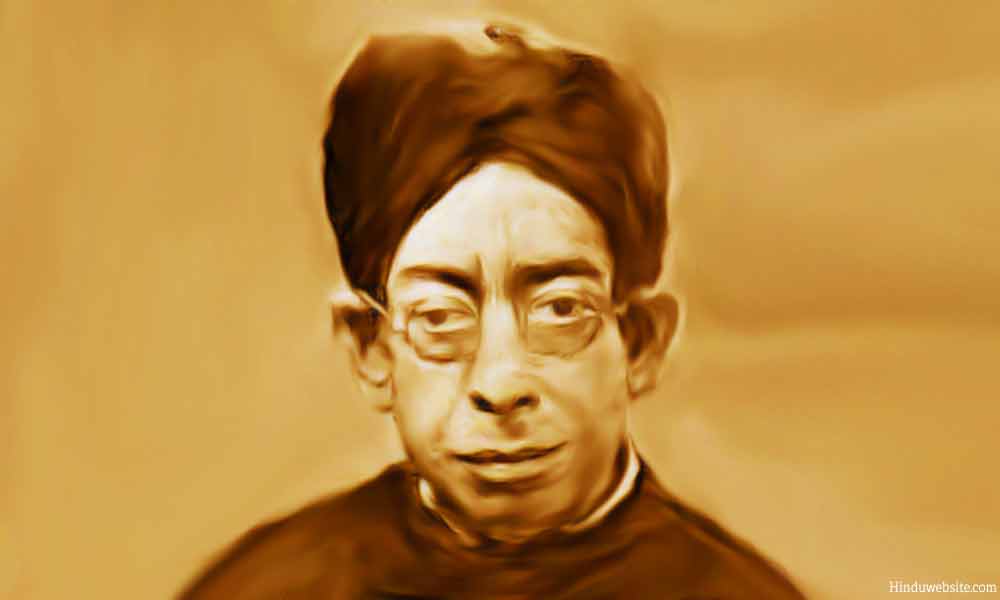
An artistic impression of Surendranath Dasgupta
| Ch1 || Ch2 || Ch3 || Ch4 || Ch5 || Ch6 || Ch7 ||Ch8 || Ch9 || Ch10 || Index ||
Criticism of Buddhism and Sâmkhya from the Nyâya standpoint.
The Buddhists had upset all common sense convictions of substance and attribute, cause and effect, and permanence of things, on the ground that all collocations are momentary; each group of collocations exhausts itself in giving rise to another group and that to another and so on. But if a collocation representing milk generates the collocation of curd it is said to be due to a joint action of the elements forming the cause-collocation and the _modus operandi_ is unintelligible; the elements composing the cause-collocation cannot separately generate the elements composing the effect-collocation, for on such a supposition it becomes hard to maintain the doctrine of momentariness as the individual and separate exercise of influence on the part of the cause-elements and their coordination and manifestation as effect cannot but take more than one moment.
The supposition that the whole of the effect-collocation is the result of the joint action of the elements of cause-collocation is against our universal uncontradicted experience that specific elements constituting the cause (e.g. the whiteness of milk) are the cause of other corresponding elements of the effect (e.g. the whiteness of the curd); and we could not say that the hardness, blackness, and other properties of the atoms of iron in a lump state should not be regarded as the cause of similar qualities in the iron ball, for this is against the testimony of experience. Moreover there would be no difference between material (_upâdâna_, e.g. clay of the jug), instrumental and concomitant causes (_nimitta_ and _sahakâri_, such as the potter, and the wheel, the stick etc. in forming the jug), for the causes jointly produce the effect, and there was no room for distinguishing the material and the instrumental causes, as such.
Again at the very moment in which a cause-collocation is brought into being, it cannot exert its influence to produce its effect-collocation. Thus after coming into being it would take the cause-collocation at least another moment to exercise its influence to produce the effect. How can the thing which is destroyed the moment after it is born produce any effect? The truth is that causal elements remain and when they are properly collocated the effect is produced. Ordinary experience also shows that we perceive things as existing from a past time. The past time is perceived by us as past, the present as present and the future as future and things are perceived as existing from a past time onwards.
The Sâmkhya assumption that effects are but the actualized states of the potential cause, and that the causal entity holds within it all the future series of effects, and that thus the effect is already existent even before the causal movement for the production of the effect, is also baseless. Sâmkhya says that the oil was already existent in the sesamum and not in the stone, and that it is thus that oil can be got from sesamum and not from the stone. The action of the instrumental cause with them consists only in actualizing or manifesting what was already existent in a potential form in the cause. This is all nonsense. A lump of clay is called the cause and the jug the effect; of what good is it to say that the jug exists in the clay since with clay we can never carry water? A jug is made out of clay, but clay is not a jug. What is meant by saying that the jug was unmanifested or was in a potential state before, and that it has now become manifest or actual? What does potential state mean? The potential state of the jug is not the same as its actual state; thus the actual state of the jug must be admitted as non-existent before. If it is meant that the jug is made up of the same parts (the atoms) of which the clay is made up, of course we admit it, but this does not mean that the jug was existent in the atoms of the lump of clay.
The potency inherent in the clay by virtue of which it can expose itself to the influence of other agents, such as the potter, for being transformed into a jug is not the same as the effect, the jug. Had it been so, then we should rather have said that the jug came out of the jug. The assumption of Sâmkhya that the substance and attribute have the same reality is also against all experience, for we all perceive that movement and attribute belong to substance and not to attribute. Again Sâmkhya holds a preposterous doctrine that buddhi is different from intelligence. It is absolutely unmeaning to call buddhi non-intelligent. Again what is the good of all this fictitious fuss that the qualities of buddhi are reflected on purusa and then again on buddhi. Evidently in all our experience we find that the soul (_âtman_) knows, feels and wills, and it is difficult to understand why Sâmkhya does not accept this patent fact and declare that knowledge, feeling, and willing, all belonged to buddhi.
Then again in order to explain experience it brought forth a theory of double reflection. Again Sâmkhya prakrti is non-intelligent, and where is the guarantee that she (prakrti) will not bind the wise again and will emancipate him once for all? Why did the purusa become bound down? Prakrti is being utilized for enjoyment by the infinite number of purusas, and she is no delicate girl (as Sâmkhya supposes) who will leave the presence of the purusa ashamed as soon as her real nature is discovered. Again pleasure (_sukha_), sorrow (_duhkha_) and a blinding feeling through ignorance (_moha_) are but the feeling-experiences of the soul, and with what impudence could Sâmkhya think of these as material substances? Again their cosmology of a mahat, ahamkâra, the tanmâtras, is all a series of assumptions never testified by experience nor by reason. They are all a series of hopeless and foolish blunders. The phenomena of experience thus call for a new careful reconstruction in the light of reason and experience such as cannot be found in other systems. (See _Nyâyamañjarî,_ pp. 452-466 and 490-496.)
Nyâya and Vais'esika sûtras.
It is very probable that the earliest beginnings of Nyâya are to be found in the disputations and debates amongst scholars trying to find out the right meanings of the Vedic texts for use in sacrifices and also in those disputations which took place between the adherents of different schools of thought trying to defeat one another. I suppose that such disputations occurred in the days of the Upanisads, and the art of disputation was regarded even then as a subject of study, and it probably passed then by the name _vâkovâkya_. Mr Bodas has pointed out that Âpastamba who according to Bühler lived before the third century B.C. used the word Nyâya in the sense of Mîmâmsâ [Footnote ref 1]. The word Nyâya derived
[Footnote 1 _Âpastamba,_ trans. by Bühler, Introduction, p. XXVII., and Bodas's article on the _Historical Survey of Indian Logic_ in the Bombay Branch of J.R.A.S., vol. XIX.]
from the root _nî_ is sometimes explained as that by which sentences and words could be interpreted as having one particular meaning and not another, and on the strength of this even Vedic accents of words (which indicate the meaning of compound words by pointing out the particular kind of compound in which the words entered into combination) were called Nyâya [Footnote ref 1]. Prof. Jacobi on the strength of Kautilya's enumeration of the _vidyâ_ (sciences) as Ânvîksikî (the science of testing the perceptual and scriptural knowledge by further scrutiny), _trayî_ (the three Vedas), _vârttâ_ (the sciences of agriculture, cattle keeping etc.), and _dandanîti_ (polity), and the enumeration of the philosophies as Sâmkhya, Yoga, Lokâyata and Ânvîksikî, supposes that the _Nyâya sûtra_ was not in existence in Kautilya's time 300 B.C.) [Footnote ref 2]. Kautilya's reference to Nyâya as Ânvîksikî only suggests that the word Nyâya was not a familiar name for Ânvîksikî in Kautilya's time. He seems to misunderstand Vâtsyâyana in thinking that Vâtsyâyana distinguishes Nyâya from the Ânvîksikî in holding that while the latter only means the science of logic the former means logic as well as metaphysics. What appears from Vâtsyâyana's statement in _Nyâya sûtra_ I.i. 1 is this that he points out that the science which was known in his time as Nyâya was the same as was referred to as Ânvîksikî by Kautilya. He distinctly identifies Nyâyavidyâ with Ânvîksikî, but justifies the separate enumeration of certain logical categories such as _sams'aya_ (doubt) etc., though these were already contained within the first two terms _pramâna_ (means of cognition) and _prameya_ (objects of cognition), by holding that unless these its special and separate branches (_prthakprasthâna_) were treated, Nyâyavidyâ would simply become metaphysics (_adhyâtmavidyâ_) like the Upanisads. The old meaning of Nyâya as the means of determining the right meaning or the right thing is also agreed upon by Vâtsyâyana and is sanctioned by Vâcaspati in his _Nyâyavârttikatâtparyatîkâ_ I.i. 1). He compares the meaning of the word Nyâya (_pramânairarthaparîksanam_--to scrutinize an object by means of logical proof) with the etymological meaning of the word ânvîksikî (to scrutinize anything after it has been known by perception and scriptures). Vâtsyâyana of course points out that so far as this logical side of Nyâya is concerned it has the widest scope for
[Footnote 1: Kâlidâsa's _Kumârasambhava "Udghâto pranavayâsâm nyâyaistribhirudîranam_," also Mallinâtha's gloss on it.]
[Footnote 2: Prof. Jacobi's "_The early history of Indian Philosophy," Indian Antiquary_, 1918.]
itself as it includes all beings, all their actions, and all the sciences [Footnote ref 1]. He quotes Kautilya to show that in this capacity Nyâya is like light illumining all sciences and is the means of all works. In its capacity as dealing with the truths of metaphysics it may show the way to salvation. I do not dispute Prof. Jacobi's main point that the metaphysical portion of the work was a later addition, for this seems to me to be a very probable view. In fact Vâtsyâyana himself designates the logical portion as a prthakprasthâna (separate branch). But I do not find that any statement of Vâtsyâyana or Kautilya can justify us in concluding that this addition was made after Kautilya. Vâtsyâyana has no doubt put more stress on the importance of the logical side of the work, but the reason of that seems to be quite obvious, for the importance of metaphysics or _adhyâtmavidyâ_ was acknowledged by all. But the importance of the mere logical side would not appeal to most people. None of the dharmas'âstras (religious scriptures) or the Vedas would lend any support to it, and Vâtsyâyana had to seek the support of Kautilya in the matter as the last resource. The fact that Kautilya was not satisfied by counting Ânvîksikî as one of the four vidyâs but also named it as one of the philosophies side by side with Sâmkhya seems to lead to the presumption that probably even in Kautilya's time Nyâya was composed of two branches, one as adhyâtmavidyâ and another as a science of logic or rather of debate. This combination is on the face of it loose and external, and it is not improbable that the metaphysical portion was added to increase the popularity of the logical part, which by itself might not attract sufficient attention. Mahâmahopâdhyâya Haraprasâda S'âstrî in an article in the _Journal of the Bengal Asiatic Society_ 1905 says that as Vâcaspati made two attempts to collect the _Nyâya sûtras_, one as _Nyâyasûci_ and the other as _Nyâyasûtroddhâra_, it seems that even in Vâcaspati's time he was not certain as to the authenticity of many of the _Nyâya sûtras_. He further points out that there are unmistakable signs that many of the sûtras were interpolated, and relates the Buddhist tradition from China and Japan that Mirok mingled Nyâya and Yoga. He also
[Footnote 1: _Yena prayuktah pravarttate tat prayojanam_ (that by which one is led to act is called _prayojanam_); _yamartham abhîpsan jihâsan vâ karma ârabhate tenânena sarve prâninah sarvâni karmâni sarvâs'ca vidyâh vyâptâh tadâs'rayâs'ca nyâyah pravarttate_ (all those which one tries to have or to fly from are called prayojana, therefore all beings, all their actions, and all sciences, are included within prayojana, and all these depend on Nyâya). _Vâtsyâyana bhâs'ya_, I.i. 1.]
thinks that the sûtras underwent two additions, one at the hands of some Buddhists and another at the hands of some Hindu who put in Hindu arguments against the Buddhist ones. These suggestions of this learned scholar seem to be very probable, but we have no clue by which we can ascertain the time when such additions were made. The fact that there are unmistakable proofs of the interpolation of many of the sûtras makes the fixing of the date of the original part of the _Nyâya sûtras_ still more difficult, for the Buddhist references can hardly be of any help, and Prof. Jacobi's attempt to fix the date of the _Nyâya sûtras_ on the basis of references to S'ûnyavâda naturally loses its value, except on the supposition that all references to S'ûnyavâda must be later than Nâgârjuna, which is not correct, since the _Mahâyâna sûtras_ written before Nâgârjuna also held the S'ûnyavâda doctrine.
The late Dr S.C. Vidyâbhûsana in _J.R.A.S._ 1918 thinks that the earlier part of Nyâya was written by Gautama about 550 B.C. whereas the _Nyâya sûtras_ of Aksapâda were written about 150 A.D. and says that the use of the word Nyâya in the sense of logic in _Mahâbhârata_ I.I. 67, I. 70. 42-51, must be regarded as interpolations. He, however, does not give any reasons in support of his assumption. It appears from his treatment of the subject that the fixing of the date of Aksapâda was made to fit in somehow with his idea that Aksapâda wrote his _Nyâya sûtras_ under the influence of Aristotle--a supposition which does not require serious refutation, at least so far as Dr Vidyâbhûsana has proved it. Thus after all this discussion we have not advanced a step towards the ascertainment of the date of the original part of the Nyâya. Goldstücker says that both Patañjali (140 B.C.) and Kâtyâyana (fourth century B.C.) knew the _Nyâya sûtras_ [Footnote ref 1]. We know that Kautilya knew the Nyâya in some form as Ânvîksikî in 300 B.C., and on the strength of this we may venture to say that the Nyâya existed in some form as early as the fourth century B.C. But there are other reasons which lead me to think that at least some of the present sûtras were written some time in the second century A.D. Bodas points out that Bâdarâyana's sûtras make allusions to the Vais'esika doctrines and not to Nyâya. On this ground he thinks that _Vais'esika sûtras_ were written before Bâdarâyana's _Brahma-sûtras_, whereas the Nyâya sûtras were written later. Candrakânta Tarkâlamkâra also contends in his
[Footnote 1: Goldstücker's _Pânini_, p. 157.]
edition of Vais'esika that the _Vais'esika sûtras_ were earlier than the Nyâya. It seems to me to be perfectly certain that the _Vais'esika sûtras_ were written before Caraka (80 A.D.); for he not only quotes one of the _Vais'esika sûtras_, but the whole foundation of his medical physics is based on the Vais`esika physics [Footnote ref 1]. The _Lankâvatâra sûtra_ (which as it was quoted by As'vaghosa is earlier than 80 A.D.) also makes allusions to the atomic doctrine. There are other weightier grounds, as we shall see later on, for supposing that the _Vais'esika sûtras_ are probably pre-Buddhistic [Footnote ref 2].
It is certain that even the logical part of the present _Nyâya sûtras_ was preceded by previous speculations on the subject by thinkers of other schools. Thus in commenting on I.i. 32 in which the sûtra states that a syllogism consists of five premisses (_avayava_) Vâtsyâyana says that this sûtra was written to refute the views of those who held that there should be ten premisses [Footnote ref 3]. The _Vais'esika sûtras_ also give us some of the earliest types of inference, which do not show any acquaintance with the technic of the Nyâya doctrine of inference [Footnote ref 4].
Does Vais'esika represent an Old School of Mîmâmsâ?
The Vais'esika is so much associated with Nyâya by tradition that it seems at first sight quite unlikely that it could be supposed to represent an old school of Mîmâmsâ, older than that represented in the _Mîmâmsâ sûtras._ But a closer inspection of the _Vais'esika sûtras_ seems to confirm such a supposition in a very remarkable way. We have seen in the previous section that Caraka quotes a _Vais'esika sûtra._ An examination of Caraka's _Sûtrasthâna_ (I.35-38) leaves us convinced that the writer of the verses had some compendium of Vais'esika such as that of the _Bhâsâpariccheda_ before him. _Caraka sûtra_ or _kârikâ_ (I.i. 36) says that the gunas are those which have been enumerated such as heaviness, etc., cognition, and those which begin with the guna "_para_" (universality) and end with "_prayatna_" (effort) together with the sense-qualities (_sârthâ_). It seems that this is a reference to some well-known enumeration. But this enumeration is not to be found in the _Vais'esika sûtra_ (I.i. 6) which leaves out the six gunas,
[Footnote 1: _Caraka, S'ârîra_, 39.]
[Footnote 2: See the next section.]
[Footnote 3: Vâtsyâyana's Bhâsya on the _Nyâya sûtras,_ I.i.32. This is undoubtedly a reference to the Jaina view as found in _Das'avaikâlikaniryukti_ as noted before.]
[Footnote 4: _Nyâya sûtra_ I.i. 5, and _Vais'esika sûtras_ IX. ii. 1-2, 4-5, and III. i. 8-17.]
heaviness (_gurutva_), liquidity (_dravatva_), oiliness(_sneha_), elasticity (_samskâra_), merit (_dharma_) and demerit (_adharma_); in one part of the sûtra the enumeration begins with "para" (universality) and ends in "prayatna," but buddhi (cognition) comes within the enumeration beginning from para and ending in prayatna, whereas in Caraka buddhi does not form part of the list and is separately enumerated. This leads me to suppose that Caraka's sûtra was written at a time when the six gunas left out in the Vais'esika enumeration had come to be counted as gunas, and compendiums had been made in which these were enumerated. _Bhâsâpariccheda_ (a later Vais'esika compendium), is a compilation from some very old kârikâs which are referred to by Vis'vanâtha as being collected from "_atisamksiptacirantanoktibhih_"--(from very ancient aphorisms [Footnote ref 1]); Caraka's definition of sâmânya and vis'esa shows that they had not then been counted as separate categories as in later Nyâya-Vais'esika doctrines; but though slightly different it is quite in keeping with the sort of definition one finds in the _Vais'esika sûtra_ that sâmânya (generality) and vi'sesa are relative to each other [Footnote ref 2]. Caraka's sûtras were therefore probably written at a time when the Vais'esika doctrines were undergoing changes, and well-known compendiums were beginning to be written on them.
The _Vais'esika sûtras_ seem to be ignorant of the Buddhist doctrines. In their discussions on the existence of soul, there is no reference to any view as to non-existence of soul, but the argument turned on the point as to whether the self is to be an object of inference or revealed to us by our notion of "I." There is also no other reference to any other systems except to some Mîmâmsâ doctrines and occasionally to Sâmkhya. There is no reason to suppose that the Mîmâmsâ doctrines referred to allude to the _Mîmâmsâ sûtras_ of Jaimini. The manner in which the nature of inference has been treated shows that the Nyâya phraseology of "_pûrvavat_" and "_s'esavat_" was not known. _Vais'esika sûtras_ in more than one place refer to time as the ultimate cause [Footnote ref 3]. We know that the S'vetâs'vatara Upanisad refers to those who regard time as the cause of all things, but in none of the
[Footnote 1: Professor Vanamâlî Vedântatîrtha's article in _J.A.S.B._, 1908.]
[Footnote 2: Caraka (I.i. 33) says that sâmânya is that which produces unity and vis'esa is that which separates. V.S. II. ii. 7. Sâmânya and vis'esa depend upon our mode of thinking (as united or as separate).]
[Footnote 3: _Vais'esika sûtra_ (II. ii. 9 and V. ii. 26).]
systems that we have can we trace any upholding of this ancient view [Footnote ref 1]. These considerations as well as the general style of the work and the methods of discussion lead me to think that these sûtras are probably the oldest that we have and in all probability are pre-Buddhistic.
The _Vais'esika sûtra_ begins with the statement that its object is to explain virtue, "dharma" This is we know the manifest duty of Mîmâmsâ and we know that unlike any other system Jaimini begins his _Mîmâmsâ sûtras_ by defining "dharma". This at first seems irrelevant to the main purpose of Vais'esika, viz, the description of the nature of padartha [Footnote ref 2]. He then defines dharma as that which gives prosperity and ultimate good (_nihsreyasa_) and says that the Veda must be regarded as valid, since it can dictate this. He ends his book with the remarks that those injunctions (of Vedic deeds) which are performed for ordinary human motives bestow prosperity even though their efficacy is not known to us through our ordinary experience, and in this matter the Veda must be regarded as the authority which dictates those acts [Footnote ref 3]. The fact that the Vais'esika begins with a promise to describe dharma and after describing the nature of substances, qualities and actions and also the _adrsta_ (unknown virtue) due to dharma (merit accruing from the performance of Vedic deeds) by which many of our unexplained experiences may be explained, ends his book by saying that those Vedic works which are not seen to produce any direct effect, will produce prosperity through adrsta, shows that Kanâda's method of explaining dharma has been by showing that physical phenomena involving substances, qualities, and actions can only be explained up to a certain extent while a good number cannot be explained at all except on the assumption of adrsta (unseen virtue) produced by dharma. The
[Footnote 1: S'vetâs'vatara I.i.2]
[Footnote 2: I remember a verse quoted in an old commentary of the _Kalâpa Vyâkarana_, in which it is said that the description of the six categories by Kanâda in his _Vais'esika sûtras_, after having proposed to describe the nature of dharma, is as irrelevant as to proceed towards the sea while intending to go to the mountain Himavat (Himâlaya).
"_Dnarmam vyâkhyâtukâmasya satpadârthopavarnanam Himavadgantukâmasya sâgaragamanopamam_."]
[Footnote 3: The sutra "_Tadvacanâd âmnâyasya prâmânyam_ (I.i.3 and X.ii.9) has been explained by _Upaskâra_ as meaning "The Veda being the word of Îs'vara (God) must be regarded as valid," but since there is no mention of Îs'vara anywhere in the text this is simply reading the later Nyâya ideas into the Vais'esika. Sûtra X.ii.8 is only a repetition of VI.ii.1.]
description of the categories of substance is not irrelevant, but is the means of proving that our ordinary experience of these cannot explain many facts which are only to be explained on the supposition of adrsta proceeding out of the performance of Vedic deeds. In V.i. 15 the movement of needles towards magnets, in V. ii. 7 the circulation of water in plant bodies, V. ii. 13 and IV. ii. 7 the upward motion of fire, the side motion of air, the combining movement of atoms (by which all combinations have taken place), and the original movement of the mind are said to be due to adrsta. In V. ii. 17 the movement of the soul after death, its taking hold of other bodies, the assimilation of food and drink and other kinds of contact (the movement and development of the foetus as enumerated in _Upaskara_) are said to be due to adrsta. Salvation (moksa) is said to be produced by the annihilation of adrsta leading to the annihilation of all contacts and non production of rebirths Vais'esika marks the distinction between the drsta (experienced) and the adrsta. All the categories that he describes are founded on drsta (experience) and those unexplained by known experience are due to adrsta These are the acts on which depend all life-process of animals and plants, the continuation of atoms or the construction of the worlds, natural motion of fire and air, death and rebirth (VI. ii. 15) and even the physical phenomena by which our fortunes are affected in some way or other (V. ii. 2), in fact all with which we are vitally interested in philosophy. Kanâda's philosophy gives only some facts of experience regarding substances, qualities and actions, leaving all the graver issues of metaphysics to adrsta But what leads to adrsta? In answer to this, Kanâda does not speak of good or bad or virtuous or sinful deeds, but of Vedic works, such as holy ablutions (_snana_), fasting, holy student life (_brahmacarya_), remaining at the house of the teacher (_gurukulavasa_), retired forest life (_vanaprastha_), sacrifice (_yajña_), gifts (_dana_), certain kinds of sacrificial sprinkling and rules of performing sacrificial works according to the prescribed time of the stars, the prescribed hymns (mantras) (VI. ii. 2).
He described what is pure and what is impure food, pure food being that which is sacrificially purified (VI. ii. 5) the contrary being impure, and he says that the taking of pure food leads to prosperity through adrsta. He also described how
feelings of attachment to things are also generated by adrsta. Throughout almost the whole of VI. i Kanâda is busy in showing the special conditions of making gifts and receiving them. A reference to our chapter on Mîmâmsâ will show that the later Mîmâmsâ writers agreed with the Nyâya-Vais`esika doctrines in most of their views regarding substance, qualities, etc. Some of the main points in which Mîmâmsâ differs from Nyâya-Vais`esika are (1) self-validity of the Vedas, (2) the eternality of the Vedas, (3) disbelief in any creator or god, (4) eternality of sound (s'abda), (5) (according to Kumârila) direct perception of self in the notion of the ego. Of these the first and the second points do not form any subject of discussion in the Vais'esika. But as no Îs'vara is mentioned, and as all adrsta depends upon the authority of the Vedas, we may assume that Vais'esika had no dispute with Mîmâmsâ. The fact that there is no reference to any dissension is probably due to the fact that really none had taken place at the time of the _Vais`esika sûtras._ It is probable that Kanâda believed that the Vedas were written by some persons superior to us (II. i. 18, VI. i. 1-2). But the fact that there is no reference to any conflict with Mîmâmsâ suggests that the doctrine that the Vedas were never written by anyone was formulated at a later period, whereas in the days of the _Vais'esika sûtras,_ the view was probably what is represented in the _Vais'esika sûtras._ As there is no reference to Îs`vara and as adrsta proceeding out of the performance of actions in accordance with Vedic injunctions is made the cause of all atomic movements, we can very well assume that Vais'esika was as atheistic or non-theistic as the later Mîmâmsâ philosophers. As regards the eternality of sound, which in later days was one of the main points of quarrel between the Nyâya-Vais'esika and the Mîmâmsâ, we find that in II. ii. 25-32, Kanâda gives reasons in favour of the non-eternality of sound, but after that from II. ii. 33 till the end of the chapter he closes the argument in favour of the eternality of sound, which is the distinctive Mîmâmsâ view as we know from the later Mîmâmsâ writers [Footnote ref 1]. Next comes the question of the proof of the existence of self. The traditional Nyâya view is
[Footnote 1: The last two concluding sûtras II. ii. 36 and 37 are in my opinion wrongly interpreted by S'ankara Mis'ra in his _Upaskâra_ (II. ii. 36 by adding an "_api_" to the sûtra and thereby changing the issue, and II. ii. 37 by misreading the phonetic combination "samkhyabhava" as sâmkhya and bhava instead of sâmkhya and abhava, which in my opinion is the right combination here) in favour of the non-eternality of sound as we find in the later Nyâya Vais'esika view.]
that the self is supposed to exist because it must be inferred as the seat of the qualities of pleasure, pain, cognition, etc. Traditionally this is regarded as the Vais'esika view as well. But in Vais'esika III. ii. 4 the existence of soul is first inferred by reason of its activity and the existence of pleasure, pain, etc., in III. ii. 6-7 this inference is challenged by saying that we do not perceive that the activity, etc. belongs to the soul and not to the body and so no certainty can be arrived at by inference, and in III. ii. 8 it is suggested that therefore the existence of soul is to be accepted on the authority of the scriptures (_âgama_). To this the final Vais'esika conclusion is given that we can directly perceive the self in our feeling as "I" (_aham_), and we have therefore not to depend on the scriptures for the proof of the existence of the self, and thus the inference of the existence of the self is only an additional proof of what we already find in perception as "I" (_aham_) (III. ii. 10-18, also IX. i. 11).
These considerations lead me to think that the Vais'esika represented a school of Mîmâmsâ thought which supplemented a metaphysics to strengthen the grounds of the Vedas.
Philosophy in the Vais'esika sûtras.
The _Vais'esika sûtras_ begin with the ostensible purpose of explaining virtue (_dharma_) (I.i. 1) and dharma according to it is that by which prosperity (_abhyudaya_) and salvation (_nihs'reyasa_) are attained. Then it goes on to say that the validity of the Vedas depends on the fact that it leads us to prosperity and salvation. Then it turns back to the second sûtra and says that salvation comes as the result of real knowledge, produced by special excellence of dharma, of the characteristic features of the categories of substance (_dravya_), quality (_guna_), class concept (_sâmdânya_), particularity (_vis'esa_), and inherence (_samavâyay_) [Footnote ref 1]. The dravyas are earth, water, fire, air, ether, time, space, soul, and mind. The gunas are colour, taste, odour, touch, number, measure, separations, contact, disjoining, quality of belonging to high genus or to species [Footnote ref 2]. Action (_karma_) means upward movement
[Footnote 1: _Upaskâra_ notes that vis'esa here refers to the ultimate differences of things and not to species. A special doctrine of this system is this, that each of the indivisible atoms of even the same element has specific features of difference.]
[Footnote 2: Here the well known qualities of heaviness (_gurutva_), liquidity (_dravatva_), oiliness (_sneha_), elasticity (_samskâra_), merit (_dharma_), and demerit (_adharma_) have been altogether omitted. These are all counted in later Vais'esika commentaries and compendiums. It must be noted that "_guna_" in Vas'esika means qualities and not subtle reals or substances as in Sâmkhya Yoga. Guna in Vas'esika would be akin to what Yoga would call _dharma_.]
downward movement, contraction, expansion and horizontal movement. The three common qualities of dravya, guna and karma are that they are existent, non-eternal, substantive, effect, cause, and possess generality and particularity. Dravya produces other dravyas and the gunas other gunas. But karma is not necessarily produced by karma. Dravya does not destroy either its cause or its effect but the gunas are destroyed both by the cause and by the effect. Karma is destroyed by karma. Dravya possesses karma and guna and is regarded as the material (_samavayi_) cause. Gunas inhere in dravya, cannot possess further gunas, and are not by themselves the cause of contact or disjoining. Karma is devoid of guna, cannot remain at one time in more than one object, inheres in dravya alone, and is an independent cause of contact or disjoining. Dravya is the material cause (samavayi) of (derivative) dravyas, guna, and karma, guna is also the non-material cause (_asamavayi_) of dravya, guna and karma. Karma is the general cause of contact, disjoining, and inertia in motion (_vega_). Karma is not the cause of dravya. For dravya may be produced even without karma [Footnote ref 1]. Dravya is the general effect of dravya. Karma is dissimilar to guna in this that it does not produce karma. The numbers two, three, etc, separateness, contact and disjoining are effected by more than one dravya. Each karma not being connected with more than one thing is not produced by more than one thing [Footnote ref 2]. A dravya is the result of many contacts (of the atoms). One colour may be the result of many colours. Upward movement is the result of heaviness, effort and contact. Contact and disjoining are also the result of karma. In denying the causality of karma it is meant that karma is not the cause of dravya and karma [Footnote ref 3].
In the second chapter of the first book Kanâda first says that if there is no cause, there is no effect, but there may be the cause even though there may not be the effect. He next says that genus (_samanya_) and species (_visesa_) are relative to the understanding;
[Footnote 1: It is only when the karya ceases that dravya is produced. See _Upaskara_ I.i. 22.]
[Footnote 2: If karma is related to more than one thing, then with the movement of one we should have felt that two or more things were moving.]
[Footnote 3: It must be noted that karma in this sense is quite different from the more extensive use of karma as meritorious or vicious action which is the cause of rebirth.]
being (_bhâva_) indicates continuity only and is hence only a genus. The universals of substance, quality and action maybe both genus and species, but visesa as constituting the ultimate differences (of atoms) exists (independent of any percipient). In connection with this he says that the ultimate genus is being (_sattâ_) in virtue of which things appear as existent, all other genera may only relatively be regarded as relative genera or species. Being must be regarded as a separate category, since it is different from dravya, guna and karma, and yet exists in them, and has no genus or species. It gives us the notion that something is and must be regarded as a category existing as one identical entity in all dravya, guna, and karma, for in its universal nature as being it has no special characteristics in the different objects in which it inheres. The specific universals of thingness (_dravyatva_) qualitiness (_gunatva_) or actionness (_karmatva_) are also categories which are separate from universal being (_bhâva_ or _sattâ_) for they also have no separate genus or species and yet may be distinguished from one another, but bhâva or being was the same in all.
In the first chapter of the second book Kanâda deals with substances. Earth possesses colour, taste, smell, and touch, water, colour, taste, touch, liquidity, and smoothness (_snigdha_), fire, colour and touch, air, touch, but none of these qualities can be found in ether (_âkâs'a_). Liquidity is a special quality of water because butter, lac, wax, lead, iron, silver, gold, become liquids only when they are heated, while water is naturally liquid itself [Footnote ref 1]. Though air cannot be seen, yet its existence can be inferred by touch, just as the existence of the genus of cows may be inferred from the characteristics of horns, tails, etc. Since this thing inferred from touch possesses motion and quality, and does not itself inhere in any other substance, it is a substance (dravya) and is eternal [Footnote ref 2]. The inference of air is of the type of inference of imperceptible things from certain known characteristics called _sâmânyato drsta_. The name of air "_vâyu_" is derived from the scriptures. The existence of others different from us has (_asmadvis'istânâm_) to be admitted for accounting for the
[Footnote 1: It should be noted that mercury is not mentioned. This is important for mercury was known at a time later than Caraka.]
[Footnote 2: Substance is that which possesses quality and motion. It should be noted that the word "_adravyatvena_" in II. i. 13 has been interpreted by me as "_adravyavattvena_."]
giving of names to things (_samjñâkarma_). Because we find that the giving of names is already in usage (and not invented by us) [Footnote ref 1]. On account of the fact that movements rest only in one thing, the phenomenon that a thing can enter into any unoccupied space, would not lead us to infer the existence of âkâs'a (ether). Âkâs'a has to be admitted as the hypothetical substance in which the quality of sound inheres, because, since sound (a quality) is not the characteristic of things which can be touched, there must be some substance of which it is a quality. And this substance is âkâs'a. It is a substance and eternal like air. As being is one so âkâs'a is one [Footnote ref 2].
In the second chapter of the second book Kanâda tries to prove that smell is a special characteristic of earth, heat of fire, and coldness of water. Time is defined as that which gives the notion of youth in the young, simultaneity, and quickness. It is one like being. Time is the cause of all non-eternal things, because the notion of time is absent in eternal things. Space supplies the notion that this is so far away from this or so much nearer to this. Like being it is one. One space appears to have diverse inter-space relations in connection with the motion of the sun. As a preliminary to discussing the problem whether sound is eternal or not, he discusses the notion of doubt, which arises when a thing is seen in a general way, but the particular features coming under it are not seen, either when these are only remembered, or when some such attribute is seen which resembles some other attribute seen before, or when a thing is seen in one way but appears in another, or when what is seen is not definitely grasped, whether rightly seen or not. He then discusses the question whether sound is eternal or non-eternal and gives his reasons to show that it is non-eternal, but concludes the discussion with a number of other reasons proving that it is eternal.
The first chapter of the third book is entirely devoted to the inference of the existence of soul from the fact that there must be some substance in which knowledge produced by the contact of the senses and their object inheres.
The knowledge of sense-objects (_indriyârtha_) is the reason by
[Footnote 1: I have differed from _Upaskâra_ in interpreting "_samjñâkarma_" in II. i. 18, 19 as a genitive compound while _Upaskâra_ makes it a _dvandva_ compound. Upaskâra's interpretation seems to be far-fetched. He wants to twist it into an argument for the existence of God.]
[Footnote 2: This interpretation is according to S'ankara Mis'ra's _Upaskâra._]
which we can infer the existence of something different from the senses and the objects which appear in connection with them. The types of inferences referred to are (1) inference of non-existence of some things from the existence of some things, (2) of the existence of some things from the non-existence of some things, (3) of the existence of some things from the existence of others. In all these cases inference is possible only when the two are known to be connected with each other (_prasiddhipûrvakatvât apades'asya_) [Footnote ref 1]. When such a connection does not exist or is doubtful, we have _anapades'a_ (fallacious middle) and _sandigdha_ (doubtful middle); thus, it is a horse because it has a horn, or it is a cow because it has a horn are examples of fallacious reason. The inference of soul from the cognition produced by the contact of soul, senses and objects is not fallacious in the above way. The inference of the existence of the soul in others may be made in a similar way in which the existence of one's own soul is inferred [Footnote ref 2], i.e. by virtue of the existence of movement and cessation of movement. In the second chapter it is said that the fact that there is cognition only when there is contact between the self, the senses and the objects proves that there is manas (mind), and this manas is a substance and eternal, and this can be proved because there is no simultaneity of production of efforts and various kinds of cognition; it may also be inferred that this manas is one (with each person).
The soul may be inferred from inhalation, exhalation, twinkling of the eye, life, the movement of the mind, the sense-affections pleasure, pain, will, antipathy, and effort. That it is a substance and eternal can be proved after the manner of vâyu. An objector is supposed to say that since when I see a man I do not see his soul, the inference of the soul is of the type of _sâmânyatodrsta_ inference, i.e., from the perceived signs of pleasure, pain, cognition to infer an unknown entity to which they belong, but that this was the self could not be affirmed. So the existence of soul has to be admitted on the strength of the scriptures. But the Vais'esika reply is that since there is nothing else but self to which the expression "I" may be applied, there is no need of falling back on the scriptures for the existence of the soul. But
[Footnote 1: In connection with this there is a short reference to the methods of fallacy in which Gautama's terminology does not appear. There is no generalised statement, but specific types of inference are only pointed out as the basis.]
[Footnote 2: The forms of inference used show that Kanâda was probably not aware of Gautama's terminology.]
then it is said that if the self is directly perceived in such experiences as "I am Yajñadatta" or "I am Devadatta," what is the good of turning to inference? The reply to this is that inference lending its aid to the same existence only strengthens the conviction. When we say that Devadatta goes or Yajñadatta goes, there comes the doubt whether by Devadatta or Yajñadatta the body alone is meant; but the doubt is removed when we think that the notion of "I" refers to the self and not to anything else. As there is no difference regarding the production of pleasure, pain, and cognition, the soul is one in all. But yet it is many by special limitations as individuals and this is also proved on the strength of the scriptures [Footnote ref 1].
In the first chapter of the fourth book it is said that that which is existent, but yet has no cause, should be considered eternal (_nitya_). It can be inferred by its effect, for the effect can only take place because of the cause. When we speak of anything as non-eternal, it is only a negation of the eternal, so that also proves that there is something eternal. The non-eternal is ignorance (_avidyâ_) [Footnote ref 2]. Colour is visible in a thing which is great (_mahat_) and compounded. Air (_vâyu_) is not perceived to have colour, though it is great and made up of parts, because it has not the actuality of colour (_rûpasamskâra_--i.e. in air there is only colour in its unmanifested form) in it. Colour is thus visible only when there is colour with special qualifications and conditions [Footnote ref 3]. In this way the cognition of taste, smell, and touch is also explained. Number, measure, separateness, contact, and disjoining, the quality of belonging to a higher or lower class, action, all these as they abide in things possessing colour are visible to the eye. The number etc. of those which have no colour are not perceived by the eye. But the notion of being and also of genus of quality (gunatva)
[Footnote 1: I have differed here from the meaning given in _Upaskâra_. I think the three sûtras "_Sukhaduhkhajñananispattyavis'esadekatmyam," "vyavasthato nana,"_ and _"vastrasâmarthyat ca"_ originally meant that the self was one, though for the sake of many limitations, and also because of the need of the performance of acts enjoined by the scriptures, they are regarded as many.]
[Footnote 2: I have differed here also in my meaning from the _Upaskâra,_ which regards this sûtra "_avidya_" to mean that we do not know of any reasons which lead to the non-eternality of the atoms.]
[Footnote 3: This is what is meant in the later distinctions of _udbhûtarûpavattva_ and _anudbhûtarûpavattva_. The word _samskâra_ in Vais'esika has many senses. It means inertia, elasticity, collection (_samavaya_), production (_udbhava_) and not being overcome (_anabhibhava_). For the last three senses see _Upaskâra_ IV. i. 7.]
are perceived by all the senses (just as colour, taste, smell, touch, and sound are perceived by one sense, cognition, pleasure, pain, etc. by the manas and number etc. by the visual and the tactile sense) [Footnote ref 1].
In the second chapter of the fourth book it is said that the earth, etc. exist in three forms, body, sense, and objects. There cannot be any compounding of the five elements or even of the three, but the atoms of different elements may combine when one of them acts as the central radicle (_upastambhaka_). Bodies are of two kinds, those produced from ovaries and those which are otherwise produced by the combination of the atoms in accordance with special kinds of dharma. All combinations of atoms are due to special kinds of dharmas. Such super-mundane bodies are to be admitted for explaining the fact that things must have been given names by beings having such super-mundane bodies, and also on account of the authority of the Vedas.
In the first chapter of the fifth book action (_karma_) is discussed. Taking the example of threshing the corn, it is said that the movement of the hand is due to its contact with the soul in a state of effort, and the movement of the flail is due to its contact with the hand. But in the case of the uprising of the flail in the threshing pot due to impact the movement is not due to contact with the hands, and so the uplifting of the hand in touch with the flail is not due to its contact with the soul; for it is due to the impact of the flail. On account of heaviness (_gurutva_) the flail will fall when not held by the hand. Things may have an upward or side motion by specially directed motions (_nodanavis'esa_) which are generated by special kinds of efforts. Even without effort the body may move during sleep. The movement of needles towards magnets is due to an unknown cause (_adrstakâranaka_). The arrow first acquires motion by specially directed movement, and then on account of its inertia (_vegasamskâra_) keeps on moving and when that ceases it falls down through heaviness.
The second chapter abounds with extremely crude explanations
[Footnote 1: This portion has been taken from the _Upaskâra_ of S'ankara Mis'ra on the _Vais'esika sûtras_ of Kanâda. It must be noted here that the notion of number according to Vais'esika is due to mental relativity or oscillation (_apeksabuddhijanya_). But this mental relativity can only start when the thing having number is either seen or touched; and it is in this sense that notion of number is said to depend on the visual or the tactual sense.]
of certain physical phenomena which have no philosophical importance. All the special phenomena of nature are explained as being due to unknown cause (_adrstakâritam_) and no explanation is given as to the nature of this unknown (_adrsta_). It is however said that with the absence of _adrsta_ there is no contact of body with soul, and thus there is no rebirth, and therefore moksa (salvation); pleasure and pain are due to contact of the self, manas, senses and objects. Yoga is that in which the mind is in contact with the self alone, by which the former becomes steady and there is no pain in the body. Time, space, âkâs'a are regarded as inactive.
The whole of the sixth book is devoted to showing that gifts are made to proper persons not through sympathy but on account of the injunction of the scriptures, the enumeration of certain Vedic performances, which brings in adrsta, purification and impurities of things, how passions are often generated by adrsta, how dharma and adharma lead to birth and death and how moksa takes place as a result of the work of the soul.
In the seventh book it is said that the qualities in eternal things are eternal and in non-eternal things non-eternal. The change of qualities produced by heat in earth has its beginning in the cause (the atoms). Atomic size is invisible while great size is visible. Visibility is due to a thing's being made up of many causes [Footnote ref 1], but the atom is therefore different from those that have great size. The same thing may be called great and small relatively at the same time. In accordance with anutva (atomic) and mahattva (great) there are also the notions of small and big. The eternal size of _parimandala_ (round) belongs to the atoms. Âkâs'a and âtman are called _mahân_ or _paramamahân_ (the supremely great or all-pervasive); since manas is not of the great measure it is of atomic size. Space and time are also considered as being of the measure "supremely great" (paramamahat), Atomic size (parimandala) belonging to the atoms and the mind (manas) and the supremely great size belonging to space, time, soul and ether (âkâs'a) are regarded as eternal.
In the second chapter of the seventh book it is said that unity and separateness are to be admitted as entities distinct from other qualities. There is no number in movement and quality; the appearance of number in them is false. Cause and effect are
[Footnote 1: I have differed from the _Upaskâra_ in the interpretation of this sûtra.]
neither one, nor have they distinctive separateness (_ekaprthaktva_). The notion of unity is the cause of the notion of duality, etc. Contact may be due to the action of one or two things, or the effect of another contact and so is disjoining. There is neither contact nor disjoining in cause and effect since they do not exist independently (_yutasiddhyabhâvât_). In the eighth book it is said that soul and manas are not perceptible, and that in the apprehension of qualities, action, generality, and particularity perception is due to their contact with the thing. Earth is the cause of perception of smell, and water, fire, and air are the cause of taste, colour and touch[Footnote ref 1]. In the ninth book negation is described; non-existence (_asat_) is defined as that to which neither action nor quality can be attributed. Even existent things may become non-existent and that which is existent in one way may be non-existent in another; but there is another kind of non-existence which is different from the above kinds of existence and non-existence [Footnote ref 2]. All negation can be directly perceived through the help of the memory which keeps before the mind the thing to which the negation applies. Allusion is also made in this connection to the special perceptual powers of the yogins (sages attaining mystical powers through Yoga practices).
In the second chapter the nature of hetu (reason) or the middle term is described. It is said that anything connected with any other thing, as effect, cause, as in contact, or as contrary or as inseparably connected, will serve as linga (reason). The main point is the notion "this is associated with this," or "these two are related as cause and effect," and since this may also be produced through premisses, there may be a formal syllogism from propositions fulfilling the above condition. Verbal cognition comes without inference. False knowledge (_avidyâ_) is due to the defect of the senses or non-observation and mal-observation due to wrong expectant impressions. The opposite of this is true knowledge (_vidyâ_). In the tenth it is said that pleasure and pain are not cognitions, since they are not related to doubt and certainty.
[Footnote 1: _Upaskâra_ here explains that it is intended that the senses are produced by those specific elements, but this cannot be found in the sûtras.]
[Footnote 2: In the previous three kinds of non-existence, _prâgabhâva_ (negation before production), _dhvamsâbhâva_ (negation after destruction), and _anyonyabhava_ (mutual negation of each other in each other), have been described. The fourth one is _sâmânyâbhâva_ (general negation).]
A dravya may be caused by the inhering of the effect in it, for because of its contact with another thing the effect is produced. Karma (motion) is also a cause since it inheres in the cause. Contact is also a cause since it inheres in the cause. A contact which inheres in the cause of the cause and thereby helps the production of the effect is also a cause. The special quality of the heat of fire is also a cause.
Works according to the injunctions of the scriptures since they have no visible effect are the cause of prosperity, and because the Vedas direct them, they have validity.
Philosophy in the Nyâya sûtras [Footnote ref 1].
The _Nyâya sûtras_ begin with an enumeration of the sixteen subjects, viz. means of right knowledge (_pramâna_), object of right knowledge (_prameya_), doubt (_sams'aya_), purpose (_prayojana_), illustrative instances (_drstânta_), accepted conclusions (_siddhânta_), premisses (_avayava_), argumentation (_tarka_), ascertainment (_nirnaya_), debates (_vâda_), disputations (_jalpa_), destructive criticisms (_vitandâ_), fallacy (_hetvâbhâsa_), quibble (_chala_), refutations (_jâti_), points of opponent's defeat (_nigrahasthâna_), and hold that by a thorough knowledge of these the highest good (_nihs'reyasa_), is attained. In the second sûtra it is said that salvation (_apavarga_) is attained by the successive disappearance of false knowledge (_mithyâjñâna_), defects (_dosa_), endeavours (_pravrtti_, birth (_janma_), and ultimately of sorrow. Then the means of proof are said to be of four kinds, perception (_pratyaksa_), inference (_anumâna_), analogy (_upamana_), and testimony (_s'abda_). Perception is defined as uncontradicted determinate knowledge unassociated with names proceeding out of sense contact with objects. Inference is of three kinds, from cause to effect (_pûrvavat_), effect to cause (_s'esavat_), and inference from common characteristics (_sâmânyato drsta_). Upamâna is the knowing of anything by similarity with any well-known thing.
S'abda is defined as the testimony of reliable authority (âpta) [Footnote ref 2].
[Footnote 1: This is a brief summary of the doctrines found in _Nyâya sûtras_, supplemented here and there with the views of Vâtsyâyana, the commentator. This follows the order of the sûtras, and tries to present their ideas with as little additions from those of later day Nyâya as possible. The general treatment of Nyâya-Vais'esika expounds the two systems in the light of later writers and commentators.]
[Footnote 2: It is curious to notice that Vâtsyâyana says that an ârya, a rsi or a mleccha (foreigner), may be an âpta (reliable authority).]
Such a testimony may tell us about things which may be experienced and which are beyond experience. Objects of knowledge are said to be self (_âtman_), body, senses, sense-objects, understanding (_buddhi_), mind (_manas_}, endeavour (pravrtti), rebirths, enjoyment of pleasure and suffering of pain, sorrow and salvation. Desire, antipathy, effort (_prayatna_), pleasure, pain, and knowledge indicate the existence of the self. Body is that which upholds movement, the senses and the rise of pleasure and pain as arising out of the contact of sense with sense-objects [Footnote ref l]; the five senses are derived from the five elements, such as prthivi, ap, tejas, vâyu and âkâs'a; smell, taste, colour, touch, and sound are the qualities of the above five elements, and these are also the objects of the senses. The fact that many cognitions cannot occur at any one moment indicates the existence of mind (_manas_). Endeavour means what is done by speech, understanding, and body. Dosas (attachment, antipathy, etc) are those which lead men to virtue and vice. Pain is that which causes suffering [Footnote ref 2]. Ultimate cessation from pain is called _apavarga_ [Footnote ref 3]. Doubt arises when through confusion of similar qualities or conflicting opinions etc., one wants to settle one of the two alternatives. That for attaining which, or for giving up which one sets himself to work is called _prayojana_.
Illustrative example (_drstânta_) is that on which both the common man and the expert (_parîksaka_) hold the same opinion. Established texts or conclusions (_siddhânta_) are of four kinds, viz (1) those which are accepted by all schools of thought called the _sarvatantrasiddhânta_; (2) those which are held by one school or similar schools but opposed by others called the _pratitantrasiddhânta_; (3) those which being accepted other conclusions will also naturally follow called _adhikaranasiddhânta_; (4) those of the opponent's views which are uncritically granted by a debater, who proceeds then to refute the consequences that follow and thereby show his own special skill and bring the opponent's intellect to disrepute (_abhyupagamasiddhânta_) [Footnote ref 4]. The premisses are five:
[Footnote 1: Here I have followed Vâtsyâyana's meaning.]
[Footnote 2: Vâtsyâyana comments here that when one finds all things full of misery, he wishes to avoid misery, and finding birth to be associated with pain becomes unattached and thus is emancipated.]
[Footnote 3: Vâtsyâyana wants to emphasise that there is no bliss in salvation, but only cessation from pain.]
[Footnote 4: I have followed Vâtsyâyana's interpretation here.]
(1) _pratijñâ_ (the first enunciation of the thing to be proved); (2) _hetu_ (the reason which establishes the conclusion on the strength of the similarity of the case in hand with known examples or negative instances); (3) _udâharana_ (positive or negative illustrative instances); (4) _upanaya_ (corroboration by the instance); (5) _nigamana_ (to reach the conclusion which has been proved). Then come the definitions of tarka, nirnaya, vâda, jalpa, vitandâ, the fallacies (hetvâbhâsa), chala, jâti, and nigrahasthâna, which have been enumerated in the first sûtra.
The second book deals with the refutations of objections against the means of right knowledge (pramâna). In refutation of certain objections against the possibility of the happening of doubt, which held that doubt could not happen, since there was always a difference between the two things regarding which doubt arose, it is held that doubt arises when the special differentiating characteristics between the two things are not noted. Certain objectors, probably the Buddhists, are supposed to object to the validity of the pramâna in general and particularly of perceptions on the ground that if they were generated before the sense-object contact, they could not be due to the latter, and if they are produced after the sense-object contact, they could not establish the nature of the objects, and if the two happened together then there would be no notion of succession in our cognitions. To this the Nyâya reply is that if there were no means of right knowledge, then there would be no means of knowledge by means of which the objector would refute all means of right knowledge; if the objector presumes to have any means of valid knowledge then he cannot say that there are no means of valid knowledge at all. Just as from the diverse kinds of sounds of different musical instruments, one can infer the previous existence of those different kinds of musical instruments, so from our knowledge of objects we can infer the previous existence of those objects of knowledge [Footnote ref 1].
The same things (e.g. the senses, etc.) which are regarded as instruments of right knowledge with reference to the right cognition of other things may themselves be the objects of right
[Footnote 1: _Yathâpas'câtsiddhena s'abdena pûrvasiddham âtodyamanumîyate sâdhyam ca âtodyam sâdhanam ca s'abdah antarhite hyâtodye svanatah anumânam bhavatîti, vînâ vâdyate venuh pûryyate iti svanavis'esena âtodyavis'esam pratipadyate tathâ pûrvasiddham upalabdhivisayam pas'câtsiddhena upalabdhihetunâ pratipadyate. Vâtsyâyana bhâsya,_ II. i. 15.]
knowledge. There are no hard and fast limits that those which are instruments of knowledge should always be treated as mere instruments, for they themselves may be objects of right knowledge. The means of right knowledge (pramâna) do not require other sets of means for revealing them, for they like the light of a lamp in revealing the objects of right knowledge reveal themselves as well.
Coming to the question of the correctness of the definition of perception, it is held that the definition includes the contact of the soul with the mind [Footnote ref 1]. Then it is said that though we perceive only parts of things, yet since there is a whole, the perception of the part will naturally refer to the whole. Since we can pull and draw things wholes exist, and the whole is not merely the parts collected together, for were it so one could say that we perceived the ultimate parts or the atoms [Footnote ref 2]. Some objectors hold that since there may be a plurality of causes it is wrong to infer particular causes from particular effects. To this the Nyáya answer is that there is always such a difference in the specific nature of each effect that if properly observed each particular effect will lead us to a correct inference of its own particular cause [Footnote ref 3]. In refuting those who object to the existence of time on the ground of relativity, it is said that if the present time did not exist, then no perception of it would have been possible. The past and future also exist, for otherwise we should not have perceived things as being done in the past or as going to be done in the future. The validity of analogy (upamána) as a means of knowledge and the validity of the Vedas is then proved. The four pramânas of perception, inference, analogy, and scripture
[Footnote 1: Here the sûtras, II. i. 20-28, are probably later interpolations to answer criticisms, not against the Nyâya doctrine of perception, but against the wording of the definition of perception as given in the,_Nyâya sûtra_, II. i. 4.]
[Footnote 2: This is a refutation of the doctrines of the Buddhists, who rejected the existence of wholes (avayavî). On this subject a later Buddhist monograph by Pandita As'oka (9th century A.D.), _Avayavinirâkarana_ in _Six Buddhist Nyâya Tracts_, may be referred to.]
[Footnote 3: _Pûrvodakavis'istam khalu varsodakan s'îghrataram srotasâ bahutaraphenaphalaparnakâsthâdivahanañcopalabhamânah pûrnatvena, nadya upari vrsto deva ityanuminoti nodakabrddhimâtrena. Vatsyâyana bhâsya_, II. i. 38. The inference that there has been rain up the river is not made merely from seeing the rise of water, but from the rainwater augmenting the previous water of the river and carrying with its current large quantities of foam, fruits, leaves, wood, etc. These characteristics, associated with the rise of water, mark it as a special kind of rise of water, which can only be due to the happening of rain up the river].
are quite sufficient and it is needless to accept arthâpatti (implication), aitihya (tradition), sambhava (when a thing is understood in terms of higher measure the lower measure contained in it is also understood--if we know that there is a bushel of corn anywhere we understand that the same contains eight gallons of corn as well) and abhâva (non-existence) as separate pramânas for the tradition is included in verbal testimony and arthâpatti, sambhava and abhâva are included within inference.
The validity of these as pramânas is recognized, but they are said to be included in the four pramânas mentioned before. The theory of the eternity of sound is then refuted and the non-eternity proved in great detail. The meaning of words is said to refer to class-notions (_jâti_), individuals (_vyakti_), and the specific position of the limbs (_âkrti_), by which the class notion is manifested. Class (_jâti_} is defined as that which produces the notion of sameness (_samânaprasavâtmikâ jâtih_).
The third book begins with the proofs for the existence of the self or âtman. It is said that each of the senses is associated with its own specific object, but there must exist some other entity in us which gathered together the different sense-cognitions and produced the perception of the total object as distinguished from the separate sense-perceptions. If there were no self then there would be no sin in injuring the bodies of men: again if there were no permanent self, no one would be able to recognize things as having seen them before; the two images produced by the eyes in visual perception could not also have been united together as one visual perception of the things [Footnote ref 1]; moreover if there were no permanent cognizer then by the sight of a sour fruit one could not be reminded of its sour taste. If consciousness belonged to the senses only, then there would be no recognition, for the experience of one could not be recognized by another. If it is said that the unity of sensations could as well be effected by manas (mind), then the manas would serve the same purpose as self and it would only be a quarrel over a name, for this entity the knower would require some instrument by which it would co-ordinate the sensations and cognize; unless manas is admitted as a separate instrument of the soul, then though the sense perceptions could be explained as being the work of the
[Footnote 1: According to Vâtsyâyana, in the two eyes we have two different senses. Udyotakara, however, thinks that there is one visual sense which works in both eyes.]
senses, yet imagining, thinking, etc., could not be explained. Another argument for the admission of soul is this, that infants show signs of pleasure and pain in quite early stages of infancy and this could not be due to anything but similar experiences in previous lives. Moreover every creature is born with some desires, and no one is seen to be born without desires. All attachments and desires are due to previous experiences, and therefore it is argued that desires in infants are due to their experience in previous existences.
The body is made up of the ksiti element. The visual sense is material and so also are all other senses [Footnote ref l]. Incidentally the view held by some that the skin is the only organ of sensation is also refuted. The earth possesses four qualities, water three, fire two, air one, and ether one, but the sense of smell, taste, eye, and touch which are made respectively by the four elements of earth, etc., can only grasp the distinctive features of the elements of which they are made. Thus though the organ of smell is made by earth which contains four qualities, it can only grasp the distinctive quality of earth, viz. smell.
Against the Sâmkhya distinction of _buddhi_ (cognition) and _cit_ (pure intelligence) it is said that there is no difference between the _buddhi_ and _cit_. We do not find in our consciousness two elements of a phenomenal and a non-phenomenal consciousness, but only one, by whichever name it may be called. The Sâmkhya epistemology that the antahkarana assumes diverse forms in cognitive acts is also denied, and these are explained on the supposition of contacts of manas with the senses, âtman and external objects. The Buddhist objection against the Sâmkhya explanation that the antahkaranas catch reflection from the external world just as a crystal does from the coloured objects that may lie near it, that there were really momentary productions of crystals and no permanent crystal catching different reflections at different times is refuted by Nyâya; for it says that it cannot be said that all creations are momentary, but it can only be agreed to in those cases where momentariness was actually experienced. In the case of the transformation of milk into curd there is no coming in of new qualities and disappearance of old ones, but
[Footnote 1: It is well to remember that Sâmkhya did not believe that the senses were constituted of the gross elements. But the Sâmkhya-Yoga view represented in _Âtreya-samhitâ_ (Caraka) regarded the senses as bhautika or constituted of the gross elements.]
the old milk is destroyed and the curd originates anew. The contact of manas with soul (_âtman_) takes place within the body and not in that part of âtman which is outside the body; knowledge belongs to the self and not to the senses or the object for even when they are destroyed knowledge remains. New cognitions destroy the old ones. No two recollections can be simultaneous. Desire and antipathy also belong to the soul. None of these can belong either to the body or to the mind (manas). Manas cannot be conscious for it is dependent upon self. Again if it was conscious then the actions done by it would have to be borne by the self and one cannot reap the fruits of the actions of another. The causes of recollection on the part of self are given as follows: (1) attention, (2) context, (3) repetition, (4) sign, (5) association, (6) likeness, (7) association of the possessor and the possessed or master and servant, or things which are generally seen to follow each other, (8) separation (as of husband and wife), (9) simpler employment, (10) opposition, (11) excess, (12) that from which anything can be got, (13) cover and covered, (14) pleasure and pain causing memory of that which caused them, (15) fear, (16) entreaty, (17) action such as that of the chariot reminding the charioteer, (18) affection, (19) merit and demerit [Footnote ref 1]. It is said that knowledge does not belong to body, and then the question of the production of the body as due to adrsta is described. Salvation (_apavarga_) is effected by the manas being permanently separated from the soul (âtman) through the destruction of karma.
In the fourth book in course of the examination of dosa (defects), it is said that moha (ignorance), is at the root of all other defects such as râga (attachment) and dvesa (antipathy). As against the Buddhist view that a thing could be produced by destruction, it is said that destruction is only a stage in the process of origination. Îs'vara is regarded as the cause of the production of effects of deeds performed by men's efforts, for man is not always found to attain success according to his efforts. A reference is made to the doctrine of those who say that all things have come into being by no-cause (_animitta_), for then no-cause would be the cause, which is impossible.
The doctrine of some that all things are eternal is next refuted on the ground that we always see things produced and destroyed.
[Footnote 1: _Nyâya sûtra_ III. ii. 44.]
The doctrine of the nihilistic Buddhists (s'ûnyavâdin Bauddhas) that all things are what they are by virtue of their relations to other things, and that of other Buddhists who hold that there are merely the qualities and parts but no substances or wholes, are then refuted. The fruits of karmas are regarded as being like the fruits of trees which take some time before they can ripen. Even though there may be pleasures here and there, birth means sorrow for men, for even the man who enjoys pleasure is tormented by many sorrows, and sometimes one mistakes pains for pleasures. As there is no sorrow in the man who is in deep dreamless sleep, so there is no affliction (_kles'a_) in the man who attains apavarga (salvation) [Footnote ref 1]. When once this state is attained all efforts (_pravrtti_) cease for ever, for though efforts were beginningless with us they were all due to attachment, antipathy, etc. Then there are short discussions regarding the way in which egoism (_ahamkâra_) ceases with the knowledge of the true causes of defects (_dosa_); about the nature of whole and parts and about the nature of atoms (_anus_) which cannot further be divided. A discussion is then introduced against the doctrine of the Vijñânavâdins that nothing can be regarded as having any reality when separated from thoughts. Incidentally Yoga is mentioned as leading to right knowledge.
The whole of the fifth book which seems to be a later addition is devoted to the enumeration of different kinds of refutations (_nigrahasthâna_) and futilities (_jâti_).
Caraka, Nyâya sûtras and Vais'esika sûtras.
When we compare the _Nyâya sûtras_ with the _Vais'esika sûtras_ we find that in the former two or three differentstreams of purposes have met, whereas the latter is much more homogeneous. The large amount of materials relating to debates treated as a practical art for defeating an opponent would lead one to suppose that it was probably originally compiled from some other existing treatises which were used by Hindus and Buddhists alike for rendering themselves fit to hold their own in debates with their opponents [Footnote ref 2]. This assumption is justified when
[Footnote 1: Vâtsyâyana notes that this is the salvation of him who has known Brahman, IV. i. 63.]
[Footnote 2: A reference to the _Suvarnaprabhâsa sûtra_ shows that the Buddhist missionaries used to get certain preparations for improving their voice in order to be able to argue with force, and they took to the worship of Sarasvatî (goddess of learning), who they supposed would help them in bringing readily before their mind all the information and ideas of which they stood so much in need at the time of debates.]
we compare the futilities (jâti) quibbles (chala), etc., relating to disputations as found in the _Nyâya sûtra_ with those that are found in the medical work of Caraka (78 A.D.), III. viii. There are no other works in early Sanskrit literature, excepting the _Nyâya sûtra_ and _Caraka-samhitâ_ which have treated of these matters. Caraka's description of some of the categories (e.g. drstânta, prayojana, pratijñâ and vitandâ) follows very closely the definitions given of those in the _Nyâya sûtras_. There are others such as the definitions of jalpa, chala, nigrahasthâna, etc., where the definitions of two authorities differ more. There are some other logical categories mentioned in Caraka (e.g. _pratisthâpanâ, jijñâsâ, vyavasâya, vâkyadosa, vâkyapras'amsâ, upalambha, parihâra, abhyanujñâ_, etc.) which are not found in the _Nyâya sûtra_ [Footnote ref 1]. Again, the various types of futilities (jâti) and points of opponent's refutation (nigrahasthâna) mentioned in the _Nyâya sûtra_ are not found in _Caraka_. There are some terms which are found in slightly variant forms in the two works, e.g. _aupamya_ in _Caraka, upamâna_ in _Nyâya sûtra, arthâpatti_ in _Nyâya sûtra_ and _arthaprâpti_ in _Caraka_. Caraka does not seem to know anything about the Nyâya work on this subject, and it is plain that the treatment of these terms of disputations in the _Caraka_ is much simpler and less technical than what we find in the _Nyâya sûtras_. If we leave out the varieties of jâti and nigrahasthâna of the fifth book, there is on the whole a great agreement between the treatment of Caraka and that of the _Nyâya sûtras_. It seems therefore in a high degree probable that both Caraka and the _Nyâya sûtras_ were indebted for their treatment of these terms of disputation to some other earlier work. Of these, Caraka's compilation was earlier, whereas the compilation of the _Nyâya sûtras_ represents a later work when a hotter atmosphere of disputations had necessitated the use of more technical terms which are embodied in this work, but which were not contained in the earlier work. It does not seem therefore that this part of the work could have been earlier than the second century A.D. Another stream flowing through the _Nyâya sûtras_ is that of a polemic against the doctrines which could be attributed to the Sautrântika Buddhists, the Vijñânavâda Buddhists, the nihilists, the Sâmkhya, the Cârvâka, and some other unknown schools of thought to which we find no
[Footnote 1: Like Vais'esika, Caraka does not know the threefold division of inference (_anumâna_) as _pûrvavat, s'esavat and sâmânyatodrsta_.]
further allusion elsewhere. The _Vais'esika sûtras_ as we have already seen had argued only against the Mîmâmsâ, and ultimately agreed with them on most points. The dispute with Mîmâmsâ in the _Nyâya sûtras_ is the same as in the Vais'esika over the question of the doctrine of the eternality of sound. The question of the self-validity of knowledge (_svatah prâmânyavâda_)and the akhyâti doctrine of illusion of the Mîmâmsists, which form the two chief points of discussion between later Mîmâmsâ and later Nyâya, are never alluded to in the _Nyâya sûtras_. The advocacy of Yoga methods (_Nyâya sûtras_, IV.ii.38-42 and 46) seems also to be an alien element; these are not found in Vais'esika and are not in keeping with the general tendency of the _Nyâya sûtras_, and the Japanese tradition that Mirok added them later on as Mahâmahopâdhyâya Haraprasâda S'astri has pointed out [Footnote ref l] is not improbable.
The _Vais'esika sûtras_, III.i.18 and III.ii.1, describe perceptional knowledge as produced by the close proximity of the self (âtman), the senses and the objects of sense, and they also adhere to the doctrine, that colour can only be perceived under special conditions of samskâra (conglomeration etc.). The reason for inferring the existence of manas from the non-simultaneity (_ayaugapadya_) of knowledge and efforts is almost the same with Vais'esika as with Nyâya. The _Nyâya sûtras_ give a more technical definition of perception, but do not bring in the questions of samskâra or udbhûtarûpavattva which Vais'esika does. On the question of inference Nyâya gives three classifications as pûrvavat, s'esavat and samânyatodrsta, but no definition. The _Vais'esika sûtras_ do not know of these classifications, and give only particular types or instances of inference (V.S. III. i. 7-17, IX. ii. 1-2, 4-5). Inference is said to be made when a thing is in contact with another, or when it is in a relation of inherence in it, or when it inheres in a third thing; one kind of effect may lead to the inference of another kind of effect, and so on. These are but mere collections of specific instances of inference without reaching a general theory. The doctrine of vyâpti (concomitance of _hetu_ (reason) and _sâdhya_ (probandum)) which became so important in later Nyâya has never been properly formulated either in the _Nyâya sûtras_ or in the Vais'esika. _Vais'esika sutra_, III. i. 24, no doubt assumes the knowledge of concomitance between hetu and sadhya (_prasiddhipûrvakatvât apades'asya_),
[Footnote 1: _J.A.S.B._ 1905.]
but the technical vyâpti is not known, and the connotation of the term _prasiddhipûrvakatva_ of Vais'esika seems to be more loose than the term _vyâpti_ as we know it in the later Nyâya. The _Vais'esika sûtras_ do not count scriptures (_s'abda_) as a separate pramâna, but they tacitly admit the great validity of the Vedas. With _Nyâya sûtras_ s'abda as a pramâna applies not only to the Vedas, but to the testimony of any trustworthy person, and Vâtsyâyana says that trustworthy persons may be of three kinds _rsi, ârya_ and _mleccha_ (foreigners). Upamâna which is regarded as a means of right cognition in Nyâya is not even referred to in the _Vais'esika sûtras_. The _Nyâya sûtras_ know of other pramânas, such as _arthâpatti, sambhava_ and _aitihya_, but include them within the pramânas admitted by them, but the _Vais'esika sûtras_ do not seem to know them at all [Footnote ref 1]. The _Vais'esika sûtras_ believe in the perception of negation (abhâva) through the perception of the locus to which such negation refers (IX. i. 1-10). The _Nyâya sûtras_ (II. ii. 1, 2, 7-12) consider that abhâva as non-existence or negation can be perceived; when one asks another to "bring the clothes which are not marked," he finds that marks are absent in some clothes and brings them; so it is argued that absence or non-existence can be directly perceived [Footnote ref 2]. Though there is thus an agreement between the Nyâya and the _Vais'esika sûtras_ about the acceptance of abhâva as being due to perception, yet their method of handling the matter is different. The _Nyâya sûtras_ say nothing about the categories of _dravya, guna, karma, vis'esa_ and _samavâya_ which form the main subjects of Vais'eska discussions [Footnote ref 3]. The _Nyâya sûtras_ take much pains to prove the materiality of the senses. But this question does not seem to have been important with Vais'esika. The slight reference to this question in VIII. ii. 5-6 can hardly be regarded as sufficient. The _Vais'esika sûtras_ do not mention the name of "Îs'vara," whereas the _Nyâya sûtras_ try to prove his existence on eschatological grounds. The reasons given in support of the existence of self in the _Nyâya sûtras_ are mainly on the ground of the unity of sense-cognitions and the phenomenon of recognition, whereas the
[Footnote 1: The only old authority which knows these pramânas is Caraka. But he also gives an interpretation of sambhava which is different from Nyâya and calls _arthâpatti arthaprâpti_ (_Caraka_ III. viii.).]
[Footnote 2: The details of this example are taken from Vâtsyâyana's commentary.]
[Footnote 3: The _Nyâya sûtra_ no doubt incidentally gives a definition of jâti as "_samânaprasavâtmikâ jâtih_" (II. ii. 71).]
Vaisesika lays its main emphasis on self-consciousness as a fact of knowledge. Both the Nyâya and the _Vais'esika sûtras_ admit the existence of atoms, but all the details of the doctrine of atomic structure in later Nyâya-Vais'esika are absent there. The Vai'sesika calls salvation _nihs'reyasa_ or _moksa_ and the Nyâya _apavarga_. Moksa with Vais'esika is the permanent cessation of connection with body; the apavarga with Nyâya is cessation of pain [Footnote ref l]. In later times the main points of difference between the Vais'esika and Nyâya are said to lie with regard to theory of the notion of number, changes of colour in the molecules by heat, etc. Thus the former admitted a special procedure of the mind by which cognitions of number arose in the mind (e.g. at the first moment there is the sense contact with an object, then the notion of oneness, then from a sense of relativeness--apeksâbuddhi--notion of two, then a notion of two-ness, and then the notion of two things); again, the doctrine of pilupâka (changes of qualities by heat are produced in atoms and not in molecules as Nyâya held) was held by Vais'esika, which the Naiyâyikas did not admit [Footnote ref 2]. But as the _Nyâya sûtras_ are silent on these points, it is not possible to say that such were really the differences between early Nyâya and early Vaisesika. These differences may be said to hold between the later interpreters of Vais'esika and the later interpreters of Nyâya. The Vais'esika as we find it in the commentary of Pras'astapâda (probably sixth century A.D.), and the Nyâya from the time of Udyotakara have come to be treated as almost the same system with slight variations only. I have therefore preferred to treat them together. The main presentation of the Nyâya-Vais'esika philosophy in this chapter is that which is found from the sixth century onwards.
The Vais'esika and Nyâya Literature.
It is difficult to ascertain definitely the date of the _Vais'esika sûtras_ by Kanâda, also called Aulûkya the son of Ulûka, though there is every reason to suppose it to be pre-Buddhistic. It
[Footnote 1: Professor Vanamâlî Vedântatîrtha quotes a passage from _Samksepas'ankarajaya_, XVI. 68-69 in _J.A.S.B._, 1905, and another passage from a Nyâya writer Bhâsarvajña, pp. 39-41, in _J.A.S.B._, 1914, to show that the old Naiyâyikas considered that there was an element of happiness (_sukha_) in the state of mukti (salvation) which the Vais'esikas denied. No evidence in support of this opinion is found in the Nyâya or the _Vais'esika sûtras_, unless the cessation of pain with Nyâya is interpreted as meaning the resence of some sort of bliss or happiness.]
[Footnote 2: See Mâdhava's _Sarvadars'anasamgraha-Aulûkyadars'ana_.]
appears from the _Vâyu purâna_ that he was born in Prabhâsa near Dvârakâ, and was the disciple of Somas'armâ. The time of Pras'astapâda who wrote a bhâsya (commentary) of the _Vais'esika sûtras_ cannot also unfortunately be ascertained. The peculiarity of Pras'astapâda's bhâsya is this that unlike other bhâsyas (which first give brief explanations of the text of the sûtras and then continue to elaborate independent explanations by explaining the first brief comments), it does not follow the sûtras but is an independent dissertation based on their main contents [Footnote ref 1]. There were two other bhâsyas on the _Vais'esika sûtras_, namely _Râvana-bhâsya_ and _Bharâdvâja-vrtti_, but these are now probably lost. References to the former are found in _Kiranâvalîbhâskara_ of Padmanâbha Mis'ra and also in _Ratnaprabhâ_ 2. 2. II. Four commentaries were written on this bhâsya, namely _Vyomavatî_ by Vyomas'ekharâcârya, _Nyâyakandalî_ by S'ridhara, _Kiranâvalî_ by Udayana (984 A.D.) and _Lîlâvatî_ S'rîvatsâcârya. In addition to these Jagadîs'a Bhattâcârya of Navadvîpa and S'ankara Mis'ra wrote two other commentaries on the _Pras'astapâda-bhâsya_, namely _Bhâsyasûkti_ and _Kanâda-rahasya_. S'ankara Mis'ra (1425 A.D.) also wrote a commentary on the _Vais'esika sûtras_ called the _Upaskâra_. Of these _Nyâya-kandalî_ of S'rîdhara on account of its simplicity of style and elaborate nature of exposition is probably the best for a modern student of Vais'esika. Its author was a native of the village of Bhûrisrsti in Bengal (Râdha). His father's name was Baladeva and mother's name was Acchokâ and he wrote his work in 913 S'aka era (990 A.D.) as he himself writes at the end of his work.
The _Nyâya sûtra_ was written by Aksapâda or Gautama, and the earliest commentary on it written by Vâtsyâyana is known as the _Vâtsyâyana-bhâsya_. The date of Vâtsyâyana has not
[Footnote 1: The bhâsya of Pras'astapâda can hardly he called a bhâsya (elaborate commentary). He himself makes no such claim and calls his work a compendium of the properties of the categories (_Padârthadharmasamgraha_). He takes the categories of _dravya, guna, karma, sâmânya, vis'esa_ and _samavâya_ in order and without raising any discussions plainly narrates what he has got to say on them. Some of the doctrines which are important in later Nyâya-Vais'esika discussions, such as the doctrine of creation and dissolution, doctrine of number, the theory that the number of atoms contributes to the atomic measure of the molecules, the doctrine of pilupâka in connection with the transformation of colours by heat occur in his narration for the first time as the _Vais'esika sûtras_ are silent on these points. It is difficult to ascertain his date definitely; he is the earliest writer on Vais'esika available to us after Kanâda and it is not improbable that he lived in the 5th or 6th century A.D.]
been definitely settled, but there is reason to believe that he lived some time in the beginning of the fourth century A.D. Jacobi places him in 300 A.D. Udyotakara (about 635 A.D.) wrote a _Vârttika_ on Vâtsyâyana's bhâsya to establish the Nyâya views and to refute the criticisms of the Buddhist logician Dinnâga (about 500 A.D.) in his _Pramânasamuccaya_. Vâcaspatimis'ra (840 A.D.) wrote a sub-commentary on the _Nyâyavârttika_ of Udyotakara called _Nyâyavârttikatâtparyatîkâ_ in order to make clear the right meanings of Udyotakara's _Vârttika_ which was sinking in the mud as it were through numerous other bad writings (_dustarakunibandhapankamagnânâm_). Udayana (984 A.D.) wrote a sub-commentary on the _Tâtparyatîkâ_ called _Tâtparyatîkâparis'uddhi_. Varddhamâna (1225 A.D.) wrote a sub-commentary on that called the _Nyâyanibandhaprakâs'a_. Padmanâbha wrote a sub-commentary on that called _Varddhamânendu_ and S'ankara Mis'ra (1425 A.D.) wrote a sub-commentary on that called the _Nyâyatâtparyamandana_. In the seventeenth century Vis'vanâtha wrote an independent short commentary known as _Vis'vanâthavrtti_, on the _Nyâya sûtra_, and Râdhâmohana wrote a separate commentary on the _Nyâya sûtras_ known as _Nyâyasûtravivarana_. In addition to these works on the _Nyâya sûtras_ many other independent works of great philosophical value have been written on the Nyâya system. The most important of these in medieval times is the _Nyâyamañjari_ of Jayanta (880 A.D.), who flourished shortly after Vâcaspatimis'ra. Jayanta chooses some of the _Nyâya sûtras_ for interpretation, but he discusses the Nyâya views quite independently, and criticizes the views of other systems of Indian thought of his time. It is far more comprehensive than Vâcaspati's _Tâtparyatîkâ_, and its style is most delightfully lucid. Another important work is Udayana's _Kusumâñjali_ in which he tries to prove the existence of Îs'vara (God). This work ought to be read with its commentary _Prakâs'a_ by Varddhamâna (1225 A.D.) and its sub-commentary _Makaranda_ by Rucidatta (1275 A.D.). Udayana's _Âtmatattvaviveka_ is a polemical work against the Buddhists, in which he tries to establish the Nyâya doctrine of soul. In addition to these we have a number of useful works on Nyâya in later times. Of these the following deserve special mention in connection with the present work. _Bhâsâpariccheda_ by Vis'vanâtha with its commentaries _Muktâvalî, Dinakarî_ and _Râmarudrî, Tarkasamgraha_ with _Nyâyanirnaya, Tarkabkâsâ_ of Kes'ava Mis'ra with the commentary _Nyâyapradîpa, Saptapadârthî_ of S'ivâditya, _Târkikaraksâ_ of Varadarâja with the commentary _Niskantaka_ of Mallinâtha, _Nyâyasâra_ of Mâdhava Deva of the city of Dhâra and _Nyâyasiddhântamañjarî_ of Jânakinâtha Bhattâcarya with the _Nyâyamanjarisara_ by Yâdavâcârya, and _Nyâyasiddhântadîpa_ of S'asadhara with _Prabhâ_ by S'esânantâcârya.
The new school of Nyâya philosophy known as Navya-Nyâya began with Ganges'a Upâdhyâya of Mithilâ, about 1200 A.D. Ganges'a wrote only on the four pramânas admitted by the Nyâya, viz. pratyaksa, anumâna, upamâna, and s'abda, and not on any of the topics of Nyâya metaphysics. But it so happened that his discussions on anumâna (inference) attracted unusually great attention in Navadvîpa (Bengal), and large numbers of commentaries and commentaries of commentaries were written on the anumâna portion of his work _Tattvacintâmani, and many independent treatises on sabda and anumâna were also written by the scholars of Bengal, which became thenceforth for some centuries the home of Nyâya studies. The commentaries of Raghunâtha S'iromani (1500 A.D.), Mathurâ Bhattâcârya (1580 A.D.), Gadâdhara Bhattâcârya (1650 A.D.) and Jagadîsa Bhattâcârya (1590 A.D.), commentaries on S'iromani's commentary on _Tattvacintâmani, had been very widely read in Bengal. The new school of Nyâya became the most important study in Navadvîpa and there appeared a series of thinkers who produced an extensive literature on the subject [Footnote ref l].The contribution was not in the direction of metaphysics, theology, ethics, or religion, but consisted mainly in developing a system of linguistic notations to specify accurately and precisely any concept or its relation with other concepts [Footnote ref 2]. Thus for example when they wished to define precisely the nature of the concomitance of one concept with another (e.g. smoke and fire), they would so specify the relation that the exact nature of the concomitance should be clearly expressed, and that there should be no confusion or ambiguity. Close subtle analytic thinking and the development of a system of highly technical
[Footnote 1: From the latter half of the twelfth century to the third quarter of the sixteenth century the new school of Nyâya was started in Mithilâ (Behar); but from the fifteenth to the seventeenth century Bengal became pre-eminently the home of Nyâya studies. See Mr Cakravarttî's paper, _J. A.S.B._ 1915. I am indebted to it for some of the dates mentioned in this section.]
[Footnote 2: _Îs'varânumâna_ of Raghunatha as well as his _Padârthatattvanirûpana_ are, however, notable exceptions.]
expressions mark the development of this literature. The technical expressions invented by this school were thus generally accepted even by other systems of thought, wherever the need of accurate and subtle thinking was felt. But from the time that Sanskrit ceased to be the vehicle of philosophical thinking in India the importance of this literature has gradually lost ground, and it can hardly be hoped that it will ever regain its old position by attracting enthusiastic students in large numbers.
I cannot close this chapter without mentioning the fact that so far as the logical portion of the Nyâya system is concerned, though Aksapâda was the first to write a comprehensive account of it, the Jains and Buddhists in medieval times had independently worked at this subject and had criticized the Nyâya account of logic and made valuable contributions. In Jaina logic _Das'avaikâlikaniryukti_ of Bhadrabâhu (357 B.C.), Umâsvâti's _Tattvârthâdhigama sûtra_, _Nyâyâvatâra_ of Siddhasena Divâkara (533 A.D.) Mânikya Nandi's (800 A.D.) _Parîksâmukha sûtra_, and _Pramânanayatattvâlokâlamkâra_ of Deva Sûri (1159 A.D.) and _Prameyakamalamârtanda_ of Prabhâcandra deserve special notice. _Pramânasamuccaya_ and _Nyâyapraves'a_ of Dinnâga (500 A.D.), _Pramânayârttika kârikâ_ and _Nyâyabindu_ of Dharmakîrtti (650 A.D.) with the commentary of Dharmottara are the most interesting of the Buddhist works on systematic logic [Footnote ref l]. The diverse points of difference between the Hindu, Jain and Buddhist logic require to be dealt with in a separate work on Indian logic and can hardly be treated within the compass of the present volume.
It is interesting to notice that between the _Vâtsyâyana bhâsya_ and the Udyotakara's _Vârttika_ no Hindu work on logic of importance seems to have been written: it appears that the science of logic in this period was in the hands of the Jains and the Buddhists; and it was Dinnâga's criticism of Hindu Nyâya that roused Udyotakara to write the _Vârttika_. The Buddhist and the Jain method of treating logic separately from metaphysics as an independent study was not accepted by the Hindus till we come to Ganges'a, and there is probably only one Hindu work of importance on Nyâya in the Buddhist style namely _Nyâyasâra_ of Bhâsarvajña. Other older Hindu works generally treated of
[Footnote 1: See _Indian Logic Medieval School_, by Dr S.C. Vidyâbhûsana, for a bibliography of Jain and Buddhist Logic.]
inference only along with metaphysical and other points of Nyâya interest [Footnote ref 1].
The main doctrine of the Nyâya-Vais'esika Philosophy [Footnote ref 2].
The Nyâya-Vais'esika having dismissed the doctrine of momentariness took a common-sense view of things, and held that things remain permanent until suitable collocations so arrange themselves that the thing can be destroyed. Thus the jug continues to remain a jug unless or until it is broken to pieces by the stroke of a stick. Things exist not because they can produce an impression on us, or serve my purposes either directly or through knowledge, as the Buddhists suppose, but because existence is one of their characteristics. If I or you or any other perceiver did not exist, the things would continue to exist all the same. Whether they produce any effect on us or on their surrounding environments is immaterial. Existence is the most general characteristic of things, and it is on account of this that things are testified by experience to be existing.
As the Nyâya-Vais'esikas depended solely on experience and on valid reasons, they dismissed the Sâmkhya cosmology, but accepted the atomic doctrine of the four elements (_bhûtas_), earth (_ksiti_), water (_ap_), fire (_tejas_), and air (_marut_). These atoms are eternal; the fifth substance (_âkâs'a_) is all pervasive and eternal. It is regarded as the cause of propagating sound; though all-pervading and thus in touch with the ears of all persons, it manifests sound only in the ear-drum, as it is only there that it shows itself as a sense-organ and manifests such sounds as the man deserves to hear by reason of his merit and demerit. Thus a deaf man though he has the âkâs'a as his sense of hearing, cannot hear on account of his demerit which impedes the faculty of that sense organ [Footnote ref 3]. In addition to these they admitted the existence of time (_kâla_) as extending from the past through the present to the
[Footnote 1: Almost all the books on Nyâya and Vais'esika referred to have been consulted in the writing of this chapter. Those who want to be acquainted with a fuller bibliography of the new school of logic should refer to the paper called "The History of Navya Nyâya in Bengal," by Mr. Cakravarttî in _J.A.S.B._ 1915.]
[Footnote 2: I have treated Nyâya and Vais'esika as the same system. Whatever may have been their original differences, they are regarded since about 600 A.D. as being in complete agreement except in some minor points. The views of one system are often supplemented by those of the other. The original character of the two systems has already been treated.]
[Footnote 3: See _Nyâyakandalî_, pp. 59-64.]
endless futurity before us. Had there been no time we could have no knowledge of it and there would be nothing to account for our time-notions associated with all changes. The Sâmkhya did not admit the existence of any real time; to them the unit of kâla is regarded as the time taken by an atom to traverse its own unit of space. It has no existence separate from the atoms and their movements. The appearance of kâla as a separate entity is a creation of our buddhi _(buddhinirmâna) as it represents the order or mode in which the buddhi records its perceptions. But kâla in Nyâya-Vais'esika is regarded as a substance existing by itself. In accordance with the changes of things it reveals itself as past, present, and future. Sâmkhya regarded it as past, present, and future, as being the modes of the constitution of the things in its different manifesting stages of evolution _(adhvan)_. The astronomers regarded it as being clue to the motion of the planets. These must all be contrasted with the Nyâya-Vais'esika conception of kala which is regarded as an all-pervading, partless substance which appears as many in association with the changes related to it [Footnote ref l].
The seventh substance is relative space _(dik)_. It is that substance by virtue of which things are perceived as being on the right, left, east, west, upwards and downwards; kâla like dik is also one. But yet tradition has given us varieties of it in the eight directions and in the upper and lower [Footnote ref 2]. The eighth substance is the soul _(âtman)_ which is all-pervading. There are separate âtmans for each person; the qualities of knowledge, feelings of pleasure and pain, desire, etc. belong to _âtman_. Manas (mind) is the ninth substance. It is atomic in size and the vehicle of memory; all affections of the soul such as knowing, feeling, and willing, are generated by the connection of manas with soul, the senses and the objects. It is the intermediate link which connects the soul with the senses, and thereby produces the affections of knowledge, feeling, or willing. With each single connection of soul with manas we have a separate affection of the soul, and thus our intellectual experience is conducted in a series, one coming after another and not simultaneously. Over and above all these we have Isvara. The definition
[Footnote 1: See _Nyâyakandalî,_ pp. 64-66, and _Nyâyamañjarî_, pp. 136-139. The _Vais'esika sûtras_ regarded time as the cause of things which suffer change but denied it of things which are eternal.]
[Footnote 2: See _Nyâyakandalî,_ pp. 66-69, and _Nyayamañjarî_, p. 140.]
of substance consists in this, that it is independent by itself, whereas the other things such as quality (_guna_), action (_karma_), sameness or generality (_sâmânya_), speciality or specific individuality (_vis'esa_) and the relation of inherence (_samavâya_) cannot show themselves without the help of substance (_dravya_). Dravya is thus the place of rest (_âs'rayâ_) on which all the others depend (_âs'rta_). Dravya, guna, karma, sâmânya, vis'esa, and samavâya are the six original entities of which all things in the world are made up [Footnote ref 1]. When a man through some special merit, by the cultivation of reason and a thorough knowledge of the fallacies and pitfalls in the way of right thinking, comes to know the respective characteristics and differences of the above entities, he ceases to have any passions and to work in accordance with their promptings and attains a conviction of the nature of self, and is liberated [Footnote ref 2]. The Nyâya-Vais'esika is a pluralistic system which neither tries to reduce the diversity of experience to any universal principle, nor dismisses patent facts of experience on the strength of the demands of the logical coherence of mere abstract thought. The entities it admits are taken directly from experience. The underlying principle is that at the root of each kind of perception there must be something to which the perception is due. It classified the percepts and concepts of experience into several ultimate types or categories (_padârtha_), and held that the notion of each type was due to the presence of that entity. These types are six in number--dravya, guna, etc. If we take a percept "I see a red book," the book appears to be an independent entity on which rests the concept of "redness" and "oneness," and we thus call the book a substance (_dravya_); dravya is thus defined as that which has the characteristic of a dravya (_dravyatva_). So also guna and karma. In the subdivision of different kinds of dravya also the same principle of classification is followed. In contrasting it with Sâmkhya or Buddhism we see that for each unit of sensation (say
[Footnote 1: _Abhâva_ (negation) as dependent on bhâva (position) is mentioned in the _Vais'esika sûtras_. Later Nyâya writers such as Udayana include _abhâva_ as a separate category, but S'rîdhara a contemporary of Udayana rightly remarks that abhâva was not counted by Pras'astapâda as it was dependent on bhâva--"_abhâvasya prthaganupades'ah bhâvapâratantryât na tvabhâvât_." _Nyâyakandalî_, p. 6, and _Laksanâvalî_, p. 2.]
[Footnote 2: "_Tattvato jñâtesu bâhyâdhyâtmikesu visayesu dosadars'anât viraktasya samîhânivrttau âtmajñasya tadarthâni karmânyakurvatah tatparityâgasâdhanâni s'rutismrtyuditâni asankalpitaphalâni upâdadânasya âtmajñânamabhyasyatah prakrstanivarttakadharmopacaye sati paripakvâtmajñânasyâtyantikas'arîraviyogasya bhâvât._" _Ibid._ p. 7.]
whiteness) the latter would admit a corresponding real, but Nyâya-Vais'esika would collect "all whiteness" under the name of "the quality of white colour" which the atom possessed [Footnote ref l]. They only regarded as a separate entity what represented an ultimate mode of thought. They did not enquire whether such notions could be regarded as the modification of some other notion or not; but whenever they found that there were some experiences which were similar and universal, they classed them as separate entities or categories.
The six Padârthas: Dravya, Guna, Karma, Sâmânya, Vis'esa, Samavâya.
Of the six classes of entities or categories (_padârtha_) we have already given some account of dravya [Footnote ref 2]. Let us now turn to the others. Of the qualities (_guna_) the first one called _rûpa_ (colour) is that which can be apprehended by the eye alone and not by any other sense. The colours are white, blue, yellow, red, green, brown and variegated (_citra_). Colours are found only in ksiti, ap and tejas. The colours of ap and tejas are permanent (_nitya_}, but the colour of ksiti changes when heat is applied, and this, S'rîdhara holds, is due to the fact that heat changes the atomic structure of ksiti (earth) and thus the old constitution of the substance being destroyed, its old colour is also destroyed, and a new one is generated. Rûpa is the general name for the specific individual colours. There is the genus _rûpatva_ (colourness), and the rûpa guna (quality) is that on which rests this genus; rûpa is not itself a genus and can be apprehended by the eye.
The second is _rasa_ (taste), that quality of things which can be apprehended only by the tongue; these are sweet, sour, pungent (_katu_), astringent (kasâya) and bitter (tikta). Only ksiti and ap have taste. The natural taste of ap is sweetness. Rasa like rûpa also denotes the genus rasatva, and rasa as quality must be distinguished from rasa as genus, though both of them are apprehended by the tongue.
The third is _gandha_ (odour), that quality which can be apprehended by the nose alone. It belongs to ksiti alone. Water
[Footnote 1: The reference is to Sautrântika Buddhism, "yo yo vruddhâdhyâsavân nâsâvekah." See Panditâs'oka's _Avayavinirâkarana, Six Buddhist Nyâya tracts_.
[Footnote 2: The word "padârtha" literally means denotations of words.]
or air is apprehended as having odour on account of the presence of earth materials.
The fourth is _spars'a_ (touch), that quality which can be apprehended only by the skin. There are three kinds of touch, cold, hot, neither hot nor cold. Spars'a belongs to ksiti; ap, tejas, and vâyu. The fifth _s'abda_ (sound) is an attribute of âkâs'a. Had there been no âkâs'a there would have been no sound.
The sixth is samkhyâ (number), that entity of quality belonging to things by virtue of which we can count them as one, two, three, etc. The conception of numbers two, three, etc. is due to a relative oscillatory state of the mind (_apeksâbuddhi_); thus when there are two jugs before my eyes, I have the notion--This is one jug and that is another jug. This is called apeksâbuddhi; then in the two jugs there arises the quality of twoness (_dvitva_) and then an indeterminate perception (_nirvikalpa-dvitva-guna_) of dvitva in us and then the determinate perceptions that there are the two jugs. The conceptions of other numbers as well as of many arise in a similar manner [Footnote ref 1].
The seventh is _parimiti_ (measure), that entity of quality in things by virtue of which we perceive them as great or small and speak of them as such. The measure of the partless atoms is called _parimandala parimâna_; it is eternal, and it cannot generate the measure of any other thing. Its measure is its own absolutely; when two atoms generate a dyad (_dvyanuka_) it is not the measure of the atom that generates the anu (atomic) and the _hrasva_ (small) measure of the dyad molecule (_dvyanuka_), for then the size (_parimâna_) of it would have been still smaller than the measure of the atom (_parimandala_), whereas the measure of the dyanuka is of a different kind, namely the small (_hrasva_) [Footnote ref 2]. Of course two atoms generate a dyad, but then the number (samkhyâ) of the atom should be regarded as bringing forth a new kind of measure, namely the small (_hrasva_) measure in the dyads. So again when three dyads (dyanuka) compose a tryanuka the number and not the measure "small"
[Footnote 1: This is distinctively a Vais'esika view introduced by Pras'astapâda. Nyâya seems to be silent on this matter. See S'ankara Mis'ra's _Upaskâra_, VII. ii. 8.]
[Footnote 2 It should be noted that the atomic measure appears in two forms as eternal as in "paramânus" and non-eternal as in the dvyanuka. The parimandala parimâna is thus a variety of anuparimâna. The anuparimâna and the hrasvaparimâna represent the two dimensions of the measure of dvyanukas as mahat and dîrgha are with reference to tryanukas. See _Nyâyakandalî_, p. 133.]
(_hrasva_) of the dyad is the cause of the measure "great" (_mahat_) of the tryanuka. But when we come to the region of these gross tryanukas we find that the "great" measure of the tryanukas is the cause of the measure of other grosser bodies composed by them. For as many tryanukas constitute a gross body, so much bigger does the thing become. Thus the cumulation of the tryanukas of mahat parimâna makes things of still more mahat parimâna. The measure of tryanukas is not only regarded as mahat but also as dîrgha (long) and this dîrgha parimâna has to be admitted as coexisting with mahat parimâna but not identical, for things not only appear as great but also as long (_dîrgha_). Here we find that the accumulation of tryanukas means the accumulation of "great" (_mahat_) and "long" (_dîrgha_) parimâna, and hence the thing generated happens to possess a measure which is greater and longer than the individual atoms which composed them. Now the hrasva parimâna of the dyads is not regarded as having a lower degree of greatness or length but as a separate and distinct type of measure which is called small (_hrasva_). As accumulation of grossness, greatness or length, generates still more greatness, grossness and length in its effect, so an accumulation of the hrasva (small) parim_ana ought to generate still more hrasva parim_ana, and we should expect that if the hrasva measure of the dyads was the cause of the measure of the tryanukas, the tryanukas should be even smaller than the dyanukas. So also if the atomic and circular (_parimandala_) size of the atoms is regarded as generating by their measure the measure of the dyanukas, then the measure of the dyanukas ought to be more atomic than the atoms. The atomic, small, and great measures should not be regarded as representing successively bigger measures produced by the mere cumulation of measures, but each should be regarded as a measure absolutely distinct, different from or foreign to the other measure. It is therefore held that if grossness in the cause generates still more greatness in the effect, the smallness and the parimandala measure of the dyads and atoms ought to generate still more smallness and subtleness in their effect. But since the dyads and the tryanuka molecules are seen to be constituted of atoms and dyads respectively, and yet are not found to share the measure of their causes, it is to be argued that the measures of the atoms and dyads do not generate the measure of their effects, but it is their _number_ which is the cause
of the measure of the latter. This explains anuparimâna, hrasva parimâna, mahat parimâna, and dîrgha parimâna. The parimâna of âkâs'a, kâla, dik and âtman which are regarded as all-pervasive, is said to be paramamahat (absolutely large). The parimânas of the atoms, âkâs'a, kâla, dik, manas, and âtman are regarded as eternal (nitya). All other kinds of parimânas as belonging to non-eternal things are regarded as non-eternal.
The eighth is _prthaktva_ (mutual difference or separateness of things), that entity or quality in things by virtue of which things appear as different (e.g. this is different from that). Difference is perceived by us as a positive notion and not as a mere negation such as this jug is not this pot.
The ninth is _samyoga_ (connection), that entity of guna by virtue of which things appear to us as connected.
The tenth is _vibhâga_ (separation), that entity of guna which destroys the connection or contact of things.
The eleventh and twelfth gunas, _paratva_ and _aparatva_, give rise in us to the perceptions of long time and short time, remote and near.
The other gunas such as _buddhi_(knowledge),_sukha_ (happiness), _duhkha_ (sorrow), _icchâ_ (will), _dvesa_ (antipathy or hatred) and _yatna_ (effort) can occur only with reference to soul.
The characteristic of _gurutva_ (heaviness) is that by virtue of which things fall to the ground. The guna of _sneha_ (oiliness) belongs to water. The guna of _samskâra_ is of three kinds, (i) _vega_ (velocity) which keeps a thing moving in different directions, (2) _sthiti-sthâpaka_ (elasticity) on account of which a gross thing tries to get back its old state even though disturbed, (3) _bhâvanâ_ is that quality of âtman by which things are constantly practised or by which things experienced are remembered and recognized [Footnote ref l]. _Dharma_ is the quality the presence of which enables the soul to enjoy happiness or to attain salvation [Footnote ref 2]. _Adharma_ is
[Footnote 1: Pras'astapâda says that bhâvanâ is a special characteristic of the soul, contrary to intoxication, sorrow and knowledge, by which things seen, heard and felt are remembered and recognized. Through unexpectedness (as the sight of a camel for a man of South India), repetition (as in studies, art etc.) and intensity of interest, the samskâra becomes particularly strong. See _Nyâyakandalî_, p. 167. Kanâda however is silent on these points. He only says that by a special kind of contact of the mind with soul and also by the samskâra, memory (smrti) is produced (ix. 2. 6).]
[Footnote 2: Pras'astapâda speaks of _dharma_ (merit) as being a quality of the soul. Thereupon S'ridhara points out that this view does not admit that dharma is a power of karma (_nakarmasâmarthyam_). Sacrifice etc. cannot be dharma for these actions being momentary they cannot generate the effects which are only to be reaped at a future time. If the action is destroyed its power (_sâmarthya_) cannot last. So dharma is to be admitted as a quality generated in the self by certain courses of conduct which produce happiness for him when helped by certain other conditions of time, place, etc. Faith (_s'raddhâ_), non-injury, doing good to all beings, truthfulness, non-stealing, sex-control, sincerity, control of anger, ablutions, taking of pure food, devotion to particular gods, fasting, strict adherence to scriptural duties, and the performance of duties assigned to each caste and stage of life, are enumerated by Pras'astapâda as producing dharma. The person who strictly adheres to these duties and the _yamas_ and _niyamas_ (cf. Patañjali's Yoga) and attains Yoga by a meditation on the six padârthas attains a dharma which brings liberation (_moksa_). S'rîdhara refers to the Sâmkhya-Yoga account of the method of attaining salvation (_Nyâyakandalî_, pp. 272-280). See also Vallabha's _Nyâyalilâvatî_, pp. 74-75. (Bombay, 1915.)]
the opposite quality, the presence of which in the soul leads a man to suffer. _Adrsta_ or destiny is that unknown quality of things and of the soul which brings about the cosmic order, and arranges it for the experience of the souls in accordance with their merits or demerits.
_Karma_ means movement; it is the third thing which must be held to be as irreducible a reality as dravya or guna. There are five kinds of movement, (1) upward, (2) downward, (3) contraction, (4) expansion, (5) movement in general. All kinds of karmas rest on substances just, as the gunas do, and cause the things to which they belong to move.
_Sâmânya_ is the fourth category. It means the genus, or aspect of generality or sameness that we notice in things. Thus in spite of the difference of colour between one cow and another, both of them are found to have such a sameness that we call them cows. In spite of all diversity in all objects around us, they are all perceived as _sat_ or existing. This sat or existence is thus a sameness, which is found to exist in all the three things, dravya, guna, and karma. This sameness is called _sâmânya_ or _jâti_, and it is regarded as a separate thing which rests on dravya, guna, or karma. This highest genus _sattâ_ (being) is called _parajâti_ (highest universal), the other intermediate jâtis are called aparajâti (lower universals), such as the genus of dravya, of karma, or of guna, or still more intermediate jâtis such as _gotvâjâti_ (the genus cow), _nîlatvajâti_ (the genus blue). The intermediate jâtis or genera sometimes appear to have a special aspect as a species, such as _pas'utva_ (animal jâti) and _gotva_ (the cow jâti); here however gotva appears as a species, yet it is in reality nothing but a jâti. The aspect as species has no separate existence. It is jâti which from one aspect appears as genus and from another as species.
This jâti or _sâmânya_ thus must be regarded as having a separate independent reality though it is existent in dravya, guna and karma. The Buddhists denied the existence of any independent reality of sâmânya, but said that the sameness as cow was really but the negation of all non-cows (_apoha_). The perception of cow realizes the negation of all non-cows and this is represented in consciousness as the sameness as cow. He who should regard this sameness to be a separate and independent reality perceived in experience might also discover two horns on his own head [Footnote ref 1]. The Nyâya-Vais'esika said that negation of non-cows is a negative perception, whereas the sameness perceived as cow is a positive perception, which cannot be explained by the aforesaid negation theory of the Buddhists. Sâmânya has thus to be admitted to have a separate reality. All perception as sameness of a thing is due to the presence of this thing in that object [Footnote ref l]. This jâti is eternal or non-destructible, for even with the destruction of individuals comprehended within the jâti, the latter is not destroyed [Footnote ref 2].
Through _vis'esa_ things are perceived as diverse. No single sensation that we receive from the external world probably agrees with any other sensation, and this difference must be due to the existence of some specific differences amongst the atoms themselves. The, specific difference existing in the atoms, emancipated souls and minds must be regarded as eternally existing, and it
[Footnote 1: The Buddhist Panditâs'oka says that there is no single thing running through different individuals (e.g. cooks) by virtue of which the sâmânya could be established, for if it did exist then we could have known it simply by seeing any cook without any reference to his action of cooking by virtue of which the notion of generality is formed. If there is a similarity between the action of cooks that cannot establish jâti in the cooks, for the similarity applies to other things, viz. the action of the cooks. If the specific individualities of a cow should require one common factor to hold them together, then these should require another and that another, and we have a regressus ad infinitum. Whatever being perceptible is not perceived is non-existent (_yadyadupalabdhilaksanapraptam sannopalabhyate tattadasat_). Sâmânya is such, therefore sâmânya is non existent. No sâmânya can be admitted to exist as an entity. But it is only as a result of the impressions of past experiences of existence and non existence that this notion is formed and transferred erroneously to external objects. Apart from this no sâmânya can be pointed out as being externally perceptible --_Sâmânyadûsanadikprasaritâ_--in _Six Buddhist Nyâya Tracts_. The Vedanta also does not think that either by perception or by inference we can know jâti as a separate substance. So it discards jâti. See _Vedântaparibhâsâ_, _Sikhamani_ and _Mamprabhâ_, pp. 69-71. See also Sriharsa's _Khandanakhandakhadya, pp 1079-1086.]
[Footnote 2: Similarity (sâdrs'ya_) is not regarded as a separate category, for it is defined as identity in difference (_tadbhinnatve sati tadgatabhûyodharmavattvam_).]
is on account of its presence that atoms appear as different to the yogins who can perceive them.
_Samavâya_, the inseparable relation of inherence, is a relation by virtue of which two different things such as substance and attribute, substance and karma, substance and sâmânya, karana (cause) and kârya (effect), atoms and vis'esa, appear so unified that they represent one whole, or one identical inseparable reality. This peculiar relation of inseparable inherence is the cause why substance, action, and attribute, cause and effect, and jâti in substance and attribute appear as indissolubly connected as if they are one and the same thing Samyoga or contact may take place between two things of the same nature which exist as disconnected and may later on be connected (_yutasiddha_), such as when I put my pen on the table. The pen and the table are both substances and were disconnected, the samynga relation is the guna by virtue of which they appear to be connected for a while. Samavâya however makes absolutely difficient things such as dravya and guna and karma or karana and karya (clay and jug) appear as one inseparable whole (_ayutasiddha_). This relation is thus a separate and independent category. This is not regarded as many like samyogas (contact) but as one and eternal because it has no cause. This or that object (eg. jug) may be destroyed but the samavâya relation which was never brought into being by anybody always remains [Footnote ref 1].
These six things are called the six padârthas or independent realities experienced in perception and expressed in language.
The Theory of Causation.
The Nyâya-Vais'esika in most of its speculations took that view of things which finds expression in our language, and which we tacitly assume as true in all our ordinary experience. Thus
[Footnote 1: The Vedânta does not admit the existence of the relation of samavâya as subsisting between two different entities (e.g. substance and qualities). Thus S'ankara says (_Brahma-sûtrabhâsya II. ii. 13_) that if a samavâya relation is to be admitted to connect two different things, then another samavâya would be necessary to connect it with either of the two entities that it intended to connect, and that another, and so there will be a vicious infinite (_anavasthâ_). Nyâya, however, would not regard it as vicious at all. It is well to remember that the Indian systems acknowledge two kinds of _anavasthâ_--_prâmânikî_ (valid infinite, as in case of the question of the seed and the tree, or of the avidyâ and the passions), and another _aprâmânikî anavasthâ_ (vicious infinite) as when the admission of anything invokes an infinite chain before it can be completed.]
they admitted dravya, guna, karma and sâmânya, Vis'esa they had to admit as the ultimate peculiarities of atoms, for they did not admit that things were continually changing their qualities, and that everything could be produced out of everything by a change of the collocation or arrangement of the constituting atoms. In the production of the effect too they did not admit that the effect was potentially pre-existent in the cause. They held that the material cause (e.g. clay) had some power within it, and the accessory and other instrumental causes (such as the stick, the wheel etc.) had other powers; the collocation of these two destroyed the cause, and produced the effect which was not existent before but was newly produced. This is what is called the doctrine of _asatkâryavâda_. This is just the opposite of the Sâmkhya axiom, that what is existent cannot be destroyed _nâbhâvo vidyate satah_) and that the non-existent could never be produced (_nâsato vidyate bhâvah_). The objection to this view is that if what is non-existent is produced, then even such impossible things as the hare's horn could also be produced. The Nyâya-Vais'esika answer is that the view is not that anything that is non-existent can be produced, but that which is produced was non-existent [Footnote ref 1].
It is held by Mîmâmsâ that an unseen power resides in the cause which produces the effect. To this Nyâya objects that this is neither a matter of observation nor of legitimate hypothesis, for there is no reason to suppose that there is any transcendental operation in causal movement as this can be satisfactorily explained by molecular movement (_parispanda_). There is nothing except the invariable time relation (antecedence and sequence) between the cause and the effect, but the mere invariableness of an antecedent does not suffice to make it the cause of what succeeds; it must be an unconditional antecedent as well (_anyathâsiddhis'ûnyasya niyatâpûrvavarttitâ_). Unconditionality and invariability are indispensable for _kâryakârana-bhâva_ or cause and effect relation. For example, the non-essential or adventitious accompaniments of an invariable antecedent may also be invariable antecedents; but they are not unconditional, only collateral or indirect. In other words their antecedence is conditional upon something else (_na svâtantryena_). The potter's stick is an unconditional invariable antecedent of the jar; but the colour
[Footnote 1: _Nyâyamuñjari_, p. 494.]
of a stick or its texture or size, or any other accompaniment or accident which does not contribute to the work done, is not an unconditional antecedent, and must not therefore be regarded as a cause. Similarly the co-effects of the invariable antecedents or what enters into the production of their co-effects may themselves be invariable antecedents; but they are not unconditional, being themselves conditioned by those of the antecedents of which they are effects. For example, the sound produced by the stick or by the potter's wheel invariably precedes the jar but it is a co-effect; and âkâs'a (ether) as the substrate and vâyu (air) as the vehicle of the sound enter into the production of this co-effect, but these are no unconditional antecedents, and must therefore be rejected in an enumeration of conditions or causes of the jar. The conditions of the conditions should also be rejected; the invariable antecedent of the potter (who is an invariable antecedent of the jar), the potter's father, does not stand in a causal relation to the potter's handiwork. In fact the antecedence must not only be unconditionally invariable, but must also be immediate. Finally all seemingly invariable antecedents which may be dispensed with or left out are not unconditional and cannot therefore be regarded as causal conditions. Thus Dr. Seal in describing it rightly remarks, "In the end, the discrimination of what is necessary to complete the sum of causes from what is dependent, collateral, secondary, superfluous, or inert (i.e. of the relevant from the irrelevant factors), must depend on the test of expenditure of energy. This test the Nyâya would accept only in the sense of an operation analysable into molar or molecular motion (_parispanda eva bhautiko vyâpârah karotyarthah atîndriyastu vyâparo nâsti._ Jayanta's Mañjari Âhnika I), but would emphatically reject, if it is advanced in support of the notion of a mysterious causal power or efficiency (_s'akti_) [Footnote ref 1]." With Nyâya all energy is necessarily kinetic. This is a peculiarity of Nyâya--its insisting that the effect is only the sum or resultant of the operations of the different causal conditions--that these operations are of the nature of motion or kinetic, in other words it firmly holds to the view that causation is a case of expenditure of energy, i.e. a redistribution of motion, but at the same time absolutely repudiates the Sâmkhya conception of power or productive
[Footnote 1: Dr P.C. Ray's _Hindu Chemistry_, 1909, pp. 249-250.]
efficiency as metaphysical or transcendental (_atîndriya_) and finds nothing in the cause other than unconditional invariable complements of operative conditions (_kârana-sâmagrî_), and nothing in the effect other than the consequent phenomenon which results from the joint operations of the antecedent conditions [Footnote ref 1]. Certain general conditions such as relative space (_dik_), time (_kâla_), the will of Îs'vara, destiny (_adrsta_) are regarded as the common cause of all effects (_kâryatva-prayojaka_). Those are called _sâdhârana-kârana_ (common cause) as distinguished from the specific causes which determine the specific effects which are called _sâdhârana kârana_. It may not be out of place here to notice that Nyâya while repudiating transcendental power (_s'akti_) in the mechanism of nature and natural causation, does not deny the existence of metaphysical conditions like merit (_dharma_), which constitutes a system of moral ends that fulfil themselves through the mechanical systems and order of nature.
The causal relation then like the relation of genus to species, is a natural relation of concomitance, which can be ascertained only by the uniform and uninterrupted experience of agreement in presence and agreement in absence, and not by a deduction from a certain _a priori_ principle like that of causality or identity of essence [Footnote ref 2].
The material cause such as the clay is technically called the _samavâyi-kârana_ of the jug. _Samavâya_ means as we have seen an intimate, inseparable relation of inherence. A kârana is called _samavâyi_ when its materials are found inseparably connected with the materials of the effect. Asamavâyi-kârana is that which produces its characteristics in the effect through the medium of the samavâyi or material cause, e.g. the clay is not the cause of the colour of the jug but the colour of the clay is the cause of the colour of the jug. The colour of the clay which exists in the clay in inseparable relation is the cause of the colour of the jug. This colour of the clay is thus called the asamavâyi cause of the jug. Any quality (_guna_) or movement which existing in the samavâya cause in the samavâya relation determines the characteristics of the effect is called the asamavâyi-kârana. The instrumental
[Footnote 1: Dr P.C. Ray's _Hindu Chemistry_, 1909, pp. 249-250.]
[Footnote 2: See for this portion Dr B.N. Seal's _Positive Sciences of the Ancient Hindus_, pp. 263-266. _Sarvadars'anasamgraha_ on Buddhism. _Nyâyamañjarî Bhâsâ-pariccheda_, with _Muktâvalî_ and _Dinakarî_, and _Tarkasmgraha_. The doctrine of Anyathâsiddhi was systematically developed from the time of Ganges'a.]
_nimitta_ and accessory (_sahakâri_) causes are those which help the material cause to produce the effect. Thus the potter, the wheel and the stick may be regarded as the nimitta and the sahakãri causes of the effect.
We know that the Nyâya-Vais'esika regards the effect as nonexistent, before the operation of the cause in producing it, but it holds that the gunas in the cause are the causes of the gunas in the effect, e.g. the black colour of the clay is the cause of the black colour of the effect, except in cases where heat comes as an extraneous cause to generate other qualities; thus when a clay jug is burnt, on account of the heat we get red colour, though the colour of the original clay and the jug was black. Another important exception is to be found in the case of the production of the parimânas of dvyanukas and trasarenus which are not produced by the parimânas of an anu or a dyanuka, but by their number as we have already seen.
Dissolution (Pralaya) and Creation (Srsti).
The doctrine of pralaya is accepted by all the Hindu systems except the Mîmâmsâ [Footnote ref 1]. According to the Nyâya-Vais'esika view Îs'vara wishing to give some respite or rest to all living beings desires to bring about dissolution (_samhâreccho bhavati_). Simultaneously with it the adrsta force residing in all the souls and forming bodies, senses, and the gross elements, ceases to act (_s'akti-pratibandha_). As a result of this no further bodies, senses, or other products come into being. Then for the bringing about of the dissolution of all produced things (by the desire of Îs'vara) the separation of the atoms commences and thus all combinations as bodies or senses are disintegrated; so all earth is reduced to the disintegrated atomic state, then all ap, then all tejas and then all vâyu. These disintegrated atoms and the souls associated with dharma, adharma and past impressions (_samskâra_) remain suspended in their own inanimate condition. For we know that souls in their natural condition are lifeless and knowledgeless, non-intelligent entities. It is only when these are connected with bodies that they possess knowledge through the activity of manas. In the state of pralaya owing to the adrsta of souls the
[Footnote 1: The doctrine of pralaya and srsti is found only in later Nyâya-Vais'esika works, but the sûtras of both the systems seem to be silent on the matter.]
atoms do not conglomerate. It is not an act of cruelty on the part of Îs'vara that he brings about dissolution, for he does it to give some rest to the sufferings of the living beings.
At the time of creation, Îs'vara wishes to create and this desire of Îs'vara works in all the souls as adrsta. This one eternal desire of Îs'vara under certain conditions of time (e.g. of pralaya) as accessory causes (_sahakâri_) helps the disintegration of atoms and at other times (e.g. that of creation) the constructive process of integration and unification of atoms for the world-creation. When it acts in a specific capacity in the diverse souls it is called adrsta. At the time of dissolution the creative function of this adrsta is suspended and at the time of creation it finds full play. At the time of creation action first begins in the vâyu atoms by the kinetic function of this adrsta, by the contact of the souls with the atoms. By such action the air atoms come in contact with one another and the dvyanukas are formed and then in a similar way the tryanukas are formed, and thus vâyu originates. After vâyu, the ap is formed by the conglomeration of water atoms, and then the tejas atoms conglomerate and then the earth atoms. When the four elements are thus conglomerated in the gross form, the god Brahmâ and all the worlds are created by Îs'vara and Brahmâ is directed by Îs'vara to do the rest of the work. Brahmâ thus arranges for the enjoyment and suffering of the fruits of diverse kinds of karma, good or bad. Îs'vara brings about this creation not for any selfish purpose but for the good of all beings. Even here sorrows have their place that they may lead men to turn from worldly attachment and try for the attainment of the highest good, mukti. Moreover Îs'vara arranges for the enjoyment of pleasures and the suffering of pains according to the merits and demerits of men, just as in our ordinary experience we find that a master awards prizes or punishments according to good or bad deeds [Footnote ref 1]. Many Nyâya books do not speak of the appointment of a Brahmâ as deputy for supervision of the due disposal of the fruits of karma according to merit or demerit. It is also held that pralaya and creation were brought about in accordance with the karma of men, or that it may be due to a mere play (_lîlâ_) of Îs'vara. Îs'vara is one, for if there were many Îs'varas they might quarrel. The will of Îs'vara not only brings about dissolution and creation,
[Footnote 1: See _Nyâyakandalî_, pp. 48-54.]
but also acts always among us in a general way, for without it our karmas could not ripen, and the consequent disposal of pleasures and sorrows to us and a corresponding change in the exterior world in the form of order or harmony could not happen. The exterior world is in perfect harmony with men's actions. Their merits and demerits and all its changes and modifications take place in accordance with merits and demerits. This desire (_icchâ_) of Îs'vara may thus be compared with the _icchâ_ of Îs'vara as we find it in the Yoga system.
Proof of the Existence of Îs'vara.
Sâmkhya asserts that the teleology of the prakrti is sufficient to explain all order and arrangement of the cosmos. The Mîmâmsakas, the Cârvâkas, the Buddhists and the Jains all deny the existence of Îs'vara (God). Nyâya believes that Îs'vara has fashioned this universe by his will out of the ever-existing atoms. For every effect (e.g. a jug) must have its cause. If this be so, then this world with all its order and arrangement must also be due to the agency of some cause, and this cause is Îs'vara. This world is not momentary as the Buddhists suppose, but is permanent as atoms, is also an effect so far as it is a collocation of atoms and is made up of parts like all other individual objects (e.g. jug, etc.), which we call effects. The world being an effect like any other effect must have a cause like any other effect. The objection made against this view is that such effects as we ordinarily perceive may be said to have agents as their causes but this manifest world with mountains, rivers, oceans etc. is so utterly different in form from ordinary effects that we notice every day, that the law that every effect must have a cause cannot be said to hold good in the present case. The answer that Nyâya gives is that the concomitance between two things must be taken in its general aspect neglecting the specific peculiarities of each case of observed concomitance. Thus I had seen many cases of the concomitance of smoke with fire, and had thence formed the notion that "wherever there is smoke there is fire"; but if I had only observed small puffs of smoke and small fires, could I say that only small quantities of smoke could lead us to the inference of fire, and could I hold that therefore large volumes of smoke from the burning of a forest should not be sufficient reason for us to infer the existence of fire in the forest?
Thus our conclusion should not be that only smaller effects are preceded by their causes, but that all effects are invariably and unconditionally preceded by causes. This world therefore being an effect must be preceded by a cause, and this cause is Îs'vara. This cause we cannot see, because Îs'vara has no visible body, not because he does not exist. It is sometimes said that we see every day that shoots come out of seeds and they are not produced by any agent. To such an objection the Nyâya answer is that even they are created by God, for they are also effects. That we do not see any one to fashion them is not because there is no maker of them, but because the creator cannot be seen. If the objector could distinctly prove that there was no invisible maker shaping these shoots, then only could he point to it as a case of contradiction. But so long as this is not done it is still only a doubtful case of enquiry and it is therefore legitimate for us to infer that since all effects have a cause, the shoots as well as the manifest world being effects must have a cause. This cause is Îs'vara. He has infinite knowledge and is all merciful. At the beginning of creation He created the Vedas. He is like our father who is always engaged in doing us good [Footnote ref 1].
The Nyâya-Vais'esika Physics.
The four kinds of atoms are earth, water, fire, and air atoms. These have mass, number, weight, fluidity (or hardness), viscosity (or its opposite), velocity, characteristic potential colour, taste, smell, or touch, not produced by the chemical operation of heat. Âkâs'a (space) is absolutely inert and structure-less being only as the substratum of sound, which is supposed to travel wave-like in the manifesting medium of air. Atomic combination is only possible with the four elements. Atoms cannot exist in an uncombined condition in the creation stage; atmospheric air however consists of atoms in an uncombined state.
Two atoms combine to form a binary molecule (_dvyanuka_). Two, three, four, or five dvyanukas form themselves into grosser molecules of tryanuka, caturanuka, etc. [Footnote ref 2]. Though this was the generally current view, there was also another view as has been pointed out by Dr B.N. Seal in his _Positive Sciences of the Ancient Hindus_, that the "atoms have also an inherent tendency to unite," and that
[Footnote 1: See Jayanta's _Nyâyamañjarî,_ pp. 190-204, and Udayana's _Kusumâñjali_ with _Prakâs'a_ and _Îs'varânumâna_ of Raghunâtha.]
[Footnote 2: _Kadâcit tribhirârabhyate iti tryanukamityucyate, kadâcit caturbhirârabhyate kadâcit pañcabhiriti yathestam kalpanâ. Nyâyakandalî_, p. 32.]
they do so in twos, threes, or fours, "either by the atoms falling into groups of threes, fours, etc., directly, or by the successive addition of one atom to each preceding aggregate [Footnote ref l]." Of course the atoms are regarded as possessed of an incessant vibratory motion. It must however be noted in this connection that behind this physical explanation of the union of atoms there is the adrsta, the will of Îs'vara, which gives the direction of all such unions in harmony with the principle of a "moral government of the universe," so that only such things are produced as can be arranged for the due disposal of the effects of karma. "An elementary substance thus produced by primary atomic combination may however suffer qualitative changes under the influence of heat (_pâkajotpatti_)" The impact of heat corpuscles decomposes a dvyanuka into the atoms and transforms the characters of the atoms determining them all in the same way. The heat particles continuing to impinge reunite the atoms so transformed to form binary or other molecules in different orders or arrangements, which account for the specific characters or qualities finally produced. The Vais'esika holds that there is first a disintegration into simple atoms, then change of atomic qualities, and then the final re-combination, under the influence of heat. This doctrine is called the doctrine of _pîlupâka_ (heating of atoms). Nyâya on the other hand thinks that no disintegration into atoms is necessary for change of qualities, but it is the molecules which assume new characters under the influence of heat. Heat thus according to Nyâya directly affects the characters of the molecules and changes their qualities without effecting a change in the atoms. Nyâya holds that the heat-corpuscles penetrate into the porous body of the object and thereby produce the change of colour. The object as a whole is not disintegrated into atoms and then reconstituted again, for such a procedure is never experienced by observation. This is called the doctrine of _pitharapâka_ (heating of molecules). This is one of the few points of difference between the later Nyâya and Vais'esika systems [Footnote ref 2].
Chemical compounds of atoms may take place between the
[Footnote 1: Utpala's commentary on _Brhatsamhitâ_ I. 7.]
[Footnote 2: See Dr B.N. Seal in P.C. Ray's _Hindu Chemistry_, pp. 190-191, _Nyâyamañjarî_, p 438, and Udyotakara's _Vârttika_. There is very little indication in the Nyâya and _Vais'esika sûtras_ that they had any of those differences indicated here. Though there are slight indications of these matters in the _Vais'esika sûtras_ (VII. 1), the _Nyâya sûtras_ are almost silent upon the matter. A systematic development of the theory of creation and atomic combinations appear to have taken place after Vâtsyâyana.]
atoms of the same bhûta or of many bhûtas. According to the Nyâya view there are no differences in the atoms of the same bhûta, and all differences of quality and characteristics of the compound of the same bhûta are due only to diverse collocations of those atoms. Thus Udyotakara says (III. i. 4) that there is no difference between the atom of a barley seed and paddy seed, since these are all but atoms of earth. Under the continued impact of heat particles the atoms take new characters. It is heat and heat alone that can cause the transformations of colours, tastes etc. in the original bhûta atoms. The change of these physical characters depends on the colours etc. of the constituent substances in contact, on the intensity or degree of heat and also on the species of tejas corpuscles that impinge on the atoms. Heat breaks bodies in contact into atoms, transforms their qualities, and forms separate bodies with them.
Pras'astapâda (the commentator of Vais'esika) holds that in the higher compounds of the same bhûta the transformation takes place (under internal heat) in the constituent atoms of the compound molecules, atoms specially determined as the compound and not in the original atoms of the bhûta entering into the composition of the compound. Thus when milk is turned into curd, the transformation as curd takes place in the atoms determined as milk in the milk molecule, and it is not necessary that the milk molecule should be disintegrated into the atoms of the original bhûta of which the milk is a modification. The change as curd thus takes place in the milk atom, and the milk molecule has not to be disintegrated into ksiti or ap atoms. So again in the fertilized ovum, the germ and the ovum substances, which in the Vais'esika view are both isomeric modes of earth (with accompaniments of other bhûtas) are broken up into homogeneous earth atoms, and it is these that chemically combine under the animal heat and biomotor force vâyu to form the germ (_kalala_). But when the germ plasm develops, deriving its nutrition from the blood of the mother, the animal heat breaks up the molecules of the germ plasm into its constituent atoms, i.e. atoms specifically determined which by their grouping formed the germ plasm. These germ-plasm atoms chemically combine with the atoms of the food constituents and thus produce cells and tissues [Footnote ref 1]. This atomic contact is called _ârambhaka-samyoga_.
[Footnote 1: See Dr B.N. Seal's _Positive Sciences,_ pp. 104-108, and _Nyâyakandalî_, pp. 33-34, "_S'arîrârambhe paramânava eva kâranam na s'ukra-s'onitasannipâtah kriyâvibhâgâdinyâyena tayorvinâs'e sati utpannapâkajaih paramânubhirârambhât, na ca s'ukras'onitaparamânûnâm kas'cidvis'esah pârthivatvâvis'esât....Pituh s'ukram mâtuh s'onitam tayos sannipâtânantaram jatharânalasambandhât s'ukra-s'onitârambhakesu paramânusu pûrvarûpâdivinâs'e samânagunântarotpattau dvyanukâdikramena kalalas'arirotpattih tatrântahkaranapraves'o...tatra mâturâhâraraso mâtrayâ samkrâmate, adrstavas'âttatra punarjatharânalasambandhât kalalârambhakaparamânusu kriyâvibhâgadinyâyena kalalas'arîre naste samutpannapâkajaih kalalârambhakaparamânubhiradrstavas'âd upajâtakriyairâhâraparamânitbhih saha sambhûya s'arîrântaramârakkyate."_.]
In the case of poly-bhautik or bi-bhautik compounds there is another kind of contact called _upastambha_. Thus in the case of such compounds as oils, fats, and fruit juices, the earth atoms cannot combine with one another unless they are surrounded by the water atoms which congregate round the former, and by the infra-atomic forces thus set up the earth atoms take peculiar qualities under the impact of heat corpuscles. Other compounds are also possible where the ap, tejas, or the vâyu atoms form the inner radicle and earth atoms dynamically surround them (e.g. gold, which is the tejas atom with the earth atoms as the surrounding upastambhaka). Solutions (of earth substances in ap) are regarded as physical mixtures.
Udayana points out that the solar heat is the source of all the stores of heat required for chemical change. But there are differences in the modes of the action of heat; and the kind of contact with heat-corpuscles, or the kind of heat with chemical action which transforms colours, is supposed to differ from what transforms flavour or taste.
Heat and light rays are supposed to consist of indefinitely small particles which dart forth or radiate in all directions rectilineally with inconceivable velocity. Heat may penetrate through the interatomic space as in the case of the conduction of heat, as when water boils in a pot put on the fire; in cases of transparency light rays penetrate through the inter-atomic spaces with _parispanda_ of the nature of deflection or refraction (_tiryag-gamana_). In other cases heat rays may impinge on the atoms and rebound back--which explains reflection. Lastly heat may strike the atoms in a peculiar way, so as to break up their grouping, transform the physico-chemical characters of the atoms, and again recombine them, all by means of continual impact with inconceivable velocity, an operation which explains all cases of chemical combination [Footnote ref l]. Govardhana a later Nyâya writer says that pâka means the combination of different kinds of heat. The heat that
[Footnote 1: See Dr Seal's _Positive Sciences of the Hindus_.]
changes the colour of a fruit is different from that which generates or changes the taste. Even when the colour and taste remain the same a particular kind of heat may change the smell. When grass eaten by cows is broken up into atoms special kinds of heat-light rays change its old taste, colour, touch and smell into such forms as those that belong to milk [Footnote ref 1].
In the Nyâya-Vais`esika system all action of matter on matter is thus resolved into motion. Conscious activity (_prayatna_) is distinguished from all forms of motion as against the Sâmkhya doctrine which considered everything other than purusa (intelligence) to arise in the course of cosmic evolution and therefore to be subject to vibratory motion.
The Origin of Knowledge (Pramâna).
The manner in which knowledge originates is one of the most favourite topics of discussion in Indian philosophy. We have already seen that Sâmkhya-Yoga explained it by supposing that the buddhi (place of consciousness) assumed the form of the object of perception, and that the buddhi so transformed was then intelligized by the reflection of the pure intelligence or purusa. The Jains regarded the origin of any knowledge as being due to a withdrawal of a veil of karma which was covering the all-intelligence of the self.
Nyâya-Vais`esika regarded all effects as being due to the assemblage of certain collocations which unconditionally, invariably, and immediately preceded these effects. That collocation (_sâmagrî_) which produced knowledge involved certain non-intelligent as well as intelligent elements and through their conjoint action uncontradicted and determinate knowledge was produced, and this collocation is thus called pramâna or the determining cause of the origin of knowledge [Footnote ref 2]. None of the separate elements composing
[Footnote 1: Govardhana's _Nyâyabodhinî_ on _Tarkasamgraha_, pp. 9, 10.]
[Footnote 2: "_Avyabhicârinîmasandigdhârthopalabdhim vidadhatî bodhâbodhasvabhâvâ sâmagrî pramânam._" _Nyâyamañjarî_, p. 12. Udyotakara however defined "pramâna" as upalabdhihetu (cause of knowledge). This view does not go against Jayanta's view which I have followed, but it emphasizes the side of vyâpâra or movement of the senses, etc. by virtue of which the objects come in contact with them and knowledge is produced. Thus Vâcaspati says: "_siddhamindriyâdi, asiddhañca tatsannikarsâdi vyâpârayannutpâdayan karana eva caritârthah karnam tvindriyâdi tatsannikarsâdi vâ nânyatra caritarthamiti sâksâdupalabdhâveva phale vyâprîyate._" _Tâtparyatîkâ_, p. 15. Thus it is the action of the senses as pramâna which is the direct cause of the production of knowledge, but as this production could not have taken place without the subject and the object, they also are to be regarded as causes in some sense. _"Pramâtrprameyayoh. pramâne caritarthatvamacaritarthatvam pramanasya tasmat tadeva phalahetuh. Pramâtrprameye tu phaloddes'ena pravrtte iti taddhetû kathañcit." Ibid._ p. 16.]
the causal collocation can be called the primary cause; it is only their joint collocation that can be said to determine the effect, for sometimes the absence of a single element composing the causal collocation is sufficient to stop the production of the effect. Of course the collocation or combination is not an entity separated from the collocated or combined things. But in any case it is the preceding collocations that combine to produce the effect jointly. These involve not only intellectual elements (e.g. indeterminate cognition as qualification (vis'esana) in determinate perceptions, the knowledge of linga in inference, the seeing of similar things in upamâna, the hearing of sound in s'abda) but also the assemblage of such physical things (e.g. proximity of the object of perception, capacity of the sense, light, etc.), which are all indispensable for the origin of knowledge. The cognitive and physical elements all co-operate in the same plane, combine together and produce further determinate knowledge. It is this capacity of the collocations that is called pramâna.
Nyâya argues that in the Sâmkhya view knowledge originates by the transcendent influence of purusa on a particular state of buddhi; this is quite unintelligible, for knowledge does not belong to buddhi as it is non-intelligent, though it contains within it the content and the form of the concept or the percept (knowledge). The purusa to whom the knowledge belongs, however, neither knows, nor feels, neither conceives nor perceives, as it always remains in its own transcendental purity. If the transcendental contact of the purusa with buddhi is but a mere semblance or appearance or illusion, then the Sâmkhya has to admit that there is no real knowledge according to them. All knowledge is false. And since all knowledge is false, the Sâmkhyists have precious little wherewith to explain the origin of right knowledge.
There are again some Buddhists who advocate the doctrine that simultaneously with the generation of an object there is the knowledge corresponding to it, and that corresponding to the rise of any knowledge there is the rise of the object of it. Neither is the knowledge generated by the object nor the object by the knowledge; but there is a sort of simultaneous parallelism. It is evident that this view does not explain why knowledge should express or manifest its object. If knowledge and the object are both but corresponding points in a parallel series, whence comes this correspondence? Why should knowledge illuminate the object. The doctrine of the Vijñâna vâdins, that it is knowledge alone that shows itself both as knowledge and as its object, is also irrational, for how can knowledge divide itself as subject and object in such a manner that knowledge as object should require the knowledge as subject to illuminate it? If this be the case we might again expect that knowledge as knowledge should also require another knowledge to manifest it and this another, and so on _ad infinitum_. Again if pramâna be defined as _prâpana_ (capacity of being realized) then also it would not hold, for all things being momentary according to the Buddhists, the thing known cannot be realized, so there would be nothing which could be called pramâna. These views moreover do not explain the origin of knowledge. Knowledge is thus to be regarded as an effect like any other effect, and its origin or production occurs in the same way as any other effect, namely by the joint collocation of causes intellectual and physical [Footnote ref 1]. There is no transcendent element involved in the production of knowledge, but it is a production on the same plane as that in which many physical phenomena are produced [Footnote ref 2].
The four Pramânas of Nyâya.
We know that the Carvâkas admitted perception (_pratyaksa_) alone as the valid source of knowledge. The Buddhists and the Vais'esika admitted two sources, pratyaksa and inference (_anumâna_); Sâmkhya added _s'abda_ (testimony) as the third source;
[Footnote 1: See _Nyâyamañjarî_, pp. 12-26.]
[Footnote 2: Discussing the question of the validity of knowledge Gañges'a, a later naiyâyika of great fame, says that it is derived as a result of our inference from the correspondence of the perception of a thing with the activity which prompted us to realize it. That which leads us to successful activity is valid and the opposite invalid. When I am sure that if I work in accordance with the perception of an object I shall be successful, I call it valid knowledge. _Tattvacintâmani_, K. Tarkavâgîs'a's edition, _Prâmânyavâda_.
"The _Vais'esika sûtras_ tacitly admit the Vedas as a pramâna. The view that Vais'esika only admitted two pramânas, perception and inference, is traditionally accepted, _"pratyaksamekamcârvâkâh kanâdasugatau punah anumânañca taccâpi,_ etc." Pras'astapâda divides all cognition (_buddhi_) as _vidyâ_ (right knowledge) and _avidyâ_ (ignorance). Under _avidyâ_ he counts _sams'aya_ (doubt or uncertainty), _viparyaya_ (illusion or error), _anadhyavasâya_ (want of definite knowledge, thus when a man who had never seen a mango, sees it for the first time, he wonders what it may be) and _svapna_ (dream). Right knowledge (_vidyâ_) is of four kinds, perception, inference, memory and the supernatural knowledge of the sages (_ârsa_). Interpreting the _Vais'esika sûtras_ I.i. 3, VI. i. 1, and VI. i. 3, to mean that the validity of the Vedas depends upon the trustworthy character of their author, he does not consider scriptures as valid in themselves. Their validity is only derived by inference from the trustworthy character of their author. _Arthâpatti_ (implication) and _anupalabdhi_ (non-perception) are also classed as inference and _upamâna_ (analogy) and _aitihya_ (tradition) are regarded as being the same as faith in trustworthy persons and hence cases of inference.]
Nyâya adds a fourth, _upamâna_ (analogy). The principle on which the four-fold division of pramânas depends is that the causal collocation which generates the knowledge as well as the nature or characteristic kind of knowledge in each of the four cases is different. The same thing which appears to us as the object of our perception, may become the object of inference or s'abda (testimony), but the manner or mode of manifestation of knowledge being different in each case, and the manner or conditions producing knowledge being different in each case, it is to be admitted that inference and s'abda are different pramânas, though they point to the same object indicated by the perception. Nyâya thus objects to the incorporation of s'abda (testimony) or upamâna within inference, on the ground that since the mode of production of knowledge is different, these are to be held as different pramânas [Footnote ref 1].
Perception (Pratyaksa).
The naiyâyikas admitted only the five cognitive senses which they believed to be composed of one or other of the five elements. These senses could each come in contact with the special characteristic of that element of which they were composed. Thus the ear could perceive sound, because sound was the attribute of âkâs'a, of which the auditory sense, the ear, was made up. The eye could send forth rays to receive the colour, etc., of things. Thus the cognitive senses can only manifest their specific objects by going over to them and thereby coming in contact with them. The cognitive senses (_vâk, pâni, pâda, pâyu_, and _upastha_) recognized in Sâmkhya as separate senses are not recognized here as such for the functions of these so-called senses are discharged by the general motor functions of the body.
Perception is defined as that right knowledge generated by the contact of the senses with the object, devoid of doubt and error not associated with any other simultaneous sound cognition (such
[Footnote 1: _Sâmagrîbhedâi phalabhedâcca pramânabhedah Anye eva hi sâmagrîphale pratyaksalingayoh Anye eva ca sâmagrîphale s'abdopamânayoh. Nyâyamañjari_, p. 33.]
as the name of the object as heard from a person uttering it, just at the time when the object is seen) or name association, and determinate [Footnote ref 1]. If when we see a cow, a man says here is a cow, the knowledge of the sound as associated with the percept cannot be counted as perception but as sound-knowledge (_s'abda-pramâna_). That right knowledge which is generated directly by the contact of the senses with the object is said to be the product of the perceptual process. Perception may be divided as indeterminate (_nirvikalpa_) and (_savikalpa_) determinate. Indeterminate perception is that in which the thing is taken at the very first moment of perception in which it appears without any association with name. Determinate perception takes place after the indeterminate stage is just passed; it reveals things as being endowed with all characteristics and qualities and names just as we find in all our concrete experience. Indeterminate perception reveals the things with their characteristics and universals, but at this stage there being no association of name it is more or less indistinct. When once the names are connected with the percept it forms the determinate perception of a thing called savikalpa-pratyaksa. If at the time of having the perception of a thing of which the name is not known to me anybody utters its name then the hearing of that should be regarded as a separate auditory name perception. Only that product is said to constitute nirvikalpa perception which results from the perceiving process of the contact of the senses with the object. Of this nirvikalpa (indeterminate) perception it is held by the later naiyâyikas that we are not conscious of it directly, but yet it has to be admitted as a necessary first stage without which the determinate consciousness could not arise. The indeterminate perception is regarded as the first stage in the process of perception. At the second stage it joins the other conditions of perception in producing the determinate perception. The contact of the sense with the object is regarded as being of six kinds: (1) contact with the dravya (thing) called samyoga, (2) contact with the gunas (qualities) through the thing (_samyukta-samavâya_) in which they inhere in samavâya (inseparable) relation, (3) contact with the gunas (such as colour etc.) in the generic character as universals of those qualities, e.g. colourness (rûpatva), which inhere in the gunas in the samavâya relation.
[Footnote 1: Gañges'a, a later naiyâyika of great reputation, describes perception as immediate awareness (_pratyaksasya sâksâtkâritvam laksanam_).]
This species of contact is called samyukta-samaveta-samavâya, for the eye is in contact with the thing, in the thing the colour is in samavâya relation, and in the specific colour there is the colour universal or the generic character of colour in samavâya relation. (4) There is another kind of contact called samavâya by which sounds are said to be perceived by the ear. The auditory sense is âkâs'a and the sound exists in âkâs'a in the samavâya relation, and thus the auditory sense can perceive sound in a peculiar kind of contact called samaveta-samavâya. (5) The generic character of sound as the universal of sound (s'abdatva) is perceived by the kind of contact known as samaveta-samavâya. (6) There is another kind of contact by which negation (_abhâva_) is perceived, namely samyukta vis'esana (as qualifying contact). This is so called because the eye perceives only the empty space which is qualified by the absence of an object and through it the negation. Thus I see that there is no jug here on the ground. My eye in this case is in touch with the ground and the absence of the jug is only a kind of quality of the ground which is perceived along with the perception of the empty ground. It will thus be seen that Nyâya admits not only the substances and qualities but all kinds of relations as real and existing and as being directly apprehended by perception (so far as they are directly presented).
The most important thing about the Nyâya-Vais'esika theory of perception is this that the whole process beginning from the contact of the sense with the object to the distinct and clear perception of the thing, sometimes involving the appreciation of its usefulness or harmfulness, is regarded as the process of perception and its result perception. The self, the mind, the senses and the objects are the main factors by the particular kinds of contact between which perceptual knowledge is produced. All knowledge is indeed _arthaprakâs'a,_ revelation of objects, and it is called perception when the sense factors are the instruments of its production and the knowledge produced is of the objects with which the senses are in contact. The contact of the senses with the objects is not in any sense metaphorical but actual. Not only in the case of touch and taste are the senses in contact with the objects, but in the cases of sight, hearing and smell as well. The senses according to Nyâya-Vais`esika are material and we have seen that the system does not admit of any other kind of transcendental (_atîndriya_) power (_s'akti_) than that of actual vibratory movement which is within the purview of sense-cognition [Footnote ref 1]. The production of knowledge is thus no transcendental occurrence, but is one which is similar to the effects produced by the conglomeration and movements of physical causes. When I perceive an orange, my visual or the tactual sense is in touch not only with its specific colour, or hardness, but also with the universals associated with them in a relation of inherence and also with the object itself of which the colour etc. are predicated. The result of this sense-contact at the first stage is called _âlocanajñâna_ (sense-cognition) and as a result of that there is roused the memory of its previous taste and a sense of pleasurable character (_sukhasâdhanatvasmrti_) and as a result of that I perceive the orange before me to have a certain pleasure-giving character [Footnote ref 2]. It is urged that this appreciation of the orange as a pleasurable object should also be regarded as a direct result of perception through the action of the memory operating as a concomitant cause (sahakâri). I perceive the orange with the eye and understand the pleasure it will give, by the mind, and thereupon understand by the mind that it is a pleasurable object. So though this perception results immediately by the operation of the mind, yet since it could only happen in association with sense-contact, it must be considered as a subsidiary effect of sense-contact and hence regarded as visual perception. Whatever may be the successive intermediary processes, if the knowledge is a result of sense-contact and if it appertains to the object with which the sense is in contact, we should regard it as a result of the perceptual process. Sense-contact with the object is thus the primary and indispensable condition of all perceptions and not only can the senses be in contact with the objects, their qualities, and the universals associated with them but also with negation. A perception is erroneous when it presents an object in a character which it does not possess (_atasmimstaditi_) and right knowledge (_pramâ_) is that which presents an object with a character which it really has
[Footnote 1: _Na khalvatîndriyâ s'aktirasmâbhirupagamyate yayâ saha na kâryyasya sambandhajñânasambhavah.
Nyâyamañjarî_, p. 69.]
[Footnote 2:
_Sukhâdi manasâ buddhvâ kapitthâdi ca caksusâ tasya karanatâ tatra manasaivâvagamyate... ...Sambandhagrahanakâle yattatkapitthâdivisayamaksajam jñânam tadupâdeyâdijñânaphalamiti bhâsyakrtas'cetasi sthitam sukhasâdhanatvajñânamupâdeyajñânam.
_Nyâyamañjarî_, pp. 69-70; see also pp. 66-71.]
(_tadvati tatprakârakânubhava_) [Footnote ref 1]. In all cases of perceptual illusion the sense is in real contact with the right object, but it is only on account of the presence of certain other conditions that it is associated with wrong characteristics or misapprehended as a different object. Thus when the sun's rays are perceived in a desert and misapprehended as a stream, at the first indeterminate stage the visual sense is in real contact with the rays and thus far there is no illusion so far as the contact with a real object is concerned, but at the second determinate stage it is owing to the similarity of certain of its characteristics with those of a stream that it is misapprehended as a stream [Footnote ref 2]. Jayanta observes that on account of the presence of the defect of the organs or the rousing of the memory of similar objects, the object with which the sense is in contact hides its own characteristics and appears with the characteristics of other objects and this is what is meant by illusion [Footnote ref 3]. In the case of mental delusions however there is no sense-contact with any object and the rousing of irrelevant memories is sufficient to produce illusory notions [Footnote ref 4]. This doctrine of illusion is known as _viparîtakhyâti_ or _anyathâkhyâti._ What existed in the mind appeared as the object before us (_hrdaye parisphurato'rthasya bahiravabhâsanam_) [Footnote ref 5]. Later Vais'esika as interpreted by Pras'astapâda and S'rîdhara is in full agreement with Nyâya in this doctrine of illusion (_bhrama_ or as Vais'esika calls it _viparyaya_) that the object of illusion is always the right thing with which the sense is in contact and that the illusion consists in the imposition of wrong characteristics [Footnote ref 6].
I have pointed out above that Nyâya divided perception into two classes as nirvikalpa (indeterminate) and savikalpa (determinate) according as it is an earlier or a later stage. Vâcaspati says, that at the first stage perception reveals an object as a particular; the perception of an orange at this _avikalpika_ or _nirvikalpika_ stage gives us indeed all its colour, form, and also the universal of orangeness associated with it, but it does not reveal
[Footnote 1: See Udyotakara's _Nyâyavârttika_, p. 37, and Ganges'a's _Tattvacintâmani,_ p. 401, _Bibliotheca Indica_.]
[Footnote 2: "_Indriyenâlocya marîcîn uccâvacamuccalato nirvikalpena grhîtvâ pas'câttatropaghâtadosât viparyyeti, savikalpako'sya pratyayo bhrânto jâyate tasmâdvijñânasya uvabhicâro nârthasya,_ Vâcaspati's _Tâtparyatîkâ_," p. 87.]
[Footnote 3: _Nyâyamañjarî,_ p. 88.]
[Footnote 4: _Ibid._ pp. 89 and 184.]
[Footnote 5: _Ibid._ p. 184.]
[Footnote 6: _Nyâyakandalî,_ pp. 177-181, "_S'uktisamyuktenendriyena dosasahakârinâ rajatasamskârasacivena sâdrs'yamanurundhatâ s'uktikâvisayo rajatâdhyavasâyah krtah._"]
it in a subject-predicate relation as when I say "this is an orange." The avikalpika stage thus reveals the universal associated with the particular, but as there is no association of name at this stage, the universal and the particular are taken in one sweep and not as terms of relation as subject and predicate or substance and attribute (_jâtyâdisvarûpâvagâhi na tu jâtyâdînâm mitho vis'esanavis'esyabhâvâvagâhîti yâvat_) [Footnote ref 1]. He thinks that such a stage, when the object is only seen but not associated with name or a subject-predicate relation, can be distinguished in perception not only in the case of infants or dumb persons that do not know the names of things, but also in the case of all ordinary persons, for the association of the names and relations could be distinguished as occurring at a succeeding stage [Footnote ref 2]. S'rîdhara, in explaining the Vais'esika view, seems to be largely in agreement with the above view of Vâcaspati. Thus S'rîdhara says that in the nirvikalpa stage not only the universals were perceived but the differences as well. But as at this stage there is no memory of other things, there is no manifest differentiation and unification such as can only result by comparison. But the differences and the universals as they are in the thing are perceived, only they are not consciously ordered as "different from this" or "similar to this," which can only take place at the savikalpa stage [Footnote ref 3]. Vâcaspati did not bring in the question of comparison with others, but had only spoken of the determinate notion of the thing in definite subject-predicate relation in association with names. The later Nyâya writers however, following Ganges'a, hold an altogether different opinion on the subject. With them nirvikalpa knowledge means the knowledge of mere predication without any association with the subject or the thing to which the predicate refers. But such a knowledge is never testified by experience. The nirvikalpa stage is thus a logical stage in the development of perceptual cognition and not a psychological stage. They would
[Footnote 1: _Tâtparyatikâ_, p. 81, also _ibid._ p. 91, "_prathamamâlocito'rthah sâmânyavis'esavân._"]
[Footnote 2: _Ibid._ p.84, "_tasmâdvyutpannasyâpi nâmadheyasmaranâya pûrvamesitavyo vinaiva nâmadheyamarthapratyayah._"]
[Footnote 3: _Nyâyakandalî,_p. 189 ff., "_atah savikalpakamicchatâ nirvikalpakamapyesitavyam, tacca na sâmânyamâtram grhnâti bhedasyâpi pratibhâsanât nâpi svalaksanamâtram sâmânyâkârasyâpi samvedanât vyaktyantaradars'ane pratisandhânâcca, kintu sâmânyam vis'esañcobhayamapi grhnâti yadi paramidam sâmânyamayam vis'esah ityevam vivicya na pratyeti vastvantarânusandhânavirahât, pindântarânuvrttigrahanâddhi sâmânyam vivicyate, vyâvrttigrahanâdvis'esoyamiti vivekah._"]
not like to dispense with it for they think that it is impossible to have the knowledge of a thing as qualified by a predicate or a quality, without previously knowing the quality or the predicate (_vis'istavais'istyajñânam prati hi vis'esanatâvacchedakaprakâram jñânam kâranam_) [Footnote ref 1]. So, before any determinate knowledge such as "I see a cow," "this is a cow" or "a cow" can arise it must be preceded by an indeterminate stage presenting only the indeterminate, unrelated, predicative quality as nirvikalpa, unconnected with universality or any other relations (_jâtyâdiyojanârahitam vais'istyânavagâhi nisprakârakam nirvikalpakam_) [Footnote ref 2]. But this stage is never psychologically experienced (_atîndriya_) and it is only a logical necessity arising out of their synthetic conception of a proposition as being the relationing of a predicate with a subject. Thus Vis'vanâtha says in his Siddhântamuktâvalî, "the cognition which does not involve relationing cannot be perceptual for the perception is of the form 'I know the jug'; here the knowledge is related to the self, the knower, the jug again is related to knowledge and the definite content of jugness is related to the jug. It is this content which forms the predicative quality (_vis'esanatâvacchedaka_) of the predicate 'jug' which is related to knowledge. We cannot therefore have the knowledge of the jug without having the knowledge of the predicative quality, the content [Footnote ref 3]." But in order that the knowledge of the jug could be rendered possible, there must be a stage at which the universal or the pure predication should be known and this is the nirvikalpa stage, the admission of which though not testified by experience is after all logically indispensably necessary. In the proposition "It is a cow," the cow is an universal, and this must be intuited directly before it could be related to the particular with which it is associated.
But both the old and the new schools of Nyâya and Vais'esika admitted the validity of the savikalpa perception which the Buddhists denied. Things are not of the nature of momentary particulars, but they are endowed with class-characters or universals and thus our knowledge of universals as revealed by the perception of objects is not erroneous and is directly produced by objects. The Buddhists hold that the error of savikalpa perception consists in the attribution of jâti (universal), guna (quality),
[Footnote 1: _Tattvacintâmani_ p. 812.]
[Footnote 2: _Ibid_. p. 809.]
[Footnote 3: _Siddhântamuktâvalî_ on _Bhâsâpariccheda kârikâ_, 58.]
kriyâ (action), nâma (name), and dravya (substance) to things [Footnote ref 1]. The universal and that of which the universal is predicated are not different but are the same identical entity. Thus the predication of an universal in the savikalpa perception involves the false creation of a difference where there was none. So also the quality is not different from the substance and to speak of a thing as qualified is thus an error similar to the former. The same remark applies to action, for motion is not something different from that which moves. But name is completely different from the thing and yet the name and the thing are identified, and again the percept "man with a stick" is regarded as if it was a single thing or substance, though "man" and "stick" are altogether different and there is no unity between them. Now as regards the first three objections it is a question of the difference of the Nyâya ontological position with that of the Buddhists, for we know that Nyâya and Vais'esika believe jâti, guna and kriyâ to be different from substance and therefore the predicating of them of substance as different categories related to it at the determinate stage of perception cannot be regarded as erroneous. As to the fourth objection Vâcaspati replies that the memory of the name of the thing roused by its sight cannot make the perception erroneous. The fact that memory operates cannot in any way vitiate perception. The fact that name is not associated until the second stage through the joint action of memory is easily explained, for the operation of memory was necessary in order to bring about the association. But so long as it is borne in mind that the name is not identical with the thing but is only associated with it as being the same as was previously acquired, there cannot be any objection to the association of the name. But the Buddhists further object that there is no reason why one should identify a thing seen at the present moment as being that which was seen before, for this identity is never the object of visual perception. To this Vâcaspati says that through the help of memory or past impressions (_samskâra_) this can be considered as being directly the object of perception, for whatever may be the concomitant causes when the main cause of sense-contact is
[Footnote 1: _Nyâyamañjarî_, pp. 93-100, "_Pañca caite kalpanâ bhavanti jâtikalpanâ, gunakalpanâ, kriyâkalpanâ, nâmakalpanâ dravyakalpanâ ceti, tâs'ca kvacidabhede'pi bhedakalpanât kvacicca bhede'pyabhedakalpanât kalpanâ ucyante._" See Dharmakîrtti's theory of Perception, pp. 151-4. See also pp. 409-410 of this book.]
present, this perception of identity should be regarded as an effect of it. But the Buddhists still emphasize the point that an object of past experience refers to a past time and place and is not experienced now and cannot therefore be identified with an object which is experienced at the present moment. It has to be admitted that Vâcaspati's answer is not very satisfactory for it leads ultimately to the testimony of direct perception which was challenged by the Buddhists [Footnote ref 1]. It is easy to see that early Nyâya-Vais'esika could not dismiss the savikalpa perception as invalid for it was the same as the nirvikalpa and differed from it only in this, that a name was associated with the thing of perception at this stage. As it admits a gradual development of perception as the progressive effects of causal operations continued through the contacts of the mind with the self and the object under the influence of various intellectual (e.g. memory) and physical (e.g. light rays) concomitant causes, it does not, like Vedânta, require that right perception should only give knowledge which was not previously acquired. The variation as well as production of knowledge in the soul depends upon the variety of causal collocations.
Mind according to Nyâya is regarded as a separate sense and can come in contact with pleasure, pain, desire, antipathy and will. The later Nyâya writers speak of three other kinds of contact of a transcendental nature called _sâmânyalaksana, jñânalaksana_ and _yogaja_ (miraculous). The contact sâmânyalaksana is that by virtue of which by coming in contact with a particular we are transcendentally (_alaukika_) in contact with all the particulars (in a general way) of which the corresponding universal may be predicated. Thus when I see smoke and through it my sense is in contact with the universal associated with smoke my visual sense is in transcendental contact with all smoke in general. Jñânalaksana contact is that by virtue of which we can associate the perceptions of other senses when perceiving by any one sense. Thus when we are looking at a piece of sandal wood our visual sense is in touch with its colour only, but still we perceive it to be fragrant without any direct contact of the object with the organ of smell. The sort of transcendental contact (_alaukika sannikarsa_) by virtue of which this is rendered
[Footnote 1: _Tâtparyatîkâ_, pp. 88-95.]
possible is called jñânalaksana. But the knowledge acquired by these two contacts is not counted as perception [Footnote ref l].
Pleasures and pains (_sukha_ and _duhkha_) are held by Nyâya to be different from knowledge (jñâna). For knowledge interprets, conceives or illumines things, but sukha etc. are never found to appear as behaving in that character. On the other hand we feel that we grasp them after having some knowledge. They cannot be self-revealing, for even knowledge is not so; if it were so, then that experience which generates sukha in one should have generated the same kind of feeling in others, or in other words it should have manifested its nature as sukha to all; and this does not happen, for the same thing which generates sukha in one might not do so in others. Moreover even admitting for argument's sake that it is knowledge itself that appears as pleasure and pain, it is evident that there must be some differences between the pleasurable and painful experiences that make them so different, and this difference is due to the fact that knowledge in one case was associated with sukha and in another case with duhkha, This shows that sukha and duhkha are not themselves knowledge. Such is the course of things that sukha and duhkha are generated by the collocation of certain conditions, and are manifested through or in association with other objects either in direct perception or in memory. They are thus the qualities which are generated in the self as a result of causal operation. It should however be remembered that merit and demerit act as concomitant causes in their production.
The yogins are believed to have the pratyaksa of the most distant things beyond our senses; they can acquire this power by gradually increasing their powers of concentration and perceive the subtlest and most distant objects directly by their mind. Even we ourselves may at some time have the notions of future events which come to be true, e.g. sometimes I may have the intuition that "To-morrow my brother will come,"
[Footnote 1:_Siddhântamuktâvalî_ on _Kârikâ_ 63 and 64. We must remember that Ganges'a discarded the definition of perception as given in the _Nyâya sûtra_ which we have discussed above, and held that perception should be defined as that cognition which has the special class-character of direct apprehension. He thinks that the old definition of perception as the cognition generated by sense-contact involves a vicious circle (_Tattvacintâmani_, pp. 538-546). Sense-contact is still regarded by him as the cause of perception, but it should not be included in the definition. He agrees to the six kinds of contact described first by Udyotakara as mentioned above.]
and this may happen to be true. This is called pratibhânajñâna, which is also to be regarded as a pratyaksa directly by the mind. This is of course different from the other form of perception called mânasa-pratyaksa, by which memories of past perceptions by other senses are associated with a percept visualized at the present moment; thus we see a rose and perceive that it is fragrant; the fragrance is not perceived by the eye, but the manas perceives it directly and associates the visual percept with it. According to Vedânta this acquired perception is only a case of inference. The prâtibha-pratyaksa however is that which is with reference to the happening of a future event. When a cognition is produced, it is produced only as an objective cognition, e.g. This is a pot, but after this it is again related to the self by the mind as "I know this pot." This is effected by the mind again coming in contact for reperception of the cognition which had already been generated in the soul. This second reperception is called anuvyavasâya, and all practical work can proceed as a result of this anuvyavasâya [Footnote ref. l].
Inference.
Inference (_anumâna_) is the second means of proof (prâmâna) and the most valuable contribution that Nyâya has made has been on this subject. It consists in making an assertion about a thing on the strength of the mark or liñga which is associated with it, as when finding smoke rising from a hill we remember that since smoke cannot be without fire, there must also be fire in yonder hill. In an example like this smoke is technically called liñga, or hetu. That about which the assertion has been made (the hill in this example) is called paksa, and the term "fire" is called sâdhya. To make a correct inference it is necessary that the hetu or liñga must be present in the paksa,
[Footnote 1: This later Nyâya doctrine that the cognition of self in association with cognition is produced at a later moment must be contrasted with the _triputîpratyaksa_ doctrine of Prabhâkara, which holds that the object, knower and knowledge are all given simultaneously in knowledge. Vyavasâya (determinate cognition), according to Ganges'a, gives us only the cognition of the object, but the cognition that I am aware of this object or cognition is a different functioning succeeding the former one and is called anu (after) vyavasâya (cognition), "_idamaham jânâmîti vyavasâye na bhâsate taddhakendriyasannikarsâbhâvât kintvidamvisayakajñânatvavis'istasya jñânasya vais'istyamâtmani bhâsate; na ca svaprakâs'e vyavasâya tâdrs'am svasya vais'istyam bhâsitumarhati, pûrvam vis'esanasya tasyâjñânât, tasmâdidamaham jânâmiti na vyavasâyah kintu anuvyavasâyah." _Tattvacintâmani_, p. 795.]
and in all other known objects similar to the paksa in having the sâdhya in it (sapaksa-sattâ), i.e., which are known to possess the sâdhya (possessing fire in the present example). The liñga must not be present in any such object as does not possess the sâdhya (_vipaksa-vyâvrtti_ absent from vipaksa or that which does not possess the sâdhya). The inferred assertion should not be such that it is invalidated by direct perception {_pratyaksa_) or the testimony of the s'âstra (_abâdhita-visayatva_). The liñga should not be such that by it an inference in the opposite way could also be possible (_asat-pratipaksa_). The violation of any one of these conditions would spoil the certitude of the hetu as determining the inference, and thus would only make the hetu fallacious, or what is technically called hetvâbhâsa or seeming hetu by which no correct inference could be made. Thus the inference that sound is eternal because it is visible is fallacious, for visibility is a quality which sound (here the paksa) does not possess [Footnote ref l]. This hetvâbhâsa is technically called _asiddha-hetu_. Again, hetvâbhâsa of the second type, technically called _viruddha-hetu_, may be exemplified in the case that sound is eternal, since it is created; the hetu "being created" is present in the opposite of sâdhya {_vipaksa_), namely non-eternality, for we know that non-eternality is a quality which belongs to all created things. A fallacy of the third type, technically called _anaikântika-hetu_, is found in the case that sound is eternal, since it is an object of knowledge. Now "being an object of knowledge" (_prameyatva_) is here the hetu, but it is present in things eternal (i.e. things possessing sâdhya), as well as in things that are not eternal (i.e. which do not possess the sâdhya), and therefore the concomitance of the hetu with the sâdhya is not absolute (_anaikântika_). A fallacy of the fourth type, technically called _kâlâtyayâpadista_, may be found in the example--fire is not hot, since it is created like a jug, etc. Here pratyaksa shows that fire is hot, and hence the hetu is fallacious. The fifth fallacy, called _prakaranasama_, is to be found in cases where opposite hetus are available at the same time for opposite conclusions, e.g. sound like a jug is non-eternal,
[Footnote 1: It should be borne in mind that Nyâya did not believe in the doctrine of the eternality of sound, which the Mîmâmsâ did. Eternality of sound meant with Mîmâmsâ the theory that sounds existed as eternal indestructible entities, and they were only manifested in our ears under certain conditions, e.g. the stroke of a drum or a particular kind of movement of the vocal muscles.]
since no eternal qualities are found in it, and sound like âkâs'a is eternal, since no non-eternal qualities are found in it.
The Buddhists held in answer to the objections raised against inference by the Cârvâkas, that inferential arguments are valid, because they are arguments on the principle of the uniformity of nature in two relations, viz. _tâdâtmya_ (essential identity) and _tadutpatti_ (succession in a relation of cause and effect). Tâdâtmya is a relation of genus and species and not of causation; thus we know that all pines are trees, and infer that this is a tree since it is a pine; tree and pine are related to each other as genus and species, and the co-inherence of the generic qualities of a tree with the specific characters of a pine tree may be viewed as a relation of essential identity (_tâdâtmya_). The relation of tadutpatti is that of uniformity of succession of cause and effect, e.g. of smoke to fire.
Nyâya holds that inference is made because of the invariable association (_niyama_) of the linga or hetu (the concomitance of which with the sâdhya has been safeguarded by the five conditions noted above) with the sâdhya, and not because of such specific relations as tâdâtmya or tadutpatti. If it is held that the inference that it is a tree because it is a pine is due to the essential identity of tree and pine, then the opposite argument that it is a pine because it is a tree ought to be valid as well; for if it were a case of identity it ought to be the same both ways. If in answer to this it is said that the characteristics of a pine are associated with those of a tree and not those of a tree with those of a pine, then certainly the argument is not due to essential identity, but to the invariable association of the linga (mark) with the lingin (the possessor of linga), otherwise called niyama. The argument from tadutpatti (association as cause and effect) is also really due to invariable association, for it explains the case of the inference of the type of cause and effect as well as of other types of inference, where the association as cause and effect is not available (e.g. from sunset the rise of stars is inferred). Thus it is that the invariable concomitance of the linga with the lingin, as safeguarded by the conditions noted above, is what leads us to make a valid inference [Footnote ref l].
We perceived in many cases that a linga (e.g. smoke) was associated with a lingin (fire), and had thence formed the notion
[Footnote 1: See _Nyâyamañjari_ on anumâna.]
that wherever there was smoke there was fire. Now when we perceived that there was smoke in yonder hill, we remembered the concomitance (_vyâpti_) of smoke and fire which we had observed before, and then since there was smoke in the hill, which was known to us to be inseparably connected with fire, we concluded that there was fire in the hill. The discovery of the linga (smoke) in the hill as associated with the memory of its concomitance with fire (_trtîya-linga-parâmars'a) is thus the cause (_anumitikarana_ or _anumâna_) of the inference (_anumiti_). The concomitance of smoke with fire is technically called _vyâpti._ When this refers to the concomitance of cases containing smoke with those having fire, it is called _bahirvyâpti_; and when it refers to the conviction of the concomitance of smoke with fire, without any relation to the circumstances under which the concomitance was observed, it is called _antarvyâpti._ The Buddhists since they did not admit the notions of generality, etc. preferred antarvyâpti view of concomitance to bahirvyâpti as a means of inference [Footnote ref 1].
Now the question arises that since the validity of an inference will depend mainly on the validity of the concomitance of sign (_hetu_) with the signate (_sâdhya_), how are we to assure ourselves in each case that the process of ascertaining the concomitance (_vyâptigraha_) had been correct, and the observation of concomitance had been valid. The Mîmâmsâ school held, as we shall see in the next chapter, that if we had no knowledge of any such case in which there was smoke but no fire, and if in all the cases I knew I had perceived that wherever there was smoke there was fire, I could enunciate the concomitance of smoke with fire. But Nyâya holds that it is not enough that in all cases where there is smoke there should be fire, but it is necessary that in all those cases where there is no fire there should not be any smoke, i.e. not only every case of the existence of smoke should be a case of the existence of fire, but every case of absence of fire should be a case of absence of smoke. The former is technically called _anvayavyâpti_ and the latter _vyatirekavyâpti._ But even this is not enough. Thus there may have been an ass sitting, in a hundred cases where I had seen smoke, and there might have been a hundred cases where there was neither ass nor smoke, but it cannot be asserted from it that there is any relation of concomitance,
[Footnote 1: See _Antarvyâptisamarthana,_ by Ratnâkaras'ânti in the _Six Buddhist Nyâya Tracts, Bibliotheca Indica_, 1910.]
or of cause and effect between the ass and the smoke. It may be that one might never have observed smoke without an antecedent ass, or an ass without the smoke following it, but even that is not enough. If it were such that we had so experienced in a very large number of cases that the introduction of the ass produced the smoke, and that even when all the antecedents remained the same, the disappearance of the ass was immediately followed by the disappearance of smoke (_yasmin sati bhavanam yato vinâ na bhavanam iti bhuyodars'anam, Nyâyamañjarî,_ p. 122), then only could we say that there was any relation of concomitance (_vyâpti_} between the ass and the smoke [Footnote ref 1]. But of course it might be that what we concluded to be the hetu by the above observations of anvaya-vyatireka might not be a real hetu, and there might be some other condition (_upâdhi_) associated with the hetu which was the real hetu. Thus we know that fire in green wood (_ârdrendhana_) produced smoke, but one might doubt that it was not the fire in the green wood that produced smoke, but there was some hidden demon who did it. But there would be no end of such doubts, and if we indulged in them, all our work endeavour and practical activities would have to be dispensed with (_vyâghâta_). Thus such doubts as lead us to the suspension of all work should not disturb or unsettle the notion of vyâpti or concomitance at which we had arrived by careful observation and consideration [Footnote ref 2]. The Buddhists and the naiyâyikas generally agreed as to the method of forming the notion of concomitance or vyâpti (_vyâptigraha_), but the former tried to assert that the validity of such a concomitance always depended on a relation of cause and effect or of identity of essence, whereas Nyâya held that neither the relations of cause and effect, nor that of essential identity of genus and species, exhausted the field of inference, and there was quite a number of other types of inference which could not be brought under either of them (e.g. the rise of the moon and the tide of the ocean). A natural fixed order that certain things happening other things would happen could certainly exist, even without the supposition of an identity of essence.
But sometimes it happens that different kinds of causes often have the same kind of effect, and in such cases it is difficult to
[Footnote 1: See _Tâtparyatîkâ_ on anumâna and vyâptigraha.]
[Footnote 2: _Tâtparyatîkâ_ on vyâptigraha, and _Tattvacintâmani_ of Ganges'a on vyâptigraha.]
infer the particular cause from the effect. Nyâya holds however that though different causes are often found to produce the same effect, yet there must be some difference between one effect and another. If each effect is taken by itself with its other attendant circumstances and peculiarities, it will be found that it may then be possible to distinguish it from similar other effects. Thus a flood in the street may be due either to a heavy downpour of rain immediately before, or to the rise in the water of the river close by, but if observed carefully the flooding of the street due to rain will be found to have such special traits that it could be distinguished from a similar flooding due to the rise of water in the river. Thus from the flooding of the street of a special type, as demonstrated by its other attendant circumstances, the special manner in which the water flows by small rivulets or in sheets, will enable us to infer that the flood was due to rains and not to the rise of water in the river. Thus we see that Nyâya relied on empirical induction based on uniform and uninterrupted agreement in nature, whereas the Buddhists assumed _a priori_ principles of causality or identity of essence. It may not be out of place here to mention that in later Nyâya works great emphasis is laid on the necessity of getting ourselves assured that there was no such upâdhi (condition) associated with the hetu on account of which the concomitance happened, but that the hetu was unconditionally associated with the sâdhya in a relation of inseparable concomitance. Thus all fire does not produce smoke; fire must be associated with green wood in order to produce smoke. Green wood is thus the necessary condition (_upâdhi_) without which, no smoke could be produced. It is on account of this condition that fire is associated with smoke; and so we cannot say that there is smoke because there is fire. But in the concomitance of smoke with fire there is no condition, and so in every case of smoke there is fire. In order to be assured of the validity of vyâpti, it is necessary that we must be assured that there should be nothing associated with the hetu which conditioned the concomitance, and this must be settled by wide experience (_bhûyodars'ana_).
Pras'astapâda in defining inference as the "knowledge of that (e.g. fire) associated with the reason (e.g. smoke) by the sight of the reason" described a valid reason (_linga_) as that which is connected with the object of inference (_anumeya_) and which exists wherever the object of inference exists and is absent in all cases where it does not exist. This is indeed the same as the Nyâya qualifications of _paksasattva, sapaksasattva and _vipaksâsattva_ of a valid reason (hetu). Pras'astapâda further quotes a verse to say that this is the same as what Kâs'yapa (believed to be the family name of Kanâda) said. Kanâda says that we can infer a cause from the effect, the effect from the cause, or we can infer one thing by another when they are mutually connected, or in opposition or in a relation of inherence (IX. ii. 1 and III. i. 9). We can infer by a reason because it is duly associated (_prasiddhipûrvakatva_) with the object of inference. What this association was according to Kanâda can also be understood for he tells us (III. i. 15) that where there is no proper association, the reason (hetu) is either non-existent in the object to be inferred or it has no concomitance with it (_aprasiddha_) or it has a doubtful existence _sandigdha_). Thus if I say this ass is a horse because it has horns it is fallacious, for neither the horse nor the ass has horns. Again if I say it is a cow because it has horns, it is fallacious, for there is no concomitance between horns and a cow, and though a cow may have a horn, all that have horns are not cows. The first fallacy is a combination of paksâsattva and sapaksâsattva, for not only the present paksa (the ass) had no horns, but no horses had any horns, and the second is a case of vipaksasattva, for those which are not cows (e.g. buffaloes) have also horns. Thus, it seems that when Pras'astapâda says that he is giving us the view of Kanâda he is faithful to it. Pras'astapâda says that wherever there is smoke there is fire, if there is no fire there is no smoke. When one knows this concomitance and unerringly perceives the smoke, he remembers the concomitance and feels certain that there is fire. But with regard to Kanâda's enumeration of types of inference such as "a cause is inferred from its effect, or an effect from the cause," etc., Pras'astapâda holds that these are not the only types of inference, but are only some examples for showing the general nature of inference. Inference merely shows a connection such that from this that can be inferred. He then divides inference into two classes, drsta (from the experienced characteristics of one member of a class to another member of the same class), and sâmânyato drsta. Drsta (perceived resemblance) is that where the previously known case and the inferred case is exactly of the same class. Thus as an example of it we can point out that by perceiving that only a cow has a hanging mass of flesh on its neck (_sâsnâ_), I can whenever I see the same hanging mass of flesh at the neck of an animal infer that it is a cow. But when on the strength of a common quality the inference is extended to a different class of objects, it is called sâmânyato drsta. Thus on perceiving that the work of the peasants is rewarded with a good harvest I may infer that the work of the priests, namely the performance of sacrifices, will also be rewarded with the objects for which they are performed (i.e. the attainment of heaven). When the conclusion, to which one has arrived (_svanis'citârtha_) is expressed in five premisses for convincing others who are either in doubt, or in error or are simply ignorant, then the inference is called parârthânumâna. We know that the distinction of svârthânumâna (inference for oneself) and parârthânumâna (inference for others) was made by the Jains and Buddhists. Pras'astapâda does not make a sharp distinction of two classes of inference, but he seems to mean that what one infers, it can be conveyed to others by means of five premisses in which case it is called parârthânumâna. But this need not be considered as an entirely new innovation of Pras'astapâda, for in IX. 2, Kanâda himself definitely alludes to this distinction (_asyedam kâryyakâranasambandhas'câvayavâdbhavati_). The five premisses which are called in Nyâya _pratijñâ, hetu drstânta, upanaya,_ and _nigamana_ are called in Vais'esika _pratijñâ, apades'a, nidars'ana, anusandhâna_, and _pratyâmnâya_. Kanâda however does not mention the name of any of these premisses excepting the second "apades'a." Pratijñâ is of course the same as we have in Nyâya, and the term nidars'ana is very similar to Nyâya drstânta, but the last two are entirely different. Nidars'ana may be of two kinds, (1) agreement in presence (e.g. that which has motion is a substance as is seen in the case of an arrow), (2) agreement in absence (e.g. what is not a substance has no motion as is seen in the case of the universal being [Footnote ref l]). He also points out cases of the fallacy of the example
{Footnote 1: Dr Vidyâbhûsana says that "An example before the time of Dignâga served as a mere familiar case which was cited to help the understanding of the listener, e.g. The hill is fiery; because it has smoke; like a kitchen (example). Asanga made the example more serviceable to reasoning, but Dignâga converted it into a universal proposition, that is a proposition expressive of the universal or inseparable connection between the middle term and the major term, e.g. The hill is fiery; because it has smoke; all that has smoke is fiery as a kitchen" (_Indian Logic_, pp. 95, 96). It is of course true that Vâtsyâyana had an imperfect example as "like a kitchen" (_s'abdah utpatvidharmakatvâdanuyah sthâlyâdivat_, I.i. 36), but Pras'astapâda has it in the proper form. Whether Pras'astapâda borrowed it from Dignnâga or Dignnâga from Pras'astapâda cannot be easily settled.]
(_nidars'anâbhâsa_). Pras'astapâda's contribution thus seems to consist of the enumeration of the five premisses and the fallacy of the nidars'ana, but the names of the last two premisses are so different from what are current in other systems that it is reasonable to suppose that he collected them from some other traditional Vais'esika work which is now lost to us. It however definitely indicates that the study of the problem of inference was being pursued in Vais'esika circles independently of Nyâya. There is no reason however to suppose that Pras'astapâda borrowed anything from Dinnâga as Professor Stcherbatsky or Keith supposes, for, as I have shown above, most of Pras'astapâda's apparent innovations are all definitely alluded to by Kanâda himself, and Professor Keith has not discussed this alternative. On the question of the fallacies of nidars'ana, unless it is definitely proved that Dinnâga preceded Pras'astapâda, there is no reason whatever to suppose that the latter borrowed it from the former [Footnote ref 1].
The nature and ascertainment of concomitance is the most important part of inference. Vâtsyâyana says that an inference can be made by the sight of the linga (reason or middle) through the memory of the connection between the middle and the major previously perceived. Udyotakara raises the question whether it is the present perception of the middle or the memory of the connection of the middle with the major that should be regarded as leading to inference. His answer is that both these lead to inference, but that which immediately leads to inference is _lingaparâmars'a_, i.e. the present perception of the middle in the minor associated with the memory of its connection with the major, for inference does not immediately follow the memory of the connection, but the present perception of the middle associated with the memory of the connection (_smrtyanugrhîto lingaparâmars'o_). But he is silent with regard to the nature of concomitance. Udyotakara's criticisms of Dinnâga as shown by Vâcaspati have no reference to this point The doctrine of _tâdâtmya_ and _tadutpatti_ was therefore in all probability a new contribution to Buddhist logic by Dharmakîrtti. Dharmakîrtti's contention was that the root principle of the connection between the middle and the major was that the former was either identical in essence with the latter or its effect and that unless this was grasped a mere collection of positive or negative instances will not give us
[Footnote 1: Pras'astapâda's bhâsya with _Nyâyakandalî_, pp. 200-255.]
the desired connection [Footnote ref 1]. Vâcaspati in his refutation of this view says that the cause-effect relation cannot be determined as a separate relation. If causality means invariable immediate antecedence such that there being fire there is smoke and there being no fire there is no smoke, then it cannot be ascertained with perfect satisfaction, for there is no proof that in each case the smoke was caused by fire and not by an invisible demon. Unless it can be ascertained that there was no invisible element associated, it cannot be said that the smoke was immediately preceded by fire and fire alone. Again accepting for the sake of argument that causality can be determined, then also cause is known to precede the effect and therefore the perception of smoke can only lead us to infer the presence of fire at a preceding time and not contemporaneously with it. Moreover there are many cases where inference is possible, but there is no relation of cause and effect or of identity of essence (e.g. the sunrise of this morning by the sunrise of yesterday morning). In the case of identity of essence (_tâdâtmya_ as in the case of the pine and the tree) also there cannot be any inference, for one thing has to be inferred by another, but if they are identical there cannot be any inference. The nature of concomitance therefore cannot be described in either of these ways. Some things (e.g. smoke) are naturally connected with some other things (e.g. fire) and when such is the case, though we may not know any further about the nature of this connection, we may infer the latter from the former and not vice versa, for fire is connected with smoke only under certain conditions (e.g. green wood). It may be argued that there may always be certain unknown conditions which may vitiate the validity of inference. To this Vâcaspati's answer is that if even after observing a large number of cases and careful search such conditions (_upâdhi_) cannot be discovered, we have to take it for granted that they do not exist and that there is a natural connection between the middle and the major. The later Buddhists introduced the method of _Pañcakâranî_ in order to determine effectively the causal relation. These five conditions determining the causal relation are (1) neither the cause nor the effect is perceived, (2) the cause is perceived, (3) in immediate succession the effect is perceived, (4) the cause disappears, (5) in
[Footnote 1: _Kâryyakâranubhâvâdvâ svabhâvâdva niyâmakât avinâbhâvaniyamo' dars'anânna na dars'anât. Tâtparyatîkâ_, p. 105.]
immediate succession the effect disappears. But this method cannot guarantee the infallibility of the determination of cause and effect relation; and if by the assumption of a cause-effect relation no higher degree of certainty is available, it is better to accept a natural relation without limiting it to a cause-effect relation [Footnote ref 1].
In early Nyâya books three kinds of inference are described, namely pûrvavat, s'esavat, and sâmânyato-drsta. Pûrvavat is the inference of effects from causes, e.g. that of impending rain from heavy dark clouds; s'esavat is the inference of causes from effects, e.g. that of rain from the rise of water in the river; sâmânyato-drsta refers to the inference in all cases other than those of cause and effect, e.g. the inference of the sour taste of the tamarind from its form and colour. _Nyâyamañjarî_ mentions another form of anumâna, namely paris'esamâna (_reductio ad absurdum_), which consists in asserting anything (e.g. consciousness) of any other thing (e.g. âtman), because it was already definitely found out that consciousness was not produced in any other part of man. Since consciousness could not belong to anything else, it must belong to soul of necessity. In spite of these variant forms they are all however of one kind, namely that of the inference of the probandum (_sâdhya_) by virtue of the unconditional and invariable concomitance of the hetu, called the vyâpti-niyama. In the new school of Nyâya (Navya-Nyâya) a formal distinction of three kinds of inference occupies an important place, namely anvayavyatireki, kevalânvayi, and kevalavyatireki. Anvayavyatireki is that inference where the vyâpti has been observed by a combination of a large number of instances of agreement in presence and agreement in absence, as in the case of the concomitance of smoke and fire (wherever there is smoke there is fire (_anvaya_), and where there is no fire, there is no smoke (_vyatireka_)). An inference could be for one's own self (_svârthânumâna_) or for the sake of convincing others (_parârthânumâna_). In the latter case, when it was necessary that an inference should be put explicitly in an unambiguous manner, live propositions (_avayavas_) were regarded as necessary, namely pratijña (e.g. the hill is fiery), hetu (since it has smoke), udâharana (where there is smoke there is fire, as in the kitchen), upanaya (this hill has smoke), nigamana (therefore it has got
[Footnote 1: Vâtsyâyana's bhâsya, Udyotakara's _Vârttika_ and _Tâtparyyatîkâ,_ I.i. 5.]
fire). Kevalânvayi is that type of inference, the vyâpti of which could not be based on any negative instance, as in the case "this object has a name, since it is an object of knowledge (_idam, vâcyam prameyatvât_)." Now no such case is known which is not an object of knowledge; we cannot therefore know of any case where there was no object of knowledge (_prameyatva_) and no name (_vâcyatva_); the vyâpti here has therefore to be based necessarily on cases of agreement--wherever there is prameyatva or an object of knowledge, there is vâcyatva or name. The third form of kevalavyatireki is that where positive instances in agreement cannot be found, such as in the case of the inference that earth differs from other elements in possessing the specific quality of smell, since all that does not differ from other elements is not earth, such as water; here it is evident that there cannot be any positive instance of agreement and the concomitance has to be taken from negative instances. There is only one instance, which is exactly the proposition of our inference--earth differs from other elements, since it has the special qualities of earth. This inference could be of use only in those cases where we had to infer anything by reason of such special traits of it as was possessed by it and it alone.
Upamâna and S'abda.
The third pramâna, which is admitted by Nyâya and not by Vais'esika, is _upamâna_, and consists in associating a thing unknown before with its name by virtue of its similarity with some other known thing. Thus a man of the city who has never seen a wild ox (_gavaya_) goes to the forest, asks a forester--"what is gavaya?" and the forester replies--"oh, you do not know it, it is just like a cow"; after hearing this from the forester he travels on, and on seeing a gavaya and finding it to be similar to a cow he forms the opinion that this is a gavaya. This knowing an hitherto unknown thing by virtue of its similarity to a known thing is called _upamâna_. If some forester had pointed out a gavaya to a man of the city and had told him that it was called a gavaya, then also the man would have known the animal by the name gavaya, but then this would have been due to testimony (_s'abda-pramana). The knowledge is said to be generated by the upamâna process when the association of the unknown animal with its name is made by the observer
on the strength of the experience of the similarity of the unknown animal to a known one. The naiyâyikas are thorough realists, and as such they do not regard the observation of similarity as being due to any subjective process of the mind. Similarity is indeed perceived by the visual sense but yet the association of the name in accordance with the perception of similarity and the instruction received is a separate act and is called _upamâna_ [Footnote ref 1].
S'abda-pramâna or testimony is the right knowledge which we derive from the utterances of infallible and absolutely truthful persons. All knowledge derived from the Vedas is valid, for the Vedas were uttered by Îs'vara himself. The Vedas give us right knowledge not of itself, but because they came out as the utterances of the infallible Îs'vara. The Vais'esikas did not admit s'abda as a separate pramâna, but they sought to establish the validity of testimony (_s'abda_) on the strength of inference (_anumiti_) on the ground of its being the utterance of an infallible person. But as I have said before, this explanation is hardly corroborated by the Vais'esika sûtras, which tacitly admit the validity of the scriptures on its own authority. But anyhow this was how Vais'esika was interpreted in later times.
Negation in Nyâya-Vais'esika.
The problem of negation or non-existence (_abhâva_) is of great interest in Indian philosophy. In this section we can describe its nature only from the point of view of perceptibility. Kumârila [Footnote ref 2]
[Footnote 1: See _Nyâyamañjarî_ on upamâna. The oldest Nyâya view was that the instruction given by the forester by virtue of which the association of the name "wild ox" to the strange animal was possible was itself "upamâna." When Pras'astapâda held that upamâna should be treated as a case of testimony (_âptavacana_), he had probably this interpretation in view. But Udyotakara and Vâcaspati hold that it was not by the instruction alone of the forester that the association of the name "wild ox" was made, but there was the perception of similarity, and the memory of the instruction of the forester too. So it is the perception of similarity with the other two factors as accessories that lead us to this association called upamâna. What Vâtsyâyana meant is not very clear, but Dinnâga supposes that according to him the result of upamâna was the knowledge of similarity or the knowledge of a thing having similarity. Vâcaspati of course holds that he has correctly interpreted Vâtsyâyana's intention. It is however definite that upamâna means the associating of a name to a new object (_samâkhyâsambandhapratipattirupamânârthah_, Vâtsyâyana). Jayanta points out that it is the preception of similarity which directly leads to the association of the name and hence the instruction of the forester cannot be regarded as the direct cause and consequently it cannot be classed under testimony (_s'abda_). See Pras'astapâda and _Nyâyakandalî,_ pp. 220-22, Vâtsyâyana, Udyotakara, Vâcaspati and Jayanta on _Upamâna_.]
[Footnote 2: See Kumârila's treatment of abhâva in the _S'lokavârttika_, pp. 473-492.]
and his followers, whose philosophy we shall deal with in the next chapter, hold that negation (_abhâva_) appears as an intuition (_mânam_) with reference to the object negated where there are no means of ordinary cognition (_pramâna_) leading to prove the existence (_satparicchedakam_) of that thing. They held that the notion "it is not existent" cannot be due to perception, for there is no contact here with sense and object. It is true indeed that when we turn our eyes (e.g. in the case of the perception of the non-existence of a jug) to the ground, we see both the ground and the non-existence of a jug, and when we shut them we can see neither the jug nor the ground, and therefore it could be urged that if we called the ground visually perceptible, we could say the same with regard to the non-existence of the jug. But even then since in the case of the perception of the jug there is sense-contact, which is absent in the other case, we could never say that both are grasped by perception. We see the ground and remember the jug (which is absent) and thus in the mind rises the notion of non-existence which has no reference at all to visual perception. A man may be sitting in a place where there were no tigers, but he might not then be aware of their non-existence at the time, since he did not think of them, but when later on he is asked in the evening if there were any tigers at the place where he was sitting in the morning, he then thinks and becomes aware of the non-existence of tigers there in the morning, even without perceiving the place and without any operation of the memory of the non-existence of tigers. There is no question of there being any inference in the rise of our notion of non-existence, for it is not preceded by any notion of concomitance of any kind, and neither the ground nor the non-perception of the jug could be regarded as a reason (_linga_), for the non-perception of the jug is related to the jug and not to the negation of the jug, and no concomitance is known between the non-perception of the jug and its non-existence, and when the question of the concomitance of non-perception with non-existence is brought in, the same difficulty about the notion of non-existence (_abhâva_) which was sought to be explained will recur again. Negation is therefore to be admitted as cognized by a separate and independent process of knowledge. Nyâya however says that the perception of non-existence (e.g. there is no jug here) is a unitary perception of one whole, just as any perception of positive existence (e.g. there is a jug on the ground) is. Both the knowledge of the ground as well as the knowledge of the non-existence of the jug arise there by the same kind of action of the visual organ, and there is therefore no reason why the knowledge of the ground should be said to be due to perception, whereas the knowledge of the negation of the jug on the ground should be said to be due to a separate process of knowledge. The non-existence of the jug is taken in the same act as the ground is perceived. The principle that in order to perceive a thing one should have sense-contact with it, applies only to positive existents and not to negation or non-existence. Negation or non-existence can be cognized even without any sense-contact. Non-existence is not a positive substance, and hence there cannot be any question here of sense-contact. It may be urged that if no sense-contact is required in apprehending negation, one could as well apprehend negation or non-existence of other places which are far away from him. To this the reply is that to apprehend negation it is necessary that the place where it exists must be perceived. We know a thing and its quality to be different, and yet the quality can only be taken in association with the thing and it is so in this case as well. We can apprehend non-existence only through the apprehension of its locus. In the case when non-existence is said to be apprehended later on it is really no later apprehension of non-existence but a memory of non-existence (e.g. of jug) perceived before along with the perception of the locus of non-existence (e.g. ground). Negation or non-existence (_abhâva_) can thus, according to Nyâya, generate its cognition just as any positive existence can do. Negation is not mere negativity or mere vacuous absence, but is what generates the cognition "is not," as position (_bhâva_) is what generates the cognition "it is."
The Buddhists deny the existence of negation. They hold that when a negation is apprehended, it is apprehended with specific time and space conditions (e.g. this is not here now); but in spite of such an apprehension, we could never think that negation could thus be associated with them in any relation. There is also no relation between the negation and its _pratiyogi_ (thing negated--e.g. jug in the negation of jug), for when there is the pratiyogi there is no negation, and when there is the negation there is no pratiyogi. There is not even the relation of opposition (_virodha_), for we could have admitted it, if the negation of the jug existed before and opposed the jug, for how can the negation of the jug oppose the jug, without effecting anything at all? Again, it may be asked whether negation is to be regarded as a positive being or becoming or of the nature of not becoming or non-being. In the first alternative it will be like any other positive existents, and in the second case it will be permanent and eternal, and it cannot be related to this or that particular negation. There are however many kinds of non-perception, e.g. (1) svabhâvânupalabdhi (natural non-perception--there is no jug because none is perceived); (2) kâranânupalabdhi (non-perception of cause--there is no smoke here, since there is no fire); (3) vyâpakânupalabdhi (non-perception of the species--there is no pine here, since there is no tree); (4) kâryânupalabdhi (non-perception of effects--there are not the causes of smoke here, since there is no smoke); (5) svabhâvaviruddhopalabdhi (perception of contradictory natures--there is no cold touch here because of fire); (6) viruddhakâryopalabdhi (perception of contradictory effects--there is no cold touch here because of smoke); (7) virudhavyâptopalabdhi (opposite concomitance--past is not of necessity destructible, since it depends on other causes); (8) kâryyaviruddhopalabdhi (opposition of effects--there is not here the causes which can give cold since there is fire); (9) vyapakaviruddhopalabdhi (opposite concomitants--there is no touch of snow here, because of fire); (10) kâranaviruddhopalabdhi (opposite causes--there is no shivering through cold here, since he is near the fire); (11) kâranaviruddhakâryyopalabdhi (effects of opposite causes--this place is not occupied by men of shivering sensations for it is full of smoke [Footnote ref 1]).
There is no doubt that in the above ways we speak of negation, but that does not prove that there is any reason for the cognition of negation (_heturnâbhâvasamvidah_). All that we can say is this that there are certain situations which justify the use (_yogyatâ_) of negative appellations. But this situation or yogyatâ is positive in character. What we all speak of in ordinary usage as non-perception is of the nature of perception of some sort. Perception of negation thus does not prove the existence of negation, but only shows that there are certain positive perceptions which are only interpreted in that way. It is the positive perception of the ground where the visible jug is absent that
[Footnote 1: See _Nyâyabindu_, p. 11, and _Nyâyamañjarî_, pp. 53-7.]
leads us to speak of having perceived the negation of the jug (_anupalambhah abhâvam vyavahârayati_) [Footnote ref 1].
The Nyâya reply against this is that the perception of positive existents is as much a fact as the perception of negation, and we have no right to say that the former alone is valid. It is said that the non-perception of jug on the ground is but the perception of the ground without the jug. But is this being without the jug identical with the ground or different? If identical then it is the same as the ground, and we shall expect to have it even when the jug is there. If different then the quarrel is only over the name, for whatever you may call it, it is admitted to be a distinct category. If some difference is noted between the ground with the jug, and the ground without it, then call it "ground, without the jugness" or "the negation of jug," it does not matter much, for a distinct category has anyhow been admitted. Negation is apprehended by perception as much as any positive existent is; the nature of the objects of perception only are different; just as even in the perception of positive sense-objects there are such diversities as colour, taste, etc. The relation of negation with space and time with which it appears associated is the relation that subsists between the qualified and the quality (_vis'esya vis'esana_). The relation between the negation and its pratiyogi is one of opposition, in the sense that where the one is the other is not. The _Vais'esika sûtra_ (IX. i. 6) seems to take abhâva in a similar way as Kumârila the Mimamsist does, though the commentators have tried to explain it away [Footnote ref 2]. In Vais'esika the four kinds of negation are enumerated as (1) _prâgabhâva_ (the negation preceding the production of an object--e.g. of the jug before it is made by the potter); (2) _dhvamsâbhâva_ (the negation following the destruction of an object--as of the jug after it is destroyed by the stroke of a stick); (3) _anyonyâbhâva_ (mutual negation--e.g. in the cow there is the negation of the horse and
[Footnote 1: See _Nyâyabindutîkâ_, pp. 34 ff., and also _Nyâyamañjarî_, pp. 48-63.]
[Footnote 2 Pras'astapâda says that as the production of an effect is the sign of the existence of the cause, so the non-production of it is the sign of its non-existence, S'rîdbara in commenting upon it says that the non-preception of a sensible object is the sign (_linga_) of its non-existence. But evidently he is not satisfied with the view for he says that non-existence is also directly perceived by the senses (_bhâvavad abhâvo'pîndriyagrahanayogyah_) and that there is an actual sense-contact with non-existence which is the collocating cause of the preception of non-existence (_abhâvendriyasannikarso'pi abhâvagrahanasâmagrî_), Nyâyakandalî_, pp. 225-30.]
in the horse that of the cow); (4) _atyantâbhâva_ (a negation which always exists--e.g. even when there is a jug here, its negation in other places is not destroyed) [Footnote ref 1].
The necessity of the Acquirement of debating devices for the seeker of Salvation.
It is probable that the Nyâya philosophy arose in an atmosphere of continued disputes and debates; as a consequence of this we find here many terms related to debates which we do not notice in any other system of Indian philosophy. These are _tarka_, _nirnaya_, _vâda_, _jalpa_, _vitandâ_, _hetvâbhâsa_, _chala_, _jâti_ and _nigrahasthâna_.
Tarka means deliberation on an unknown thing to discern its real nature; it thus consists of seeking reasons in favour of some supposition to the exclusion of other suppositions; it is not inference, but merely an oscillation of the mind to come to a right conclusion. When there is doubt (_sams'aya_) about the specific nature of anything we have to take to tarka. Nirnaya means the conclusion to which we arrive as a result of tarka. When two opposite parties dispute over their respective theses, such as the doctrines that there is or is not an âtman, in which each of them tries to prove his own thesis with reasons, each of the theses is called a _vâda_. Jalpa means a dispute in which the disputants give wrangling rejoinders in order to defeat their respective opponents. A jalpa is called a _vitandâ_ when it is only a destructive criticism which seeks to refute the opponent's doctrine without seeking to establish or formulate any new doctrine. Hetvâbhâsas are those which appear as hetus but are really not so. _Nyâya_ sûtras enumerate five fallacies (_hetvâbhâsas_) of the middle (hetu): _savyabhicâra_ (erratic), _viruddha_ (contradictory), _prakaranasama_ (tautology), _sâddhyasama_ (unproved reason) and _kâlâtîta _(inopportune). Savyabhicâra is that where the same reason may prove opposite conclusions (e.g. sound is eternal because it is intangible like the atoms which are eternal, and sound is non-eternal because it is intangible like cognitions which are non-eternal); viruddha is that where the reason opposes the premiss to be proved (e.g. a jug is eternal, because it is produced); prakaranasama is that
[Footnote 1: The doctrine of negation, its function and value with reference to diverse logical problems, have many diverse aspects, and it is impossible to do them justice in a small section like this.]
where the reason repeats the thesis to be proved in another form (e.g. sound is non-eternal because it has not the quality of eternality); sâdhyasama is that where the reason itself requires to be proved (e.g. shadow is a substance because it has motion, but it remains to be proved whether shadows have motion or not); kâlâtîta is a false analogy where the reason fails because it does not tally with the example in point of time. Thus one may argue that sound is eternal because it is the result of contact (stick and the drum) like colour which is also a result of contact of light and the object and is eternal. Here the fallacy lies in this, that colour is simultaneous with the contact of light which shows what was already there and only manifested by the light, whereas in the case of sound it is produced immediately after the contact of the stick and drum and is hence a product and hence non-eternal. The later Nyâya works divide savyabhicâra into three classes, (1) sâdhârana or common (e.g. the mountain is fiery because it is an object of knowledge, but even a lake which is opposed to fire is also an object of knowledge), (2) asâdhârana or too restricted (e.g. sound is eternal because it has the nature of sound; this cannot be a reason for the nature of sound exists only in the sound and nowhere else), and (3) anupasamhârin or unsubsuming (e.g. everything is non-eternal, because they are all objects of knowledge; here the fallacy lies in this, that no instance can be found which is not an object of knowledge and an opposite conclusion may also be drawn). The fallacy _satpratipaksa_ is that in which there is a contrary reason which may prove the opposite conclusion (e.g. sound is eternal because it is audible, sound is non-eternal because it is an effect). The fallacy _asiddha_ (unreal) is of three kinds (i) _âs'rayâsiddha_ (the lotus of the sky is fragrant because it is like other lotuses; now there cannot be any lotus in the sky), (2) _svarûpâsiddha_ (sound is a quality because it is visible; but sound has no visibility), (3) _vyâpyatvâsiddha_ is that where the concomitance between the middle and the consequence is not invariable and inevitable; there is smoke in the hill because there is fire; but there may be fire without the smoke as in a red hot iron ball, it is only green-wood fire that is invariably associated with smoke. The fallacy _bâdhita_ is that which pretends to prove a thesis which is against direct experience, e.g. fire is not hot because it is a substance. We have already enumerated the fallacies counted by Vais'esika. Contrary to Nyâya practice Pras'astapâda counts the fallacies of the example. Dinnâga also counted fallacies of example (e.g. sound is eternal, because it is incorporeal, that which is incorporeal is eternal as the atoms; but atoms are not incorporeal) and Dharmakîrtti counted also the fallacies of the paksa (minor); but Nyâya rightly considers that the fallacies of the middle if avoided will completely safeguard inference and that these are mere repetitions. Chala means the intentional misinterpretation of the opponent's arguments for the purpose of defeating him. Jâti consists in the drawing of contradictory conclusions, the raising of false issues or the like with the deliberate intention of defeating an opponent. Nigrahasthâna means the exposure of the opponent's argument as involving self-contradiction, inconsistency or the like, by which his defeat is conclusively proved before the people to the glory of the victorious opponent. As to the utility of the description of so many debating tricks by which an opponent might be defeated in a metaphysical work, the aim of which ought to be to direct the ways that lead to emancipation, it is said by Jayanta in his _Nyâyamañjarî_ that these had to be resorted to as a protective measure against arrogant disputants who often tried to humiliate a teacher before his pupils. If the teacher could not silence the opponent, the faith of the pupils in him would be shaken and great disorder would follow, and it was therefore deemed necessary that he who was plodding onward for the attainment of moksa should acquire these devices for the protection of his own faith and that of his pupils. A knowledge of these has therefore been enjoined in the Nyâya sûtra as being necessary for the attainment of salvation [Footnote ref l].
The doctrine of Soul.
Dhûrtta Cârvâkas denied the existence of soul and regarded consciousness and life as products of bodily changes; there were other Cârvâkas called Sus'iksita Cârvâkas who admitted the existence of soul but thought that it was destroyed at death. The Buddhists also denied the existence of any permanent self. The naiyâyikas ascertained all the categories of metaphysics mainly by such inference as was corroborated by experience. They argued that since consciousness, pleasures, pains, willing, etc. could not belong to our body or the senses, there must be
[Footnote 1: See _Nyâyamañjarî_, pp. 586-659, and _Târkikaraksâ_ of Varadarâja and _Niskantaka_ of Mallinâtha, pp. 185 ff.]
some entity to which they belonged; the existence of the self is not proved according to Nyâya merely by the notion of our self-consciousness, as in the case of Mîmâmsâ, for Nyâya holds that we cannot depend upon such a perception, for it may be erroneous. It often happens that I say that I am white or I am black, but it is evident that such a perception cannot be relied upon, for the self cannot have any colour. So we cannot safely depend on our self-consciousness as upon the inference that the self has to be admitted as that entity to which consciousness, emotion, etc. adhere when they are produced as a result of collocations. Never has the production of âtman been experienced, nor has it been found to suffer any destruction like the body, so the soul must be eternal. It is not located in any part of the body, but is all-pervading, i.e. exists at the same time in all places (_vibhu_), and does not travel with the body but exists everywhere at the same time. But though âtman is thus disconnected from the body, yet its actions are seen in the body because it is with the help of the collocation of bodily limbs, etc. that action in the self can be manifested or produced. It is unconscious in itself and acquires consciousness as a result of suitable collocations [Footnote ref l].
Even at birth children show signs of pleasure by their different facial features, and this could not be due to anything else than the memory of the past experiences in past lives of pleasures and pains. Moreover the inequalities in the distribution of pleasures and pains and of successes and failures prove that these must be due to the different kinds of good and bad action that men performed in their past lives. Since the inequality of the world must have some reasons behind it, it is better to admit karma as the determining factor than to leave it to irresponsible chance.
Îs'vara and Salvation.
Nyâya seeks to establish the existence of Îs'vara on the basis of inference. We know that the Jains, the Sâmkhya and the Buddhists did not believe in the existence of Îs'vara and offered many antitheistic arguments. Nyâya wanted to refute these and prove the existence of Is'vara by an inference of the sâmânyato-drsta type.
[Footnote 1:_Jñânasamavâyanibandhanamevâtmanas'cetayitrtvam_, &c. See _Nyâyamañjarî_, pp. 432 ff.]
The Jains and other atheists held that though things in the world have production and decay, the world as a whole was never produced, and it was never therefore an effect. In contrast to this view the Nyâya holds that the world as a whole is also an effect like any other effect. Many geological changes and landslips occur, and from these destructive operations proceeding in nature it may be assumed that this world is not eternal but a result of production. But even if this is not admitted by the atheists they can in no way deny the arrangement and order of the universe. But they would argue that there was certainly a difference between the order and arrangement of human productions (e.g. a jug) and the order and arrangement of the universe; and therefore from the order and arrangement(_sannives'a-vis'istatâ_) of the universe it could not be argued that the universe was produced by a creator; for, it is from the sort of order and arrangement that is found in human productions that a creator or producer could be inferred. To this, Nyâya answers that the concomitance is to be taken between the "order and arrangement" in a general sense and "the existence of a creator" and not with specific cases of "order and arrangement," for each specific case may have some such peculiarity in which it differs from similar other specific cases; thus the fire in the kitchen is not the same kind of fire as we find in a forest fire, but yet we are to disregard the specific individual peculiarities of fire in each case and consider the concomitance of fire in general with smoke in general. So here, we have to consider the concomitance of "order and arrangement" in general with "the existence of a creator," and thus though the order and arrangement of the world may be different from the order and arrangement of things produced by man, yet an inference from it for the existence of a creator would not be inadmissible. The objection that even now we see many effects (e.g. trees) which are daily shooting forth from the ground without any creator being found to produce them, does not hold, for it can never be proved that the plants are not actually created by a creator. The inference therefore stands that the world has a creator, since it is an effect and has order and arrangement in its construction. Everything that is an effect and has an order and arrangement has a creator, like the jug. The world is an effect and has order and arrangement and has therefore a creator. Just as the potter knows all the purposes of the jug that he makes, so Îs'vara knows all the purposes of this wide universe and is thus omniscient. He knows all things always and therefore does not require memory; all things are perceived by him directly without any intervention of any internal sense such as manas, etc. He is always happy. His will is eternal, and in accordance with the karma of men the same will produces dissolution, creates, or protects the world, in the order by which each man reaps the results of his own deeds. As our self which is in itself bodiless can by its will produce changes in our body and through it in the external world, so Îs'vara also can by his will create the universe though he has no body. Some, however, say that if any association of body with Îs'vara is indispensable for our conception of him, the atoms may as well be regarded as his body, so that just as by the will of our self changes and movement of our body take place, so also by his will changes and movements are produced in the atoms [Footnote ref l].
The naiyâyikas in common with most other systems of Indian philosophy believed that the world was full of sorrow and that the small bits of pleasure only served to intensify the force of sorrow. To a wise person therefore everything is sorrow (_sarvam duhkham vivekinah_); the wise therefore is never attached to the so-called pleasures of life which only lead us to further sorrows.
The bondage of the world is due to false knowledge (_mithyâjñâna_) which consists in thinking as my own self that which is not my self, namely body, senses, manas, feelings and knowledge; when once the true knowledge of the six padârthas and as Nyâya says, of the proofs (_pramâna_), the objects of knowledge (_prameya_), and of the other logical categories of inference is attained, false knowledge is destroyed. False knowledge can be removed by constant thinking of its opposite (_pratipaksabhâvanâ_), namely the true estimates of things. Thus when any pleasure attracts us, we are to think that this is in reality but pain, and thus the right knowledge about it will dawn and it will never attract us again. Thus it is that with the destruction of false knowledge our attachment or antipathy to things and ignorance about them (collectively called dosa, cf. the kles'a of Patañjali) are also destroyed.
With the destruction of attachment actions (_pravrtti_) for the
[Footnote:1: See _Nyâyamañjarî_, pp. 190-204,_ Îs'varânumâna_ of Raghunâtha S'iromani and Udayana's _Kusumâñjalî_.]
fulfilment of desires cease and with it rebirth ceases and with it sorrow ceases. Without false knowledge and attachment, actions cannot produce the bondage of karma that leads to the production of body and its experiences. With the cessation of sorrow there is emancipation in which the self is divested of all its qualities (consciousness, feeling, willing, etc.) and remains in its own inert state. The state of mukti according to Nyâya-Vais'esika is neither a state of pure knowledge nor of bliss but a state of perfect qualitilessness, in which the self remains in itself in its own purity. It is the negative state of absolute painlessness in mukti that is sometimes spoken of as being a state of absolute happiness (_ânanda_), though really speaking the state of mukti can never be a state of happiness. It is a passive state of self in its original and natural purity unassociated with pleasure, pain, knowledge, willing, etc. [Footnote ref 1].
[Footnote 1: _Nyâyamañjarî_, pp. 499-533.]
Suggestions for Further Reading
- Chapter I - Introductory
- Chapter II - The Vedas, BrâhmaNas And Their Philosophy
- Chapter III - The Earlier UpaniSads (700 B.C.-600 B.C.)
- Chapter IV - General Observations On The Systems Of Indian Philosophy
- Chapter V - Buddhist Philosophy
- Chapter VI -The Jaina Philosophy
- Chapter VII - The Kapila And The Pâtañjala SâMkhya (Yoga)
- Chapter VIII - The Nyâya-Vaisesika Philosophy
- Chapter IX - MîmâMsâ Philosophy
- Chapter X - The S'aNkara School Of Vedânta
- Essays On Dharma
- Esoteric Mystic Hinduism
- Introduction to Hinduism
- Hindu Way of Life
- Essays On Karma
- Hindu Rites and Rituals
- The Origin of The Sanskrit Language
- Symbolism in Hinduism
- Essays on The Upanishads
- Concepts of Hinduism
- Essays on Atman
- Hindu Festivals
- Spiritual Practice
- Right Living
- Yoga of Sorrow
- Happiness
- Mental Health
- Concepts of Buddhism
- General Essays
Source: A History Of Indian Philosophy Surendranath Dasgupta Volume I First Edition: Cambridge, 1922. Produced by Srinivasan Sriram and sripedia.org, William Boerst and PG Distributed Proofreaders. While we have made every effort to reproduce the text correctly, we do not guarantee or accept any responsibility for any errors or omissions or inaccuracies in the reproduction of this text. Please refer the original text for any academic or serious studies.