
Chapter III, Earlier Upanishads (700 B.C.-600 B.C.)
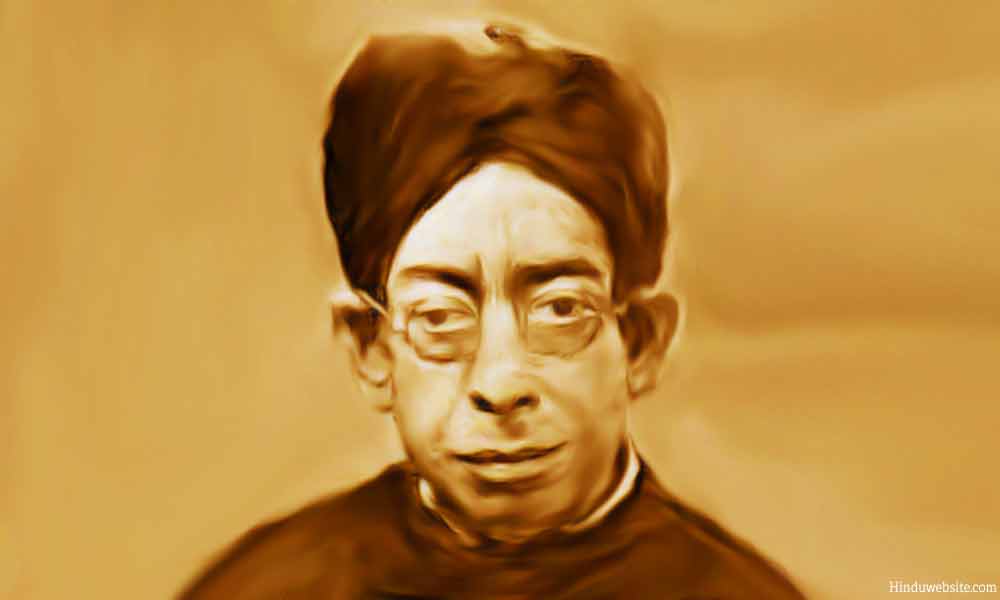
An artistic impression of Surendranath Dasgupta
| Ch1 || Ch2 || Ch3 || Ch4 || Ch5 || Ch6 || Ch7 ||Ch8 || Ch9 || Ch10 || Index ||
[Footnote ref 1].
The place of the Upanisads in Vedic literature.
Though it is generally held that the Upanisads are usually attached as appendices to the Âranyakas which are again attached to the Brâhmanas, yet it cannot be said that their distinction as separate treatises is always observed. Thus we find in some cases that subjects which we should expect to be discussed in a Brâhmana are introduced into the Âranyakas and the Âranyaka materials are sometimes fused into the great bulk of Upanisad teaching. This shows that these three literatures gradually grew up in one
[Footnote 1: There are about 112 Upanisads which have been published by the "Nirnaya-Sâgara" Press, Bombay, 1917. These are 1 Ísâ, 2 Kena, 3 Katha, 4 Pras'na, 5 Mundaka, 6 Mândukya, 7 Taittirîya, 7 Aitareya, 9 Chândogya, 10 Brhadâranyaka, 11 S'vetâs'vatara, 12 Kausitaki, 13 Maitreyî, 14 Kaivalya, 15 Jâbâla, 16 Brahmabindu, 17 Hamsa, 18 Ârunika, 19 Garbha, 20 Nârâyana, 21 Nârâyana, 22 Paramahamsa, 23 Brahma, 24 Amrtanâda, 25 Atharvas'iras, 26 Atharvas'ikhâ, 27 Maitrâyanî, 28 Brhajjâbâla, 29 Nrsimhapûrvatâpinî, 30 Nrsimhottaratâpinî, 31 Kâlâgnirudra, 32 Subâla, 33 Ksurikâ, 34 Yantrikâ, 35 Sarvasâra, 36 Nirâlamba, 37 S'ukarahasya, 38 Vajrasûcikâ, 39 Tejobindu, 40 Nâdabindu, 41 Dhyânabindu, 42 Brahmavidyâ, 43 Yogatattva, 44 Atmabodha, 45 Nâradaparivrâjaka, 46 Tris'ikhibrâhmana, 47 Sîtâ, 48 Yogacûdamani, 49 Nirvâna, 50 Mandalabrâhmana, 51 Daksinâmûrtti, 52 S'arabha, 53 Skanda, 54 Tripâdvibhûtimahânâryana, 55 Advayatâraka, 56 Ramarahasya, 57 Râmapûrvatâpinî, 58 Râmottaratâpinî, 59 Vâsudeva, 60 Mudgala, 61 Sândilya, 62 Paingala, 63 Bhiksuka, Mahâ, 65 S'ârîraka, 66 Yogas'ikhâ, 67 Turiyâtîta, 68 Samnyâsa, 69 Paramahamsaparivrâjaka, 70 Aksamâlâ, 71 Avyakta, 72 Ekâksara, 73 Annapûrnâ, 74 Sûrya, 75 Aksi, 76 Adhyâtma, 77 Kundika, 78 Sâvitrî, 79 Âtman, 80 Pâ'supatabrahma, 81 Parabrahma, 82 Avadhûta, 83 Tripurârâpini, 84 Devî, 85 Tripurâ, 86 Katharudra, 87 Bhâvanâ, 88 Rudrahrdaya, 89 Yogakundali, 90 Bhasmajâbâla, 91 Rudrâksajâbâla, 92 Ganapati, 93 Jâbâladars'ana, 94 Tâiasâra, 95 Mahâvakya, 96 Paficabrahma, 97 Prânâgnihotra, 98 Gopâlapûrvatâpinî, 99 Gopâlottaratâpinî, 100 Krsna, 101 Yâjñavalkya, 102 Varâha, 103 S'âthyâyanîya, 104 Hayagrîva, 105 Dattâtreya, 106 Garuda, 107 Kalisantarana, 108 Jâbâli, 109 Saubhâgyalaksmî, 110 Sarasvatîrahasya, 111 Bahvrca, 112 Muktika.
The collection of Upanisads translated by Dara shiko, Aurangzeb's brother, contained 50 Upanisads. The Muktika Upanisad gives a list of 108 Upanisads. With the exception of the first 13 Upanisads most of them are of more or less later date. The Upanisads dealt with in this chapter are the earlier ones. Amongst the later ones there are some which repeat the purport of these, there are others which deal with the S'aiva, S'âkta, the Yoga and the Vaisnava doctrines. These will be referred to in connection with the consideration of those systems in Volume II. The later Upanisads which only repeat the purport of those dealt with in this chapter do not require further mention. Some of the later Upanisads were composed even as late as the fourteenth or the fifteenth century.]
process of development and they were probably regarded as parts of one literature, in spite of the differences in their subject-matter. Deussen supposes that the principle of this division was to be found in this, that the Brâhmanas were intended for the householders, the Âranyakas for those who in their old age withdrew into the solitude of the forests and the Upanisads for those who renounced the world to attain ultimate salvation by meditation. Whatever might be said about these literary classifications the ancient philosophers of India looked upon the Upanisads as being of an entirely different type from the rest of the Vedic literature as dictating the path of knowledge (_jñâna-mârga_) as opposed to the path of works (_karma-mârga_) which forms the content of the latter. It is not out of place here to mention that the orthodox Hindu view holds that whatever may be written in the Veda is to be interpreted as commandments to perform certain actions (_vidhi_) or prohibitions against committing certain others (_nisedha_).
Even the stories or episodes are to be so interpreted that the real objects of their insertion might appear as only to praise the performance of the commandments and to blame the commission of the prohibitions. No person has any right to argue why any particular Vedic commandment is to be followed, for no reason can ever discover that, and it is only because reason fails to find out why a certain Vedic act leads to a certain effect that the Vedas have been revealed as commandments and prohibitions to show the true path of happiness. The Vedic teaching belongs therefore to that of the Karma-mârga or the performance of Vedic duties of sacrifice, etc. The Upanisads however do not require the performance of any action, but only reveal the ultimate truth and reality, a knowledge of which at once emancipates a man. Readers of Hindu philosophy are aware that there is a very strong controversy on this point between the adherents of the Vedânta (_Upanisads_) and those of the Veda. For the latter seek in analogy to the other parts of the Vedic literature to establish the principle that the Upanisads should not be regarded as an exception, but that they should also be so interpreted that they might also be held out as commending the performance of duties; but the former dissociate the Upanisads from the rest of the Vedic literature and assert that they do not make the slightest reference to any Vedic duties, but only delineate the ultimate reality which reveals the highest knowledge in the minds of the deserving.
S'ankara the most eminent exponent of the Upanisads holds that they are meant for such superior men who are already above worldly or heavenly prosperities, and for whom the Vedic duties have ceased to have any attraction. Wheresoever there may be such a deserving person, be he a student, a householder or an ascetic, for him the Upanisads have been revealed for his ultimate emancipation and the true knowledge. Those who perform the Vedic duties belong to a stage inferior to those who no longer care for the fruits of the Vedic duties but are eager for final emancipation, and it is the latter who alone are fit to hear the Upanisads [Footnote ref 1].
The names of the Upanisads; Non-Brahmanic influence.
The Upanisads are also known by another name Vedânta, as they are believed to be the last portions of the Vedas (_veda-anta_, end); it is by this name that the philosophy of the Upanisads, the Vedânta philosophy, is so familiar to us. A modern student knows that in language the Upanisads approach the classical Sanskrit; the ideas preached also show that they are the culmination of the intellectual achievement of a great epoch. As they thus formed the concluding parts of the Vedas they retained their Vedic names which they took from the name of the different schools or branches (_s'âkhâ_) among which the Vedas were studied [Footnote ref 2]. Thus the Upanisads attached to the Brâhmanas of the Aitareya and Kausîtaki schools are called respectively Aitareya and Kausîtaki Upanisads. Those of the Tândins and Talavakâras of the Sâma-veda are called the Chândogya and Talavakâra (or Kena) Upanisads. Those of the Taittirïya school of the Yajurveda
[Footnote 1: This is what is called the difference of fitness (_adhikâribheda_). Those who perform the sacrifices are not fit to hear the Upanisads and those who are fit to hear the Upanisads have no longer any necessity to perform the sacrificial duties.]
[Footnote 2: When the Samhitâ texts had become substantially fixed, they were committed to memory in different parts of the country and transmitted from teacher to pupil along with directions for the practical performance of sacrificial duties. The latter formed the matter of prose compositions, the Brâhmanas. These however were gradually liable to diverse kinds of modifications according to the special tendencies and needs of the people among which they were recited. Thus after a time there occurred a great divergence in the readings of the texts of the Brâhmanas even of the same Veda among different people. These different schools were known by the name of particular S'âkhâs (e.g. Aitareya, Kausîtaki) with which the Brâhmanas were associated or named. According to the divergence of the Brâhmanas of the different S'âkhâs there occurred the divergences of content and the length of the Upanisads associated with them.]
form the Taittirîya and Mahânârayana, of the Katha school the Kâthaka, of the Maitrâyanî school the Maitrâyanî. The Brhadâranyaka Upanisad forms part of the S'atapatha Brâhmana of the Vâjasaneyi schools. The Îs'â Upanisad also belongs to the latter school. But the school to which the S'vetâs'vatara belongs cannot be traced, and has probably been lost. The presumption with regard to these Upanisads is that they represent the enlightened views of the particular schools among which they flourished, and under whose names they passed. A large number of Upanisads of a comparatively later age were attached to the Atharva-Veda, most of which were named not according to the Vedic schools but according to the subject-matter with which they dealt [Footnote ref 1].
It may not be out of place here to mention that from the frequent episodes in the Upanisads in which the Brahmins are described as having gone to the Ksattriyas for the highest knowledge of philosophy, as well as from the disparateness of the Upanisad teachings from that of the general doctrines of the Brâhmanas and from the allusions to the existence of philosophical speculations amongst the people in Pâli works, it may be inferred that among the Ksattriyas in general there existed earnest philosophic enquiries which must be regarded as having exerted an important influence in the formation of the Upanisad doctrines. There is thus some probability in the supposition that though the Upanisads are found directly incorporated with the Brâhmanas it was not the production of the growth of Brahmanic dogmas alone, but that non-Brahmanic thought as well must have either set the Upanisad doctrines afoot, or have rendered fruitful assistance to their formulation and cultivation, though they achieved their culmination in the hands of the Brahmins.
Brâhmanas and the Early Upanisads.
The passage of the Indian mind from the Brâhmanic to the Upanisad thought is probably the most remarkable event in the history of philosophic thought. We know that in the later Vedic hymns some monotheistic conceptions of great excellence were developed, but these differ in their nature from the absolutism of the Upanisads as much as the Ptolemaic and the Copernican
[Footnote 1: Garbha Upanisad, Âtman Upanisad, Pras'na Upanisad, etc. There were however some exceptions such as the Mândûkya, Jâbâla, Paingala, S'aunaka, etc.]
systems in astronomy. The direct translation of Vis'vakarman or Hiranyagarbha into the âtman and the Brahman of the Upanisads seems to me to be very improbable, though I am quite willing to admit that these conceptions were swallowed up by the âtman doctrine when it had developed to a proper extent. Throughout the earlier Upanisads no mention is to be found of Vis'vakarman, Hiranyagarbha or Brahmanaspati and no reference of such a nature is to be found as can justify us in connecting the Upanisad ideas with those conceptions [Footnote ref l]. The word purusa no doubt occurs frequently in the Upanisads, but the sense and the association that come along with it are widely different from that of the purusa of the Purusasûkta of the Rg-Veda.
When the Rg-Veda describes Vis'vakarman it describes him as a creator from outside, a controller of mundane events, to whom they pray for worldly benefits. "What was the position, which and whence was the principle, from which the all-seeing Vis'vakarman produced the earth, and disclosed the sky by his might? The one god, who has on every side eyes, on every side a face, on every side arms, on every side feet, when producing the sky and earth, shapes them with his arms and with his wings....Do thou, Vis'vakarman, grant to thy friends those thy abodes which are the highest, and the lowest, and the middle...may a generous son remain here to us [Footnote ref 2]"; again in R.V.X. 82 we find "Vis'vakarman is wise, energetic, the creator, the disposer, and the highest object of intuition....He who is our father, our creator, disposer, who knows all spheres and creatures, who alone assigns to the gods their names, to him the other creatures resort for instruction [Footnote ref 3]." Again about Hiranyagarbha we find in R.V.I. 121, "Hiranyagarbha arose in the beginning; born, he was the one lord of things existing. He established the earth and this sky; to what god shall we offer our oblation?... May he not injure us, he who is the generator of the earth, who ruling by fixed ordinances, produced the heavens, who produced the great and brilliant waters!--to what god, etc.? Prajâpati, no other than thou is lord over all these created things: may we obtain that, through desire of which we have invoked thee; may we become masters of riches [Footnote ref 4]." Speaking of the purusa the Rg-Veda
[Footnote 1: The name Vis'vakarma appears in S'vet. IV. 17. Hiranyagarbha appears in S'vet. III. 4 and IV. 12, but only as the first created being. The phrase Sarvâhammânî Hiranyagarbha which Deussen refers to occurs only in the later Nrsimh. 9. The word Brahmanaspati does not occur at all in the Upanisads.]
[Footnote 2: Muir's _Sanskrit Texts_, vol. IV. pp. 6, 7.]
[Footnote 3: _Ibid._ p, 7.]
[Footnote 4: _Ibid._ pp. 16, 17.]
says "Purusha has a thousand heads...a thousand eyes, and a thousand feet. On every side enveloping the earth he transcended [it] by a space of ten fingers....He formed those aerial creatures, and the animals, both wild and tame [Footnote ref 1]," etc. Even that famous hymn (R.V.x. 129) which begins with "There was then neither being nor non-being, there was no air nor sky above" ends with saying "From whence this creation came into being, whether it was created or not--he who is in the highest sky, its ruler, probably knows or does not know."
In the Upanisads however, the position is entirely changed, and the centre of interest there is not in a creator from outside but in the self: the natural development of the monotheistic position of the Vedas could have grown into some form of developed theism, but not into the doctrine that the self was the only reality and that everything else was far below it. There is no relation here of the worshipper and the worshipped and no prayers are offered to it, but the whole quest is of the highest truth, and the true self of man is discovered as the greatest reality. This change of philosophical position seems to me to be a matter of great interest. This change of the mind from the objective to the subjective does not carry with it in the Upanisads any elaborate philosophical discussions, or subtle analysis of mind. It comes there as a matter of direct perception, and the conviction with which the truth has been grasped cannot fail to impress the readers. That out of the apparently meaningless speculations of the Brâhmanas this doctrine could have developed, might indeed appear to be too improbable to be believed.
On the strength of the stories of Bâlâki Ga'rgya and Ajâtas'atru (Brh. II. i), S'vetaketu and Pravâhana Jaibali (Châ. V. 3 and Brh. VI. 2) and Âruni and As'vapati Kaikeya (Châ. V. 11) Garbe thinks "that it can be proven that the Brahman's profoundest wisdom, the doctrine of All-one, which has exercised an unmistakable influence on the intellectual life even of our time, did not have its origin in the circle of Brahmans at all [Footnote ref 2]" and that "it took its rise in the ranks of the warrior caste [Footnote ref 3]." This if true would of course lead the development of the Upanisads away from the influence of the Veda, Brâhmanas and the Âranyakas. But do the facts prove this? Let us briefly examine the evidences that Garbe himself
[Footnote 1: Muir's _Sanskrit Texts_, vol. v. pp. 368, 371.]
[Footnote 2: Garbe's article, "_Hindu Monism_," p. 68.]
[Footnote 3: _Ibid._ p. 78.
has produced. In the story of Bâlâki Gârgya and Ajâtas'atru (Brh. II. 1) referred to by him, Bâlâki Gârgya is a boastful man who wants to teach the Ksattriya Ajâtas'atru the true Brahman, but fails and then wants it to be taught by him. To this Ajâtas'atru replies (following Garbe's own translation) "it is contrary to the natural order that a Brahman receive instruction from a warrior and expect the latter to declare the Brahman to him [Footnote ref l]." Does this not imply that in the natural order of things a Brahmin always taught the knowledge of Brahman to the Ksattriyas, and that it was unusual to find a Brahmin asking a Ksattriya about the true knowledge of Brahman? At the beginning of the conversation, Ajâtas'atru had promised to pay Bâlâki one thousand coins if he could tell him about Brahman, since all people used to run to Janaka to speak about Brahman [Footnote ref 2]. The second story of S'vetaketu and Pravâhana Jaibali seems to be fairly conclusive with regard to the fact that the transmigration doctrines, the way of the gods (_devayâna_) and the way of the fathers (_pitryâna_) had originated among the Ksattriyas, but it is without any relevancy with regard to the origin of the superior knowledge of Brahman as the true self.
The third story of Âruni and As'vapati Kaikeya (Châ. V. 11) is hardly more convincing, for here five Brahmins wishing to know what the Brahman and the self were, went to Uddâlaka Âruni; but as he did not know sufficiently about it he accompanied them to the Ksattriya king As'vapati Kaikeya who was studying the subject. But As'vapati ends the conversation by giving them certain instructions about the fire doctrine (_vaisvânara agni_) and the import of its sacrifices. He does not say anything about the true self as Brahman. We ought also to consider that there are only the few exceptional cases where Ksattriya kings were instructing the Brahmins. But in all other cases the Brahmins were discussing and instructing the âtman knowledge. I am thus led to think that Garbe owing to his bitterness of feeling against the Brahmins as expressed in the earlier part of the essay had been too hasty in his judgment. The opinion of Garbe seems to have been shared to some extent by Winternitz also, and the references given by him to the Upanisad passages are also the same as we
[Footnote 1: Garbe's article, "_Hindu Monism_," p. 74.]
[Footnote 2: Brh. II., compare also Brh. IV. 3, how Yâjñavalkya speaks to Janaka about the _brahmavidyâ_.]
just examined [Footnote ref 1]. The truth seems to me to be this, that the Ksattriyas and even some women took interest in the religio-philosophical quest manifested in the Upanisads. The enquirers were so eager that either in receiving the instruction of Brahman or in imparting it to others, they had no considerations of sex and birth [Footnote ref 2]; and there seems to be no definite evidence for thinking that the Upanisad philosophy originated among the Ksattriyas or that the germs of its growth could not be traced in the Brâhmanas and the Âranyakas which were the productions of the Brahmins.
The change of the Brâhmana into the Âranyaka thought is signified by a transference of values from the actual sacrifices to their symbolic representations and meditations which were regarded as being productive of various earthly benefits. Thus we find in the Brhadâranyaka (I.1) that instead of a horse sacrifice the visible universe is to be conceived as a horse and meditated upon as such. The dawn is the head of the horse, the sun is the eye, wind is its life, fire is its mouth and the year is its soul, and so on. What is the horse that grazes in the field and to what good can its sacrifice lead? This moving universe is the horse which is most significant to the mind, and the meditation of it as such is the most suitable substitute of the sacrifice of the horse, the mere animal. Thought-activity as meditation, is here taking the place of an external worship in the form of sacrifices. The material substances and the most elaborate and accurate sacrificial rituals lost their value and bare meditations took their place. Side by side with the ritualistic sacrifices of the generality of the Brahmins, was springing up a system where thinking and symbolic meditations were taking the place of gross matter and action involved in sacrifices. These symbols were not only chosen from the external world as the sun, the wind, etc., from the body of man, his various vital functions and the senses, but even arbitrary alphabets were taken up and it was believed that the meditation of these as the highest and the greatest was productive of great beneficial results. Sacrifice in itself was losing value in the eyes of these men and diverse mystical significances and imports were beginning to be considered as their real truth [Footnote ref 3].
[Footnote 1: Winternitz's _Geschichte der indischen Litteratur_, I. pp. 197 ff.]
[Footnote 2: The story of Maitryî and Yâjñavalikya (Brh. II. 4) and that of Satyakâma son of Jabâlâ and his teacher (Châ. IV. 4).]
[Footnote 3: Châ. V. II.]
The Uktha (verse) of Rg-Veda was identified in the Aitareya Âranyaka under several allegorical forms with the Prâna [Footnote ref 1], the Udgîtha of the Sâmaveda was identified with Om, Prâna, sun and eye; in Chândogya II. the Sâman was identified with Om, rain, water, seasons, Prâna, etc., in Chândogya III. 16-17 man was identified with sacrifice; his hunger, thirst, sorrow, with initiation; laughing, eating, etc., with the utterance of the Mantras; and asceticism, gift, sincerity, restraint from injury, truth, with sacrificial fees (_daksinâ_). The gifted mind of these cultured Vedic Indians was anxious to come to some unity, but logical precision of thought had not developed, and as a result of that we find in the Âranyakas the most grotesque and fanciful unifications of things which to our eyes have little or no connection. Any kind of instrumentality in producing an effect was often considered as pure identity. Thus in Ait. Âran. II. 1. 3 we find "Then comes the origin of food. The seed of Prajâpati are the gods. The seed of the gods is rain. The seed of rain is herbs. The seed of herbs is food. The seed of food is seed. The seed of seed is creatures. The seed of creatures is the heart. The seed of the heart is the mind. The seed of the mind is speech. The seed of speech is action. The act done is this man the abode of Brahman [Footnote ref 2]."
The word Brahman according to Sâyana meant mantras (magical verses), the ceremonies, the hotr priest, the great. Hillebrandt points out that it is spoken of in R.V. as being new, "as not having hitherto existed," and as "coming into being from the fathers." It originates from the seat of the Rta, springs forth at the sound of the sacrifice, begins really to exist when the soma juice is pressed and the hymns are recited at the savana rite, endures with the help of the gods even in battle, and soma is its guardian (R.V. VIII. 37. I, VIII. 69. 9, VI. 23. 5, 1. 47. 2, VII. 22. 9, VI. 52. 3, etc.). On the strength of these Hillebrandt justifies the conjecture of Haug that it signifies a mysterious power which can be called forth by various ceremonies, and his definition of it, as the magical force which is derived from the orderly cooperation of the hymns, the chants and the sacrificial gifts [Footnote ref 3]. I am disposed to think that this meaning is closely connected with the meaning as we find it in many passages in the Âranyakas and the Upanisads. The meaning in many of these seems to be midway between
[Footnote 1: Ait. Âran. II 1-3.]
[Footnote 2: Keith's _Translation of Aitareya Âranyaka_.]
[Footnote 3: Hillebrandt's article on Brahman, _E.R.E._.]
"magical force" and "great," transition between which is rather easy. Even when the sacrifices began to be replaced by meditations, the old belief in the power of the sacrifices still remained, and as a result of that we find that in many passages of the Upanisads people are thinking of meditating upon this great force "Brahman" as being identified with diverse symbols, natural objects, parts and functions of the body.
When the main interest of sacrifice was transferred from its actual performance in the external world to certain forms of meditation, we find that the understanding of particular allegories of sacrifice having a relation to particular kinds of bodily functions was regarded as Brahman, without a knowledge of which nothing could be obtained. The fact that these allegorical interpretations of the Pañcâgnividyâ are so much referred to in the Upanisads as a secret doctrine, shows that some people came to think that the real efficacy of sacrifices depended upon such meditations. When the sages rose to the culminating conception, that he is really ignorant who thinks the gods to be different from him, they thought that as each man was nourished by many beasts, so the gods were nourished by each man, and as it is unpleasant for a man if any of his beasts are taken away, so it is unpleasant for the gods that men should know this great truth. [Footnote ref 1].
In the Kena we find it indicated that all the powers of the gods such as that of Agni (fire) to burn, Vâyu (wind) to blow, depended upon Brahman, and that it is through Brahman that all the gods and all the senses of man could work. The whole process of Upanisad thought shows that the magic power of sacrifices as associated with Rta (unalterable law) was being abstracted from the sacrifices and conceived as the supreme power. There are many stories in the Upanisads of the search after the nature of this great power the Brahman, which was at first only imperfectly realized. They identified it with the dominating power of the natural objects of wonder, the sun, the moon, etc. with bodily and mental functions and with various symbolical representations, and deluded themselves for a time with the idea that these were satisfactory. But as these were gradually found inadequate, they came to the final solution, and the doctrine of the inner self of man as being the highest truth the Brahman originated.
[Footnote 1: Brh. I. 4. 10.]
The meaning of the word Upanisad.
The word Upanisad is derived from the root _sad_ with the prefix _ni_ (to sit), and Max Muller says that the word originally meant the act of sitting down near a teacher and of submissively listening to him. In his introduction to the Upanisads he says, "The history and the genius of the Sanskrit language leave little doubt that Upanisad meant originally session, particularly a session consisting of pupils, assembled at a respectful distance round their teacher [Footnote ref 1]." Deussen points out that the word means "secret" or "secret instruction," and this is borne out by many of the passages of the Upanisads themselves. Max Muller also agrees that the word was used in this sense in the Upanisads [Footnote ref 2]. There we find that great injunctions of secrecy are to be observed for the communication of the doctrines, and it is said that it should only be given to a student or pupil who by his supreme moral restraint and noble desires proves himself deserving to hear them. S'ankara however, the great Indian exponent of the Upanisads, derives the word from the root _sad_ to destroy and supposes that it is so called because it destroys inborn ignorance and leads to salvation by revealing the right knowledge. But if we compare the many texts in which the word Upanisad occurs in the Upanisads themselves it seems that Deussen's meaning is fully justified [Footnote ref 3].
The composition and growth of diverse Upanisads.
The oldest Upanisads are written in prose. Next to these we have some in verses very similar to those that are to be found in classical Sanskrit. As is easy to see, the older the Upanisad the more archaic is it in its language. The earliest Upanisads have an almost mysterious forcefulness in their expressions at least to Indian ears. They are simple, pithy and penetrate to the heart. We can read and read them over again without getting tired. The lines are always as fresh as ever. As such they have a charm apart from the value of the ideas they intend to convey. The word Upanisad was used, as we have seen, in the sense of "secret doctrine or instruction"; the Upanisad teachings were also intended to be conveyed in strictest secrecy to earnest enquirers of high morals and superior self-restraint for the purpose of achieving
[Footnote 1: Max Muller's _Translation of the Upanishads, S.B.E._ vol. I.p. lxxxi.]
[Footnote 2: _S. B.E._ vol. I, p lxxxi.]
[Footnote 3: Deussen's _Philosophy of the Upanishads,_ pp. 10-15.]
emancipation. It was thus that the Upanisad style of expression, when it once came into use, came to possess the greatest charm and attraction for earnest religious people; and as a result of that we find that even when other forms of prose and verse had been adapted for the Sanskrit language, the Upanisad form of composition had not stopped. Thus though the earliest Upanisads were compiled by 500 B C., they continued to be written even so late as the spread of Mahommedan influence in India. The earliest and most important are probably those that have been commented upon by S'ankara namely Brhadâranyaka, Chândogya, Aitareya, Taittiriya, Îs'a, Kena, Katha, Pras'na, Mundaka and Mândûkya [Footnote ref 1]. It is important to note in this connection that the separate Upanisads differ much from one another with regard to their content and methods of exposition. Thus while some of them are busy laying great stress upon the monistic doctrine of the self as the only reality, there are others which lay stress upon the practice of Yoga, asceticism, the cult of S'iva, of Visnu and the philosophy or anatomy of the body, and may thus be respectively called the Yoga, S'aiva, Visnu and S'ârîra Upanisads. These in all make up the number to one hundred and eight.
Revival of Upanisad studies in modern times.
How the Upanisads came to be introduced into Europe is an interesting story Dâra Shiko the eldest son of the Emperor Shah Jahan heard of the Upanisads during his stay in Kashmir in 1640. He invited several Pandits from Benares to Delhi, who undertook the work of translating them into Persian. In 1775 Anquetil Duperron, the discoverer of the Zend Avesta, received a manuscript of it presented to him by his friend Le Gentil, the French resident in Faizabad at the court of Shujâ-uddaulah. Anquetil translated it into Latin which was published in 1801-1802. This translation though largely unintelligible was read by Schopenhauer with great enthusiasm. It had, as Schopenhauer himself admits, profoundly influenced his philosophy. Thus he
[Footnote 1: Deussen supposes that Kausîtaki is also one of the earliest. Max Müller and Schroeder think that Maitrâyanî also belongs to the earliest group, whereas Deussen counts it as a comparatively later production. Winternitz divides the Upanisads into four periods. In the first period he includes Brhadâranyaka, Chândogya, Taittirîya, Aitareya, Kausîtaki and Kena. In that second he includes Kâthaka, Ís'â, S'vetâs'vatara, Mundaka, Mahânârâyana, and in the third period he includes Pras'na, Maitrâyanî and Mândûkya. The rest of the Upanisads he includes in the fourth period.]
writes in the preface to his _Welt als Wille und Vorstellung_ [Footnote ref 1], "And if, indeed, in addition to this he is a partaker of the benefit conferred by the Vedas, the access to which, opened to us through the Upanishads, is in my eyes the greatest advantage which this still young century enjoys over previous ones, because I believe that the influence of the Sanskrit literature will penetrate not less deeply than did the revival of Greek literature in the fifteenth century: if, I say, the reader has also already received and assimilated the sacred, primitive Indian wisdom, then is he best of all prepared to hear what I have to say to him....I might express the opinion that each one of the individual and disconnected aphorisms which make up the Upanishads may be deduced as a consequence from the thought I am going to impart, though the converse, that my thought is to be found in the Upanishads is by no means the case." Again, "How does every line display its firm, definite, and throughout harmonious meaning! From every sentence deep, original, and sublime thoughts arise, and the whole is pervaded by a high and holy and earnest spirit....In the whole world there is no study, except that of the originals, so beneficial and so elevating as that of the Oupanikhat. It has been the solace of my life, it will be the solace of my death! [Footnote ref 2]" Through Schopenhauer the study of the Upanisads attracted much attention in Germany and with the growth of a general interest in the study of Sanskrit, they found their way into other parts of Europe as well.
The study of the Upanisads has however gained a great impetus by the earnest attempts of our Ram Mohan Roy who not only translated them into Bengali, Hindi and English and published them at his own expense, but founded the Brahma Samaj in Bengal, the main religious doctrines of which were derived directly from the Upanisads.
[Footnote 1: Translation by Haldane and Kemp, vol. I. pp. xii and xiii.]
[Footnote 2: Max Muller says in his introduction to the Upanishada (_S.B.E._ I p. lxii; see also pp. lx, lxi) "that Schopenhauer should have spoken of the Upanishads as 'products of the highest wisdom'...that he should have placed the pantheism there taught high above the pantheism of Bruno, Malebranche, Spinoza and Scotus Erigena, as brought to light again at Oxford in 1681, may perhaps secure a more considerate reception for those relics of ancient wisdom than anything that I could say in their favour."]
The Upanisads and their interpretations.
Before entering into the philosophy of the Upanisads it may be worth while to say a few words as to the reason why diverse and even contradictory explanations as to the real import of the Upanisads had been offered by the great Indian scholars of past times. The Upanisads, as we have seen, formed the concluding portion of the revealed Vedic literature, and were thus called the Vedânta. It was almost universally believed by the Hindus that the highest truths could only be found in the revelation of the Vedas. Reason was regarded generally as occupying a comparatively subservient place, and its proper use was to be found in its judicious employment in getting out the real meaning of the apparently conflicting ideas of the Vedas. The highest knowledge of ultimate truth and reality was thus regarded as having been once for all declared in the Upanisads. Reason had only to unravel it in the light of experience. It is important that readers of Hindu philosophy should bear in mind the contrast that it presents to the ruling idea of the modern world that new truths are discovered by reason and experience every day, and even in those cases where the old truths remain, they change their hue and character every day, and that in matters of ultimate truths no finality can ever be achieved; we are to be content only with as much as comes before the purview of our reason and experience at the time. It was therefore thought to be extremely audacious that any person howsoever learned and brilliant he might be should have any right to say anything regarding the highest truths simply on the authority of his own opinion or the reasons that he might offer. In order to make himself heard it was necessary for him to show from the texts of the Upanisads that they supported him, and that their purport was also the same. Thus it was that most schools of Hindu philosophy found it one of their principal duties to interpret the Upanisads in order to show that they alone represented the true Vedânta doctrines. Any one who should feel himself persuaded by the interpretations of any particular school might say that in following that school he was following the Vedânta.
The difficulty of assuring oneself that any interpretation is absolutely the right one is enhanced by the fact that germs of diverse kinds of thoughts are found scattered over the Upanisads which are not worked out in a systematic manner. Thus each interpreter in his turn made the texts favourable to his own doctrines prominent and brought them to the forefront, and tried to repress others or explain them away. But comparing the various systems of Upanisad interpretation we find that the interpretation offered by S'ankara very largely represents the view of the general body of the earlier Upanisad doctrines, though there are some which distinctly foreshadow the doctrines of other systems, but in a crude and germinal form. It is thus that Vedânta is generally associated with the interpretation of S'ankara and S'ankara's system of thought is called the Vedânta system, though there are many other systems which put forth their claim as representing the true Vedânta doctrines.
Under these circumstances it is necessary that a modern interpreter of the Upanisads should turn a deaf ear to the absolute claims of these exponents, and look upon the Upanisads not as a systematic treatise but as a repository of diverse currents of thought--the melting pot in which all later philosophic ideas were still in a state of fusion, though the monistic doctrine of S'ankara, or rather an approach thereto, may be regarded as the purport of by far the largest majority of the texts. It will be better that a modern interpreter should not agree to the claims of the ancients that all the Upanisads represent a connected system, but take the texts independently and separately and determine their meanings, though keeping an attentive eye on the context in which they appear. It is in this way alone that we can detect the germs of the thoughts of other Indian systems in the Upanisads, and thus find in them the earliest records of those tendencies of thoughts.
The quest after Brahman: the struggle and the failures.
The fundamental idea which runs through the early Upanisads is that underlying the exterior world of change there is an unchangeable reality which is identical with that which underlies the essence in man [Footnote ref 1]. If we look at Greek philosophy in Parmenides or Plato or at modern philosophy in Kant, we find the same tendency towards glorifying one unspeakable entity as the reality or the essence. I have said above that the Upanisads are
[Footnote 1: Brh. IV. 4. 5. 22.
no systematic treatises of a single hand, but are rather collations or compilations of floating monologues, dialogues or anecdotes. There are no doubt here and there simple discussions but there is no pedantry or gymnastics of logic. Even the most casual reader cannot but be struck with the earnestness and enthusiasm of the sages. They run from place to place with great eagerness in search of a teacher competent to instruct them about the nature of Brahman. Where is Brahman? What is his nature?
We have noticed that during the closing period of the Samhitâ there were people who had risen to the conception of a single creator and controller of the universe, variously called Prajâpati, Vis'vakarman, Purusa, Brahmanaspati and Brahman. But this divine controller was yet only a deity. The search as to the nature of this deity began in the Upanisads. Many visible objects of nature such as the sun or the wind on one hand and the various psychological functions in man were tried, but none could render satisfaction to the great ideal that had been aroused. The sages in the Upanisad had already started with the idea that there was a supreme controller or essence presiding over man and the universe. But what was its nature? Could it be identified with any of the deities of Nature, was it a new deity or was it no deity at all? The Upanisads present to us the history of this quest and the results that were achieved.
When we look merely to this quest we find that we have not yet gone out of the Âranyaka ideas and of symbolic (_pratîka_) forms of worship. _Prâna_ (vital breath) was regarded as the most essential function for the life of man, and many anecdotes are related to show that it is superior to the other organs, such as the eye or ear, and that on it all other functions depend. This recognition of the superiority of prâna brings us to the meditations on prâna as Brahman as leading to the most beneficial results. So also we find that owing to the presence of the exalting characters of omnipresence and eternality _âkâs'a_ (space) is meditated upon as Brahman. So also manas and Âditya (sun) are meditated upon as Brahman. Again side by side with the visible material representation of Brahman as the pervading Vâyu, or the sun and the immaterial representation as âkâs'a, manas or prâna, we find also the various kinds of meditations as substitutes for actual sacrifice. Thus it is that there was an earnest quest after the discovery of Brahman. We find a stratum of thought which shows that the sages were still blinded by the old ritualistic associations, and though meditation had taken the place of sacrifice yet this was hardly adequate for the highest attainment of Brahman.
Next to the failure of the meditations we have to notice the history of the search after Brahman in which the sages sought to identify Brahman with the presiding deity of the sun, moon, lightning, ether, wind, fire, water, etc., and failed; for none of these could satisfy the ideal they cherished of Brahman. It is indeed needless here to multiply these examples, for they are tiresome not only in this summary treatment but in the original as well. They are of value only in this that they indicate how toilsome was the process by which the old ritualistic associations could be got rid of; what struggles and failures the sages had to undergo before they reached a knowledge of the true nature of Brahman.
Unknowability of Brahman and the Negative Method.
It is indeed true that the magical element involved in the discharge of sacrificial duties lingered for a while in the symbolic worship of Brahman in which He was conceived almost as a deity. The minds of the Vedic poets so long accustomed to worship deities of visible manifestation could not easily dispense with the idea of seeking after a positive and definite content of Brahman. They tried some of the sublime powers of nature and also many symbols, but these could not render ultimate satisfaction. They did not know what the Brahman was like, for they had only a dim and dreamy vision of it in the deep craving of their souls which could not be translated into permanent terms. But this was enough to lead them on to the goal, for they could not be satisfied with anything short of the highest.
They found that by whatever means they tried to give a positive and definite content of the ultimate reality, the Brahman, they failed. Positive definitions were impossible. They could not point out what the Brahman was like in order to give an utterance to that which was unutterable, they could only say that it was not like aught that we find in experience. Yâjñavalkya said "He the âtman is not this, nor this (_neti neti_). He is inconceivable, for he cannot be conceived, unchangeable, for he is not changed, untouched, for nothing touches him; he cannot suffer by a stroke of the sword, he cannot suffer any injury [Footnote ref 1]." He is _asat_, non-being, for the being which Brahman is, is not to be understood as such being as is known to us by experience; yet he is being, for he alone is supremely real, for the universe subsists by him. We ourselves are but he, and yet we know not what he is. Whatever we can experience, whatever we can express, is limited, but he is the unlimited, the basis of all. "That which is inaudible, intangible, invisible, indestructible, which cannot be tasted, nor smelt, eternal, without beginning or end, greater than the great (_mahat_), the fixed. He who knows it is released from the jaws of death [Footnote ref 2]." Space, time and causality do not appertain to him, for he at once forms their essence and transcends them. He is the infinite and the vast, yet the smallest of the small, at once here as there, there as here; no characterisation of him is possible, otherwise than by the denial to him of all empirical attributes, relations and definitions. He is independent of all limitations of space, time, and cause which rules all that is objectively presented, and therefore the empirical universe. When Bâhva was questioned by Vaskali, he expounded the nature of Brahman to him by maintaining silence--"Teach me," said Vaskali, "most reverent sir, the nature of Brahman." Bâhva however remained silent. But when the question was put forth a second or third time he answered, "I teach you indeed but you do not understand; the Âtman is silence [Footnote ref 3]." The way to indicate it is thus by _neti neti_, it is not this, it is not this. We cannot describe it by any positive content which is always limited by conceptual thought.
The Âtman doctrine.
The sum and substance of the Upanisad teaching is involved in the equation Âtman=Brahman. We have already seen that the word Âtman was used in the Rg-Veda to denote on the one hand the ultimate essence of the universe, and on the other the vital breath in man. Later on in the Upanisads we see that the word Brahman is generally used in the former sense, while the word Âtman is reserved to denote the inmost essence in man, and the
[Footnote 1: Brh. IV. 5. 15. Deussen, Max Muller and Roer have all misinterpreted this passage; _asito_ has been interpreted as an adjective or participle, though no evidence has ever been adduced; it is evidently the ablative of _asi_, a sword.]
[Footnote 2: Katha III. 15.]
[Footnote 3: Sankara on _Brahmasûtra_, III. 2. 17, and also Deussen, _Philosophy of the Upanishads_, p. 156.]
Upanisads are emphatic in their declaration that the two are one and the same. But what is the inmost essence of man? The self of man involves an ambiguity, as it is used in a variety of senses. Thus so far as man consists of the essence of food (i.e. the physical parts of man) he is called _annamaya_. But behind the sheath of this body there is the other self consisting of the vital breath which is called the self as vital breath (_prânamaya âtman_). Behind this again there is the other self "consisting of will" called the _manomaya âtman_. This again contains within it the self "consisting of consciousness" called the _vijñânamaya âtman_. But behind it we come to the final essence the self as pure bliss (the _ânandamaya âtman_). The texts say: "Truly he is the rapture; for whoever gets this rapture becomes blissful. For who could live, who could breathe if this space (_âkâs'a_) was not bliss? For it is he who behaves as bliss. For whoever in that Invisible, Self-surpassing, Unspeakable, Supportless finds fearless support, he really becomes fearless. But whoever finds even a slight difference, between himself and this Âtman there is fear for him [Footnote ref 1]."
Again in another place we find that Prajâpati said: "The self (_âtman_) which is free from sin, free from old age, from death and grief, from hunger and thirst, whose desires are true, whose cogitations are true, that is to be searched for, that is to be enquired; he gets all his desires and all worlds who knows that self [Footnote ref 2]." The gods and the demons on hearing of this sent Indra and Virocana respectively as their representatives to enquire of this self from Prajâpati. He agreed to teach them, and asked them to look into a vessel of water and tell him how much of self they could find. They answered: "We see, this our whole self, even to the hair, and to the nails." And he said, "Well, that is the self, that is the deathless and the fearless, that is the Brahman." They went away pleased, but Prajâpati thought, "There they go away, without having discovered, without having realized the self." Virocana came away with the conviction that the body was the self; but Indra did not return back to the gods, he was afraid and pestered with doubts and came back to Prajâpati and said, "just as the self becomes decorated when the body is decorated, well-dressed when the body is well-dressed, well-cleaned when the body is well-cleaned, even so that image self will be blind when the body is blind, injured in one eye when the body is injured in one eye, and mutilated when the body is mutilated, and it perishes
[Footnote 1: Taitt. II. 7.]
[Footnote 2: Châ. VIII. 7. 1.]
when the body perishes, therefore I can see no good in this theory." Prajâpati then gave him a higher instruction about the self, and said, "He who goes about enjoying dreams, he is the self, this is the deathless, the fearless, this is Brahman." Indra departed but was again disturbed with doubts, and was afraid and came back and said "that though the dream self does not become blind when the body is blind, or injured in one eye when the body is so injured and is not affected by its defects, and is not killed by its destruction, but yet it is as if it was overwhelmed, as if it suffered and as if it wept--in this I see no good." Prajâpati gave a still higher instruction: "When a man, fast asleep, in total contentment, does not know any dreams, this is the self, this is the deathless, the fearless, this is Brahman." Indra departed but was again filled with doubts on the way, and returned again and said "the self in deep sleep does not know himself, that I am this, nor does he know any other existing objects. He is destroyed and lost. I see no good in this." And now Prajâpati after having given a course of successively higher instructions as self as the body, as the self in dreams and as the self in deep dreamless sleep, and having found that the enquirer in each case could find out that this was not the ultimate truth about the self that he was seeking, ultimately gave him the ultimate and final instruction about the full truth about the self, and said "this body is the support of the deathless and the bodiless self. The self as embodied is affected by pleasure and pain, the self when associated with the body cannot get rid of pleasure and pain, but pleasure and pain do not touch the bodiless self [Footnote ref 1]."
As the anecdote shows, they sought such a constant and unchangeable essence in man as was beyond the limits of any change. This inmost essence has sometimes been described as pure subject-object-less consciousness, the reality, and the bliss. He is the seer of all seeing, the hearer of all hearing and the knower of all knowledge. He sees but is not seen, hears but is not heard, knows but is not known. He is the light of all lights. He is like a lump of salt, with no inner or outer, which consists through and through entirely of savour; as in truth this Âtman has no inner or outer, but consists through and through entirely of knowledge. Bliss is not an attribute of it but it is bliss itself. The state of Brahman is thus likened unto the state of dreamless sleep. And he who has reached this bliss is beyond any fear. It is dearer to us than
[Footnote 1: Châ. VIII. 7-12.]
son, brother, wife, or husband, wealth or prosperity. It is for it and by it that things appear dear to us. It is the dearest _par excellence_, our inmost Âtman. All limitation is fraught with pain; it is the infinite alone that is the highest bliss. When a man receives this rapture, then is he full of bliss; for who could breathe, who live, if that bliss had not filled this void (_âkâs'a_)? It is he who behaves as bliss. For when a man finds his peace, his fearless support in that invisible, supportless, inexpressible, unspeakable one, then has he attained peace.
Place of Brahman in the Upanisads.
There is the âtman not in man alone but in all objects of the universe, the sun, the moon, the world; and Brahman is this âtman. There is nothing outside the âtman, and therefore there is no plurality at all. As from a lump of clay all that is made of clay is known, as from an ingot of black iron all that is made of black iron is known, so when this âtman the Brahman is known everything else is known. The essence in man and the essence of the universe are one and the same, and it is Brahman.
Now a question may arise as to what may be called the nature of the phenomenal world of colour, sound, taste, and smell. But we must also remember that the Upanisads do not represent so much a conceptional system of philosophy as visions of the seers who are possessed by the spirit of this Brahman. They do not notice even the contradiction between the Brahman as unity and nature in its diversity. When the empirical aspect of diversity attracts their notice, they affirm it and yet declare that it is all Brahman. From Brahman it has come forth and to it will it return. He has himself created it out of himself and then entered into it as its inner controller (_antaryâmin_). Here is thus a glaring dualistic trait of the world of matter and Brahman as its controller, though in other places we find it asserted most emphatically that these are but names and forms, and when Brahman is known everything else is known. No attempts at reconciliation are made for the sake of the consistency of conceptual utterance, as S'ankara the great professor of Vedânta does by explaining away the dualistic texts. The universe is said to be a reality, but the real in it is Brahman alone. It is on account of Brahman that the fire burns and the wind blows. He is the active principle in the entire universe, and yet the most passive and unmoved. The world is his body, yet he is the soul within. "He creates all, wills all, smells all, tastes all, he has pervaded all, silent and unaffected [Footnote ref 1]." He is below, above, in the back, in front, in the south and in the north, he is all this [Footnote ref 2]." These rivers in the east and in the west originating from the ocean, return back into it and become the ocean themselves, though they do not know that they are so. So also all these people coming into being from the Being do not know that they have come from the Being...That which is the subtlest that is the self, that is all this, the truth, that self thou art O S'vetaketu [Footnote ref 3]." "Brahman," as Deussen points out, "was regarded as the cause antecedent in time, and the universe as the effect proceeding from it; the inner dependence of the universe on Brahman and its essential identity with him was represented as a creation of the universe by and out of Brahman." Thus it is said in Mund. I.I. 7:
As a spider ejects and retracts (the threads), As the plants shoot forth on the earth, As the hairs on the head and body of the living man, So from the imperishable all that is here. As the sparks from the well-kindled fire, In nature akin to it, spring forth in their thousands, So, my dear sir, from the imperishable Living beings of many kinds go forth, And again return into him [Footnote ref 4].
Yet this world principle is the dearest to us and the highest teaching of the Upanisads is "That art thou."
Again the growth of the doctrine that Brahman is the "inner controller" in all the parts and forces of nature and of mankind as the âtman thereof, and that all the effects of the universe are the result of his commands which no one can outstep, gave rise to a theistic current of thought in which Brahman is held as standing aloof as God and controlling the world. It is by his ordaining, it is said, that the sun and moon are held together, and the sky and earth stand held together [Footnote ref 5]. God and soul are distinguished again in the famous verse of S'vetâs'vatara [Footnote ref 6]:
Two bright-feathered bosom friends Flit around one and the same tree; One of them tastes the sweet berries, The other without eating merely gazes down.
[Footnote 1: Châ. III. 14. 4.]
[Footnote 2: _Ibid._ VII. 25. i; also Mundaka II. 2. ii.]
[Footnote 3: Châ. VI. 10.]
[Footnote 4: Deussen's translation in _Philosophy of the Upanishads_, p. 164.]
[Footnote 5: Brh. III. 8. i.]
[Footnote 6: S'vetâs'vatara IV. 6, and Mundaka III. i, 1, also Deussen's translation in _Philosophy of the Upanishads_, p. 177.]
But in spite of this apparent theistic tendency and the occasional use of the word _Îs'a_ or _Îs'âna_, there seems to be no doubt that theism in its true sense was never prominent, and this acknowledgement of a supreme Lord was also an offshoot of the exalted position of the âtman as the supreme principle. Thus we read in Kausîtaki Upanisad 3. 9, "He is not great by good deeds nor low by evil deeds, but it is he makes one do good deeds whom he wants to raise, and makes him commit bad deeds whom he wants to lower down. He is the protector of the universe, he is the master of the world and the lord of all; he is my soul (_âtman_)." Thus the lord in spite of his greatness is still my soul. There are again other passages which regard Brahman as being at once immanent and transcendent. Thus it is said that there is that eternally existing tree whose roots grow upward and whose branches grow downward. All the universes are supported in it and no one can transcend it. This is that, "...from its fear the fire burns, the sun shines, and from its fear Indra, Vâyu and Death the fifth (with the other two) run on [Footnote ref 1]."
If we overlook the different shades in the development of the conception of Brahman in the Upanisads and look to the main currents, we find that the strongest current of thought which has found expression in the majority of the texts is this that the Âtman or the Brahman is the only reality and that besides this everything else is unreal. The other current of thought which is to be found in many of the texts is the pantheistic creed that identifies the universe with the Âtman or Brahman. The third current is that of theism which looks upon Brahman as the Lord controlling the world. It is because these ideas were still in the melting pot, in which none of them were systematically worked out, that the later exponents of Vedânta, S'ankara, Râmânuja, and others quarrelled over the meanings of texts in order to develop a consistent systematic philosophy out of them. Thus it is that the doctrine of Mâyâ which is slightly hinted at once in Brhadâranyaka and thrice in S'vetâs'vatara, becomes the foundation of S'ankara's philosophy of the Vedânta in which Brahman alone is real and all else beside him is unreal [Footnote ref 2].
[Footnote 1: Katha II. 6. 1 and 3.]
[Footnote 2: Brh. II. 5. 19, S'vet. I. 10, IV. 9, 10.]
The World.
We have already seen that the universe has come out of Brahman, has its essence in Brahman, and will also return back to it. But in spite of its existence as Brahman its character as represented to experience could not be denied. S'ankara held that the Upanisads referred to the external world and accorded a reality to it consciously with the purpose of treating it as merely relatively real, which will eventually appear as unreal as soon as the ultimate truth, the Brahman, is known. This however remains to be modified to this extent that the sages had not probably any conscious purpose of according a relative reality to the phenomenal world, but in spite of regarding Brahman as the highest reality they could not ignore the claims of the exterior world, and had to accord a reality to it. The inconsistency of this reality of the phenomenal world with the ultimate and only reality of Brahman was attempted to be reconciled by holding that this world is not beside him but it has come out of him, it is maintained in him and it will return back to him.
The world is sometimes spoken of in its twofold aspect, the organic and the inorganic. All organic things, whether plants, animals or men, have souls [Footnote ref 1]. Brahman desiring to be many created fire (_tejas_), water (_ap_) and earth (_ksiti_). Then the self-existent Brahman entered into these three, and it is by their combination that all other bodies are formed [Footnote ref 2]. So all other things are produced as a result of an alloying or compounding of the parts of these three together. In this theory of the threefold division of the primitive elements lies the earliest germ of the later distinction (especially in the Sâmkhya school) of pure infinitesimal substances (_tanmâtra_) and gross elements, and the theory that each gross substance is composed of the atoms of the primary elements. And in Pras'na IV. 8 we find the gross elements distinguished from their subtler natures, e.g. earth (_prthivî_), and the subtler state of earth (_prthivîmâtra_). In the Taittirîya, II. 1, however, ether (_âkâs'a_) is also described as proceeding from Brahman, and the other elements, air, fire, water, and earth, are described as each proceeding directly from the one which directly preceded it.
[Footnote 1: Châ. VI.11.]
[Footnote 2: _ibid._ VI.2,3,4.]
The World-Soul.
The conception of a world-soul related to the universe as the soul of man to his body is found for the first time in R.V.X. 121. I, where he is said to have sprung forth as the firstborn of creation from the primeval waters. This being has twice been referred to in the S'vetâs'vatara, in III. 4 and IV. 12. It is indeed very strange that this being is not referred to in any of the earlier Upanisads. In the two passages in which he has been spoken of, his mythical character is apparent. He is regarded as one of the earlier products in the process of cosmic creation, but his importance from the point of view of the development of the theory of Brahman or Âtman is almost nothing. The fact that neither the Purusa, nor the Vis'vakarma, nor the Hiranyagarbha played an important part in the earlier development of the Upanisads leads me to think that the Upanisad doctrines were not directly developed from the monotheistic tendencies of the later Rg-Veda speculations. The passages in S'vetâs'vatara clearly show how from the supreme eminence that he had in R.V.X. 121, Hiranyagarbha had been brought to the level of one of the created beings. Deussen in explaining the philosophical significance of the Hiranyagarbha doctrine of the Upanisads says that the "entire objective universe is possible only in so far as it is sustained by a knowing subject. This subject as a sustainer of the objective universe is manifested in all individual objects but is by no means identical with them. For the individual objects pass away but the objective universe continues to exist without them; there exists therefore the eternal knowing subject also (_hiranyagarbha_) by whom it is sustained. Space and time are derived from this subject. It is itself accordingly not in space and does not belong to time, and therefore from an empirical point of view it is in general non-existent; it has no empirical but only a metaphysical reality [Footnote ref 1]." This however seems to me to be wholly irrelevant, since the Hiranyagarbha doctrine cannot be supposed to have any philosophical importance in the Upanisads.
The Theory of Causation.
There was practically no systematic theory of causation in the Upanisads. S'ankara, the later exponent of Vedânta philosophy, always tried to show that the Upanisads looked upon the cause
[Footnote 1: Deussen's _Philosophy of the Upanishads_, p. 201.]
as mere ground of change which though unchanged in itself in reality had only an appearance of suffering change. This he did on the strength of a series of examples in the Chândogya Upanisad (VI. 1) in which the material cause, e.g. the clay, is spoken of as the only reality in all its transformations as the pot, the jug or the plate. It is said that though there are so many diversities of appearance that one is called the plate, the other the pot, and the other the jug, yet these are only empty distinctions of name and form, for the only thing real in them is the earth which in its essence remains ever the same whether you call it the pot, plate, or Jug. So it is that the ultimate cause, the unchangeable Brahman, remains ever constant, though it may appear to suffer change as the manifold world outside. This world is thus only an unsubstantial appearance, a mirage imposed upon Brahman, the real _par excellence_.
It seems however that though such a view may be regarded as having been expounded in the Upanisads in an imperfect manner, there is also side by side the other view which looks upon the effect as the product of a real change wrought in the cause itself through the action and combination of the elements of diversity in it. Thus when the different objects of nature have been spoken of in one place as the product of the combination of the three elements fire, water and earth, the effect signifies a real change produced by their compounding. This is in germ (as we shall see hereafter) the Parinâma theory of causation advocated by the Sâmkhya school [Footnote ref 1].
Doctrine of Transmigration.
When the Vedic people witnessed the burning of a dead body they supposed that the eye of the man went to the sun, his breath to the wind, his speech to the fire, his limbs to the different parts of the universe. They also believed as we have already seen in the recompense of good and bad actions in worlds other than our own, and though we hear of such things as the passage of the human soul into trees, etc., the tendency towards transmigration had but little developed at the time.
In the Upanisads however we find a clear development in the direction of transmigration in two distinct stages. In the one the Vedic idea of a recompense in the other world is combined with
[Footnote 1: Châ. VI. 2-4.]
the doctrine of transmigration, whereas in the other the doctrine of transmigration comes to the forefront in supersession of the idea of a recompense in the other world. Thus it is said that those who performed charitable deeds or such public works as the digging of wells, etc., follow after death the way of the fathers (_pitryâna_), in which the soul after death enters first into smoke, then into night, the dark half of the month, etc., and at last reaches the moon; after a residence there as long as the remnant of his good deeds remains he descends again through ether, wind, smoke, mist, cloud, rain, herbage, food and seed, and through the assimilation of food by man he enters the womb of the mother and is born again. Here we see that the soul had not only a recompense in the world of the moon, but was re-born again in this world [Footnote ref 1].
The other way is the way of gods (_devayâna_), meant for those who cultivate faith and asceticism (_tapas_). These souls at death enter successively into flame, day, bright half of the month, bright half of the year, sun, moon, lightning, and then finally into Brahman never to return. Deussen says that "the meaning of the whole is that the soul on the way of the gods reaches regions of ever-increasing light, in which is concentrated all that is bright and radiant as stations on the way to Brahman the 'light of lights'" (_jyotisâm jyotih_) [Footnote ref 2].
The other line of thought is a direct reference to the doctrine of transmigration unmixed with the idea of reaping the fruits of his deeds (_karma_) by passing through the other worlds and without reference to the doctrine of the ways of the fathers and gods, the _Yânas_. Thus Yâjñavalkya says, "when the soul becomes weak (apparent weakness owing to the weakness of the body with which it is associated) and falls into a swoon as it were, these senses go towards it. It (Soul) takes these light particles within itself and centres itself only in the heart. Thus when the person in the eye turns back, then the soul cannot know colour; (the senses) become one (with him); (people about him) say he does not see; (the senses) become one (with him), he does not smell, (the senses) become one (with him), he does not taste, (the senses) become one (with him), he does not speak, (the senses) become one (with him), he does not hear, (the senses) become one (with him), he does not think, (the senses) become one with him, he does not touch, (the senses) become one with him, he does not know, they say. The
[Footnote 1: Châ. V. 10.]
[Footnote 2: Deussen's _Philosophy of the Upanishads_, p. 335.]
tip of his heart shines and by that shining this soul goes out. When he goes out either through the eye, the head, or by any other part of the body, the vital function (_prâna_) follows and all the senses follow the vital function (_prâna_) in coming out. He is then with determinate consciousness and as such he comes out. Knowledge, the deeds as well as previous experience (_prajñâ_) accompany him. Just as a caterpillar going to the end of a blade of grass, by undertaking a separate movement collects itself, so this self after destroying this body, removing ignorance, by a separate movement collects itself. Just as a goldsmith taking a small bit of gold, gives to it a newer and fairer form, so the soul after destroying this body and removing ignorance fashions a newer and fairer form as of the Pitrs, the Gandharvas, the gods, of Prajâpati or Brahma or of any other being....As he acts and behaves so he becomes, good by good deeds, bad by bad deeds, virtuous by virtuous deeds and vicious by vice. The man is full of desires. As he desires so he wills, as he wills so he works, as the work is done so it happens. There is also a verse, being attached to that he wants to gain by karma that to which he was attached. Having reaped the full fruit (lit. gone to the end) of the karma that he does here, he returns back to this world for doing karma [Footnote ref 1]. So it is the case with those who have desires. He who has no desires, who had no desires, who has freed himself from all desires, is satisfied in his desires and in himself, his senses do not go out. He being Brahma attains Brahmahood. Thus the verse says, when all the desires that are in his heart are got rid of, the mortal becomes immortal and attains Brahma here" (Brh. IV. iv. 1-7).
A close consideration of the above passage shows that the self itself destroyed the body and built up a newer and fairer frame by its own activity when it reached the end of the present life. At the time of death, the self collected within itself all senses and faculties and after death all its previous knowledge, work and experience accompanied him. The falling off of the body at the time of death is only for the building of a newer body either in this world or in the other worlds. The self which thus takes rebirth is regarded as an aggregation of diverse categories. Thus it is said that "he is of the essence of understanding,
[Footnote 1: It is possible that there is a vague and obscure reference here to the doctrine that the fruits of our deeds are reaped in other worlds.]
of the vital function, of the visual sense, of the auditory sense, of the essence of the five elements (which would make up the physical body in accordance with its needs) or the essence of desires, of the essence of restraint of desires, of the essence of anger, of the essence of turning off from all anger, of the essence of dharma, of the essence of adharma, of the essence of all that is this (manifest) and that is that (unmanifest or latent)" (Brh. IV. iv. 5). The self that undergoes rebirth is thus a unity not only of moral and psychological tendencies, but also of all the elements which compose the physical world. The whole process of his changes follows from this nature of his; for whatever he desires, he wills and whatever he wills he acts, and in accordance with his acts the fruit happens. The whole logic of the genesis of karma and its fruits is held up within him, for he is a unity of the moral and psychological tendencies on the one hand and elements of the physical world on the other.
The self that undergoes rebirth being a combination of diverse psychological and moral tendencies and the physical elements holds within itself the principle of all its transformations. The root of all this is the desire of the self and the consequent fruition of it through will and act. When the self continues to desire and act, it reaps the fruit and comes again to this world for performing acts. This world is generally regarded as the field for performing karma, whereas other worlds are regarded as places where the fruits of karma are reaped by those born as celestial beings. But there is no emphasis in the Upanisads on this point. The Pitryâna theory is not indeed given up, but it seems only to form a part in the larger scheme of rebirth in other worlds and sometimes in this world too. All the course of these rebirths is effected by the self itself by its own desires, and if it ceases to desire, it suffers no rebirth and becomes immortal. The most distinctive feature of this doctrine is this, that it refers to desires as the cause of rebirth and not karma. Karma only comes as the connecting link between desires and rebirth--for it is said that whatever a man desires he wills, and whatever he wills he acts.
Thus it is said in another place "he who knowingly desires is born by his desires in those places (accordingly), but for him whose desires have been fulfilled and who has realized himself, all his desires vanish here" (Mund III. 2. 2). This destruction of desires is effected by the right knowledge of the self. "He who knows
his self as 'I am the person' for what wish and for what desire will he trouble the body,...even being here if we know it, well if we do not, what a great destruction" (Brh. IV. iv. 12 and 14). "In former times the wise men did not desire sons, thinking what shall we do with sons since this our self is the universe" (Brh. IV. iv. 22). None of the complexities of the karma doctrine which we find later on in more recent developments of Hindu thought can be found in the Upanisads. The whole scheme is worked out on the principle of desire (_kâma_) and karma only serves as the link between it and the actual effects desired and willed by the person.
It is interesting to note in this connection that consistently with the idea that desires (_kâma_) led to rebirth, we find that in some Upanisads the discharge of the semen in the womb of a woman as a result of desires is considered as the first birth of man, and the birth of the son as the second birth and the birth elsewhere after death is regarded as the third birth. Thus it is said, "It is in man that there comes first the embryo, which is but the semen which is produced as the essence of all parts of his body and which holds itself within itself, and when it is put in a woman, that is his first birth. That embryo then becomes part of the woman's self like any part of her body; it therefore does not hurt her; she protects and develops the embryo within herself. As she protects (the embryo) so she also should be protected. It is the woman who bears the embryo (before birth) but when after birth the father takes care of the son always, he is taking care only of himself, for it is through sons alone that the continuity of the existence of people can be maintained. This is his second birth. He makes this self of his a representative for performing all the virtuous deeds. The other self of his after realizing himself and attaining age goes away and when going away he is born again that is his third birth" (Aitareya, II. 1-4) [Footnote ref 1]. No special emphasis is given in the Upanisads to the sex-desire or the desire for a son; for, being called kâma, whatever was the desire for a son was the same as the desire for money and the desire for money was the same as any other worldly desire (Brh. IV. iv. 22), and hence sex-desires stand on the same plane as any other desire.
[Footnote 1: See also Kausîtaki, II. 15.]
Emancipation.
The doctrine which next attracts our attention in this connection is that of emancipation (_mukti_). Already we know that the doctrine of Devayâna held that those who were faithful and performed asceticism (_tapas_) went by the way of the gods through successive stages never to return to the world and suffer rebirth. This could be contrasted with the way of the fathers (_pitryâna_) where the dead were for a time recompensed in another world and then had to suffer rebirth. Thus we find that those who are faithful and perform _s'raddhâ_ had a distinctly different type of goal from those who performed ordinary virtues, such as those of a general altruistic nature. This distinction attains its fullest development in the doctrine of emancipation. Emancipation or Mukti means in the Upanisads the state of infiniteness that a man attains when he knows his own self and thus becomes Brahman. The ceaseless course of transmigration is only for those who are ignorant. The wise man however who has divested himself of all passions and knows himself to be Brahman, at once becomes Brahman and no bondage of any kind can ever affect him.
He who beholds that loftiest and deepest, For him the fetters of the heart break asunder, For him all doubts are solved, And his works become nothingness [Footnote ref 1].
The knowledge of the self reveals the fact that all our passions and antipathies, all our limitations of experience, all that is ignoble and small in us, all that is transient and finite in us is false. We "do not know" but are "pure knowledge" ourselves. We are not limited by anything, for we are the infinite; we do not suffer death, for we are immortal. Emancipation thus is not a new acquisition, product, an effect, or result of any action, but it always exists as the Truth of our nature. We are always emancipated and always free. We do not seem to be so and seem to suffer rebirth and thousands of other troubles only because we do not know the true nature of our self. Thus it is that the true knowledge of self does not lead to emancipation but is emancipation itself. All sufferings and limitations are true only so long as we do not know our self. Emancipation is the natural and only goal of man simply because it represents the true nature and essence of man. It is the realization of our own nature that
[Footnote 1: Deussen's _Philosophy of the Upanishads_, p. 352.]
is called emancipation. Since we are all already and always in our own true nature and as such emancipated, the only thing necessary for us is to know that we are so. Self-knowledge is therefore the only desideratum which can wipe off all false knowledge, all illusions of death and rebirth. The story is told in the Katha Upanisad that Yama, the lord of death, promised Naciketas, the son of Gautama, to grant him three boons at his choice. Naciketas, knowing that his father Gautama was offended with him, said, "O death let Gautama be pleased in mind and forget his anger against me." This being granted Naciketas asked the second boon that the fire by which heaven is gained should be made known to him. This also being granted Naciketas said, "There is this enquiry, some say the soul exists after the death of man; others say it does not exist. This I should like to know instructed by thee. This is my third boon." Yama said, "It was inquired of old, even by the gods; for it is not easy to understand it. Subtle is its nature, choose another boon. Do not compel me to this." Naciketas said, "Even by the gods was it inquired before, and even thou O Death sayest that it is not easy to understand it, but there is no other speaker to be found like thee. There is no other boon like this." Yama said, "Choose sons and grandsons who may live a hundred years, choose herds of cattle; choose elephants and gold and horses; choose the wide expanded earth, and live thyself as many years as thou wishest. Or if thou knowest a boon like this choose it together with wealth and far-extending life. Be a king on the wide earth. I will make thee the enjoyer of all desires. All those desires that are difficult to gain in the world of mortals, all those ask thou at thy pleasure; those fair nymphs with their chariots, with their musical instruments; the like of them are not to be gained by men. I will give them to thee, but do not ask the question regarding death." Naciketas replied, "All those enjoyments are of to-morrow and they only weaken the senses. All life is short, with thee the dance and song. Man cannot be satisfied with wealth, we could obtain wealth, as long as we did not reach you we live only as long as thou pleasest. The boon which I choose I have said." Yama said, "One thing is good, another is pleasant. Blessed is he who takes the good, but he who chooses the pleasant loses the object of man. But thou considering the objects of desire, hast abandoned them. These two, ignorance (whose object is what is pleasant) and knowledge (whose object is what is good), are known to be far asunder, and to lead to different goals. Believing that this world exists and not the other, the careless youth is subject to my sway. That knowledge which thou hast asked is not to be obtained by argument. I know worldly happiness is transient for that firm one is not to be obtained by what is not firm. The wise by concentrating on the soul, knowing him whom it is hard to behold, leaves both grief and joy. Thee O Naciketas, I believe to be like a house whose door is open to Brahman. Brahman is deathless, whoever knows him obtains whatever he wishes. The wise man is not born; he does not die; he is not produced from anywhere. Unborn, eternal, the soul is not slain, though the body is slain; subtler than what is subtle, greater than what is great, sitting it goes far, lying it goes everywhere. Thinking the soul as unbodily among bodies, firm among fleeting things, the wise man casts off all grief. The soul cannot be gained by eloquence, by understanding, or by learning. It can be obtained by him alone whom it chooses. To him it reveals its own nature [Footnote ref 1]." So long as the Self identifies itself with its desires, he wills and acts according to them and reaps the fruits in the present and in future lives. But when he comes to know the highest truth about himself, that he is the highest essence and principle of the universe, the immortal and the infinite, he ceases to have desires, and receding from all desires realizes the ultimate truth of himself in his own infinitude. Man is as it were the epitome of the universe and he holds within himself the fine constituents of the gross body (_annamaya kosa_), the vital functions (_prânamaya kosa_) of life, the will and desire (_manomaya_) and the thoughts and ideas (_vijñânamaya_), and so long as he keeps himself in these spheres and passes through a series of experiences in the present life and in other lives to come, these experiences are willed by him and in that sense created by him. He suffers pleasures and pains, disease and death. But if he retires from these into his true unchangeable being, he is in a state where he is one with his experience and there is no change and no movement. What this state is cannot be explained by the use of concepts. One could only indicate it by pointing out that it is not any of those concepts found in ordinary knowledge; it is not
[Footnote 1: Katha II. The translation is not continuous. There are some parts in the extract which may be differently interpreted.]
whatever one knows as this and this (_neti neti_). In this infinite and true self there is no difference, no diversity, no _meum_ and _tuum_. It is like an ocean in which all our phenomenal existence will dissolve like salt in water. "Just as a lump of salt when put in water will disappear in it and it cannot be taken out separately but in whatever portion of water we taste we find the salt, so, Maitreyî, does this great reality infinite and limitless consisting only of pure intelligence manifesting itself in all these (phenomenal existences) vanish in them and there is then no phenomenal knowledge" (Brh. II. 4. 12). The true self manifests itself in all the processes of our phenomenal existences, but ultimately when it retires back to itself, it can no longer be found in them. It is a state of absolute infinitude of pure intelligence, pure being, and pure blessedness.
Suggested Further Reading
Suggestions for Further Reading
- Chapter I - Introductory
- Chapter II - The Vedas, BrâhmaNas And Their Philosophy
- Chapter III - The Earlier UpaniSads (700 B.C.-600 B.C.)
- Chapter IV - General Observations On The Systems Of Indian Philosophy
- Chapter V - Buddhist Philosophy
- Chapter VI -The Jaina Philosophy
- Chapter VII - The Kapila And The Pâtañjala SâMkhya (Yoga)
- Chapter VIII - The Nyâya-Vaisesika Philosophy
- Chapter IX - MîmâMsâ Philosophy
- Chapter X - The S'aNkara School Of Vedânta
- Essays On Dharma
- Esoteric Mystic Hinduism
- Introduction to Hinduism
- Hindu Way of Life
- Essays On Karma
- Hindu Rites and Rituals
- The Origin of The Sanskrit Language
- Symbolism in Hinduism
- Essays on The Upanishads
- Concepts of Hinduism
- Essays on Atman
- Hindu Festivals
- Spiritual Practice
- Right Living
- Yoga of Sorrow
- Happiness
- Mental Health
- Concepts of Buddhism
- General Essays
Source: A History Of Indian Philosophy Surendranath Dasgupta Volume I First Edition: Cambridge, 1922. Produced by Srinivasan Sriram and sripedia.org, William Boerst and PG Distributed Proofreaders. While we have made every effort to reproduce the text correctly, we do not guarantee or accept any responsibility for any errors or omissions or inaccuracies in the reproduction of this text. Please refer the original text for any academic or serious studies.