
Chapter IV - GENERAL OBSERVATIONS ON THE SYSTEMS OF INDIAN PHILOSOPHY
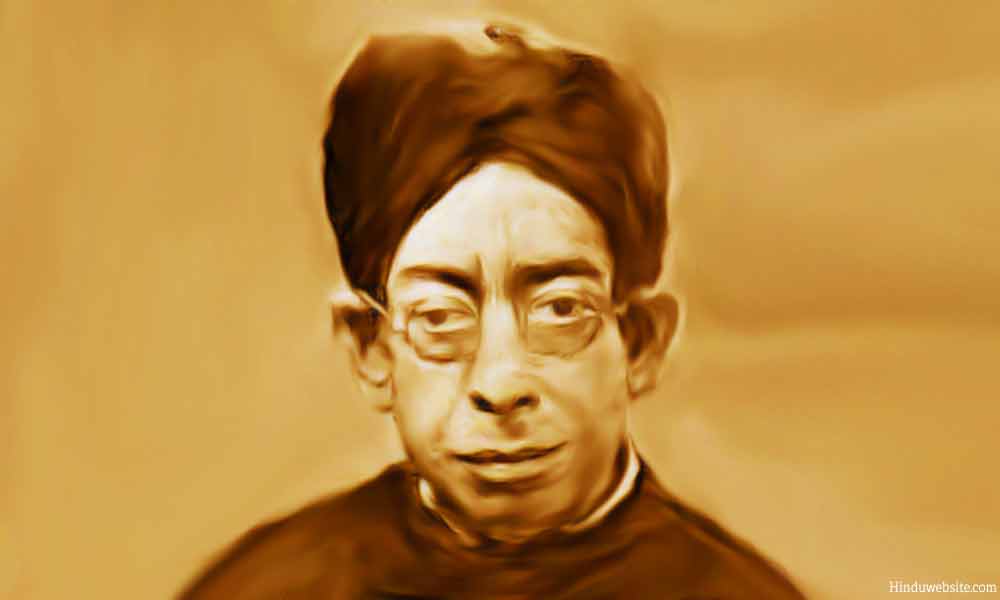
An artistic impression of Surendranath Dasgupta
| Ch1 || Ch2 || Ch3 || Ch4 || Ch5 || Ch6 || Ch7 ||Ch8 || Ch9 || Ch10 || Index ||
In what Sense is A History Of Indian Philosophy possible?
It is hardly possible to attempt A History Of Indian Philosophy in the manner in which the histories of European philosophy have been written. In Europe from the earliest times, thinkers came one after another and offered their independent speculations on philosophy. The work of a modern historian consists in chronologically arranging these views and in commenting upon the influence of one school upon another or upon the general change from time to time in the tides and currents of philosophy. Here in India, however, the principal systems of philosophy had their beginning in times of which we have but scanty record, and it is hardly possible to say correctly at what time they began, or to compute the influence that led to the foundation of so many divergent systems at so early a period, for in all probability these were formulated just after the earliest Upanisads had been composed or arranged.
The systematic treatises were written in short and pregnant half-sentences (_sûtras_) which did not elaborate the subject in detail, but served only to hold before the reader the lost threads of memory of elaborate disquisitions with which he was already thoroughly acquainted. It seems, therefore, that these pithy half-sentences were like lecture hints, intended for those who had had direct elaborate oral instructions on the subject. It is indeed difficult to guess from the sûtras the extent of their significance, or how far the discussions which they gave rise to in later days were originally intended by them. The sûtras of the Vedânta system, known as the S'ârîraka-sûtras or Brahma-sûtras of Bâdarâyana for example were of so ambiguous a nature that they gave rise to more than half a dozen divergent interpretations, each one of which claimed to be the only faithful one. Such was the high esteem and respect in which these writers of the sûtras were held by later writers that whenever they had any new speculations to offer, these were reconciled with the doctrines of one or other of the existing systems, and put down as faithful interpretations of the system in the form of commentaries.
Such was the hold of these systems upon scholars that all the orthodox teachers since the foundation of the systems of philosophy belonged to one or other of these schools. Their pupils were thus naturally brought up in accordance with the views of their teachers. All the independence of their thinking was limited and enchained by the faith of the school to which they were attached. Instead of producing a succession of free-lance thinkers having their own systems to propound and establish, India had brought forth schools of pupils who carried the traditionary views of particular systems from generation to generation, who explained and expounded them, and defended them against the attacks of other rival schools which they constantly attacked in order to establish the superiority of the system to which they adhered. To take an example, the Nyâya system of philosophy consisting of a number of half-sentences or sûtras is attributed to Gautama, also called Aksapâda. The earliest commentary on these sûtras, called the _Vâtsyâyana bhâsya_, was written by Vâtsyâyana.
This work was sharply criticized by the Buddhist Dinnâga, and to answer these criticisms Udyotakara wrote a commentary on this commentary called the _Bhâsyavâttika_ [Footnote ref 1]. As time went on the original force of this work was lost, and it failed to maintain the old dignity of the school. At this Vâcaspati Mis'ra wrote a commentary called _Vârttika-tâtparyatîkâ_ on this second commentary, where he tried to refute all objections against the Nyâya system made by other rival schools and particularly by the Buddhists. This commentary, called _Nyâya-tâtparyatîkâ_, had another commentary called _Nyâya-tâtparyatîkâ-paris'uddhi_ written by the great Udayana. This commentary had another commentary called _Nyâya-nibandha-prakâs'a_ written by Varddhamâna the son of the illustrious Ganges'a. This again had another commentary called _Varddha-mânendu_ upon it by Padmanâbha Mis'ra, and this again had another named _Nyâya-tâtparyamandana_ by S'ankara Mis'ra. The names of Vâtsyâyana, Vâcaspati, and Udayana are indeed very great, but even they contented themselves by writing commentaries on commentaries, and did not try to formulate any original system. Even S'ankara, probably the greatest man of India after Buddha, spent his life in writing commentaries on the _Brahma-sûtras_, the Upanisads, and the _Bhagavadgîtâ_.
[Footnote 1: I have preferred to spell Dinnâga after Vâcaspati's _Tâtparyatîkâ_ (p. I) and not Dignnâga as it is generally spelt.]
As a system passed on it had to meet unexpected opponents and troublesome criticisms for which it was not in the least prepared. Its adherents had therefore to use all their ingenuity and subtlety in support of their own positions, and to discover the defects of the rival schools that attacked them. A system as it was originally formulated in the sûtras had probably but few problems to solve, but as it fought its way in the teeth of opposition of other schools, it had to offer consistent opinions on other problems in which the original views were more or less involved but to which no attention had been given before.
The contributions of the successive commentators served to make each system more and more complete in all its parts, and stronger and stronger to enable it to hold its own successfully against the opposition and attacks of the rival schools. A system in the sûtras is weak and shapeless as a newborn babe, but if we take it along with its developments down to the beginning of the seventeenth century it appears as a fully developed man strong and harmonious in all its limbs. It is therefore not possible to write any history of successive philosophies of India, but it is necessity that each system should be studied and interpreted in all the growth it has acquired through the successive ages of history from its conflicts with the rival systems as one whole [Footnote ref 1]. In the history of Indian philosophy we have no place for systems which had their importance only so long as they lived and were then forgotten or remembered only as targets of criticism. Each system grew and developed by the untiring energy of its adherents through all the successive ages of history, and a history of this growth is a history of its conflicts. No study of any Indian system is therefore adequate unless it is taken throughout all the growth it attained by the work of its champions, the commentators whose selfless toil for it had kept it living through the ages of history.
[Footnote 1: In the case of some systems it is indeed possible to suggest one or two earlier phases of the system, but this principle cannot be carried all through, for the supplementary information and arguments given by the later commentators often appear as harmonious elaborations of the earlier writings and are very seldom in conflict with them.]
Growth of the Philosophic Literature.
It is difficult to say how the systems were originally formulated, and what were the influences that led to it. We know that a spirit of philosophic enquiry had already begun in the days of the earliest Upanisads. The spirit of that enquiry was that the final essence or truth was the âtman, that a search after it was our highest duty, and that until we are ultimately merged in it we can only feel this truth and remain uncontented with everything else and say that it is not the truth we want, it is not the truth we want (_neti neti_). Philosophical enquires were however continuing in circles other than those of the Upanisads. Thus the Buddha who closely followed the early Upanisad period, spoke of and enumerated sixty-two kinds of heresies [Footnote ref 1], and these can hardly be traced in the Upanisads. The Jaina activities were also probably going on contemporaneously but in the Upanisads no reference to these can be found. We may thus reasonably suppose that there were different forms of philosophic enquiry in spheres other than those of the Upanisad sages, of which we have but scanty records. It seems probable that the Hindu systems of thought originated among the sages who though attached chiefly to the Upanisad circles used to take note of the discussions and views of the antagonistic and heretical philosophic circles. In the assemblies of these sages and their pupils, the views of the heretical circles were probably discussed and refuted. So it continued probably for some time when some illustrious member of the assembly such as Gautama or Kanada collected the purport of these discussions on various topics and problems, filled up many of the missing links, classified and arranged these in the form of a system of philosophy and recorded it in sûtras. These sûtras were intended probably for people who had attended the elaborate oral discussions and thus could easily follow the meaning of the suggestive phrases contained in the aphorisms. The sûtras thus contain sometimes allusions to the views of the rival schools and indicate the way in which they could be refuted. The commentators were possessed of the general drift of the different discussions alluded to and conveyed from generation to generation through an unbroken chain of succession of teachers and pupils. They were however free to supplement these traditionary explanations with their own
[Footnote 1: _Brahmajâla-sutta, Dîgha_, 1. p. 12 ff.]
views or to modify and even suppress such of the traditionary views with which they did not agree or which they found it difficult to maintain. Brilliant oppositions from the opposing schools often made it necessary for them to offer solutions to new problems unthought of before, but put forward by some illustrious adherent of a rival school. In order to reconcile these new solutions with the other parts of the system, the commentators never hesitated to offer such slight modifications of the doctrines as could harmonize them into a complete whole. These elaborations or modifications generally developed the traditionary system, but did not effect any serious change in the system as expounded by the older teachers, for the new exponents always bound themselves to the explanations of the older teachers and never contradicted them. They would only interpret them to suit their own ideas, or say new things only in those cases where the older teachers had remained silent. It is not therefore possible to describe the growth of any system by treating the contributions of the individual commentators separately. This would only mean unnecessary repetition. Except when there is a specially new development, the system is to be interpreted on the basis of the joint work of the commentators treating their contributions as forming one whole.
The fact that each system had to contend with other rival systems in order to hold its own has left its permanent mark upon all the philosophic literatures of India which are always written in the form of disputes, where the writer is supposed to be always faced with objections from rival schools to whatever he has got to say. At each step he supposes certain objections put forth against him which he answers, and points out the defects of the objector or shows that the objection itself is ill founded. It is thus through interminable byways of objections, counter-objections and their answers that the writer can wend his way to his destination. Most often the objections of the rival schools are referred to in so brief a manner that those only who know the views can catch them. To add to these difficulties the Sanskrit style of most of the commentaries is so condensed and different from literary Sanskrit, and aims so much at precision and brevity, leading to the use of technical words current in the diverse systems, that a study of these becomes often impossible without the aid of an expert preceptor; it is difficult therefore for all who are not widely read in all the different systems to follow any advanced work of any particular system, as the deliberations of that particular system are expressed in such close interconnection with the views of other systems that these can hardly be understood without them. Each system of India has grown (at least in particular epochs) in relation to and in opposition to the growth of other systems of thought, and to be a thorough student of Indian philosophy one should study all the systems in their mutual opposition and relation from the earliest times to a period at which they ceased to grow and came to a stop--a purpose for which a work like the present one may only be regarded as forming a preliminary introduction.
Besides the sûtras and their commentaries there are also independent treatises on the systems in verse called _kârikâs_, which try to summarize the important topics of any system in a succinct manner; the _Sâmkhya kârikâ_ may be mentioned as a work of this kind. In addition to these there were also long dissertations, commentaries, or general observations on any system written in verses called the vârttikas; the _S'lokavârttika_, of Kumarila or the _Vârttika_ of Sures'vara may be mentioned as examples. All these of course had their commentaries to explain them. In addition to these there were also advanced treatises on the systems in prose in which the writers either nominally followed some selected sûtras or proceeded independently of them. Of the former class the _Nyâyamañjarî_ of Jayanta may be mentioned as an example and of the latter the _Pras'astapâda bhâsya_, the _Advaitasiddhi_ of Madhusûdana Sarasvatî or the _Vedânta-paribhâsâ_ of Dharmarâjâdhvarîndra. The more remarkable of these treatises were of a masterly nature in which the writers represented the systems they adhered to in a highly forcible and logical manner by dint of their own great mental powers and genius. These also had their commentaries to explain and elaborate them. The period of the growth of the philosophic literatures of India begins from about 500 B.C. (about the time of the Buddha) and practically ends in the later half of the seventeenth century, though even now some minor publications are seen to come out.
The Indian Systems of Philosophy.
The Hindus classify the systems of philosophy into two classes, namely, the _nâstika_ and the _âstika_. The nâstika (_na asti_ "it is not") views are those which neither regard the Vedas as infallible nor try to establish their own validity on their authority. These are principally three in number, the Buddhist, Jaina and the Cârvâka. The âstika-mata or orthodox schools are six in number, Sâmkhya, Yoga, Vedânta, Mîmâmsâ, Nyâya and Vais'esika, generally known as the six systems (_saddars'ana_ [Footnote ref 1]).
The Sâmkhya is ascribed to a mythical Kâpila, but the earliest works on the subject are probably now lost. The Yoga system is attributed to Patañjali and the original sûtras are called the _Pâtañjala Yoga sûtras_. The general metaphysical position of these two systems with regard to soul, nature, cosmology and the final goal is almost the same, and the difference lies in this that the Yoga system acknowledges a god (_Îs'vara_) as distinct from Âtman and lays much importance on certain mystical practices (commonly known as Yoga practices) for the achievement of liberation, whereas the Sâmkhya denies the existence of Îs'vara and thinks that sincere philosophic thought and culture are sufficient to produce the true conviction of the truth and thereby bring about liberation. It is probable that the system of Sâmkhya associated with Kâpila and the Yoga system associated with Patañjali are but two divergent modifications of an original Sâmkhya school, of which we now get only references here and there. These systems therefore though generally counted as two should more properly be looked upon as two different schools of the same Sâmkhya system--one may be called the Kâpila Sâmkhya and the other Pâtañjala Sâmkhya.
The Pûrva Mîmâmsâ (from the root _man_ to think--rational conclusions) cannot properly be spoken of as a system of philosophy. It is a systematized code of principles in accordance with which the Vedic texts are to be interpreted for purposes of sacrifices.
[Footnote 1: The word "_dars'ana_" in the sense of true philosophic knowledge has its earliest use in the _Vais'esika sûtras_ of Kanâda (IX. ii. 13) which I consider as pre-Buddhistic. The Buddhist pitakas (400 B.C.) called the heretical opinions "_ditthi_" (Sanskrit--drsti from the same root _drs'_ from which dars'ana is formed). Haribhadra (fifth century A.D.) uses the word Dars'ana in the sense of systems of philosophy (_sarvadars'anavâcyo' rthah--Saddars'anasamuccaya_ I.). Ratnakîrtti (end of the tenth century A.D.) uses the word also in the same sense ("_Yadi nâma dars'ane dars'ane nânâprakâram sattvatak-sanam uktamasti._" _Ksanabhangasiddhi_ in _Six Buddhist Nyâya tracts_, p.20). Mâdhava (1331 A.D.) calls his Compendium of all systems of philosophy, _Sarvadars'anasamgrana_. The word "_mata_" (opinion or view) was also freely used in quoting the views of other systems. But there is no word to denote 'philosophers' in the technical sense. The Buddhists used to call those who held heretical views "_tairthika._" The words "siddha," "_jñânin_," etc. do not denote philosophers, in the modern sense, they are used rather in the sense of "seers" or "perfects."]
The Vedic texts were used as mantras (incantations) for sacrifices, and people often disputed as to the relation of words in a sentence or their mutual relative importance with reference to the general drift of the sentence. There were also differences of view with regard to the meaning of a sentence, the use to which it may be applied as a mantra, its relative importance or the exact nature of its connection with other similar sentences in a complex Vedic context. The Mîmâmsâ formulated some principles according to which one could arrive at rational and uniform solutions for all these difficulties. Preliminary to these its main objects, it indulges in speculations with regard to the external world, soul, perception, inference, the validity of the Vedas, or the like, for in order that a man might perform sacrifices with mantras, a definite order of the universe and its relation to man or the position and nature of the mantras of the Veda must be demonstrated and established. Though its interest in such abstract speculations is but secondary yet it briefly discusses these in order to prepare a rational ground for its doctrine of the mantras and their practical utility for man. It is only so far as there are these preliminary discussions in the Mîmâmsâ that it may be called a system of philosophy. Its principles and maxims for the interpretation of the import of words and sentences have a legal value even to this day. The sûtras of Mîmâmsâ are attributed to Jaimini, and S'abara wrote a bhâsya upon it. The two great names in the history of Mîmâmsâ literature after Jaimini and S'abara are Kumârila Bhatta and his pupil Prabhâkara, who criticized the opinions of his master so much, that the master used to call him guru (master) in sarcasm, and to this day his opinions pass as _guru-mata_, whereas the views of Kumârila Bhatta pass as _bhatta-mata_ [Footnote ref 1]. It may not be out of place to mention here that Hindu Law (_smrti_) accepts without any reservation the maxims and principles settled and formulated by the Mîmâmsâ.
[Footnote 1: There is a story that Kumârila could not understand the meaning of a Sanskrit sentence "_Atra tunoktam tatrâpinoktam iti paunaraktam_" (hence spoken twice). _Tunoktam_ phonetically admits of two combinations, _tu noktam_ (but not said) and _tunâuktam_ (said by the particle _tu_) and _tatrâpi noktam_ as _tatra api na uktam_ (not said also there) and _tatra apinâ uktam_ (said there by the particle _api_). Under the first interpretation the sentence would mean, "Not spoken here, not spoken there, it is thus spoken twice." This puzzled Kumârila, when Prabhâkara taking the second meaning pointed out to him that the meaning was "here it is indicated by _tu_ and there by _api,_ and so it is indicated twice." Kumârila was so pleased that he called his pupil "Guru" (master) at this.]
The _Vedânta sûtras_, also called Uttara Mîmâmsâ, written by Bâdarâyana, otherwise known as the _Brahma-sûtras_, form the original authoritative work of Vedânta. The word Vedânta means "end of the Veda," i.e. the Upanisads, and the _Vedânta sûtras_ are so called as they are but a summarized statement of the general views of the Upanisads. This work is divided into four books or adhyâyas and each adhyâya is divided into four pâdas or chapters. The first four sûtras of the work commonly known as _Catuhsûtrî_ are (1) How to ask about Brahman, (2) From whom proceed birth and decay, (3) This is because from him the Vedas have come forth, (4) This is shown by the harmonious testimony of the Upanisads. The whole of the first chapter of the second book is devoted to justifying the position of the Vedânta against the attacks of the rival schools. The second chapter of the second book is busy in dealing blows at rival systems. All the other parts of the book are devoted to settling the disputed interpretations of a number of individual Upanisad texts. The really philosophical portion of the work is thus limited to the first four sûtras and the first and second chapters of the second book. The other portions are like commentaries to the Upanisads, which however contain many theological views of the system. The first commentary of the _Brahma-sûtra_ was probably written by Baudhâyana, which however is not available now. The earliest commentary that is now found is that of the great S'ankara. His interpretations of the _Brahma-sûtras_ together with all the commentaries and other works that follow his views are popularly known as Vedânta philosophy, though this philosophy ought more properly to be called Vis'uddhâdvaitavâda school of Vedânta philosophy (i.e. the Vedânta philosophy of the school of absolute monism). Variant forms of dualistic philosophy as represented by the Vaisnavas, S'aivas, Râmâyatas, etc., also claim to express the original purport of the Brahma sûtras. We thus find that apostles of dualistic creeds such as Râmânuja, Vallabha, Madhva, S'rîkantha, Baladeva, etc., have written independent commentaries on the _Brahma-sûtra_ to show that the philosophy as elaborated by themselves is the view of the Upanisads and as summarized in the _Brahma-sûtras_. These differed largely and often vehemently attacked S'ankara's interpretations of the same sûtras. These systems as expounded by them also pass by the name of Vedânta as these are also claimed to be the real interpretations intended by the Vedânta (Upanisads) and the _Vedânta sûtras_. Of these the system of Râmânuja has great philosophical importance.
The _Nyâya sûtras_ attributed to Gautama, called also Aksapâda, and the _Vais'esika sûtras_ attributed to Kanâda, called also Ulûka, represent the same system for all practical purposes. They are in later times considered to differ only in a few points of minor importance. So far as the sûtras are concerned the _Nyâya sûtras_ lay particular stress on the cultivation of logic as an art, while the _Vais'esika sûtras_ deal mostly with metaphysics and physics. In addition to these six systems, the Tantras had also philosophies of their own, which however may generally be looked upon largely as modifications of the Sâmkhya and Vedânta systems, though their own contributions are also noteworthy.
Some fundamental Points of Agreement.
I. _The Karma Theory._
It is, however, remarkable that with the exception of the Cârvâka materialists all the other systems agree on some fundamental points of importance. The systems of philosophy in India were not stirred up merely by the speculative demands of the human mind which has a natural inclination for indulging in abstract thought, but by a deep craving after the realization of the religious purpose of life. It is surprising to note that the postulates, aims and conditions for such a realization were found to be identical in all the conflicting systems. Whatever may be their differences of opinion in other matters, so far as the general postulates for the realization of the transcendent state, the _summum bonum_ of life, were concerned, all the systems were practically in thorough agreement. It may be worth while to note some of them at this stage.
First, the theory of Karma and rebirth. All the Indian systems agree in believing that whatever action is done by an individual leaves behind it some sort of potency which has the power to ordain for him joy or sorrow in the future according as it is good or bad. When the fruits of the actions are such that they cannot be enjoyed in the present life or in a human life, the individual has to take another birth as a man or any other being in order to suffer them.
The Vedic belief that the mantras uttered in the correct accent at the sacrifices with the proper observance of all ritualistic details, exactly according to the directions without the slightest error even in the smallest trifle, had something like a magical virtue automatically to produce the desired object immediately or after a lapse of time, was probably the earliest form of the Karma doctrine. It postulates a semi-conscious belief that certain mystical actions can produce at a distant time certain effects without the ordinary process of the instrumentality of visible agents of ordinary cause and effect. When the sacrifice is performed, the action leaves such an unseen magical virtue, called the _adrsta_ (the unseen) or the _apûrva_ (new), that by it the desired object will be achieved in a mysterious manner, for the _modus operandi_ of the _apûrva_ is unknown. There is also the notion prevalent in the Samhitâs, as we have already noticed, that he who commits wicked deeds suffers in another world, whereas he who performs good deeds enjoys the highest material pleasures. These were probably associated with the conception of _rta_, the inviolable order of things. Thus these are probably the elements which built up the Karma theory which we find pretty well established but not emphasized in the Upanisads, where it is said that according to good or bad actions men will have good or bad births.
To notice other relevant points in connection with the Karma doctrine as established in the âstika systems we find that it was believed that the unseen (_adrsta_) potency of the action generally required some time before it could be fit for giving the doer the merited punishment or enjoyment. These would often accumulate and prepare the items of suffering and enjoyment for the doer in his next life. Only the fruits of those actions which are extremely wicked or particularly good could be reaped in this life. The nature of the next birth of a man is determined by the nature of pleasurable or painful experiences that have been made ready for him by his maturing actions of this life. If the experiences determined for him by his action are such that they are possible to be realized in the life of a goat, the man will die and be born as a goat. As there is no ultimate beginning in time of this world process, so there is no time at which any person first began his actions or experiences. Man has had an infinite number of past lives of the most varied nature, and the instincts of each kind of life exist dormant in the life of every individual, and thus whenever he has any particular birth as this or that animal or man, the special instincts of that life (technically called _vâsanâ_) come forth. In accordance with these vâsanâs the person passes through the painful or pleasurable experiences as determined for him by his action. The length of life is also determined by the number and duration of experiences as preordained by the fructifying actions of his past life. When once certain actions become fit for giving certain experiences, these cannot be avoided, but those actions which have not matured are uprooted once for all if the person attains true knowledge as advocated by philosophy. But even such an emancipated (_mukta_) person has to pass through the pleasurable or painful experiences ordained for him by the actions just ripened for giving their fruits. There are four kinds of actions, white or virtuous (_s'ukla_), black or wicked (_krsna_), white-black or partly virtuous and partly vicious (_s'ukla-krsna_) as most of our actions are, neither black nor white (_as'uklâkrsna_), i.e. those acts of self-renunciation or meditation which are not associated with any desires for the fruit. It is only when a person can so restrain himself as to perform only the last kind of action that he ceases to accumulate any new karma for giving fresh fruits. He has thus only to enjoy the fruits of his previous karmas which have ripened for giving fruits. If in the meantime he attains true knowledge, all his past accumulated actions become destroyed, and as his acts are only of the as'uklâkrsna type no fresh karma for ripening is accumulated, and thus he becomes divested of all karma after enjoying the fruits of the ripened karmas alone.
The Jains think that through the actions of body, speech and mind a kind of subtle matter technically called karma is produced. The passions of a man act like a viscous substance that attracts this karma matter, which thus pours into the soul and sticks to it. The karma matter thus accumulated round the soul during the infinite number of past lives is technically called _kârmas'arîra_, which encircles the soul as it passes on from birth to birth. This karma matter sticking to the soul gradually ripens and exhausts itself in ordaining the sufferance of pains or the enjoyment of pleasures for the individual. While some karma matter is being expended in this way, other karma matters are accumulating by his activities, and thus keep him in a continuous process of suffering and enjoyment. The karma matter thus accumulated in the soul produces a kind of coloration called _les'yâ_, such as white, black, etc., which marks the character of the soul. The idea of the s'ukla and krsna karmas of the Yoga system was probably suggested by the Jaina view. But when a man is free from passions, and acts in strict compliance with the rules of conduct, his actions produce karma which lasts but for a moment and is then annihilated. Every karma that the sage has previously earned has its predestined limits within which it must take effect and be purged away. But when by contemplation and the strict adherence to the five great vows, no new karma is generated, and when all the karmas are exhausted the worldly existence of the person rapidly draws towards its end. Thus in the last stage of contemplation, all karma being annihilated, and all activities having ceased, the soul leaves the body and goes up to the top of the universe, where the liberated souls stay for ever.
which however being intimately connected with their metaphysics will be treated later on.
2. _The Doctrine of Mukti_.
Not only do the Indian systems agree as to the cause of the inequalities in the share of sufferings and enjoyments in the case of different persons, and the manner in which the cycle of births and rebirths has been kept going from beginningless time, on the basis of the mysterious connection of one's actions with the happenings of the world, but they also agree in believing that this beginningless chain of karma and its fruits, of births and rebirths, this running on from beginningless time has somewhere its end. This end was not to be attained at some distant time or in some distant kingdom, but was to be sought within us. Karma leads us to this endless cycle, and if we could divest ourselves of all such emotions, ideas or desires as lead us to action we should find within us the actionless self which neither suffers nor enjoys, neither works nor undergoes rebirth. When the Indians, wearied by the endless bustle and turmoil of worldly events, sought for and believed that somewhere a peaceful goal could be found, they generally hit upon the self of man. The belief that the soul could be realized in some stage as being permanently divested of all action, feelings or ideas, led logically to the conclusion that the connection of the soul with these worldly elements was extraneous, artificial or even illusory. In its true nature the soul is untouched by the impurities of our ordinary life, and it is through ignorance and passion as inherited from the cycle of karma from beginningless time that we connect it with these. The realization of this transcendent state is the goal and final achievement of this endless cycle of births and rebirths through karma. The Buddhists did not admit the existence of soul, but recognized that the final realization of the process of karma is to be found in the ultimate dissolution called Nirvâna, the nature of which we shall discuss later on.
3. _The Doctrine of Soul_.
All the Indian systems except Buddhism admit the existence of a permanent entity variously called atman, purusa or jîva. As to the exact nature of this soul there are indeed divergences of view. Thus while the Nyâya calls it absolutely qualityless and characterless, indeterminate unconscious entity, Sâmkhya describes it as being of the nature of pure consciousness, the Vedânta says that it is that fundamental point of unity implied in pure consciousness (_cit_), pure bliss (_ânanda_), and pure being (_sat_). But all agree in holding that it is pure and unsullied in its nature and that all impurities of action or passion do not form a real part of it. The _summum bonum_ of life is attained when all impurities are removed and the pure nature of the self is thoroughly and permanently apprehended and all other extraneous connections with it are absolutely dissociated.
The Pessimistic Attitude towards the World and the Optimistic Faith in the end.
Though the belief that the world is full of sorrow has not been equally prominently emphasized in all systems, yet it may be considered as being shared by all of them. It finds its strongest utterance in Sâmkhya, Yoga, and Buddhism. This interminable chain of pleasurable and painful experiences was looked upon as nearing no peaceful end but embroiling and entangling us in the meshes of karma, rebirth, and sorrow. What appear as pleasures are but a mere appearance for the attempt to keep them steady is painful, there is pain when we lose the pleasures or when we are anxious to have them. When the pleasures are so much associated with pains they are but pains themselves. We are but duped when we seek pleasures, for they are sure to lead us to pain. All our experiences are essentially sorrowful and ultimately sorrow-begetting. Sorrow is the ultimate truth of this process of the world. That which to an ordinary person seems pleasurable appears to a wise person or to a yogin who has a clearer vision as painful. The greater the knowledge the higher is the sensitiveness to sorrow and dissatisfaction with world experiences. The yogin is like the pupil of the eye to which even the smallest grain of disturbance is unbearable. This sorrow of worldly experiences cannot be removed by bringing in remedies for each sorrow as it comes, for the moment it is remedied another sorrow comes in. It cannot also be avoided by mere inaction or suicide, for we are continually being forced to action by our nature, and suicide will but lead to another life of sorrow and rebirth. The only way to get rid of it is by the culmination of moral greatness and true knowledge which uproot sorrow once for all. It is our ignorance that the self is intimately connected with the experiences of life or its pleasures, that leads us to action and arouses passion in us for the enjoyment of pleasures and other emotions and activities. Through the highest moral elevation a man may attain absolute dispassion towards world-experiences and retire in body, mind, and speech from all worldly concerns. When the mind is so purified, the self shines in its true light, and its true nature is rightly conceived. When this is once done the self can never again be associated with passion or ignorance. It becomes at this stage ultimately dissociated from _citta_ which contains within it the root of all emotions, ideas, and actions. Thus emancipated the self for ever conquers all sorrow. It is important, however, to note in this connection that emancipation is not based on a general aversion to intercourse with the world or on such feelings as a disappointed person may have, but on the appreciation of the state of mukti as the supremely blessed one. The details of the pessimistic creed of each system have developed from the logical necessity peculiar to each system. There was never the slightest tendency to shirk the duties of this life, but to rise above them through right performance and right understanding. It is only when a man rises to the highest pinnacle of moral glory that he is fit for aspiring to that realization of selfhood in comparison with which all worldly things or even the joys of Heaven would not only shrink into insignificance, but appear in their true character as sorrowful and loathsome. It is when his mind has thus turned from all ordinary joys that he can strive towards his ideal of salvation. In fact it seems to me that a sincere religious craving after some ideal blessedness and quiet of self-realization is indeed the fundamental fact from which not only her philosophy but many of the complex phenomena of the civilization of India can be logically deduced. The sorrow around us has no fear for us if we remember that we are naturally sorrowless and blessed in ourselves. The pessimistic view loses all terror as it closes in absolute optimistic confidence in one's own self and the ultimate destiny and goal of emancipation.
Unity in Indian Sâdhana (philosophical, religious and ethical endeavours).
As might be expected the Indian systems are all agreed upon the general principles of ethical conduct which must be followed for the attainment of salvation. That all passions are to be controlled, no injury to life in any form should be done, and that all desire for pleasures should be checked, are principles which are almost universally acknowledged. When a man attains a very high degree of moral greatness he has to strengthen and prepare his mind for further purifying and steadying it for the attainment of his ideal; and most of the Indian systems are unanimous with regard to the means to be employed for the purpose. There are indeed divergences in certain details or technical names, but the means to be adopted for purification are almost everywhere essentially the same as those advocated by the Yoga system. It is only in later times that devotion (_bhakti_) is seen to occupy a more prominent place specially in Vaisnava schools of thought. Thus it was that though there were many differences among the various systems, yet their goal of life, their attitude towards the world and the means fur the attainment of the goal (_sâdhana_) being fundamentally the same, there was a unique unity in the practical sâdhana of almost all the Indian systems. The religious craving has been universal in India and this uniformity of sâdhana has therefore secured for India a unity in all her aspirations and strivings.
Suggestions for Further Reading
- Chapter I - Introductory
- Chapter II - The Vedas, BrâhmaNas And Their Philosophy
- Chapter III - The Earlier UpaniSads (700 B.C.-600 B.C.)
- Chapter IV - General Observations On The Systems Of Indian Philosophy
- Chapter V - Buddhist Philosophy
- Chapter VI -The Jaina Philosophy
- Chapter VII - The Kapila And The Pâtañjala SâMkhya (Yoga)
- Chapter VIII - The Nyâya-Vaisesika Philosophy
- Chapter IX - MîmâMsâ Philosophy
- Chapter X - The S'aNkara School Of Vedânta
- Essays On Dharma
- Esoteric Mystic Hinduism
- Introduction to Hinduism
- Hindu Way of Life
- Essays On Karma
- Hindu Rites and Rituals
- The Origin of The Sanskrit Language
- Symbolism in Hinduism
- Essays on The Upanishads
- Concepts of Hinduism
- Essays on Atman
- Hindu Festivals
- Spiritual Practice
- Right Living
- Yoga of Sorrow
- Happiness
- Mental Health
- Concepts of Buddhism
- General Essays
Source: A History Of Indian Philosophy Surendranath Dasgupta Volume I First Edition: Cambridge, 1922. Produced by Srinivasan Sriram and sripedia.org, William Boerst and PG Distributed Proofreaders. While we have made every effort to reproduce the text correctly, we do not guarantee or accept any responsibility for any errors or omissions or inaccuracies in the reproduction of this text. Please refer the original text for any academic or serious studies.