
Maya As the Field of Illusion and Power of Delusion
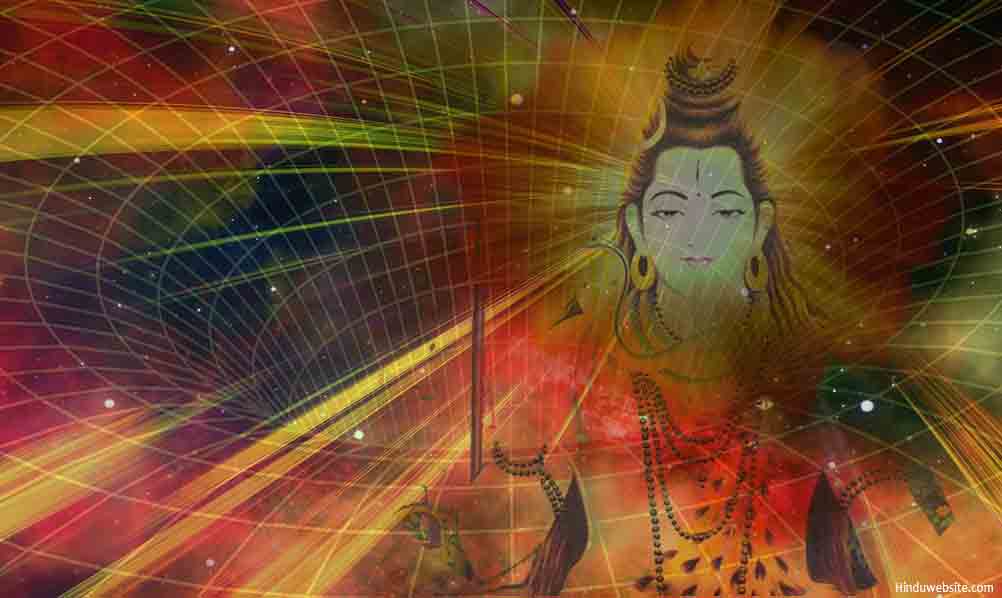
In the epic Mahabharata, when Duryodhana enters the hall of illusion (Mayasabha), he loses his way, becomes confused and envious. Seeing his predicament, Draupadi laughs at him. At once, he becomes uncontrollably angry, feels insulted and vows to take revenge against Pandavas (his cousins) for their audacity to display their power and wealth to belittle him in the presence of women.
It was in the hall of illusions that the seeds of the great Mahabharata war were sown, which germinated in due course and ultimately consumed the whole Kuru clan, causing them untold misery and the destruction of their prosperous empire. The epic Mahabharata shows in many ways how human beings can bring misery and destruction upon themselves and others through their weaknesses under the influence of Maya and where they may eventually lead them. The great Mayasabha of the Mahabharata symbolizes our world, which is the home of Maya, where truths are not self-evident except to an awakened mind.
Maya in the mortal world
The world in which we live is not very different from the hall of illusions which Duryodhana entered. It is a giant illusion in itself, where our egos grow in strength, experience emotions and where we assume one thing for another and suffer from confusion, delusion and emotional turmoil. If Mayasabha symbolizes the world, Duryodhana symbolizes the egoistic individual (jiva) and Draupadi personifies Nature or Maya who instigates beings into different states of delusion, confusion and mental or emotional instability.
Maya is ubiquitous in this world, and none is spared by it. The influence of Maya manifests in every aspect of our lives. It clouds our judgment and creates confusion and conflicting states whereby people fail to see things as they are or make wise choices. Modern psychology confirms that there are limitations to our knowing and perceiving since our minds are subject to several filters and shortcuts, which interfere with our perception and thinking and make us see what we want to see rather than what truly exists.
Seeing things as they are needs effort, right knowledge, mental clarity and sharp intelligence, which ordinary mortals cannot naturally achieve in their lives because of Maya. Maya strengthens the ego, which makes it even more difficult. It is the same state which made Arjuna experience the mental turmoil in the Bhagavadgita. His belief that he was a physical being made him view the entire situation in the battlefield from a limited perspective as a battle between two groups of mortal beings rather than a divine intervention by God to restore Dharma.
We suffer from the same problem since we do not discern the play of God in the phenomena of the world. Deep within our minds skepticism lurks like a shadow and vacillate between faith and disbelief about God and ourselves. Maya is the inescapable condition of mortal life. We cannot validate its existence except through the testimony of the scriptures. In the macrocosm we recognize her as a deity or an aspect or force of Nature and in the beings as a state or condition which is responsible for egoism, delusion and ignorance. The body itself is a creation of Maya, subject to Maya, the field of Maya and personifies the state of Maya. So is the mind. Both act as the prison house of the Self and do not let it go, until one is completely freed from it.
The mechanism of Maya
Who unleashes this deluding and distracting force, which draws the souls into the whirlpool of Samsara and tosses them up and down on the waves of impermanence? It is but God himself, the Creator, who is described in the scriptures as Mayavi, the grand wizard of illusion. First, he activates Nature. Next, he conceals the truth, and in its place projects an alternate reality. Then, he casts his net of illusion (Maya) and draws the unsuspecting souls into the field of Nature and lets her do the rest.
Thus, Maya is either God in action in the field of Nature or Nature in action under the will of God. Both views enjoy support by different schools of Hinduism. Concealed by his own Maya, the Self becomes an enemy of the Self. He becomes what he is not, or different and distinct from what he is. He perceives himself as an object and an independent player in the field of Nature. In other words, Maya is not only a binding mechanism but also a concealing mechanism.
No one can achieve liberation without overcoming delusion and without stabilizing intelligence (buddhi) in the contemplation of the Self. Moksha truly means the destruction of delusion (mo (ha) + ksha (ra)), which leads to enlightenment, knowledge and liberation. To achieve liberation, one must know the mechanism of Maya and how to overcome it. In the following discussion we will examine how Maya binds beings to the mortal world and how she subjects them to delusion and the cycle of births and deaths, using her aspects, field, modifications, modes and finite realities (tattvas).
Diversity
The first discernible phenomenon in creation is diversity. God is one, but in the field of Nature he appears as many due to the force of Maya. Since we depend upon our senses to perceive the world, we see the diversity of creation but not its underlying unity. Diversity manifests in each of us also. However, due to the power of Maya, we perceive the diversity of our minds and bodies but not the Self which is hidden. Within our minds also, we perceive the diversity of our subtle worlds but not the pure consciousness that supports them all.
Senses
The Self is all knowing and self-knowing. He does not depend upon any external organs for perception or cognition. In contrast, due to the influence of Maya we cannot do without senses. We depend upon them to perceive, know, relate and interact with the external world. Out of the 23 finite realities of Nature (or Maya), 15 are senses only namely the five organs of action, five organs of perception and five subtle senses. The senses are by nature outgoing. They draw the mind out and involve it with the sense objects. They are chiefly responsible for Samsara.
Desires
The Self is complete and perfect, and free from desires whatsoever. Nothing can be taken out of him or added to him. Therefore, the Self does not engage in desire-ridden actions. In contrast, beings are incomplete and depend upon numerous objects to continue their existence. Hence, they engage in desire-ridden actions, which lead to karma and bondage. Desires are induced in us by the triple modes of Maya. Hence, to overcome the influence of Maya, the scriptures recommend the practice of detachment, withdrawal, renunciation and self-restraint.
Attachments
The Self is free from all attachments both in its liberated state and bound state. However, because of Maya, duality and egoism, beings develop attachment to numerous things and become stuck in the mortal world, mired to the Samsara. The Bhagavadgita declares that repeated interactions of the senses with the objects, under the influence of triple gunas, result in attraction and aversion, which lead to desire-ridden actions, and which in turn produce karma and attachments. Attachments are responsible for desire-ridden actions, which bind the beings to the cycle of births and deaths.
Gunas
Gunas are the modes of Maya, which are three namely sattva, rajas and tamas. Maya essentially exerts her influence upon beings and the word through them only. The Self is free from their influence. However, in the mind and the body, the field of Maya, they are very active. They not only induce in them desire ridden actions but also try to suppress each other whereby beings experience desires, modifications and delusion. According to the Bhagavadgita, unless one cultivates purity through spiritual practice and transcends the triple gunas, one cannot be from delusion and bondage.
Beingness
Beingness is the state of having materiality or the mind and body, which may be gross or subtle or both. In the purest state, Brahman is without qualities and beingness. So is the case with the Self. However, in the field of Maya some aspects of him develop beingness. The highest of all beings in creation is Isvara, the Lord of the universe, who is the combination of pure consciousness and pure beingness. As the consciousness descends into the grosser aspects of creation, beings become increasingly impure while Maya becomes increasingly active and powerful. Beingness is the field of Maya, an aspect of Maya and the play of Maya. Although it is impermanent, destructible and mutable, it plays an important role in the transmigration of the souls. In some schools of Hinduism, the material world itself is considered a being (Viraj) and the whole material universe the body of God.
Karma
Karma is the sum of desire-ridden actions we perform and their fruit, or their cumulative influence and effect upon our lives and destinies. Karma arises from the modes of Maya and remains in motion until the modes are suppressed. Both reinforce each other and involve the embodied souls in the vicious cycle of births and deaths. At the root of karma is the evil of selfishness, which arises from Maya only due to ignorance and delusion. The Vedas declare that all selfish actions, however good they may outwardly appear to be, are inherently evil and lead to sinful karma and one’s spiritual downfall. As the Bhagavadgita states, there is no escape for the one who does not make offerings to God because of selfishness. He verily eats sin and falls down. Karma is continuous and cumulative. Hence, it is difficult for beings to get rid of karma and achieve liberation without practicing karma sanyasa yoga or the renunciation of the desire for the fruit of one’s actions.
Egoism
Egoism (anava or atomicity) is the notion of being small, distinct and different or the experience of individuality, personality and distinctiveness. It is identifying oneself with one’s mind and body and considering it to be the true, rather than the Self that is hidden deep within. The ego is an aspect as well as a force of Maya only, which assumes doership and ownership and takes control of the mind and body. Through them, it engages in desire-ridden actions. To overcome our egos, we must acknowledge God or the Self. The universe truly belongs to God since he is its source and support. He is also the source of all causes and effects. Hence, all actions should be rightfully offered to him without desiring their fruit or claiming ownership. For that one should cultivate purity, detachment, equanimity and renunciation and engage the mind in the contemplation of the Self.
Ignorance
Maya prevents beings from knowing who they are by inducing in them the delusion that they are mere physical beings and the world which they experience through their senses is real. Because of that, they become caught in the apparent reality of the world and accept their physical identities as real. It also prevents them from knowing their own spirituality and essential nature. This is the state of ignorance, which is described in the scriptures as the projection or modification of Maya, which is responsible for bondage and suffering. On the path of liberation, ignorance is a major obstacle. According to the Bhagavadgita ignorance can be overcome by practicing the yoga of knowledge (jnana yoga), which involves purification of the mind and body, self-study, desireless actions, and stabilizing the mind and intelligence in the contemplation of Self, whereby one can gradually overcome ignorance and perceive the hidden Self.
Duality
Brahman is one, without divisions and without a second. In the absolute reality of Brahman there is no knower and the known, just the self-existent knower, who knows without the need to know or the effort to know. However, the projected reality of Brahman is marked by duality and pairs of opposites. In the mortal world, or the field of Maya, all truths are relative, subjective and vary according to the context and perspective. One comes to know about them only by knowing their opposites. The two sides of truth always exist in pairs. Our attraction or aversion to them results in karma and bondage through desire-ridden actions. Duality is an aspect or projection of Maya which is responsible for our afflictions and mental modifications. The scriptures suggest that one can overcome the dualities of life and pairs of opposites by overcoming attraction and aversion to them and cultivating sameness towards them all.
Delusion
What appears as Maya in the macrocosm manifests as delusion (moham) in the microcosm of the beings. Delusion is the inability to see things as they are or mistaking one for another. It arises because of Maya only. Maya makes things appear different, or other than what they truly are. It is also the source of confusion and lack of discernment. For example, because of delusion beings mistakes their bodies as their true identities and ignore their hidden Selves. They also mistake the projections of God (the worlds and beings) for real, ignoring the reality that is hidden in them. The Bhagavadgita prescribes buddhi yoga to overcome delusion and the confusion of the mind, which involves the purification of the mind and body by cultivating sattva so that one can discern truths correctly and make right choices.
Death, decay and impermanence
Change and impermanence are the striking phenomena of the mortal world. No one can escape from them. They arise in the field of Maya as modifications to perpetuate the illusion of life, movement and continuity. The Self is eternal, permanent, indestructible and immutable. As the Upanishads declare, the Self is neither active nor reactive but remains in the domain of Maya as a silent witness. However, our minds and bodies are subject to the modifications of aging, death, sickness and decay, as part of the renewal and transformative process which facilitates the order and regularity of the world. The Self is does not participate in any of them except as the enjoyer. It remains unchanged amidst the changes of the world while our minds and bodies may experience physical, mental or emotional instability due to our attachments and limited knowledge. According to our beliefs, change and impermanence are illusions as projected by God’s Maya. They can be overcome through liberation.
Bondage
The ultimate aim of Maya is to subject beings to the bondage and perpetuate the play of God (lila). Maya (Nature) is instrumental in executing the will of God and facilitating creation, preservation and destruction of the worlds and beings. The alternate reality of God which arises from him as a projection, transformation or superimposition does not happen without Maya and her deluding power.
In philosophical terms bondage, also known as Samsara, means to remain bound to the cycle of births and deaths. It is the state of the embodied Selves (Jivas) who are caught in the cycle of creation. Because of that, the souls remain bound to the earth and go through numerous births and deaths. Even if they temporarily leave at the time of death, they return to take another birth.
Bondage is the alternate reality which arises in the field of Nature because of the actions of Maya only. It is a temporary state which lasts as long as the cycle of creation lasts. For the individual souls it lasts until they attain liberation. Thus, liberation not only means liberation from mortality but also from the influence of Maya and her field of modifications.
Deliverance from Maya
Although the souls are caught in the net of Maya, they can still escape from it with discernment, purity and spiritual practice, ensuring that the wheel karma does not lead them further to rebirth. The Bhagavadgita lays out a comprehensive plan to help aspiring souls to escape from this world. The paths to liberation are many. The scripture suggests that they all lead to the same goal. The following are a few important principles that are common to them and facilitate liberation.
- Overcoming desires with the help of detachment and renunciation
- Overcoming ignorance with the help of right knowledge
- Overcoming karma with the help of selfless actions
- Overcoming fate or past karma with the help of devotion
- Overcoming the triple modes by cultivating purity
- Overcoming duality by cultivating sameness
- Overcoming delusion by cultivating discernment
- Overcoming egoism by stabilizing the mind in the contemplation of Self
- Overcoming evil tendencies by cultivating virtues or divine qualities
Maya for the pragmatist
From a practical and materialistic perspective, Maya is your ignorance, your assumptions, irrational beliefs and your false notions about yourself, others and the world, which influence your thinking and behavior. You may not acknowledge Maya, but you should know that you are not always right or mostly right. The unfortunate truth is that your mistakes and errors in judgment are not self-evident. They become evident only when they yield fruit. By that time whatever damage that had to happen, would have happened. Therefore, it is wise to live with caution and with the awareness that you do not have all the information and you cannot be too stubborn about your ideas or your judgments. It is also why learing from your mistakes, failures and experience is so important to your survival and success.
While you may have great illusions about your self-importance, the truth is the universe does not give you any special or extra importance. It treats you the same way in which it treats a stone or a mountain, according to its laws and universal truths. If you look at the expansive universe, with its billions of galaxies and trillions of stars and planets, you will realize that in the universal scheme of things neither the earth nor our lives matter. It is a miracle that the earth escaped destruction in the formative stages of the solar system and facilitated intelligent life. Our survival until this moment is a miracle in itself, while numerous species, more powerful and capable than us perished without a trace. There is no doubt that chance plays an important role in our lives and destinies.
However, we cannot also ignore the role of self-directed effort. We are able to survive against odds because we are endowed with intelligence, which help us make right choices and overcome problems. Intelligence is also our only hope against the play of Maya or the influence of Nature. Living in a rather cryptic universe, we can still make a difference to ourselves and our lives. Although our knowledge of the universe, of our existence and our personalities is not sufficient to discern all truths, we can still survive, using our intelligence and the knowledge that we already know. Since it has proven effective thus far, we should continue on the path, without giving in to our emotions or our destructive tendencies.
By continuing on the path of knowledge and selfless actions, having faith in ourselves and our spirituality and restraining our negative and destructive tendencies, we can wisely spend our time upon earth and improve our chances of peace and happiness. While we cannot totally remove our physical or mental limitations to our knowing, perceiving and understanding, we can keep learning and improving our thinking, rationality and judgment until late into our lives so that we can see with greater clarity the truths of our existence and wisely use that knowledge to depart from here without regrets and sinful memories.
The truth regarding Truth
The absolute truths of our existence will always remain beyond our capacity to know. However, we can grasp relative truths and use them wisely, without mistaking them for absolute truths and without being too judgmental or opinionated about anything. Healthy skepticism is good in dealing with the complex problems of life. Our scriptures say that the Supreme Being is indescribable, indefinable and incomprehensible. In other words, you cannot be definitive about him or clam that you know him fully or with certainty. This is the wisdom of the sages who composed the Upanishads. They kept healthy skepticism and openness about the nature of creation, existence, Brahman and the Self without falling into the trap of doctrinal rigidity.
In the world of relative truths and opinions, many opinions, viewpoints, possibilities and probabilities can coexist, and each can stand on its own merits in particular contexts and conditions. This is the truth of Truth. Every truth or principle is a possibility in some context, condition or situation. Sometimes you may find it worth fighting for and sometime not. Truth is an undulating wave on the surface of impermanence. You may call it by any name, but we consider it to be Maya, the deluding power of existence which hides in the play of light and shadow to create the illusion of something or the other. You will find it only in the unstable currents of life just as the sun light that reflects upon the waters of an ocean, but you cannot truly grasp its brilliance or immensity until you cross those waters and stand on the shore.
Suggestions for Further Reading
- Maya, the World as an Illusion
- What is Maya in Hinduism?
- The Mind and The Illusion of Reality
- Maya in the Bhagavadgita
- The Definition and Concept of Maya in Hinduism
- Me, Myself and Maya
- The Duality of Shakti, the Two Faces of Creation
- Ashtavakra Gita on Tattvajna - Liberated Person
- Vedanta Definition, Purpose and Importance
- The Working of Maya or Illusion - A Buddhist Perspective
- An Anthology of The Teachings of Ajaan Lee Dhammadharo
- Quantum Reality in Daily Life
- The concept of Sense Organs in the Bhagavadgita
- Advaita Vedanta, Concepts and Conclusion
- The Five Bodies of Jiva, the Limited Being
- Ignorance From The Aspect of Right View in Buddhism
- The Mandukya Upanishad
- The Bhagavadgita On The Mind And Its Control
- Symbolic Significance of Numbers in Hinduism
- The Belief of Reincarnation of Soul in Hinduism
- The True Meaning Of Renunciation According To Hinduism
- The Symbolic Significance of Puja Or Worship In Hinduism
- Introduction to the Upanishads of Hinduism
- Origin, Principles, Practice and Types of Yoga
- Hinduism and the Belief in one God
- Essays On Dharma
- Esoteric Mystic Hinduism
- Introduction to Hinduism
- Hindu Way of Life
- Essays On Karma
- Hindu Rites and Rituals
- The Origin of The Sanskrit Language
- Symbolism in Hinduism
- Essays on The Upanishads
- Concepts of Hinduism
- Essays on Atman
- Hindu Festivals
- Spiritual Practice
- Right Living
- Yoga of Sorrow
- Happiness
- Mental Health
- Concepts of Buddhism
- General Essays