Additional Slokas by Guru Nanak: Sacred Teachings of the Sikh Tradition
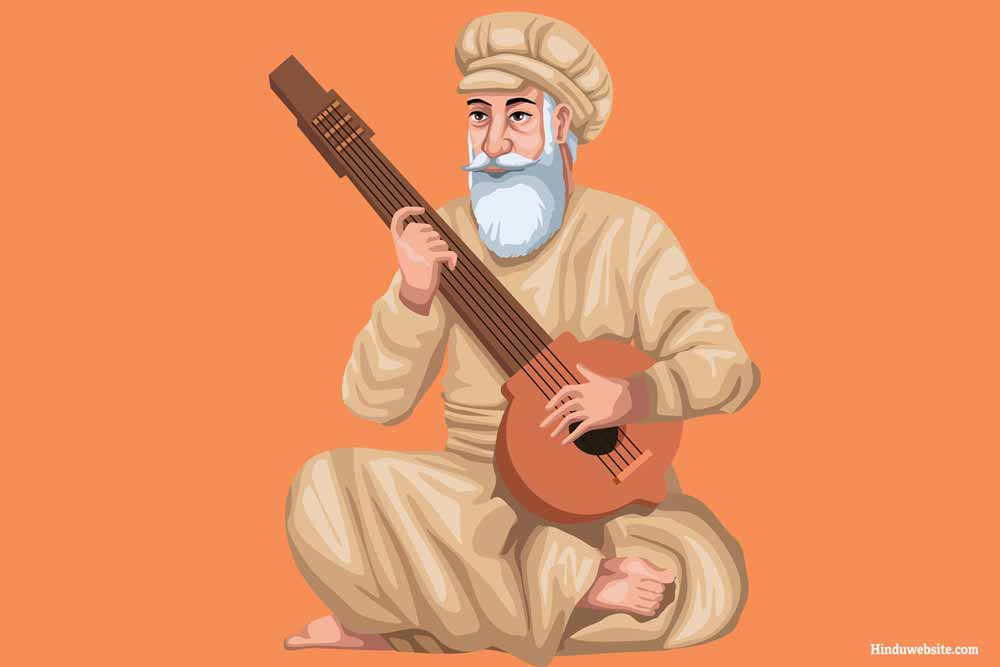
Summary: This page presents additional Slokas (sacred verses) composed by Guru Nanak, the founder of Sikhism, with English translations from Max Arthur Macauliffe's scholarly work "The Sikh Religion: Its Gurus, Sacred Writings and Authors." The collection includes spiritual teachings and philosophical guidance offered by Guru Nanak during his travels, emphasizing moral virtue, spiritual wisdom, and the transitory nature of worldly attachments. Readers will encounter authentic Sikh sacred writings that illuminate the spiritual and ethical foundations of the Sikh faith.
When Guru Nanak visited Ceylon he gave the following advice to its queen, who was proud of her beauty and her state:--
Hear, young woman with the gazelle eyes, hear my serious and weighty words.
First examine
thy goods and make thy traffic.
Dismiss[1] the evil and welcome the good.
Consider, O young
woman, what proclamation to give by which thou mayest find friends.
Give thy soul and body
to thy friends, and thou shalt thus enjoy the utmost hilarity.
Love not that which is transitory
Nanak, I am a sacrifice to those who understand this.
In spiritual matters consult the holy:--
If thou art to cross the. water, consult those who have the skill to cross:
They are very
wise and will keep clear of the whirlpool.
The dangers of the world:--
There are continual showers, squalls, and torrents hundreds of thousands of waves succeed one another.
[1. Dohi dichai. Literally-make a proclamation to depart.]
Address the True Guru, and there shall be no fear that thy bark will founder.
Another of the Guru's reflections on the sinfulness of his age:--
Nanak, to what hath the world come?
No companion or friend remaineth.
Love hath ceased
among brethren and kinsmen
Faith is lost on account of mammon.
The following was composed by Guru Nanak on seeing women mourning:--
They are saying 'Hai hai!' and 'Oh Oh!';
They beat their cheeks and pluck out the hairs
of their heads;
They utter God's name[1] without meaning it: if they were absorbed in it,
Then would Nanak be a sacrifice unto them.
The Guru went to visit a man of reputed sanctity, but on finding him a hypocrite composed the following:--
The raven washeth and rubbeth itself in a small pool in the desert;
Its mind and body are
full of demerits and its beak of filth.
The swan of the lake, not knowing that the raven was
an evil bird, associated with him.
Such is affection for the infidel; O man of divine knowledge,
understand the allusion.
Congratulate the congregation of the saints, and act like a holy man.
Pure is the ablution, O Nanak, when the Guru is deemed the river of pilgrimage.
The really holy are few:--
The saints are few, not many; deceit and wrangling Prevail in the world.[2]
[1. Oh hai. He is.
2. Also translated--They who act as become faqîrs are few in the world.]
The following has reference to the concremation of widows:--
Nanak, the widow followeth her husband and dieth; she hath no power to live.
But she who
dieth struck by the news of her husband's death is acceptable.
When the Allwise hath struck
her with the arrow of love it cannot be extracted.
She whom God hath struck with it is struck,
and being struck is acceptable.
The body is frail and cannot be saved without God's grace:--
Who can wash a vessel which is fragile in its construction?
The body is a compound of five
elements; it hath a false gilding.
If it please God, the vessel shall be acceptable,
The
supreme light shall shine and God's praises resound in it.
Pride without merit:--
Nanak, those men are the real donkeys who are proud without merit.
A definition of a Brahman:--
He is a Brahman who knoweth God,
Who performeth works of devotion, penance, and self-restraint;
And who observeth the religion of mildness and patience.
Such a Brahman shall burst his bonds,
obtain salvation,.
And be worthy of worship.
A definition of a Khatri:--
He is a Khatri who is brave in good deeds
And who employeth his body in charity.[1]
The
Khatri who inspecteth his ground before sowing his gifts,
[1. That is, who sacrifices himself for others.]
Shall be acceptable in God's court.
The Khatri who practiseth greed, covetousness, and falsehood,
Shall suffer for his misdeeds.
The Guru required complete self-sacrifice from his disciples:--
If thou desire to play at love with me,
Come my way with thy head in the palm of thy hand.
Put thy feet on this road;
Give thy head and regard not human opinion.
The Guru, faith, truth, and the capital of God's name are necessary for salvation:--
Without the Guru there is no divine knowledge, without faith no meditation;
Without truth
there is no credit, and without capital no balance.
If Ram had been God he would not have lost his queen
Sita, and he would himself have
healed his half-brother Lachhman instead of calling on Hanuman
to do so:--
Ram Chandar mourned in his soul for Sita and Lachhman
He remembered Hanuman,[l] and he came
to meet him.
The misguided demon Rawan did not know it was not Ram but God who did this.
Nanak, God is independent: Ram could not erase his destiny.
A purse-proud person addressed improper language to the Guru. When the Guru's disciples took this amiss, the Guru uttered the following:--
Impute not blame to the Rai;[2] his intellect is forsaking him in his old age.
[1. See the story of Hanumân going for a plant to heal Lachhman, in Dowson's Dictionary of Hindu Mythology.
2. This word means a nobleman.]
The blind man talketh much and falleth into the pit.
Whatever the Perfect One hath done
is perfect; there is no deficiency or excess in it.
Nanak, the pious who know this, shall be
absorbed in the Perfect One.
Source: The Sikh Religion: Its Gurus, Sacred Writings and Authors by Max Arthur Macauliffe. Volume I. Oxford: Clarendon Press, 1909. Formatted for Hinduwebsite.com by Jayaram V. Although every precaution has been taken, the accuracy of the text cannot be guaranteed. For research and in-depth study, please refer to the original work.
About the Author: Max Arthur Macauliffe was a senior Sikh-British administrator, a prolific scholar, and an author. He produced an English translation of the sacred scriptures of the Sikh religion and also wrote The Sikh Religion: Its Gurus, Sacred Writings and Authors. He was assisted in his work by Pratap Singh Giani, a Sikh scholar.