Sri Rag: Sacred Hymns of Guru Nanak
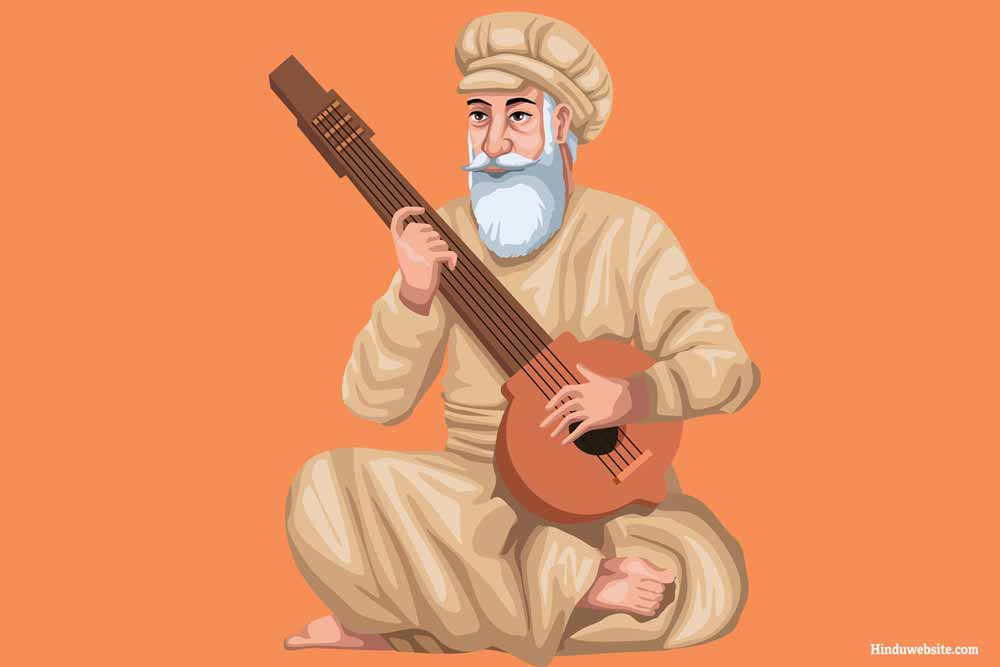
Summary: Sri Rag is a sacred composition of hymns by Guru Nanak, the founder of Sikhism, presented here with English translation from Jayaram V's scholarly work on the Sikh Religion. This page features Guru Nanak's spiritual teachings addressing the nature of true intoxication, virtue, and devotion to God. Through metaphorical language, these hymns guide seekers toward truth, righteousness, and the realization of divine grace.
HYMNS OF GURU NANAK - SRI RAG
THE following was addressed to a man addicted to intoxicants:--
The Giver gave man a pill of the intoxicant illusion.
In his intoxication he forgot death
and enjoyed pleasure for four days.
The abstainers[1] obtained truth to keep them
By serving
Him man obtaineth happiness and proceedeth with honour to His court.
The true wine is that
which containeth the true Name; it is prepared without molasses.
I am a sacrifice unto those
who hear and explain this.
Man is known as properly intoxicated when he obtaineth a place in
God's court.
Bathe in the water of virtues; apply the perfume of truth to thy body;
Then
shall thy face become bright, and the One Giver bestow hundreds of thousands of gifts on thee.
Inform God, with whom resteth happiness, of thine unhappiness.
Why forget Him who owneth thy
soul and life?
All clothing and food are impure without Him.
All else is false; what pleaseth
Thee, O God, is acceptable.
[1. Sofiân. These must not be confounded with the Sûfis of Persia whose predilections are in the opposite direction. By abstainers are here meant the truthful.]
A Sikh called Prema asked the Guru where God resided, in what. state He dwelt, and how He could be found. The following was the Guru's reply:--
The virtues of the virtuous woman are blazoned abroad; she who is not virtuous regretteth it.
O woman, if thou desire thy Spouse, practise truth. He cannot be obtained by falsehood.
No
boat or raft will take thee to the distant Beloved.
My Lord is perfect; His throne is secure.
He whom the perfect Guru maketh holy, shall obtain the True and unrivalled One.
God's palace
is beautiful; it is adorned with bright gems, rubies,
Pearls, and diamonds; it is surrounded
by a golden fortress, and is an abode of pleasure.
How shall I scale the fortress without a
ladder? By meditating on God through the Guru I shall behold Him.
The Guru giving me God's
name is my ladder, my boat, and my raft;
The Guru is the lake, the sea, and the boat; the Guru
is the sacred stream.
If it please God, I shall go to bathe in the true tank[1] and become
pure.
He is called the most perfect; He reposeth on a perfect throne.
His seat is perfectly
beautiful; He fulfilleth the hopes of the hopeless.
Nanak, if man obtain the Perfect One how
can his virtues decrease?
A man can only find favour with God by devotion:--
Accursed is her life who is separated from her Spouse she is ruined by mammon.
Like a wall
impregnated with kallar she crumbleth down day and night.
She obtaineth no rest without the
Word; without her Beloved her grief departeth not.
O woman, what are thine adornments without
thy Spouse?
[1. The Guru is meant.]
Thou shalt not obtain entrance into God's court; being false thou shalt be despised.
The
Lord is wise and forgetteth not: He is true and a great husbandman.
He first prepareth the
ground, then soweth the seed of the true Name.
From the name of the one God the nine treasures
are
produced, and man obtaineth the marks[2] of His favour.
What shall be the condition
of him who accepteth not the Guru's doctrine?
The blind[3] man hath forgotten the Name; the
perverse is stone-blind.
His transmigration shall cease not; he shall be ruined by death and
birth.
Woman may buy sandal, kungu,[4] and red lead for the partings of her hair,
Distilled
aloe wood, sandal, betel, and camphor in great quantities;
Yet, if she please not her Spouse,
all her preparations are vain:
All her enjoyments are vain, and all her adornments are useless.
Until she is permeated by the Word, how shall she obtain honour at God's court?
Nanak, blest
is the woman who loveth her Spouse.
The Guru's idea of creation:--
From the True One proceedeth air, from air water,
And from water the three worlds; light
was infused into every heart.
The Pure One becometh not impure: he who is imbued with the Word
obtaineth honour.
Guru Nanak composed the following after a conversation
[1. That is, man's heart.
2. A reference to the thappâs, or marks, put on crops before being divided among the partners of the land.
3. That is, spiritually blind.
4. A red composition, principally of saffron, used by women to ornament their foreheads.]
with Samangir, a Sanyasi, at Talwandi. The Guru maintained the excellence of his own system and the advantage of repeating God's name obtained from the Guru:--
If I turn myself into a woman, the Enjoyer will enjoy me.
Love not that which appeareth
transient,
The Spouse enjoyeth on His couch the pious virtuous wife.
Having under the Guru's
instruction obtained God's name as the water, quench the four fires.[1]
The lotus of the heart
shall then bloom, and thou shalt be completely. satiated with nectar.
Nanak, make the true
Guru' thy friend, and thou shalt obtain happiness[2] in God's court.
The following is a homily addressed to a trader called Ramu whom the Guru met at Kartarpur:--
Trade, O trader, and take care of thy merchandise.
Buy such goods as shall depart with thee.
In the next world is a wise Merchant who will be careful in selecting the real article.
O my
brother, utter God's name with attention.
Take with thee God's praise as thy merchandise, so
that, when the Merchant seeth it, He shall be satisfied.
How shall they whose wares are not
genuine, be happy?
By trading in counterfeit goods the soul and body become counterfeit.
Like a deer shared in a noose, such a trader shall suffer great misery and ever lament.
The
counterfeit shall not be received in the great God's treasury, and they shall not behold Him.
The counterfeit have neither caste nor honour; the counterfeit are none of them acceptable.
The counterfeit who do counterfeit work, shall lose their honour in transmigration.
[1. The four fires are--hinsa, cruelty; moh, worldly love; krodh, anger; and lobh, avarice.
2. Sach, literally truth, but in the compositions of the Gurus the word often means happiness.]
Nanak, instruct thy heart by the Guru's word and advice.
They who are imbued-with the love
of God's name have no load of sin and no superstition.
They in whose hearts God dwelleth are
without fear, and great shall be their gain by repeating His name.
The omnipresence of God:--
He Himself is the Relisher; He Himself is the relish
He Himself is the Enjoyer;
He Himself
is the robe; He Himself the couch and the Spouse--
My Lord, who ]is dyed with love, pervadeth
everything--
He Himself is the fisherman and the fish; He Himself is the water and the net.
He Himself is the lead of the net; He Himself is the bait within it.
O my friends, my Darling
is in every way playful.
He ever enjoyeth the virtuous wife; see what a state is mine![1]
Nanak representeth, Thou art the lake, and Thou art the swan;
Thou art the lotus and the water
lily, Thou art pleased on beholding them.[2]
The following was a remonstrance to a Mulla and a Qazi who had entered on a discussion with the Guru:--
He is the Lord who hath caused the garden of the world to flourish[3] and grow green,
And
who restraineth sea and land; hail to the Creator!
Thou must die, O Mulla, thou must die.
By all means fear the Creator.
[1. Who, not being virtuous, am divorced from God.
2. The lotus opens its leaves by day and the water-lily by night. God is the sun and moon which behold them by day and night alternately.
3. Maula, a name of God in Arabic, The Hindi verb maulna means to bloom or blossom. There is in the original a pun on the word.]
Thou art a Mulla or a Qazi only when thou really knowest God's name.
Even if thou be very
learned thou must depart; none may remain when his measure of life is full.
He is a Qazi who
hath renounced pride, and made the name of God alone his support.
He is, was, and shall be:
He was not born, neither shall He die; True is the Creator.[1]
Thou prayest five times a day,
and readest thy Quran and holy books.
Nanak saith, when the grave calleth, man shall cease
to drink and eat.
ASHTAPADI
The following was composed in a devotional paroxysm. Some suppose that it was uttered at Makka in reply to Qazis who had asked the Guru to tell them of the God he adored:-
Persuade thy heart to sing God's name with every breath thou drawest.[2]
How great is He
to whom one playeth and singeth, and where doth He dwell?
All Thy eulogists continue to praise
Thee with affection.
Father, God is inaccessible and endless.
Pure is the Name; pure is
the place of the true Cherisher.
How great Thy sovereignty is cannot be known; no one knoweth
how to describe it.
If a hundred poets were to be found, they could not describe a particle
of it, though they sang their utmost.[3]
Nobody hath found Thy worth; every one as he hath
heard describeth Thy glory.
Priests, prophets, saints, faithful men, martyrs,
Shaikhs, Strivers,
Qazis, Mullas, Darweshes who have arrived at God's gate,
[1. True here apparently means abiding, eternal.
2. Also translated---As far as it can fix its attention.
3. Literally--even though they cried over it.]
Obtain further blessings if they continue to recite God's praises.
He consulteth no one
when He createth; He consulteth no one when He destroyeth; He consulteth no one when He giveth
or taketh.
He knoweth His own might; He acteth and causeth others to act.
He beholdeth all
men with favour, and bestoweth on those who please Him.
Neither His place nor His name is known,
nor how great His name is among other names.
How great is that place where my Sovereign dwelleth!
None can reach it; of whom shall I inquire the way?
High or low caste influenceth not God when
He maketh any one great.
Greatness is in the hands of the Great One; He giveth to whom He pleaseth.
He regenerateth man by His order without any delay.
Everybody crieth 'Give me much, much ',
in the hope of getting it.
How great shall the Giver be called who giveth countless gifts!
Nanak saith, O God, Thy storehouses are full in every age, and never is there a deficiency.
It is said that a Qazi and a pandit asked the Guru how man could find God and be blended with Him. The following was the reply:--
All are wives of the Spouse and adorn themselves for Him.
In trumpery red dresses have they
come for His inspection.[1]
Love is not obtained by hypocrisy; counterfeit gilding degradeth.
In this way God the Spouse shall enjoy the wife.
The good wife is pleasing to Thee, O Lord;
of Thy favour Thou decoratest her.
[1. Literally-to be counted by Him.]
She is decorated with the Guru's word; her body and soul are with her Beloved.
With hands
clasped she standeth waiting on Him, and offereth Him true supplication.
She is imbued with
the love of her Darling; she dwelleth in fear of the True One;
and, when dyed with His love,
her colour is the true one.
She is called the handmaiden of the Beloved, and answereth to the
name of Lali.[1]
Her true affection is not sundered; the True One blendeth her with Himself.
Her soul is imbued and saturated with the Word; I am ever a sacrifice unto her.
She who is
absorbed in the True Guru, shall not sit down a widow.
Her Beloved is an abode of pleasure
ever voting and true; He neither dieth nor is born.
He ever enjoyeth His virtuous wife, and
casteth true glances on her as she obeyeth Him.
She maketh truth the parting of her hair, and
lovelier dress and ornaments.
She maketh the indwelling[2] of God her sandal, and the tenth
gate her chamber.
She lighteth the lamp of the Word, and weareth God's name as her necklet.
She weareth on her forehead the jewel of love, and she is beautiful among women.
Her beauty
and wisdom are charming, and true is her infinite love.'
She knoweth no man but her Beloved;
it is only for the True Guru she feeleth love and affection.
But thou who art reckless on a
dark night[3] how shalt thou pass it without the Beloved?
Thy bosom shall burn, thy body shall
burn, and thy mind shall burn, O woman.
[1. The jewel or precious one.
2. Chit wasâia; also translated--mental restraint.
3. In spiritual ignorance.]
When woman enjoyeth not her Husband, her youth passeth in vain.
Her Husband is on the couch;
his wife sleepeth and knoweth not His presence.
While I sleep, the Beloved awaketh; whom shall
I go to consult?[1]
Nanak, the true Guru, having taught me love, hath caused me to meet God,
and I abide in His fear.
The mind is impure until it receives instruction from a true religious teacher:--
When the mind is impure the body is impure, and the tongue impure'.
The mouth is impure
by uttering impurity; how shall it be made pure?
The heart cannot be cleansed without the Word;
from the True One truth is obtained.
O girl, what happiness is there without virtue?
Brahmans
read books aloud, but understand not their meaning.
They give instruction to others as a business
matter.
They wander about the world preaching falsehood; while they who abide by the Word are
the best.
How many pandits and astrologers study the Veds
They glorify battles and enmities;[2]
but from quarrels resulteth transmigration.
However much they tell and preach what they have
heard, man shall not be freed from his sins without the Guru.
All call themselves virtuous,
but I possess no virtue.
Beautiful is the woman who hath God for her Spouse; that God pleaseth
me.
Nanak, she who is united with God by the Word shall not be separated from Him.
The following was addressed to Hindu devotees whom the Guru met in his wanderings in the Himalayas:--
[1. That is, there is no remedy for my negligence now.
2. The epic poems Ramâyan and Mahâbhârat.]
Though man perform lip-devotion, penance, and austerities, dwell at places of pilgrimage,
Bestow alms and perform acts of devotion, what are these without the True One?
As he soweth
so shall he reap; human life is lost without virtue.
O silly one, happiness is obtained by
being a slave to virtue.
She who under the Guru's instruction abandoneth evil, shall be absorbed
in the Perfect One.
The following is a brief lecture against hypocrisy, with a few precepts to obtain future happiness:--
God carefully draweth the touchstone over men in order to assay them.
The counterfeit shall
not be accepted; the genuine shall be put into His treasury.
Dispel hopes and fears, so shall
thy filth be washed away.
Everybody asketh for happiness; nobody asketh for misery.
Great
misery attendeth on happiness, but the perverse understand it not.
They who consider happiness
and misery the same, and know the secret of the Word shall be happy.
Man may escape from the dangers of this world by accepting the Guru and hearkening to his instructions:--
The fearful ocean of the world is dangerous and formidable; it hath no shore or limit,
No
boat, no raft, no pole, and no boatman;
But the true Guru hath a vessel for the terrible ocean,
and ferrieth over him on whom he looketh with favour.
Love for God is inculcated by familiar Indian examples:--
O man, entertain such love for God as the lotus hath for the water.
Such love doth it bear
it, that it bloometh even when dashed down by the waves.
The creatures which God created in
water die without it, and therefore love it.
O man, how shalt thou be delivered without love?
God pervadeth the hearts of the pious, and bestoweth oil them a store of devotion.
O man, entertain
such love for God as the fish for the water.
The more it hath, the happier it becometh, and
the greater its peace of mind and body.
Without water it could not live for a moment; God alone
knoweth the sufferings of its heart.
O man, entertain such love for God as the chatrik for
rain:
Though the tanks be full and the earth drenched, it will not drink from either.
If
so fated, it shall obtain the rain-drops, otherwise it is fated to die.
O man, entertain such
love for God as water for milk.
The water alone is consumed in boiling and alloweth not tile
milk to be consumed.
God uniteth the separated, and conferreth true greatness.
O man, entertain
such love for God as the chakwi[1] for the sun.
She sleepeth not for a moment, for she knoweth
that her mate is absent from her.
The perverse see not; to the pious God is ever present.
The perverse make calculations, but it is only what the Creator doeth that cometh to pass.
His worth cannot be ascertained, even though all men desire it
But it can be ascertained under
the Guru's instruction by meeting the True One happiness is obtained.
[1. The ruddy sheldrake, called by Anglo-Indians the Brâhmani duck. Should the male and female birds be separated at night, for instance at different sides of a river, they are believed to call to each other until they behold the morning sun when they renew their conjugal acquaintance.]
If the True Guru be met, true love shall not sunder,
And the wealth of divine knowledge
of the three worlds shall be obtained.
If any one acquire virtue, he will not forget the Pure
Name.
The birds which peck on sea and land have played and gone away.
Man must depart in
a ghari or two; his enjoyment is only for to-day or to-morrow.
He whom Thou blendest with Thyself
shall be blended with Thee, and shall take his place in the true arena.
Without the Guru love
is not produced, and the filth of pride departeth not.
He who recognizeth God in himself, and
knoweth the secret of the Word, shall be satisfied:
But when man recognizeth himself through
the Guru's instruction, what more remaineth for him to do?
Why speak of meeting God? Mail hath
met Him already,[1] but it is only on receiving the Word he is satisfied.
Tile perverse obtain
not understanding; separated from God they suffer punishment.
For Nanak there is but the gate
of the one God; there is no other refuge.
It is said the following was addressed by the Guru, during his pilgrimage to the east, to a Raja called Harbans:
Man is led astray by the reading of words; ritualists are very proud.
What availeth it to
bathe at the place of pilgrimage, if the filth of pride be in the heart?
Who but the Guru can
explain that the King and Emperor dwelleth in the heart?
All men err; it is only the great
Creator who erreth not.
He who admonisheth his heart under the Guru's instruction shall love
the Lord.
[1. Because the soul has emanated from God.]
Nanak, he whom the incomparable Word hath caused to meet God, shall not forget the True One.
God cannot be deceived and His merits cannot be described:--
By taking the protection of the Guru man shall be saved; counterfeit is the capital of the
perverse.
The eight metals of the King are coined agreeably to His orders.[1]
The Assayer
Himself assayeth the coins, and putteth the genuine into His treasury.
Thy merits, O Lord,
cannot be ascertained; I have seen and tested everything.
Thy merits cannot be expressed by
words; if man remain true, he shall obtain honour.
Under the Guru's instruction Thou, O Lord.,
art praised otherwise Thy worth cannot be described.
The Guru prefers the repetition of God's name to all other forms of devotion:--
My heart is penetrated by God's name; what else shall I reflect upon?
Happiness cometh to
him who meditateth on the, Word; perfect happiness to him who is imbued with God.
Preserve
me as it pleaseth Thee, O God; Thy name is my support.
O man, just is the will of the Master.
Love Him who made and adorned thy body and mind.
Were my body to be cut into pieces and burnt
in the fire
Were I to turn my body and soul into firewood, and burn them night and day;
Were I to perform hundreds of thousands and millions of religious ceremonies, all would not be
equal to God's name.
[1. Man is composed, according to Indian ideas, of hair, blood, nerves, skin, bone, seed, flesh, and fat. These correspond to the eight simple or compound metals differently stated by Indian historians. Bhâi Gur Das understands the eight metals to be the four castes of Hindus and the four great sects of Muhammadans.]
Were a saw to be applied to my head and my body to be cut in twain;[1]
Were my body to be
frozen in the Himalayas, even then my mind would not be free from disease--
It would all not
be equal to God's name--I have seen and examined everything--
Were I to make offerings of millions
of gold, many excellent horses and excellent elephants;
Were I to make large presents of lands
and cows, even then pride would remain in my heart.
The Guru hath given me the true gift that
my mind is penetrated by God's name.
How many opinions, and how many interpretations of the
Veds through obstinacy!
How many entanglements there are for the soul! the gate of deliverance
is only obtained through the Guru's instruction.
Everything is inferior to truth; the practice,
of truth is superior to all else.
Call every one exalted; let no one appear to thee low.
The one God fashioned the vessels, and it is His light that filleth the three worlds.
By His
favour man obtaineth the truth; what He granteth in the beginning none can efface.
The holy
meet the holy; by love for the Guru man obtaineth consolation.
He who is absorbed in the True
Guru pondereth on the Word of the Ineffable.
He who drinketh the nectar of the Name shall be
satisfied, and go to God's court with a dress of honour.
The strain of ecstasy[2] resoundeth
night and day in the hearts of those who bear great love to the Word.
[1. Saws were kept at Banaras and Priyâg for the immolation of Hindu devotees. The operator applied the saw first to the head and cut through the body to the middle thus dividing it into halves. Devotees believed that all their sins should thus be forgiven, and they should immediately enter a state of bliss.
2. Kinguri is a musical instrument, originally composed of two gourds or calabashes connected by a frame on which there were four strings. It is now generally made of one calabash, a frame and one {footnote p. 275} string. The Jogis apply the word to the music heard in the brain by the practice of Jog.]
Few there are who obtain understanding by admonishing their hearts through their guru.
Nanak,
they who forget not the Name, and who act according to the Word shall be delivered.
The following principally inculcates the inutility of worldly possessions and the superiority of devotion:--
We see mansions painted and whitewashed with ornamented doors.
They were constructed to
give pleasure to the heart,
and through love and regard for worldly things, but they shall
fall to ruin.
So the body which is empty within and possesseth no love, shall fall and become
a heap of dust.
O my brethren, your bodies and wealth shall not accompany you.
God's name
is the pure wealth; God giveth it through the Guru.
If the Giver give the true wealth of God's
name,
The great Creator shall become man's friend, and no inquiry shall be made of him in the
next world.
If God deliver man, he shall be delivered; God alone is the Pardoner.
The perverse
man deemeth that daughters, sons, and relations are his.
He is pleased on beholding woman,
but, as she bringeth joy, so she bringeth sorrow,
Holy men are imbued with the Word, and day
and night enjoy divine happiness.
The mind of the wavering infidel wandereth in quest of transitory
wealth.
Men ruin themselves by their search abroad while the Real Thing is in their homes.
The pious obtain It, the perverse miss It through pride.
O vicious infidel, know thine own
origin.
Thy body made from blood and semen shall be brought to the fire at last.
The body is in
the power of the breath according to the true mark on the forehead.
Men pray for a long life;
no one desireth to die.
He is said to lead a happy life in whose heart God dwelleth through
the Guru's instruction.
Of what account are they who are without the Name, and who therefore
obtain not a sight of the great God?
As a man goeth astray at night in his sleep,
So doth
he in whose heart there is pride and worldly love, and who is in the power of mammon.
To him
who reflecteth under the Guru's instruction the world appeareth a dream.
As thirst is quenched
when one findeth water; as the child is sustained by its mother's milk;
As the lotus cannot
exist without water, and the fish would die without it,
So, Nanak, may I obtain divine happiness
through the Guru's instruction and live singing God's praises!
Without the spiritual condition which is obtained by a repetition of the Name there is no salvation:--
I have become alarmed on seeing a terrible mountain in my Father's house.[1]
Steep is the
mountain and difficult to ascend; there is no ladder which will reach it;
But under the Guru's
instruction I have found the secret;[2] the Guru hath caused me to meet God and I am saved.
O my brethren, the ocean of the world is difficult and formidable.
If I have a satisfactory
interview with the perfect true Guru, he will deliver me by granting me God's name.
If I say
I am perishable, it will not avail me; but if I really know that I am perishable, it will.
Everything that came into this world shall depart; the Creator alone is immortal.
[1. Seeing the difficulties of this world.
2. That there is no mountain.]
Be sure to praise the True One and love His abode.
Beautiful houses and palaces and thousands
of strong holds,
Elephants, horses with their housings, and hundreds of thousands, yea, countless
armed men
Will not depart with any one: Their masters pine away and die without gaining any
advantage from them.
Thou mayest amass gold and silver, but wealth is an entangling net.
Man's authority may be proclaimed throughout the whole world, but without the Name death standeth
over his head.
When the body falleth, the soul fleeth away; what shall be the condition of
the evil doers?
The husband is delighted on beholding his sons and his wife on her couch;
He applieth distilled aloe wood and sandal he weareth fine clothes and decorateth himself;
Yet shall he leave his family and depart dust shall return to dust.
He may be styled a chief,
an emperor, a king, a governor, or a lord;
He may be called the headman of a town or a governor;
he may burn with pride
Yet by perversely forgetting the Name he shall be as a reed burnt in
the fire.
Having come into the world, he shall depart however proud he be.
The whole world
is a chamber of lampblack; the body and soul which enter it shall be tarnished.[1]
They who
are preserved by the Guru are pure; the fire of their desires is extinguished by the Word.
Nanak, man obtaineth deliverance by the true name of the King of kings.
May I not forget God's
name! may I purchase it as a jewel!
The perverse man perisheth in the terrible ocean of the
[1. Literally--shall become ashes.]
world; the holy man crosseth it, unfathomable though it be.
GHAR III[1]
Definitions:--
How is Sat Sangat, the Society of the holy, known?
The name of the one God is mentioned
there.
How are Duhagins--women separated from their husbands--known?
They are those who
forgetful of their Spouse wander unhonoured.
They who are pleased with God's will,
Remove
superstition from their minds.
Nanak, the true Guru, is known by his association with every
one.
SRI RAG KI WAR
Some virtues which contribute to perfection--
Faith and resignation are the characteristics of the holy; patience is the viaticum of angels.
The perfect shall obtain a sight of God; the fool shall find no place with Him.
Caste is vain and contributes not to goodness or holiness:--
Castes are folly, names are folly
All creatures have one shelter, that of God.
If a man
call himself good,
The truth shall be known, O Nanak, when his account is accepted.
Man, no matter what his caste or social position may be, is exalted by devotion:--
What difference is there between a swan and a crane, if God look kindly on the latter?
Nanak,
if it please Him, He can change a raven into a swan,
[1. This is understood to mark time--three beats to a bar.]
MAJH KI WAR
God as the Guru --
The Guru is the Giver, the Guru is the house of snow,[1] the Guru is the lamp of the three
worlds.
Nanak, the Guru possesseth the immortal wealth; by putting faith in Him happiness is
obtained.
The ten stages of man:--
In man's first stage he loveth the milk of his mother's breast;
In his second he recognizeth
his father and mother
In his third his brother, his brother's wife, and his own sister;
In the fourth a love of play ariseth in him
In the fifth he runneth after food and drink
In the sixth he inquireth not a woman's caste in his lust
In the seventh he collecteth things
for a house to live in
In the eighth his body is wasted by wrath;
In the ninth he groweth
grey and his breathing is difficult;
In the tenth he is burnt and becometh ashes.
His companions accompany him to his pyre with loud lamentations.
The soul flieth away, showing
the road of departure to others.
He Came, he died, and departed--leaving only a name.
After
his death his relations offer food on leaves, and call the crows.[2]
Nanak, the perverse love
mental darkness.
Without a guru the world is lost.
Other divisions of human life:--
At ten a child, at twenty a rake, at thirty man calleth himself handsome;
[1. That is, he cools the fire of desires. Some suppose that hiwai ghar is for the Sanskrit himkar, the moon.
2. Portions (bali) of such offerings are set aside for cows, portions for dogs, and portions for crows.]
At forty he is in his prime, at fifty his feet halt, at sixty old age cometh on;
At seventy
he loseth his intellect, at eighty he cannot perform his duties
At ninety he reclineth on his
couch, and feeleth no strength whatever in himself.
I, Nanak, have sought and searched, and
seen that the world is a mansion of smoke.
The following is said to have been addressed to a holy man called Thakur Das at Priyag:--
Were I to dwell in the cavern of a golden mountain or in a pit of water
Were I to stand
on my head on earth or in the heavens
Were I to cover all my body with clothes,[1] and did
I nothing but bathe;
Were I to shout aloud the white, the red, the yellow, and the black Veds;[2]
Were I to remain dirty and filthy,[3] all this would be foolish and sinful.
Nanak, since I
have pondered on the Word, I am not, I was not, and I shall not be.[4]
Guru Nanak declares the folly of external purifications:--
Man washeth his clothes and his body, and mortifieth himself.
Knowing not of the filth attaching
to his heart, he rubbeth and cleanseth himself externally.
Being blind he is led astray, and
falleth into Death's noose.
He deemeth the property of others as his own, and suffereth for
his pride.
Nanak, when pride is dispelled under the Guru's instructions, man meditateth on
God's name,
Repeateth the Name, adoreth the Name, and through thc Name is absorbed in happiness.
[1. This is done. by a sect called the Kâprias, who cover even their faces.
2. As the Brâhmans do.
3. The reference is to the Jains.
4. That is, I am totally absorbed in God.]
Some important subjects are briefly treated as follows:--
God hath caused the union of body and soul
He who created them can separate them.
A fool
while enjoying pleasure bath all pain
Disease proccedeth from sinful pleasure.
From worldly
rejoicing proceedeth mourning, separation from God, birth, and death.
The fool while boasting
becometh involved in disputes
The decision resteth with. the True Guru; He putteth an end to
disputes.
That which the Creator doeth cometh to pass; what man hath set in motion must stop.
The following was addressed by the Guru to a Qazi at Sultanpur:--
Thou utterest falsehood, eatest carrion,[1]
Yet thou goest to admonish others.
Cheated
thyself thou now cheatest thy companions.
Nanak saith, that is the sort of guide thou appearest!
As a Qazi beheaded a goat, some drops of blood fell on his garments, which he at once wiped off. He said that he could not join in prayer until the pollution had been removed. The following was uttered by the Guru on the occasion:--
If clothes become defiled by blood falling on them,
How can the hearts of those who drink
human blood[2] be pure?
Nanak, utter God's name with a pure heart regardless of thy dress.
All else is but worldly ostentation; thou, O Qazi, practisest falsehood.
The Qazi asked Guru Nanak who he was. The latter replied as follows:--
Since I am nobody, what shall I say: since I am nothing, what can I be?
[1. Food obtained by peculation and bribery.
2. That is, who practise extortion or tyranny.]
As God made me, I act; as He told me, I speak; I am thoroughly defiled with sin, and desire
to wash it away.
Though I know nothing myself, yet I teach others; such a guide am I.
Nanak,
he who being blind showeth the road to others and misleadeth all his companions,
Shall be shoe-beaten
in the next world, and it will be seen what sort of guide he was.
Everything shall vanish except God:--
Of kings, subjects, and rulers none shall remain
Shops, cities, bazars shall be destroyed
by God's order.
Solid and beautiful mansions a fool deemeth his own;
Storehouses filled
with wealth in a moment become empty.
Steeds, chariots, camels, elephants and their housings,
Gardens, properties, houses, and homes,
Tents, comfortable beds, and ornamental pavilions--where
shall they be recognized?
The following was delivered to Sikhs who asked the Guru what pleasure God's praises afforded him:--
Were rivers to become kine, and springs to become milk and clarified butter;
Were the whole
earth to become sugar so that the heart might ever rejoice;
Were the mountains to become gold
and silver, and be studded with diamonds and rubies;
I would even then magnify Thee, and the
desire to do so would not cease as I spoke.
Were the eighteen loads of vegetables of the earth[1] to become fruit, and grass to become
rice;
Could I arrest the moon and sun in their courses, and were my seat to become immovable,
[1. This is the sum total of the earth's flora according to ancient Sanskrit writers. The idea was that if a leaf were taken off every tree and plant, there would be formed eighteen loads, each of which an ordinary strong man could lift.]
I would even then magnify Thee, and the desire to do so would not cease as I spoke.
Could I inflict pain by means of the two sinful beings Rahu and Ketu;[1]
Could I obtain
authority over bloodthirsty kings and my glory thus shine forth,
I would even then magnify
Thee, and the desire to do so would not cease as I spoke.
Were fire and frost to become my raiment, and the wind my food;
Were all the fascinating
women of heaven to become my wives--all perishable[2]--
I would even then magnify Thee, and
the desire to do so would not cease as I spoke.
Caste becomes deadly if exclusive reliance be placed on it for salvation:--
What power hath caste? It is the reality that is tested.
Poison may be held in the hand,
but man dieth if he eat it.
The sovereignty of the True One is known in every age.
He who
obeyeth God's order shall become a noble in His court.
The following allegory of mounted cavalry refers to the different stages of asceticism:--
The Master sent obedience to His orders as a steed into the world;
Reflection on the instruction
which the Guru imparteth is its kettle-drums.
Some have mounted their steeds, others have them
ready caparisoned;
[1. Owing to the exigencies of prosody, only Râhu is mentioned in the original text. Râhu arid Ketu are two demons, who, according to Indian astrologers, inflict pain or., mortals as they do on the sun and moon on occasions of eclipse.
2. Some understood jâu to be the Sanskrit jâyâ, wife. The gyanis translate--All the fascinating women of heaven may go, as far as I am concerned.]
Some have loaded their baggage for the march, and others have set out.
In the following allegory the mill is the world, the corn is the soul, the husk the body, refuge in God the axle:--
When the field is ripe, it is cut; only the chaff and the hedge remain.
The corn is threshed
with the husk, and the chaff is winnowed away.
Men then put together the two mill-stones and
sit down to grind corn.
That which attacheth to the axle escapeth. Nanak hath seen a wonderful
thing.[1]
Good men, like sugar-cane, are subject to torture:--
See how sugar-cane is cut down and made into sheaves after the stalks are cleaned.
The labourers
put it into a press and squeeze it.
Having expressed the juice, they put it into a pan, and
it groaneth as it burneth.
The residue is collected and put into the fire beneath the pan.
Nanak, sweet things are thus ill-treated; come and see, O people.
It is useless to endeavour to instruct a fool:--
What can deep water do to it fish? What can the sky do to a bird?
What can cold do to it
stone? What can married life do to a eunuch?
Even though thou apply sandal to a dog, he will
still preserve his canine nature:
Even though thou instruct a deaf man, and read for him the
Simritis;
Even though thou place a light before a blind man, and burn fifty lamps fox him,
all would be of no avail.
[1. That the corn attached to the axle is not ground, that is, the soul which is attached to God is not tortured by Death.]
Even though thou put gold before a herd of cattle, they would still pick out the grass to eat.
If a flux be put into iron it will melt, but not become cotton.[1]
Nanak, the peculiarity of
a fool is that what is said to him is ever lost.
When his Sikhs inquired how an alliance could be formed with God the Guru composed the following:--
When bronze, gold, and iron break,
The blacksmith weldeth them by means of fire.
When
a husband falleth out with his spouse,
A reconciliation is effected in this world through children.
When the king asketh and his subjects give, a bond is established between them.
When a hungry
man eateth, he establisheth an alliance with the world.
Drought formeth an alliance with rivers
when they are flooded with rain.
There is an affinity between love and sweet words.
If any
one speak the truth, he formeth a bond with know ledge.
By goodness and truth the dead establish
a bond with the living.
Such are the affinities that are established in the world.
The only
way to establish friendship with a fool is to smite him on the mouth.[2]
By praising God man
establisheth an alliance with God's court.
Nanak saith this deliberately.
The following seven sloks form part of the Guru's instruction to Shaikh Brahm, or Farid the second, of Pak Pattan:--
The priests, the shaikhs, and the potentates of the world are all beneath the earth.
[1 Its nature will not be altered.
2. Munh mar. Also translated--to remain silent.]
Emperors pass away, but God ever flourisheth.
There is only Thou, there is only Thou, O
God!
Neither demigods, nor demons, nor men,
Nor Sidhs, nor Strivers, nor this earth shall abide.
There is One; is there any other?
There is only Thou, there is only Thou, O God!
Neither the just nor the generous,
Nor the seven regions beneath the earth shall remain.
There is One: is there any other?
There is only Thou, there is only Thou, O God!
Not the regions of the sun and the moon,
Nor the seven continents, nor the seven seas,
Nor corn, nor wind shall abide.
There is only Thou, there is only Thou, O God!
Our maintenance is in nobody's power but God's:
To all of us but one hope abideth
There
is one: is there any other?
There is only Thou, there is only Thou, O God!
Birds have no money in their possession
They only depend on trees and water.
God is their
Giver.
There is only Thou, there is only Thou, O God!
Nanak, no one can erase
What is written on the forehead.
God it is who giveth man power
and again taketh it away.
There is only Thou, there is only Thou, O God!
Guru Nanak thus discoursed to Prem Chand of Sarhind on the best way of occupying time:--
They who in the early morning praise God and meditate on Him with single heart,
Are perfect
kings, and die fighting when occasion ariseth.[1]
In the second watch there are many ways in
which the attention of the mind is distracted.
[1. This is understood to mean that they fight to the death with their deadly sins.]
Many persons fall into the fathomless water, and cannot emerge however much they struggle.
In the third watch when hunger and thirst are both barking, food is put into the mouth.
What
is eaten becometh filth, yet man again desireth food.
In the fourth watch drowsiness cometh,
man closeth his eyes and goeth into dreamland.[1]
Again rising in the morning he engageth in
turmoil, and yet maketh preparations to live a hundred years.
If man feel love for God every
moment during the eight watches of the day,
O Nanak, God will dwell in his heart and true shall
be his ablution.
Man's continual thought should be devotion to his Maker:--
When Thou art near, what more do I desire? I speak verily.
He who is deceived by false worldly
occupations reacheth not God's palace:
His heart is hard and he loseth his service.
The
house which containeth not the True One, should be destroyed and rebuilt.
When its owner is
weighed, how shall he be found of full weight?
If he lose his pride, no one will say he is
of short weight.
The genuine shall be assayed, and selected at the gate of the All-seeing.
The true goods are only in one shop; they are obtained from the perfect Guru.
The advantages conferred on men by the True One:--
Without the True One all are false and practise falsehood.
Without the True One the false
shall be bound and led away;
[1. Pawâr properly means trance, or suspended animation.]
Without the True One the body is dust and shall be rolled in the dust
Without the True One
dress and food are all hunger
Without the True One the false shall not attain God's court.
The false attached to avarice miss God's palace.
The whole world is deceived, and cometh and
goeth in deception.
In the heart is the fire of greed which is quenched by the Guru's instruction.
The advantages of the Guru, who is likened to a life-giving tree --
Nanak, the Guru is the tree of contentment, whose blossom is religion and whose fruit is divine
knowledge.
It aboundeth in succulence and is ever green; it ripeneth by good works and meditation.
Honour is obtained by partaking of its relish; it is the greatest of gifts.
There is a tree
of gold; its leaves are corals; its blossoms, jewels and rubies.
It beareth gems for fruit,
and the heart of him who eateth it rejoiceth.
Nanak, it is obtained by him on whose forehead
such destiny hath been recorded.
The sixty-eight places of pilgrimage are at the Guru's feet,
and ever specially worship them.
Cruelty, worldly love, avarice, and wrath are four streams
of fire:
They who fall into them are burnt. O Nanak, but deliverance is obtained by cleaving
to good works.
The evil of forgetting God:--
In the heart and mouth of the perverse who never remember Thee,.
Abide the bitterness of
the gourd, the colocynth, and the nim, and the poison of the akk[1] and dhatura.
[1. Caloptropis procera.]
Nanak, to whom shall I tell it? Whoso forget Thee wander bereft of Thy favour, O God.
The unequal conditions of men:--
The bird, man, by his ideas and his acts sometimes flieth high and sometimes low,[1]
He
sometimes percheth on a sandal-tree, sometimes on the branch of the akk-shrub, and sometimes again
he loveth high flight.
Nanak saith, it is the custom of the Lord to lead all beings by His
order.
Women's duty:--
If women adorn themselves with love and affection for their Spouse,
They shall not be restrained
from their devotion to Him day or night.
They shall abide in His chambers, and the Word shall
regenerate them;
They shall humbly supplicate the True One;
And they shall appear beautiful
near their Spouse, walking according to His order.
They shall make hearty supplication to the
Beloved.
Accursed the homes, wretched the lives of those who possess not the Word.
They
whose hopes are fulfilled by the Word quaff nectar.
The Guru was requested to state the extent of his love of devotion:--
The desert is not satisfied with rain, and the hunger of fire is not appeased;
Kings are
not satisfied with dominion; who hath ever filled the ocean?
How much hath Nanak inquired after
the True Name, and not been satisfied!
Bhai Rama of Sultanpur inquired how God was known. The Guru replied --
He to whom God giveth understanding understandeth;
[1. Literally--is sometimes exalted and sometimes debased.]
He to whom He giveth knowledge knoweth everything.
Man merely worrieth himself when he preacheth
for the sake of mammon.
The Commander, who created all things,
Himself possesseth all knowledge.
He Himself, Nanak, spoke the Word--
Doubt shall depart from him to whom He gave it.
The Guru's reward for singing God's praises:--
Me, a minstrel out of work, God applieth to His work;
He ordered me in the beginning to
sing His praises night and day.
The Master summoned the minstrel to His true court,
And
put on him a robe of true praise and eulogy:
He then obtained the ambrosial food of the true
Name.
They who have eaten under the Guru's instruction are satisfied, and have obtained comfort.
The minstrel uttereth praise and singeth the Word.
Nanak, he who uttereth true praise obtaineth
the Perfect One.
RAG GAURI
The advantages resulting from the fear of God:--
The fear of God is very great and very heavy.
Man's wisdom is of little account, and so
is his chatter.
Walk with the load of fear on thy head;
Meditate on the Guru who is kind
and merciful.
No one shall be saved without the fear of God -
His fear hath adorned man's
love.
The fire of the fear of transmigration is burned away by the fear of God.
By fear
the Word is fashioned and decorated.
What is fashioned without fear is altogether worthless:
Useless is the mould and useless the stroke thereon.
In the minds of many there is a desire
to fashion the Word without fear;
But even though they perform a thousand artifices they shall
not succeed.
Nanak, the speech of the perverse is nonsense;
What they write is worthless
absurdity.
The following was addressed by the Guru to one who had remonstrated with him for having left his relations to lead a wandering life:--
Make wisdom thy mother, contentment thy father,
Truth thy brother--this is best.
People
talk, but talking is of no avail.
The measure of Thy might, O God, cannot be obtained.
Modesty
and attention are my two parents-in-law
Good works I have accepted as my spouse;
Union with
saints hath been my auspicious time for marriage, and separation from the world my wedding.
Saith Nanak, from such a union hath sprung truth as my offspring.
The composition of man's body and the inutility of pilgrimages; the body dies, but not the soul:--
The body is a mixture of wind, water, and fire;
Within it is the changeful play of the intellect.
The body hath nine gates and a tenth door;
O wise man, understand and reflect on this.
God
speaketh, preacheth, and listeneth;
He who reflecteth on himself is a wise man.
The body
is earth, the wind speaketh therein.
Consider, O wise man, what it is that dieth
It is the
quarrelsome and proud understanding.
The conscious soul dieth not.
The precious jewel, for
which men go on pilgrimages,
Dwelleth within the heart.
Pandits read and argue,
But know
not that which is within themselves.
When my spiritual ignorance dieth, I die not myself.
He who is everywhere contained dieth not.
Saith Nanak, when the Guru showed me God,
No one
seemed to me to die or to be born.
One Sant Das propounded six questions to Guru Nanak:--
Is it known whence man hath come,
Whence he hath sprung, in what he shall be absorbed,
How he is bound, how he obtaineth emancipation,
And how he shall be easily absorbed in the
Imperishable?
The Guru replied:--
The Name is nectar in the heart as well as in the mouth:
Through it man is freed from worldly
desires.
Man cometh in the course of nature and goeth in the course of nature.
Man is born
according to the desires of his heart, and he is absorbed in the same way.
The pious man is
emancipated and falleth into no entanglements:
He is delivered by meditation on the Word and
by God's name.
Many birds roost by night on a tree--
Some happy, others unhappy--they whose
minds have worldly love perish.
When night hath passed away, they gaze upon the sky:[1]
They fly in every direction according to the destiny recorded for them.
They who are associated
with the Name deem the world like a meeting-place of cowherds:
The poisonous vessels of lust
and wrath have burst for them.
To those without the capital of the Name houses and shops are
empty;
But by meeting the Guru the adamant doors of their understanding are opened.
A holy
man is met by primal destiny.
God's perfect people are rendered happy by truth
They barter
their souls and bodies for divine knowledge and God's love.
Nanak toucheth their feet.
The following is a conversation between soul and body:--
The Soul: 'O body, thou thinkest thyself immortal, and that thou shalt be always happy--know that this world is a play,
[1. When life ceases, their souls take flight.]
Thou practisest avarice, covetousness, and excessive falsehood, and bearest many burdens.
I have seen thee, O body, trodden as ashes on the ground.'
The Body: 'Hearken, hearken to mine
instruction.
If thou have done good works, they shall abide with thee; O my soul, thou shalt
not again find such opportunity.'
The Soul: 'I address thee, O my body, hearken to my 'instruction.
Thou slanderest[1] and bearest false witness against others.'
The Body: 'Thou covetest another's
vine,[2] O Soul; thou committest theft and evil deeds.'
The Soul: 'When the soul departeth,
thou shalt remain behind like an abandoned woman.
Thou, O body, shalt remain but as a dream-what
good deeds hast thou done? '
The Body: 'Whatever I took by stealth was pleasing to thee.
Thou hast no honour in this world, and thou shalt be rejected in the next; thou hast lost thy
human dwelling in vain.'
I am very unhappy, O father, saith Nanak, no one careth for me.
Arabian and Turkish steeds, gold, silver, and loads of raiment
No one taketh with him; they
leave him in this world, O fool.
Sugar, fruit, all have I tasted; it is only Thine ambrosial
Name which is sweet.
Man diggeth deep foundations and constructeth edifices on them, but they
shall become at last heaps of dust.
He hoardeth, and hoardeth, and giveth to no one; the fool
thinketh that all is his own.
Rawan nominally possessed a golden Lanka and a golden palace,
but they were no one's property.
Hear, O foolish and ignorant soul:
What pleaseth God shall
be done.
My Lord is a great Merchant, we are His retail-dealers.
[1. Ninda chinda is an alliteration.
2. This is understood to be meant for neighbour's wife.]
Our souls and bodies are all His capital; He it is who killeth and re-animateth.
The Guru reflects on the power of the deadly sins which lead men to destruction:--
The others[1] are five, I am but one; how shall I protect my house?
They ever assail and
plunder me; to whom shall I complain?
Utter God's holy name, O my soul;
Before thee is Death's
army fierce and numerous.
God erected a palace,[2] put doors to it, and the woman[3] sitteth
within.
Deeming the world sweet, she ever sporteth, but these five men rob her.
When Death
destroyeth the palace, her chamber is sacked, and she being alone is captured.
She is beaten
by Death's mace, and his chains are riveted on her neck; the five men have taken flight.
The
housewife wanteth gold and silver; friends want banquets.
Nanak, they who commit sin for these
things shall go bound to Death's city.
Kinganath Jogi pressed Guru Nanak to become his disciple; the Guru replied that he had already learned the science of Jog. He composed the following hymn on the occasion:--
Make restraint of thine inmost heart thine earrings, thy body the patched coat;
Reduce thy
five senses to subjection, O Jogi, and make a pure heart thy staff -
In this way shalt thou
obtain the way of jog.
Make the fact that there is but one Word and none other thy devotion
to tubers and roots.
If God could be obtained by merely shaving the head, we should make a
god of the Ganges.[4]
[1. The deadly sins which rob the body.
2. The body.
3. The soul.
4 Where pilgrims shave their heads.]
It is the one Lord who saveth the three worlds; thou thinkest not of Him, O fool.
If thou
apply thy mind to words through hypocrisy, thy doubts shall never leave thee.
If thou turn
thy thoughts to the feet of the one God, why pursue avarice and greed?
If thou repeat the Name
of the Bright One, thy soul shall be absorbed in Him.
O Jogi, why utterest thou so much deceit?
Thy body is mad,[1] thy mind is silly, thou passest thy life talking of thy property.
Nanak
representeth, it is after the naked body is burnt the soul regretteth lost opportunities.
Man's precious life should not be wasted, but should be devoted to God's service and not to the acquisition of wealth:--
Man loseth his nights in sleeping and his days in eating His human life, valuable as a diamond,
he parteth with for a kauri.
Thou knowest not God's name; O fool, thou shalt here after regret.
Thou buriest endless wealth in the earth, yet thy desire for it departeth not.[2]
They who
departed desiring endless wealth lost the Endless One.
If all were to obtain according to their
desires, they would be happy.
Whatever all may desire, a man's fate is decided by his acts.
Nanak, He who fashioned creation taketh care of it.
It is not known on whom God's order will
confer greatness.
The fervour of the Guru's devotion:--
Were I to become a fawn, live in the forest, and gather and eat tubers and roots,
I should
ever and ever be a sacrifice to my Lord, who is obtained through the favour of the Guru.
I
am a retail-dealer of Thine, O God;
[1. Because smeared with ashes.
2. Also translated--Thou desirest not the Endless One.]
Thy Name is my stock-in-trade and my merchandise.
Were I to become a koil and live in a
mango-tree, I should still tranquilly meditate on the Word.
Through my love my Lord, whose
form appeareth unequalled, would naturally meet me.
Were I to become a fish and dwell in the
water, I should still remember Him who watcheth over all animals.
My Spouse dwelleth on this
side and on that; I shall stretch forth mine arm to touch Him.
Were I to become a serpent and
dwell in the ground, I should still abide in the Word and my fears would depart.
Nanak, they
are ever the happy married wives whom God hath absorbed in His light.
GAURI ASHTAPADI
Without a religious guide man would run riot in evil and haste to perdition:--
The heart is all elephant, the body a forest,
The Guru the goad; when the mark of the true
Word is made on the elephant,
He shall obtain honour in the King's court.
God cannot be
known by cleverness.
Without chastening the mind how can God be appraised;
In the house
is nectar which the thieves are taking away:[1]
No one tried to restrain them.
If any one
guard the nectar, God Himself will confer greatness on him.
Worldly wealth, comforts, and pleasures would never satisfy the Guru without devotion to God.
I may apply distilled aloe wood and sandal to my body,
I may wear silks and satins,
But
without God's name how shall I obtain happiness?
What shall I wear? in what dress shall I show
myself?
How shall I obtain happiness without the Lord of the world?
I may have rings in
mine ears and a necklace of pearls on my neck,
[1. The name of God is in the heart.
2. The evil passions plunder it.]
A red coverlet, flowers, and red powder;[1]
But where should I search for happiness except
with the Lord of the world?
A beautiful woman with expressive eyes
May make the sixteen
decorations and render herself very lovely,
Yet without worshipping the Lord of the world she
would ever be despised.
One may have in his house or palace a comfortable couch;
A flower-girl
may scatter flowers on it day and night,
Yet without God's name its owner would be unhappy.
Excellent horses, elephants, lances, musical instruments,
Armies, mace-bearers, and attendants
are worthless
And vain shows without the Lord of the world.
I may be called a Sidh, and
I may summon wealth and supernatural power to me;
I may make for my head a crown, a regal hat,
and an umbrella,
Yet how should I obtain real happiness without the Lord of the world?
I
may be styled a lord, an emperor, or a king,
I may say 'Now then'[2] to inferiors; all this
would be false display.
Without the Guru's instruction my business could not be adjusted.
Egotism and selfishness are forgotten under the Guru's instruction.
Through the Guru's instruction
it is known that God is in the heart.
Nanak supplicateth, I seek Thy shelter, O God.
The Guru describes the condition of the holy and the means of salvation:--
He who serveth the one God knoweth not others
He layeth aside the bitter things deceit and
evil.
By love and truth shalt thou meet the Truest of the True.
[1. For frontal marks and the parting of the hair.
2 Abe tabe in Panjabi is a much more contemptuous expression than 'now then'.]
If there be any such saint of God,
His filth shall be washed away, and he shall meet God
by singing His praises.
Reversed are the lotuses of all men's hearts
The fire of evil inclinations
burneth away the world,
While those who meditate on the word of the Guru are saved.
The
bumble-bee, the moth, the elephant, the fish,
And the deer[1] suffer the consequences of their
acts and die.
Absorbed in worldly desires man knoweth not the Real Thing;
He thinketh of
lust and love for woman,
Which with wrath ruin all sinners.
He who forgetteth the Name,
loseth his honour and his senses.
The perverse being who alloweth his mind to covet another's
house,
Hath a halter round his neck, and is entangled in difficulties;
While the pious shall
be delivered by singing God's praises.
As a widow, who giveth her body to a stranger,
And
through lust or money falleth into another's power,
Is never satisfied without a lover;
So man readeth books and reciteth the Simritis;
He also readeth, heareth, and expoundeth the
Veds and the Purans;
But without being dyed with God's essence his mind is very unstable.
As the chatrik loveth and thirsteth for the rain-drops,
As the fish is delighted with the water,
So Nanak is satisfied quaffing God's essence.
There was a hill king called Amar Singh who was dethroned by his brother. On being expelled he went to Guru Nanak for advice. The following was given him:--
[1. The animals mentioned suffer for the gratification of their senses. The bee scents the lotus and is entangled; the moth looks on the lamp and is burnt; the elephant, to gratify his lust, rushes into a trap: the fish is hungry and takes the bait; and the deer is lured to his death by the hunter's bell.]
They who wear religious garbs are full of pride and know not God.
Few are they whose minds
are reconciled to devotion under the Guru's instruction.
The True One is not obtained by the
practice of egotism.
When pride departeth, the supreme dignity is obtained.
Kings under
the influence of pride make many expeditions:
They are ruined by pride and remain subject to
transmigration.
He who meditateth on the Guru's word shall lose his pride;
He shall dismiss
his wandering thoughts, and destroy his deadly sins.
He in whose heart is the truth shall easily
arrive at God's court,
And, knowing God, shall obtain the supreme state.
The Guru dispelleth
the doubts of those whose works are true;
And they shall obtain a fixed seat in the court of
the Fearless.
What do they retain who die talking of their possessions
He who meeteth a
perfect Guru putteth an end to his contentions.--
What there is, is nothing in reality--
The pious who are saturated with divine knowledge sing God's praises.
The fetters of pride
cause man to wander in transmigration.
Nanak, it is the saint of God who obtaineth happiness.
Death impends over all, but cannot harm the holy:--
Even Brahma was subject to death[1] from the beginning.
[1. Literally--Brahma entered the house of death.]
He found not the end of Vishnu's lotus in the nether regions;[1]
He accepted not God's order,
and was led astray in error.
Whatever is created Death destroyeth.
God hath preserved us
by our meditating on the word of the Guru.
Maya deludeth all the gods and goddesses.
Death
looseth not his hold on him who serveth not the Guru.
God is imperishable, invisible, and inscrutable.
Emperors, rulers, and kings shall not abide.
Having forgotten the Name they shall undergo death's
torture.
The Name is my support; I shall abide as Thou keepest me, O Lord.
Chiefs and kings
have no abiding-place.
Bankers die after accumulating wealth and money.
O God, grant me
Thine ambrosial name as my wealth.
Subjects, lords, headmen, sovereigns--
None is found
permanent in this world.
Irresistible death striketh false mortals on the head.
One alone,
the Truest of the true, is immovable.
All those whom He created He will again destroy.[2]
Man obtaineth honour when he knoweth God under the Guru's instruction.
Qazis, shaikhs, and
faqirs in religious garbs
Call themselves great, but through pride their bodies are in pain.
Death will not release them without receiving the true Guru's consolation.
[1. According to many Hindus Vishnu was the creator of the world. From Vishnu's navel there grew a lotus from which the god Brahma was produced. Brahma on attaining . intelligence began to consider the source of his birth. It could not be from such an insignificant thing as a lotus. He rejected the idea and kicked the lotus at the same time, whereupon he descended into it and remained long wandering in its stem until he repented of his error. He then rose to the top where he sat enthroned as before.
2 Literally--draw within Himself. Creation is God's extension; destruction, His contraction.]
The net of Death is over man's tongue and eyes;
It is over his ears when he listeneth to
unchaste language.
He is robbed day and night without the Word.
Death cannot espy him in
whose heart
God's true -name dwelleth, and who singeth God's praises--
Nanak, the pious
shall be absorbed in the Word.
A prayer to God for protection:--
As a herdsman guardeth and keepeth watch over his cattle,
So God day and night cherisheth
and guardeth man and keepeth him in happiness.
O Thou compassionate to the poor, I seek Thy
protection; look on me with favour.
Preserve me in this world and the next.
Wherever I look
there art Thou contained; guard me, O Guardian.
Thou art the Giver, Thou art the Enjoyer, Thou
art the support of the soul.
Man must supplement his prayers by good acts:--
Without meditating on divine knowledge man ascendeth or descendeth according to his acts.
Without praising the Lord of the world the darkness of ignorance shall not be dispelled.
We
see that the world is perishing through covetousness and pride.
By serving the Guru, God and
the true gate of salvation are attained.
What hath man brought into the world? What shall he
take away when he is entangled in Death's noose?
Like a well-bucket firmly attached to a rope,
he is now in heaven, now in hell.
A spiritual guide is necessary for salvation:--
His account is settled who through the Guru's favour knoweth God.
God, called the Pure One,
who is in every heart, is my Lord.
Man shall not be emancipated without the Guru's instruction; see and ponder upon this.
Even
though man performed hundreds of thousands of ceremonies, all would still be darkness without
the Guru.
What shall we say to those who are blind and devoid of wisdom?
Without the Guru
the way cannot be seen; how shall we reach the goal?
Man calleth the counterfeit genuine; but
he knoweth not what the genuine is.
A blind man he calleth an assayer; wonderful is this age.
Man saith, the sleeper is awake, and he who is awake sleepeth;
He saith, they who are alive
are dead, and he weepeth not for those who are really dead;
He saith, that he who is coming
bath gone, and that he who bath gone is coming;
He calleth another's property his own, and
with his own he is not satisfied;
He calleth what is sweet bitter, and what is bitter sweet
He slandereth those who love God--such is what I have seen in this age.
Man serveth a handmaiden,[1]
but the Master he seeth not.
He churneth tank water, and no butter is produced.
He who can
explain this is the Guru for me.
Nanak, he who knoweth himself is unequalled and unrivalled.
GAURI CHHANT
The longing of the pious for God is compared to the longing of the young bride for her spouse:--
Painful is the night for the young bride; without her Beloved she sleepeth not.
She pineth
away through grief at His absence:
The woman pineth away through grief at His absence, saying
'How shall I look upon Him?'
[1. Mammon.]
Ornaments, dainty food, sensuous enjoyments are all vain and of no account for her.
Intoxicated
with the wine of youth and melting with pride milk cometh not to her breast.
Nanak, she meeteth
her Spouse when He causeth her to meet Him; without Him no sleep cometh to her.
The bride is
unhonoured without her beloved Lord.
How shall she be happy without embracing Him?
Without
a spouse there is no domestic happiness; ask thy friends and companions.
Without the Name there
is no love or affection; but, with the True One, woman abideth in happiness.
They in whose
hearts there is truth and contentment, meet the Friend; under the Guru's instruction the Bridegroom
is recognized.
Nanak, the woman who abandoneth not the Name shall be easily absorbed in God
through it.
Come, friends and companions, let us enjoy our Beloved.
I will ask my Guru and
write His words of. love.
The Guru hath communicated to me the true Word; the perverse shall
regret they have not received it.
When I recognized the True One, my roaming mind became fixed.
The wisdom of the True One is ever new, so is the love of His Word.
Nanak, true peace of mind
is obtained from His look of favour; meet Him, my friends and companions.
My desires have been
fulfilled; the Friend hath come home to me.
A song of rejoicing was sung at the union of Husband
and wife.
His praises and a song of joy were sung; the bride is happy in His love and her heart
is in raptures.
Her friends are also happy, her enemies unhappy; true profit is obtained by
repeating the name of the True One.
With clasped hands the woman prayeth that she may night
and day be steeped in God's love.
Nanak, the Beloved and His spouse unite in dalliance; my
desires have been fulfilled.
RAG ASA
The Creator bestows good gifts:--
If a beggar at God's gate cry aloud, God heareth him in His palace.
God may give him consolation
or repulse him; He alone bestoweth greatness.
God knoweth man's virtues and inquireth not his
caste; in the next world there is no caste.
God acteth Himself and causeth to act.
Thou,
O Creator, payest heed to man's complaints.
Since it is Thou alone who actest,
Why should
we be dependent on any but Thee?
What is the world to us?
Thou Thyself didst create; Thou
Thyself dost bestow;
Thou forbiddest evil inclinations.
If Thou by the Guru's favour dwell
in the heart,
Suffering and the darkness of ignorance shall depart therefrom.
Thou givest
truth to those whom Thou lovest
Thou givest truth to none besides.
If Thou give truth to
any one, saith Nanak, there shall be no inquiry made of him hereafter.
The following was addressed to a votary of Krishan, who was. worshipping his god with music and dancing:--
Make understanding thy fife, the love of God thy drum
By these joy and earnest desire are
ever produced in the heart.
This is devotion; this is austerity-
In this wise dance beating
time with thy feet.
Deem knowing how to praise God as beating time:
Other dances are sensuous pleasures.
Play truth and contentment as thy pair of cymbals
Make the perpetual vision of God the bells
for thy feet
Make love for none but God thy measures and songs
In this wise, dance beating
time with thy feet.
Ever make the fear of God in thy heart and sour,
Whether sitting or standing, thy gyrations.
Make the knowledge that thy body is ashes thy recumbent posture [1]--
In this wise dance beating
time with thy feet.
Thine audience shall be the disciples who love instruction,
Who hear the true Name from
the Guru's lips,
And repeat it again and again-
Nanak, in this wise dance beating time with
thy feet.
The following was intended to show God's superiority to His creatures Ram and Krishan, who are now adored as gods by the Hindus:--
God having created the atmosphere supported the whole earth and set bounds to water and fire.
The fatuous Rawan[2] had his ten heads cut off; what greatness was obtained by slaying him?
What praise of Thine, O God, shall be uttered?
Thou pervadest everything; Thou lovest all Thy
creatures.
Having created living beings, Thou holdest their ways in Thy hand. What greatness
was obtained by putting a nose-ring on the black serpent of the Jamna?[3]
Whose husband art
Thou? Who is Thy wife? Thou pervadest all things.
Brahma, the granter of favours, with his
progeny went to ascertain God's greatness,
But could not find His limits; what greatness wits
obtained by slaying Kans?[4]
When the sea of milk was churned and its gems brought
[1. A part of an Oriental dance.
2. Râwan, king of Ceylon, abducted Sita, Râm's wife, and was killed by him.
3. This was one of the feats of Krishan, who, in some ways, resembles the Hercules of Greece.
4. Kans, king of Mathura, is called Krishan's maternal uncle. It was foretold that the offspring of Krishan's mother, Devaki, should kill Kans, so he employed all his efforts to destroy her children. Krishan however, was not destroyed, but succeeded in fulfilling the terms of the prophecy.]
forth, the demigods and demons each claimed the merit thereof.
What greatness was obtained
by the distribution of the gems to each? Saith Nanak, if men try to conceal Thy greatness, O God,
how can it be concealed?
The Guru in his anxiety to meet God compares himself to a bride who rejoices in her approaching marriage:--
When the Bridegroom kindly came to my house,
My female companions met me and arranged for
the marriage.
My heart was glad as I gazed upon the play; the Bridegroom came to wed me.
Sing, sing, O ladies, the bridal song with wisdom and reflection.
The Life of the world hath
come to my house as my Bridegroom.
My marriage having been brought about through my Guru, when
I met him I recognized my Spouse
Whose Word filleth the three worlds; when my pride departed
my heart was glad.
God arrangeth His own affairs; they are not arranged by others:
They
consist in bestowing truth, contentment, mercy, and faith-a few pious persons know this.
Saith
Nanak, God alone is the Spouse of all,
She on whom He looketh with favour is the happy wife.
In the opinion of the Guru human life is worthless without holiness:--
A cow without milk, a bird without wings, and tillage without water are of no avail.
What
is an emperor to whom no obeisance is made? Dark is the chamber in which Thy name, O God, is not.
Why shouldest Thou forget me when I am in great affliction?
When affliction befalleth me, forget
me not.
Man's eye grow blind, his tongue loseth its taste, his ears hear not;
He can only move by being supported--these are the fruits of non-service.
Make the Word
the garden tree, plant it in good soil,[1] and irrigate with love.
The one Name is the fruit
of all such trees; how shall men obtain it without good works?
All creatures are Thine, O Lord;
none obtaineth his reward without devotion to Thee.
Woe and weal are distributed according
to Thy will without Thy name real life remaineth not.
How may man live except by dying by the
Guru's teaching? If one live otherwise, he shall not know the way.
Saith Nanak, Thou, O Lord,
restorest life; Thou preservest man as Thou pleasest.
The following was addressed by way of admonition to a Brahman:--
Making my body the loin-cloth, my heart the Brahman,
Divine knowledge my sacrificial thread,
meditation my grass[2] and leaves,
I shall beg for God's name and praises instead of the alms
of the Brahmans;
And by the favour of the Guru be absorbed in God.
O Brahman, so meditate
on God
That His name may become thy purification, His name thy learning, and His name thy wisdom
and good acts.
The sacrificial thread is only on thy body its long as thou hast life.
Make
the remembrance of the Name thy loin-cloth and frontal mark,
And it shall abide with thee in
this world and the next.
Search for nothing but the trite Name;
Make God's love thy worship,
the burning of the love of wealth thine incense.
Look only on the one God, search for none
other.
[1. The heart.
2. The kusha (Poa cynosureides), used by the Brahmans in worship.]
He who repeateth God's name with his mouth and pondereth on it,
Beholdeth Him at the tenth
door of the firmament.[1]
His doubt and fear who liveth upon the love of God flee away.
If the sentry be on the alert, thieves will not break in.
Deem the knowledge of the one God
thy frontal mark,
And the consciousness that God is within thee thy discrimination.[2]
God
cannot be overcome by other ceremonial acts.
He who merely readeth religious books hath not
found His worth.
His secret is not known from the eighteen Purans or the four Veds.
Nanak,
the true Guru hath shown me God.
The following was addressed to a pandit who inquired how salvation could be obtained:--
The body like a frail earthen vessel is miserable; in birth and death it suffereth further
pain.
How shall the dangerous ocean of this world be crossed? It cannot without the divine
Guru.
There is none but Thee O my Beloved; there is none but Thee, O God.
In all colours
and forms art Thou; Thou pardonest him on whom Thou lookest with favour.
My mother-in-law[3]
is perverse; she will neither let me dwell at home, nor meet my Beloved.
Since I have worshipped-
the feet of my companions and friends,[4]
my Beloved through the kindness of the Guru hath
looked on me with favour.
Reflecting on myself and chastening my heart I see that there is
no friend like Thee.
As Thou keepest me so I live; I endure woe and weal as Thou bestowest
them.
[1. In the brain in a state of ecstasy.
2. In the matter of eating, drinking, wearing, living, and worshipping.
3. Mammon.
4 The saints.]
I have dispelled hopes and desires, and I no more long for mammon.
The holy man who hath
found shelter in the society of the saints, obtaineth the fourth state.[1]
He in whose heart
the invisible and inscrutable God dwelleth, possesseth all divine knowledge, meditation, devotion,
and penance.
Nanak, he whose heart is dyed with God's name shall readily obtain devotion under
the Guru's instruction.
The following is supposed to have been composed by the Guru on the death of his father:--
Abandon love of family and love of everything.
Abandon worldly love; it is all sinful.
Abandon worldly love and superstition, O my friends.
Repeat the true Name with your tongues
and your hearts.
His children weep not and his mother afflicteth not herself for him[2]
Who possesseth the nine treasures of the true Name.
The world is ruined by such love as the
worldly feel;
Only some rare pious man may be saved.
Through such love as that one is born
again
He who feeleth such love goeth to the city of Death.
Practise acceptance of the Guru's.
instruction as thy devotion and penance.
He who breaketh not with worldly love shall not be
accepted.
If God look on man with favour such love shall depart,
O Nanak, and he shall be
absorbed in God.
When Guru Nanak went to Gorakhmata-the present Nanakmata--he found religious men of several sects assembled there. The following was composed after a discussion with them:--
[1. Ancient Indian writers enumerate four states of life--jâgrat, waking; swapan, dreaming; sukhupati, deep sleep--{Greek e?peid'an tis kaðeu'dwn mhd? o?'nar mhde`n o!ra^j}(Plato, Apology); and turiya, mental absorption in God, in which state man is said to have obtained salvation during life. He then forgets the troubles of the world and is immersed in happiness.
2 The gyânis also translate--His heart crieth not or longeth for mammon.]
He who meditateth on knowledge conferreth favour on others;
When he correcteth his evil
passions he dwelleth at a place of pilgrimage;
The tinkling bells of ecstasy resound for him
when he turneth his heart to God.
What can Death do to me in the next world?
When man hath
abandoned desires he is a Sanyasi.
If a Jogi be continent, he enjoyeth his body.[1]
He who
in his heart meditateth mercy, is a Digambar:[2]
He tortureth himself, but not others.
Thou,
O Lord, art one, but many are Thy manifestations.
Nanak knoweth not Thy wonderful play.
As a wife fears that she is forgotten by her spouse, so the holy man fears that he is neglected by God:---
I am not possessed of one virtue to cleanse my polluted body.
My Lord awaketh; I sleep the
livelong night.
How shall I thus become dear to my Spouse?
My Lord awaketh; 1 sleep the
livelong night.
Even though I approach His couch smitten with desire,
I know -not if I shall
then please Him or please Him not.
How know I what shall occur, O mother?
Without beholding
God I cannot abide.
I have not tasted love; my thirst is not quenched
My youth hath fled,
and I mourn for what is lost.
Even now I awake smitten with desire:
I have become sad, and
remain without hope.
If woman adorn herself with the rejection of pride,
Her Spouse will
enjoy her on the couch.
Then, Nanak, shall she please her Spouse's heart
She will abandon
pride and be absorbed in Him.
[1. The ecstasy he feels from the practice of Jog is sufficient for him.
2. Who wanders naked.]
It is necessary to fear as well as love God so as to keep His commandments:--
In this world woman is very silly.
I know not the worth of my Spouse;
He is one, there
is none other.
If He cast a glance of favour on me, I shall meet Him.
In the next world
woman shall know the truth,
And easily recognize her Beloved.
If she obtain such wisdom
by the Guru's favour,
She shall please her Spouse's heart.
Saith Nanak, if she adorn herself
with fear and love,
Her Spouse will ever enjoy her on the couch.
When man has parted with all worldly love, he has prepared himself for deliverance:--
No one hath a son, no one hath a mother.[1]
Through deceitful worldly love man wandereth
in doubt.
O my Lord, I am Thy creation;
I utter Thy name when Thou givest it me.
Man
may wail aloud for his many transgressions,
But he shall only be pardoned if it be God's will.
By the Guru's favour evil inclinations depart
Wherever I gaze there is only one God
Saith
Nanak, if man attain such wisdom,
The True One will absorb that true one in Himself.
The following was addressed to a worldly-minded Raja:--
Thou mayest have lakhs of armies, lakhs of musical instruments and lances; lakhs of men may
rise to do thee homage;
Thy dominion may extend over lakhs of miles; lakhs of men may rise
to do thee honour
All that would be fruitless, wert thou not credited in God's account.
Without God's name the world is only trouble.
If the fool be never so much admonished, he remaineth
the blindest of the blind.
[1. Everything is illusion.]
Thou mayest earn lakhs of rupees; thou mayest amass and spend lakhs; lakhs may come and lakhs
may go;
But, if thy soul obtain not credit in God's account, where else shall it obtain it?
Lakhs of Shastars may be explained to thee; lakhs of pandits may read the Purans for thee--
All would be unacceptable didst thou not obtain credit in God's account.
From the true Name--the
kind Creator's name--honour is obtained.
If it dwell day and night in the heart, O Nanak, man
shall be delivered by God's favouring glance.
The temptations to which man is exposed by his senses:--
The five evil passions dwell concealed within the heart;
Wherefore it remaineth not fixed,
but wandereth like a pilgrim.
My mind remaineth not fixed on the Merciful One
Avaricious,
deceitful, sinful, and hypocritical, it is excessively attached to worldly love.
When I meet
my Beloved I will adorn myself,
And put on necklaces of flowers.
1 have five companions
and one husband.[1]
It is ordained from the beginning that the soul depart.
The five senses
shall weep in unison,
Saith Nanak, when the soul is arrested to give its account.
ASA ASHTAPADI
Guru Nanak expatiates on the advantage of the Guru's instruction and the repetition of God's name:--
Man may perform all. devotion, all penance, and resort to every expedient;
Yet he is as
if he wandered in a wilderness, and could not find the way.
Without knowing God, no one is
acceptable.
[1. This is the relation of the soul to the five senses or organs of perception.]
Without the Name man is despised.[1]
The Lord is permanent; the world cometh and goeth.
Mortals shall be emancipated by being the holy man's slaves.
The world is bound by worldly
love and many desires;
Yet some reject it under the Guru's instruction.
The lotuses of the
hearts of those who have the Name within them bloom,
And they fear not Death
The world which
loveth women is overcome by them.
Men attached to sons and wives forget God's name.
They
waste in vain their human lives and lose their game.
To serve the true Guru is the best thing.
They who utter words of pride in public,
Never apply the unction of salvation to their hearts
They who burn worldly love under the Guru's instruction,
And ever meditate on the pure Name
in their hearts,
Hold and restrain their wandering minds.
By God's favour the Guru associateth
such persons with the congregation of the Sikhs.
Without a guru man forgetteth God and suffereth
transmigration.
Him whom God regardeth favourably He blendeth with Himself.
If I speak of
the beautiful One, I cannot describe Him.
If I discourse of the Ineffable, I cannot find His
worth.
All pain and pleasure depend on Thy will, O God.
All pain shall be erased by the
True Name,
And men shall hear instruments played without hands and anklets without feet.
If man understand the Word, he shall behold the True One.
When the True One is in the heart,
all happiness is there also.
The Preserver preserveth men by His favouring glance.
He who
effaceth himself knoweth the three worlds.
He who understandeth the Word, shall be absorbed
in the True One.
[1. Literally---has ashes thrown on his head.]
Nanak, the Creator will congratulate him
Who without respite meditateth on the Word.
How deliverance may be obtained:--
He who burneth his hopes and desires by the Word,
Who uttereth and causeth others to utter
God's name,
Shall by means of the Guru find the way to God's own abode.
His body shall become
gold by God's incomparable light,
And he shall behold God's form in the whole three worlds.
I possess God's true name as wealth which shall never fail.
God pervadeth the five elements,
the three worlds, the nine regions, and the four quarters of the universe.
The Almighty supporteth
the earth and the heavens.
The wandering mind He bringeth back.
Whoever is a fool seeth
not with his eyes
His language giveth not pleasure, and he understandeth not what is told him.
Intoxicated with evil passions, he quarrelleth with the world;
While on the other hand a man
becometh good by association with the good,
Pursueth virtue and purifieth himself from vice.
Without serving the Guru peace is not obtained.
The Name is diamonds, jewels, and rubies;
It is the pearl of the heart, God's own wealth.
Nanak, God assayeth man, and maketh him happy
with a glance.
The following was addressed to a hypocritical Jogi:--
Men sing songs while meditating evil;
They intone measures and style themselves knowing.
Without the Name the heart is filthy and meditateth evil.
Whither goest thou? O man, remain
at home.
The pious are satiated with God's name, and by searching easily find Him.
The bodily
sins of lust, wrath, and worldly love are in the mind.;
So are painful greed, avarice, and pride.
How can the mind be satisfied without God's name?
They who lave their hearts know the True One.
The holy man knoweth the condition of his heart.
The mind obtains composure by devotion:--
The apostate's mind is a furious elephant
Which wandereth distracted in the forest of worldly
love.
Impelled by Death it rusheth here and there,
While the pious search and find God in
their hearts.
Without the Guru's word the mind is not at rest.
Remember God's very pure
name and relinquish bitter pride.
Say how shall this stupid mind be happy:
Without understanding,
it shall suffer the torture of Death.
God will cause man to meet the true Guru, and will pardon
him.
The True One will thrust aside the tortures of Death.
Wealth is perishable; devotion to God an abiding gain:--
When the body perisheth, whose shall be its wealth?
Without the Guru how shall God's name
be obtained?
God's name is wealth which accompanieth and assisteth us.
Day and night he
is pure who fixeth his attention on God.
What have we but God's name?
Treating pleasure
and pain as the same I forsake not the Name: God will pardon and blend me with Himself.
The
fool loveth gold and woman;
Attached to mammon he forgetteth the Name.
Him whom Thou, O
God, pardonest Thou causest to repeat Thy name.
Death's myrmidons cannot overtake him who singeth
Thy praises.
O Hari, who art God., the great Giver,
Mercifully preserve us as Thou pleasest.
Under the Guru's instruction God is pleasing to my mind
Disease is removed and pain averted.
There is no other medicine, charm, or spell.
By remembering God, sin is destroyed.
As
I behold creation I am amazed and astonished
God is contained in the hearts of demigods and
men.
God who filleth every place, I hold in my heart.
There is none equal to Thee, O Lord.
He who loveth worship hath God's name in his mouth.
In the company of such saints and worshippers
Man breaketh his shackles and meditateth on God.
Pious men are emancipated by a knowledge of
God through the Guru.
Death's myrmidons cannot inflict pain on him
Who awaketh in the love
of God's name.
God to whom His saints are dear, abideth with them.
Nanak, salvation is obtained
by bearing love to God.
The following on the disregard of worldly things was addressed to a selfish Brahman:--
He who serveth the Guru knoweth the Lord;
His pain is erased who recognizeth the True Word.
Repeat God's. name, my friends and companions.
On serving the true Guru ye shall behold God
with your eyes.
Entanglements are mother, father, and the whole world
Entanglements are
sons, daughters, and women;
Entanglements are religious ceremonies performed through ostentation;
Entanglements are sons, wives, and worldly love in the mind;
An entanglement is the tillage
done by the tiller--
He suffereth for his selfishness when the King demandeth revenue--
An entanglement is traffic without meditating on God.
Man is never satisfied; worldly love
is everywhere, diffused.[1]
An entanglement is the perishable wealth which merchants amass.
[1. Also translated--Man is not satisfied with the extension of his wealth.]
Without devotion to God man findeth no place.
Entanglements are Veds, religious discussions,
and pride.
By the entanglements of worldly love and sin man perisheth--
Nanak taketh shelter
in God's name--
He whom the true Guru preserveth is freed from his entanglements.
The following was addressed to a mixed assembly of professedly religious men:--
I have searched in every direction, but found no friend.
If it please Thee, O Lord, Thou
art mine and I am Thine.
I have no other gate than Thine; whom shall I salute?
I possess
Thee alone, O Lord; Thy true name is in my mouth.
The Sidhs strive for supernatural power;
Pirs also desire wealth and supernatural power.
May I not forget the one Name under the true
Guru's instruction 1
Why do the Jogis, the Bhogis,[1] and the Kaprias wander in foreign lands?
They heed not the Guru's instruction or the Real Thing that is within them.
Pandits, preceptors,
and astrologers ever read the Purans,
But know not the Thing within them--God who is concealed
within the heart.
Some anchorets perform austerities in forests, others ever dwell at places
of pilgrimages.
Those benighted people know not themselves; why have they become ascetics?
Some who are called Jatis try to restrain their seed:
Without the word of the Guru they shall
not be saved, but shall wander in transmigration.
Different persons are family men, worshippers,
penitents; but it is only they who are attached to the Guru's instructions,
Who hold fast the
Name, charity, -and ablutions, and who awake in God's service.
[1. A sect of Indian Sybarites.]
Through the Guru the gate of Thy house, O Lord, is known; when men go there they recognize
it.
Saith Nanak, may I not forget Thy name, and may my heart be reconciled with the True One!
Precepts for salvation:--
By restraining his mental desires man shall assuredly cross the terrible ocean.
Thou, O
Lord, wast in the beginning and in the primal age; Thou art the Merciful; I have entered Thine
asylum.
Thou art the Giver; we are Thy beggars; O God, grant us a sight of Thee.
O man,
meditate on the Name under the Guru's instruction, and thou shalt be happy in the temple of thy
heart.
Renounce falsehood and avarice; and then shalt thou recognize the True One.
Be absorbed
in the Guru's instruction, and thou shalt know what is best for thee.
This mind is a grasping
tyrant enamoured of greed:
Under the Guru's instruction greed is removed, and man arriveth
at an understanding with God.
If man sow a barren field, how shall he obtain profit?
The
obstinate man is not pleased with the truth; he is buried in falsehood.
Renounce avarice, ye
blind; it bringeth great unhappiness.
If the true Lord dwell in the heart, the poison of pride
shall be removed.
Forsake the evil way of mammon, my brethren, or ye shall be plundered.
Day and night praise the Name under the protection of the true Guru.
The mind of the perverse
is a stone or a rock; accursed and vain is his life.
However much a stone be put into the water,
it is dry at the core.
God's name is wealth, the true Guru hath given it.
Nanak, he who
forgetteth not God's name drinketh, distilled nectar.
The advantage of domestic devotion:--
Why should I go searching in the wood? My heart is a verdant forest.
The true Word hath
come quickly to my heart and abideth there.
Wherever I look there is God; no one else is seen,
Whosoever doeth the Guru's work shall find God's court.
The True One blendeth with Himself
him who is pleasing to His mind;
He. blendeth with Himself him who ever walketh according to
His will.
If the true Lord dwell in the heart, it becometh fixed.
God then granteth greatness
in which naught is wanting.
How shall one reach God's court by occasional service?
He who
embarketh in a boat of stone shall be drowned with his cargo.[1]
An inculcation of devotion regardless of worldly opinion:--
He whose mind is imbued with God's name discourseth of the True One.
What care I for men
if I please Thee?
As long as there are life and soul, meditate on the True One.
The profit
of singing God's praises is that man obtaineth happiness.
True is Thy work; grant it me, Thou
Merciful One.
I live by praising Thee; Thou art my prop and my support.
I am the servant
and the porter at Thy gate; Thou knowest my pain.
I am astounded at Thy service which hath
removed my pain.
Holy men through Thy name shall reach Thy court and Thy presence.[2]
[1. Also translated--in the ocean.
2. Also translated--They who know the Name under the Guru's instruction shall reach God's court.]
That time is auspicious when man recognizeth the true Word.
Practise truth, contentment,
and love; and then the worship of God's name shall be thy viaticum.
Banish sin from thy mind,
and the True One will bestow truth:
The True One bestoweth true love on the true.
What pleaseth
Thee, O God, is the real justice.
True are the gifts which the true and merciful One granteth.
Serve Him day and night whose Name is priceless.
Thou, O God, art the most high; I who am Thy
servant am low.
Saith Nanak, O True One, look on me with favour that I who am separated from
Thee may meet Thee.
ASA CHHANT
It is said that Bhai Budha and Mula, a Sikh, went to the Guru and asked him what afforded the highest gratification. His reply was the following:--
O woman in the prime of youth, my Beloved is playful.
When a wife entertaineth great love
for her Spouse, He mercifully taketh delight in her and enjoyeth her.
The wife shall meet her
Spouse if the Lord God Himself show her favour.
Her bed is pleasant in the company of her Beloved;
her seven tanks[1] are filled with nectar.
Show me compassion and kindness, O Compassionate
One, that 1 may obtain the true Word and sing Thy praises.
Nanak, the young woman, having seen
God her Spouse, is delighted and her heart is enraptured.
O young woman, beautiful without
art, pray only for the love of the one God.
God is pleasing to my soul and body, and 1 am charmed
with His companionship.
She who is dyed with God's love and prayeth to Him, shall abide in
happiness through His name.
[1. The five organs of perception, with intellect and understanding.]
When thou embracest virtue thou shalt know God; virtue shall abide with thee and vice be put
to flight.
Without Thee I cannot abide for a moment; I derive no satisfaction from merely conversing
of Thee.
Nanak, she whose tongue and heart are moistened with God's essence, calleth for her
Beloved.
O my friends and companions, my beloved is a merchant.
I have purchased from him God's name
whose sweetness and value are infinite.
If woman's house be pleasing to the inestimable, true,
and beloved God, she shall be happy.
Other women enjoy dalliance with God; I cry aloud standing
at His door.
Thou, Cause of causes, Omnipotent, Harbinger of prosperity, arrangest man's affairs.
Nanak, she on whom God looketh with favour is a happy wife; she treasureth up the Word in her
heart.
In my house is a true song of rejoicing; God my lover hath visited me.
Imbued with
love He enjoyed me; I have exchanged hearts with Him.
I gave God my heart and took Him as my
Spouse; He enjoyeth me as He pleaseth.
She who offereth her soul and body to the Beloved is
supremely happy through the Word, and obtaineth the ambrosial fruit in her own home.
It is
not obtained by intellect, or study, or by great cleverness; what the heart desireth is obtained
by love.
Nanak, God is my Beloved; I belong to none besides.[2]
As the deer is snared, the bumble-bee caught by the lotus, and the fish falleth into the net, so man's soul becomes the prey of Death.
Hear, O black deer,[2] why art thou enamoured of the garden?[3]
The fruit of sin is sweet,
but only for four days; it then groweth bitter.
[1. Also translated--I conceal not the fact.
2. Man.
3 The world.]
The fruit for which thou greatly cravest, shall become very bitter without the Name.
That
fruit is as a wave of the ocean, or as a flash of lightning.'
There is no protector but God;
yet He hath been forgotten by thee.
Verily, saith Nanak, think of it, thou shalt die, O black
deer.
O bumble-bee,[2] thou wanderest among the flowers, and very great shall be thy suffering,
when the lotus closeth on thee.
I have inquired of my Guru regarding the true knowledge of
God.
I have inquired of the true Guru regarding the knowledge of God; O bumble-bee, thou art
enamoured of the flowers.
When the sun riseth,[3] the body falleth, and the soul shall be boiled
in hot oil.
O demon, without the Word thou shalt be bound and punished on the road of death.
Verily, saith Nanak, think of it, thou shalt die, O black bee.
My soul from a strange land,[4]
why fallest thou into entanglements?
When the true Lord dwelleth in thee, why shouldst thou
be entangled in Death's net?
When the fisherman casteth his net, the fish leaveth the water
with tears in its eyes.
The love of mammon is dear to the world; all doubts on the subject
shall at last be set aside.[5]
Serve God heartily, and dispel thy mental anxieties.
Verily,
saith Nanak, think of it, O my soul from a strange land,
Rivers which separate in their course
can only meet again by chance.
In every age what is sweet is full of poison, some rare holy
man knoweth this.
[1. That is, such fruit is very transitory.
2. The soul in another aspect.
3. When death comes.
4. Which has migrated from another body.
5. Also translated--But at last it shall be delivered from its error.]
Some rare person who thinketh of the true Guru knoweth divine knowledge and recognizeth God.
Without God's name the fools and the heedless wander in superstition and are ruined.
They whose
hearts contain not God's true name and service, at last groan and weep.
Verily, saith Nanak,
they who have been long separated meet by the True Word.
RAG GUJARI
Guru Nanak orders man to repeat God's name and engage not in idol worship:--
If the heart be made the scraper,[1] the Name the sandal,
And good acts be mixed with it
as kungu, that shall be the real worship of God in the heart.
Worship God by meditating on
His name, for without the Name there is no worship.
If any one were to wash his heart as the
surface of the idol is washed,
His impurity should be removed, his soul should become pure,
and he should depart to deliverance.
Even beasts have their merits; for the oil-cake they eat
they give milk, but the Brahmans make no return of the offerings made them.
Without the Name
accursed is man's life and the acts he performeth.
God is near, think Him not distant; He ever
careth for and remembereth us.
Eat what He giveth, said Nanak verily.
The Guru's God is superior to the demigods of the Hindus:--
Brahma sprang from the lotus of Vishnu's navel, and having attuned his throat began to recite
the Veds;
Yet he could not see God's limits, and remained iii the darkness of transmigration.
Why should I forget the Beloved who is the support of my soul,
[1. Ursa. A stone on which sandal for worship is scraped.]
Whom the perfect worship, whom munis serve, on whom gurus meditate,
Whose lamps are the
sun and moon, and whose one light pervadeth the three worlds?
The pious have light day and
night, but for the perverse there is only sable darkness.
The Sidh sitteth in meditative posture
and ever argueth, but can he see God even with both his eyes?
They in whose hearts there is
light are awakened by the sound of the Word; the true Guru decideth their arguments.
O Lord
of demigods and men, infinite, unborn, Thy true palace is unrivalled.
Saith Nanak, O Life of
the world, grant me peace and save me by Thy favouring glance.
GUJARI ASHTAPADI
The Gurus heart is ever filled with devotion:--
I ask Thee, O God, for nothing at any time[1] but the love of Thy pure name; grant it to me,
O Bright One.
The chatrik Nanak prayeth for the nectareous water of Thy name; mercifully grant
him to sing Thy praises.
There is no happiness without true devotion:--
O Sire, how many people wear religious garbs to beg and fill their bellies!
O mortal, there
is no happiness without God's service without the Guru pride departeth not.
O Sire, what shall
I ask? Nothing appeareth permanent; in this world are the ebb and flow of life.
Saith Nanak,
grant me the Name as my wealth, that 1 may wear it as a necklace on my heart.
The Guru only claims to be a religious instructor from the ranks of the people:--
O Sire, I am not high, or low, or middling; I am of God's people, and I seek His protection.
[1. Ab tab. Also translated--I only look for Thy Pure name, not the worthless things of this world.]
It is only they who are dyed with the Name who are free from worldly love and forget mourning,
separation, and disease.
My brethren, by the favour of the Guru God's service is obtained.
He in whose heart is the Word of the true Guru, obtaineth the Pure God, heedeth not Death and
oweth him nothing.
The following instruction was addressed to Pandit Ram Chand at Banaras:--
The saints worship God with love; they thirst for the truth, and hear it with excessive love.
They who cry aloud in trouble obtain rest by prayer and heartily loving God.
O man, repeat
God's name and seek His protection.
Repeat God's name and do good works; thus shalt thou cross
over the ocean of the world.
O mortal man, to repeat God's name under the Gurus instruction
is a happy thought.
By mentally repeating God's name one's mind obtaineth a treasure of real
divine knowledge and peace.
In this world man's fickle mind pursueth wealth and becometh intoxicated
with worldly love;
Bat, on being imbued with the Guru's word and teaching, God's name and service
become firmly implanted in the heart.
Doubts which ruin the world by the disease of transmigration,
cease not by wandering to places of pilgrimage.
The place of God is the abode of unmixed happiness;
he who is truly wise repeateth God's name as his penance.
Every one is saturated with worldly
love, and therefore endureth the great pain of birth and death.
Man shall be saved by hastening
to the asylum of the true Guru and repeating God's name in his heart.
Man's mind becometh stable,
and he practiseth divine meditation under the Guru's instruction.
Pure is the heart which containeth
truth and the excellent jewel of divine knowledge.
O man, by fear, love, and service, and by fixing thine attention on God's feet shalt thou cross
the terrible ocean.
O God, put into my heart Thy name which is the purest of the pure; my body
is in Thy sanctuary.
Extricate me, O God, from the waves of avarice and covetousness, and put
Thy name as capital into my heart.
Chasten my mind, Thou spotless One, saith Nanak, I seek
Thy protection.
BIHAGRE KI WAR
Reflections on the Hindu idol-worshippers:--
The Hindus have forgotten God, and are going the wrong way.
They worship according to the
instruction of Narad.[1]
They are blind and dumb, the blindest of the blind.
The ignorant
fools take stones and worship them.
O Hindus, how shall the stone which itself sinketh carry
you across?
RAG WADHANS
The Guru enjoyed a vision of God in his dreams, and on awaking felt the pain of separation from Him --
The peacocks are crying with joy; O sisters, the rainy season hath come.
The fervent woman,
O God, is enamoured of Thy glances which bind her like a rope.
I am a sacrifice to a sight
of Thee, O God, to Thy name I am a sacrifice.
Since Thou art my Master I am proud; without
Thee what pride should I have?
O woman, break thy couch with its frame and thine arm with their
bracelets,[2]
Since, notwithstanding thy decorations, the. Lord is enamoured of others.
Thou needest not a bracelet-dealer, or silver, or glass bracelets:
[1. Nârad's Pancharâtrâ inculcates idolatry.
2. Literally--break thy bracelets on thy couch and along with them its frame and thine arms.]
Burn the arm which embraceth not the Bridegroom.
All my companions went to enjoy the Bridegroom;
whose door shall I, wretched that I am, approach?
O Lord, I think myself well behaved and very
clever, yet I have no charm to please Thee.
I plaited my tresses With cosmetic and filled the
parting of my hair with vermilion;
Yet when I went before Thee I was not accepted; I shall
die of excessive grief.
I am weeping; the whole world weepeth; yea, even the birds of the forests
weep for me.
One thing weepeth not for me, the separation which parted me from my Beloved.
He came to me in my dreams and again vanished, upon which I wept my fill.
T cannot go to Thee,
O Beloved, or send any one to Thee.
Return, O happy sleep, perhaps I may again behold my Lord.
What shall I give him, saith Nanak, Who telleth me of Thee, O God?
I will cut off my head and
give it to him to sit on; without my head I will perform his service.
Why do I not die and
give up my life since my Lord hath chosen another?
WADHANS CHHANT
The following was addressed to the Hindus, who set the highest religious value on ablutions:--
Why wash the body defiled by falsehood?
The practice of truth is the acceptable ablution.
When there is truth in the heart, then man becometh true and obtaineth the True One.
Understanding
is not obtained without favourable destiny-, man ruineth himself by vain babbling.
Wherever
thou sittest speak civilly, and fix thine attention on God's word.
Why wash the body defiled
by falsehood?
When Thou, O Lord, didst cause me to speak, I spoke.
Thine ambrosial name
is pleasing to my soul.
Thy name is sweet to my soul; a load of sorrow hath fallen from off me.
When Thou gavest
the order, happiness came and took its seat in my heart.
I pray to Thee, who didst create the
world, for Thy favour.
When Thou didst cause me to speak, I spoke.
The Master granteth man
his term of human life according to his past acts.
Fall not into a quarrel by calling any one
evil.
Enter not into a quarrel with the Lord; thou shalt only ruin thyself.
Why be jealous
and vex him with whom thou associatest?
Bear what God giveth thee; it is forbidden to remonstrate;
speak not nonsense regarding it.
The Master granteth man his term of life according to past
acts.
God created all things and looketh on them with favour.
Nobody desireth what is bitter;
every one desireth what is sweet.
Everybody may ask for what is sweet, but God will do as He
pleaseth.
Alms-offerings and various good works are not equal to the Name.
Nanak, they who
are the objects of God's favour from the beginning, have obtained His name.
God created all
things and looketh on them with favour.
WADHANS ALAHANIAN
Some one inquired why God, who is ever present. is never visible. The Guru replied:--
The Lord who created the world and again drew it within Himself, is known by His omnipotence.
Search not for the True One afar off; He is in every heart, and is known by the Guru's instruction.
By the Gurus instruction know the True One who made creation; think Him not distant.
Meditate
on the Name and thou shalt obtain happiness without the Name man is not victorious in the arena
of the world.
He who established the world knoweth its ways; what shall any one say?
He who established
the world spread the net of mammon; accept that Lord with thy heart.
WADHANS KI WAR
Guru Nanak as usual pays no attention to ceremonial:--
Perish the ritual by which 1 forgot my Beloved!
Nanak, that is the true love which preserveth
me in honour with the Lord.
RAG SORATH
The Guru's reflections on death and future punishment:--
Death must come to all and all must part company
Go and ask the wise if men shall meet hereafter
or not.
They who have forgotten my God shall suffer great pain.
Certainly praise that true
Being,
From whose glance of favour happiness ever resulteth.
Praise Him, for He is Great.
He is, was, and ever shall be.
Thou alone, O God, art the Benefactor of all; no gifts are obtained
from man.
What pleaseth Thee taketh place; what avail womanly tears?
How many kings have
departed having exercised sovereignty over millions of fortresses on earth?
They whom the world
could not contain have had rings put on their noses.[1]
If man thought of future torments why
should he devote himself to enjoyment?[2]
Nanak, man shall have to wear on his neck as many
chains as he hath sins.
If he possess virtues, which are as brothers and friends, his chains
shall be cut off.
They who have no Guru shall not be accepted hereafter they shall be beaten
and expelled.
[1. Have been made slaves.
2 Literally--Why should he eat sweet things?]
The following is in opposition to all except deistic forms of religion:--
There appeareth no partner of Thine; then whom shall I praise but Thee?
Nanak, the slave
of slaves representeth, God is known by the Guru's teaching.
The Guru's conception of God:--
The Unseen, Infinite, Inaccessible, Inapprehensible God is not subject to death or destiny.[1]
He is of no caste, unborn, self-existent, without fear or doubt.
I am a sacrifice to the Truest
of the true.
He hath no form, or colour, or outline; He becometh manifest by the true Word.
He hath no mother, father, son, or kinsman; He feeleth not lust, and hath no wife
Or family;
He is pure, endless, and infinite; all light is Thine, O Lord.
God is concealed in every heart;
His light is in every heart.
He whose understanding's adamantine doors are opened by the Guru's
instruction, fixeth his gaze on the Fearless One.
God having created animals made them subject
to death, and retained all contrivances in his own power.
He who serveth the True Guru obtaineth
the real boon, and is delivered by repeating the Word.
Truth is contained in pure vessels;
few there are whose acts are pure.
By seeking Thy protection, saith Nanak, the soul blendeth
with the Supreme Soul.
The condition of a man who has no Guru to communicate God's name:--
As a fish without water, so is the infidel--dying of thirst.
If thy breath be drawn in vain,
O man, thou shalt die without God.
[1. Also translated--God is not bound by the influence of His acts.]
O man, repeat God's name and praises;
But how shalt thou obtain this pleasure without the
Guru? It is the Guru who uniteth man with God.
Meeting the society of holy men is as a pilgrimage
for the holy.
The advantages of bathing at the sixty-eight places of pilgrimage are obtained by beholding the Guru:--
As a Jogi without continence, devotion, truth, or contentment,
So is the body without the
Name; Death Will punish it since it containeth sin in its heart.
God is not found by loving
the infidel; He is found by loving the true Guru.
Saith Nanak, he who is absorbed in God's
praises obtaineth the Guru who is the dispenser of weal and woe.
Man should cultivate true piety in his own home:--
The nectareous water of life,[1] for which thou camest into the world, is with the Guru.
Abandon garbs, disguises, and cleverness; this water[2] is not obtained by devotion to mammon.
O man, remain at home; go nowhere, my friend.
By searching abroad thou shalt suffer much affliction
the water of life is in thy heart at home.
Forsake vice and pursue virtue. thy vice thou shalt
regret.
Thou knowest not good from evil thou shalt again and again wallow in the mire.
Inside
thee is the great filth of covetousness and falsehood; why washest thou thine outside?
Ever
repeat the Pure Name under the Guru's instruction, then shall thy heart be pure.
Abandon covetousness
and slander, forswear falsehood and thou shalt obtain the true fruit through the Guru's instruction.
O God, preserve me as Thou pleasest; Nanak praiseth Thy Word.
[1. That is, God's name.
2. Literally--this fruit.]
God is the invisible Benefactor and is pleased .when men obey His behests:--
All creatures are subject to destiny from the beginning there is none not subject to it.
God alone is not subject to destiny; He beholdeth the work of His own omnipotence; He causeth
His order to be executed.
O man, repeat God's name and thou shalt be happy
Day and night
worship the feet of the Guru the Giver and the Enjoyer.
Behold Him without thee as He is within
thee; there is none other.
Under the Guru's instruction regard all men as equal, since God's
light is contained in the heart of each.
Restrain in its place thy wandering mind; thou shalt
know how to do this on meeting the Guru.
On beholding the Invisible thou shalt be astounded;
thou shalt forget thy misery and obtain happiness.
Quaff nectar and thou shalt obtain supreme
happiness and abide in thine own home.
Sing His praises who destroyeth the fear of birth and
death, and thou shalt not be born again.
God[1] the First Principle, the Pure One, is in all
things of this there is no doubt.
Nanak hath obtained God the Infinite Supreme Being as his
Guru.
SORATH ASHTAPADI
The Guru deprecates idolatry and then gives his notion of an ideal Bairagi, or renouncer of the world:--
May I not fall under the power of mammon, worship any but God, or visit tombs and places of
cremation!
May I not enter the strange house impelled by greed![2] may the Name extinguish
my greed!
The Guru showed me God in my own home; my heart became easily enamoured of Him, my
brethren.
[1. Soham, I am he. Compare 'I am that I am'.
2 May I not go to worship in a heathen temple for the sake of mammon.]
Thou art wise, Thou art far-seeing; it is only Thou, O Lord, who givest wisdom.
My heart
hath no love for the world; it is tinctured with its hate; the Word hath penetrated my heart,
O my mother.
He who loveth the true Lord and continually repeateth His hymns, beholdeth His
light in his own heart.
Countless persons call themselves Bairagis, but only he who is pleasing
to God is a Bairagi.
Such a Bairagi treasureth the Word in his heart: he is ever absorbed in
the fear of God and serveth the Guru.
He thinketh on the one God, his mind wavereth not, and
he restraineth its wanderings.
He is intoxicated with God's love, ever absorbed in divine pleasure,
and he singeth the praises of the True One.
If the mind, which is like the wind, dwell even
for a little on the name of Him who liveth at ease, happiness shall result, my brethren.
My
tongue, eyes, and ears are tinctured by the True One
Thou, O Lord, hast extinguished the fire
that consumed me.
He is a Bairagi who abandoneth desires and assumeth an attitude of contemplation
in his own home.
He who is filled with the alms of the Name is contented and quaffeth nectar
at his ease.
As long as there is a particle of worldly love, there is no contempt of the world.
All the world is Thine, O Lord; Thou alone art the Giver there is none other, my brethren.
Perverse creatures ever abide in misery; God conferreth greatness on the holy.
Infinite, endless,
inaccessible, inapprehensible, Thy worth cannot be obtained by speaking.
Sun Samadh,[l] Mahaparamarath,[2]
and Lord of the three worlds are names of Thine.
All animals born in the world have their destinies
recorded on their foreheads, and must beat- what is destined for them.
[1. He who is in deep and silent meditation.
2. The great supreme Being.]
It is God who causeth man to perform good acts and maketh them steadfast in His service.
When man feareth God, the filth of his soul and body departeth, and God Himself giveth him divine
knowledge:
Only he who hath tasted it, knoweth its flavour, as a dumb man enjoyeth sweets.[1]
How describe the Indescribable, my brethren? Ever walk according to His will.
If God cause
man to meet the generous Guru, understanding is produced; he who hath no Guru hath no understanding.
Walk as God causeth you to walk, my brethren; what other device can man adopt?
Some are led
astray in error, others love God's service; Thy play, O Lord, is incomprehensible.
Men obtain
the result of what Thou hast applied them to; Thou leadest them by Thine order.
We can serve
Thee if we have anything of our own; our souls and bodies are Thine.
God is merciful to him
who hath met the true Guru; the ambrosial Name is his support.
He to whom the attributes of
God, who dwelleth in heaven, become manifest, shall obtain divine knowledge and meditation from
them.
God's name is pleasing to him; he uttereth it himself and causeth others to utter it;
and he only speaketh of the Real Thing.
The Deep and Profound is obtained by the instruction
of the Guru and priest; without such instruction the world would go mad.
Nanak, he whose heart
is pleased with the True One is a perfect Bairagi, and naturally fortunate.
The following was the Guru's instruction to a Brahman:--
Hopes and desires are entanglements, my brother; thy religious ceremonies are also entanglements.
[1. The dumb man eating sweets enjoys a pleasure which is incommunicable.]
Man, my brother, is born in the world as the result of bad and good acts;[1] he perisheth when
he forgetteth the Name.
Maya bewitcheth the world, my brother; all thy religious ceremonies
are worthless.
Hear me, thou Pandit with the religious ceremonies--
Meditation on the Supreme
Being is the only religious ceremony, my brother, from which happiness is derived.
Thou standest
chattering of the Shastars and Veds, my brother, and makest it a worldly affair.
The filth
of sin which is within thee shall not be washed away by hypocrisy.
Like the hypocrite, the
spider is ruined when her web is blown by the wind and she falleth headlong.
By evil inclinations
many are ruined; by love of mammon they are lost.
Without the true Guru the Name is not obtained,
and without the Name doubt departeth not.
My brother, serve the true Guru and thou shalt be
happy, and released from transmigration.
True peace is obtained from the Guru. When the mind
is pure, man shall be absorbed in the True One,
He who serveth the Guru knoweth the way; without
the Guru it cannot be found.
What religious acts can he perform who hath greed in his heart?
He uttereth falsehood and eateth poison.
O Pandit, if thou churn coagulated milk, butter shall
be produced;
If thou churn water, thou shalt obtain but water; this is the way of the world.
The unseen God dwelleth in every heart, yet without the Guru man is ruined by wandering.
Maya
hath bound this world on all sides with her cable:
Without a guru its knot cannot be untied;
man groweth weary in striving.
[1. If a man's acts were totally bad, he could not obtain human birth. Human birth is only obtained when good and bad acts are in equipoise.]
This world is led astray by superstition; words are of no avail.
By meeting the Guru, my
brother, the fear of God entereth the heart. To die in the fear of God is man's true destiny.
In God's court the Name is superior to ablutions, alms, and similar religious acts.
He who,
by the Guru's goad, hath driven the Name into his heart to abide there, shall become free from
hypocrisy.
Man is a banker's shop, the unrivalled Name is his capital.
The merchant who
meditateth on the Guru's instruction secureth the capital.
Nanak, blest are the merchants who
on meeting the Guru engage in such traffic.
Deprecation of idolatry:--
My brethren, you worship goddesses and gods; what can you ask them? and what can they give
you?
Even if a stone be washed with water, it will again sink in it.
RAG DHANASARI
The Guru reposes his hopes in God and confirms his devotion to Him:--
My soul is in fear; to whom shall I complain?
I have served Him who causeth us to forget
our sorrows He is ever and ever the Giver.
My Lord is ever young; He is ever and ever the Giver.
Night and day serve the Lord, and in the end He will deliver thee.
Hark, hark, my friend,[1]
thus shalt thou cross over.
O Merciful One, by Thy name shall 1 cross over aim
ever a sacrifice
unto Thee.
In the whole world there is only one True Being; there is no second.
He on whom
God looketh with favour will serve Him.
How shall I, O Beloved, abide without Thee?
Grant
me the favour to remain attached to Thy name.
[1. Literally--woman.]
There is none other, O my Beloved, to whom 1 may go to address myself.
I serve my Lord,
I beg from no other
Nanak is His slave and ever a sacrifice unto Him.
O Lord, I am ever
a sacrifice to Thy name, for which I could bear to be cut to pieces.
Life is but brief, and man ought to make the best use of it:--
We men live but for a moment; we know not if we shall live the space of two gharis.
Nanak
representeth, serve Him to whom belong our souls and lives.
O fool, consider how many days
thy life shall last.
O Lord, my breath, body, and soul are all Thine; Thou art very dear to
me.
The poet Nanak thus speaketh; O True Cherisher,
If Thou give nothing to any one, what
pledge can he give Thee?[1]
Nanak representeth, he who is destined from the beginning to obtain
something shall obtain it.
The deceitful person who, instead of thinking of God's name, practiseth
deceit,
Shall be led captive to the gate of Death, and shall then as he is led along regret
lost opportunities.
As long as we are in this world, Nanak, hear somewhat and speak somewhat
of God.
I have searched and found no resting-place; wherefore in the midst of life be in death.
The Guru moralized as follows on seeing a thief arrested:--
If a thief praise the magistrate, the mind of the latter is not pleased thereby;
If he revile
the magistrate, it cannot displease him in the least.
Nobody will be surety for a thief.
[1. Man can obtain nothing from God except as the result of His favour. If man receive nothing from God, no surety is needed.]
How can what a thief doeth be good?
Hear, O fool, dog, and liar,
The True One knoweth
thee, O thief, without thy speaking.
A thief may be well dressed, a thief may be ingenious,
Yet he is only worth a double paisa, the price of a bad rupee.
If thou put a bad coin with
others,
It will be found counterfeit on being assayed.
As man acteth, so shall be his reward:
He himself soweth and he himself eateth the fruit.
Even though man praise himself,
Yet will
he act according to his understanding.
If he tell hundreds of lies to conceal the truth,
He shall still be false even though the whole world call him good.
If it please Thee, even
a fool is acceptable.
Nanak, God is clever to know man's secret.
A Brahman, a Qazi, and a Jogi entered into discussion with the Guru, and he gave them the following instruction:--
The body is the paper, the mind the order written thereon,
Silly man readeth not the lines
of destiny on his forehead.
In God's court three destinies [1] are engraved.
Lo! what is
counterfeit is there of no avail.
Nanak, if there be sterling silver within us,
Everybody
will say that it is real.
The Qazi telleth lies and eateth filth.
The Brahman taketh life
and then batheth.
The ignorant Jogi knoweth not the way of union with God--
The whole three
ruin the world.[2]
He is a Jogi who knoweth the way to God,
And who by the Guru's favour
only recognizeth the One.
He-is a Qazi who turneth away men from the world,
And who by the
Guru's favour while alive is dead.
[1. Superior, medium, and inferior destinies.
2 Literally--the three form the boundary of the wilderness, that is, preach the whole of what ruins mortals.]
He is a Brahman who reflecteth upon God:
He shall be saved himself, and shall save all his
relations.
Wise is he who cleanseth his heart:
A Musalman is he who cleanseth his impurity.
He who readeth and acteth on what he readeth, is acceptable.
He shall bear on his forehead
the stamp of God's court.
DHANASARI ASHTAPADI
God is pleased with love and service, not with idolatry or pilgrimages:--
God maketh Himself manifest and beholdeth men.
He is not pleased by obstinate penance nor
by many religious garbs.
He who fashioned the vessel of the body and poured into it His ambrosial
gifts,
Will only be satisfied with man's love and service.
They who, though ever reading,
forget God's name shall suffer punishment,
And notwithstanding their great cleverness undergo
transmigration.
He who repeateth the Name and thus eateth the food of fear,
Shall become
a pious worshipper and be absorbed 'u God.
He who worshippeth stones, visiteth places of pilgrimage,
dwelleth in forests,
And renounceth the world, wandereth and wavereth.
How can his filthy
mind become pure?
He who meeteth the True One shall obtain honour.
DHANIASARI CHHANT
They who utter falsehood are unhappy:--
If a woman please her Spouse, she shall be honoured in His house:
If she utter falsehood
it is of no avail:
If she utter falsehood it is of no avail her Spouse will not look at her.
Without merits, forgotten by her Spouse, and false, painful are her nights.
RAG SUHI
Man ought to practise devotion at home:--
Man dwelleth not at home, but wandereth abroad.
Why doth he forsake ambrosia and eat poison?
Embrace such knowledge, O my soul,
As may make thee a servant of the True One.
Although
every one speaketh of divine knowledge and meditation,
Yet the whole world wandereth bound
by its own entanglements.
He who performeth service is a servant of Him
Who pervadeth the
water, the dry land, the nether regions, and the firmament.
I am not good; there is nobody
bad.
The representation of Nanak is--he who thinketh so is saved.
SUHI ASHTAPADI
The Guru depreciates himself, and utters a prayer to the Almighty --
In me are all demerits; I have not one merit
How shall I meet my Spouse?
No beauty or
lustrous eyes are mine,
No family, no manners, or sweet speech.
The woman who cometh adorned
with divine knowledge,
Shall be a happy wife if she please her Spouse.
O God, mercifully
attach her to Thy feet
Who hath neither beauty nor good features,
Who remembereth not God
at the last moment,
Who hath no wisdom, understanding, or cleverness.
The woman, who though
very wise pleaseth not her Spouse,
Who attached to mammon is lost in superstition,
Shall,
if she dismiss her pride, be absorbed in her Beloved,
And obtain Him who is her nine treasures.
I suffered through being separated from God in many births.
O Beloved Sovereign, take my hand.
Saith Nanak, the Lord is, was, and shall be.
The Beloved will enjoy her who is pleasing to
Him.
Miscellaneous instruction of the Guru:--
False and fleeting is the dye of the safflower, lasting for only four days.
Without the
Name man wandereth in error; the evil passions[1] rob him, false that he is.
He who is tinctured
with the True One shall not be born again.
How canst thou who art dyed with the love of God,
be otherwise dyed?
Serve the Guru who giveth God's dye, and apply thy heart to the True One.
Even though man wander in every direction, he shall not obtain spiritual wealth without good fortune.
If robbed by vice thou wander in the forest like a huntsman, thou shalt not find shelter.
They
whom the Guru protecteth are saved; their hearts are dyed with his instruction.
They who wear
white clothes, but whose hearts are filthy and hard,
Never utter the Name, but like thieves
become absorbed in mammon.
They who know not their own humble origin are beasts and cattle.
Man though ever and ever engaged in pleasures, ever and ever desireth more enjoyment.
He thinketh
not of the Creator, so misery attacheth to him again and again.
How shall he in whose heart
the Dispenser of weal and woe dwelleth, want for anything?
They whose accounts are not adjusted
shall be summoned; the executioner shall smite them on their heads.
When the account is called
for it must be given; it will be examined and considered.
Man shall be saved by his love for
the True One; the Pardoner will pardon him.
If he make any one else than God his friend, he
shall die and be blended with the dust.
[1. Literally--thags.]
Man beholding various phases of life is led astray, and going astray suffereth transmigration;
But he shall be emancipated by a favouring glance from God and God will blend him with Himself.
O listless man who possessest not divine knowledge, search not for it without the Guru.
Man
is ruined by allowing himself to be drawn in different directions; the effects of both evil and
good acts remain with him.
The god of death spieth every one who is without the Word, and who
feeleth not the fear of God.
He who made and sustained the world giveth support to all.
Why forget Him who is ever and ever the Benefactor?
May Nanak not forget the Name which is
the support of the supportless!
SUHI CHHANT
The following is now sung by Sikhs at marriages and other festivities:--
Friends[1] have come to my house:
The True One hath caused me to meet them.
When it pleased
God He caused me to meet them without Mine own effort; by meeting the elect happiness is found.
I have obtained what I set my heart on.
When I meet the saints my soul is happy; night and
day my hearth and home look bright.
The unbeaten sound of the five musical instruments playeth
since saints have come to my house.
Come, beloved friends,
Sing a song of rejoicing, O women.
Sing a true song of rejoicing; then shall you be pleasing to God and rejoice through the four
ages.[2]
The Spouse hath come to my house, the place is adorned by Him. His instruction hath
adjusted mine affairs.
I applied the great salve of divine knowledge to mine eyes, and saw
God's form which filleth the three worlds.
[1. Saints are meant.
2. Also translated--Then shall you be pleasing to God to whom songs of rejoicing are sung through the four ages.]
Meet me, O companions, sing with zest a song of rejoicing, since my Spouse hath come home to
me.
My soul and body are bedewed with nectar,
And in my heart is the jewel of love:
In
my heart is the precious jewel, and I ponder on the Primal Essence.
To animals Thou art the
opulent Giver[1]; Thou givest to every individual.
Thou art wise; Thou possessest divine knowledge;
Thou art the searcher of hearts; Thou Thyself didst create the world.
Listen, my friends, the
charming Bridegroom hath fascinated me, and my soul and body are bedewed with nectar,
O Supreme
Spirit of the world,
True is Thy play:
True is Thy play, O Incomprehensible and Infinite
One; who can cause us to understand but Thee?
Without Thee how many can call themselves Sidhs,
Strivers, or wise?
The Guru hath stayed the soul which was maddened with the misery of death.
Nanak, he who removeth his demerits by the Word, obtaineth God through his aggregate of merits.
The Guru is waiting for God as a fond wife for her husband --
Come, my Friend, that I may behold Thee.
Standing at my door I am watching for Thee; in
my heart is excessive longing;
In my heart is excessive longing; hear me, my Lord, I have reliance
on Thee.
On beholding Thee I have become free from desire; the pain of birth and death is at
an end.
In all things is Thy light; from it art Thou known, but Thou art found by love.
Nanak, I am a sacrifice to the Friend; the True One is found when my mind cometh home.
[1. Also translated--animals beg of Thee.]
SUHI KI WAR
God will assay man's qualities:--
Nanak when a man bringeth and putteth money in his house he examineth it;
So in the Lord's
court the counterfeit and the genuine shall be tested.
Bathing at places of pilgrimage only renders men more impure:--
Men of evil minds and thievish bodies go to bathe at places of pilgrimage.
One part of their
filth departeth by bathing, but they contract double more.[1]
A gourd may be externally washed,
but it containeth undiluted poison within.
Holy men are good without bathing; a thief is always
a thief whether he bathe or not.
Men should traffic in God's name from their earliest years:--
There are two lamps for fourteen shops,[2]
And as many shopkeepers as souls:
When the.
shops are opened, the traffic beginneth.
Every one who cometh into the world is transient.
Religion is the broker who putteth a mark on the goods.
Nanak, they who profit by the Name
are acceptable.
For those who obtain the greatness of the true Name.
Gratulations resound
on their arrival at their own homes.
In evil association there is no hope of amendment:--
It is the habit of thieves, adulterers, prostitutes, and pimps
To contract friendship with
the irreligious and dine with them.
They take no thought for God's praises; the devil ever
dwelleth in their hearts.
[1. Their bodily filth departs, but their mental filth and hypocrisy increase.
2. There are the sun and moon for the fourteen worlds.]
If sandal be rubbed on a donkey, he will still roll in the dust.
Nanak, by spinning falsehood
the web of falsehood is woven.
False is the cloth therefrom and its measurement; false the
raiment and the pride thereof.
The repetition of God's name is superior to the call of the
Muazzin[1] or the horn of the Jogi,
Whether the Muezzin repeateth the call to prayer or the
Jogi bloweth horns, and the bards join the chorus,
Some are givers, others are beggars; to
me Thy name alone is acceptable.
Nanak, I am a sacrifice to those who have heard and accepted
it.
The following sloks in the Suhi ki War contain miscellaneous instruction and reflections of the Guru:--
I am a sacrifice to those whose words consist of God's praises.
Every night is for the married
woman; let me who am separated from Thee, O God, obtain even one night.
They who have not obtained the sweets of love or the delights of the Bridegroom,
Are like
the guest of an empty house who goeth as he cometh.
A curse on the lives of those who eat to
distend their bellies
Nanak, without the true Name all love is turned into hate.
You say, O Pandits--'As darkness is dispelled when a lamp is lighted,
'So by reading the
Veds sinful inclinations are destroyed.'
I say, 'When the sun riseth, the moon is not seen.
'Where divine knowledge appeareth mental ignorance is dispelled.
'You, O Pandits, read the
Veds and study them,
But the reading of the Veds is a secular occupation.
Without understanding
this every one shall be disgraced,
[1. Who calls to prayer from the top of a mosque.]
'Nanak, the man who listeneth to the Guru's instruction shall be saved.
'They who delight
not in the Word and who love not God's name,
'Speak offensively with their tongues, and shall
ever be disgraced.
'Nanak, they act according to their destiny which none can erase.'
RAG BILAWAL
It would not redound to God's glory to call Him by the names of the Hindu incarnations.
Thou art an emperor; if I call Thee lord, how will that be to Thy greatness?
If Thou inspire
me, I will praise Thee, O Lord; I am foolish myself and can say nothing.
Give me understanding
to sing Thy praises,
That I may abide in truth according to Thy will.
All that there is
cometh from Thee; Thou lovest all.
I know not Thy limit, O my Lord; what skill have 1, a blind
man?
What shall I say? while talking I see that I cannot describe the Indescribable.
I speak
as it pleaseth Thee; and this is only in the smallest degree for Thy greatness.
Among so many
dogs I, a strange dog, bark for my belly's sake.
Even though Nanak perform no service, he will
still bear his Master's name.
The Guru's faith in God.
My body I have clothed with a Qalandar's dress, I have turned my heart into a temple, and I
bathe in that place of pilgrimage.
The one word dwelleth in my heart, and I shall not be born
again.
My soul is pierced by the Compassionate One; O my mother,
Who knoweth another's pain?
I think of no one but God.
O inaccessible, imperceptible,
unseen, and boundless God, take thought for me.
Thou fillest sea and land, the upper and lower
regions Thy light is in every heart.
My faculty of learning and my understanding are all Thine;
I have built my heart as a temple to Thee.
I know none but Thee, O my Lord; I ever sing Thy
praises.
Men and lower animals all seek Thy protection; all anxiety for them resteth with Thee.
What pleaseth Thee is good; this is Nanak's sole representation.
LUNAR DAYS
The Guru counsels disregard of mammon:--
What name shall I repeat except that of the Lord of the world?
Under the Guru's instruction
God's court is seen in one's own home.
They who are attached to mammon shall regret it
They
shall go in fetters to Death's gate and suffer transmigration.
What have they brought, and
what shall they take away?
They shall receive blows from the god of death on the head.
No
one can be emancipated without the Guru's instruction.
No one can be saved by the practice
of hypocrisy.
Heartfelt devotion is superior to all offerings and ablutions:--
On the tenth day of the lunar month repeat the Name as your offerings and ablutions.
Night
and day lave yourselves in the attributes and knowledge of the True One.
When doubts and fears have fled, impurity shall not cling to the true heart.
A frail cord
will soon snap
Know that the world is as the cord.
Fix thy mind firmly on the True One and
thou shalt be happy.
RAMKALI
In his devotional enthusiasm the Guru indulges in self-depreciation:--
Some read the Veds,[1] some the Purans
Some repeat names[2] on their rosaries and meditate
on them.
I know not and never knew anything; 1 recognize only Thy name.
I know not, O God,
what my lot shall be.
I am ignorant and devoid of divine knowledge; O Lord, I seek Thy protection,
mercifully preserve my self-respect and honour.
The mind sometimes riseth and sometimes falleth
to the nether regions.[3]
The greedy mind remaineth not still; it searcheth for mammon in all
directions.
Man entered the world doomed to die; yet he amasseth wealth for long life.
While
others depart, O Lord, we see the burning fire approaching us also.
No one hath a friend, no
one hath a brother, no one hath a father or mother.
Nanak representeth, if Thou give Thy name,
it will assist me at the last hour.
After the death of a Hindu a lamp is kept burning for several days to light the soul of the departed to the next world. It is then floated on water. Guru Nanak indites the following homily on the custom:--
[1. Literally--Sanskrit.
2. Some invoke gods and goddesses.
3. Sometimes man is elated and sometimes depressed.]
Adore God[1] in the following way--
Make thy body into a raft[2] by which thou mayest cross
over.
Put on it the fire of thy heart,
And the lamp shall burn untiringly day and night.
Float such a lamp on the water
As shall procure thee all knowledge.
The knowledge of God
is a good material;
God will accept a lamp made out of it.
Make good deeds thy wheel, and
mould thy lamp on it;
It will accompany thee in this world and the next.
When God looketh
on him with an eye of favour,
Some rare pious man knoweth how to make this lamp.
This lamp
shall be permanent in his heart,
And shall not be extinguished when he dieth.
Float such
a lamp on the water As shall not be shaken or put out by the wind,
And by whose light God's
throne may be seen.
Khatris, Brahmans, Sudars, and Vaisyas
Find not such a lamp by thousands
of researches and calculations;
But if any of them light such a lamp as I have described,
He shall, O Nanak, obtain deliverance.
The following was addressed to a Jogi:--
The Jogi runneth about begging for clothes and food
He burneth with the pangs of hunger,
and he shall also have misery hereafter.
He who hath not received the Guru's instruction, loseth
his honour by his own stupidity.
Some rare man obtaineth God's service by the Guru's teaching.
The Jogi who knoweth the way dwelleth in a peaceful home.
He who is satisfied with the alms
of love and the Word beholdeth all men with an equal eye.
[1. Literally--fix thine attention on God.
2. The little raft on which the lamp is placed.]
The five oxen[1] draw the carriage of the body:
The whole goeth well by the contrivance
of God.
When the axle breaketh, the carriage turneth over
Its timber is scattered and it
is burnt in the fire.
Meditate, O Jogi, on the Guru's instruction.
Consider weal and woe,
union and separation of friends as the same.
Let the Name and meditation on the Guru's instruction
be thy dainties.[2]
The wall of thy body shall remain permanent[3] by repeating God's name.
By the practice of sahaj jog thou shalt be freed from entanglements,
And shalt repress lust
and wrath under the Guru's admonition.
Make the protection of God and the Guru earrings for
thy heart.
Nanak, it is by devotion to God man shall be saved.
ASHTAPADI
God is in man's heart and ought not to be sought for elsewhere:--
O Nanak, may I obtain the greatness of the Name! there is no religious work superior to it.
If man go elsewhere to ask for what he hath at home, he shall be received with reproaches.
It is said that Guru Nanak on his excursion to the Himalayas met a Jogi called Chetnath, who reproached him with not being a Jogi, a Sanyasi, or a saint, but only a pretended guru. The following was Guru Nanak's reply:--
O Jogi, thou buildest a hut and preachest to the world
If, abandoning thy devotional attitudes,
thou beg from door to door, how shalt thou obtain the True One?
[1. The five organs of action.
2. Sweets are given to Jogis at the time of their reception into a monastery.
3. There is a belief that the Jogis live for hundreds of years as the result of their austerities.]
Thou lovest mammon and woman,
And art neither an anchoret nor a worldly man.
O Jogi,
keep thy seat,[1] and the pain of thy worldly love shall depart.
Thou art not ashamed to beg
from door to door
Thou singest songs, but knowest not thyself.
How shall the great fire
which burneth thee be extinguished?
If the love of God attach to thy heart under the Guru's
instruction,
Thou shalt easily enjoy the alms of contemplation.
Thou hypocritically appliest
ashes to thy body,
And shalt be punished for thy worldliness by Death's mace.
The impure
vessel[2] of thy heart cannot hold the alms of love.
Thou art bound by bonds and shalt suffer
transmigration.
Thou dost not restrain thy seed, and yet thou callest thyself continent.
While saying 'Mother', thou beggest and fallest in love with woman.
Thou art without compassion
and God's light shineth not in thee.
Thou art immersed in every species of entanglement.
With a patched coat and a bag thou assumest many guises.
Like a conjurer thou performest many
tricks to deceive men.
The fire of anxiety burneth thy heart--
How shalt thou be saved without
good works?
Thou makest rings of crystal for thine ears.
Without the highest divine knowledge
there is no emancipation.
Thou art beguiled by the pleasures of the tongue and sensual organs.
Thou hast become a beast, and the mark of it shall not be erased.
[1. That is, go not a-begging.
2. Khapar. A wooden vessel shaped like a skull. It is carried by Jogis for the alms they receive.]
There are three classes of people and three classes of Jog.[1]
He who meditateth on the
Word shall need no mourning.
He who meditateth on the way of Jog is a Jogi
By the true Word
he shall become bright.
The Guru in an address to a pandit rejects astrology:--
Thou calculatest auspicious moments, but reflectest not
That God is beyond auspicious moments.
He who meeteth the Guru knoweth them.
When there is the Guru's instruction man recognizeth
God's will.
Speak not falsehood; O Pandit, tell the truth,
If pride depart by means of the
Word, God's abode shall be attained.
The astrologer after calculating draweth out a horoscope
He readeth it to himself and others, but knoweth not the reality.
Deem the Guru's word the
highest of all
Utter no other discourse; it were all in vain.
Thou bathest, and washest,
and worshippest stones,
But without being imbued with God thou art the filthiest of the filthy.
Abandon pride, and thou shalt meet God the real. wealth.
Repeat God's name, and thou shalt
succeed in obtaining emancipation.
Thou readest not thine epic poems nor reflectest on the
Veds:
Drowned thyself, how canst thou save thine ancestors?
Few understand that God is in
every heart.
When man meeteth the true Guru, he obtaineth understanding.
By making calculations
such as thine doubt and sorrow enter the mind
But, when the Guru's protection is sought, happiness
resulteth.
Having sinned we come to him for protection.
[1. People and Jog are subdivided according to the three qualities.]
According to man's acts in a former state the Guru causeth him to meet God.
God cannot be
obtained unless man enter the Guru's protection;
Otherwise he is led astray in superstition
and suffereth transmigration.
He who hath not God in his heart and whose conduct is not according
to the Word,
Shall be bound at Death's gate and punished for his sins.
Men call themselves
Teachers, Pandits, and Missars;[1]
But they who are tinctured with mammon shall not reach God's
mansion.
He who by the Guru's favour hath the support of the Name,
Is unequalled amongst
millions.
One man appeareth evil and another good; but they are both contained in the True
One:
The learned man understandeth this by the aid of the true Guru.
A few holy men who
know the one God,
Have ended their transmigration, and become absorbed in Him.
They in whose
hearts is the one God,
Possess all excellences and meditate on the truth.
They who act as
pleaseth the Guru
Are true, O Nanak, and shall be absorbed in the True One.
The following was addressed to a rich sinner who visited the Guru:--
O silly man, as thou camest so shalt thou depart; as thou wert born so shalt thou die;
As
thy enjoyment so shall be thy suffering; through forgetfulness of the Name thou shalt fall into
the terrible ocean.
Thou art proud on beholding thy beauty and wealth.
Thou hast extended
thy love to gold and woman; why hast thou forgotten the Name and gone astray?
[1. A title applied to Brahmans by Hindus.]
Not having practised continence, truth, self-restraint, or virtue, thou shalt suffer in the
skeleton of a ghost.
Alms-gifts, ablutions, and austerities are of no avail without association
with the saints, thou hast been born in vain.
Through the covetousness that attacheth to thee
thou hast forgotten the Name; thy life hath been wasted in transmigration.
Death will hasten
to seize thee by the hair and punish thee; and, when he eateth thee, thou shalt have no consciousness
for repentance.
Day and night thou revilest others and art jealous of them; the Name is not
in thy heart, and thou hast not universal benevolence.
Without the Guru's instruction thou
shalt not obtain salvation or honour; without God's name thou shalt go to hell.
Thou practisest
disguise for a brief period like a conjurer, while thou art steeped in worldly love and sin.
Seeing the extension of thy wealth here and there, thou hast become intoxicated with worldly love.
Thou committest sin on a large scale, and without remembering the Word hast fallen into error.
Thou hast suffered great pain from the disease of pride; but it shall depart when thou receivest
the Guru's instruction.
The infidel seeing happiness and wealth coming to him becometh proud
in his heart.
He who owneth this body and wealth will take them back; he who feeleth anxiety
regarding them shall have sorrow.
At the last moment nothing shall depart with thee whatever
is seen is the result of God's kindness.
God is the primal and infinite Being; by treasuring
His name in the heart man shall be saved.
Thou weepest for the dead; who heareth thy weeping
He whom thou weepest for might have fallen to the dragon in the sea of terror.
The infidel
beholding his family, wealth, houses, and mansions falleth into needless entanglements.
Man cometh when God sendeth him, and he goeth away when God calleth him.
God continueth
to do what is proper; the Pardoner pardoneth.
O brethren, search for the society of those who
have tasted. God's elixir.
When man taketh the Guru's protection, then wealth, supernatural
power, wisdom, divine knowledge, and the boon of emancipation are obtained.
The pious consider
woe and weal as the same, and are free from joy or sorrow.
Nanak, he who chasteneth himself
under the Guru's instruction obtaineth God, and God absorbeth him in Himself.
DAKHANI OAMKAR[1]
Men who are generally impure cannot obtain emancipation until their hearts are thoroughly purified:--
As borax melteth gold,
So lust and wrath melt the body.
The gold is drawn over the touchstone,
and must, until thoroughly pure, endure the fire.
When it assumeth a high colour[2] the Assayer
is satisfied.
The world is a beast, and pride. is its butcher.[3]
As thou actest with thine
own hand, so shall be thy recompense.
He who made the world knoweth its worth.
What else
is to be said? Talking availeth not.
RAMKALI K1 WAR I
The following is a satire on the professedly religious men of the time:--
They who call themselves virtuous, commit sin and pretend that they are doing good.
[1. This is a composition of Guru Nanak. made in the south of India in praise of God.
2. The body must be purified as gold is by melting. God the Assayer is satisfied with it when it assumes a bright colour.
3. Pride is killing the world.]
Gurus go, to private houses to impart instruction.
A woman loveth man for the money he earneth
for her;
Otherwise he may come or go as he pleaseth.
Nobody obeyeth the Shastars or the
Veds
Everybody worshippeth himself.
The Qazi sitteth to administer. justice
He turneth
over his beads and invoketh God,
But he taketh bribes and doeth injustice.
If any one call
him to account, he will read and cite texts.
The Muhammadan creed filleth the ears and hearts
of the Hindus.
They carry tales to the judge and plunder the populace
They make squares
for cooking so as to appear pure.
See what the Hindus are like.
Jogis with long hair and
ashes on their bodies keep wives.
Children scream before and behind them.
They miss the
right road and obtain not union with God.
Why do they put ashes on their heads?
Nanak, this
is the state of this degenerate age,
That men only speak of themselves and think themselves
the best.
The following is also a satire on Brahmans, Muhammadan priests, and Jogis.--
A Brahman goeth to the house of a Hindu,
Readeth texts, and putteth the sacrificial thread
on a boy's neck.
If the boy commit sin after putting on the thread,
He shall not be accepted
for all his ablutions and washings.
The Musalman may praise himself,
But without a guru
or a priest he shall not be accepted.
Even when the road is pointed out, few travel by it.
Without good works heaven is not obtained.
Men seek the way in a Jogi's monastery;
And on
that account put rings in their ears and become his disciples.
With earrings on they wander
about the world,
While the Creator they pretend to search for is everywhere.
All souls are travellers:
When the death-warrant cometh for them there must be no delay.
He who knoweth God in this world, shall recognize Him in the next.
All others, whether Hindus
or Musalmans, are chatterers.
All men's accounts shall be taken in God's court
And no one
shall be saved without good works.
He who repeateth the name of the Truest of the true,
Shall not, O Nanak, be examinèd hereafter.
Only the good shall be saved when the final reckoning is called for:--
Nanak saith, O man, hear true instruction--
God seated in judgement will produce His book
and call on thee for thine account.
The stiff-necked who owe anything shall be summoned;
And the angel Azrail placed over them.
They shall see no way of escape; they shall be entangled
in the narrow streets.
Falsehood is at an end, O Nanak, and truth shall at last prevail.
The following was addressed to a proud Muhammadan governor:--
At thy waist is a handsome sword, thou art mounted on a handsome steed:
Be not proud, saith
Nanak, lest thou fall on thy head.
Only good men can remain in the society of the saints:--
Between the lake and the swan there is affinity from the beginning; so it pleased the Lord.
In the lake there are diamonds and pearls which form the swan's food.
Cranes and ravens, however
cunning they may be, cannot remain in lake Mansarowar.[1]
They cannot subsist there; their
food is different.
[1. It is said that Lake Mânsarowar in the Himâlayas contains pearls, which are food for swans, but not for cranes and ravens.]
By the practice of truth, truth is obtained; O false ones, false is your pride.
Nanak, they
for whom it was so ordered from the beginning meet the True Guru.
My Lord is effulgent, if
any one reflect on it.
Nanak, serve Him who giveth ever and ever;
Nanak serve Him by whose
service sorrow departeth,
Sins are erased, merits take their place, and peace abideth in the
heart.
RAG MARU ASHTAPADI
A hypocritical Sanyasi called Brahmpuri was mentioned to the Guru as a very worthy man. The Guru, knowing his real condition, composed the following:--
The perverse having through avarice abandoned their own homes, ruin themselves by casting covetous
eyes on the houses of others.
They have ruined their state as householders; they have not met
the True Guru, and through their stupidity are involved in a whirlpool.
Of wandering in foreign
countries and reading texts they grow weary, and their covetousness increaseth.
Of weak intellect,
they know not the Word; they fill their bellies like cattle.
O Sir, the way of the Sanyasi
should be this
He should under the Guru's instruction only think of the one God, love His name,
and be satisfied with it.
But the hypocrite mixeth ochre, dyeth his dress with it, and weareth
the garb of a beggar;
He teareth his clothes to make a patched coat, and putteth money into
his wallet;
Blind that he is and bereft of shame, he beggeth from house to house and preacheth
to the world;
Led astray by superstition he knoweth not the Word and loseth the game.
The
fire which is within him is not extinguished without the Guru, yet he heateth himself with external
fires[1] also.
[1. The penance of five fires is frequently spoken of and resorted to {footnote p. 359} by Hindu devotees during the sultriest time of an Indian summer. They light fires around them in the four directions; the sun over them is the fifth.]
There is no worship without serving the Guru; how can man of himself recognize God?
He who
slandereth others shall abide in hell, and be separated from the Supreme Spirit.
He who wandereth
to the sixty-eight places of pilgrimage is ruined thereby; how can he wash away the filth of his
sins?
He sifteth dust, applieth it to his body, and looketh for the way of mammon.
He knoweth
not the one God who is with him whether he be at home or abroad; if any one tell him the truth,
he groweth angry.
While reading texts his mouth uttereth falsehoods; that is all the wisdom
a man without a guru possesseth.
How can man obtain happiness without repeating the Name? How
shall he be honoured without the Name?
Some shave their heads, some twist long hair round them
or wear a top-knot; others through pride remain silent;
But without the love of divine knowledge
their minds waver and hasten in every direction.
Maddened by worldly love they reject nectar
and drink deadly poison.
They obey not God's order; their evil deeds shall not be effaced,
and they shall enter the bodies of beasts.
The Kapari with a bowl in his hand and excessive
greed in his heart
Abandoneth his own wife, and filled with lust coveteth his neighbour's.
While preaching he knoweth not God's word, and, attacheth himself to a prostitute.
With poison
in his heart he pretendeth that he hath no doubts, but Death will disgrace him.
He who serveth
the True Guru and removeth pride from his heart, is a true Sanyasi;
He desireth not clothes
or food, but taketh what is freely offered him;
He chattereth not; he amasseth the wealth of patience and his passions he subdueth with God's
name.
Blessings on that man, who whether householder, Sanyasi, or Jogi, fixeth his attention
on God's feet.
He who in the midst of desires is without desires, and who loveth the one God
is a Sanyasi.
He who drinketh God's essence and preserveth a religious attitude in his own
home shall obtain peace.
The mind of the pious man who knoweth God wavereth not, but restraineth
its wanderings.
He who under the Guru's instruction searcheth the house of the body, shall
obtain the boon of the Name.
Brahma, Vishnu, and Shiv are most exalted when they are imbued
with the contemplation of the Name.
Thy light, O Lord, is in the sources of production, in
compositions, in the firmament, in the lower regions, and in all creatures.
By repeating hymns
containing God's true name and clasping it to the heart, all happiness and final deliverance shall
be obtained.
No one can be saved without the Name; Nanak, that is the true way to swim across.
The following was delivered in a fit of extreme religious fervour to Mihan and Sihan:--
Woman, however many friends she may make, wandereth like an itinerant minstrel in transmigration.
She who is separated from God obtaineth no access to Him; how shall she be patient?
My soul
is imbued with the love of the Beloved.
I am a sacrifice; I would cut myself in pieces for
Thee look at me even for an instant with a glance of favour.
Separated as I am from my Beloved
in my father's house, how shall I meet him in my father-in-law's?
I wear demerits round. my
neck; I am ruined without the Beloved; I am pining to death.
If in my father's house I remember
the Beloved, I shall find a dwelling in His.
The wife who hath found her Beloved, the Lord of excellences, sleepeth in peace.
She maketh
a silken coverlet and mattress for her couch, and arrayeth herself in a costly robe.
The wife
whom her husband abandoneth passeth the night in grief.
Whatever dainties she tasteth and whatever
dresses she weareth `
Her youth passeth in vain without her Beloved; she pineth away through
separation from Him.
Hear the song of the True One under the Guru's instruction.
True is
the throne of the True One; she on whom He looketh with favour loveth Him.
The possessor of
divine knowledge applieth the salve of truth to her eyes, and then beholdeth Him who seeth all
things.
He who under the Guru's instruction dispelleth his pride and arrogance, shall understand
and know God.
They who please Thee, O God, are like Thee; how many unhappy wives there are
like me:
Nanak, their Spouse parteth not from those who are imbued with the love of the True
One.
God is the only true friend and relation:--
Nor sisters, nor brothers, nor mothers-in-law remain with one;
But, O companions, the true
relationship with the Beloved, when found through the Guru, shall never be sundered.
I am a
sacrifice to my Guru, I am ever a sacrifice unto him.
1 have grown weary of wandering so far
without a guru; now the Guru hath united me with my Beloved.
Paternal and maternal aunts, grandmothers,
and wives of husbands' younger and elder brothers
Come and go; they tarry not but depart like
relays of passengers.
Maternal uncles and their wives, brothers, fathers, and mothers abide
not.
Assembled in great crowds at the river they depart with their baggage like travellers.
O
my companions, my Husband is dyed with the true colour.
The true Husband never forsaketh; He
enjoyeth one with delight.
All seasons are good for those who love the True One.
The woman
who knoweth her husband enjoyeth happiness day[1] and night.
The ferryman calleth out at the
ferry, 'Come on, make haste; you delay.'
I have seen at the other side those whom the Guru
put into the boat.
Some have loaded their baggage, some have set out with it, and others are
weighed down by their loads.
They who have made true traffic are with the true God.
1 am
not good, nor do I find any one bad.
Nanak, he who effaceth his pride is as the True One.
MARU SOLHE
God has no incarnations:--
God's secret is not found in the Veds or the books of the Musalmans;
He hath not father
or mother or son or brother.
There is no friend like God, who is to be obtained through the Guru by those who lead a holy life:--
I have no friend like God
Who gave me soul and body, and infused into me understanding.
He cherisheth and watcheth over all creatures; He is wise and knoweth the secrets of hearts.
The Guru is like a lake; we are his beloved swans
In the water are many jewels and rubies.
God's praises are pearls, gems, and diamonds; singing them maketh soul and body happy.
[1. Deh in the original, pronounced exactly like its English equivalent.]
God is inaccessible, unfathomable, altogether distinct from His creation.
The great Sustainer
of the earth hath no end.
God saveth man through the true Guru's instruction; He blendeth with
Himself those who are absorbed in His love.
How can there be emancipation without the true
Guru?
He loveth the primal God who was before all time,
Who mercifully granteth emancipation
in His court, and pardoneth the sins which man committeth.
The true Guru is the giver and procurer
of emancipation.
He prescribeth nectareous essence and cureth all diseases.
He whose avarice
is extinguished and whose mind is cool, shall owe no tax to Death the tax-gatherer.
The body
greatly loveth the soul;
The latter is a male Jogi, the former a beautiful woman.
He enjoyeth
her in dalliance day and night, but goeth away without taking leave.
God having created the
world arrangeth it;
He speaketh in the wind, water, and fire.
The mind of him who associateth
with evil passions wavereth; he suffereth the consequences of his acts.
They who forget the
Name shall have to endure pain and misery.
How can they tarry when they receive the order to
depart?
They shall plunge into the pit of hell and suffer like fishes out of water.
The
apostate shall undergo the pain of transmigration in eighty-four lakhs of species.
Man shall
suffer according to his acts.
There is no salvation without the true Guru; man shall be seized
and bound according to his acts.
Very narrow is the way like the edge of a sword.
Man's
account shall be taken, and he shall be pressed like sesame.
There no mother, father, wife,
or son will befriend thee without love for God there is no emancipation.
However numerous one's friends and companions may be in the world,
There are no real friends
but the Guru and God.
Salvation dependeth upon serving the Guru, and night and day singing
God's praises.
Abandon falsehood, pursue truth,
And thou shalt obtain the fruit thy heart
desireth.
Few are they who traffic in true merchandise; they who do so obtain profit.
Depart
with the merchandise of God's name,
And thou shalt easily obtain a sight of God's court.
A perfect man under the Guru's instruction searcheth for God, and thus beholdeth Him who looketh
on all alike.
God is infinite, but under the Guru's instruction is found by a few
Who teach
their hearts the Guru's word.
Accept the true Guru's word as true; thus shalt thou be absorbed
in God.
Narad and Saraswati are Thy servants, O Lord.
The greatest of the great in the three
worlds are Thy servants.
In all things is Thy might; Thou bestowest on all everything is Thy
creation.
Some worship at Thy gate, and thus dispel their sufferings.
They who are emancipated
by the true Guru, receive a robe of honour in Thy court.
The true Guru breaketh the entanglements
of pride, and hindereth the mind from wandering.
Meet the true Guru, look for the way
To
reach God, and thus have no account against thee.
Efface pride and serve the Guru, O Nanak,
and thou shalt be dyed with God's love.
Miscellaneous instruction of the Guru:--
The Creator is the true Lord
Who carefully supporteth the globe of the earth.
The Creator
beholdeth the work of His hands; true and independent,
He created the different species of
animals.
Two travellers[1] have struck out two roads.
There is no emancipation without the perfect
Guru; it is profitable to repeat the true Name.
The perverse man readeth, but knoweth not the
way:
Led astray by error he knoweth not the Name.
The false evidence the evil man giveth
for a bribe becometh like a halter round his neck.
Brahmans read the Simritis, the Shastars,
and the Purans:
They engage in disputations, but know not the Real Thing:
Without the true
Guru they find not the Real Thing.
They who are purified by the True One walk in the true way.
Everybody praiseth God and speaketh of Him as he hath heard.
God is wise and assayeth the true.
They on whom God looketh with favour are holy and praise His word.
How many speak of God according
to what they have heard!
They speak of Him according to what they have heard, but know not
His limit.
He to whom the Unseen hath manifested Himself knoweth the story of the Ineffable.
When one is born gratulations resound;
The ignorant sing songs of rejoicing.;
But he who
is born shall assuredly die, and undergo the destiny allotted him.
It is my God who effecteth
union and separation of the soul and body.
He who created the world assigned His creatures
woe or weal;
But the holy who wear the armour of mildness are unaffected by them.
Good are
they who deal in the truth
By the Guru's wisdom they obtain the true merchandise.
He who
possesseth the wealth of the true merchandise, is enraptured with the true Word.
[1. The founders of the Hindu and Muhammadan religions.]
Loss accrueth from false dealings.
The pious carry on their dealings according to God's
will.
Their capital remaineth intact, their stock-in-trade safe, and they escape from Death's
noose.
Every one speaketh of God according to his own pleasure.
The perverse who are attached
to mammon, know not how to speak of God.
The understanding and utterance of the blind man are
blind; he shall suffer the pain of transmigration.
In pain he is born, in pain he dieth.
His pain cannot be removed except by seeking the Guru's protection.
In pain he is created,
in pain he perisheth. What hath he brought with him? what shall he take away?
True are the
acts of those who are subject to the Guru;
They shall not suffer transmigration or feel the
edge of Death's sword.
He who abandoneth the branches of the tree of the world,[1] and only
knoweth God the essential root of all things, enjoyeth true delight in his heart.
Death shall
not punish godly people,
Nor shall they experience the pain of the difficult road.
They
worship God's name in their hearts and mention no other.
They who repeat not God's praises
shall be punished at last;
While they who please Thee, O God, shall abide according to Thy
will:
They shall go with a robe of honour to Thy court and be happy by the True King's order.
Many describe Thine attributes, O Lord; what availeth my speaking?
The greatest of the great
find not Thy limit.
Nanak, may I obtain the truth! preserve mine honour, O Lord; Thou art the
Monarch of monarchs!
[1. Worldly entanglements.]
The following is said to be instruction given to Taru and Bharu during the Baisakhi fair at Kartarpur:--
Put away from you lust, wrath, and slander;
Abandon avarice, and covetousness, and you shall
be free from care.
He who breaketh the chain of superstition shall be free, and feel divine
pleasure in his heart.
The happy and incomparable perfect Guru showeth man
Day and night
the light within him, and he beholdeth it
Like a bright flash of lightning at night.
Meet
the true Guru, and God Himself
Who placed the lamps of the moon and sun in the firmament of
heaven will save you.
Continue to love God, and you shall behold the Unseen One pervading all
three worlds.
He who obtaineth the ambrosial essence loseth his avarice and his fear.
He
who effaceth himself obtaineth the fearless position.
He who acteth according to the pure Word
shall attain a lofty degree, the loftiest of the lofty.
The Name of the Unseen and Inapprehensible
is unequalled;
The juice of the beloved Name is exceeding sweet.
God's praises be given
to Nanak, and in every age repeat ye His name whose end is not known.
The heart which hath
obtained the diamond of the Name
Shall obtain patience by repeating and reverencing it.
Put the Destroyer of fear into thy stubborn heart, and thou shalt Dot be born again.
Man is
saved by love of devotion and the Guru's word.
I crave the boon of the praise of God's name.
If God be pleased, He will cause us to meet the true Guru and save the whole world.
Death's
myrmidons and Death himself worship the feet of those
Who repeat God's name under the Guru's
teaching and directions.
Man's state and condition become exalted by exalted company, and he crosseth over the terrible
ocean of the world.
This world which is a terrible ocean, is crossed over by the Guru's instruction
And by dispelling the heart's doubts.
Let man take the five arrows,[1] put them on the bow
of his brain and kill Death.
How shall the apostate obtain knowledge of the Word?
Without
a knowledge of the Word man undergoeth transmigration.
Nanak, salvation dependeth upon the
instruction of the Guru whom God by perfect good fortune hath caused us to meet.
The Fearless
One, the true Guru is our protector.
The great God is obtained by devotion.
For him who
obtaineth the Bright One under the Guru's instruction, the unbeaten strain of joy resoundeth.
The Fearless One is He on whose forehead no destiny is recorded.
He is invisible, but we behold
Him through His omnipotence.
He transcendeth the world; He is unborn and self-existent, O Nanak,
and is obtained by the Guru's instruction.
Only the True Guru knoweth the state of man's heart.
He is fearless who recognizeth the Guru's instructions,
Beholdeth God within him, knoweth that
He pervadeth creation, and alloweth not his mind to wander elsewhere.
He in whose heart God
dwelleth is fearless,
And day and night delighted with the bright Name.
Nanak, God's praises
are obtained from the society of the saints, and man is thus easily blended with Him.
He who
knoweth that God is with him whether at home or abroad,
Who remaineth attached to the world
and bringeth home his wandering mind,
Shall obtain, O Nanak, the ambrosial essence of the True
One who dwelleth in the three worlds, and who was before all things.
[1. The five virtues.]
MARU KI WAR I
Man shall certainly be responsible for his acts:--
Creation was by God's order; in His court the truth is accepted.
The Lord will call for
man's account; O man, stray not on beholding the world.
Nanak, God will keep an account of
the love and affection of him
Who watcheth over his heart, and is a pure-minded darwesh.
The condition of really holy men:--
For those who dwell apart and live on the bread of alms God is everywhere:
The diamonds
of their hearts are pierced with God's diamond, O Nanak, and their necks are gorgeous with jewels.
True devotion and repetition of the Name secure salvation:--
Recognize God's primal love,[1] and worship the great God.
Shall Death then, O Nanak, strike
thee on the head? Nay; the Name shall cause thee to meet God.
Many sects appeal to the Veds, but it is heartfelt devotion which secures salvation:--
The drum of the Veds loudly resoundeth for many a faction.
Remember God's name, Nanak; there
is none but Him.
Where man is, proud there art Thou not; where Thou art, there no pride is.
O men of divine knowledge, understand this riddle--the story of the Ineffable One is in the heart,
But without the Guru the Real Thing cannot be found it is concealed though it dwelleth in every
heart,
[1. Explained to be the love of God which disposes Him to protect the child in the womb.]
God is known by meeting the true Guru and implanting his instruction in the heart.
When
pride departeth, doubt, fear, and the pain of transmigration depart.
By the wisdom of the:
Guru the Unseen is seen, Man's intellect becometh exalted, and he is saved.
Nanak, repeat the
spell of God in whom the three worlds are contained.
BHAIRO
To engage in ritualistic practices is of no avail:--
To give a feast, make a burnt offering, offer alms, perform penance and worship, and endure
bodily pain for ever are all of no avail.
Without God's name salvation is not obtained; the
holy man obtaineth it by the Name.
Without God's name it is useless to be born in the world.
To eat poison, to speak for the sake of poison (mammon) without the Name is to die an unprofitable
death and wander in transmigration.
To read books, discuss grammar, and pray three times a
day are all of no avail.
Without the Guru's instruction, O mortal, where is salvation? without
Gods name man is entangled and dieth.
Even though man take up the beggar's staff and pot, and
adopt the hair-tuft, the sacrificial thread, and the dhoti of the Hindus, go to places of pilgrimage,
and wander far and wide,
Yet shall he not find comfort without God's name; he who repeateth
it shall be saved.
Even though man weave his hair into a crown, apply ashes to his body, doff
his clothes, and wander naked,
Yet shall he be not satisfied without God's name; it is under
the stress of prenatal acts man assumeth a devotional garb.
Thou, O God, art in all creatures
that are in the water, the dry land, the nether regions, and the firmament.
By the favour of
the Guru preserve Thy servant; Nanak stirring God's elixir hath drunk it.
RAG BASANT
The following was written with buoyant feeling after the departure of a cold winter in the north of India:--
All hail to the great month[1] in which spring ever beginneth.
Ever and ever remember the
Sustainer of the earth, and thy heart shall rejoice.
O silly man, forget thy pride,
Subdue
thy pride and meditate on God in thy heart adopt the most excellent virtues.
Good acts are
the tree, God's name its branches, religion its flowers, divine knowledge its fruit,
Attainment
of God its leaves, and the dispelling of mental pride its dense shade.
They who behold God's
power with their eyes, hear it with their ears, and repeat the true Name with their tongues,
Obtain the full wealth of honour and tranquilly meditate on God.
The great season hath come,
be careful and do good works.
Nanak, the pious who continue absorbed in God shall be perennial
and never wither.
SARANG KI WAR
The following is a refutation of the general Indian ideas on the subject of impurity:--
There is no impurity in songs,[2] there is no impurity in knowledge;[3]
There is no impurity
in the moon's or sun's different phases;
[1. Basant, the Indian spring, is generally considered to begin between the 12th and 14th of March.
2. As supposed by the Musalmans.
3. The Brâhmans assert that the Veds should not be communicated to women and Sûdars. During the period of Brâhmanical ascendency in India the Sûdars were forbidden under pain of death to read the Veds--they might only repeat God's name. Among the Sûdars are included all women.]
There is no impurity in corn, there is no impurity in ablution;[1]
There is no impurity
in rain which falleth everywhere
There is no impurity in earth, there is no impurity in water;
There is no impurity contained in air.
There are no virtues, Nanak, in the man who is without
a guru.
It is he who turneth away from God whose mouth is impure.
The Guru mentions things which confer purity on men of different classes:--
Nanak, the following handfuls[2] of water are pure if any one know how to fill them-
Divine
knowledge for the Pandit, continence for the Jogi,
Contentment for the Brahman, alms out of
what he hath himself earned for the family man,[3]
Justice for the king, meditation on the
True One for the learned.
Although water when drunk will quench thirst, the heart cannot be
washed with it.
Water is the generator of the world, and shall finally destroy everything.
The futility of idolatry:--
Thou in thy house keepest an idol with its attendant gods:[4]
Thou washest it and worshippest
it;
Thou offerest it kungu, sandal, and flowers
Thou fallest at its feet and propitiatest
it to the utmost
Yet it is by continually begging of men thou clothest and supportest thyself.
[1. As supposed by the Jains, who avoid water.
2. Chuli, as much water as can be taken in one hand. Water is taken in handfuls by Hindus and drunk as grace before and sometimes after meals accompanied by sacred texts. Hindus also use water in the same way when taking solemn oaths.
3. As contradistinguished from the almsgiving of thieves out of their plunder.
4. Such as Lakhshmi, Garur, Ganesh, &c.]
For such foolish acts shalt thou receive the punishment of the foolish.
The idol giveth
thee not when hungry, nor preserveth thee from death.
It is like a foolish quarrel among the
blind.
God has no partner, wherefore supplication should be made to Him direct:--
If Thou have any partner, O God, I will speak of Thee in his presence.
But Thou hast no
partner, therefore will I praise Thee to Thy face. Thy name giveth sight to the blind.
One of the Guru's reflections on this degenerate age:--
In the Kal age men have faces like dogs, and eat carrion.
They bark as they utter falsehood,
and have no regard for honesty.
They who have no honour while alive, shall have an evil reputation
after death.
What is destined taketh place, Nanak; what the Creator doeth cometh to pass.
They who deceive men by selling them charms and amulets shall not find salvation:--
Accursed the lives of those who write God's name to sell it.
They whose crop is spoiled
require no place for a harvest-heap.
They who are devoid of truth and modesty will receive,
no assistance hereafter.
The ways of wisdom:--
Call not by the name of wisdom the wisdom which is spent in wrangling.
By wisdom the Lord
is worshipped; by wisdom honour: is obtained.
It is by wisdom what is read is understood, it
is by wisdom alms are properly bestowed.
Nanak saith, these are the ways of wisdom, all else
are ways of wickedness.
The virtues and practices which are most potent to secure deliverance:--
They who make truth their fasting, contentment their place of pilgrimage, divine knowledge
and meditation their ablutions,
Mercy their idol, and forgiveness their rosary, are foremost
in God's favour.
Nanak, few there are who make the right way their loincloths, meditation on
God their cooking squares,
Good deeds their frontal marks, and God's love their food.
Better to live by honest labour than by begging:--
Men without divine knowledge sing hymns.
The hungry Mulla maketh a home of his mosque.[1]
One man who earneth nothing slitteth his ears;[2]
Another becometh a beggar and loseth his
caste.
Touch not at all the feet of those
Who call themselves gurus and pirs, and go begging.
They who cat the fruit of their. labour and bestow something,
O Nanak, recognize the right
way.
Some moral commandments:--
Cease to covet another's wife and another's goods; shun the deadly sins of pride,
Evil inclinations,
slander, Pind lust and wrath the executioners.
The inaccessible and illimitable God dwelleth
in man's heart.
He shall obtain nectar in his own heart, whose conduct is according to the
Guru's precious instruction;
And who considereth woe and weal and the blame and praise of the
world as the same.
[1. He spends all his time in his mosque, so as to receive the more alms.
2 The Jogi.]
Wisdom, knowledge, and understanding are obtained from God's name; the love of God is obtained
by association with the saints.
Day and night profit is obtained from God's name given by the
beneficent Guru.
He on whom the Creator looketh with favour obtaineth instruction from the
Guru's words.
The body is the palace, the temple, and the house of God; into it He putteth
His eternal light.
Nanak, the pious are invited to God's palace; He will blend them with Himself.
MALAR ASHTAPADI
The Guru by familiar Indian examples expresses his love for God:--
The chakwi will not sleep at night in the absence of her mate.
When the sun riseth she gazeth
on her beloved, and boweth, and toucheth his feet.
O my Beloved, dear to me is Thy love, which
shall be my companion.
I cannot live for a moment in this world without Him so much do I thirst
for Him.
The lotus on the lake on beholding the sunbeams of heaven naturally rejoiceth:
O my Beloved, such is the longing 1 feel in my heart that my light may be blended with Thine.
The chatrik without water crieth 'Prio, prio!' and screameth aloud.
There is terrible thunder,
it raineth on every side, but without its special raindrops the chatrik's thirst departeth not.
The fish which is born and liveth in water, obtaineth weal and woe according to its previous acts.
It cannot live for an instant without water; its death or life dependeth on it.
Woman is separated
from her Beloved who liveth abroad; she sendeth Him a message through the true Guru.
All cry out 'Prio, prio!', but they can only obtain their Beloved if it please the Guru.
The Beloved is with us; He ever associateth with the true; He blendeth with Himself those on whom
He looketh with favour.
God is the life within all lives; He pervadeth every heart.
Through
the Guru's favour He is manifest at home, and men become easily absorbed in Him.
Arrange thine
own affairs, O man; the Lord of the earth is the Giver of happiness.
When by the Guru's favour
man findeth God in his heart, then, O Nanak, his burning is extinguished.
MALAR KI WAR
Prayers ought not to be offered for worldly advantages:--
They who offer prayers shall die, and so shall they who are prayed for.
Nanak, it is not
known where they shall be placed by God's order.
The punishments that await the impenitent wicked:--
Some have chains on their necks and are being led off to prison;
But by recognizing Him
who is the truest of the true, they shall be freed from their bonds.
He who obtaineth favourable
destiny knoweth the True One.
Man's fate is decided by God's order; when man goeth before Him
he shall know this.
Recognize the Word which will cause thee to cross the terrible ocean.
Thieves, adulterers, and gamblers shall be pressed like sesame;
Slanderers and backbiters shall
be carried away by the flood.
The pious who are absorbed in the True One shall be known in
God's court.
Worldly advantages distract men's minds from devotion:--
Empire, wealth, beauty, nobility, and youth are five robbers;
These robbers have robbed
the world without respect for any one.
They who fall at the Guru's feet, however, rob them.[1]
The Guru's humility, the transitory character of human life, and the efficacy of the Name:--
The world is very transient like a flash of lightning;
Yet, foolish heart of mine, thou
thinkest not of the grave.
I am low and wretched; Thou, O God, art an ocean of generosity.
Grant me only one thing-Thy name; the poisonous things of the world please me not.
By the skill
of God even a fragile vessel holdeth water.[2]
Thou art omnipotent; 1 have come into the world
by Thy power.
Nanak, the dog of Thy court, is growing madder every day for Thy love.
The
world is fire, God's name is what cooleth it.
The bliss of divine composition:--
Blest the paper, blest the pen, blest the ink-bottle, blest the ink,
Blest the writer, Nanak,
who writeth the True Name.
He who batheth in the immortal water of divine knowledge taketh
with him the sixty-eight places of pilgrimage.
RAG PRABHATI
A satire on Hindu sects and ritualists:--
Jogis go to ruin in twelve sects, Sanyasis in ten.
The Jogis, the Kaprias, and the plucked-headed
Saravagis without the Word have halters round their necks.
[1. That is, deprive them of the power of robbing. 2. A frail mortal may be possessed of divine knowledge.]
They who are tinctured by the Word are perfect Bairagis,
Who beg to obtain alms in the wallet
of their hearts that their love may be fixed on God alone.
The Brahmans read the epic poems
before devotional acts, and cause others to perform them
But without knowing God they know
nothing; the perverse are separated from God and miserable.
They who obtain the: Guru's instruction
are pure, and shall be honoured at the true court.
Night and day they love the jewel of the
Name, and are blended with the True One in every age.
All religious acts, purifications, austerities,
devotion, penance, and pilgrimages abide in the Word.
Nanak, if the true Guru be found, he
will unite man with God, when sorrow and sin and death shall be no more.
PRABHATI ASHTAPADI
The feats of the Jogis and the tenets of the six religious systems of the Hindus are ineffectual to secure salvation:--
The niwali feat,[1] the suspension of breath in the dorsal chamber;[2] the turning the brain
into a still, making expiration and inspiration like the Jogis, and suspending the breath are
of no avail.
Without the true Guru man knoweth nothing; he is led astray in error, sinketh,
and dieth.
The fool is defiled, and the more he washeth, the more is he defiled; the filth
of his heart shall never depart.
All religious acts are vain except the repetition of the Name;
they are like conjuror's tricks which deceive the spectators.
The six religious duties are
contained in the name of the Bright One.
[1. This consists in passing a tape through the body to cleanse the stomach and intestines--a feat of the Jogis.
2. The Jogis assert that they can draw breath from the lower vertebral column to the brain., and suspend it when they please in its passage. We shall further on find that the passage is called the serpent's way. When the breath finally reaches the brain, it is said to distil nectar which produces a state of exaltation.]
Thou art, O God, an ocean of merits; in me are demerits.
The pursuit of worldly things is
a foolish and sinful act.
The blockhead thinketh too highly of himself, and cannot understand
his duty.
The perverse desire fascinating wealth, and their speech is evil.
According to
the Hindus foul is the ablution of the Chandal, and vain are his religious ceremonies and decorations.
False is the wisdom of the perverse; their acts produce strife.
In the impure man is pride;
he obtaineth not the flavour of the Lord.
Insipid the pleasure of doing other than the repetition
of God's name.
Source: The Sikh Religion: Its Gurus, Sacred Writings and Authors by Max Arthur Macauliffe. Volume I. Oxford: Clarendon Press, 1909. Formatted for Hinduwebsite.com by Jayaram V. Although every precaution has been taken, the accuracy of the text cannot be guaranteed. For research and in-depth study, please refer to the original work.
About the Author: Max Arthur Macauliffe was a senior Sikh-British administrator, a prolific scholar, and an author. He produced an English translation of the sacred scriptures of the Sikh religion and also wrote The Sikh Religion: Its Gurus, Sacred Writings and Authors. He was assisted in his work by Pratap Singh Giani, a Sikh scholar.