Japji: The Sacred Slokas of Guru Nanak and the Sikh Gurus
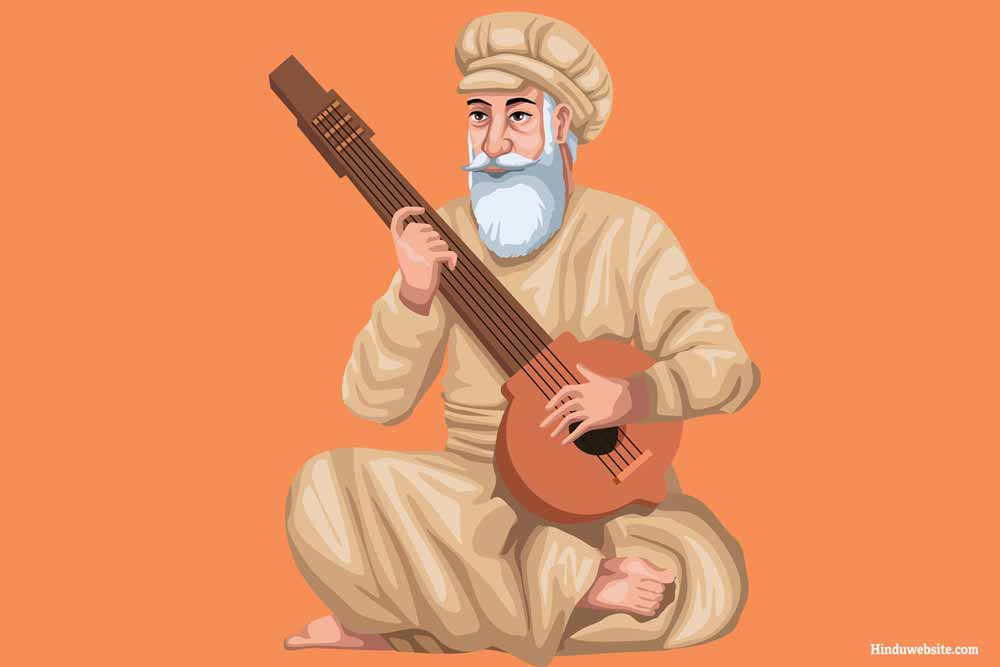
Summary: The Japji is a foundational sacred text in Sikhism, composed by Guru Nanak and revered as a key to understanding Sikh doctrine and philosophy. This page presents the original slokas with English translations from Max Arthur Macauliffe's authoritative work on Sikh sacred writings. Every orthodox Sikh is expected to memorize and recite the Japji as a daily morning spiritual practice.
THERE is but one God whose name is true, the Creator,[2] devoid of fear and enmity, immortal, unborn, self-existent by the favour of the Guru.[4]
REPEAT HIS NAME
The True One was in the beginning; the True One was in the primal age.
The True One is[5] now also, O Nanak; the True One also shall be.[6]
[1. The Japji is considered by the Sikhs a key to their sacred volume and an epitome of its doctrines. It is silently repeated by the Sikhs early in the morning. Every Sikh must have it by heart, otherwise he is not deemed orthodox. It is the duty of all Sikhs, even if they cannot read, to have themselves taught this eat morning divine service. The composition appears to have been the work of Guru Nânak in advanced age.
2. Karta purukh. It is perhaps not necessary to translate the word purukh. It means male or creative agency. The all-pervading spirit in union with a female element uttered a word from which sprang creation.
3. Saibhan is derived from the Sanskrit swayambhu, which we have found in this passage in a very ancient Sikh MS.
4 Gur Parsâd. We have translated these words in deference to the opinions of the majority of the Sikhs; but with several carried gyânis we have no doubt that they were intended as epithets of God--the great and bountiful. Guru Nanak had no human guru; as we have already seen, his guru was God. It was during the spiritual supremacy of his Successors the favour of the Guru was invoked, and deemed indispensable for deliverance. Moreover, though gur parsâd does sometimes in the Granth Sâhib mean the Guru's favour, this appears to be more often expressed by gur parsâdi.
5. Bhi. There are two bhis in this line which some say are idiomatic. We have very little doubt that the first bhi is an obsolete past tense of the defective verb bhu, and that the verse ought to be translated 'The True One is, was, and also shall be.' Compare--'Guru Nânak, Shahu hai, bhi, hosi.'--Sûhi Ashtapadi 1.
6. Also translated--
God was true in the beginning, he was true in the primal age
He is true
now also, Nânak, and He also will be true.
{footnote p. 196} This translation appears to be unmeaning, for it is not doubted that God was true in all ages. With the translation in the text compare {Greek E?gw' ei`mi pa^n to' gegonos, kai` o?'n, kai` e?so'menon}, 'I am all that was, and is, and will be.'--Inscription on a Greek temple.]
I
By thinking I cannot obtain a conception of Him, even though I think hundreds of thousands
of times.
Even though I be silent and keep my attention firmly fixed on Him, I cannot preserve
silence.
The hunger of the hungry for God subsideth not though they obtain the load of the
worlds.
If man should have thousands and hundreds of thousands of devices, even one would not
assist him in obtaining God.
How shall man become true before God? How shall the veil of falsehood
be rent?[1]
By walking, O Nanak, according to the will[2] of the Commander as preordained.
II
By His order bodies are produced; His order cannot be described.
By His order Souls[3] are
infused into them; by His order greatness is obtained.
By His order men are high or low; by
His order they obtain preordained pain or pleasure.
By His order some obtain their reward;[4]
by His order others must ever wander in transmigration.
All are subject to His order; none
is exempt from it.
He who understandeth God's order, O Nanak, is never guilty of egoism.[5]
III
Who can sing His power? Who hath power to sing it?[6]
Who can sing His gifts or know His
signs?[7]
[1. Also translated--How shall the line of falsehood be broken?
2. Rajâi, the Arabic razâ, the divine pleasure.
3. In these two lines some suppose akâr to refer to the non-sentient, jiv to the sentient world.
4. That is, to be blended with God.
5. Literally-would not be guilty of saying haun main, i.e. I exist by myself independently of God. This is the sin of spiritual pride.
6. Also translated--Whoever has the power.
7. Also translated--He who knows his signs.]
Who can sing His attributes, His greatness, and His deeds?[1]
Who can sing is knowledge
whose study is arduous?
Who can sing Him, who fashioneth the body and again destroyeth it?
Who can sing Him, who taketh away life and again restoreth it?
Who can sing Him, who appeareth
to be far, but is known to be near.
Who can sing Him, who is all-seeing and omnipresent?[2]
In describing Him there would never be an end.
Millions of men give millions upon millions
of descriptions of Him, but they fail to describe Him.
The Giver giveth; the receiver groweth
weary of receiving.
In every age man subsisteth by His bounty.
The Commander by His order
hath laid out the way of the world.
Nanak, God the unconcerned is happy.
IV
True is the Lord, true is His name; it is uttered with endless love.[3]
People pray and
beg, 'Give us, give us the Giver giveth His gifts;
Then what can we offer Him whereby His court
may be seen?
What words shall we utter with our lips, on hearing which He. may love us?
At the ambrosial hour of morning meditate on the true Name and God's greatness.
[1. Châr is understood to be a contracted form of achâr. Some translate the word 'excellent,' and make it an epithet of wadiâi.
2. This and the preceding line of this pauri are also translated--
Some sing His power according to their abilities;
Some sing, His gifts
according to their knowledge of His signs;
Some sing His attributes, His greatness, and
His deeds;
Some sin His knowledge whose study is arduous;
Some sing that He fashioneth
tire body and again destroyeth it;
Sonic that He taketh away the soul and again restoreth
it;
Sonic that He appeareth far from mortal gaze;
Some that He is all-seeing and omnipresent.
3. Also translated--His attributes are described in endless languages.]
The Kind One will give us a robe of honour, and by His favour we shall reach the gate of salvation.[1]
Nanak, we shall thus know that God is altogether true.[2]
V
He is not established, nor is He created.
The pure one existeth by Himself.
They who
worshipped Him have obtained honour.
Nanak, sing His praises who is the Treasury of excellences.
Sing and hear and put His love into your hearts.
Thus shall your sorrows be removed, and you
shall be absorbed in Him who is the abode of happiness.[3]
Under the Guru',; instruction God's
word is heard; under the Guru's instruction its knowledge is acquired; under the Guru's instruction
man learns that God is everywhere contained.[4]
The Guru is Shiv; the Guru is Vishnu and Brahma;
the Guru is Parbati, Lakhshmi,[5] and Saraswati.[6]
[1. This verse is also translated--By our former acts we acquire this human vesture, and by God's favour reach the gate of salvation.
The body is first formed, and then the soul from another body enters it. God decides in what body the soul is to have residence until the, body perishes. The acts of previous births are adjusted when the soul attains a human body. It is the acts done in human body which accompany the soul to future states of existence.
2. This verse is commonly translated--we shall then know that God is all in all Himself; but this translation does not appear to harmonize with the preceding part of the pauri.
3. Also translated--and you shall take happiness to your homes.
4. This very difficult verse is also translated--
(a) Under the Guru's instruction God's word is heard; under the Guru's instruction the knowledge of it is acquired; it is contained in the Guru's instruction.
(b) The voice of God is found as well in other compositions as in the Veds; the voice of God is all-pervading.
(c) The pious; know the Gum's instruction, that God is everywhere contained.
(d) The voice of the Guru is as the Veds for the holy; they are absorbed in it.
5. The Hindu goddess of wealth and riches, consort of Vishnu, and mother of Kâm the god of love.
6. The goddess of eloquence and learning and patroness of arts and sciences.
This verse is also translated--
{footnote p. 199}
(a) He is greater than Shiv; greater than Vishnu and Brahma greater than Pârbati, Lakshmi, and Saraswati.
(b) For the holy the Guru is Shiv; the Guru is Vishnu and Brahma; the Guru is Pârbati, Lakhshmi and Saraswati.
The tenth Guru says:--
Khanda prithme sâj ke Jin sab sansâr upâiya--
God first created the sword,
the emblem of Death, and then the world.
So here Shiv obtains precedence as the agent of destruction. The word uttered by God became the source of knowledge of him through the Guru in the three forms of 'Shiv, Vishnu, and Brahma.']
If I knew Him, should I not describe Him? He cannot be described by words.
My Guru hath
explained one thing to me--
That there is but one Bestower on all living beings; may I not
forget Him!
VI
If I please Him, that is my place of pilgrimage to bathe in; If I please Him not, what ablutions
shall I make?
What can all the created beings I behold obtain without previous good acts?
Precious stones, jewels, and gems shall be treasured up in thy heart if thou hearken to even one
word of the Guru.
The Guru hath explained one thing to me--
That there is but one Bestower
on all living beings; may I not forget Him!
VII
Were man to live through the four ages, yea ten times longer;
Were he to be known on the
nine continents, and were everybody to follow in his train;[1]
Were he to obtain a great name
and praise and renown in the world;
If God's look of favour fell not on him, no one would notice
him.
He would be accounted a worm among worms, and even sinners would impute sin to him.
[1. That is. to show him respect.]
Nanak, God may bestow virtue on those who are devoid
of it, as well as on those who already
possess it;
But no such person is seen as can bestow virtue upon Him.
VIII
By hearing the name of God men become Sidhs, Pirs, Surs,[1] and Naths;
By hearing the Name
man understandeth the real nature of the earth, its supporting bull,[2] and Heaven;
By hearing
the Name man obtaineth a knowledge of the Continents, the worlds, and the nether regions.
By
hearing the Name death doth not affect one.[3]
Nanak, the saints are ever happy.
By hearing
the Name sorrow and sin are no more.
IX
By hearing the Name man become as Shiv, Brahma, and Indar.
By hearing the Name even the
low become highly lauded.[4]
By hearing the Name the way of Jog and the secrets of the body
are obtained.
By hearing the Name man understandeth the real nature of the Shastars, the Simtritis,
and the Veds.
Nanak, the saints, are ever happy.
By hearing the Name sorrow and sin are
no more.
X
By hearing the Name truth, contentment, and divine knowledge are obtained.
Hearing the.
Name. is equal to bathing at the sixty-eight places of pilgrimage.
By hearing the Name and
reading it man obtaineth honour.[5]
[1. Sûrs are spiritual heroes.
2. The bull which the Hindus believe supports the earth. This is not believed in by the Sikhs. See below, pauri xvi.
3. Man shall not die again, but obtain deliverance.
4. Also translated--On hearing the Name one is praised by high and low.
5. Also translated--On hearing the Name man obtaineth honour by the knowledge acquired.]
By hearing the Name the mind is composed and fixed on God.[1]
Nanak, the saints are ever
happy.
By hearing the Name sorrow and sin are no more.
XI
By hearing the Name, the depth of the sea of virtue is sounded.[2]
By hearing the Name men
become Shaikhs, Pirs, and Emperors.
By hearing the Name a blind man findeth his way.
By
hearing the Name the unfathomable becometh fathomable.
Nanak, the saints are ever happy.
By hearing the Name sorrow and sin are no more.
XII
The condition of him who obeyeth God cannot be described.
Whoever trieth to describe it,
shall afterward repent.
There is no paper, or pen, or writer
To describe the condition of
him who obeyeth God.
So pure is His Name--
Whoever obeyeth God knoweth the pleasure of it
in his own heart.[3]
XIII
By obeying Him wisdom and understanding enter the mind;
By obeying Him man knoweth all worlds
By obeying Him man suffereth not punishment;
By obeying Him man shall not depart with Jam[4]
So pure is God's name--
Whoever obeyeth God knoweth the pleasure of it in his own heart.
[1. Or--by hearing the Name man easily meditateth upon God.
2. Also translated--man acquireth the best virtues.
3. Literally--he knows it in his own mind, that is, he obtains a pleasure which is incommunicable.
4. The god of death, previously called Dharmrâj. This verse means, that in man shall not die again, but be absorbed in God.]
XIV
By obeying Him man's path is not obstructed;
By obeying Him man departeth with honour and
distinction;
By obeying Him man proceedeth in ecstasy[1] on his way;
By obeying Him man
formeth an alliance with virtue--
So pure is God's name--
Whoever obeyeth God knoweth the
pleasure of it in his own heart.
XV
By obeying Him man attaineth the gate of salvation
By obeying Him man is saved with his
family;
By obeying Him the Guru is saved, and saveth his disciples;
By obeying Him, O Nanak,
man wandereth not in quest of alms[2]--
So pure is God's name--
Whoever obeyeth God knoweth
the pleasure of it in his own heart.
XVI
The elect[3] are acceptable, the elect are distinguished
The elect obtain honour in God's
court;
The elect shed lustre[4] on the courts of kings.
The attention of the elect is bestowed
on the one Guru.[5]
If any one say he can form an idea of God, he way say so,
[1. Magun. This word is understood to be for magan. Those who read magu na translate--
(a) By obeying Him man proceedeth not by the path of destruction.
(b) Man proceedeth by the broad, not the narrow way.
2. This is explained to mean--does not wander in transmigration.
3. Panch, literally five. The number conveys the idea of selection. There is a Hindustâni proverb, Pânehon men Parameshwar hai, Where live are assembled, God is in the midst of them. Others say that panch refers to the live classes of persons previously mentioned-- those who walk according, to God's will, who know Him to be true, who praise Him, who hear His name, and who obey Him.
4. This is the interpretation of sohahi given by Bhâi Chanda Singh in his commentary on the Granth Sâhib.
5. The elect have one God as their Guru or spiritual guide, and meditate on Him.]
But the Creator's works cannot be numbered.
The bull that is spoken of is righteousness,
the offspring of mercy,
Which supported by patience maintaineth the order of nature.[1]
Whoever understandeth this is a true man.
What a load there is upon the bull![2]
Beyond
this earth there are more worlds, more and more.
What power can support their weight?
The
names of living things, their species, and colours
Have all been written with a flowing pen.
Doth any one know how to write an account of them?
If the account were written, how great it
would be
What power and beautiful form are Thine, O God!
Who hath power[3] to know how great
Thy gifts are?
By one word[4] Thou didst effect the expansion of the world,
Whereby hundreds
of thousands of rivers were produced.
What power have I to describe Thee?
So powerless am
I, that I cannot even once be a sacrifice unto Thee.
Whatever pleaseth Thee is good.
Thou,
O Formless One, art ever secure.
XVII
Numberless thy worshippers[5], and numberless Thy lovers
Numberless Thine adorers, and numberless
they who perform austerities for Thee
Numberless the reciters of sacred books and Veds
[1. Sût, the thread on which the world is strung. The Guru means by patience the adjusted balance of the world, everything being in equipoise.
2. Here Guru Nânak obviously rejects the Hindu story that the earth is supported by a bull.
3. We understand kût as the Arabic kuwwat. If kût be held to mean food, a meaning which the word so pronounced also hears in Arabic, the verse will be translated--Who knoweth the extent of Thy gifts of sustenance?
4. The Hindus believe this is Eko aham, bahu syâm, one, let Me become many.
5. Literally--repetitions of God's, name. Here the word is used by metonymy for those who repeat God's name.]
Numberless Thy Jogis whose hearts are indifferent to the world;
Numberless the saints who
ponder on Thine attributes and divine knowledge;
Numberless Thy true men; numberless Thine
almsgivers
Numberless Thy heroes who face the steel of their enemies;
Numberless Thy silent
worshippers who lovingly fix their thoughts upon Thee.
What power have I to describe Thee?
So lowly am I, that I cannot even once be a sacrifice unto Thee.
Whatever pleaseth Thee is
good.
O Formless One, Thou art ever secure.
XVIII
Numberless are the fools appallingly blind
Numberless are the thieves and devourers of others'
property;
Numberless those who establish their sovereignty by force;[1]
Numberless the cut-throats
and murderers
Numberless the sinners who pride themselves on committing sin;
Numberless
the liars who roam about lying;
Numberless the filthy[2] who enjoy filthy gain
Numberless
the slanderers who carry loads of calumny, on their heads
Nanak thus describeth the degraded.
So lowly am I, I cannot even once be a sacrifice unto Thee.
Whatever pleaseth Thee is good.
O Formless One, Thou art ever Secure.
[1. Also translated--Numberless are those who issue oppressive orders.
2. Malechh. Whose desires are filthy, and who are deemed the lowest of the low, complete outcasts. In the Guru's time the word malechh was applied by Hindus as a term of opprobrium to Muhammadans. The Hindus still apply it to all who are not of their own persuasion.]
XIX
Numberless Thy names, and numberless Thy places.
Completely beyond reach are Thy numberless
worlds.
Numberless they who repeat Thy name with all the strength of their intellects.[1]
By letters[2] we repeat Thy name, by letters we praise Thee
By letters we acquire divine knowledge,
and sing Thy praises and Thine attributes,
By letters we write and utter the word[3] of God;
By the letters recorded on man's head his destiny is declared.
He who inscribeth them on others,
beareth them not on His own head.
As He ordaineth, so shall man obtain.
As great Thy creation,
O God, so great is Thy fame
There is no place without Thy name.
What power have I to describe
Thee
So lowly am I, that I cannot even once be a sacrifice unto Thee.
Whatever pleaseth
Thee is good.
O Formless One, Thou art ever secure.
XX
When the hands, feet, and other members of the body are covered with filth,
It is removed
by washing with water.
When thy clothes are polluted,
Apply soap, and the impurity shall
be washed away.
So when the mind is defiled by sin,
It is cleansed by the love[4] of the
Name.
Men do not become saints or sinners by merely calling themselves so.
[1. Also translated--
(a) With their bodies reversed, that is, standing on their heads, it form of religious austerity practised in India.
(b) They who try to describe Thee shall have to carry loads of sin on their heads.
2. Letters here appear to mean sacred literature.
3. Bân generally means custom. Here it is understood to be used for bâni, a word.
4. Water in which the dye of the Name has been dissolved.]
The recording angels take with them a record of man's acts.
It is he himself soweth, and
he himself eateth.
Nanak, man suffereth transmigration by God's order.
XXI.
Pilgrimage, austerities, mercy, and almsgiving on general and special occasions
Whosoever
performeth, may obtain some little honour;
But he who heareth and obeyeth and loveth God in
his heart,
Shall wash off his impurity in the place of pilgrimage, within him.
All virtues
are Thine, O Lord; none are mine.
There is no devotion without virtue.
From the Self-existent
proceeded Maya (athi), whence issued a word which produced Brahma and the rest[1]--
'Thou art
true, Thou art beautiful, there is ever pleasure in Thy heart!'
What the time, what the epoch,
what the lunar day, and what the week-day,
What the season, and what the month when the world
was created,
The Pandits did not discover; had they done so, they would have recorded it in
tile Purans.
Nor did the Qazis[2] discover it; had they done so, they would have recorded it
in the Quran:
Neither the Jogi nor any other mortal knows the lunar day, or the week-day, or
the season, or the month.
Only the Creator who fashioned the world knoweth when He did so.
How shall I address Thee, O God? how shall I praise Thee? how shall I describe Thee? and how shall
I know Thee?
[1. The verse is also translated--'Blessing on Thee!' is said to have been the first salutation that Brahma addressed Thee.
2 Guru Nânak means the scribes who reduced the Qurân to writing.]
Saith Nanak, everybody speaketh of Thee, one wiser than another.
Great is the Lord, great
is His name; what He doeth cometh to pass.
Nanak, he who is proud shall not be honoured on
his arrival in the next world.
XXII
There are hundreds of thousands of nether and upper regions.
Men have grown weary at last
of searching for God's limits; the Veds say one thing, that God has no limit.[1]
The thousands
of Purans[2] and Muhammadan books tell that in reality there is but one principle.[3]
If God
can be described by writing, then describe Him; but such description is impossible.
O Nanak,
call Him great; only He Himself knoweth how great He is.
XXIII
Praisers praise God, but have not acquired a knowledge of Him,
As rivers and streams fall
into the sea, but know not its extent.
Kings and emperors who possess oceans and mountains
of property and wealth,[4]
Are not equal to the worm which forgetteth not God in its heart.
[1. The verse is also translated --The Veds have at last grown weary of searching for God's limits, but they cannot give the slightest description of Him.
2. There being only eighteen Purâns, the expression in the text means a thousand times eighteen or an indefinite number. The word sahans is also understood by the gyânis to refer to rikhis and learned men in indefinite numbers.
3. That is, that God is the root or principle of all things.
4. Also translated--As the sea is the king of streams, so is God the monarch of all. They who possess mountainous wealth, &c.]
XXIV
There is no limit to God's praises;[1] to those who repeat them there is no limit.
There
is no limit to His mercy, and to His gifts there. is no limit.
There is no limit to what God
seeth, no limit to what He heareth.
The limit of the secret of His heart cannot be known.
The limit of His creation cannot be known; neither His near nor His far side can be discovered.[2]
To know His limits how many vex their hearts.[3]
His limits cannot be ascertained
Nobody
knoweth His limits.
The more we say, the more there remains to be said.
Great is the Lord,
and exalted is His seat.
His exalted name is higher than the most exalted.
Were any one
else ever so exalted,
Then he would know that exalted Being
How great He is He knoweth Himself.
Nanak, God bestoweth gifts on whom He looketh with favour and mercy.
XXV
His many bounties[4] cannot be recorded,
He is a great giver and hath not it particle of
covetousness.
How many, yea countless heroes beg of Him!
How many others whose number cannot
be conceived
How many pine away in sin![5]
How many persons receive yet deny God's gifts
How many fools there are who merely eat!
How many are ever dying in distress and hunger
O Giver, these are also Thy gifts.
[1. Also translated--There is no limit to the Praised One.
2. A metaphor taken from the banks of a river.
3. Billâh, literally, cry in pain.
4. Karm, in Sanskrit, is work; in Persian, kindness, favour, or bounty. The context seems to show that the latter is intended.
5 Compare. Man Vekârin veria, the mind is encompassed with sin. Guru Amar Das.]
Rebirth[1] and deliverance depend on Thy will:
Nobody can interfere with it.
If any fool[2]
try to interfere with it
He shall himself know the punishment he shall suffer.
God himself
knoweth to whom He may give, and He Himself giveth:
Very few acknowledge this.
He to whom
God hath given the boon of praising and lauding Him,
O Nanak, is the King of kings.[3]
XXVI
Priceless are Thine attributes, O God, and priceless Thy dealings;[4]
Priceless Thy dealers,
priceless Thy storehouses
Priceless what cometh from Thee, and priceless what is taken away;
Priceless Thy rate and priceless the time for dealing;[5]
Priceless Thy justice and priceless
Thy court;
Priceless Thy weights and priceless Thy measures;[6]
Priceless Thy gifts and
priceless Thy marks;
Priceless Thy mercy and priceless Thine ordinances.
How beyond all
price Thou art cannot be stated.
Ever speaking of Thee men continue to fix their thoughts on
Thee.[7]
[1. Band, to be enclosed in a womb.
2. Khâik. This word is also found in the Sri Râg ki Wâr, Slok 2--thâo nâhîn khâika, there is no place for the fool.
3. Also translated--
To those few, O Nânak. the King of kings
Giveth the boon of praising and
lauding Him.
4. In the true Name.
5. Also translated--Priceless is Thy love, and priceless they who are absorbed in it.
6. We read pramân for parwân. If the latter be read, the translation will be--Priceless Thy weights and priceless Thine acceptance of mortals. A third translation is--Priceless Thy scale and priceless Thy weights.
7. Also translated--Repeating that Thou art priceless, men continue to fix their attention on Thee.]
That God is ever true, He is the true Lord, and the true Name.
He who made this world is
and shall be; He shall neither depart, nor be made to depart.[1]
He who created things of different
colours, descriptions, and species,
Beholdeth His handiwork which attesteth His greatness.
He will do what pleaseth Himself; no order may be issued to Him.
He is King, the King of kings,
O Nanak; all remain subject to His will.
XXVIII[2]
Make contentment and modesty thine earrings, self-respect thy wallet, meditation the ashes
to smear on thy body;
Make thy body, which is only a morsel for death, thy beggar's coat, and
faith thy rule of life and thy staff.[3]
Make association with men thine Ai Panth,[4] and the
conquest of thy heart the conquest of the world.
To Thee sing chaste and patient of mankind,
Unyielding heroes of true faith approved.
To Thee sing pandits and the chiefs of saints
The ages four and Veds to them assigned.
To
Thee sing maidens who delight the sense,
This world of ours, high heaven, and hell below.
To Thee sing gems from Vishnu's sea that rose,
And eight and sixty spots of pilgrims' haunt.
To Thee sing heroes and the men of might;
The sources four from which all life doth spring.
To Thee sing regions, orbs, and universe,
Created, cherish'd, and upheld by Thee!
To Thee
sing those whose deeds delight Thine eye,
The hosts who wear the colours of Thy faith.
All
things beside which sing Thy glorious name,
Could ne'er be told by Nanak's lowly song.
[1. Also translated--Creation shall depart, but not He who made it.
2. This and the following three pauris were composed by Guru Nânak after the Jogis had pressed him to adopt their dress and their religion.
3. This verse is also translated--Make the chastening of thy body not yet wedded to death thy patched coat, and faith thy beggar's staff.
4. A sect of Jogi.]
HAIL![1] HAIL TO HIM,
The primal, the pure,[2] without beginning, the indestructible, the same in every age!
XXIX
Make divine knowledge thy food, compassion thy store
keeper, and the voice which is in every
heart the pipe to call to repast.
Make Him who hath strung the whole world on His string thy
spiritual Lord; let wealth and supernatural power be relishes for others.
Union and separation
is the law which regulateth the world.[3] By destiny we receive our portion.
HAIL! HAIL TO HIM,
The primal, the pure, without beginning, the indestructible, the same in every age!
XXX
One Maya in union with God gave birth to three acceptable children.[4]
One of them is the
creator, the second the provider, the third performeth the function of destroyer.[5]
As it
pleaseth God, He directeth them by His orders.
He beholdeth them, but is not seen by them.
This is very marvellous.
HAIL! HAIL TO HIM,
The primal, the pure, without beginning, the indestructible, the same in every age!
[1. Adesh, the ordinary salutation of Jogis. This word is derived from âdi, primal and Îsh or Îshwar, God. Guru Nânak means that this salutation should only be offered to God.
2. Anîl--literally, not of a blue colour, as Kristian is represented.
3. Also translated--favourable and unfavourable destinies shape men's actions.
4. Chele, literally, disciples.
5. Lai may either mean absorption or reaper (lâve). Both meanings convey the idea of destruction.]
XXXI
His seat and His storehouses[1] are in every world.
What was to be put into them was put
in at one time.[2]
The Creator beholdeth His creation.
Nanak, true is the work of the True
One.
HAIL! HAIL TO HIM,
The primal, the pure, without beginning, the indestructible, the same in every age!
XXXII
Were one tongue to become a hundred thousand, and a hundred thousand to become twentyfold more,
I would utter the name of the one Lord of the world hundreds of thousands of times with all my
tongues.
In this way I should ascend the stairs of the Lord, and become one with Him.
On
hearing of the exaltation of the religious the vile become jealous.[3]
Nanak, the former have
found the Kind One, while false is the boasting of the false.
XXXIII
I have no strength to speak and no strength to be silent.[4]
I have no strength to ask and
no strength to give
I have no strength to live, and no strength to die,
I have no strength
to acquire empire or wealth which produce a commotion in the heart.
I have no strength to meditate
on Thee or ponder on divine knowledge;
I have no strength to find the way to escape from the
world.
He in whose arm there is strength, may see what he can do.
Nanak, no one is of superior
or inferior strength before God.
[1. To supply human necessities.
2. That is, before man is born, his Portion is fully allotted him.
3. Literally--on hearing matters connected with heaven worms grow jealous.
4. This hyperbole means that man has no strength to do anything without God's assistance.]
XXXIV
God created nights, seasons, lunar days, and week days,
Wind, water, fire, and the nether
regions.
In the midst of these He established the earth as a temple.
In it He placed living
beings of different habits and kinds.
Their names are various and endless,
And they are
judged according to their acts.
True is God, and true is His court.
There the elect are
accepted and honoured.
The Merciful One marketh them according to their acts.
The bad and
the good shall there be distinguished.
Nanak, on arrival there, this shall be seen.
XXXV
Such is the practice in the realm of righteousness.
I now describe the condition of the
realm of knowledge.
How many winds, waters, and fires! how many Krishans and Shivs!
How
many Brahmas[1] who fashioned worlds! how many forms, colours, and garbs!
How many lands of
grace like this![2] now many mountains!
how many Dhrus and instructors[3] such as his.
How
many Indars, how many moons and suns, how many regions and countries!
How many Sidhs, Budhs,
how many Naths! now many goddesses and representations of them!
How many demigods and demons!
how many saints, how many jewels and seas!
How many sources of life! how many languages! and
how many lines of kings!
How many possessors of divine knowledge! now many worshippers! Nanak,
there is no end of them.
[1. The Hindus believe it was through the agency of Brahma God created the world.
2. Where men reap the results of their acts.
3. Nârad, who instructed Dhru to obtain his exalted dignity. Nârad is said to have been a son of Brahma. His father advised him to marry, but he rejected his advice saying it was only proper to love Krishan. Father and son then began to curse each other with immoral and disastrous results for both. One of Nârad's epithets is Strife-maker.]
XXXVI
In the realm of knowledge the light of divine knowledge is resplendent.
There are heard
songs from which millions of joys and pleasures proceed.
Beauty is the attribute of the realm
of happiness.[1]
There things are fashioned in an incomparable manner.
What is done there
cannot be described.
Whoever endeavoureth to describe it shall afterwards repent.
There
are fashioned knowledge, wisdom, intellect, and understanding;
And there too is fashioned the
skill of demigods and men of supernatural power.
XXXVII
Force is the attribute of the realm of action.[2]
Incomparable are they who dwell therein.
There are very powerful warriors and heroes
They are filled with the might of Ram.-
There
are many Sitas[3] in the midst of greatness,
Their beauty cannot be described
They die not,
neither are they led astray[4]
In whose hearts God dwelleth.
There dwell congregations of
saints
They rejoice; the True One is in their hearts.
God dwelleth in the true realm.[5]
He looketh on its denizens with an eye of favour, and rendereth them happy.
There are continents,
worlds, and universes.
Whoever trieth to describe them shall never arrive at an end.
[1. Sharm khand. Sharm is here not the Persian sharm, shame, nor the Sanskrit shram, toil. It is the Sanskrit sharman, happiness. The verse is also translated--Beautiful are the words of those who have attained the realm of the happy.
2. That is, the world.
3 Sita's name is apparently introduced here as she was the wife of Ram mentioned in the preceding line.
4 Na thâge jâh, literally--are not deceived.
5. Sach Khand.]
There are worlds upon worlds and forms upon forms.
They fulfil their functions according
to God's orders:
God beholding and contemplating them is pleased.
Nanak, to describe them
would be impossible.[1]
XXXVIII
Make continence thy furnace, resignation thy goldsmith,
Understanding thine anvil, divine
knowledge thy tools,
The fear of God thy bellows, austerities thy fire,
Divine love thy
crucible, and melt God's name therein.
In such a true mint the Word shall be coined.
This
is the practice of those on whom God looketh with an eye of favour.
Nanak, the Kind One by
a glance maketh them happy.
SLOK
The air is the guru, water our father, and the great earth our mother;
Day and night are
our two nurses, male and female, who set the whole world a-playing.[2]
Merits and demerits
shall be read out in the presence of the Judge.
According to men's acts, some shall be near,
and others distant from God.
They who have pondered on the Name and departed after the completion
of their toil,[3]
Shall have their countenances made bright, O Nanak; how many shall be emancipated
in company with them!
[1. Literally --would be as hard as iron.
2. Here the denizens of the world are likened to children, Their father is said to be water, the human sperm; the earth like a mother affords them nutriment; day supplies them with occupation; the night lulls them to rest; and the breath of the Guru imparts divine instruction.
In the East it is usual for the rich to have two nurses for a child--female nurse by night, and a male nurse to accompany and play with it by day.
3. The worship of God and the necessity of labour for one's livelihood are eminently Sikh principles.
4. This slok is generally believed to be the composition of Guru Angad.]
Source: The Sikh Religion: Its Gurus, Sacred Writings and Authors by Max Arthur Macauliffe. Volume I. Oxford: Clarendon Press, 1909. Formatted for Hinduwebsite.com by Jayaram V. Although every precaution has been taken, the accuracy of the text cannot be guaranteed. For research and in-depth study, please refer to the original work.
About the Author: Max Arthur Macauliffe was a senior Sikh-British administrator, a prolific scholar, and an author. He produced an English translation of the sacred scriptures of the Sikh religion and also wrote The Sikh Religion: Its Gurus, Sacred Writings and Authors. He was assisted in his work by Pratap Singh Giani, a Sikh scholar.