Ramayana Glossary: Sanskrit Terms and Hindu Ritual Definitions
Summary: This glossary provides scholarly definitions of Sanskrit terms, religious rituals, and philosophical concepts found throughout the Ramayana, the ancient Hindu epic. Translated by Romesh Chunder Dutt, the glossary explains key terminology including sacred ablutions, sacrificial practices, festivals, and religious roles essential to understanding the text's spiritual and cultural context. Readers will discover precise definitions of Sanskrit words that illuminate the religious and philosophical dimensions of this foundational Hindu scripture.
GLOSSARY
ABHISHAVA, a religious rite.
ABBHISHEKA, sacred ablution.
ACHARYA, preceptor.
AGNIROTRA,
a sacrifice to the fire performed with a daily offering of milk morning and evening.
AGRAYANA,
an autumn harvest festival performed with offering of new grain.
AJYA, a form of sacrificial
offering.
APRAMATTA, without pride or passion.
APSARA, celestial nymph.
ARGHYA, an offering
due to an honoured guest.
ARTA, an honourable person, an Aryan.
ASOKA, name of a flower, orange and scarlet.
ASRAMA, hermitage.
ASURA, demon, enemies of
gods,
ASWAKARNA, a flower.
ASWAMEDHA, a horse-sacrifice.
BAIDURYA, lapis-lazuli.
BHINDIPALA,
a weapon of war.
BRAHMACHARIN, one who has taken vows and lives an austere life.
CHAITYA,
a Shrine or temple.
CHAKRAVAKA, a ruddy goose, the male and female being regarded as a pattern
of conjugal love.
CHAMPAKA, a tree with yellow blossom also the flower of the tree.
CHANDAN,
sandal-tree; also the fragrant sandal paste.
CHOWRI (properly CHAMARI), the yak, the tail of
which is used as a fan.
DAKSHINA, gifts made at sacrifices.
DASAPUTRA, son of a slave.
DEVA, gods.
DEVADARU (lit. heavenly tree), the Himalayan pine.
DEVA-KANYA, celestial maid.
DEVA-RISHI, celestial saint.
DRARMA-RAJA, monarch by reason of piety and virtue.
DIKSHA,
initiation into a sacred rite.
DUNDUBHI, drum.
GANDHARVA, celestial musician.
GANDIVA,
Arjun's bow.
GAURI, a goddess, wife of Siva.
GURITA or GHEE, clarified butter.
GRAHA,
the being of darkness who is supposed to seize the sun and the moon at eclipse; a planet with
malignant influence.
GURU, preceptor.
HANSA, swan or goose.
HOMA, a sacrificial rite
or offering.
HOWDA, the seat on an elephant.
IDA, a form of sacrificial offering.
KANKA,
a bird of prey
KARMA, act which brings its fruit in life or in after life.
KARNIKARA, a
tree; also its flower.
KARTIKA, October-November.
KAUTUKA, wedding investiture with the
nuptial chord.
KETAKA, a strong-scented plant.
KHADIRA, a tree, a kind of acacia.
KIMPURUSHA, a class of
imaginary beings.
KINNARA, a fabulous being with the body of a man and the face of a horse,
the counterpart of the Greek Centaur.
KINSUKA, a flower.
KOKIL, an Indian bird answering
to the English cuckoo, and prized for its sweet note.
KUSA, grass strewn round the altar at
sacrifice.
LODHRA, a tree.
MAGITA, a, winter month.
MAHAMATRA, a royal officer.
MAHUA
(properly MADHUKA), a tree, Bassia latifolia.
MAHUT or MAHAMATRA, elephant driver.
MANTRA,
hymn, incantation.
MAYA, illusion.
MLECHCHA, outer barbarian. All who were not Hindus were
designated by this name.
MRIDANGA, a kind of drum.
MUNI, saint, anchorite.
NAGA, snake;
a being of the lower or snake world; also a tribe in Eastern India.
NISHADA, an aboriginal
race.
NISHKA, a coin, often used as ornament.
NULLA, a rivulet or rill.
NYAGRODRA, the
banyan or Indian fig-tree.
PALASA, a tree bearing large red blossoms with no scent.
PANKHA
(from Sanscrit paksha, wing), a fan.
PATAHA, a kind of drum.
PISHACHA, ghost or goblin.
PITRI-MEDHA, sacrifice and offering due to departed ancestors.
PRAVARGYA, a religious rite.
PRIYANGU, a fragrant ointment.
PUNNAGA, a flower tree.
PURANA, ancient and sacred chronicles.
PURUSHA, the soul.
RAHU, the being of darkness who is supposed to seize the sun and the moon
at eclipses.
RAJASUYA, an imperial sacrifice.
RAKSHA, a class of fabulous beings represented
as demons and night rangers, and wearing various shapes at will. The inhabitants of Ceylon, with
whom the hero of the Epic fought, are represented as Rakshas.
RIK, hymn recited at sacrifice.
RISHI, saint or anchorite.
SABDA-BEDHI, an archer who shoots an invisible game by hearing the
sound it makes.
SAKTI, javelin.
SALA, a tall forest tree.
SAMADHI, austere religious
practice.
SAMAN, hymn chanted at sacrifice.
SAMI, a dark leafy tree.
SANKRA, conch-shell
used as a sounding instrument in wars and in festivities.
SAPTA-PARNA, a plant with a seven
branched leaf.
SARASA, the Indian crane.
SARVAVARNIN, an Indian tree.
SASTRA, sacred
scriptures.
SATAGHNI, a weapon of war, supposed to kill a hundred men at one discharge.
SAVANA, a religious rite.
SAVITRI, a hymn; also the goddess of the hymn
SIDDHA, holy celestial
beings.
SLESHA, an Indian tree.
SRAVANA, July -August.
SRI, the goddess of beauty and wealth, wife of Vishnu.
SUPARNA, celestial bird.
SWARGA,
heaven.
SWASTI, a word uttered to dispel evil.
SWAYAMVARA, a form of bridal, the bride selecting
her husband from among Suitors.
TALA, a Species of palm-tree bearing a large round fruit; also
the fruit of the tree.
TAMALA, a graceful leafy tree.
THIRTHA, holy rites at the crossing
of rivers.
THIRATRA, a three nights' penance and fast.
USIRA, a kind of hard wood.
VANARA,
monkey. T'he hill tribes of Southern India, who formed an alliance with the hero of the Epic,
are represented as Vanaras.
VEDA, the most ancient and holiest scriptures of the Hindus.
VIJAYA, Karna's bow.
VILWA, a tree bearing an edible fruit.
VINA, the lyre.
YAJNA, sacrifice.
YATO DHARMA STATO JAYAH, where there is virtue there is victory.
YOJANA, a measure of distance
equal to about nine English miles.
YUGA, the period of the world's existence.
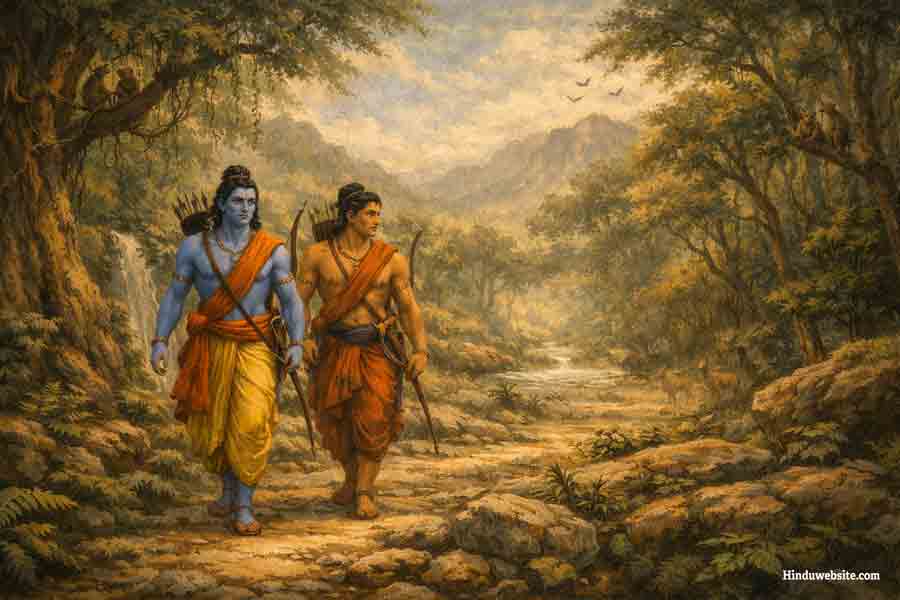
Source: The Ramayana And The Mahabharata Condensed Into English Verse By Romesh C. Dutt (1899) Dedicated To The Right Hon. Professor F. Max Muller. The text has been reformatted and summary has been added to each page by Jayaram V for Hinduwebsite.com. The title image used for this page has been generated by AI and is not a part of the original text.
Disclaimer: While we have made every effort to reproduce the text correctly, we do not guarantee or accept any responsibility for any errors or omissions or inaccuracies in the reproduction of this text. This text has been reproduced for general reading purposes only and readers are advised to refer the original text for any research or academic studies and references.