
Vedic Rituals and Sacrifices From Srauta Sastras
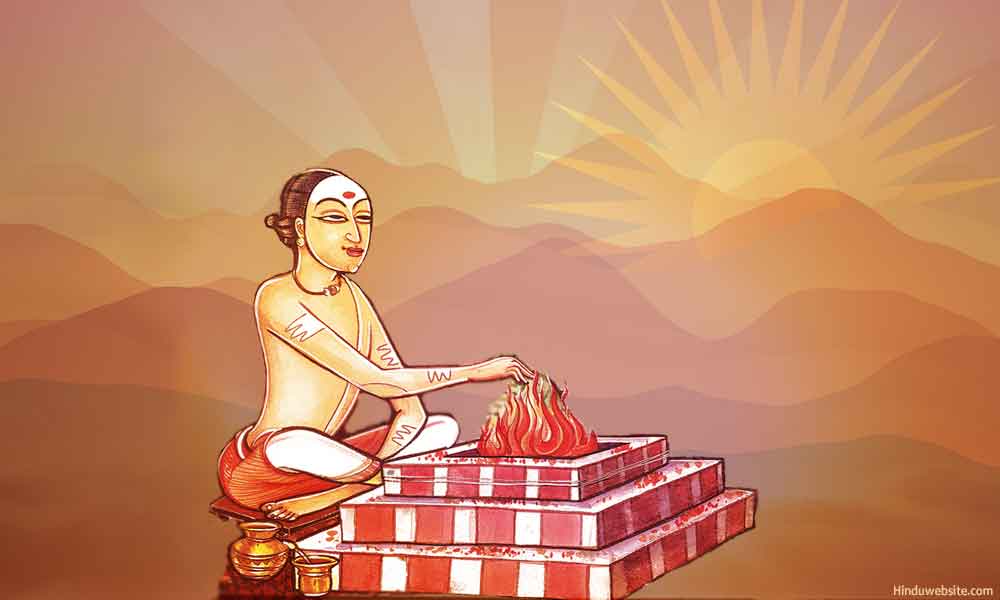
This is a comprehensive manual on Vedic rituals as practiced in ancient times, useful for both general and academic purposes. It is a work in progress, and may require further additions, references and alterations. Jayaram V
Hinduism has a ritual dimension which dates back to the Vedic times (2500 BC) or earlier. Its rich body of rituals is drawn from Brahmanism, Shavism, Vaishnavism, Shaktism, Tantra and numerous other folk traditions and teacher traditions. Their common thread is the priesthood, who for over 4000 years served God with their ritual knowledge and priestly services.
Ancient Indians excelled in magical rituals, invoking gods to resolve human problems. The Purva Mimansa school considered rituals even superior to God. For them, knowledge of the rituals was all that mattered since it was the source of all creation, diversity, and fulfillment of desires. In the following discussion, we will focus upon the various dimensions of Vedic rituals, how they were practiced and what role they played in the religious and social lives of common people.
The importance of sacrifices in Vedic religion
On the surface, you may find a divergence between the ritual and spiritual practices of Hinduism. However, upon close examination you will realize that both are complimentary rather than contradictory and play an important role in balancing the material and spiritual aspirations of people. Vedic Indian practiced various rituals or sacrifices, which were known as Yajnas (Yagnas). Other names given to them are homa, havana, and yaaga or yagya. The last two are corrupted forms (vikrti) of Yajna. The other two minor variations of yajna arise from the nature of offerings and the scale of functions. Etymologically, the word Yoga may have its origin in "Yajna" or "Yagya" since the essential purpose of Yajna in internal rituals (antaryajna), using pranagni or the fire of breath is the same as that of Yoga, which is the union between God and Soul.
Each sacrifice involved an intention (sankalpa), an altar (yajnakunda), a host (yajamana), sacrificial offerings of various kinds (kratuvu, bali), utensils, sacred fire (yagagni), one or more officiating priests (purohita), gifts (dakshina) for the priests and guests, expiation ceremony (prayaschitta) and other concluding rituals. They were performed in open or in a house, temple, palace or a temporary structure (yajnavatika) built for the purpose. Their purpose essentially was to fulfill desires, nourish the gods, obtain their favors, overcome adversity, resolve problems or wash away sins. People believed in the sanctity of the rituals and their ability to change the lives of people upon earth. Hence, they frequently resorted to them and used them to resolve issues which arose from the actions of others (adhibhautika), from fate (vidhi) or the acts of God (adhidaiva). In their worldview, the Yajna constituted an important aspect of God’s eternal Dharma (set of duties) upon earth, which humans were expected to uphold since they were delegated to them.
In today’s increasingly materialistic world and instant gratification, the word ritual may convey a rather mechanical approach and attitude, any action in your daily life such as greeting another person or expressing gratitude, which you perform without putting your attention or emotion in it. Vedic people had a different approach to the sacrificial rituals. They genuinely believed in the efficacy and divine nature of the sacrifices and attributed every event and activity upon earth to some divine cause or the activity of the gods. For them, the idea of sacrifice constituted a way of life and a convenient means to feel assured that they had some control over their lives and circumstances and could invoke the power of gods to change them if necessary. They had almost childlike faith in the efficacy and importance of the rituals, which they believed gave them the power to live like gods upon earth. Hence, you will find that in the Vedic world, the sacrifices defined every aspect of their lives and permeated their consciousness.
Vedic people also viewed life itself as a continuous sacrifice in which they offered their lives and possessions as offerings. They relied upon them to express their allegiance to gods through prayers and chants and achieve the four aims of human life namely Dharma, wealth, sexual pleasure and liberation. As part of it, they practiced various sacrifices in all the four phases of human life namely, Brahmacharya (studentship), Grihasta (householder), Vanaprastha (forest dwelling), and Sanyasa (renunciation). Ritual knowledge constituted a major part of the curriculum for students of Vedas. They had to recite the hymns by heart and preserve the knowledge for their survival and that of their progeny.
For priestly families, ritual knowledge was the main source of livelihood. Through that they derived power, name, fame, prestige and social status. Brahmanas of great repute were employed by kings. They were respected in society for their knowledge and judgment and dispensed with justice. Ritual knowledge helped them earn the confidence of the elite and win their approval, appreciation and material favors. By establishing elaborate and complicated rules and procedures, precluding other castes from knowing them, and defining a strict code of conduct and establishing rules of social engagement through the authority of scriptures, they minimized competition from others, monopolized priestly duties, and guaranteed their job security. It was not that they had no concern for others. They prayed for peace and prosperity, and for a prosperous and bountiful world, so that they could find more patrons and have more opportunities to practice their profession and earn their livelihood.
Sources of ritual knowledge
The knowledge of the rituals comes to us mainly from the Vedas and the Srauta Shastras (or Kalpa Sutras which form part of Kalpa, one of the six Vedangas). They contain information about the methods and the manner in which the Vaidik sacrifices were meant to be performed so that their purity and efficacy could be guaranteed. The knowledge was crucial for the continuation or preservation of Dharma, the survival of the priesthood and of those who depended upon it for their survival and success.
Since no one doubted the efficacy of the Vedic hymns or the rituals or the power of gods, priests had to take extra precautions to preserve their reputation and ensure that the sacrifices which they performed yielded the right results. Probably it also led to the idea of karma yoga that one should engage in ritual or obligatory actions without the desire for their result. The priests went to extreme lengths and took elaborate precautions to ensure that the rituals were performed under their supervision with utmost care and purity. If the rituals failed, they attributed it to the displeasure of the gods or fate or karma rather than their own failings.
Of the four divisions of the Vedas, the knowledge of the rituals is found mainly in the Samhitas and Brahmanas, and to some extent in the Aranyakas. A few ancient Upanishads, especially the ones derived from the Brahmanas, also contain information about them to denote their spiritual significance. Apart from the Vedas, our knowledge of rituals also comes to us from other sources such as the Tantras, Agama Shastras, and several Vaishnava texts.
With the emergence of temple traditions, and with the integration of several sectarian movements into the Vedic religion, the rituals and the knowledge associated with them became even more complicated. Hence, an attempt was made to codify them and organize the knowledge for the benefit of those to whom the rituals mattered. The result was the emergence of several Srauta Shastras or ritual texts, which are collectively known as Kalpa Sutras. Of them some contain the knowledge of Srauta rituals and some, the knowledge of domestic sacrifices. The difference between the two is explained later.
Each Veda is associated with one or more Sutras, named after their author, which detail the various aspects of sacrifices. For example, the Rigveda is associated with three sutra texts, Asvalayanasutra, Sankhayanasutra and Saunaka-sutra. The Samaveda has four auxiliary texts namely Latyayanasutra, Drahyayanasutra, Nidanasutra, Pushpasutra and Anustotrasutra. Yajurveda has ten namely Manavasutra, Bharadvajasutra, Vadhunasutra, Vaikhanasasutra, Laugakshisutra, Maitrasutra, Kathasutra, Varahasutra, Apastambasutra and Baudhayanasutra. Atharvavdea has just one, Kusikasutra. These texts have alternative names. Together, they constitute the Kalpa, which is one of the six ancillary texts (Vedangas or the limbs of the Vedas), used in the study of the Vedas. They provide information about the method and manner in which the sacrifices should be performed and what types of offerings should be made. Apart from the Sutras, the knowledge of rituals is also found in the literature of Smartaism, which emerged as the main ritual tradition of Hinduism during the Satavahana period, and which is currently practiced in many temples and domestic rituals in various parts of India, especially in the South.
Rituals in the post Vedic period
A comparative study of the Vedas and the above mentioned texts suggest that Vedic ritualism not only grew in complexity overtime but also underwent many changes due to various factors. The expansion of the Vedic culture into various parts of India, the rise of new religions and teacher traditions, the migration of priests to different parts of the country, the admission of non-Vedic kings into the Vedic fold who believed in other gods, the personal preferences of patrons, local influences, the availability of sacrificial materials, climate and other conditions seemed to have played a role in shaping and transforming the essential character and structure of the Vedic sacrifices and their relevance to the lives of people.
Many sacrifices also became defunct overtime as the Vedic civilization grew and people had a wider choice to choose their way of life and work for their liberation. In the later Vedic period the growing complexity and importance of the rituals and the worldliness of overzealous priests who clamored for expensive gifts made the ritual tradition rather cumbersome and unfairly advantageous to those who possessed the ritual knowledge. The emergence of new religious traditions and practices dented the importance of the Vedic rituals. However, Vedism continued to grow and expand its reach to a large section of Indian people. Their influence is still felt, although many Sratua rituals have fallen into disuse and are no more performed.
A very important development took place in Vedism as people realized the importance of karma in their lives. The Upanishadic seers foresaw the evils of excessive and empty ritualism, which they believed kept the people distracted from the main goal of liberation. Therefore, they cautioned people against over indulgence in ritual practices, suggesting that ritual knowledge constituted inferior knowledge or ignorance (avidya), and was an obstacle to liberation. They cautioned them against overdependence upon rituals or ritual knowledge to resolve human suffering, and urged them to focus upon both ritual and spiritual practices by internalizing the rituals and leading contemplative lives as part of their preparation for liberation.
The priesthood and types of priests
As stated already, Vedic rituals were not only complex but also involved a lot of prior preparation and complex procedures. They made it virtually impossible to perform many sacrifices without the active participation of one or more priests. While the daily sacrifices and simple ceremonies such as the full moon and new moon offerings could be performed by the householders without much outside help, more complex and elaborate rituals such as the Soma Sacrifices, Rajasuya or Asvamedha which lasted for days or months required the participation of several of priests or classes of priests to perform different roles and take care of the various aspects of the rituals.
The Vedas and the Srauta texts mention the names of different types of priests who specialized in various branches of Vedic knowledge and ritual practice. Some were good at chanting Riks, some at singing the Samans, some in reciting the Yajus, some in casting spells, some in chanting specific mantras and prayers, some in organizing the sacrificial material or building altars, some in conducting expiation ceremonies or purification rituals, and so on. It appears that the priests specialized not only in different types of rituals but also in different aspects of each ritual so that their knowledge and expertise could be correctly used to perform them without confusion and mistakes.
Depending upon their duties and knowledge, the priests went by different names such as Hotr, Potr, Adhvaryu, Avayas, Agnimindha, Gravagrabha, Prasastr, Brahman, Upavaktr, Udagrabha, Paurohita, Samagas, Samanyas, Udgatris, Prastrotr and so on. Some of the names denoted their functions or their specialization, and some their status or position in the priestdom. They participated in the rituals according to the need and the generosity of the patrons. It is possible that on occasions the same priest undertook different functions to save time and costs and the names were more ceremonial, suggesting their family background, rather than their duties. As time went by, most of the specialized functions became either defunct or merged with others, while the functional names became part of family names or caste names.
Types of sacrifices
Vedic sacrifices can be categorized variously based upon their intent, purpose, procedure, location, offerings, duration, etc. They are listed below.
Srauta Rituals
Srauta, as the name suggest, refers to the texts which have been derived from the Sruti or the Vedas. Although they are memorial texts (Smriti), their source is Sruti or God. They also serve as the source of Kalpa. The Srauta rituals cover a whole gamut of rituals from the simplest to the most complicated. Most of them are no more practiced, but their study is useful for historical reasons. As per tradition, the Srauta Shastras identify the following six types of sacrifices (yajnas).
- Pakayajnas or food sacrifices: They involve cooking of food (paka) for offering to gods. They go by different names such as aṣtaka, sthālipāka, parvana, srāvaṇi, āgrahayani, etc.
- Soma sacrifices: These sacrifices involved the extraction of Soma and its offering to Soma, Indra and their companion gods. Examples of Soma sacrifices are Agnistoma, atyagnistoma, uktya, shodasi, vājapeya etc.
- Oblationary sacrifices or Havir Yajna: In these sacrifices, the priests poured oblations of milk, vegetable oil, sesame oil, clarified butter, honey and other liquid offerings. Agniyādhāna, Agnihotra, Darśa-Pūrṇamāsa, Agrayana, Cāturmāsya, Sautrāmaṇi are a few important Havir yajnas
- The five daily sacrifices or mahayajnas: They are performed daily by the householders. They will be explained later.
- Vedavratas: These were meant to mark the progress of a student’s education under a teacher and his success in attaining the knowledge of the Vedas, while keeping his vows of celibacy and secrecy until his graduation as a Snataka (one who has bathed and was ready for the life of a householder or an apprentice).
- The Shodasa Yajnas or Samskaras: They were performed at different times in the life of an individual. They will be explained later.
Many sacrifices which are mentioned above are no more practiced in today’s world. However, they had a long history of at least 3500 years. It is truly amazing that in the days when there was no writing and no means of recording any information, people as well as the priests followed such elaborate rituals with great precision and zero tolerance for errors by the sheer power of their memory. Since each sacrifice required strict compliance of numerous rules and procedures, under the active supervision of several priests, there was little scope for errors or negligence. Since the reputation of the priests depended upon their efficacy and timely completion, they took great care to ensure their strict compliance.
External and internal rituals
We may also classify Vedic sacrifices into external and internal rituals, depending upon how they are performed. External rituals are physical, in which offerings are externally made to gods. Internal rituals are mental or spiritual, in which the mind and the senses were withdrawn and engaged in contemplative or meditative practices, which culminated in self-absorption. In the internal rituals, the sacrificial model is internalized. The mind and the body become the field or the sacrificial pit, breath becomes fire, whatever that is offered to the body such as food or pleasure becomes the offering. In the mind thoughts and emotions become the offerings while the Self becomes object of the sacrifice. Before eating, when the food which one eats is consecrated with a prayer, it becomes the sacrificial food and worthy of offering to gods who reside in the body. After it is digested, the energy (prana), which arises from it in the digestive fire, is distributed by breath among the deities in the body namely the mind, the breath, the speech, the senses and the bodily organs. In Vedic cosmology, the body is a world in itself, a replica of the macrocosm, and the Self is Purusha, the Cosmic Being.
Domestic and General rituals
Technically all rituals which are listed before constitute Srauta rituals only. They are called Srauta because they are based upon the Vedas, or the Sruti. Depending upon the location where they are performed and other features, one can discern in them two distinct types of sacrifices namely the domestic or household rituals and the general, priestly rituals. The former can be practiced without the help of priests, whereas the latter invariably require their services to avoid the displeasure of gods.
In Vedic times domestic sacrifices were performed at home by householders, using the domestic fires which were kept in the house. The general rituals also required the use of one or more domestic fires, but they were essentially performed at home or in a public place by trained priests at the behest of the householders or kings who acted as the hosts (yajamanas). The distinction between the domestic and general rituals is drawn here for convenience and for study and understanding. It should not be construed as a universal practice. The Sruta rituals, including the domestic ones, are described later in greater detail.
Regular and occasional rituals
Depending upon how frequency they are performed, one may classify the sacrifices as daily, fortnightly, seasonal, and periodical. The duration of a sacrifice may also vary. Some may last from a few minutes, while some last for several months or years. Some are very simple, which require a few require a few prayers and notional offerings, while some require a lot of prior preparation. Some can be performed at any time, but some can be performed only on specific occasions, which may or may not repeat in the life of an individual. In addition, there are sacrificial ceremonies which have to be performed at different stages in the life of an individual to mark important events in life, such as conception, birth, marriage, death, etc. A detailed account of them will be provided in a later section.
Domestic fires and their importance
In Vedic times householders of upper castes performed domestic sacrifices as part of their obligatory duties, for which they kept three or four domestic fires at different locations in the house and used them for different purposes. Members of the household tended to the fires and kept them always alighted. If the fires died down for any reason, they had to be relighted according to the prescribed procedure. The fires symbolized their religious beliefs and their daily commitment to the faith of their ancestors. They also denoted the presence of gods upon earth and their universality and proximity.
The most common domestic fires were gārhapatya, āhavaniya and dakshinagni. Each had a specific purpose and represented an aspect of Agni. The Gārhapatya fire was used for general domestic purposes, especially to cook sacrificial food (paka or bali) or light the lamps in the house. The Ahavaniya fire was kept on the eastern side of the house (the side from which the Sun arose) used to invite the gods by pouring the offerings, and the Dakshinagni or the southern fire, was used for protection and to ward off evil forces by invoking fierce gods. Together they are considered the triple fires (triagni). Apart from them, the texts also mention Sabhyagni fire and Avasatyagni fires, which were used in advanced sacrificial rituals such as the horse sacrifice or the Vajapeya.
The Upanishads suggest their symbolism. The Atharvasikha Upanishad compares them to the three syllables in AUM. In the Prasna Upanishad they are compared to the breaths (pranas). The triple fires also represent the three gods of Hinduism namely Brahma (Garhapathya), Vishnu (Avhvaniya) and Shiva (Dakshinagni). The trident of Shiva also represents the triple fires as the weapon of Shiva. Vedic people believed that the fires resided in the body also and burned continuously as internal fires (antaragni). The idea of tapas (austerity) which was central to Vedic spirituality was based upon the belief that the fires in the body could be harnessed through internal sacrifices and the resultant heat (tapah) could be transformed into virility (retas), bodily vigor (ojas) or mental brilliance (medhas) or harnessed as a supernatural power (taposhakti).
The Vedic texts stipulate rules to establish the domestic fires, and how to maintain them or rekindle them, if necessary. For example, one of the ideal times to establish them was when a young student (Snataka) completed his education and apprenticeship and embarked upon the life of a householder. Alternatively, it could be done at the time of his marriage or when the duties of the head of the householder were transferred to him by his father through a transference ceremony or upon his death or retirement. Once the fires were lit, it was the duty of the householder and all the family members to guard them and keep them alive. If for any reason they were extinguished, they had to be rekindled by either generating a new fire with friction or borrowing it from another household of good repute or a close relation. If for any reason the fires remained unkindled for more than 12 days, one had to follow a series of steps as detailed in the Grihya Sutras to reestablish them.
Presently no one keeps the domestic fires. In today’s urban environment keeping three naked fires in the house not only is a huge responsibility but also might be considered a fire hazard by today’s legal standards. Fire can be lighted anytime and whenever needed with matches, gas lighters, gas stoves and several other contraptions. Besides, domestic sacrifices are no more performed by a majority of Hindus, including many Brahmana and Kshatriya families, nor any of the Srauta rituals. People may occasionally perform them on specific occasions in temples or at homes, but it is doubtful how many people truly understand their significance. Domestic rituals have been replaced by domestic worship (puja). The idea of daily sacrifices is a noble practice as we examine later. Even if they cannot be practiced as in the past, one may think of practicing them internally or symbolically by helping others or being generous.
Domestic sacrifices, Paka Yajnas
The most important domestic sacrifices were, the daily, reverential salutations to gods in the morning and evening, the five daily sacrifices, and the full moon and new moon day offerings. Domestic fire was used to prepare the food which was used in the offerings. Hence, the sacrifices were also known as paka yajnas. The duty of performing the domestic sacrifices rested upon the head of the household and in his absence his wife, while the other members of the family helped in the preparation. On specific occasions, the services of one or more priests were sought to perform complex sacrifices. The following is a brief account of the domestic sacrifices which were performed by householders as part of their obligatory duties.
Sandhya, Morning and evening service
Every day, after completing bathing, putting on marks, applying ashes, tying up the hair or combing, the householders of the higher castes were required to perform two sets of rituals namely Pratah Sandhya and Sayam Sandhya in the morning and evening respectively. They are still practiced today, and probably the only daily rituals that have withstood the ravages of time. In the past, there used to be a midday prayer also, which is not currently practiced. Traditionally, in the morning ritual the offering was made to the Sun and Prajapati, and in the evening to Agni and Prajapati. They are essentially purification or cleansing rituals to begin and end the day with reverential attitude and keep the body and the mind in a spiritual state. Of the two, the morning oblation is considered more important. The law books suggest that one should not perform any ritual without performing the morning oblation first.
In its simplest form, which is still practiced by many Brahmanas and members of the higher castes, it is practiced just before the dawn by standing in a water body such as a river or a water tank and offering water (tarpana) to the Sun as it rises in the east with a prayer and a salutation (vandanam), which makes the sacrifice both an external and an internal cleansing worship. The standard format is more elaborate and involves several steps including Achamana (sipping water), Kesavanama (uttering the names of Vishnu), Pranayama (controlled breathing), Vyahruti (the uttering of the names of seven worlds) recitation of Gayatri, Marjana (sprinkling of water upon oneself), Upastana (standing to pay homage to the rising sun as Mitra), Gotracara (specifying the family pedigree) and adoration to Supreme God. Some formats include the tantric ritual known as Karanyasa, a form of mystical hand gesture (mudra) as part of the salutation. The evening oblation (Sayam Sandhya) proceeds on similar lines except that Varuna is invoked instead of Mitra in the Upastana.
Brahma Yajna, Offering to Brahma
Some texts mention the practice of Brahma Yajna or service to Brahman as part of the morning service (Sandhya). The purpose of it was to please the Supreme Being, by worshipping Brahma, the creator God who was considered the highest god in the pantheon during the Vedic period. Brahma was the source of all creation and the knowledge of the Vedas. Therefore, it was obligatory for the householders to worship him every day in the early morning after the Sandhya, by reciting the first few words of all the main texts, such as the Rigveda, the Aitareya Brahmana, each of the five books of Aitareya Aranyaka, the first words of Yajurveda, Samaveda, Atharvaveda, Nirukta, Chhandas, Nighantu, Jyotisha, Siksha, Vyakarana, Yajnavalkya Smriti, Mahabharata and so on. It was followed by offering of water to gods (Deva Tarpana), sages (Rishi Tarpana), teachers (Acharya Tarpana) and forefathers (Pitri Tarpana).
Pancha Maha Yajnas, The five daily sacrifices,
It was customary in Vedic times for the householders of the higher castes to perform five supplementary services, known as the five daily sacrifices (pancha maha yajnas), as part of their obligatory duty towards God to ensure the order and regularity of the world and uphold Dharma. Every day, they performed a Homa and cooked sacrificial food (paka), using the Garhapatya fire, which was offered to five classes of beings namely the gods, all creatures, ancestors, seers and sages, and people who were under oath not to cook their own food or unable to cook food for any physical or economic reason. According to the recipient of the offerings the five sacrifices were known as deva yajna, bhuta yajna, pitra yajna, brahma yajna and manusya yajna respectively. By performing them, one paid the karmic debt owed to God and earned his mercy (daya) and merit (punya).
The full moon and new moon day sacrifices
Apart from daily sacrifices, householders of the Vedic period also performed new moon and full moon sacrifices in which married couples participated. On the night before the sacrifice, both the husband and wife observed rules and restraints as dictated by tradition and spent their time in each other’s company, thinking pious thoughts, reciting prayers or exchanging religious knowledge. On the day of the sacrifice they made offerings to gods and to each other.
Visvadeva Tarpana and Baliharana
Apart from the morning services and the five daily sacrifices, householders of the Vedic period also performed a Visvadeva Ceremony, before the midday meal, in which they invoked the Visvadevas and made them offerings of small amounts food as a homage as well as expiation for the sins committed during the day. The ceremony was obligatory for the head of the household only but not for others. It followed by another ritual, known as Baliharana, in which the householder placed small portions of food in a circle and offered to particular deities and other beings, reciting prayers from the Vedas.
Other domestic services
Apart from the above, we find references to a few other domestic ceremonies in the Vedic texts, which do not seem to be universal but limited to a few communities. For example, the texts refer to the offering of sacrificial food to snake deities, at the beginning of the rainy season in the month of Sravana, and to Pasupathi on the full moon day of Asvani. Then there was the Agrahayani sacrifice, which was performed on the full moon day of Margasira to celebrate the newyear. A special sacrifice to snakes for healing was performed when someone in the family or the community was injured by a snakebite. Once in a year, householders invited Important members of the community for a meal to show reverence or express gratitude. They invited a teacher, relative, spiritual person, priest, student or a member of good social standing and honored them with offerings. They offered them water (arghyam) to clean their feet, sweetened water (madhuparkam) and gifted them clothes, money or cows according to their financial capacity. Then they served them food, which was with curd, ghee, butter, honey, vegetables, fruit and food grains. On such occasions they also worshipped gods and made them offerings in the domestic fire.
During the domestic sacrifices, householders had to follow many rules and restraints to ensure their physical and mental purity and stay free from evil. They bathed, kept menstruating women away, and prepared the sacrificial food (bali) with great care, using appropriate materials such as milk, barley, gruel, curds, ghee, butter, rice, sesame seeds, etc. On specific occasions, they cooked even animal food meant for certain gods. Once the food was cooked, it was offered to the various gods, according to the family tradition, such as Agni, Soma, Indra and Agni, Visnu, Bharadvaja, Dhanvantari, Visva Devas, Prajapati, Aditi, Anumati, Agni, Aditi, Adityas, Indra, Yama, Varuna, Soma, Brihaspati, etc.
The remains of the sacrifice were distributed among students, beggars, ancestors, old and decrepit people. Whatever that was left was consumed by the householders or their family members. The daily sacrifices were meant to keep people from being selfish, nourish the gods who depended upon humans for their nourishment and serve others such as students, old people, beggars, renunciants, who depended upon the generosity of others for their survival.
General Srauta Rituals
Srauta rituals were more complex and involved the participation of different classes of priests. Each ritual was performed by one or more chief priests, assisted by several assistant priests who performed specific tasks. For example, in advanced rituals the Hotris recited the hymns (Riks) from the Rigveda. Adhavaryus supervised the construction of the altar using the specified number of bricks and sanctifying the ritual place according to the formulae (Yajus) in the Yajurvedas. The Udgatris sang songs (Samans) from the Samaveda according to specific meters. A Brahman priest supervised the whole proceedings in the background without uttering a word and performed expiation ceremonies in the end.
Elaborate preparations were made to perform the Srauta rituals, which lasted for several hours, days or even months. Worshippers also made several rounds of offerings as the sacrifices proceeded through several stages. They were performed either in the house of the host or at a designated place as suggested by the priest. The timing of the sacrifice depended upon the astronomical calculations of the position of the stars and the planets, the caste of the host or the purpose for which it was performed. The texts provide different versions of the same rituals, which suggest that they were not uniformly practiced due to local influences and the specific needs of the worshippers.
Before performing the sacrifice, according to the practice priests either reestablished new sacrificial fires or used existing ones if they were blemishless. Friction or an existing fire from a reliable source was used to establish the domestic fires if they were not already present in the household, or if the existing ones were believed to have lost their purity. The process of establishing new fires, or reviving the existing ones, generally lasted for two days. The night before the domestic fires were lit, the host and his wife remained awake listening to music and prayers. The next day, Samans were sung by the priests in the presence of a sacred horse, which was brought for the occasion, as the fires were established by a qualified priest. Apart from the three domestic fires which were mentioned before, a fourth fire called the community fire (sabhyagni) was set up if the sacrifice was to be performed in the royal court at the behest of a king or a royal member of the household.
Each sacrifice had a main component (Pradhana) and several, common auxillary parts (angas) which provided the structure to it. Some classifications divide the Srauta rituals into two types, Yajatayas and Juhotayas,. In the former the offerings were mainly solid and in the latter the priests poured oblations or liquid offerings uttering, “Swaha!.” There were some which had elements of both.
The Srauta rituals required the singing of Samans or songs from the Samaveda by a special class of trained priests according to particular meters or melodies such as Brahat or Rathantara. Different sets of priests sang the introductory Samans (Prastava) beginning with “hum.” They were followed by another group of priests who sang the high Samans or Udgatris beginning with the sound, “Aum.” The third group of priests responded to them by singing the closing Samans (Pratihara), beginning with the sound, “Hum.” The main body of the ritual ended with the concluding Samans (Nidhana), followed by expiation ceremonies, cleaning of the altars, ritual baths, distribution of the sacrificial food and gifts to the participating priests. In more complex rituals the pattern was repeated several times as each stage was completed.
What is stated above was the general structure of a Srauta ritual, which was practiced in the Vedic times. There were variations and exceptions too. In some sacrifices, the Pratihara Samans were further divided into two parts, Pratihara and Upadrava. The latter was sung by the Udgatrr priests. In addition, some sacrifices required the participation of Upagatrs who were required to chant “ho” in unison while the Pratihara Saman was sung. Before the priests sang the Samans, they had to obtain the approval of the head priest (Brahman) which he expressed with a silent nod. These are but a few rules which are stated here to suggest the complexity of the sacrifices. Apart from them, the priests had to follow several other procedures and formalities to sing the Samans and make the offerings. Such elaborate rules and participation of diverse classes of priests, some with nominal roles, made the Srauta sacrifices too laborious and subject to ridicule and contempt.
Important Sratua Rituals of Vedic period
Vedic people practiced several sacrifices such as the fruit sacrifice (agrayanaisti), animal sacrifices, Soma sacrifice, the Hot-milk Sacrifice (Pravargya), the Multiple Animal Sacrifice (Aika Dakshina), Jyotistoma, Vajapeya, Rajasuya, Asvamedha, Naramedha, etc. In addition to them, they also practiced several initiatory vows (diskshas), devotional, votive observances (Vratas), and expiatory penances, which will be discussed separately. The following is an account of important Vedic sacrifices, which were practiced during the Vedic period. Most of them are now either defunct are incorporated into other rituals. Since Vedic sacrifices underwent many changes over a long period due to the changes in the way of life, the following study is useful mainly as religious, historical and academic study of Vedic ritual practices
The seasonal sacrifices
Vedic people performed three seasonal sacrifices, Vaisvadeva, Varunapraghasa and Sakamedha in the spring, rainy season and autumn respectively. In the Spring Sacrifice, offerings were made to Agni, Soma, Savitr, Sarasvatl, and Pusan. In the Rainy Season Sacrifice, they were made to Indra, Agni, Varuna, Maruts and Ka. Since, Autumn was a season of decay, in the Autumn Sacrifice, offerings were made to ancestors and Trayambaka or Rudra.
Agrayana Isti, or the First-fruit Sacrifice
As the name suggests, this sacrifice was performed when the first fruit of the season became ripe for consumption. True to their tradition, people did not consume them until they were first offered to gods. Therefore, they picked ripened fruit from the fruit bearing trees in the fields and offered them to gods before using them for their own household consumption or give to others. Depending upon the season, not only fruit but also food grains and seeds from the newly harvested fields were collected and ritually offered to Indra, Agni and other gods of heaven.
Animal sacrifices
Vedic people performed animal sacrifices to appease certain gods and consumed the remains of the animal sacrifices for ritual purposes. Kshatriyas had the permission to eat meat. Therefore, we may presume that animal sacrifices were performed mainly by them during the sacrifices which they hosted. It is doubtful whether the Brahmanas actually sacrificed any animals or partook the sacrificial food (bali) made from them. The texts also indicate that the priests who conducted animal sacrifices belonged to a lower social status within the Brahmana community and were not used for other sacrifices.
Whatever may be the truth, animal sacrifices were performed as part of an independent ritual or as part of Soma sacrifices. The type of animal which was used for the purpose depended upon the nature and purpose of the sacrifice and which deities were invoked. Animals such as goats, oxen, sheep were sacrificed as offerings to Indra, Agni, Surya and Prajapati. Apart them, people also sacrificed owls, doves, hare, etc., to certain fiery deities. Special care was taken in selecting the sacrificial animal (bhakta).
The animals chosen for the purpose were supposed to be blemishless and not sick, old or injured. After the they were sacrificed, certain parts and organs from its body were cut and dropped into the fire along with other materials as offerings, while the priests uttered the mantras and sang songs. At the end of the ritual, the burnt or cooked meat from the ritual pit was shared by the participants as the remains of the sacrifice. They consumed it under the belief that the offerings made during the sacrifice went to the gods in heaven, while the energy (prana) hidden in the remains of the sacrifice went to the deities (senses and organs) in the body upon consuming it. Thus, both the gods above and gods within the body were nourished through the ritual.
Soma sacrifices
Vedic people practiced several variations of the Soma sacrifice. As the name suggests, the sacrifice involved the ritual preparation of the Soma juice, which was an intoxicant, and its offering to the gods. As in other sacrifices, the remains of the sacrifice were consumed by the participants as the offering to the gods within. For the sacrifice, the priests collected tender leaves of the Soma plants and pressed them between wooden bars which were specially made for the purpose, chanting mantras and uttering prayers. After the juice was extracted and collected in Soma cups, it was offered to Soma, Indra, Mitra and other companion gods.
Depending upon the purpose, Soma Sacrifices lasted for a day or two, while some went on for days, weeks or even months. In some cases, especially those hosted by kings, animals were also sacrificed. Daylong sacrifices were conducted on the line of the Agnistoma sacrifice. Soma juice was pressed ritually with the chanting of the hymns and was offered to the gods three times, in the morning, in the midday and in the evening respectively. In the two day sacrifices, an animal was sacrificed on the first day, and Soma was prepared and offered the next day. In some instances, more than one animal was sacrificed and the sacrifice continued for several days or a whole year. According to some scholars, Vedic people performed Soma sacrifices to appease the gods of heaven and obtain rains, which increased the possibility of the return of the ancestors from the ancestral world.
Pravargya or the Hot Milk Sacrifice
It was originally an independent sacrifice, but was later made part of the Soma Sacrifice. For the purpose of the sacrifice, a few pots were made using a particular clay, which was specially chosen for the purpose. One of the pots was designated as the Mahavira pot and used in the sacrifice, while the remaining ones were kept as spare. The Mahavira pot was placed on a raised bed of Munja grass, and the milk of a goat or a cow was poured into it. The pot was heated on fire, and the heated milk was offered to Asvins along with two rice cakes, once in the morning and once in the evening. At the end of the sacrifice, a human figure was created and worshipped by placing the various utensils used in the sacrifice, with the pot serving as the head. The purpose of the sacrifice was said to be to provide a new body and heal the worshipper who was mortally injured in a war or was extremely sick.
Aika Dakshina
This is a more elaborate form of animal sacrifice, in which eleven animals were sacrificed for the one animal that was sacrificed in the standard Agnistoma sacrifice. Thirteen posts were set up for the purpose. Of them eleven were used to tie the animals. The twelfth post was kept unused, and the thirteenth one was used only at the end of the ceremony. The placing of the posts and their proximity to the sacrificial fire were crucial to the purity and the efficacy of the ritual. Each post to which an animal was tied was meant for a specific deity. The central one was meant for Agni, while the remaining ones were meant for Saraswathi, Soma, Varuna, Tvastr, etc.
The Jyotistoma Sacrifice
Jyotistoma was the generic name given to at least seven, different types of sacrifices, which lasted from a day to weeks and months or even a year. Of them the first was Agnistoma or Atyagnistoma. The others were, the Ukthya, Sodashi, Vajapeya, Atiratra, and Aptoryama. However, this list is inconclusive and does not appear in the older Samhitas. All the sacrifices followed the same standard pattern, but differed with regard to how and when the Soma juice was to be pressed and offered and how many Samans needed to be sung during the sacrifice. Apart from them, Vedic people practiced several one-day Jyotistoma sacrifices also, which went by different names such as Visvajit, the Six Sadhyakras, the four Vratya Stomas, the Upavahya, the Gosava, etc.
The Vajapeya Sacrifice
The Vajapeya was a more formal sacrifice of food and drink, which was meant to increase the strength and majesty of the worshipper, who was usually a king or a member of the royal family. It might have also been performed to obtain divine help to win wars and overpower enemies. The sacrifice lasted for a minimum of 17 days and up to a year. Of the 17 days, the first day was meant for pressing the Soma Juice, the next 13 days for the worship of gods with chants and prayers and offerings of food and oblations, and the last three days for the Upasad ceremony, in which the host observed fasting, while subsisting entirely on specific quantities of milk, as part of his cleansing.
During the sacrifice the host also sacrificed several animals for the Maruts and Prajapati. The priests, the host and his wife wore gold garlands, which formed part of the priestly fees. After the sacrifice began on the first day with the midday pressing of the Soma Juice, the king organized a mock chariot racing, in which he participated along with sixteen other charioteers. His chariot was yoked to three horses, while those of his competitors to four each. The chief priest organized the racing in which the king was eventually declared the winner, and drums were beaten. It was followed by other rituals in which the priests and the host paid respects to several gods with cups of Soma juice and other offerings. Vajapeya sacrifice was a pompous ceremony, which was performed by the kings to display their strength and prowess, impress their subjects and intimidate their enemies.
The Rajasuya or the Royal Consecration
The Rajasuya Yajna was also performed with a lot of pomp, in a show of strength by a king or emperor to commemorate his coronation or declare his might and supremacy. Several people participated in it including the members of the royal family including the queens, important dignitaries, vassals, different classes of priests headed by the royal priest (purohita), Vedic scholars of great repute, and other important nobles and feudal lords in the King’s administration. During the ceremony the king was anointed and declared a victor in a game of make believe dice and a staged battle. Preparation for the actual event began several years in advance, with the king declaring his intent (Diksha) to perform the sacrifice. The sacrifice was complex, with several rounds of offerings, libations, chanting of Samans, the drinking of several cups of Soma, invocations to several gods, the cutting of hair and other observances. Due to the prestige associated with it, the sacrifice offered a great opportunity to the priests to earn the appreciation of the king and receive lavish gifts of food grains, cows, land, a seat in the royal court, gold and jewelry, etc.
The Asvamedha, the Horse Sacrifice
Asvamedha was one of the most popular and prestigious Vedic sacrifices in ancient India, which is mentioned in several scriptures, including the Upanishads. Like the Vajapeya and Rajasuya, it was also performed by kings to expand their territories and celebrate their victories. The sacrifice began with the selection of an able horse. On the appointed day, the priests were entertained with lavish offerings of food. The king, accompanied by his queens, priests and royal entourage assembled in an open ground and camped there for the night near the Garhapatya fire, listening to religious discourse of music.
The next day, the horse was consecrated with rituals and set free, along with a hundred other horses, an army of four hundred young soldiers guarding them. Armed with swords, arrows, spears, etc., they followed the horse wherever it went and guarded it from enemies and unforeseen events. If the horse died due to sickness or an accident, it was replaced by another. For a year or six months, the horse was allowed to roam free in whichever direction it went. The king claimed all the land through which it passed as his own and declared his sovereignty over it. If anyone challenged him, he waged a war.
If everything went well, at the end of the expedition, the horse was guided back to the ritual place and anointed by the chief queen. King’s men or the priests decorated it and covered it with 101 gold coins which were later gifted to the priests. They fed the sacrificial horse and tied it to a ritual post along with hundreds (300-400) of other animals, from elephants to even birds and bees. On the chosen day, the king sacrificed the horse to the chants of the priests. It was followed by the sacrifice of the remaining animals. The night the horse was sacrificed, the chief queen slept with the horse as a symbolic gesture of sleeping with a divine being (Purusha). The rituals lasted for days, even after the horse was sacrificed, in which Indra, Varuna and other gods were invoked and nourished with rich offerings.
The Naramedha, the Human Sacrifice
We do not know how frequently Vedic people engaged in human sacrifices and for what ends, and whether they actually sacrificed any human being for the purpose or whether it was a mere symbolic ritual. Human sacrifices might have been practiced in prehistoric Vedic traditions to appease certain gods, choosing victims from among slaves or those who were captured in wars or those who were sentenced to capital punishment. The practice might have been discontinued later or replaced with more benign, symbolic sacrifice. The Katha Upanishad vaguely mentions the sacrifice of young Naciketa by his own father and his visit to the house of Yama upon departing from the world. None of the Brahmanas mention the actual sacrifice of a human being because either the references to it were edited out or the practice itself was discontinued and forgotten.
The texts suggest that the human sacrifices followed the same pattern as the horse sacrifice. The priests who presided over it were those who belonged to a separate class and were not treated on par with other Brahmana families. The victim who was chosen for the sacrifice was supposed to be a person of either the Brahmana or the Kshatriya caste. He was purchased from his parents, masters or captors for a hefty price. After purchasing him and formally consecrating him, he was allowed to live freely for a year and go wherever he wanted, just at the horse in case of the horse sacrifice. However, he was instructed to remain chaste and avoid the company of women. When he returned, the priests set the stage for the sacrifice. At the end of a five-day ceremony, he was tied to a post and sacrificed in the presence of the king and queen. As in case of the horse sacrifice, the queen was instructed to lay beside the body of the victim for a night.
We do not know what purpose the sacrifice served. The idea of self-sacrifice is an integral part of Hindu spiritual practices, which prevailed in the Vedic period also. Vedic people believed that the world was ruled by the God of Death (Kala) who devoured everything. From that perspective, becoming food to God as part of one’s devotion or service presented itself as a logical idea. Probably similar reasoning led to the idea of renunciation as the ultimate human sacrifice which led to liberation. The Vedas proclaim that God himself said to have sacrificed parts of his own body to create the world. In other words, he himself set the example of self-sacrifice as part of one’s eternal duties. Following the example, some teacher traditions of ancient India also practiced willful self-mortification through fasting or self-immolation to attain final liberation. The idea of a devotee symbolically becoming Bhakta (sacrificial food) to God (the Bhokta) through bhakti (devotion or the act of offering) on the path of devotion probably arose from the ancient practice of human sacrifices or self-sacrifices.
Sarvamedha, The Universal Sacrifice
Although it is mentioned in the Vedas, the Sarvamedha sacrifice might have never been practiced in real life in the Vedic period. Rather it may have been used to symbolically represent the highest ideal of renunciation or giving up everything for the sake of liberation. According to Varnashrama Dharma, at the end of Vanaprastha a person had to give up everything, including fire and cooked food, and live in the forests entirely at the mercy of the elements, awaiting his final release from the mortal body.
The phase of Sanyasa symbolically represents the practice of Sarvamedha only. We find a similar approach in the legend of Naciketa also, who refuses to accept any worldly gifts and enjoyments from Yama as they will not lead to his liberation, or grant him eternal peace. Ideally, in all other sacrifices, the worshippers make offerings to gods with the expectation receive something in return.
In the Sarvamedha, there is no such exchange. The worshipper expects nothing in return, while he gives away everything, including his name, fame, riches, possessions, relationships, likes and dislikes, and attachments to spend the rest of his life in search of liberation. Whether it was practiced or not, the Sarvamedha sacrifice represented the highest ideal of the Vedic spirituality, which was exemplified by the ancient seers and sages. Even the Buddha went in search of Nirvana, after sacrificing everything.
Ceremonial rituals
Apart from the domestic sacrifices and Srauta rituals, Vedic people also practiced several sacrificial ceremonies called the Samskaras or Sacraments to commemorate important events in their lives, staring from conception, until death. The ceremonies added structure and order to their lives and kept them bound to the duties of Dharma. They also ensured the continuation of their families and the order and regularity of the world. Most of these ceremonies had a social dimension and a festive aspect about them since they were ceremonially practiced in the presence of friends and family members with a lot of festivity and rejoicing, except for the last rite.
The following is a brief account of important ceremonial rituals and important events in the life of an individual, which are still practiced by many orthodox Hindu families, while a few of them are practiced by almost all Hindus. It is important to remember that the following list do not necessarily all the ceremonial practices (Samskaras) of the Vedic people and differs from the current list of Samskaras practiced by Hindus1.
1. The rite (garbhadana) performed by the married couple, who invoked the gods, declaring to them their intent to conceive a child and requesting them to facilitate impregnation and conception.
2. The rite (pumvasana) performed during the third month of pregnancy, invoking gods for the birth of a male child. Vedic people preferred male children due to importance given to men in society, in ensuring family lineages and in performing religious duties.
3. The rite performed in the early stages of pregnancy to prevent abortion or protect the embryo.
4. The rite (Simanta) performed in the late stages of pregnancy, parting the hair of the mother with darbha grass, a piece of wood and a quill in the fourth month of the first pregnancy only.
5. The rite (Jatakarma) performed at the time of the birth of the child for long life and intelligence. The father or priests uttered prayers as the child was born. Upon birth, they recited prayers in the newly born child’s ear, lighted incense or an aromatic substance to purify the baby’s body with smoke and invoked gods, seeking their protection.
6. The rite (Namakarana) performed at the time of name giving ceremony. The father or the head of the household gave two names to the newly born, one a secret name and one a public name. The first one was given immediately upon the birth and the second one about ten day later with offerings to Prajapati. The names were also meant to be given according to specific rules for both boys and girls.
7. The rite performed in the third month after the birth when the mother showed the child to the father.
8. The rite (Nishkramana) performed in the fourth month when the child was taken out for the first time and showed the sun.
9. The rite performed in the six month (Annaprasana), when the child was fed solid food. The type of food that was served depended upon what the parents expected to see in the child when he or she grew up.
10. The tonsure ceremony (Chudakarana) performed in the third, fifth or seventh for the Brahmanas, Kshatriyas and Vaishyas respectively when the hair was cut in parts or in full for the first time by a barber who was rewarded with money and gifts.
11. The rite (Upanayana) performed at the age of eight, eleven or twelve depending upon the status of the caste to initiate the child into studentship by reciting the Gayatri mantra in his ear, which marked the second birth of child and made him twice born (dvija). After the ceremony the children were either educated at home by parents or sent to gurukula for the study of the Vedas and ancillary texts.
12. The rite (Samavartana) performed at the end of formal education when a student became Snataka or graduate. Upon the completion of his education, the student returned to his home and began his life as an apprentice under his father.
13. The marriage ceremony (Vivaha), starting from the time the marriage was fixed until it was consummated. A person was considered eligible for marriage if the completed his education, obtained permission from his parents and chose to become a householder. Polygamy was a common practice. The marriage was consummated three nights after the wedding.
14. The rites associated with the construction of a new house and the entry of the couple into the new house upon its construction
15. The rite associated with the birth of children, their initiation, marriage, etc.
16. The rite associated with the death
Ceremonies to influence the course of afterlife
According to Hindu scriptures, when people died they either go to the heavenly worlds of gods or to the ancestral world, depending upon their previous deeds. Ritual practices and obligatory duties are important. However, they do not liberate the soul. Liberation is achieved only when one conquers desires, overcomes the gunas and attains sameness through detachment, renunciation and self-transformation.
Those who are destined for rebirth enter the ancestral world and remain there until their karma is exhausted. Then they return to take another birth. Until a soul remained in the ancestral world, members of his family or his descendants have an obligatory duty to perform daily sacrifices, make annual offerings to keep intact his casual bodies. Their services benefit not only him but also other ancestors of his family who have not yet returned to the earth.
The last rite in the life of an individual upon earth is the funeral rite, which is also known as Antyeshti or Sraaddha. Hindu funeral ceremonies are very elaborate and complex and involve a number of rites and rituals which are meant to ensure the safe departure of the soul from the earth and its onward journey to the next world. The journey of the soul is believed to last for a year and during that period they pass through several planes and meet numerous deities and celestial beings. Therefore, provisions have to be made to make their journey safe and comfortable and keep their astral bodies strong until they reach the destination. As in case of Domestic sacrifices, offering of food is central to the last rites.
Rituals in today’s world
In the present day world, the practice of Hinduism is changing gradually. While rituals are still performed by some people, especially those who belong to the higher castes, many people view them with skepticism as remnants of ancient magical rituals. One can also notice a growing interest among people in the spiritual practices of Hinduism.
Many Hindus who live in the urban areas and who have been brought up in an environment of secular and progressive values, prefer to be unconventional rather than religious and ritualistic. Many turn to rituals under peer pressure or out of fear.
They have no time or inclination to perform rituals or make the necessary effort to study their religion. In the past rituals played an important role in healing people and resolving health related problems. Nowadays, we have better solutions due to advances in medical sciences. Hence, when people are sick they look for medical treatment rather to Vedic rituals. The rituals are also not obligatory to many castes. Hence, they do not show much interest such practices. However, you can also see a renewed interest in Hinduism and its anxiety body of ritual and spiritual knowledge among the current generations. Hopefully, they will ensure the revival of age old beliefs and practices.
Suggestions for Further Reading
- Yajna - Vedic Sacrifices in Hinduism
- Significance of Rituals in Hinduism
- Samskaras - Rites and Rituals in Hindu Tradition
- Vedic Sacrifice
- Yagna or Yajna, the Ritual Form of Worship in Hinduism
- The symbolic significance of the Vedic gods
- Hindu Marriages And The Duties Of Husband And Wife In A Traditional Hindu Family
- Death and Afterlife in Hinduism
- The Hindu Marriage, Past and Present
- The Samkhya Philosophy and 24 Principles of Creation
- The Concept of Atman or Eternal Soul in Hinduism
- Bhakti yoga or the Yoga of Devotion
- Hinduism And The Evolution of Life And Consciousness
- A Summary of the Bhagavadgita
- Symbolic Significance of Numbers in Hinduism
- The Belief of Reincarnation of Soul in Hinduism
- The True Meaning Of Renunciation According To Hinduism
- The Symbolic Significance of Puja Or Worship In Hinduism
- Origin, Principles, Practice and Types of Yoga
- Hinduism and the Belief in one God
- Essays On Dharma
- Esoteric Mystic Hinduism
- Introduction to Hinduism
- Hindu Way of Life
- Essays On Karma
- Hindu Rites and Rituals
- The Origin of The Sanskrit Language
- Symbolism in Hinduism
- Essays on The Upanishads
- Concepts of Hinduism
- Essays on Atman
- Hindu Festivals
- Spiritual Practice
- Right Living
- Yoga of Sorrow
- Happiness
- Mental Health
- Concepts of Buddhism
- General Essays
Notes
1. For a complete of Samskaras please refer to the following essay at Hinduwebsite.com: Samskaras - The Sacraments of Hinduism
References
1. Brāhmanism and Hindūism, Or, Religious Thought and Life in India: As Based on the Veda and Other Sacred Books of the Hindūs, by Sir Monier Monier-Williams, published by J. Murray, 1891.
2. The Religion And Philosophy of the Veda and Upanishads By Arthur Berriedale Keith, The First Half, Chapters 1-19, Page 1 To Page 312, Cambridge, Massachusetts, London : Humphrey Milford, Oxford University Press, 1925.
3. The Religion And Philosophy of the Veda and Upanishads By Arthur Berriedale Keith, The Second Half, Chapters 20-29, Page 313 to page 683, Cambridge, Massachusetts, London : Humphrey Milford, Oxford University Press, 1925.
4. Selected Upanishads, A Collection of 14 Upanishads With Devanagari Script, Translation and Notes, By Jayram V, Pure Life Vision Books, 2013.