
Jainism - Sects and Sub-sects
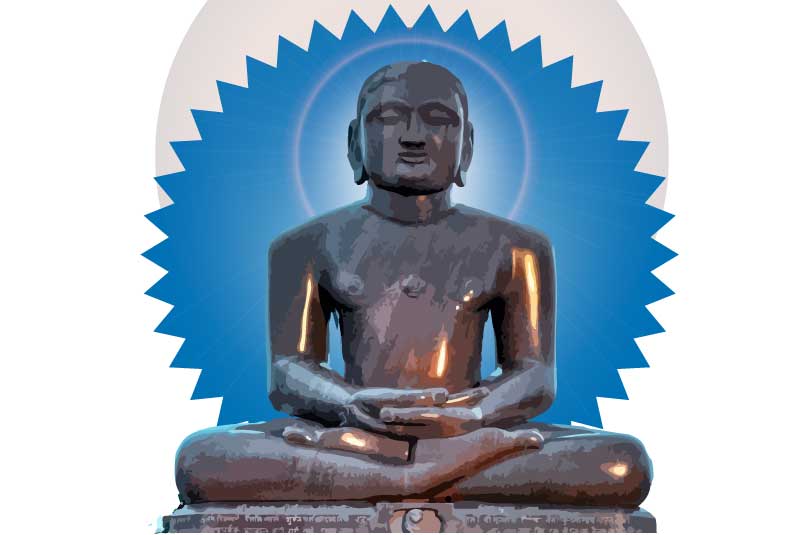
One of the characteristics of Indian religious traditions has been regular and periodic changes and disputes with in each of them regarding doctrine and practice, which often led to the formation of new sects, sub-sects and schools of thought. Jainism was no exception. During the time of Mahavira himself there were some disputes regarding the finer aspects of his teachings. Some of his followers disagreed with him openly and formed their own sects.
Early Schisms
Jain tradition records seven minor movements (Nihnava) within Jainism during its early history, either during or after Mahavira, in addition to the major schism that led to the formation of Svetambara and Digambara sects, the seeds of which were probably sown during Mahavira's time. The seven splits that took place in the early development of Jainism are mentioned below.
1. The first split organized by Jaimali, Mahavira's own son-in-law regarding some minor differences about the nature of influence.
2. The split caused by Monk Tisyagupta regarding the atomic nature of the soul.
3. Asadha, who lived about 200 years after Mahavira, initiated a split by suggesting that the Jaina monks were indistinguishable from gods and should be treated alike. The sect rejoined the mainstream Jainism due to the efforts of King Balabhadra.
4. Asvamitra created confusion within the Jaina community by suggesting that all beings would vanish someday, which directly contradicted the Jaina belief that the souls were immortal. Asvamitra said to have admitted to his mistake and offered an apology.
5. Ganga, a Jaina monk, proposed that it was possible to experience dualities of life such as heat and cold simultaneously, for which he was expelled and later readmitted when he atoned for his mistake.
6. 544 years after Mahavira, a Jaina teacher named Rohagupta proposed that apart from the living beings (Jivas) and inanimate matter (Ajiva), there was a third class of Non-living things (Nojiva).
7. A decades later, another teacher, Gostamahila, deviated from the main teachings regarding the manner in which karma substance clung to the soul and the duration for which renunciation should be practiced. His views were rejected by the Jaina council and he was excommunicated.
Svetambara and Digambara sects
When Mahavira was spreading his message, there was already a community of Jaina monks who were practicing the teachings of Parsvanatha and the previous Thirthankaras. We are not sure whether they joined the Order established by Mahavira, or maintained their separate identity. However, it appears that they kept to their the old practices, including the practice of wearing clothes, in contrast to Mahavira's own practice of remaining naked in deference to the vow of non-possession.
Those early differences deepened with time and led to the great schism in Jainism, which contributed in no small measure to its subsequent decline. After the departure of Mahavira, efforts were made to reconcile the differences between the two sects and organize the Jaina cannon. They were not very successful. Overtime, the differences worsened, and both groups separated formally about 85-87 C.E.
The great schism, divided the Order into two vertical divisions. One group called themselves Digambaras, meaning the naked ones, who preferred not to wear any clothes and remain naked both in private and public, and the other group called themselves Svetambaras, meaning the white robed ones, who wore white clothes and covered their bodies as part of their monastic discipline. The division and the differences between the two continue even today. They represent two distinct streams of thought and two distinct traditions, although both sides agree on the fundamental aspects of the teachings. They differ mainly with regard to a few practices and some matters related to the essential doctrine. Following are the main differences between the Digambaras and the Svetambaras.
Main differences
The Digambaras remain unclothed. For them, this is an absolute precondition to join the path. They accept nudity as an observation of the vow of non-possession according to which a perfect monk should be devoid of any possessions including clothes and the desire to protect his body in whatever form. Going by the same argument they hold that women are not qualified for salvation since they do not observe the vow of non-possession strictly. Those who reach perfection in their ascetic practices in this life would attain salvation only if and when they were born as men and taken up the ascetic path again.
The Digambaras depict Mahavira in complete nudity, without any ornamentation, with downcast eyes. They also believe that Mahavira led a completely celibate life and never married. They refuse to recognize the eleven angas of the Jain canon, which form part of the 41 Sutras.
The Svetambaras mainly follow the example of Parsvanatha. They accept the 11 angas, wear white robes and hold that observing complete nudity is not a prerequisite to attain liberation, since Parsvanahta and his disciples wore white robes and did not practice complete nudity. According to them women are equally qualified to attain salvation, and show Mahavira wearing white robes.
Another important difference between the two is with regard to omniscience. According to Digambaras, when monk attains omniscience, he ( it is always he since nuns are not qualified for salvation) does not require any food. This is refuted by the Svetambaras as they believe that an omniscient monk or nun also require food since he or she has not yet discarded the body, which needs to be nourished.
The two sects also differ with regard to the manner in which Mahavira was born. According to Svetambaras, the conception of Mahavira took place inside the womb of a Brahmana woman known as Dvananda. At the behest of Indra, the embryo was transferred from her womb into the womb of Trisala, a Kshatriya woman. The Digambaras consider it an absurd theory.
Svetambaras also believe that before he renounced worldly life, Mahavira married princess Yasoda and had a daughter named Priyadarsana through her. Digambaras believe that Mahavira never married and remained a celibate throughout his life.
Svetambaras are allowed to receive food freely given to them from more than one household in day. They are also allowed to eat more than once each day. When they go out seeking food from the households, they carry a bowl to collect the food and eat it more than once. The Digambaras collect food freely given to them from only one household in a day. They do not use a bowl. They collect the food in their hands and eat it from their hands.
Regarding the possession of things also both sects disagree. The Svetambaras are permitted to hold up to 14 possession, which include clothes and the begging bowl, whereas Digambaras are allowed only two possessions, a whisk-broom and a wooden water pot. However, both sects are allowed to carry religious texts with them for study and teaching.
Differences between the two with regard to worship, rituals and customs are considered trivial.
Sub-sects
In course of time, there were further divisions within each of these two sects due to differences in the interpretations of the teachings, practice of rituals and dissatisfaction with the leadership of the community. While Jainism was predominantly an ascetic traditions, during the medieval period various factors influenced the growth of ritual practices and temple traditions similar to the Hindu devotional practices and methods of worship. This also led to a counter movement within community as a section of them detested the idea of ritualism, image worship and superstitious practices. Following are some of the sub-sects that formed within both the sects in the medieval period.
Digambara sects
1. Bisapantha, meaning Twenty-fold Path. This sub-sect relies upon the services of Bhattaraks who practice the ritual worship of the images of Tirthankaras and heavenly deities in a ritual manner, similar to the ritual worship of deities by Hindu priests, with flowers, fruits, incense, sweets, sacred flame (arati) etc.. The offerings are then distributed to the devotees who participate in such worship. This sub-sect is popular in Maharashtra, Karnataka, Andhra Pradesh, Rajasthan and Gujarat.
2. Terapantha, meaning Your Path or the Thirteen-fold Path. This sub-sect rose to prominence in the early 17th century because of the growing dissatisfaction in the Digambara community against the institution of the Bhattarakas. Its followers are found mostly in Uttar Pradesh, Madhya Pradesh and Rajasthan. They worship only the images of the Tirthankaras, with dried materials such as grains, and avoid offering flowers, fruits etc. They also do not perform worship with sacred flame (arati) or distribute the remains of the offerings to the worshippers.
3. Taranapatha. This sub-sect is named after its founder Tarana Swami (1448 - 1515 C.E.). It is also known as Samaiya Pantha, since it followers worship the sacred texts (Samaya sara) instead of images, in scripture-halls specially erected for this purpose. They recited not only the main texts of Jainism but also the fourteen texts written by Taranaswami. The sub-sect does not worship images or idols but focuses upon religious knowledge. It has a limited following in Madhya Pradesh and Maharashtra. Vidisa in Madhya Pradesh, where the Swami died is the chief pilgrim center of this sect.
4. Gumanapantha. This is a small little known sub-sect founded by Padit Gumnai Rama or Gumani Rai. They believe that offering sacred flame (arati) in the temples is an act of violence since insects may die in the process. Hence, although they worship images they do not perform arati or make other offerings in worship.
5. Totapantha meaning sixteen and a half sub-sect. As its names implies, it was formed as a result of a compromise between the twenty-fold path and the thirteen-fold path. Its followers believe in some aspects of both the sub-sects. It is found only in some parts of Madhya Pradesh.
6. Kanjipantha. It is founded by Kanji Swami, who was originally a Svetambara, but became a lay follower of Digambara sect. He created a synthetic approach to practice the ascetic teachings of Jainism that has appeal to both sides. He popularized the ancient texts of Kundakunda and emphasized upon the spiritual aspect of the doctrine rather than its ritual aspects. The popularity of the sect is said to be growing in northern India and abroad among educated Jains. Kanjipatha temples are established outside India in places like Nairobi and London.
Svetambara sects
Murtipujakas. As the name implies, members of this sub-sect are predominantly image worshippers and constitute the largest sub-sect of the Svetambaras. They worship the images of the Tirthankaras and believe in its beneficial effect in cleansing karma. They are also known as Deravasis and Caityavasis, (dwellers of sacred places), mandirmargis (temple goers) and pujaras (worshippers). The sect adorn their images with jewels, saffron paste, clothes and flowers. They make offerings of rice, fruit, incense etc. during worship, and cover their mouths with clothe while cleaning, touching or anointing the images and while performing arati. They do not offer edible items to the images, but distribute them among those who serve in the temple. Ascetics of this sect cover their mouths with a cloth or hold it in their hands while speaking to others. Members of this sub-sect are found in all parts of India, especially in the urban centers of Gujarat, Maharashtra and Rajasthan.
Sthanakavavasi. The sect was founded by a Jaina monk name Viraj in the 18th century. Viraj originally was a lay follower of the Lonka sect which was founded in 1460 C.E., by Lonkasaha, a merchant from Allahabad. The sect rejected image worship and insisted upon strict adherence to the teachings of Mahavira. Taking inspiration from the Lonka sect, Viraj initiated a new movement, which denounced the worship of the images of the Thirthankaras and the construction of temples to house them. Followers of this sect are known as Sthanakavasis, because they assemble in ordinary unadorned buildings, called sthanakas or prayer halls instead of in elaborately constructed and well decorated temples and places of worship. They are also known as dhundiya (finders) and sadhumargis (followers of the ascetic path). Except for the image worship, many of their practices resemble those of the murtipujakas.
Terapanthi. This is a division within Sthanakavasi, founded by Muni Bhkianji, who was originally a follower of Sthanakavasi and a disciple of Acarya Raghunatha. He and four other monks differed with his guru regarding certain Sthanakavasi ethical practices and founded the Terapantha in 1760 C.E. He emphasized thirteen principles of practice, namely the five vows (mahavratas), five observances (samitis) and three restraints (guptis). Hence, his sect is also known as Terapanthi, the path of thirteen principles. It is headed by a single teacher (acarya), a traditional leader appointed by his predecessor, who is responsible for its overall welfare and direction. Members of this sub-sect do not worship images and focus upon the spiritual teachings of the Tirthankaras. They believe in simple living and high thinking and reject the practice of worshipping images physically and mentally. Their monks do not live in monasteries, but in the houses of lay followers where they spend their time in meditation, austerities and recitation of scriptures. They worship live mendicants as symbols of Jain ideals of nonviolence and restraint. To avoid injuring the insects and small organisms, they also cover their mouths with a cloth known as muhpatti. The sect, which is popular among the merchant families of Bisa Osval caste in some parts of Rajasthan, is also known for community service and spreading the message of peace and non-violence through collective effort.
Today the divisions continue. The Digambara Jains are found mostly in the south, especially in the erstwhile Mysore state, the place where the group led by Bhadrabahu went some two thousand and three hundred years ago. The Svetambaras and the Sthanakavasis are found mostly in Gujarat and Rajasthan.
The followers of Jainism today come mostly from the trading communities of India and are known for their high degree of commitment to the teachings of Mahavira. Their way of life is characterized by fasting, non violence, vegetarianism, philanthropy, austerity, amiability and simplicity. They also play vital role in the religious, political and economic activities of India, without distancing themselves from the Hindus who form the majority and who in turn do not find any distinction between them and the Jains.
Gacchas
Literarily speaking, gaccha means a tree or going or travelling together. The Gacchas are minor divisions or groups (ganas) of monks or "mendicant lineages" within the Svetambara sect, which were formed mostly in the 11th-13th centuries, each founded by an ascetic teacher and practicing certain aspects of the doctrine. Whenever a group of monks differed with their teacher on the issues of practicing the doctrine, it usually led to the formation of a gaccha. Tradition identifies 84 Gacchas of which only a few survived, namely Kharataragaccha, Tapagaccha, Ancalagaccha, Agamikagaccha, Paurnamiyakagaccha Tristutigaccha, Parsvacandragaccha, Upakesagaccha and Vimalagaccha. Their following ranges from a few hundred to a few thousand. A few of them are discussed below.
Upakesagaccha: The group traces its origins to Parsvanatha. Kesi was another important teacher. The osvals constitute its major lay followers.
Kharataragaccha is one of the oldest, formed in the 10th or 11th century C.E., by a Jain monk, whose name is not certain. One of their prominent teachers was Acarya Jinadatta Suri. (1075-1154C.E.) He is considered the first Dadaguru of the tradition. He initiated a number of temple dwellers (caityavasis) and converted people of other faith to Jainism. Another prominent guru of this tradition was Acarya Jinacandra Suri II (1537-1612). He was a contemporary of Akbar. He said to have met Akbar and persuaded him to protect the Jaina pilgrimage site in his empire and to prohibit the slaughter of animals during Paryusana. Presently, this group is active in Gujarat and Rajasthan and known for their "socio-religious institution called Dadawadis or Dadabaris."
Tapagaccha. Tradition holds that this group founder was Acarya Jagacchandra Suri, who earned recognition for his austerity (tapah) in 1228 from King Jaitrasimha of Mewar, and from then on he and his followers were known as Tapagaccha. The group's main focus is on the austere practices and spiritual teachings. Member of this group are found in many parts of India.
Ancalagaccha. This group, said to have been formed in the 12th century by Upadhyaya Narasimha, also known as Arya-raksita Suri. Another prominent teacher of this group was Sravika Nati, a blind monk. The group derives its name from the practice of its followers covering their mouth with a small piece of cloth (ancala) during the daily penitential ritual. This group believes in the dutiful performance of the sacred rituals as per tradition (vidhipaksa). It has currently a few hundred followers.
Paurnamiyakagaccha was founded in 1102 C.E. by Candrapraha. The group suffered a setback when it was driven out of his kingdom by King Kumarapala at the behest of his friend and spiritual guide, Hemachandra. Although he revived the group after their passing away, it is currently extinct.
Agamikagaccha was founded in 1193 by Silaguna and Devabhadra who were originally followers of Paurnamiyaka and Ancalagaccha. The group consisted of only lay followers and hence they are termed enemies of the monks (muni-vairis). The group did not worship the gods.
The Traditional Eighty four Gacchas of Jainism
| 1. ? *† 2. Osvâla*† 3. Âmchala* 4. Jirâvalâ*† 5. Khadatara or Kharatara 6. Lonkâ or Richmati*† 7. Tapâ*† 8. Gamgeśvara*† 9. Korantavâla† 10. Ânandapura† 11. Bharavalî 12. Udhavîyâ*† 13. Gudâvâ*† 14. Dekâüpâ or Dekâwâ*† 15. Bh nmâl↠16. Mahudîyâ*† 17. Gachhapâla*† 18. Goshavâla† 19. Magatragagad↠20. Vrihmânîy↠21. Tâlârâ*† |
22. Vîkadîyâ*† 23. Muñjhîyâ*† 24. Chitrod↠25. Sâchorâ*† 26. Jachandîy↠27. Sîdhâlavâ*† 28. Mîyânnîyâ 29. Âgamîy↠30. Maladhârî*† 31. Bhâvarîy↠32. Palîvâla*† 33. Nâgadîgeśvara† 34. Dharmaghosha† 35. Nâgapurâ*† 36. Uchatavâla† 37. Nânnâvâla*† 38. Sâderâ*† 39. Mandovarâ*† 40. Śurânî*† 41. Khambhâvatî*† 42. Pâëchamda |
43. Sopârîyâ*† 44. Mândalîyâ*† 45. Kochhîpanâ*† 46. Jâgamna*† 47. Lâparavâla*† 48. Vosaradâ*† 49. Düîvamdanîyâ*† 50. Chitrâvâla*† 51. Vegadâ 52. Vâpadâ 53. Vîjaharâ, Vîjharâ*† 54. Kâüpurî† 55. Kâchala 56. Hamdalîy↠57. Mahukar↠58. Putaliyâ*† 59. Kamnarîsey† 60. Revardıyâ*† 61. Dhandhuk↠62. Thambhanîpanâ* 63. Pamchîvâla† |
64. Pâlanpurâ* 65. Gamdhârîyâ*† 66. Velîy↠67. Sâdhapunamîyâ 68. Nagarakotîyâ*† 69. Hâsorâ*† 70. Bhatanerâ*† 71. Janaharâ*† 72. Jagâyana* 73. Bhîmasena*† 74. Takadîy↠75. Kamboja*† 76. Senat↠77. Vagherâ*† 78. Vahedîyâ* 79. Siddhapura*† 80. Ghogharî*† 81. Nîgamîyâ 82. Punamîyâ 83. Varhadîy↠84. Nâmîlâ.† |
Source: On The Indian Sect Of The Jainas By Johann Georg Buhler
Suggestions for Further Reading
- The Atomic Theory of Jainism
- History of Jainism
- Jainism - Philosophy and Doctrine
- Major Beliefs of Jainism
- Jain Literature and Canonical Texts
- Jainism Cosmology
- The Jains And Their Creed
- Jainism - Doctrine and History
- An Introduction to Jainism or Jain Dharma
- The Philosophy and Practice of Jainism
- Information Websites on Jainism
- Jainism and the Belief in God
- Jainism - Jivas, the Embodied Souls
- Jainism - Belief in Karma
- The Theory of Knowledge in Jainism
- History of Jainism after Mahavira
- Vardhamana Mahavira
- Jainism - Anekantavada or Nayavada
- An Outsider Perspective on Jainism
- Jainism - Sects and Subsects
- Syadavada or Saptabhangi
- The Tattvas of Jainism
- Jain Thirthankaras
- Ethics of Jainism - The Three Jewels
- Tirthahkaras Before Mahavira
- Essays On Dharma
- Esoteric Mystic Hinduism
- Introduction to Hinduism
- Hindu Way of Life
- Essays On Karma
- Hindu Rites and Rituals
- The Origin of The Sanskrit Language
- Symbolism in Hinduism
- Essays on The Upanishads
- Concepts of Hinduism
- Essays on Atman
- Hindu Festivals
- Spiritual Practice
- Right Living
- Yoga of Sorrow
- Happiness
- Mental Health
- Concepts of Buddhism
- General Essays
References
Jainism: The World of Conquerors, Volume 1, by Natubhai Shah, Published by Motilal Banarsidass Publishers, 1998.
Jainism, edited by Helmuth Von Glasenapp, Published by Motilal Banarsidass Publishers, 1999.
Historical Dictionary of Jainism, by Kristi L. Wiley, published by Scarecrow Press. 1949.
Jainism, the Early Faith of Asoka, by Edward Thomas, published by Trunbner & Co. 1877.
The A to Z of Jainism, by Kristi L. Wiley, published by published by Scarecrow Press.2004.
On The Indian Sect of the Jainas, by Johann Georg Buhler in German, translated by Jas Burgess (1903).
The Encyclopedia of Jainism by P.C.Nahar and K.C.Ghosh, Sri Satguru Publications, A Division of Indian Books Center, Delhi-India, 1996.