
Hinduism and Zoroastrianism A Comparison
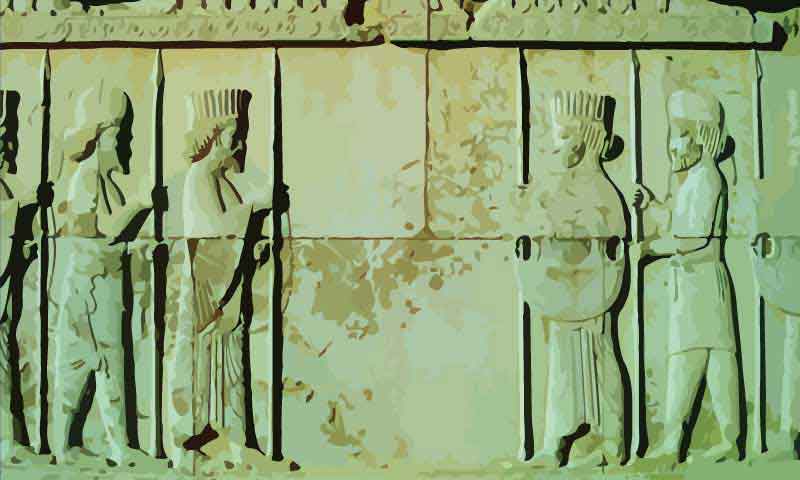
Before we begin, let us contemplate upon these.
The history of Indian thought commences only when the Aryans of Central Asia separated themselves into two groups, the one making through Afghanistan to India and the other spreading over the territory called Iran. (Gilbert Murray)
The Avesta is nearer the Veda than the Veda to its own epic Sanskrit. (Dr. Mills)
Varuna is the god of sky...He is identical with the Greek Ouranos and the Ahuramazda of the Avesta. (S.Radhakrishnan)
Like the Rigvedic Aryans, the ancient Iranians worshipped gods like Mitra, Vayu, Verutraghna.
They also wore the sacred thread and worshipped fire. They had a social classes that were in some ways similar to the Vedic occupation based caste system.
It is believed that Zoroastrianism was preceded in the region by an ancient religion that had some affinity with the Rigvedic religion, and the differences and similarities between Zoroastrianism and Hinduism might be due to the distinction Zoroastrianism tried to establish against its predecessor.
Zoroastrian religion was practiced mostly in Iran, or the ancient Persia. It is probably the oldest, organized, and monotheistic religion with a huge following.
Its founder Zarathustra was born in ancient Iran or adjoining Afghanistan, which was mostly under Persian control. The world Iran is a corrupt form of the word Aryan. This lends credence to the theory that the ancient Iranians probably descended from an Aryans ancestry.
Vedic influence in Persia prior to Zoroaster
The people who lived in Afghanistan and adjoining areas and practiced a form of Vedic tradition prior to the spread of Zoroastrianism had some affinity with those who lived in north western India and worshipped Vedic gods.
Both spoke different dialects of Sanskrit and worshipped several common gods. We have no information as to how the two pastoral communities happened to live side by side with distinct cultures but unmistakable similarities. They probably had a common ancestry but went their ways during their wanderings.
In the Indian subcontinent, climatic changes forced the Vedic people to migrate to greener pastures towards the Gangetic valley. The migration forced them to adapt to new conditions and make some adjustments in their religious beliefs and practices. But the core aspects of the Vedic tradition survived the upheaval.
Those in Iran were less fortunate. With the emergence of Zoroaster and his personal appeal, the ancient Vedic tradition that was practiced in Iran and adjoining areas disappeared largely. Only a few aspects of it survived in the form of ta few influences it left upon Zoroastrianism.
Rivalry
Zoroastrianism was a monotheistic and messianic religion centered around the duality of good and evil and founded on the teachings of its Prophet, Zoroaster. It has very little in common with Hinduism.
Whatever similarities it had in the past with the Vedic religion were mostly cultural and linguistic and stemmed basically from the influences Zoroastrianism inherited from its predecessor.
Zoroaster was no friend of the Vedic tradition that was practiced in India and outside during this time. His chief concern was probably not the Vedic religion per se which was practiced in the Indian subcontinent, but the Vedic tradition of ancient Iran which preceded Zoroastrianism, and which had many identical features with the Vedic tradition of India.
Because of is popularity in the rural areas and nomadic tribes of Iran, it became necessary for Zoroaster to distinguish his teachings from it and set the stage for its demise.
Therefore, the differences between Vedic religion and Zoroastrianism were most likely coincidental, or unintended consequence, rather than intentional. We have no evidence that Zoroaster ever tried to spread his teachings to India.
However, some confrontation might have taken place between the two in the border areas adjoining the Indian subcontinent, which were often under the control of Indians and often the Iranians .
Differences
Whatever may be the reason, the differences between the two traditions are striking, as are the similarities.
The Iranians worshipped Ahura (God). The Indians used a similar name for the demons.
The Indian worshipped devas (gods). The Iranians used a similar name for evil spirits.
Zoroastrians also used the names Rudra and Nasatya as agents of Angira Mainyu, the chief enemy of Ahura Mazda.
According to Zend Avesta, Indra, Sauru and Naonihaitya were evil spirits who tried to kill Zoroaster.
Similarities
However, some gods of the Vedic religion escaped such harsh treatment, namely Yama, Varuna and Mitra.
Yama appears in identical roles in both traditions as the lord of death and ruler of the underworld.
Varuna and Mitra are considered divine entities in Zoroastrianism also. They are associated with sun and moon light, rain, water and plant life.
In Zoroastrian rituals, Mitra is associated with Haoma rites, just as the Moon (Soma) is associated with the Soma sacrifices in the Vedic tradition. While Indra gives company to Soma in Vedic rituals, Varuna gives company to Mitra in the Haoma rituals.
In both tradition, Varuna is considered the upholder and guardian of divine laws, who keeps a close watch upon the worlds through his spies.
Other common features between the two include the following.
1. The Vedic sacrifices are called Yajna and Zoroastrian ones Yasna.
2. Both use fire in their sacrificial ceremonies and consider fire as sacred and auspicious.
3. Vedic tradition has hotr priest Zoroastrianism has Zaotr.
4. Both traditions have similar names for some elements like apah (water), Vayu (air).
5. The celestial beings having musical talents are called Gandharvas in the Vedic tradition and Gandharewa in Zoroastrianism.
6. There were exchange of ideas and scholars between the two traditions. India merchants travelled to Persia and vice versa. Much of the contact happened through Afghanistan and Baluchistan.
7. Persian influence was felt in art and architecture of the Mauryan period.
8. Persian coins were in circulation in some adjoining areas of north western India.
9. The Kharosti script was introduced by Persians and used in north western India until the fourth century A.D.
Decline and destruction of Zoroastrianism
Zoroastrianism declined with in a short span of time in the seventh century AD, with the invasion of Arab Muslims who defeated the Sassanids and destroyed their empire.
The invaders made sure that the religion of the conquered was completely uprooted by destroying the priestly families who were instrumental in preserving and promoting the tradition for long.
As the priestly families disappeared and their patrons were gone, Zoroastrianism declined sharply within a few decades. Many native Iranians submitted to the invaders and changed their religion to save themselves from further destruction. A few escaped to India and sought asylum in the province of Gujarat from a local ruler. This happened around 700 AD.
In course of time, the Iranians who fled their country and settled in India became famous as Parsees. Today the Parsees are an integral part of India's multi religious and multi ethnic society and though they generally do not mingle much with other communities, they have contributed richly to the heritage of Indian society.
Today Zoroastrianism, one of the oldest religions in the world is practiced by less than a million people, most of whom live in India and Iran.
Suggestions for Further Reading
- Hindu Gods - Lord Ganesha
- God and Self in Hinduism
- Goddesses of Hinduism, Their Symbolism and Significance
- Purusharthas in Hinduism
- The History, Antiquity and Chronology of Hinduism
- Ashrama Dharma in Hinduism
- Hinduism and Buddhism
- Death and Afterlife in Hinduism
- Hinduism and Divorce
- Hinduism and Adultery
- Hinduism, Food and Fasting
- The Future of Hinduism
- Good and Evil in Hinduism
- The Hindu Marriage, Past and Present
- What is Maya in Hinduism?
- The Origin and Definition of Hindu
- Hinduism and Polygamy
- Hinduism and polytheism
- Hinduism and Premarital Relationships
- God and Soul, Atma and Paramatma, in Hinduism
- About Suicides in Hinduism
- Religious Tolerance in Hinduism
- Violence and Abuse in Hinduism
- Traditional Status of Women in Hinduism
- Ashtanga Yoga of Patanjali
- About Hanuman or Anjaneya
- Hinduism and Same-sex Marriage
- Perspectives on What Karma Means
- Hinduism - The Role of Shakti in Creation
- Significance of Happiness in Hinduism
- Hindu God Lord Shiva (Siva) - the Destroyer
- The Role of Archakas, Temple Priests, in Hinduism
- Hinduism - Gods and Goddess in the Vedas
- Essays On Dharma
- Esoteric Mystic Hinduism
- Introduction to Hinduism
- Hindu Way of Life
- Essays On Karma
- Hindu Rites and Rituals
- The Origin of The Sanskrit Language
- Symbolism in Hinduism
- Essays on The Upanishads
- Concepts of Hinduism
- Essays on Atman
- Hindu Festivals
- Spiritual Practice
- Right Living
- Yoga of Sorrow
- Happiness
- Mental Health
- Concepts of Buddhism
- General Essays