
Hinduism and Religious Tolerance
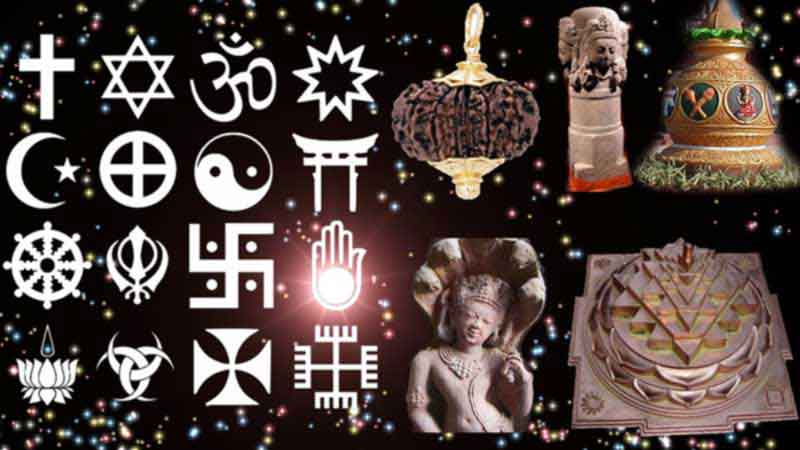
To believe that some people need to be forced or lured or convinced or encouraged or threatened to agree with our religious beliefs and dogmas has been and will always be the cause of the instability of this world - Jayaram V
I do not think God needs me as His salesman or soldier. He wants me to be myself and be that little ripple in the stream of life until it lasts. Jayaram V
What is Hinduism? For the purpose of our discussion, Hinduism means those traditions, belief systems and schools of thought, which originated in India, which do not form part of other major world religions and which regard the Vedas as the final authority in ascertaining spiritual truths. Our knowledge of Hinduism is derived mostly from the Vedas, the Sutras, the Sastras, the epics, the Bhagavadgita and the Puranas. This makeshift definition is necessary to distinguish Hinduism from other religions and examine its relationship with them in the past as well as in the present times.
What is tolerance? In one sense, tolerance means bearing with the disagreeable and the unacceptable. This is negative tolerance. It means you dislike or disagree with something but you put up with it for one reason or the other. That reason may be personal, professional, social, economic, legal or statutory. Technically, this is not tolerance, but a pretense of tolerance. Your heart and soul are not in it, but mentally you resign yourself to accept it. You put up with it out of fear or under duress. This is tolerance for many people.
However, there is another kind of tolerance, which is very positive and divine. It is accepting and respecting willfully the differences that exist in the world as part of God's creation and diversity. It is acknowledging and respecting the subtle nuances and the rich diversity we perceive in God's creation, without being disturbed by them or abandoning our own. It is acknowledging the rights of others to live according to their choices and preferences while respecting our own. It is honoring the ultimate truth that God is all and all are God's numerous manifestations and each aspect of His creation is as sacred and important as ourselves. This kind of tolerances is true tolerance in letter and spirit, which arises from your convictions, beliefs, knowledge, vision, understanding, empathy and compassion. For the purpose of our discussion, we accept this definition of tolerance. It is the kind of tolerance that Hinduism promotes as an essential part of its philosophy and practice.
When intolerance is justified
In Hinduism intolerance towards evil is fully justified. No one should compromise with evil. No one should surrender to evil and no one should tolerate evil. This is the central message of the Bhagavadgita, the two epics and many stories from the Puranas. Traditionally, Hinduism recognizes only two paths: good (dharma) and evil (adharma). The good is represented by the gods and reflected in the knowledge of the Vedas. The evil is represented by the demons and reflected in their philosophy of cruelty, selfishness and violence. Both refer to two distinct lifestyles, worldviews and philosophies with diametrically opposite consequences for those who practice them. The gods live and serve the purpose of creation as their obligatory duty. They help others selflessly. The demons live for themselves and serve themselves. They oppress others with cruelty for control and dominance. In their worldview, the body is the Self and it is perfectly justified to disobey God and live entirely for one's own ends without any consideration for others. The gods, on the other hand obey the laws of God and help the humans to achieve their ends, in exchange for offerings of food.
The battle between the two is eternal in which God always takes the side of the good. The gods oppose evil for the sake of the order and regularity of the worlds and protect Dharma. In this battle, human beings have the choice to follow either of the two. They may nourish the gods in their bodies by living selflessly and dutifully or they may invite demons into them and live purely for selfish ends. Depending upon what they do, they accumulate karma. Good people go to heaven and become immortal. Bad people fall down into worst hells. Those who are partially good and bad go the world of ancestors and return to the earth to take another birth. These are the different options available to humans. The Vedas firmly declare that in your battle against evil there is no place for tolerance or compromise. You cannot let evil gain an upper hand in your mind or body. You cannot let evil thoughts and intentions prevail or accept the ways of evil.
Thus, if there is one aspect about which Hinduism is uncompromisingly intolerant, it is against evil. The scriptures such as the Bhagavadgita clearly draw a straight line between divine and demonic qualities and urge the followers to cultivate godliness as part of their self-transformation.
Evidence of intolerance
It is inappropriate to speak of the intolerance of Hinduism in the same vein as the intolerance of Islam or Christianity towards other religions. The intolerance of Hinduism is mostly symbolic, subtle, scholarly and subdued in both tone and temperament. Hindu scholars in the past often vented their anger and displeasure towards other faiths but mostly in response to the criticism and abuses heaped upon Hinduism by their opponents.
For a long time in its history, in fact, until the beginning of last century, Hinduism had no distinct religious identity. The different traditions and sects within Hinduism competed with one another and acted independently. They dealt with one another in the same manner as they deal with the organized religions such as Buddhism, Jainism, Islam and Christianity. A Vaishnava and Saiva showed the same level of distrust and animosity against one another as they showed against a Buddhist, Jina or Muslim.
While tolerance was the idea projected by many scriptures, the compulsions of reality often prompted people to vent their feelings against other faiths. The scriptures betray the acrimony and discord that prevailed in ancient Indian society among different faith based groups. There were no incidences of violence in religious disputes. But it may be stretching too far to say that they had tolerance for one another. In this regard, the following points are worth mentioning.
1. Religious discussions, debates and argument were common among various religious groups. Often, they ended inconclusively with a lot of unpleasantness on both sides.
2. Each group tried to portray the others in poor light in their writings, often embellishing them with lies, exaggerations and distortions. For example, in some Puranas, Buddhists and Jains are depicted as demons or holding demonic beliefs. The Buddhists followed a similar policy of negative propaganda to highlight the vulnerabilities of Hinduism. They even downgraded the immortal Hindu gods as mere mortals, subject to karma, death and decay.
3. Religious tensions were evident among the various sections of society during the time of Asoka since he converted to Buddhism and stopped patronizing the Brahmanas and the Vedic sacrificial ceremonies. His actions clearly led to a lot of bitterness among those who practiced Vedic dharma.
4. The Sungas who succeeded the Mauryas, after Asoka, were patrons of Vedic religion and markedly against Buddhism. They tried to restore the ancient faith and patronized Brahmanas. It is suggested that they might have even destroyed some Buddhist monasteries.
5. Literary evidence suggests that ancient Indians showed great contempt for the foreign invaders such as the Greeks, Sakas and Pahlavas, equating them with low castes and outcasts. People showed a similar contempt later towards the Muslim and British rulers.
6. While the ancient Indians liked trading with people from the outside world, they did not appreciate any interference in their religious lives. When St. Thomas, a disciple of Jesus, sailed to India, after the death of Jesus, and tried to preach the new doctrine to the native people, he was killed by a mob shortly after his arrival.
7. When Buddhism declined, many caves and religious places belonging to Buddhists were occupied by Hindus and the images and icons of the Buddha were replaced by those of Hindu deities.
8. Hindu laws and customs prohibited contact and communication with foreigners. Travelling to foreign countries by high caste Hindus was declared sinful. Hindu households were not allowed to entertain foreign or Muslim guests since they were considered unclean. In the same manner, marriage relations with them was completely ruled out.
9. The Indian war of 1857 against the British was precipitated partly by religious causes. It was a protest against the British policy of supporting the Christian missionaries in their religious cause and their attempts to disrespect the religious sentiments of native soldiers.
Based upon these points, it is difficult to argue that Hinduism is a hundred percent tolerant religion. By and large, compared to dogmatic religions, it is very lenient in its approach and attitude. Its people also had been remarkably tolerant and peaceful towards others as they are now. However, in this remarkable display of character and conduct, one cannot fail to notice the underlying simmering discontent, voiced often through literary channels and symbolic expressions.
Evidence of tolerance
Whatever intolerance, Hindu scholars displayed towards other religions was subtle and symbolic and most likely was done to present a superior argument in defense of their own faith. Traditionally, Hindus showed their intolerance by withdrawing and avoiding contact with those whom they held in contempt, instead of using violence and aggression to strike fear in their hearts. Hinduism is perhaps the only religion in the world which showed remarkable tolerance towards other religions in difficult times and under testing conditions. Even Buddhism, which spread in India mostly through negative campaigns against Hinduism, cannot claim that credit. Criticizing other religions and showing them in poor light to attract converts to its own fold was never an approved practice in Hinduism. The following points amply prove that Hinduism is incomparable in its tolerance and attitude towards other faiths.
1. In its thousands of years of history, no Indian ruler had ever launched a religious war against other nations.
2. From the earliest times Indian society has been a heterogeneous society in which people belonging to different linguistic, ethnic, social and economic backgrounds lived in harmony, practicing their respective faiths without pressure or interference from others. For most people, faith was a personal choice or family tradition in which others had no role. Even now, people do not mind who worships whom as long as the choices are conventional. However, if a person converts to either Christianity or Islam you may expect disbelief and disapproval from friends and close members of the family mainly because of the social repurcussions of such actions.
3. Interactions and exchange of ideas among scholars of various faiths in the form of debates and discussions was a regular feature of ancient India. Even the Buddha participated in them. In places like Takshasila and Nalanda, which were famous centers of traditional education, people participated in religious debates to improve their knowledge and understanding.
4. The kings of ancient India never enforced their religious beliefs upon people. The strictly followed the policy of non-interference. They built temples and places of worship, practiced their own faith, patronized scholars and spiritual gurus of their choice, but never oppressed those who practiced other faiths.
5. The Bhagavadgita clearly upholds the practice of tolerance. It firmly declares that the paths to God are many and all reach Him only in the end. It also encourages people to practice their own dharma instead of following that of others, even if it is superior. The scripture clearly distinguishes divine qualities from demonic ones and the need to follow virtue and righteousness in one's conduct.
6. Hindus never persecuted religious teachers and spiritual masters who questioned the validity of the Vedas or held unconventional beliefs within Hinduism itself.
7. Spiritual masters like Ramakrishna and Yogananda showed remarkable tolerance in their own teachings and conduct. They upheld all religions, emphasized the importance of communal harmony and drew the attention of people to the similarities between the teachings of Hinduism and other religions.
8. Upon gaining independence, even though the country was partitioned on religious grounds and a vast majority of Indians were Hindus, India opted for secular democracy and provided equal opportunities to people of all religions. Despite many problems and provocations, by and large, Hindus displayed great restraint in their attitude and conduct towards other faiths. A large share of the credit for communal harmony in India goes to Hindus, despite the fact that India had to deal with numerous instances of religious terrorism, missionary zeal and communal violence, which often resulted in widespread destruction of property and loss of life.
9. Despite centuries of oppression, destruction of their temples and religious places and violent religious persecutions, and acts of terrorism a majority of Hindus remain largely friendly and conciliatory towards other faiths without resentment or rancor in their hearts.
10. Hinduism does not actively pursue religious conversions. Underlying this is the belief that a person becomes a Hindu because of past karmas. If a person is not ready, there is no point in trying to convert him and interfere with his karmic destiny.
11. Unlike many nations in the world, where people uniformly practice a monolithic religion, from the earliest times India was a pluralistic society in which people belonging to different ethnic and racial backgrounds practiced numerous faiths without resorting to communal or religious wars. The very fact that Hinduism itself is an amalgamation of numerous traditions proves the point that tolerance was a way of life in ancient India. This would not have happened, had Hinduism been an intolerant religion like Islam or Christianity.
Religious tolerance in modern times
The religious tolerance of present day Hinduism is partly influenced by conventional wisdom and partly by the values of democracy and modern education. Not all Hindus practice religious tolerance equally. On the one end you have the enlightened and knowledgeable ones who want to display extreme tolerance in the face of extreme aggression. On the other end you have those who want to retaliate and answer violence with violence. In between the two groups fall the majority of Hindus with varying degrees of tolerance and intolerance. This group remains largely peaceful and tolerant, but when passions are incited, one can feel their frustration and anger in public and on the social networks. The intolerance of many present day Hindus, in fact, is an acquired trait, learned in response to the intolerance they get to see in other communities. A section of Hindus have reached the end of their threshold of tolerance, holding that enough is enough and it is time Hindus begin to assert themselves and stand united. By and large, Hindus are amiable and peace loving, who display remarkable pride in their religious identity and its historical distinction. They have suffered enough, sacrificed enough and endured enough to understand the agony of religious discord.
Amidst the tumult of discordant voices, they also recognize the importance of living in peace. Many Indians are politically conscious. They display a remarkable knowledge of the world and the events that happen in the other parts of the world. They are well aware of the divisive nature of religion and its adverse effects upon the interests of a nation. Therefore, they understand well that for the order and regularity of a pluralistic society, religious tolerance is a compelling necessity. No country can make progress, if its people remain divided. A majority of Hindus recognize this fact and try to get on with their lives ignoring the stray incidents of communal violence that keep happening in various parts of the world. Social, political and economic compulsions also make tolerance a compelling case for the members of a pluralistic society to follow.
Hinduism is a tolerant and flexible religion. It is free from the oppression of dogma and the pressures of an organized religion. It is very tolerant, lenient and forgiving towards its own followers and gives everyone great freedom to practice their faith according to their convictions and convenience. Today, anyone can join Hinduism and practice it without any official or baptismal ceremony. In a very broad sense, it is a democratic tradition which verges on the side of anarchy. Therefore, the concept of tolerance is nicely integrated in the way of life it upholds.
Suggestions for Further Reading
- Hindu Gods - Lord Ganesha
- God and Self in Hinduism
- Goddesses of Hinduism, Their Symbolism and Significance
- Purusharthas in Hinduism
- The History, Antiquity and Chronology of Hinduism
- Ashrama Dharma in Hinduism
- Hinduism and Buddhism
- Death and Afterlife in Hinduism
- Hinduism and Divorce
- Hinduism and Adultery
- Hinduism, Food and Fasting
- The Future of Hinduism
- Good and Evil in Hinduism
- The Hindu Marriage, Past and Present
- What is Maya in Hinduism?
- The Origin and Definition of Hindu
- Hinduism and Polygamy
- Hinduism and polytheism
- Hinduism and Premarital Relationships
- God and Soul, Atma and Paramatma, in Hinduism
- About Suicides in Hinduism
- Religious Tolerance in Hinduism
- Violence and Abuse in Hinduism
- Traditional Status of Women in Hinduism
- Ashtanga Yoga of Patanjali
- About Hanuman or Anjaneya
- Hinduism and Same-sex Marriage
- Perspectives on What Karma Means
- Hinduism - The Role of Shakti in Creation
- Significance of Happiness in Hinduism
- Hindu God Lord Shiva (Siva) - the Destroyer
- The Role of Archakas, Temple Priests, in Hinduism
- Hinduism - Gods and Goddess in the Vedas
- Essays On Dharma
- Esoteric Mystic Hinduism
- Introduction to Hinduism
- Hindu Way of Life
- Essays On Karma
- Hindu Rites and Rituals
- The Origin of The Sanskrit Language
- Symbolism in Hinduism
- Essays on The Upanishads
- Concepts of Hinduism
- Essays on Atman
- Hindu Festivals
- Spiritual Practice
- Right Living
- Yoga of Sorrow
- Happiness
- Mental Health
- Concepts of Buddhism
- General Essays