The Life of Crows in Urban Areas
Summary: This reflective essay explores how the body becomes the first home of individuality and the foundation of self‑esteem, relationships, and personal identity . It examines how appearance shapes confidence, how personality and inner qualities can compensate for physical limitations, and how deeper still lies the untouched essence of the self. The piece also considers how both worldly and spiritual pursuits often reinforce individuality through desires, distinctions, and attachments. Ultimately, it invites readers to recognize the body’s role while understanding the karmic weight of clinging to name and form.
Recently, a report in the newspapers said that a prominent personality in India sold his expensive car because he saw a crow sitting on it. He took it as a bad omen. It is a sad reflection of how our beliefs shape our perception of the world—and, in the process, how we grow insensitive to the value of human life and the need for compassion toward other living beings.
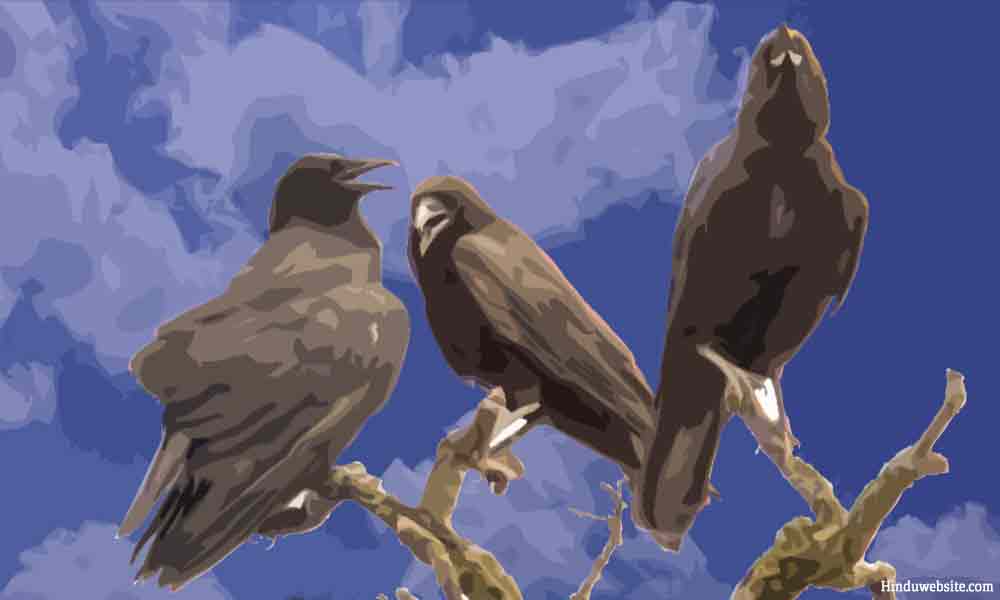
The crow is one of the most common birds of India. They are like the dogs of the air—you see them everywhere in towns and villages. They live amidst people and are accustomed to human presence. If you offer them food, they come quite near you without fear.
It is not clear when they came to be considered a bad omen. There was a time when you would see them in almost every village, an inseparable part of the rural milieu. They would often steal food by entering houses and kitchens. Yet no one seemed bothered if they sat on a wall, landed on a cot or bed, or perched on the roof.
However, rapid urbanization has impacted their natural habitats, just as it has threatened the lives of many birds and animals. High-rise buildings, pollution, traffic noise, overcrowded streets, encroachment on public lands, destruction of forests, and changing weather patterns have made life very difficult for them.
There was a time when birds ruled the skies. Now the equation has changed: we even consider them a nuisance to air travel. Many bird species—not just crows—are on the verge of extinction as their habitats and migratory routes are destroyed. For birds that live amidst people, it is increasingly hard to find a proper place to lay eggs and rear chicks. For them, this is an apocalypse, and most of us do not see the destruction we have been inflicting on so many life forms on Earth.
In the past, crows were a regular presence in cattle sheds and backyards in rural areas. They perched on trees or walls and used every opportunity to declare their presence.
As a child, I thought crows were a generous lot because they were not greedy. Whenever they saw food, they cawed loudly and invited other crows to share it. That, in my opinion, morally puts them above humans. They had a field day on festive occasions, feasting on leftover food from kitchens and utensils left in the open for cleaning. Sometimes they stole food from sheds where cattle were housed. On occasion, one might have considered them a nuisance, but no one really felt bothered by them—or thought that they were inauspicious. I do not recall a single instance where they were considered a bad omen. I do remember that if they cawed in chorus, people believed some relative or guest might visit the household soon.
It is still not clear when crows became a bad omen in India. Bats, vultures, owls, and certain birds that make strange noises at night are certainly considered inauspicious, but crows did not have that kind of reputation in the past. It may be because of their black color, which is considered inauspicious, or because they are associated with Hindu funeral rites.
Hindus have a tradition of offering rice balls to crows as part of the funeral ceremony, after the body of the deceased is cremated with proper rites. If the crows readily eat the food, it means the departed soul is happy with the offerings and ready to depart. If they do not eat, or show reluctance, it means the soul is unhappy and needs some expiation.
Because of this practice, you can see a number of crows in and around cremation grounds. They sit on trees or buildings, waiting for food. People are happy to see them because it helps them complete their rituals. The crows are happy because they are constantly fed; on any given day, there may be at least 10–20 cremations. The people who manage the cremation grounds believe the crows serve an important purpose, and so they let them stay. If you visit these grounds, you will see the crows cawing and declaring their presence. Unfortunately, they are now among the only places in urban areas where crows feel welcome and safe.
However, this seems to have changed how people perceive crows. Birds that once lived mostly in open areas—fields, groves, and open lands—are now found largely in cremation grounds or busy urban environments. It is a sad development because it has altered people’s attitude toward them. If you see crows in the cremation grounds and later on your balcony, you may not feel comfortable with their presence and may want to shoo them away.
The truth is, crows are just another bird species. We cannot project onto them our notions of good or evil. They do no harm to humans, and their lives in urban areas are already in grave danger. It is very likely that, within a few decades, most bird species—including crows—may become extinct as the skies fill with drones, personal flying aircraft, robotic flying machines, radio and wireless towers, and more high-rise buildings, alongside scarce resources and a changing climate.
While we may establish human settlements on Mars, the chances of survival for many species on Earth will become increasingly slim. It is therefore necessary to treat these creatures with compassion and consideration.