White Yajurveda Hymns Index: Books 1–40
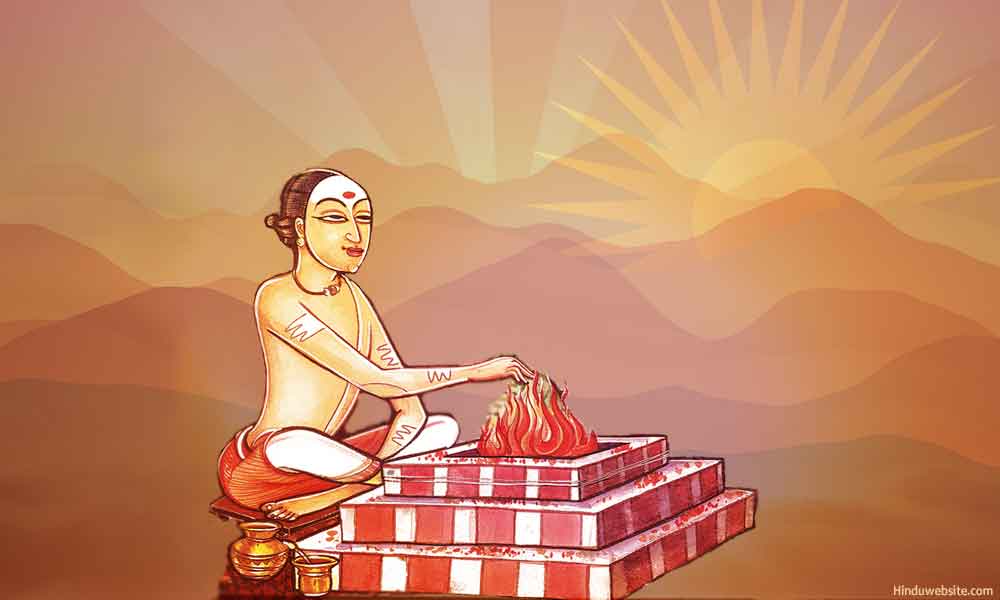
Summary: This index presents a complete listing of hymns, ritual sections, and ceremonial topics found across all forty books of the White Yajurveda. Organized book by book, it outlines the major rites described in the text, including new and full moon sacrifices, fire‑establishment rituals, Soma ceremonies, seasonal offerings, royal consecrations, and the construction of the fire altar. Each entry provides a concise description of the ritual action or formula, allowing readers to navigate the extensive structure of the Vājasaneyī Saṁhitā with clarity. The index serves as a practical reference for understanding the progression of Vedic rites and their symbolic components.
BOOK 1.
New and Full Moon sacrifices1
Removal of the calves 1
The milking 2
Purification of the milk 2
The Vow of Abstinence 2
Preparation of the rice 3
Rice-cake offered to Agni 3
Rice-cake to Agni-Soma 3
Bringing forward the sacrificial waters 4
Purification of the waters 4
Spreading the black-antelope's skin 4
Pounding the rice 5
Putting potsherds on the fire 5
Placing the nether press-stone on the skin 6
Division of the dough: one lump for Agni and one for Agni-Soma 6
Exorcism of the fiend Araru 7
Drawing of lines on three sides of the altar 7
Exorcism of evil spirits 8
Girding the Sacrificer's wife as his associate 8
BOOK 2.
Sprinkling of fuel, altar, and sacred grass 9
Placing of the Prastara or Grass-bunch on the covering grass 9
Laying the enclosing-sticks round the sacrificial fire 9
Kindling the fire 9
Exorcism of fiends 10
Spreading of the Prastara 10
Laying down the three offering-spoons 10
Election of Agni as Hotar 11
Prayers for the protection of the sacrifice 1l
p. iv Anointing the enclosing-sticks 12
Throwing the sticks into the fire 12
The Sacrificer's wife unties the Veda or sacred Grass-bunch 13
Holy water poured on the altar 14
Portion of oblation allotted to Râkshasas 14
The three Vishnu-strides 14
Completion of the Vow of Abstinence 14
Pindapitriyajña or Obsequial Offerings to Ancestral Manes 15
Line drawn to keep off evil spirits 15
Threads, wool, or hair as raiment for the Manes 15
Formula recited by the Sacrificer's wife to obtain a son 15
Water poured on the obsequial cakes 16
BOOK 3.
Agnyâdhâna or Establishment of Sacrificial Fires 17
The Âhavanîya Fire 17
The Dakshinâgni or Southern Fire 17
Agnihotra, morning and evening milk-oblations 18
The Gârhapatya Fire 18, 19 Worship of Agni 18, 19 Address to the Cows 19
The Sâvitrî 21
Worship of the Gârhapatya and Âhavanîya Fires 21
Worship of Agni Purîshya 21
Four-monthly Sacrifices 22
Purificatory Baptism of the Sacrificer and his Wife 22
The Sâkamedha Offerings 23
Worship, with oblation, of Rudra Tryambaka 24
Ceremonial Shaving of the Sacrificer's head 25
BOOK 4.
Soma Sacrifice 26
Apsu-Dîkshâ, Consecration by Water, Baptism 26
Andgrabhana or Uplifting Ceremonies 27
Putting on the Sacrificial Girdle 27, 28 p. v Tying on a black-buck's horn 28
Preparation of Vow-food 28
Hiranyavatî-âhuti, Offering with Gold 29
Reverence to the Soma purchasing Cow 29
Purchase of Soma plants 31
Introduction of Soma 33
BOOK 5.
Âtithya, or Ceremonial Reception of Soma 34
Tânûnaptra, or Invocation of Agni Tanûnapât 34
Minor Consecration 35
Âpyâyana, Sprinkling of the Soma plants 35
Upasads, Reverential Services 35
Marking out the lines of the Soma altar 36
Providing earth for the High Altar 36
Anointing of the four corners of the Altar place 36
Construction of Havirdhânas or Soma cart sheds 37
Construction of the Priests’ Shed, the Pressing-place, and Dhishnyas 37
Preparation of the Uparavas or sound-holes 38
Erection of the Udumbara Poet in the Priests’ Shed 39
Enclosing of the Priests’ Shed with mats 40
Consecration of the Dhishnyas 40
Laying fire on the Âgnîdhra hearth 42
Deposition of Pressing-stones, Soma trough, and Soma vessels 42
Deposition of the Soma plant on a black-antelope's skin 42
Animal Sacrifice 42
Preparation of the Yûpa or Sacrificial Stake 42
BOOK 6.
Erection of the Stake 44
Binding and Slaughtering of the Victim 45
Roasting and offering of the omentum and flesh 47
Symbolical re-uniting of the separated portions 47
Dismissal of the re-united Victim to Heaven 48
Soma Sacrifice 48
p. vi The Vasatîvarî water, to be used in the Soma-pressing 48
Taking the Soma plants from the cart and laying them on the pressing-stones 48
The Morning Pressing 49
The Upâmsu Press stone 49
The Nigrâbhyâ Water 49
Beating the Soma 50
BOOK 7.
Grahagrahana, Drawing Cups of Soma 51
Upâmsu Graha 51
Antaryâma Graha 51
Aindra-Vâyava Graha 52
Maitrâ-Varuna Graha 52
Âsvina Graha 52
Sukra Graha 53
Manthin Graha 53
Âgrayana Graha 54
Ukthya Graha 55
Dhruvâ Graha 55
Viprud-Homa, or Drop Oblation 55
Avakâsa Formulas 56
Ritu Grahas, Libations to the Seasons 56
Aindrâgna Cup 57
Vaisvadeva Cup 57
The Midday Pressing 57
Marutvatîya Cups 57
Mâhendra Graha, Cup for Mahendra 58
Dâkshina-Homa, Oblation in the Southern Fire 58
Address to the Guerdon-Cows 59
BOOK 8.
The Third or Evening Pressing 60
Âditya Graha or Libation to the Âdityas 60
Sâvitra Graha, or Libation to Savitar 60
Mahâvaisvadeva Cup, or Libation to the Great All-Gods 61
p. vii Pâtnîvata Cup, or Libation to Soma 61
Pâtnîvata Cup, or Libation to Agni 61
Hâriyojana Cup, a Libation to Indra 61
Splinters of the Sacrificial Stake thrown on the fire 62
Samishtayajus Ceremonies 62
Avabhritha, or Purifying Bath 64
Offering of the Vasâ, or Sacrificial Cow 61
Offering of the Embryo Calf 64
Additional Soma Sacrifices 65
Shodasî 65
Dvâdasâha 65
Atigrâhyas 65
Gavâmayana 66
Gargatrirâtra 66
Mahâvratîya Graha 67
Adâbhya Graha 67
Sattrotthâna, or Rising from a Sacrificial Session 63
Rectifying and Expiatory Formulas 68
BOOK 9
The Vâjapeya, or Draught of Strength 71
Cups of Soma 71
Cup of Surâ 71
Chariot-race 72
Sprinkling and harnessing the horses 72
Beating the Drum 73
Address to the Horses 74
Twelve Oblations, one for each Month 74
Six Oblations, one for each Season 75
Enthronement of the Sacrificer 75
Vâjaprasavanîya, or Strength furthering, Oblations 75
Ujjitis, or Victory Formulas 76
The Râjasûya, or King's Inauguration 77
Preliminary Oblations 77
Apâmârga, or Exorcising, Oblation 77
Oblations to the Eight Devasûs or Furthering Gods 78
Presentation of the King to the People 78
p. viii
BOOK 10.
The Abhisheka, Aspersion, or Consecration 79
Collection of the Consecrating Waters 79
Spreading the Tiger-skin 80
Robing with the Consecration Garments 81
Presentation of the Three Arrows 81
Formulas announcing and introducing the King 81
Ascending the Quarters 82
Sprinkling with Holy Water 83
The Capture of the Cows 83
Rathavimochanîya, or Car-unharnessing, Oblations 84
The Throwing of the Dice 84
The Dasapeya Libations 85
Samsrip, or,Creeping, Oblation 85
The Sautrâmanî 85
BOOK 11.
Agnichayana, Building of the Fire Altar 87
Taking up the Spade 88
Address to the Victims 83
The Clay Lump, representing Agni 89
Digging round the Clay Lump 91
The Lotus-leaf 91
Forming the Fire-pan 95
Address to the Fire-pan 96
Placing the Fire-pan on the Âhavanîya Fire 97
Address to Agni Purîshya 97
BOOK 12.
Raising the Ukhya, or Fire-pan, Agni, and setting it on a seat 100
The Sling in which the Ukhya Agni is to be carried about 100
The Vishnu-strides 101
The Vâtsapra Rite 102
Vanîvâ hanam, or Driving Hither and Thither of Agni 103
Construction of the Gârhapatya Hearth 105
Preparation of the Ground 105
p. ix Laying the Bricks 106
Throwing the Ukhya Agni on the Hearth 107
The Altar of Nirriti 107
Preparation of the Site of the Fire Altar 109
Ploughing the Ground 109
Watering and Sowing 109
Address to the Plants 109
The first Layer of Bricks 112
Spreading Sand on the Altar 113
Address to the Fires 113
BOOK 13.
The Lotus Leaf 114
The Piece of Gold 114
The Golden Man 114
The Porous Brick 116
The Dûrvâ Grass 116
The Dviyajus Bricks 117
The Retahsich Bricks 117
The Ritavyâ Bricks 117
The Ashâdhâ or Invincible Brick 117
The Tortoise 118
The Pestle and Mortar 118
The Fire-pan 119
The Victims’ Heads 119
The Gold Splinters 119
Worship of the Unfinished Altar 121
Apasyâ Bricks 122
Chhandasyâ Bricks 122
Prânabhrit Bricks 122
BOOK 14.
The Second Layer 124
Âsvinî Bricks 124
Ritavyâs 124
Vaisvadevis 125
Prânabhritas 125
Vayasyâs 125
The Third Layer 126
p. x Central Porous Brick 126
Disyâs 126
Visvajyotis 126
Ritavyâs (Nabhas and Nabhasya) 126
Ritavyâs (Isha and Ûrja) 127
Prânabhritas 127
Chhandasyâs 127
Vâlakhilyâs 127
The Fourth Layer 128
Stomas 128
Spritas 129
Ritavyâs 129
Srishtis 129
BOOK 15.
The Fifth Layer 131
Asapatnâs 131
Virâjas 131
Stoma-bhâgâs 132
Nâkasadas 132
Pañchachûdâs 123
Chhandasyâs 134
Gârhapatya Hearth 133
Punaschiti 138
Ritavyâs 139
Visvajyotis 139
Lokamprinâs 139
Vikarnî 139
Porous Brick 139
Scattering Bits of Gold on the Altar 139
BOOK 16.
The Satarudriya 140
BOOK 17.
Taking Possession of the Altar 148
Frog, Avakâ, and Bamboo-shoot 148
Mounting the Altar 149
Oblation to Agni on the chief Porous Brick 149
p. xi Sprinkling the Altar with curds, honey and butter 150
Oblations in the Hall Door Fire 150
Prayer to Indra as. God of Battles 152
Erection of the Variegated Stone 156
Mounting the Altar 156
Oblation of Milk from a Black Cow with a White Calf 157
Laying three Logs on the Fire 157
Oblations to Agni 158
Offering of Seven Rice Cakes to the Mutate 158
Eulogy of Ghrita 159
BOOK 18.
Consecration Service for Agni as King 162
Vasordhârâ, or Stream of Riches 162
Ardhendra, or Half-Indra, Oblations 163
Three sets of Grahas 164
Yajñakratus, or Sacrificial Rites 164
Enumeration of Stomas or Hymns of Praise 165
Age Libations 165
Name Libation 165
Kalpa, or Success, Libation 165
Vâjaprasavîya, or Strength-furthering, Libations 166
Râshtrabhrit, or Kingdom supporting, Libation 166
Oblations on the Head of the War-chariot 167
Wind Oblations 167
Lustrous Oblations 167
Arkâsvamedha-santati Oblations 168
Agniyojana, or Equipment of Agni 168
Samishtayajus, or Final Sacrificial, Oblations 169
Homage to the completed Fire Altar 170
Symbolical Meaning of the Construction of the Fire Altar 171
BOOK 19.
The Sautrâmanî 172
Milk Libations to the Asvins, Sarasvatî, and Indra 173
Purification of the Sacrificer 173
p. xii The Identification of the Sautrâmanî with Soma Sacrifice 174
Transubstantiation of the Surâ or Wine 176
Libations of Surâ in the Southern Fire 177
Oblation and Prayer to the Fathers 177
The Hundred-holed Jar of Surâ 177
Oblations to the Fathers 178
Residue drunk by the Sacrificer 179
Formulas addressed to the Somavat Fathers 179
Formulas addressed to the Barhishads 180
Formulas addressed to the Agnishvâttas 180
Prayer to Fathers of all Classes 181
Address to Agni 182
Address to Indra 182
Verses illustrative of Separation and Rejection 182
Thirty-two Oblations of Fat or Marrow 183
Re-creation of Indra 184
BOOK 20.
The Âsandî or Sacrificer's Seat 186
Sprinkling of the Sacrificer with Libation-fat 186
The Sacrificer's Benediction on all Parts of his Body 186
Further Self-benedictory Formulas 187
The Avabhritha or Purificatory Ceremony 187
Prayers for Remission of Sin 187
Laying Fuel on the Âhavanîya Fire 188
Mixing Surâ with Soma 189
Offering of a Rice Cake to Indra 189
The Thirty-third Oblation of Fat or Marrow 189
Inhaling the Odour of the Remains of the Oblation 190
Âprî Hymn 190
Invitation of Indra to the Sacrifice 190
Further Address to Indra 191
Praise of the Asvins and Sarasvatî 192
Prayer to Agni 195
Praise of Sarasvatî 195
Invitation to Indra and the Asvins 195
p. xiii
BOOK 21.
Offering of a Rice Cake and prayer to Varuna 196
Prayer to Agni as Mediator 196
Prayer and Oblation to Aditi 196
Oblations to Mitra and Varuna as Rain-Gods 196
A Propitiatory Hymn in honour of Indra 197
Benedictions on Indra 198
Directions to the Hotar to worship various Deities and Sacred Objects 199
Benedictions on Indra 202
Conclusion of the Santrâmanî Ceremony 204
BOOK 22.
The Asvamedha or Horse-Sacrifice 205
Investing the Sacrificer with the Gold Ornament 205
Address to the Ornament 205
Girding and Sprinkling of the Horse 205
Symbolical Slaughter of a Dog 205
Offering of Oblations to Ten Deities 205
Homage to the Horse 205
Prayers and Oblations to Savitar 205
Inviting Verses to Agni 206
Eulogy of the Horse 206
Protection invoked for the Horse 206
Oblations and Homage to Prajâpati and Other Deities 207
The King's Prayer for Blessings on his Kingdom 208
Homage and Oblations to Gods and deified Objects 208
Homage to the Genii of Numbers 209
BOOK 23.
Ceremonies after return of the Horse 210
Offering of two Mahiman Libations 210
Harnessing the Horse 210
Bathing the Horse 210
Anointing and Decking the Horse 211
A Brahmodyam 211
Binding the Horse to the Stake 211
Slaughter of the Horse 212
Circumambulation of the Horse 213
Ceremony performed by the Chief Queen 213
Marking the lines of dissection 213
A Brahmodyam 213
Mahiman Libation to Prajâpati 217
BOOK 24.
Enumeration of Animals to be tied up 218
BOOK 25.
Continuation of the Horse Sacrifice 224
Oblations of the roasted flesh 224
Inviting and Offering Verses to Prajâpati 226
Inviting and Offering Verses to the All-Gods 226
The Eulogy of the Horse 227
Conclusion of the Sacrifice 230
BOOK 26.
Supplementary Texts and Formulas connected with various sacrifices 231
BOOK 27.
Supplementary Texts and Formulas continued 235
BOOK 28.
BOOK 29.
Supplementary Texts and Formulas of the Asvamedha or Horse-Sacrifice 247
Praise of the Home as identified with the Sun 248
An Âprî hymn 250
Eulogy of the Bow and Implements of War 251
Supplement to the List of Victims in Book XXIV 254
BOOK 30.
The Purushamedha or Human Sacrifice 255
Enumeration of Victims, men and women, to be dedicated to various Deities and Abstractions 255
BOOK 31.
The Purushamedha continued 260
The Purushasûkta 260
Glorification of the First Performer of the Purushamedha 263
BOOK 32.
Texts and Formulas of the Sarvamedha or Sacrifice for Universal Success and Prosperity 264
Eulogy of the Sacrificer 265
Prayer for Wisdom and Glory 266
BOOK 33.
Continuation of the Sarvamedha Formulas 267
A Litany addressed to Agni 267
Glorification of Indra 269
Glorification, with Libations, of Sûrya 271
Unconnected verses in praise of various Deities 274
BOOK 34.
The Sivasankalpa Upanishad 280
Miscellaneous Texts suitable for the General Sacrifice 280
Prayer to Bhaga 284
Praise of Pûshan 285
Investiture with a Golden Ornament 286
Prayer to Brahmanaspati 247
BOOK 35.
Formulas, connected with the Pitriyajña or Sacrifice to the Fathers or Ancestral Manes, to be used at funeral ceremonies 288
Purificatory and benedictive Formulas 289
BOOK 36.
Preliminary Formulas of the Pravargya Ceremony 291
BOOK 37.
Formulas to be used at the performance of the Pravargya 293
Fumigation of, and addresses to, the three Caldrons 294
Circumambulation of the Mahâvîra 295
The Rauhina Oblation 296
BOOK 38.
Continuation of the Pravargya Formulas 297
Calling and milking of the Cow 297
Anointing of the Mahâvîra 299
Address to Agni represented by the Mahâvîra 299
Remains of the contents drunk by Sacrificer and Priests 300
BOOK 39.
Expiatory Formulas to remedy any defect in the performance of the Pravargya Ceremony 301
Various Deities represented by the Mahâvîra 301
Names of seven Maruts or Storm-Gods 302
Propitiation of various Deities 302
The Object of the Pravargya 302
BOOK 40.
The Îsâvâsyam or Îsopanishad 304
Îs, Lord, Soul of All, the only Absolute Reality 304
Renunciation and Religious Works or Karma 304
The Âtmâ or Self 305
Sambhûti and Asambhûti 306
Sambhava and Asambhava 306
Sambhûti and Vinâsa 306
Nescience and Science 307
The Prayer of the dying Devotee 307
Excursus on the Îsopanishad 308
Source:Reproduced from the Texts of the White Yajurveda, tr. Ralph T.H. Griffith, [1899]. The text has been reformatted by Jayaram V for Hinduwebsite.com. This hymns have been divided into two parts at Hinduwebsite.com for convenience, books 1to 20 in part 1 and books 21-40 in part 2. The content section has been placed at the beginning of each part for easy reference and the same have been linked to the page numbers and book heading. While certain pages have been omitted from the online copy presented here such as the title page and the cover page, the index of hymns and verses from the Rigveda and the Athrvaveda has been presented in one page along with the preface for reader's convenient. While all possible care has been taken to reproduce the text accurately, we cannot guarantee the accuracy or the authenticity of the text produced. We strongly recommend referring the original copy of the book for serious study and academic projects and use this text for general reading and understanding.