Why Was Arjuna was Chosen For Bhagavadgita Discourse?
Bhagavadgita Wisdom Index Page
Summary: Find out why Arjuna was especially chosen by Lord Krishna to deliver the message of death and liberation in the middle of a battlefield.
Notes: I have translated the Bhagavad Gita three times. The first one was a loose translation. The second one was a word-to-word translation in 2013 with detailed commentary. The third attempt was made in 2025, rewriting the 2013 commentary entirely. The writings in this section are different from the commentary I wrote. Here, I intend to share with you, occasionally, my reflections on the knowledge, philosophy, and wisdom of the Bhagavad Gita from a spiritual perspective as a long series. Jayaram V
Arjuna was one of the five Pandavas brothers who, participated in the war, besides the best of the warriors who lived in India at that time. In that war everything was put to test. A chapter in the history of human civilization was about to close and new chapter and a new era was about to begin, because as we understand from the Bhagavadgita, the war was meant to wipe out evil and restore Dharma, for which a great destruction was required. Hence, every warrior of some renown was destined to participate in the great war on the side of either the Pandavas or the Kauravas.
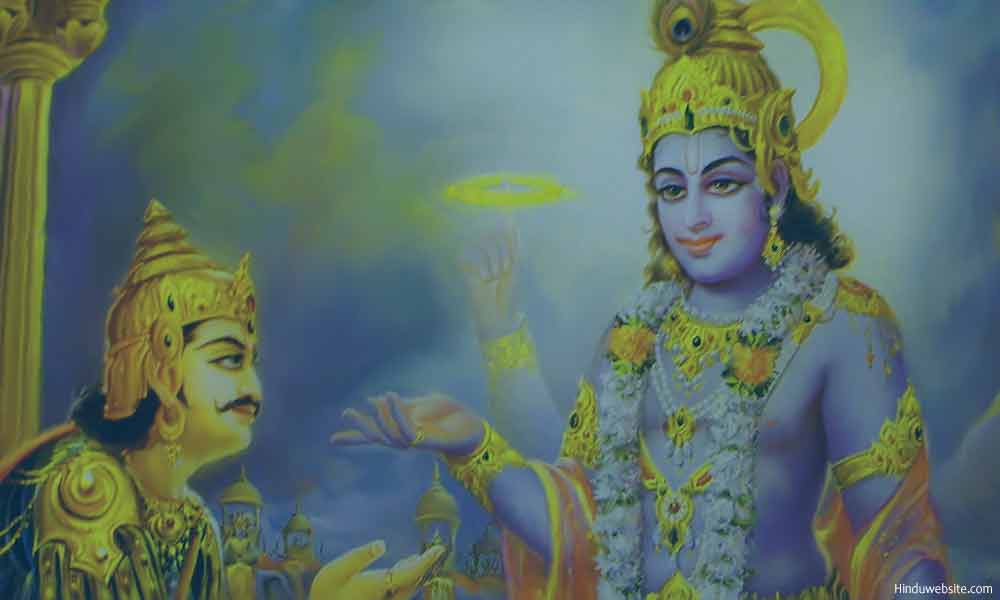
However, the knowledge of the Bhagavadgita was received by only Arjuna directly from Krishna. The rest of the people who were in that battlefield were witnessing the event but did not know what was going on. Apart from Arjuna, only Sanjaya and Dhritarashtra were able to receive the knowledge. There were warriors who had more spiritual and moral strength than Arjuna. There was Dharmaraja, the epitome of virtue and duty. Bhima was there, the one who actually killed all the 100 Kauravas, including Duryodhana.
The reason Arjuna was chosen because he was closest to Krishna and was receptive to the advice. Secondly, he was a warrior of great virtue and possessed the qualities of a sincere devotee. Thirdly, he was fighting the war for a right cause, not for himself but to help his brother regain the kingdom and his lost prestige. Fourthly, he was the personification of Indra himself, the lord of the heavens, who, as the lord of the senses, represents the mind in the human body. The mind is the most important aspect of the human personality. It is the mind that needs to be convinced about anything.
The Bhagavadgita knowledge is meant for the mind only for the eventual liberation of the Self. Fifthly, Arjuna was destined to face moral dilemmas as he would be killing some of the best warriors on the enemy side, towards whom he had great respect. He had to slay his own teacher, Drona, his grandfather, Bhishma, who was a great warrior, and Karna who was a person of great virtue and was renowned as a great warrior.
In all these slayings, he would be using some doubtful and deceptive means to accomplish his task, as each of the three was endowed with exceptional powers and divine boons. If he wavered or faltered in his duty, the course of the war would be different. Finally, it also appears that, unlike Dharmaraja, the eldest of the brothers, Arjuna was not endowed with the right knowledge of Dharma. Bhima was even less knowledgeable.
However, he was filled with feelings of revenge and with an unshakeable resolve to settle scores with each of the Kauravas who insulted his wife and brothers and later subjected them to innumerable sufferings and humiliations. Arjuna did not have the same kind of resolve and he had his own doubts about the war and its moral justification.