The Fourth Noble Truth: Path to Liberation
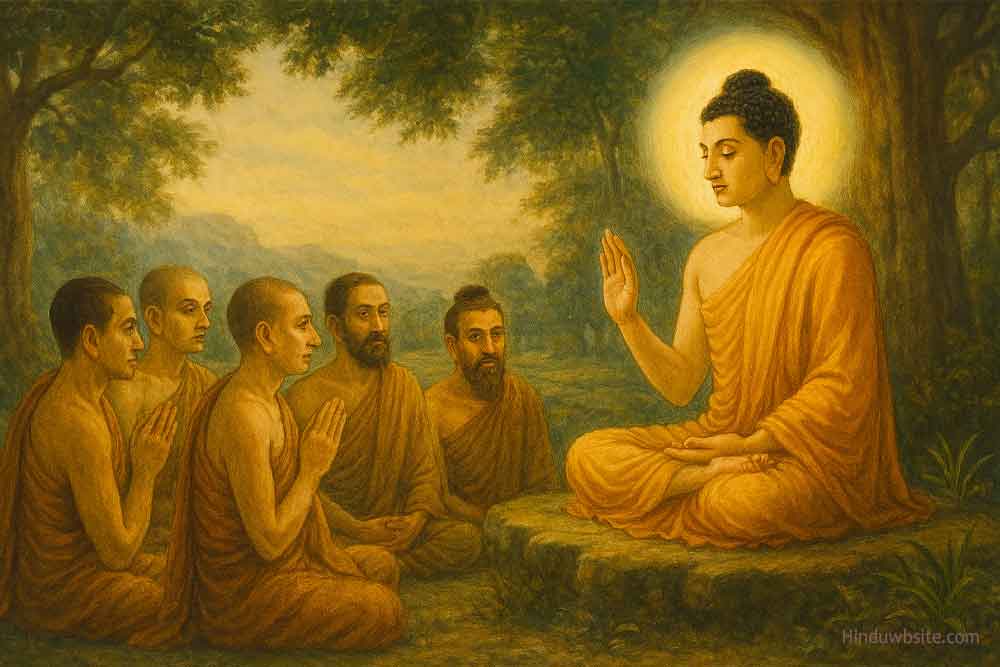
Summary: This page explains the Fourth Noble Truth - the Noble Eightfold Path as the practical method to end suffering. The Buddha presented this as the Middle Path between extreme asceticism and sensual indulgence, describing it as "an ancient road, traveled by the Rightly Self-awakened Ones of former times." The eight factors are: Right View (seeing in line with truth), Right Resolve (thinking toward well-being), Right Speech (speaking truthfully), Right Action (correct conduct), Right Livelihood (honest maintenance), Right Effort (exertion toward good), Right Mindfulness (constant awareness), and Right Concentration (properly centered mind). The teaching emphasizes that the path requires both practice and proper intellectual understanding, with right understanding itself being part of the practice. The Four Noble Truths constitute the doctrine while the Eightfold Path constitutes the practice - two sides of the eternal dhamma. Following this path with vigor leads practitioners to liberation from birth and death, suitable for people of all ages, creeds, and nationalities.
And this, monks, is the noble truth of the way of practice leading to the cessation of dukkha: precisely this Noble Eightfold Path: right view, right resolve, right speech, right action, right livelihood, right effort, right mindfulness, right concentration.
The Buddha suggested to the suffering humanity the ultimate solution to end all suffering. Suffering could be ended by following vigorously the principles of the eightfold path through right view, right resolve, right speech, right action, right livelihood, right effort, right mindfulness and right concentration. In his age and time it was a great revelation, a profound and timeless solution that could be followed by people of all ages, creeds and nationalities. What he suggested was a simple and easy path to follow, which was based on focused thinking, mindfulness, virtuous living and discretionary behavior that would lead a practitioner to liberation from the bonds of birth and death.
I saw an ancient path, an ancient road, traveled by the Rightly Self-awakened Ones of former times. And what is that ancient path, that ancient road, traveled by the Rightly Self-awakened Ones of former times? Just this noble eightfold path: right view, right resolve, right speech, right action, right livelihood, right effort, right mindfulness, right concentration..."
The Buddha did not preach extreme adherence to austerity and self-inflicted physical torture in the practice of virtuous life, a practice that was widespread among the spiritual practitioners of his time. He realized that following the extremes of life was not conducive to the liberation of a person and that it was neither by indulging in sensuous cravings and pleasures, nor by subjecting oneself to painful, unholy and un-profitable self-torture, one could hope to achieve freedom from suffering and rebirth. He suggested the ancient Middle Path, "an ancient road, traveled by the Rightly Self-awakened Ones of former times", to be more effective for attaining peace and Nirvana. And he declared:
I followed that path. Following it, I came to direct knowledge of birth... becoming... clinging... craving... feeling... contact... the six sense media... name-&-form... consciousness, direct knowledge of the origination of consciousness, direct knowledge of the cessation of consciousness, direct knowledge of the path leading to the cessation of consciousness. I followed that path.
Following it, I came to direct knowledge of fabrications, direct knowledge of the origination of fabrications, direct knowledge of the cessation of fabrications, direct knowledge of the path leading to the cessation of fabrications. Knowing that directly, I have revealed it to monks, nuns, male lay followers & female lay followers, so that this holy life has become powerful, rich, detailed, well-populated, wide-spread, proclaimed among celestial & human beings.
The Eightfold path is the Middle Path, at the end of which is the door to Nirvana. It consists of Right Understanding, Right Mindedness, Right Speech, Right Action, Right Living, Right Effort, Right Attentiveness and Right Concentration. This is the middle path which the Buddha discovered and preached.
The Four Noble Truths constitute the doctrine, while the Eightfold Path constitute the practice. They are like the two sides of the eternal dhamma.
To follow the Noble Eightfold Path is a matter of practice rather than intellectual knowledge, but to apply the path correctly it has to be properly understood. In fact, right understanding of the path is itself a part of the practice. It is a facet of right view, the first path factor, the forerunner and guide for the rest of the path. Thus, though initial enthusiasm might suggest that the task of intellectual comprehension may be shelved as a bothersome distraction, mature consideration reveals it to be quite essential to ultimate success in the practice.
In the worlds of Ajaan Lee Dhammadharo, the Buddha's teachings and their practice can be summed up in the following eight factors
- Right View: seeing in line with the truth.
- Right Resolve: thinking in ways that will lead to well-being.
- Right Speech: speaking in line with the truth.
- Right Action: being correct and upright in one's activities.
- Right Livelihood: maintaining oneself in ways that are honest and proper.
- Right Effort: exerting oneself in line with all that is good.
- Right Mindfulness: always being mindful of the person or topic that forms one's point of reference.
- Right Concentration: keeping the mind correctly centered in line with the principles of the truth, not letting it fall into the ways of Wrong Concentration. ****