
Mahanirvana Tantra - Chapter 14
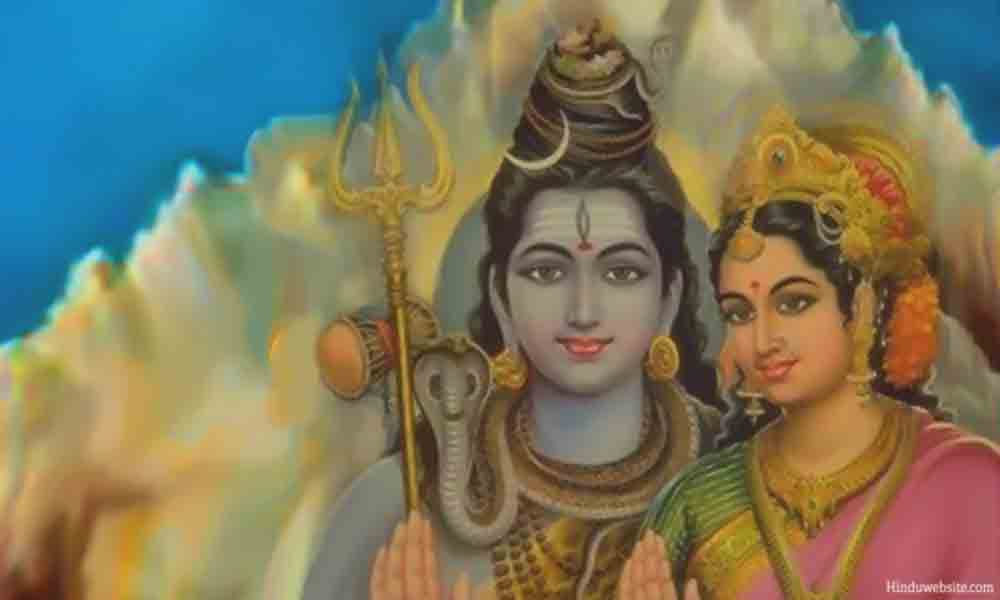
The Consecration of Shiva-linga and Description of the Four Classes of Avadhutas
SHRI DEVI said:
I am grateful to Thee, O Lord of Mercy! in that Thou hast in Thy discourse upon the Worship of the Adya Shakti, spoken, in Thy mercy, of the mode of Worship of various other Devas (1).
Thou hast spoken of the Installation of a Movable Shiva-linga, but what is the object of installing an immovable Shiva-linga, and what are the rites relating to the installation of such a Linga? (2).
Do Thou, O Lord of the Worlds! now tell Me all the particulars thereof; for say, who is there but Thee that I can honour by My questions anent this excellent subject? (3).
Who is there that is Omniscient, Merciful, All-knowing, Omnipresent, easily satisfied, Protector of the humble, like Thee? Who makes My joys increase like Thee? (4).
Shri Sadashiva said:
What shall I tell Thee of the merit acquired by the installation of a Shiva-linga? By it a man is purified of all great sins, and goes to the Supreme Abode (5).
There is no doubt that by the installation of a Shiva-linga a man acquires ten million times the merit which is acquired by giving the world and all its gold, by the performance of ten thousand horse-sacrifices, by the digging of a tank in a waterless country, or by making happy the poor and such as are enfeebled by disease (6-7).
Kalika! Brahma, Vishnu, Indra, and the other Devas reside where Mahadeva is in His linga form (8).
Thirty-five million known and unknown places of pilgrimage and all the holy places abide near Shiva. The land within a radius of a hundred cubits of the linga is declared to be Shiva-kshetra (9-10).
This land of Isha is very sacred. It is more excellent than the most excellent of holy places, because there abide all the Immortals and there are all the holy places (11).
He who in a devout spirit lives there, be it even for but a little while, becomes purged of all sins, and goes to the heaven of Shangkara after death (12).
Anything great or small (meritorious or otherwise) which is done in this land of Shiva becomes multiplied (in its effect) by the majesty of Shiva (13).
All sins committed elsewhere are removed (by going) near Shiva, but sins committed in Shiva-kshetra adhere to a man with the strength of a thunderbolt (14).
The merit acquired by the performance there of Purashcharana, japa, acts of charity, Shraddha, tarpana, or any other pious acts is eternal (15).
The merit acquired by the performance of a hundred Purashcharana at times of lunar or solar eclipse is acquired by merely performing one japa near Shiva (16).
By the offering of Pinda once only in the land of Shiva, a man obtains the same fruit as he who offers ten million pindas at Gaya, the Ganges, and Prayaga (17).
Even in the case of those who are guilty of many sins or of great sins attain the supreme abode if Shraddha be performed in their names in the land of Shiva (18).
The fourteen worlds abide there where abides the Lord of the Universe in His Linga form with the auspicious Devi Durga (19).
I have spoken a little about the majesty of the immovable Mahadeva in His linga form. The mahima of the Anadi-linga is beyond the power of words to express (20).
O Suvrat! even in Thy worship at the Mahapithas the touch of an untouchable is unclean, but this is not so in the worship of Hara in His linga image (21).
O Devi! as there are no prohibitions at the time of Chakra worship, so know this, O Kalika! that there are none in the holy shrine in Shiva s land (22).
What is the use of saying more? I am but telling Thee the very truth when I say that I am unable to describe the glory, majesty, and sanctity of the linga image of Shiva (23).
Whether the Linga is placed on a Gauri-patta or not, the worshipper should, for the successful attainment of his desires, worship it devoutly (24).
The excellent worshipper earns the merit of (performing) ten thousand horse-sacrifices if he performs the Adhivasa of the Deva in the evening previous to the day of installation (25).
The twenty articles to be used in the rite of Adhivasa are: Earth, Scent, a Pebble, Paddy, Durvva grass, Flower, Fruit, Curds, Ghee, Svastika, Vermillion, Conch-shell, Kajjala, Rochana, White Mustard Seed, Silver, Gold, Copper, Lights, and a Mirror (26-27).
Taking each of these articles, the Maya Vija and the Brahma-Gayatri should be repeated, and then should be said "Anena" (with this) and "Amushya" (of this one s or his or hers) "may the auspicious Adhivasa be" (28).
And then the forehead of the worshipped divinity should be touched with the earth and all other articles aforesaid. Then Adhivasa should be performed with the Prashasti-patra that is, the receptacle should be lifted up, and with it the forehead of the image should be touched three times (29).
The worshipper conversant with the ordinances, having thus performed the Adhivasa of the Deva, should bathe the deity with milk and other liquids, as directed in the ceremony relating to the dedication of a temple (30).
Rubbing the linga with a piece of cloth and placing it on its seat, Ganesha and other Deities should be worshipped according to the rules prescribed for their worship (31).
Having performed Kara-nyasa and Anga-nyasa and Pranayama with the Pranava, the ever-existent Shiva should be meditated upon.
Dhyana
As tranquil, possessed of the effulgence of ten million Moons; clothed in garments of tiger-skins; wearing a sacred thread made of a serpent; His whole body covered with ashes; wearing ornaments of serpents; His five faces are of reddish-black, yellow, rose, white, and red colours, with three eyes each; His head is covered with matted hair; He is Omnipresent; He holds Ganga on His head, and has ten arms, and in His forehead shines the (crescent) Moon; He holds in His left hand the skull, fire, the noose, the Pinaka, and the axe, and in His right the trident, the thunderbolt, the arrow, and blessings; He is being praised by all the Devas and great Sages; His eyes half-closed in the excess of bliss; His body is white as the snow and the Kunda flower and the Moon; He is seated on the Bull; He is by day and night surrounded on every side by Siddhas, Gandharvas, and Apsaras, who are chanting hymns in His praise; He is the husband of Uma; the devoted Protector of His worshippers (32-38).
Having thus meditated upon Mahadeva and worshipped Him with articles of mental worship, He should be invoked into the Linga, and worshipped to the best of one s powers, and as laid down in the ordinances relating to such worship (39).
I have already spoken of the Mantras for the giving of Asana and other articles of worship. I shall now speak of the Mula Mantra of the Great Mahesha (40).
Maya, Tara, and the Shabda Vija, with Au and Ardhendu-Vindu added to it, is the Shiva Vija that is, "Hring Ong Haung." (41).
Covering Shangkara with clothes and garland of sweet-smelling flowers, and placing Him on a beautiful couch, the Gauri-patta should be consecrated in manner above-mentioned (42).
The Devi should be worshipped in the Gauri-patta according to the following rites: with the Maya Vija, Anga-nyasa, Kara-nyasa, and Pranayama should be performed (43).
The Great Devi should, to the best of the worshipper s ability, be worshipped after meditation upon Her as follows:
Dhyana
I meditate upon the stainless One, Whose splendour isthat of a thousand rising Suns, Whose eyes are like Fire, Sun and Moon, and Whose lotus face in smiles is adorned with golden earrings set with lines of pearls. With her lotus hands She makes the gestures which grant blessings and dispel fear, and holds the discus and lotus; Her breasts are large and rounded; She is the Dispeller of all fear, and She is clothed in saffron-coloured raiments.
Having thus meditated upon Her, the ten Dikpalas and the Bull should be worshipped to the best of one s powers (44-45).
I will now speak of the Mantra of the Bhagavati, by which the World-pervading One should be worshipped (46).
Repeating the Maya, Lakshmi Vijas, and the letter which follows Sa with the sixth vowel, with the Vindu added to it, and thereafter uttering the name of the Wife of Fire, the Mantra is formed (which is as follows):
Mantra
Hring Shring Hung Svaha (47).
Placing the Devi as aforementioned, offerings should be made to all the Devas with a mixture of Masha beans, rice, and curds, with sugar, etc., added to it (48).
These articles of worship should be placed in the Ishana corner, and purified with the Varuna Vija, and should be offered after purification with scents and flowers and the following (49)
Mantra
O Devas, Siddhas, Gandharvas, Uragas, Rakshasas, Pishachas, Mothers, Yakshas, Bhutas, Pitris, Rishis, and other Devas! do you quietly take this offering, and do you stay surrounding Mahadeva and Girija (50-51).
Then japa should be made of the Mantra of the Great Devi as often as one may, and then with excellent songs and instrumental music let the festival be celebrated (52).
Having completed the Adhivasa in manner above, the following day after performance of the compulsory daily duties, and having taken the vow, the Five Devas should be worshipped (53).
After worshipping the Matris and making the Vasudhara, and performing Vriddhi-Shraddha, the Door-keepers of Mahesha should, in a calm and devout frame of mind, be worshipped (54).
The Door-keepers of Shiva are Nandi, Maha-bala, Kishavadana, and Gana-nayaka; they are all armed with missiles and other weapons (55).
Bringing the Linga and Tarini, as represented by the Gauri-patta, they should be placed on a Sarvato-bhadra Mandala, or on an auspicious seat (56).
Shambhu should then be bathed with eight jars of water with the Mantra "Tryambaka," etc., and worshipped with the sixteen articles of worship (57).
After bathing the Devi in a similar way with the Mula Mantra, and worshipping Her, the good worshipper should pray to Shangkara with joined palms (58).
Mantra
Come, O Bhagavan! O Shambhu! O Thou before Whom all Devas bow! I bow to Thee, Who art armed with the Pinaka, Thee the Lord of all, O Great Deva (59).
O Deva! Thou Who conferrest benefits on Thy votaries! do Thou in Thy mercy come to this temple with Bhagavati: I bow to Thee again and again (60).
O Mother! O Devi! O Mahamaya! O All-beneficent One! be Thou along with Shambhu pleased: I bow to Thee, O Beloved of Hara (61).
Come to this house, O Devi! Thou Who grantest all boons, be Thou pleased, and do Thou grant me all prosperity (62).
Rise, O Queen of Devas! and Each with Thy followers abide happy in this place; may Both of You be pleased, You Who are kind to your devotees (63).
Having thus prayed to Shiva and the Devi, They should first be carried three times round the Temple, keeping the latter on the right to the accompaniment of joyful sounds, and then taken inside (64).
Repeating the Mula Mantra, one-third of the Linga should be set in a hollow made in a piece of stone or in a masonry hole (65). (With the following Mantra):
Mantra
O Mahadeva! do Thou remain here so long as the Moon and the Sun endure, so long as the Earth and the Oceans endure: I bow to Thee (66).
Having firmly fixed Sadashiva with this Mantra, the Gauri-patta, with its tapering end to the North, should be placed on the Linga, that it may be entered by the latter (67).
Mantra
Be still, O Jagad-dhatri! Thou That art the Cause of creation, existence, and destruction of things; abide Thou here so long as the Sun and the Moon endure (68).
Having firmly fixed it, the Linga should be touched and the following (Mantra) should be repeated (69):
Mantra
I invoke that Deva Who has three eyes, the Decayless, Ishana, around whose lion-seat are tigers, Bhutas, Pishachas, Gandharvas, Siddhas, Charanas, Yakshas, Nagas, Vetalas, Loka-palas, Maharshis, Matris, Gana-nathas, Vishnu Brahma, and Vrihaspati, and all beings which live on earth or in the air; come, O Bhagavan! to this Yantra, which is the handiwork of Brahma, for the prosperity, happiness, and Heaven of all (70-72).
Beloved! Shiva should then be bathed according to the injunctions relating to the consecration of a Deva, and, having been meditated upon as before-mentioned, should be worshipped with mental offerings (73).
After placing a special arghya, and having worshipped the Gana-devatas, and meditated upon Mabesha again, flowers should be placed on the Linga (74).
Repeating the Shakti Vija between Pasha and Angkusha, and the letters from Ya to Sa with the nasal point, and then " Haung Hangsa," the life of Sadashiva should be infused into the Linga (75).
Then, smearing the Husband of the Daughter of the Mountain with sandal, aguru, and saffron, He should be worshipped with the sixteen articles of worship according to the injunctions laid down after performing the jata, the nama, and other rites (76).
After concluding everything according to the injunctions, and after worshipping the Devi in the Gauri-patta, the eight images of the Deva should be carefully worshipped (77).
By the name Sharva the Earth is meant; by Bhava is meant Water; by Rudra, Fire; by Ugra, Wind; by Bhuna, Ether; by Pashu-pati is meant the Employer of a priest for sacrifice; by Mahadeva, the Source of Nectar, and by Ishana, the Sun: these are declared to be the Eight Images (78-79).
Each of these should be invoked and worshipped in their order (in the corners), beginning with the East and ending with the North-East, uttering the Pranava first and Namah last (80).
After having worshipped Indra and the other Dikpalas, the eight Matris, Brahmi, and others, the worshipper should give to Isha the Bull, awning, houses, and the like (81).
Then, with joined palms, he should with fervour pray to the Husband of Parvati (as follows) (82):
Mantra
O Ocean of Mercy! O Lord! Thou hast been placed in this place by me; be Thou pleased (with me). O Shambhu! Thou Who art the Cause of all causes, do Thou abide in this room, O Supreme Deva! so long as the Earth with all its Oceans exist, so long as the Moon and the Sun endure. I bow to Thee. Should there occur the death of any living being, may I, O Dhurjjati! by Thy grace, be kept from that sin (83-85).
The dedicator should go round the image, keeping it on his right, and, having bowed before the Deva, go home. Returning again in the morning, he should bathe Chandra-Shekhara (86).
He should first be bathed with consecrated Panchamrita with a hundred jars of scented water, and the worshipper, having worshipped Him to the best of his powers, should pray to Him (as follows) (87-88):
Mantra
O Husband of Uma,! if there has been any irregularity, omission, want of devotion in this worship, may they all, by Thy grace, be rectified, and may my fame remain incomparable in this world so long as Moon, the Sun, the Earth, and its Oceans endure (89-90).
I bow to the three-eyed Rudra, Who wields the excellent Pinaka, to Him Who is worshipped by Vishnu, Brahma, Indra, Suryya, and other Devas, I bow again and again (91).
The worshipper should then make presents, and feast the Kaulika-dvijas, and give pleasure to the poor by gifts of food, drink, and clothes (92).
The Deva should be worshipped every day according to one s means. The fixed Shiva-linga should on no account be removed (93).
Parameshvari! I have in brief spoken to you of the rites relating to the consecration of the immovable Shiva-linga, gathering same from all the Agamas (94).
Shri Devi said:
If, O Lord! there be an accidental omission in the worship of the Devas, then what should be done by their votaries do Thou speak in detail about this (95).
Say, on account of what faults are images of Devas unfit for worship, and should thus be rejected, and what should be done? (96).
Shri Sadashiva said:
If there be an omission to worship an image for a day, then (the next day) the worship should be twice performed; if for two days, then the worship should be four times performed; if for three days, then it should be celebrated eight times (97).
If the omission extends three days, but does not exceed six months, then the wise man should worship after bathing the Deva with eight jars of water (98).
If the period of omission exceeds six months, then the excellent worshipper should carefully consecrate the Deva according to the rules already laid down, and then worship Him (99)
The wise man should not worship the image of a Deva which is broken or is holed, or which has lost a limb, or has been touched by a leper, or has fallen on unholy ground (100).
The image of a Deva with missing limbs, or which is broken or has holes in it, should be consigned to water. If the image has been made impure by touch, it should be consecrated, and then worshipped (101).
The Mahapithas and Anadi-lingas are free from all deficiencies, and these should always be worshipped for the attainment of happiness by each worshipper as he pleases (102).
Mahamaya! whatever Thou hast asked for the good of men who act with a view to the fruits of action, I have answered all this in detail (103).
Men cannot live without such actions even for half amoment. Even when men are unwilling, they are, in spite of themselves, drawn by the whirlwind of action (104).
By action men enjoy happiness, and by action again they suffer pain. They are born, they live, and they die the slaves of action (105).
It is for this that I have spoken of various kinds of action, such as S,dhana and the like, for the guidance of the intellectually weak in the paths of righteousness, and that they may be restrained from wicked acts (106).
There are two kands of action good and evil; the effect of evil action is that men suffer acute pain (107).
And, O Devi! those who do good acts with minds intent on the fruits thereof go to the next world, and come back again to this, chained by their action (108).
Therefore men will not attain final liberation even at the end of a hundred kalpas so long as action, whether good or evil, is not destroyed (109).
As a man is bound, be it by a gold or iron chain, so he is bound by his action, be it good or evil (110).
So long as a man has not real knowledge, he does not attain final liberation, even though he be in the constant practice of religious acts and a hundred austerities (111).
The knowledge of the wise from whom the darkness of ignorance is removed, and whose souls are pure, arises from the performance of duty without expectation of fruit or reward, and by constant meditation on the Brahman (112).
He who knows that all which is in this universe from Brahma to a blade of grass is but the result of Maya, and that the Brahman is the one and supreme Truth, has this (113).
That man is released from the bonds of action who, renouncing name and form, has attained to complete knowledge of the essence of the eternal and immutable Brahman (114).
Liberation does not come fram japa, homa, or a hundred fasts; man becomes liberated by the knowledge that he himself is Brahman (115).
Final liberation is attained by the knowledge that the Atma (Soul) is the witness, is the Truth, is omnipresent, is one, free from all illuding distractions of self and not-self, the supreme, and, though abiding in the body, is not in the body (116).
All imagination of name-form and the like are but the play of a child. He who put away all this sets himself in firm attachment to the Brahman, is, without doubt, liberated (117).
If the image imagined by the (human) mind were to lead to liberation, then undoubtedly men would be Kings by virtue of such kingdoms as they gain in their dreams (118).
Those who (in their ignorance) believe that Ishvara is (only) in images made of clay, or stone, or metal, or wood, merely trouble themselves by their tapas. They can never attain liberation without knowledge (119).
Can men attain final liberation by restriction in food, be they ever so thin thereby, or by uncontrolled indulgence, be they ever so gross therefrom, unless they possess the knowledge of Brahman? (120).
If by observance of Vrata to live on air, leaves of trees, bits of grain, or water, final liberation may be attained, then snakes, cattle, birds, and aquatic animals should all be able to attain final liberation (121).
Brahma-sad-bhava is the highest state of mind; dhyana-bhava is middling; stuti and japa is the last; and external worship is the lowest of all (122).
Yoga is the union of the embodied soul and the Supreme Soul," Puja is the union of the worshipper and the worshipped; but he who realizes that all things are Brahman for him there is neither Yoga nor Puja (123).
For him who possesses the knowledge of Brahman, the supreme knowledge, of what use are japa, yajna," tapas, niyama, and vrata? (124).
He who sees the Brahman, Who is Truth, Knowledge, Bliss, and the One, is by his very nature one with the Brahman. Of what use to him are puja, dhyana, and dharana? (125).
For him who knows that all is Brahman there is neither sin nor virtue, neither heaven nor future birth. There is none to meditate upon, nor one who meditates (126).
The soul which is detached from all things is ever liberated; what can bind it? From what do fools desire to be liberated? (127).
He abides in this Universe, the creation of His powers of illusion, which even the Devas cannot pierce. He is seemingly in the Universe, but not in it (128).
The Spirit, the eternal witness, is in its own nature like the void which exists both outside and inside all things, and which has neither birth nor childhood, nor youth nor old age, but is the eternal intelligence which is ever the same, knowing no change or decay (129-130).
It is the body which is born, matures, and decays. Men enthralled by illusion, seeing this, understand it not (131).
As the Sun (though one and the same) when reflected in different platters of water appears to be many, so by illusion the one soul appears to be many in the different bodies in which it abides (132).
As when water is disturbed the Moon which is reflected in it appears to be disturbed, so when the intelligence is disturbed ignorant men think that it is the soul which is disturbed (133).
As the void inside a jar remains the same ever after the jar is broken, so the Soul remains the same after the body is destroyed (134).
The knowledge of the Spirit, O Devi! is the one means of attaining final liberation; and he who possesses it is verily yea, verily liberated in this world, even yet whilst living, there is no doubt of that (135).
Neither by acts, nor by begetting offspring, nor by wealth is man liberated; it is by the knowledge of the Spirit, by the Spirit that man is liberated (136).
It is the Spirit that is dear to all; there is nothing dearer than the Spirit;O Shive! it is by the unity of Spirits that men become dear to one another (137).
Knowledge, Object of knowledge, the knower appear by illusion to be three different things; but if careful discrimination is made, Spirit is found to be the sole residuum (138).
Knowledge is Spirit in the form of intelligence, the object of knowledge is Spirit whose substance is intelligence, the Knower is the Spirit Itself. He who knows this knows the Spirit (139).
I have now spoken of knowledge which is the true cause of final liberation. This is the most precious possession of the four classes of Avadhutas (140).
Shri Devi said:
Thou hast spoken of the two stages in the life of man namely, that of householder and mendicant; what is this wonderful distinction of four classes of Avadhutas which I now hear? (141).
I wish to hear and clearly understand the distinctive features of the four classes of Avadhutas: do Thou, O Lord! speak (about them) truly (142).
Shri Sadashiva said:
Those Brahmanas, Kshatriyas, and other castes who are worshippers of the Brahma-mantra should be known to be Yatis, even though they be living the life of a householder (143).
O Worshipped of the Kulas! those men who are sanctified by the rites of Purnabhisheka should be known and honoured as Shaivavadhutas (144).
Both the Brahma and Shaiva Avadhutas shall do all acts in their respective states of life according to the way directed by me (145).
They should not partake of forbidden food or drink unless the same has been offered to the Brahman or offered in the Chakra (146).
O Beauteous One! I have already spoken of the customs and Dharmma of the Kaulas, who are Brahma Avadhutas, and of the Kaulas who have been initiated. For Brahma and Shaiva Avadhutas, bathing, eating evening meals, drinking, the giving of charities, and marital intercourse should be done according to the way prescribed by the Agamas (147-148).
The above Avadhutas are of two classes, according as they are perfect or imperfect. Beloved! the perfect one is called Parama-hangsa, and the other or imperfect one is called Parivrat (149).
The man who has gone through the Sangskara of an Avadhuta, but whose knowledge is yet imperfect, should, by living the life of a householder, purify his spirit (150).
Preserving his caste-mark and practising the rites of a Kaula, he should, remaining constantly devoted to the Brahman, cultivate the excellent knowledge (151).
With his mind ever free from attachment, yet discharging all his duty, he should constantly repeat "Ong Tat Sat," and constantly think upon and realize the saying, "Sah aham" (152).
Doing his duties, his mind as completely detached as the water on the lotus leaf, he should constantly strive to free his soul by the knowledge of Divine truth and discrimination (153).
The man, be he a householder or an ascetic, who commences any undertaking with the Mantra "Ong Tat Sat," is ever successful therein (154).
Japa, homa, pratishtha, and all sacramental rites, if performed with the Mantra "Ong Tat Sat," are faultess beyond all doubt (155).
What use is there of the various other Mantras? What use of the other multitudinous practices? With this Brahma Mantra alone may all rites be concluded (156).
Ambika! this Mantra is easily practised, is not prolix, and gives complete success, and there is no other way besides this great Mantra (157).
If it be kept written in any part of the house or on the body, then such house becomes a holy place and the body becomes sanctified (158).
O Deveshi! I am telling Thee the very truth when I say that the Mantra "Ong Tat Sat" is superior to the essence of essences of the Nigamas, the Agamas, and the Tantras (159).
This most excellent of Mantras, "Ong Tat Sat," has pierced through the palate, the skull, and crownlock of Brahma, Vishnu, and Shiva, and has thus manifested itself (160).
If the four kinds of food and other articles are sanctified by this Mantra, then it becomes useless to sanctify them by any other Mantras (161).
He is a King among Kaulas, who sees the Great Being everywhere, and constantly makes japa of the great Mantra "Tat Sat" (i.e., Ong Tat Sat), acts as he so inclines, and is pure of heart withal (162).
By japa of this Mantra a man becomes a Siddha; by thinking of its meaning he is liberated, and he who, when making japa, thinks of its meaning, becomes like unto the Brahman in visible form (163).
This Great, Three-footed Mantra is the cause of all causes; by its sadhana one becomes the Conqueror of Death himself (164).
O Maheshani! the worshipper attains siddhi in whatsoever way he makes japa of it (165).
He who, renouncing all acts (rites), has been cleansed by the Sangskara of a Shaiva Avadhuta, ceases to have any right to worship Devas, to perform the Shraddha of the Pitris, or to honour the Rishis (166).
Of the four classes of Avadhutas, the fourth is called the Hangsa (Parama-hangsa). The other three both practise yoga and have enjoyment. They are all liberated and are like unto Shiva (167).
The Hangsa should not have intercourse with women, and should not touch metals. Unfettered by restrictions, he moves about enjoying the fruits of his meritorious acts done in previous lives (168).
The fourth class, removing his caste-marks and relinquishing his household duties, should move about in this world without aim or striving (169).
Always pleased in his own mind, he is free from sorrow and illusion, homeless and forgiving, fearless, and doing harm to none (170).
For him there is no offering of food and drink (to any Deva); for him there is no necessity for dhyana or dharana, the Yati is liberated, is free from attachment, unaffected by all opposites, and follows the ways of a Hangsa (171).
O Devi! I have now spoken to Thee in detail of the distinctive marks of the four classes of Kula-Yogis, who are but images of Myself (172).
By seeing them, by touching them, conversing with them, or pleasing them, men earn the fruit of pilgrimage to all the holy places (173).
All the shrines and holy places which there are in this world, they all, O my Beloved! abide in the body of the Kula-Sannyasi (174).
Those men who have worshipped Kula Sadhus with
Kula-dravya are indeed blessed and holy, have attained their desired aim, and have earned the fruit of all sacrifices (175).
By mere touch of these Sadhus the impure becomes pure, the untouchable becomes touchable, and food unfit to be eaten becomes fit to be eaten. By their touch even the Kiratas, the sinful, the wicked, the Pulindas, the Yavanas, and the wicked and ferocious, are made pure; who else but they should be honoured? (176-177).
Even those who but once worship the Kaulika Yogi with Kula-tattva and Kula-dravya become worthy of honour in this world (178).
O Thou with the lotus face! there is no Dharmma superior to Kaula-Dharmma, by seeking refuge in which even a man of inferior caste becomes purified and attains the state of a Kaula (179).
As the footmarks of all animals disappear in the footmark of the elephant, so do all other Dharmmas disappear in the Kula-Dharmma (180).
My Beloved! how holy are the Kaulas! They are like the images of the holy places. They purify by their merepresence even the Chandalas and the vilest of the vile (181).
As other waters falling into Ganga become the water of Ganga, so all men following Kulachara reach the stage of a Kaula (182).
As water gone into the sea does not retain its separateness, so men sunk in the ocean of Kula lose theirs (183).
All beings in this world which have two feet, from the Vipra to the inferior castes, are competent for Kulachara (184).
Those that are averse to the acceptance of Kula-Dharmma, even when invited, are divorced from all Dharmma and go the downward path (185).
The Kulina who deceived those men who seek for Kulachara shall go to the hell named Raurava (186).
That low Kaula who refuses to initiate a Chandala or a Yavana into the Kula-Dharmma, considering them to be inferior, or a woman out of disrespect for her, goes the downward way (187).
The merit acquired by a hundred Abhisheka, by the performance of a hundred Purashcharana, ten million times that merit is acquired by the initiation of one man into the Kula-Dharmma (188).
All the different castes, all the followers of the different Dharmmas in this world, are, by becoming Kaulas, freed from their bonds, and go to the Supreme Abode (189).
The Kaulas who follow that Shaiva-Dharmma are like places of pilgrimage, and possess the soul of Shiva. They worship and honour one another with affection, respect, and love (190).
What is the use of saying more? I am speaking the very truth before Thee when I say that the only bridge for the crossing of this ocean of existence is the Kula- Dharmma and none other (191).
By the following of Kula-Dharmma all doubts are cut through, all the accumulation of sins is destroyed, and the multitude of acts is destroyed (192).
Those Kaulikas are excellent who, truthful and faithful to the Brahman, in their mercy invite men to purify them by Kulachara (193).
Devi! I have spoken to Thee the first portion of the Maha-nirvana Tantra for the purification of men. It contains the conclusions of all Dharmmas (194).
He who hears it daily or enables other men to hear it becomes freed from all sins, and attains Nirvana at the end (195).
By knowing this King among Tantras, which contains the essence of essence of all the Tantras, and is the most excellent among the Tantras, a man becomes versed in all the Shastras (196).
The man who knows this Maha-Tantra is freed fromthe bonds of actions. Of what use is it to him to go on pilgrimage, or to do japa, yajna, and sadhana? (197).
Kalika! he who knows this Tantra, is conversant with all the Shastras, he is pre-eminent among the virtuous, is wise, knows the Brahman, and is a Sage (198).
There is no use of the Vedas, the Puranas, the Smritis,. the Sanghitas, and the various other Tantras, as by knowing this Tantra one knows all (199).
All the most secret rites and practices and the most excellent knowledge have been revealed by me in reply to Thy questions (200).
Suvrata! as Thou art my most excellent Brahmi Shakti, and art to me dearer than life itself, know Thou that the Mahanirvana Tantra is likewise (201).
As the Himalaya is among the Mountains, as the Moon is among the Stars, as the Sun is among all lustrous bodies, so this Tantra is the King among Tantras (202).
All the Dharmmas pervade this Tantra. It is the only means for the acquirement of the knowledge of Brahman. The man who repeats himself or causes others to repeat it will surely acquire such knowledge (203).
In the family of the man in whose house there is this most excellent of all Tantras there will never be a Pashu (204).
The man blinded by the darkness of ignorance, the fool caught in the meshes of his actions, and the illiterate man, by listening to this Great Tantra, are released fromthe bonds of karmma (205).
Parameshani! reading, listening to, and worshipping this Tantra, and singing its praise, gives liberation to men (206).
Of the other various Tantras each deals with one subject only. There is no other Tantra which contains all the Dharmmas (207).
The last part contains an account of the nether, earthly, and heavenly worlds. He who knows it (along with the first) undoubtedly knows all (208).
The man who knows the second part with this book is able to speak of the past, present, and future, and knows the three worlds (209).
There are all manner of Tantras and various Shastras, but they are not equal to a sixteenth part (in value) of this Mahanirvana Tantra (210).
What further shall I tell Thee of the greatness of the Mahanirvana Tantra? Through the knowledge of it one shall attain to Brahma-nirvana (211).
End of the Fourteenth Joyful Message of the First Part of the Mahanirvana, entitled, "The Consecration of Shiva-linga and Description of the Four Classes of Avadhutas."
Suggestions for Further Reading
- Chapter 1 - Questions relating to the Liberation of Beings
- Chapter 2 - Introduction to the Worship of Brahman
- Chapter 3 - Description of the Worship of the Supreme Brahman
- Chapter 4 - Introduction of the Worship of the Supreme Prakriti
- Chapter 5 - The Formation of the Mantras, Placing of the Jar, and Purification of the Elements of Worship
- Chapter 6 - Placing of the Shri-patra, Homa, Formation of the Chakra, and other Rites
- Chapter 7 - Hymn of Praise (Stotra), Amulet (Kavacha), and the description of the Kula-tattva
- Chapter 8 - The Dharmma and Customs of the Castes and Ashramas
- Chapter 9 - The Ten Kinds of Purificatory Rites (Sangskara)
- Chapter 10 - Rites relating to Vriddhi Shraddha, Funeral Rites, and Purnabhisheka
- Chapter 11 - The Account of Expiatory Rites
- Chapter 12 - An Account of the Eternal and Immutable Dharmma
- Chapter 13 - Installation of the Devata
- Chapter 14 - The Consecration of Shiva-linga and Description of the Four Classes of Avadhutas
- Essays On Dharma
- Esoteric Mystic Hinduism
- Introduction to Hinduism
- Hindu Way of Life
- Essays On Karma
- Hindu Rites and Rituals
- The Origin of The Sanskrit Language
- Symbolism in Hinduism
- Essays on The Upanishads
- Concepts of Hinduism
- Essays on Atman
- Hindu Festivals
- Spiritual Practice
- Right Living
- Yoga of Sorrow
- Happiness
- Mental Health
- Concepts of Buddhism
- General Essays
Source: Mahanirvana Tantra Tantra of the Great Liberation, Translated by Arthur Avalon (Sir John Woodroffe) [1913]. While we have made every effort to reproduce the text correctly, we do not guarantee or accept any responsibility for any errors or omissions or inaccuracies in the reproduction of this text.