
A Note on Late Romesh Chunder Dutt
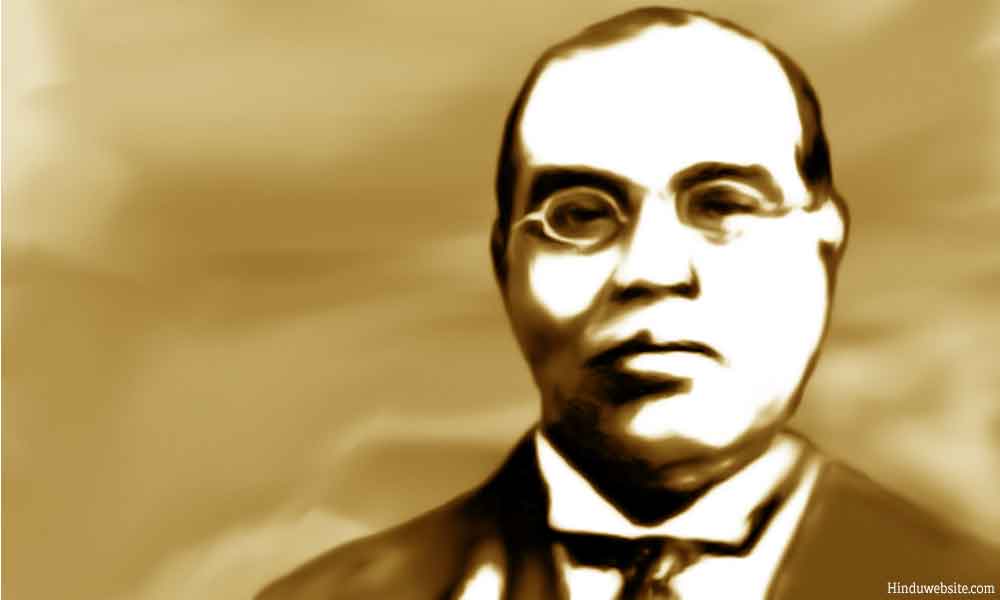
An artistic impression of late Sri Romesh Chunder Dutt
|| Book 1 || Book 2 || Book 3 || Book 4 || Book 5 || Book 6 || Book 7 || Book 8 || Book 9 || Book 10 || Book 11 || Book 12 || Epilogue || Index||
A NOTE ON THE LATE ROMESH C. DUTT
ROMESH CHUNDER DUTT, to whom English readers are indebted for the condensed metrical version of the ancient Indian epics given in this volume, was one of the most distinguished sons of modern India. He came of a Hindu family standing high among the Kayasths, second of the great castes in Bengal, was born in 1848, and grew to manhood amid influences of deep spiritual disturbance. In those days an Indian youth who had felt the call of the West encountered the sternest opposition from both his own family and the community, if hie avowed his ambition of making the voyage to Europe.
Rornesh Dutt, having passed through the Presidency College, Calcutta, took his fate into his own hands. Accompanied by two friends, both of whom after wards rose to eminence in Bengal, he secretly took ship, came to London, entered for the Indian Civil Service, and took third place in the open examination of 1869. He was the first of his race to attain the rank of divisional commissioner, and long before his retirement in 1897, at the end of twenty-five years' service, had made a high reputation as an administrator. He sat for a time in the Bengal Legislative Council, and, in recognition of his official work, received the Companionship of the Indian Empire. He died on November 30, 1909, at Baroda, the capital of the important Native State which he had served with brilliant success as revenue minister and dewan.
The influences which determined his literary activity were primarily European. As a student in Calcutta he had made acquaintance with the English classics, and later, while at University College, had read the poets insatiably. Nevertheless his first successes were achieved in his mother tongue. He wrote in Bengali poems and plays, historical and social novels, and aroused a storm of protest within the orthodox community of his Province by publishing a Bengali translation of the Rig Veda. In English, of which he had complete mastery, his first complete essay was a history of civilisation in Ancient India, which, though not a work of original research, fulfilled a useful purpose in its day. When freedom from Government service gave him the opportunity he set himself to writing the Economic History of India and India in the Victorian Age, the two together forming, his chief contribution to the subject which he, more than any other Indian of his time, had made his own. In these books, as in others of kindred theme and purpose, there is much criticism of British administration, strongly felt if temperately expressed. Apart from this, its more controversial side, the work of Romesh Dutt is valuable mainly in that it has helped to reveal to his own people no less than to ours, the spiritual riches of ancient India.
S. K. RATCLIFFE
BIBLIOGRAPHY
The Ramayana
The following is a list of the, various edition of "The Ramayana:
- "The Ramayana," edited by S. Goressio (with Italian translation). 10 vols. 1843-58, 1859-60 (Calcutta), 1888 (Bombay).
- English translations: by Kirtee Bass. 5 vols. Serampore, 1802.
- "The Ramayuna of Valmeeki, in the original Sungscrit, with a Prose Translation and Explanatory Notes." W. Carey and J. Marshman. 1806-10.
- An English translation for "Nirvachanothara, Ramayanum" (i.e. the "Uttara Ramayana "attributed to V lm ki, with Commentary). Madras, 1880.
- Free English translation by R. T. H. Griffith. 5 vols. 1870-75.
- Translation into English Prose. Edited by Manmatha Nath Dutt. 1889, 1892-94.
- Condensed into English Verse by Romesh Dutt. 1899 (Temple Classics), 1900.
Works on:
- Sir M. Williams, "Indian Epic Poetry, with full Analysis of the Ramayana and Mahabharata." 1863.
- J. T. Wheeler, "History of India." 1867, &c.
- J. C. Oman, "Struggles of the Dawn, the Stories of the Great Indian Epics, Ramayana," &c. 1893. "The Great Indian Epics," &c. 1894, 1899 (Bohn).
The Mahabharata
The following is a list of the various editions of " The Mahabharata":
- Complete edition, Calcutta, 1834-39, 4 vols.; Bombay, 1863; re-edited, with commentary by Nitakantha Govinda, 1890.
- Translations into English Prose, by Protap Chandra Roy, 1883; (Sanscrit text of Maharshi Vyas, with complete English and Hindi translations, 1902, &c.).
- "Virtue's Triumph; or, The Mah -Bh rata." By Rai Bahadur, P. Anunda Charlu. 1894.
- Prose literal translation, by Manmatha Nath Dutt. 1895.
- Condensed into English verse by Romesh Dutt (Temple Classics). 1898. The same, with Introduction by W. Max-M ller. 1899.
- (Many English translations of portions of the whole epic have been published.)
Works on:
- H. H. Wilson," Essays on the Religion of the Hindoos." 1862.
- Sir M. Williams, "Indian Epic Poetry," &c. 1863.
- Wheeler, "The Vedic Period and the Mahabbarata." 1867.
- Buehler and Kirste, " Indian Studies, Contributions to the History of the Mahabharata." 1892.
- J. C. Oman (see above).
- V. Fausboll, "Indian Mythology, according to the Mahabharata in Outline" (Oriental Religions Series, Luzac, vol. i.). 1903.
- "Raganama Ramkrishna Bhaguvata," an attempt to analyse the Mahabharata from the higher Brahminical standpoint. 1905.
- Chintamani Vinayaka Vaidya, "The Mahabharata; a Criticism." 1905. "Epic India; or, India as described in the -'Mahabharata and Ramayana." 1907.
Suggestions for Further Reading
- The Ramayana Translated by Romesh Dutt, Index
- The Mahabharata, the Epic of the Bharatas
- Indian Idylls from the Mahabharata and Ramayana
- Tao Te Ching by Lao-tzu
- What is Tantra?
- The Gospel of the Buddha
- The Historical Context of The Bhagavadgita
- The Sankhya Sutras of Kapila, Index page
- The Hungry Stones and Other Stories
- The Autobiography of a Yogi by Swami Yogananda, Index
- Essays On Dharma
- Esoteric Mystic Hinduism
- Introduction to Hinduism
- Hindu Way of Life
- Essays On Karma
- Hindu Rites and Rituals
- The Origin of The Sanskrit Language
- Symbolism in Hinduism
- Essays on The Upanishads
- Concepts of Hinduism
- Essays on Atman
- Hindu Festivals
- Spiritual Practice
- Right Living
- Yoga of Sorrow
- Happiness
- Mental Health
- Concepts of Buddhism
- General Essays
Source: The Ramayana And The Mahabharata Condensed Into
English Verse By Romesh C. Dutt (1899) Dedicated To The Right Hon.
Professor F. Max M ller.
Disclaimer: While we have
made every effort to reproduce the text correctly, we do not guarantee
or accept any responsibility for any errors or omissions or inaccuracies
in the reproduction of this text. This text has been reproduced
for general reading purposes only and readers are advised to refer
the original text for any research or academic studies and references.