
The Sankhya Sutras of Kapila - Complete Translation
Contents
Book 1

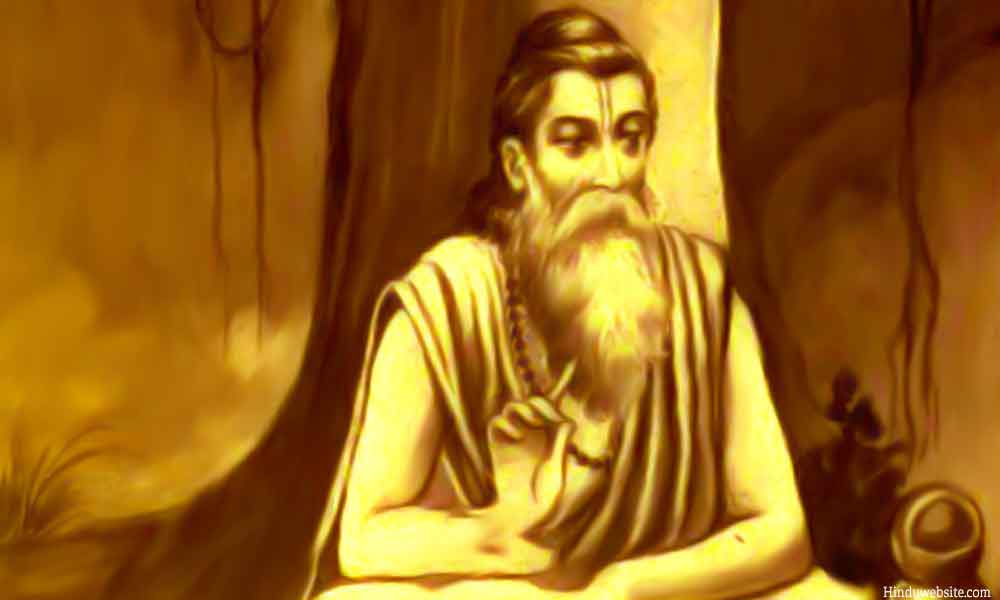
a. Salutation to the illustrious sage, Kapila!
b. Well, the great sage, Kapila, desirous of raising the world (from the Slough of Despond in which he found it sunk), perceiving that the knowledge of the excellence of any fruit, through the desire (which this excites) for the fruit, is a cause of people's betaking themselves to the means (adapted to the attainment of the fruit), declares (as follows) the excellence of the fruit (which he would urge our striving to obtain):
The subject proposed
Aph. 1. Well, the complete cessation of pain (which is) of three kinds is the complete end of
Aph. 2. The effectuation of this (complete cessation of pain) is not (to be expected) by means of the visible (such as wealth, &c.); for we see (on the loss of wealth, &c.,) the restoration (of the misery and evil,) after (its temporary) cessation.
Aph. 4. This (method of palliatives ( 3)) is to be rejected by those who are versed in evidence; because it is not everywhere possible (to employ it at all), and because, even if this were possible, there would be an impossibility as regards (ensuring) the perfect fitness (of the agents employed).
Aph. 5. Also (an inferior method ought not to be adopted) because of the preeminence of Liberation (as proved) by the text (of Scripture declaratory) of its preeminence above all else.
Aph. 6. And there is no difference between the two.
Aph. 8. Since an essential nature is imperishable, unauthoritativness, betokened by impracticableness, (would be chargeable against the Scripture, if pain were essential to humanity).
Aph. 9. There is no rule, where something impossible is enjoined: though it be enjoined, it is no injunction.
Aph. 10. If (some one says) as in the case of white cloth, or of a seed, (something essential may be not irremovable, then he will find his answer in the next aphorism).
Aph. 11. Since both perceptibleness and (subsequent) non-perceptibleness may belong to some power (which is indestructible), it is not something impracticable that is enjoined, (when one is directed to render some indestructible power imperceptible).
Aph. 12. Not from connexion with time (does bondage befall the soul); because this, all-pervading and eternal, is (eternally) associated with all, (and not with those alone who are in bondage).
Aph. 13. Nor (does bondage arise) from connexion with place, either, for the same (reason)
Aph. 14. Nor (does the bondage of the soul arise) from its being conditioned (by its standing among circumstances that clog it by limiting it); because that is the fact in regard to (not the soul, but) the body.
Aph. 15. Because this soul is (unassociated with any conditions or circumstances that could serve as its bonds, it is) absolute.
Aph. 17. If it were the property of any other, then there could not be diverse experience.
Aph. 18. If (you say that the soul's bondage arises) from Nature, as its cause, (then I say) 'no;' (because) that, also, is a dependent thing.
Aph. 19. (But) not without the conjunction thereof (i.e., of Nature) is there the connexion of that (i.e., of pain) with that (viz., the soul,) which is ever essentially a pure and free intelligence.
Aph. 20. Not from Ignorance, too, (does the soul's bondage arise); because that which is not a reality is not adapted to binding.
Aph. 21. If it ('Ignorance') be (asserted, by you, to be) a reality, then there is an abandonment of the (Vedntc) tenet, (by you who profess to follow the Vednta).
Aph. 22. And (if you assume 'Ignorance' to be a reality, then) there would be a duality, through (there being) something of a different kind (from soul; which you asserters of non-duality cannot contemplate allowing).
Aph. 24. (To the suggestion that 'Ignorance' is at once real and unreal we say) 'no;' because no such thing is known (as is at once real and unreal.)
Aph. 25. (Possibly the Vednt may remonstrate) 'We are not asserters of any Six Categories, like the Vaiśeshikas and others.'
Aph. 26. Even although this be not compulsory (that the categories be six, or sixteen), there is no acceptance of the inconsistent; else we come to the level of children, and madmen, and the like.
Aph. 27. (The bondage) thereof moreover, is not caused by any influence of objects from all eternity.
Aph. 28. Also (in my opinion, as well as in yours, apparently), between the external and the internal there is not the relation of influenced and influencer; because there is a local separation; as there is between him that stays at Srughna and him that stays at Pṭaliputra.
Aph. 29. (It is impossible that the soul's bondage should arise) from an influence received in the same place (where the object is; because, in that case), there would be no distinction between the two, (the bond and the free).
Aph. 30. If (the heretic, wishing to save his theory suggests that a difference between the two cases (see 29) does exist) in virtue of the unseen, (i.e., of merit and demerit, then he will find his answer in the next aphorism).
Aph. 31. They cannot stand in the relation of deserver and bestower, since the two do not belong to one and the same time.
Aph. 32. If (the heretic suggests that) the case is like that of the ceremonies in regard to a son, (then he will find his reply by looking forward).
Aph. 33. (Your illustration proves nothing;) for, in that case, there is no one permanent soul which could be consecrated by the ceremonies in anticipation of conception, &c.
Aph. 34. Since there is no such thing as a permanent result (on the heretical view), the momentariness (of bondage, also, is to be admitted).
Aph. 35. No, (things are not momentary in their duration); for the absurdity of this is proved by recognition.
Aph. 36. And (things are not momentary;) because this is contradicted by Scripture and reasoning.
Aph. 37. And (we reject the argument of this heretic;) because his instance is not a fact.
Aph. 38. It is not between two things coming simultaneously into existence, that the relation of cause and effect exists.
Aph. 39. Because, when the antecedent departs the consequent is unfit (to arise, and survive it).
Aph. 40. Moreover, not (on Theory of the momentary duration of things can there be such a relation as that of cause and effect); because, while the one (the antecedent) exists, the other (the consequent) is incompatible, because the two keep always asunder.3
Aph. 41. If there were merely antecedence, then there would be no determination (of a substantial or material cause, as distinguished from an instrumental cause).
Aph. 42. Not Thought alone exists; because there is the intuition of the external.
Aph. 43. Then, since, if the one does not exist, the other does not exist, there is a void, (i.e., nothing exists at all).
Aph. 44. The reality is a void: what is perishes; because to perish is the habit of things.
Aph. 45. This is a mere counter-assertion of unintelligent persons.
Aph. 46. Moreover, this (nihilistic theory is not a right one); because it has the same fortune as both the views (which were confuted just before).
Aph. 47. In neither way (whether as a means, or as an end,) is this (annihilation) the soul's aim.
Aph. 48. Not from any kind of motion (such as its entrance into a body, does the soul's bondage
Aph. 49. Because this is impossible for what is inactive, (or in other words without motion)
Aph. 50. (We cannot admit that the soul is other than all-pervading; because) by its being limited, since it would come under the same conditions as jars, &c., there would be a contradiction to our tenet (of its imperishableness).
Aph. 51. The text regarding the motion (of the soul), moreover, is (applicable, only) because of the junction of an attendant;1 as in the case of the Ether (or Space, which moves not, though we talk of the space enclosed in a jar, as moving with the jar).
Aph. 52. Nor, moreover, (does the bondage of the soul result from the merit or demerit arising) from works; because these belong not thereto.
Aph. 53. 4 If the case were otherwise (than as I say), then it (the bondage of the soul might extend unduly, even to the emancipated).
Aph. 54. And this (opinion, that the bondage of the soul arises from any of causes alleged by the heretics,) is contrary to such texts as the one that declares it (the soul) to be without qualities: and so much for that point.
Aph. 55. Moreover, the conjunction thereof does not, through non-discrimination, take place (in the case of the emancipated); nor is there a parity, p. 58 (in this respect, between the emancipated and the unemancipated).
Aph. 56. Bondage arises from the error (of not discriminating between Nature and soul).2
Aph. 56. The removal of it is to be effected by the necessary means, just like darkness.
Aph. 57. Since the non-discrimination of other things (from soul) results from the non-discrimination of Nature (from soul), the cessation of this will take place, on the cessation of that (from which it results).
Aph. 58. It is merely verbal, and not a reality1 (this so-called bondage of the soul); since it (the bondage) resides in the mind, (and not in the soul).
Aph. 59. Moreover, it (the non-discrimination of Soul from Nature,) is not to be removed by argument; as that of a person perplexed about the points of the compass (is not to be removed) without immediate cognition.
Aph. 60. The knowledge of things imperceptible is by means of Inference; as that of fire (when not directly perceptible,) is by means of smoke, &c.
Aph. 62. (The knowledge of the existence) of the five 'Subtile Elements' is (by inference,) from the 'Gross Elements.'
Aph. 63. (The knowledge of the existence) of Self-consciousness is (by inference,) from the external and internal p. 75 (organs), and from these ('Subtile Elements,' mentioned in Aph. 62).
Aph. 64. (The knowledge of the existence) of Intellect is (by inference,) from that (Self-consciousness, 63).
Aph. 65. (The knowledge of the existence) of Nature is (by inference,) from that ('Intellect,' 64).
Aph. 66. (The existence) of Soul (is inferred) from the fact that the combination (of the principles of Nature into their various effects) is for the sake of another (than unintelligent Nature, or any of its similarly unintelligent products).
Aph. 67. Since the root has no root, the root (of all) is rootless.3
Aph. 68. Even if there be a succession, there is a halt at some one point; and so it is merely a name (that we give to the point in question, when we speak of the root of things, under The name of 'Nature').
Aph. 69. Alike, in respect of Nature, (and of both Soul and Nature, is the argument for the uncreated existence).2
Aph. 70. There is no rule (or necessity, that all should arrive at the truth); because those who are privileged (to engage in the inquiry) are of three descriptions.
Aph. 71. The first product (of the Primal Agent, Nature), which is called 'the Great one,' is Mind.
Aph. 72. 'Self-consciousness' is that which is subsequent (to Mind.)
Aph. 73. To the others it belongs to be products thereof, (i.e., of Self-consciousness).
Aph. 74. Moreover, mediately, through that (i.e., the 'Great one' ( 71)) the first (cause, viz., Nature,) is the cause (of all products); as is the case with the Atoms, (the causes, though not the immediate causes, of jars, &c.).
Aph. 75. While both (Soul and Nature) are antecedent (to all products), since the one (viz., Soul,) is devoid (of this character of being a cause), it is applicable (only) to the other of the two, (viz., Nature).
Aph. 76. What is limited cannot be the substance of all (things).
Aph. 77. And (the proposition that Nature is the cause of all is proved) from the text of Scripture, that the origin (of the world) is therefrom, (i.e., from Nature).
Aph. 78. A thing is not made out of nothing.
Aph. 79. It (the world) is not unreal; because there is no fact contradictory (to its reality), and because it is not the (false) result of depraved causes, (leading to a belief in what ought not to be believed).
Aph. 80. If it (the substantial cause,) be an entity, then this would be the case, (that the product would be an entity), from its union (or identity) therewith; (but) if (the cause be) a nonentity, then how could it possibly be the case (that the product would be real), since it is a nonentity, (like the cause with which it is united, in the relation of identity)?
Aph. 81. No; for works are not adapted to be the substantial cause (of any product).
Aph. 82. The accomplishment thereof (i.e., of Liberation) is not moreover, through Scriptural rites: the chief end of man does not consist in this (which is gained through such means); because, since this consists of what is accomplished through acts, (and is therefore, a product, and not eternal), there is (still left impending over the ritualist,) the liability to repetition of births.
Aph. 83. There is Scripture for it, that he who has attained to discrimination, in regard to these (i.e. Nature and Soul), has no repetition of births.
Aph. 84. From pain (occasioned, e.g., to victims in sacrifice) must come pain (to the sacrificer, and not liberation from pain); as there is not relief from chilliness, by affusion of water.
Aph. 85. (Liberation cannot arise from acts); because whether the end be something desirable, or undesirable, (and we admit that the motive of the sacrifice is not the giving pain to the victim), this makes no difference in regard to its being the result of acts, (and, therefore, not eternal, but transitory).
Aph. 86. Of him who is essentially liberated, his bonds having absolutely perished, it (i.e., the fruit of his saving knowledge,) is absolute:3 there is no parity (between his case and that of him who relies on works, and who may thereby secure a temporary sojourn in Paradise, only to return again to earth).
Aph. 87. The determination of something not (previously) lodged in both (the Soul and the Intellect), nor in one or other of them, is 'right notion' (pram). What is, in the highest degree, productive thereof (i.e., of any given 'right notion'), is that; (i.e., is what we mean by proof, or evidence, (pramṉa)).
Aph. 88. Proof is of three kinds:1 there is no establishment of more; because, if these be established, then all (that is true) can be established (by one or other of these three proofs).
Aph. 89. Perception (pratyakska) is that discernment which, being in3 conjunction (with the thing perceived), portrays the form thereof.
Aph. 90. It is not a fault (in the definition, that it does not apply to the perceptions of adepts in the Yoga); because that of the adepts in the Yoga is not an external perception.
Aph. 91. Or, there is no fault (in the definition), because of the conjunction, with causal things, of that (mystical mind) which has attained exaltation.4
Aph. 92. (This objection to the definition of Perception has no force); because it is not proved that there is a Lord (śwara).
Aph. 93. (And, further,) it is not proved that he (the 'Lord,') exists; because (whoever exists must be either free or bound; and), of free and bound, he can be neither the one nor the other.
a. The 'Lord' whom you imagine, tell us, is he free from troubles, &c.? Or is he in bondage through these? p. 114 Since he is not, cannot be, either the one or the other, it is not proved that there is a 'Lord:' such is the meaning.
Aph. 94. (Because,) either way, he would be inefficient.
Aph. 95. (The Scriptural texts which make mention of the 'Lord' are either glorifications of the liberated Soul, or homages to the recognized3 (deities of the Hindu pantheon).4
Aph. 96. The governorship (thereof, i.e., of Soul over Nature) is from (its) proximity thereto, (not from its resolving to act thereon); as is the case with the gem, (the lodestone, in regard to iron).
Aph. 97. In the case of individual products, also, (the apparent agency) of animal souls (is solely through proximity).
Aph. 98. The declaration of the texts or sense (of the Veda, by Brahm, for example), since he knows the truth, (is authorative evidence).
Aph. 99. The internal organ,1 through its being enlightened thereby (i.e., by Soul), is the overruler; as is the iron, (in respect of the magnet).
Aph. 100. The knowledge of the connected (e.g., fire), through perception of the connexion (e.g., of fire with smoke), is inference.
Aph. 101. Testimony (such as is entitled to the name of evidence, is a declaration by one worthy (to be believed).
Aph. 102. Since the establishment of (the existence of) both (soul and non-soul) is by means of evidence, the decaration thereof (i.e., of the kinds of evidence, has been here made).
Aph. 103. The establishment of both (Nature and Soul) is by analogy.
Aph. 104. Experience (whether of pain or pleasure, ends with the discernment of) Thought, (or Soul, as contradistinguished from Nature).
Aph. 105. The experience of the fruit may belong even to another than the agent; as in the case of food, &c.
Aph. 106. Or, (to give a better account of the matter than that given in 105), since it is from non-discrimination that it is derived, the notion that the agent (soul being mistaken for an agent,) has the fruit (of the act is a wrong notion).
Aph. 107. And, when the truth is told, there is (seen to be) neither (agency, in Soul, nor experience).
Aph. 108. (A thing may be) an object (perceptible), and also (at another time,) not an object, through there being, in consequence of great distance, &c., a want of (conjunction of the sense with the thing), or (on the other hand,) an appliance of the sense (to the thing).
Aph. 109. Her imperceptibleness arises from (her) subtility.
Aph. 110. (Nature exists;) because her existence is gathered from the beholding of productions.
Aph. 111. If (you throw out the doubt that) it (viz., the existence of Nature,) is not established, because of the contradiction of asserters (of other views, then you will find an answer in the next aphorism).
Aph. 112. Still, since1 each (doctrine) is established in the opinion of each, a (mere unsupported) denial is not (decisive).
Aph. 113. Because (if we were to infer any other cause than Nature,) we should have a contradiction to the threefold (aspect which things really exhibit).
Aph. 114. The production of what is no entity, as a man's horn, does not take place.
Aph. 115. Because of the rule, that there must be some material (of which the product may consist).
Aph. 116. Because everything is not possible everywhere and always (which might be the case) if materials could be dispensed with).
Aph. 117. Because it is that which is competent (to the making of anything) that makes what is possible, (as a product of it).
Aph. 118. And because it (the product,) is (nothing else than) the cause, (in the shape of the product).
Aph. 119. If (it be alleged that) there is no possibility of that's becoming which already is (then the answer will be found in the next aphorism).
Aph. 120. No; (do not argue that what is cannot become; for) the employment and the non-employment (of the term 'production') are occasioned by the manifestation (and the non-manifestation of what is spoken of as produced, or not).
Aph. 121. Destruction (of anything) is the resolution (of the thing spoken of as destroyed,) into the cause (from which it was produced).
Aph. 122. Because they seek each other reciprocally,3 as is the case with seed and plant, (manifestation may generate manifestation, from eternity to eternity).
Aph. 123. Or, (at all events, our theory of 'manifestation' is as) blameless as (your theory of) 'production.'
Aph. 124. (A product of Nature is) caused, uneternal, not all-pervading, mutable, multitudinous, dependent, mergent.
Aph. 125. There is the establishment of these (twenty-four 'Qualities' of the Nyya, which you fancy that we do not recognize, because we do not explicitly enumerate them), either by reason that these ordinary qualities (as contradistinguished from the three Qualities of the Snkhya), &c., are, in reality, nothing different; or (to put it in another point of view,) because they are hinted by (the term) Nature, (in which, like our own three Qualities, they are implied).
Aph. 126. Of both (Nature and her products) the fact that they consist of the three Qualities ( 61. a.), and that they are irrational, &c., (is the common property).
Aph. 127. The Qualities ( 62) differ in character mutually by pleasantness, unpleasantness, lassitude, &c., (in which forms, severally, the Qualities present themselves).
Aph. 128. Through Lightness and other habits the Qualities mutually agree and differ.
Aph. 129. Since they are other than both (Soul and Nature, the only two uncaused entities), Mind and the rest are products; as is the case with a jar, or the like.
Aph. 130. Because of (their) measure, (which is a limited one).
Aph. 131. Because they conform (to Nature).
Aph. 132. And, finally, because it is through the power (of the cause alone, that the product can do aught).
Aph. 133. On the quitting thereof (quitting the condition of product), there is Nature, or Soul, (into one or other of which the product must needs have resolved itself).
Aph. 134. If they were other than these two they would be void; (seeing that there is nothing self-existent, besides soul and Nature).
Aph. 135. The cause is inferred from the effect, (in the case of Nature and her products); because it accompanies it.
Aph. 136. The indiscrete, (Nature, must be inferred) from its (discrete and resolvable) effect. (Mind), in which are the three Qualities, (which constitute Nature).
Aph. 137. There is no denying that it (Nature,) is; because of its effects, (which will be in vain attributed to any other source).
Aph. 138. (The relation of cause and effect is) not (alleged as) the means of establishing (the existence of Soul); because, as is the case with (the disputed term) 'merit,' there is no dispute about there being such a kind of thing; (though what kind of thing is matter of dispute).
Aph. 139. Soul is something else than the body, &c.
Aph. 141. (And Soul is something else than the body, &c.); because there is (in Soul,) the reverse of the three Qualities, &c.
Aph. 142. And (Soul is not material;) because of (its) superintedence (over Nature).
Aph. 143. (And Soul is not material;) because of (its) being the experiencer.
Aph. 144. (It is for Soul, and not for Nature;) because2 the exertions are with a view to isolation (from all qualities; a condition to which Soul is competent, but Nature is not).
Aph. 145. Since light does not pertain to the unintelligent, light, (which must pertain to something or other, is the essence of the Soul, which, self-manifesting, manifests whatever else is manifest).
Aph. 146. It (Soul,) has not Intelligence as its attribute; because it is without quality.
Aph. 147. There is no denial (to be allowed) of what is established by Scripture; because the (supposed) evidence of intuition for this (i.e., for the existence or qualities in the Soul,) is confuted (by the Scriptural declaration of the contrary).
Aph. 148. (If soul were unintelligent,) it would not be witness (of its own comfort,) in profound (and dreamless) sleep, &c.
Aph. 149. From the several allotment of birth, &c., a multiplicity of souls (is to be inferred).
Aph. 150. (The Vednts say, that,) there being a difference in its investments, moreover, multiplicity attaches (seemingly,) to the one (Soul); as is the case with Space, by reason of jars, &c., (which mark out the spaces that they occupy).
Aph. 151. The investment is different, (according to the Vednts), but not that to which this belongs; (and the absurd consequences of such an opinion will be seen).
Aph. 152. Thus, (i.e., by taking the Snkhya view,) there is no imputation of contradictory conditions to (a Soul p. 170 supposed to be) everywhere present as one (infinitely extended monad).
Aph. 153. Even though there be (imputed to Soul) the possession of the condition of another, this (i.e., that it really possesses such,) is not established by the imputation; because it (Soul,) is one (absolutely simple, unqualified entity).
Aph. 154. There is no opposition to the Scriptures (declaratory) of the non-duality (of Soul); because the reference (in such texts,) is to the genus, (or to Soul in general).
Aph. 155. Of him (i.e., of that soul,) by whom the cause of Bondage is known, there is that condition (of isolation, or entire liberation), by the perception (of the fact, that Nature and soul are distinct, and that he, really, was not bound, even when he seemed to be so).3
Aph. 156. No: because the blind do not see, can those who have their eyesight not perceive?
Aph. 157. Vmadeva, as well as others, has been liberated, (if we are to believe the Scriptures; therefore) non-duality is not (asserted, in the same Scriptures, in the Vedntic sense).
Aph. 158. Though it (the world,) has been from eternity, since, up to this day, there has not been (an entire emptying of the world), the future, also, (may be inferentially expected to be) thus (as it has been heretofore).
Aph. 159. As now (things are, so), everywhere (will they continue to go on: hence there will be) no absolute cutting short (of the course of mundane things).
Aph. 160. It (Soul,) is altogether free (but seemingly) multiform (or different, in appearance, from a free thing, through a delusive semblance of being bound).3
Aph. 161. It (Soul,) is a witness, through its connexion with sense-organs, (which quit it, on liberation).
Aph. 162. (The nature of Soul is) constant freedom.5
Aph. 163. And, finally, (the nature of Soul is) indifference (to Pain and Pleasure, alike).
a. By 'indifference' is meant non-agency. The word iti (rendered 'finally,') implies that the exposition of the Nature of Soul is completed.)
Aph. 164. (Soul's fancy of) being an agent is, through the influence (of Nature),1 from the proximity of Intellect, from the proximity of Intellect.
END OF BOOK I.
Book 2
Aph. 1. Of Nature (the agency, or the being a maker, is) for the emancipation of what is (really, though not apparently,) emancipated, or else for (the removal of) itself.
Aph. 2. Because this (Emancipation) is (only) of him that is void of passion.
Aph. 3. It is not effected by the mere hearing; because of the forcibleness of the impressions4 from eternity.
Aph. 4. Or as people have, severally, many dependants.
Aph. 5. And, since it (the character of creator,) belongs, really, to Nature, it follows that it is fictitiously attributed to Soul.
Aph. 6. Since it is proved from the products.
Aph. 7. The rule is with reference to one knowing; just as escape from a thorn.
Aph. 8. Even though there be conjunction (of Soul) with the other (viz., Nature), this (power of giving rise to products) does not exist in it immediately; just like the burning action of iron.
Aph. 9. When there is passion, or dispassion, there is concentration, (in the latter case, and) creation, (in the former).
Aph. 10. In the order (see 12. b.) of Mind, &c., (is the creation) of the five elements, (or of the material world).
Aph. 11. Since creation is for the sake of Soul the origination of these (products of Nature) is not for their own sake.
Aph. 12. (Relative) Space and Time (arise) from the Ether, &c.
Aph. 13. Intellect is judgment.
Aph. 14. Merit, &c., are products of it.
Aph. 15. The Great one (intellect,) becomes reversed through tincture.2
Aph. 16. Self-consciousness is a conceit.
Aph. 17. The product of it (viz., of Self-consciousness,) is the eleven (organs), and the five Subtile Elements.
Aph. 18. The eleventh, consisting of (the principle of) Purity, proceeds from modified Self-consciousness.
Aph. 19. Along with the organs of action and the organs of understanding another is the eleventh.
Aph. 20. They (the organs,) are not formed of the Elements; because there is Scripture for (their) being formed of Self-consciousness.
Aph. 21. The Scripture regarding absorption into deities is not (declaratory) of an originator.
Aph. 22. (None of the organs is eternal, as some hold the Mind to be;) because we have Scripture for their beginning to be, and because we see their destruction.
Aph. 23. The Sense is supersensuous; (it being the notion) of mistaken persons (that the Sense exists) in (identity with) its site.
Aph. 24. Moreover, a difference being established if a difference of powers be (conceded), there is not a oneness (of the organs).
Aph. 25. A theoretical discordance is not (of any weight,) in the case of what is matter of ocular evidence.
Aph. 26. The Mind identifies itself with both
Aph. 27. By reason of the varieties of transformation of (which) the Qualities (are susceptible), there is a diversity (of their product, the Mind,) according to circumstances.
Aph. 28. Of both (sets of organs the object is that list of things), beginning with Colour, and ending with the dirt of Taste.
Aph. 29. The being the seer, &c., belongs to the Soul; the instrumentality belongs to the Organs.
Aph. 30. Of the three (internal organs) there is a diversity among themselves.
Aph. 31. The five airs, viz., Breath, &c., are the modifications, in common, of the (three internal) instruments.
Aph. 32. The modifications of the organs take place successively and simultaneously.
Aph. 33. The modifications (of the understanding, which are to be shown to be the cause of the world, and) which are of five kinds, are (some of them,) painful and (others,) not painful.4
Aph. 34. On the cessation thereof (viz., of mundane influences), its tincture4 ceasing, it (Soul,) abides in itself.
Aph. 35. And as (by) a flower, the gem.
Aph. 36. The Organs also arise, for the sake of Soul from the development of desert.
Aph. 37. As the cow for the calf.
Aph. 38. Organ is of thirteen sorts, through division of the subordinates.
Aph. 39. Because the quality of being most efficient is conjoined with the organs; as in the case of an axe.
Aph. 40. Among the two (the external and the internal organs), the principal is Mind; just as, in the world, among troops of dependants.
Aph. 41. (And Intellect is the principal, or immediate and direct, efficient in Soul's emancipation;) because there is no wandering away.
Aph. 42. So, too, because it (the understanding,) is the depository of all self-continuant impressions.
Aph. 43. And because we infer this (its preeminence) by reason of its meditating.
Aph. 44. It cannot be of its own nature.
Aph. 45. The condition (as regards Soul's instruments,) of secondary and principal is relative; because of the difference of function.
Aph. 46. The energizing (of this or that Intellect) is for the sake of this (or that Soul); because of (its) having been purchased by the works (or deserts) of this (or that Soul); just as in the world.
Aph. 47. Admitting that they (the various instruments of Soul, all) equally act, the preeminence belongs to Intellect; just as in the world, just as in the world.
End of Book 2
Book 3
Aph. 1. The origination of the diversified (world of sense) is from that which has no difference.
Aph. 2. Therefrom, of the Body.
Aph. 3. From the seed thereof is mundane existence.
Aph. 4. And, till there is discrimination, there is the energizing of these, which have no differences.
Aph. 5. Because of (the necessity of) the other's experiencing.
Aph. 6. It (Soul,) is now quite free from both.
Aph. 7. The Gross (Body) usually arises from father and mother; the other one is not so.
Aph. 8. To that which arose antecedently it belongs to be that whose result is this; because it is to the one that there belongs fruition, not to the other.
Aph. 9. The seventeen, as one, are the Subtile Body.
Aph. 10. There is distinction of individuals, through diversity of desert.
Aph. 11. From its being applied to it, (viz., to the Subtile one), it is applied to the Body, which is the tabernacle of the abiding thereof.
Aph. 12. Not independently (can the Subtile Body exist), without that (Gross Body); just like a shadow and a picture.
Aph. 13. No, even though it be limited; because of (its) association with masses; just like the sun.
Aph. 14. It is of atomic magnitude; for there is a Scripture for its acting.
Aph. 15. And because there is Scripture for its being formed of food.
Aph. 16. The mundane existence of is for the sake of Soul; just like a king's cooks.
Aph. 17. The Body consists of the five elements.
Aph. 18. Some say it consists of four elements.
Aph. 19. Others say that it consists of one element.
Aph. 20. Intellect is not natural (a natural result of organization); because it is not found in them severally.
Aph. 21. And (if the Body had intellect natural to it,) there would not be the death, &c., of anything.
Aph. 22. If (you say that Intellect results from organization, and that) it is like the power of something intoxicating, (the ingredients of which, separately, have no intoxicating power, we reply, that) this might arise, on conjunction, if we had seen, in each (element, something conducive to the result).
Aph. 23. From knowledge (acquired during mundane existence, comes) salvation, (Soul's chief end).
Aph. 24. Bondage (which may be viewed as one of the ends which Soul could arrive at only through the Subtile Body,) is from Misconception.
Aph. 25. Since this (viz., knowledge,) is the precise cause (of liberation), there is neither association (of anything else with it, e.g., good works,) nor alternativeness, (e.g., of good works, in its stead).
Aph. 26. The emancipation of Soul does not depend on both (knowledge and works, or the like); as (any end that one aims at is not obtained) from dreams and from the waking state, (together, or alternatively, which are, severally,) illusory and not illusory.
Aph. 27. Even of that other it is not complete.
Aph. 28. Moreover, it is in what is fancied that it is thus (illusory).
Aph. 29. From the achievement of (the worship termed) meditation there is, to the pure (Soul), all (power); like Nature.
Aph. 30. Meditation is (the cause of) the removal of Desire.
Aph. 31. It (Meditation,) is perfected by the repelling of the modifications (of the Mind, which ought to be abstracted from all thoughts of anything).
Aph. 32. This (Meditation,) is perfected by Restraint, Postures, and one's Duties.
Aph. 33. Restraint (of the breath) is by means of expulsion and retention. 3
Aph. 34. Steady and (promoting) ease is a (suitable) Posture.
Aph. 35. One's Duty is the performance of the actions prescribed for one's religious order.
Aph. 36. Through Dispassion and Practice.
Aph. 37. The kinds of Misconception are five.
Aph. 38. But Disability is of twenty-eight sorts. 5
Aph. 39. Acquiescence is of nine sorts.
Aph. 40. Perfection is of eight sorts.
Aph. 41. The subdivisions (of Misconception) are as (declared) aforetime.
Aph. 42. So of the other (viz., Disability).
Aph. 43. Acquiescence is ninefold, through the divisions of 'the internal and the rest.'
Aph. 44. Through Reasoning, &c., (which are its subdivisions,) Perfection (is eightfold).
Aph. 45. Not from any other (than what we have just stated does real Perfection arise; because what does arise therefrom, e.g., from austerities, is) without abandonment of something else, (viz., Misconception).
Aph. 46. (The creation is that) of which the subdivisions are the demons, &c.
Aph. 47. From Brahm down to a post, for its (Soul's,) sake is creation, till there be discrimination (between Soul and Nature).
Aph. 48. Aloft, it (the creation,) abounds in (the quality of) Purity.
Aph. 49. Beneath, it (the creation,) abounds in Darkness.
Aph. 50. In the midst, it (the creation,) abounds in Passion.
Aph. 51. By reason of diversity of desert is Nature's (diverse) behaviour; like a born-slave.
Aph. 52. Even there there is return (to miserable states of existence): it is to be shunned, by reason of the successive subjections to birth, (from which the inhabitants of Heaven enjoy no immunity).
Aph. 53. Alike (belongs to all) the sorrow produced by decay and death.
Aph. 54. Not by absorption into the cause is there accomplishment of the end; because, as in the case of one who has dived, there is a rising again.
Aph. 55. Though she be not constrained to act, yet this is fitting; because of her being devoted to another.
Aph. 56. (He who is absorbed into Nature must rise again;) for he becomes omniscient and omnipotent (in a subsequent creation).
Aph. 57. The existence of such a Lord is a settled point.
Aph. 58. Nature's creating is for the sake of another, though it be spontaneous; for she is not the experiencer; like a cart's carrying saffron (for the sake of its master).
Aph. 59. Though she be unintelligent, yet Nature acts; as is the case with milk.
Aph. 60. Or as is the case with the acts (or on-goings) for we see them of Time, &c.
Aph. 61. From her own nature she acts, not from thought; like a servant.
Aph. 62. Or from attraction by Deserts, which have been from eternity.
Aph. 63. From discriminative knowledge there is a cessation of Nature's creating; as is the case with a cook, when the cooking has been performed.
Aph. 64. Another remains like another, through her fault.
Aph. 65. (The fruit of Nature's ceasing to act), the solitariness of both (Nature and Soul), or (which comes to the same thing,) of either, is liberation.
Aph. 66. Moreover, (when Nature has left off distressing the emancipated,) she does not desist, in regard to her creative influence on another; as is the case with the snake, (which ceases to be a terror,) in respect of him who is aware of the truth in regard to the rope (which another mistakes for a snake). 5
Aph. 67. And from connexion with Desert, which is the cause.
Aph. 68. Though there is (on Soul's part, this) indifference, yet want of discrimination is the cause of Nature's service.
Aph. 69. Like a dancer does she, though she had been energizing, desist; because of the end's having been attained.
Aph. 70. Moreover, when her fault is known, Nature does not approach (Soul); like a woman of good family.
Aph. 71. Bondage and Liberation do not actually belong to Soul, (and would not even appear to do so,) but for non-discrimination.
Aph. 72. They really belong to Nature, through consociation; like a beast.
Aph. 73. In seven ways does Nature bind herself; like the silk-worm: in one way does she liberate herself.
Aph. 74. Non-discrimination is the cause (not the thing itself); (so that) there is no disparagement of sense-evidence.
Aph. 75. Discrimination is perfected through abandonment (of everything), expressed by a 'No, No,' through study of the (twenty-five) Principles.
Aph. 76. Through the difference of those competent (to engage in the matter at all), there is no necessity (that each and every one should at once be successful).
Aph. 77. Since what (Pain) has been repelled returns again, there comes, even from medium (but imperfect,) Discrimination, experience, (which it is desired to get entirely rid of).
Aph. 78. And he who, living, is liberated.
Aph. 79. It is proved by the fact of instructed and instructor.
Aph. 80. And there is Scripture. 2
Aph. 81. (And not through merely hearing is one qualified to become an instructor): otherwise, there were blind tradition.
Aph. 82. Possessed of a body, (the emancipated sage goes on living); like the whirling of a wheel.
Aph. 83. This (retention of a body) is occasioned by the least vestige of impression.
Aph. 84. That which was to be done has been done, when entire Cessation of Pain has resulted from Discrimination; not otherwise, not otherwise.
End of Book 3
Book 4
Aph. 1. As in the case of the king's son, from instruction as to the truth (comes discrimination between soul and Nature).
Aph. 2. As in the case of the goblin, even when the instruction was for the sake of another, (the chance hearer may be benefited).
Aph. 3. Repetition (is to be made), if not, from once instructing, (the end be gained).
Aph. 4. As in the case of father and son; since both are seen; (to one, to die, and the other, to be born).
Aph. 5. One experiences pleasure or pain (alternatively), from (voluntary) abandonment or (forcible) separation; as in the case of a hawk.
Aph. 6. As in the case of a snake and its skin.
Aph. 7. Or as an amputated hand.
Aph. 8. What is not a means (of liberation is) not to be thought about, (as this conduces only) to bondage; as in the case of Bharata.
Aph. 9. From (association with) many there is obstruction to concentration, through passion, &c.; as in the case of a girl's shells. 4
Aph. 10. Just so, from (the company of) two, also.
Aph. 11. He who is without hope is happy; like Pingala. 3
Aph. 12. (One may be happy,) even without exertion; like a serpent happy in another's house.
Aph. 13. Though he devote himself to many Institutes and teachers, a taking of the essence (is to be made); as is the case with the bee.
Aph. 14. The Meditation is not interrupted of him whose mind is intent on one object; like the maker of arrows. 3
Aph. 15. Through transgression of the enjoined rules there is failure in the aim; as in the world.
Aph. 16. Moreover, if they be forgotten; as in the case of the female frog.
Aph. 17. Not even though instruction be heard is the end gained, without reflexion; as in the case of Virochana. 4
Aph. 18. Of those two, it (reflexion,) was seen in the case of Indra (only).
Aph. 19. Having performed reverence, the duties of a student, and attendance, one has success after a long time; as in his case.
Aph. 20. There is no determination of the time; as in the Case of Vamadeva. 3
Aph. 21. Through devotion to something under a superinduced form, (attainment to, or approach towards, knowledge takes place) by degrees; as in the case of those who devote themselves to sacrifices.
Aph. 22. Moreover, after the attainment of what (like the world of Brahma,) is other (than the state of emancipated soul), there is return (to mundane existence); because it is written (in the 5th Prapaṭhaka of the Chhandogya Upanishad 4 ): 'From conjunction with the five fires there is birth,' &c.
Aph. 23. By him who is free from passion what is to be left is left, and what is to be taken is taken; as in the case of the swan and the milk.
Aph. 24. Or through association with one who has obtained excellence; 4 as in the case thereof.
Aph. 25. Not of his own accord should he go near one who is infected with desire; like the parrot.
Aph. 26. (Else he may become) bound, by conjunction with the cords; as in the case of the parrot.
Aph. 27. Not by enjoyment is desire appeased; as in the case of the saint.
Aph. 28. From seeing the fault of both.
Aph. 29. Not in the case of him whose mind is disturbed does the seed of instruction sprout; as in the case of Aja.
Aph. 30. Not even a mere semblance (of this true knowledge arises in him whose mind is disturbed); as in the case of a foul mirror.
Aph. 31. Nor, even though sprung therefrom, is that (knowledge, necessarily,) in accordance therewith; like the lotus.
Aph. 32. Not even on the attainment of glorification has that been done which was to be done; as is the case with the perfection 4 of the objects worshipped, as is the case with the perfection of the objects worshipped.
End of Book 4 - Cause
Book 5
Aph. 1. The (use of a) Benediction (is justified) by the practice of the good, by our seeing its fruit, and by Scripture.
Aph. 2. Not from its (the world's,) being governed by a Lord is there the effectuation of fruit: for it is by works (i.e., by merit and demerit,) that this is accomplished.
Aph. 3. (If a Lord were governor, then) from intending his own benefit, his government (would be selfish), as is the case (with ordinary governors) in the world.
Aph. 4. (He must, then, be) just like a worldly lord, (and) otherwise (than you desire that we should conceive of him).
Aph. 5. Or (let the name of Lord be) technical.
Aph. 6. This (position, viz., that there is a Lord,) cannot be established without (assuming that he is affected by) Passion; because that is the determinate cause (of all energizing).
Aph. 7. Moreover, were that (Pasion) conjoined with him, he could not be eternally free.
Aph. 8. If it were from the conjunction of the properties of Nature, it would turn out that there is association, (which Scripture denies of Soul).
Aph. 9. If it were from the mere existence (of Nature, not in association, but simply in proximity), then lordship would belong to every one.
Aph. 10. It is not established (that there is an eternal Lord); because there is no evidence of it.
Aph. 11. There is no inferential proof (of there being a Lord); because there is (here) no (case of invariable) association (between a sign and that which it might betoken).
Aph. 12. Moreover, there is Scripture for (this world's) being the product of Nature, (not of a Lord).
a. Scripture asserts, exclusively, that the world is the product of Nature, not that it has Soul for its cause.
Aph. 13. With that which is solitary there cannot be conjunction of the property of Ignorance.
Aph. 14. Since the existence of this (alleged negative Ignorance) is established (only) on the ground of its (pretended) conjunction, there is a vicious circle. 3
Aph. 15. It is not as in the case of seed and sprout; for Scripture teaches that the world has a beginning.
Aph. 16. Then Brahma would be found to be excluded (from existence); because he is something else than knowledge.
Aph. 17. Were there not exclusion, then there would be resultlesseness.
Aph. 18. If it (Ignorance,) meant the being excludible by Knowledge, it would be (predicable), in like manner, of the world, also.
Aph. 19. If it (Ignorance,) were of that nature it would be something that had a commencement. 2
Aph. 20. There is no denying Merit; because of the diversity in the operations of Nature.
Aph. 21. It (the existence of Merit,) is established by Scripture, by tokens, &c.
Aph. 22. There is, here, no necessity; for there is room for other proofs.
Aph. 23. It is thus, moreover, in both cases.
Aph. 24. If the existence (of Merit) be as of course, (because, otherwise, something would be unaccounted for), the same is the case in respect of both.
Aph. 25. It is of the internal organ 3 (not of soul) that Merit, &c., are the properties.
Aph. 26. And of the Qualities, &c., there is not absolute debarment.
Aph. 27. By a conjunction of the five members (of an argumentative statement) we discern (that) Happiness (exists).
Aph. 28. Not from once apprehending is a connexion established.
Aph. 29. Pervadedness is a constant consociation of characters, in the case of both, or of one of them.
Aph. 30. It (Pervadedness,) is not (as some think (see a 31),) an additional principle (over and above the twenty-five (Book I., a 61)); for it is unsuitable to postulate entities (praeter rationem).
Aph. 31. (But certain) teachers say that it (Pervadedness,) is (another principle, in addition to the twenty-five,) resulting from the power of the thing itself.
Aph. 32. Panchaśikha 2 says that it ('Pervadedness,') is the possession of the power of the sustained.
Aph. 33. The relation is not an essential power; for we should have (in that case,) a tautology.
Aph. 34. Because we should find the distinction unmeaning; (as Intellect does not differ from Nature at all, except as does the sustained from the sustainer).
Aph. 35. And because it (Pervadedness,) would not be reconcilable in shoots, &c.
Aph. 36. Were it (thus) settled that it is a power of the 'sustained,' then, by the like argument, its dependence on an essential power, (as pretended by the heterodox teachers p. 341 referred to in a 31, might be proved, also; and thus the argument proves nothing, since it proves too much).
Aph. 37. The connexion between word and meaning is the relation of expressed and expresser.
Aph. 38. The connexion (between a word and its sense) is determined by three (means).
Aph. 39. There is no restriction to what is to be done; because we see it both ways.
Aph. 40. He who is accomplished in the secular (connexion of words with meanings) can understand the sense of the Veda.
Aph. 41. Not by the three (means mentioned in a 38, objects some one, can the sense of the Veda be gathered); because the Veda is superhuman, and what it means transcends the senses.
Aph. 42. Not so (i.e., what is meant by the Veda is not something transcending the senses); because sacrificings, &c., are, in themselves, what constitutes merit, preeminently.
Aph. 43. The natural force (of the terms in the Veda) is ascertained through the conversancy (therewith of those who successively transmit the knowledge).
Aph. 44. This really takes place; because they (viz., the words,) give rise to knowledge, in the case both of things adapted (to sense) and of things not (so) adapted.
Aph. 45. The Vedas are not from eternity; for there is Scripture for their being a production.
Aph. 46. They (the Vedas,) are not the work of (the Supreme) Man; because there is no such thing as the (Supreme) Man, (whom you allude to as being, possibly,) their maker.
Aph. 47. Since the liberated is unsuited (to the work, by his indifference), and the unliberated is so, (by his want of power) neither of these can be author of the Vedas). 4
Aph. 48. As in the case of sprouts, &c., their eternity does not follow from their not being the work of (any Supreme) Man.
Aph. 49. Were this the case with these, also, (i.e., if it were the case that vegetables were works), we should find a contradiction to experience, &c.
Aph. 50. That (only) is Man's work, in respect of which, even be it something invisible, an effort of understanding takes place. 2
Aph. 51. They are, spontaneously, conveyers of right knowledge, from the patentness of their own power (to instruct rightly).
Aph. 52. There is no Cognition of what is no entity, as a man's horn.
Aph. 53. It is not of the real (that there is here cognizance); because exclusion is seen (of the Qualities).
Aph. 54. It is not of what cannot be (intelligibly) expressed (that there is cognizance); because there exists no such thing.
Aph. 55. There is no such thing as cognizing otherwise (or cognizing that as belonging to one, which belongs to another); because your own proposition is self-destructive.
Aph. 56. They (the Qualities,) are cognized rightly or wrongly, through their being denied and not denied (appropriately or otherwise).
Aph. 57. A word does not consist of (what the Yogas call) the 'expresser' (sphoṭa); by reason both of cognizance (which would disprove the existence of such imaginary p. 359 thing,) and of non-cognizance, (which would, in like manner, disprove it).
Aph. 58. Sound is not eternal; because we perceive it to be made.
Aph. 59. (Suppose that) there is (in the case of sounds,) the manifestation of something whose existence was previously settled; as (the manifestation) of a (preexistent) jar by a lamp.
Aph. 60. If the dogma of products' being real (is accepted by you), then this is a proving of the already proved.
Aph. 61. Non-duality of Soul 2 is not; for its distinctions are cognized through signs.
Aph. 62. Moreover, there is not (non-distinction of Soul) from non-Soul; because this is disproved by sense-evidence.
Aph. 63. Not between the two (Soul and non-Soul, is there non-difference); for that same (couple of reasons).
Aph. 64. There it is for the sake of something else, in respect of the undiscriminating.
Aph. 65. Neither soul, nor Ignorance, 2 nor both, can be the material cause of the world; because of the solitariness of (Soul).
Aph. 66. The two natures, joy and knowledge do not belong to one; because the two are different.
Aph. 67. Metaphorical (is the word joy, in the sense) of the cessation of pain.
Aph. 68. It is (as) a laudation of emancipation, for the sake of the dull.
Aph. 69. The Mind is not all-pervading; because it is an instrument, and because it is, moreover, an organ.
Aph. 70. (The Mind is not all-pervading); for it is moveable; since there is Scripture regarding the motion.
Aph. 71. Like a jar, it (the Mind,) is not without parts; because it comes in contact therewith, (i.e., with several Senses, simultaneously).
Aph. 72. Everything except Nature and Soul is uneternal.
Aph. 73. No parts (from the presence of which in the discerptible, one might infer destructibility,) are found in the Experiencer; for there is Scripture for its being without parts.
Aph. 74. Emancipation is not a manifestation of joy; because there p. 376 are no properties (in Soul, as, e.g., in the shape of joy).
Aph. 75. Nor, in like manner, is it (Emancipation,) the destruction of special qualities.
Aph. 76. Nor is it (Emancipation,) any particular going of that (Soul,) which is motionless.
Aph. 77. Nor is it (Emancipation,) the destruction of the influence of (intellectual) forms, by reason of the faults of momentariness, &c.
Aph. 78. Nor is it (Emancipation,) destruction of all; for this has, among other things, the fault of not being the soul's aim.
Aph. 79. So, too, the Void.
Aph. 80. And conjunctions terminate in separations; therefore, it (Emancipation,) is not the acquisition of lands, &c., either.
Aph. 81. Nor is it (Emancipation,) conjunction of a Part with the Whole.
Aph. 82. Nor is it (Emancipation), moreover, conjunction with the (power of) becoming as small as an atom, &c.; since, as is the case with other conjunctions, the destruction of this must necessarily take place.
Aph. 83. Nor, just as in that case, is it (Emancipation), moreover, conjunction with the rank of Indra, &c.
Aph. 84. The Organs are not formed of the Elements (as the Naiyayikas assert); because there is Scripture for their being derived from Self-consciousness.
Aph. 85. The rule of six categories is not (the correct one); nor does Emancipation result from acquaintance therewith, (as the Vaiśeshikas maintain).
Aph. 86. So, too, is it in the case of the sixteen (categories of the Nyaya), &c.
Aph. 87. (The five Elements being products, as declared in Book I., a 61), Atoms are not eternal, (as alleged in the Nyaya); for there is Scripture for their being products.
Aph. 88. Since it is a product, it is not without parts.
Aph. 89. There is no necessity that direct cognition should have colour as its cause.
Aph. 90. There are not four varieties of dimension; because those can be accounted for by two.
Aph. 91. Though these (individuals) be uneternal, recognition, as being associated with constancy, is of genus.
Aph. 92. Therefore it (genus,) is not to be denied.
Aph. 93. It (genus,) does not consist in exclusion of something else; because it is cognized as an entity.
Aph. 94. Likeness is not a separate principle; for it is directly apprehended, (as one manifestation of Community).
Aph. 95. Nor is it (likeness,) a manifestation of (something's) own power; because the apprehension of it is different.
Aph. 96. Nor, moreover, is it (likeness,) the connexion between name and named.
Aph. 97. That connexion (viz., between name and named,) is not eternal; since both (the correlatives) are uneternal.
Aph. 98. The connexion is not so (not eternal), for this reason, viz., because this is debarred by the evidence which acquaints us with the thing; (i.e., the supposition is inconsistent with the definition of the term).
Aph. 99. There is no (such thing as) Coinherence, (such as the Naiyayikas insist upon); for there is no evidence (for it).
Aph. 100. Neither perception nor inference (is evidence for the existence of Coinherence); since, as regards both alike, the case is otherwise disposed of. 3
Aph. 101. Motion is not a matter of inference; for he who stands very near has, indeed, direct cognition both of it and of what it belongs to.
Aph. 102. The Body does not consist of five elements; because many (heterogeneous things) are unsuitable as the material.
Aph. 103. It (the Body,) is not, necessarily, the Gross one; for there is, also, the vehicular (transmigrating or Subtile) one.
Aph. 104. The senses do not reveal what they do not reach to; because of their not reaching, or because (else,) they might reach everything.
Aph. 105. Not because Light glides (and the Sight does so, too,) is the Sight luminous (or formed of Light); because the thing is accounted for by (Theory of) modifications, (to be now explained).
Aph. 106. By the sign of the display of the attained object the (existence of the) modification (which could alone account for that display,) is proved.
Aph. 107. The 'modification' is another principle than a fragment, or p. 398 a quality, (of the Sight, or other sense); because it is for the sake of connexion that it glides forth.
Aph. 108. It (the term 'modification,') is not confined to substances; because it is etymological, (not technical, and applies, etymologically, to a quality, as well).
Aph. 109. Not though there be a difference of locality, is there a difference in the material (of which the organs are formed): the rule is as with the like of us.
Aph. 110. The mention thereof (viz., of materiality, as if it belonged to the organs,) is because there is (intended to be made, thereby, a more emphatic) mention of the concomitant cause. 4
Aph. 111. The heat-born, egg-born, womb-born, vegetable, thought-born, and spell-born; such is not an exhaustive division (of Gross Body, though a rough and customary one).
Aph. 112. In all (Bodies) Earth is the material: in consideration (however,) of some speciality, there is designation as this (or that other element than earth, as entering into the constitution of some given body), as in the preceding case (treated under a 110).
Aph. 113. The vital air is not (on the allegation that it is the principal thing in the Body, to be considered) the originant of the Body; because it (the vital air, or spirit,) subsists through the power of the organs.
Aph. 114. The site of experience (viz., the Body,) is contructed (only) through the superintendence of the experiencer (Soul): otherwise, we should find putrefaction.
Aph. 115. Through a servant, not directly, is superintendence (exercised) by the master.
Aph. 116. In Concentration, profound sleep, and emancipation, it (Soul,) consists of Brahma. 2
Aph. 118. But there are not the two (only); because the triad, also (Emancipation inclusive), is evident; as are the two.
Aph. 119. There is not the revelation, by memory, of an object likewise during the conjunction of a (more potent) fault (such as sleep): the secondary cause does not debar the principal. 2
Aph. 120. A single impression (suffices to generate, and) lasts out 2 the experience: but there are not different impressions, one to each (instant of) experience; else, we should have a postulation of many, (where a single one may suffice).
Aph. 121. Knowledge of the external is not indispensable (to constitute a Body): 1 trees, shrubs, climbers, annuals, trees with invisible flowers, grasses, creepers, &c., (which have internal consciousness), are, also, sites of experiencer and experience; as in the former case.
Aph. 122. And from the Legal Institutes (the same fact may be inferred, viz., that vegetables have bodies and are conscious). 1
Aph. 123. Not merely through a Body is there susceptibility of Merit and Demerit; for Scripture tells us the distinction.
Aph. 124. Among the three there is a threefold distribution; the Body of merit, the Body of experience, and the Body of both.
Aph. 125. Not any one (of these), moreover, is that of the apathetic.
Aph. 126. Eternity does not (as is alleged by those who wish to establish the existence of a Lord,) belong to knowledge, 2 &c., even in the case of the particular site, (viz., that of the supposed Lord); as is the case with fire.
Aph. 127. And, because the site (viz. the supposed Lord) is unreal, (it matters not, in the present instance, whether knowledge, &c.. may be eternal, or not).
Aph. 128. The superhuman powers 2 of concentration, just like the effects of drugs, &c., are not to be gainsaid.
Aph. 129. Thought does not belong to the Elements; for it is not found in them separately, or, moreover, in the state of combination,aor, moreover, in the state of combination.
End of Book 5
Book 6
Aph. 1. Soul is; for there is no proof that it is not.
Aph. 2. This (Soul,) is different from the Body, &c.; because of heterogeneousness, (or complete difference between the two).
Aph. 3. Also because it (Soul,) is expressed by means of the sixth (or possessive,) case.
Aph. 4. It is not as in the case of the statue; because there is (there) a contradiction to the evidence which acquaints us with the thing.
Aph. 5. Through the entire cessation of pain there is done what was to be done.
Aph. 6. Not such desire for pleasure is there to Soul, as there is annoyance from Pain.
Aph. 7. For (only) some one, somewhere, is happy.
Aph. 8. It (Pleasure,) is also mixed with Pain, therefore the discriminating throw it to the side of (and reckon it as so much,) Pain.
Aph. 9. If you say that this (cessation of Pain) is not Soul's aim, inasmuch as there is no acquisition of Pleasure, then it is not as you say; for there are two kinds (of things desired).
Aph. 10. The Soul (some one may suggest,) has no quality; for there is Scripture for its being unaccompanied, &c.
Aph. 11. Though it (the Pain,) be the property of something else, yet it exists in it (the Soul,) through non-discrimination.
Aph. 12. Non-discrimination (of Soul from Nature) is beginningless; because, otherwise, two objections would present themselves.
Aph. 13. It (non-discrimination, cannot be everlasting (in the same manner) as the soul is; else, it could not be cut short, (as we affirm that it can be).
Aph. 14. It (Bondage,) is annihilable by the alloted cause, (viz., discrimination of Soul from Nature); as darkness is (annihilable by the allotted cause, viz., Light).
Aph. 15. Here, also, (viz., in the case of Bondage and Discrimination, as in the case of Darkness and Light,) there is allotment, (as is proved) both by positive and negative consociation; 2 (Liberation taking place where Discrimination is, and not where it is not).
Aph. 16. Since it cannot be (accounted for) in any other way, it is non-discrimination alone that is (the cause of) Bondage, (which cannot be innate).
Aph. 17. Further, Bondage does not again attach to the liberated; because there is Scripture 4 for its non-recurrence.
Aph. 18. Else, it (liberation,) would not be the Soul's aim, (which it is).
Aph. 19. What happened to both would be alike, (if liberation were perishable).
Aph. 20. Liberation is nothing other than the removal 3 of the obstacle (to the Soul's recognition of itself as free).
Aph. 21. Even in that case, there is no contradiction.
Aph. 22. This (attainment of Liberation, on the mere hearing of the truth,) is no necessity; for there are three sorts of those competent (to apprehend the truth; but not all are qualified to appropriate it, on merely hearing it). 3
Aph. 23. Of others (viz., other means besides hearing) for the sake of confirmation, (there is need).
Aph. 24. There is no (absolute) necessity that what is steady and promoting ease should be a (particular) posture, (such as any of those referred to in Book III., a 34).
Aph. 25. Mind without an object is Meditation.
Aph. 26. If you say that even both ways there is no difference, it is not so: there is a difference, through the excluion (in the one case,) of the tinge (of reflected pain which exists in the other case).
Aph. 27. Though it (Soul,) be unassociated, still there is a tingeing (reflexionally,) through Non-discrimination.
Aph. 28. As is the case with the Hibiscus and the crystal (Book I., a 19, c.), there is not a tinge, but a fancy (that there is such).
Aph. 29. It (viz.,the aforesaid tinge,) is debarred by Meditation, Restraint, Practice, Apathy, &c.
Aph. 30. It is by the exclusion of dissolution 2 and distraction, say the teachers.
Aph. 31. There is no rule about localities; for it is from tranquillity of Mind.
Aph. 32. Nature is the primal material; for there is Scripture (to the effect) that the others are products.
Aph. 33. Not to Soul does this (viz., the material of the world,) belong, though it be eternal; because of its want of suitableness.
Aph. 34. The despicable sophist 4 does not gain (a correct apprehension of) Soul; because of the contradictoriness (of his notions) to Scripture.
Aph. 35. Though but mediately (the cause of products), Nature is inferred (as the ultimate cause of the intermediate causes,); just as are Atoms, (by the Vaiśeshikas).
Aph. 36. It (Nature,) is all-pervading; because (its) products are seen everywhere.
Aph. 37. Though motion may attach to it, this does not destroy its character as ultimate cause; just as is the case with Atoms.
Aph. 38. Nature is something in addition to the notorious (nine Substances of the Naiyayikas): it is no matter of necessity (that there should be precisely nine).
Aph. 39. Purity and the others are not properties of it (viz., Nature); because they are its essence.
Aph. 40. Nature, though it does not enjoy (the results of its own energizing), creates for the sake of Soul; like a cart's carrying saffron, (for the use of its master. See Book III., a 58).
Aph. 41. The diversity of creation is in consequence of the diversity of Desert.
Aph. 42. The two results are through equipoise and the reverse of equipoise.
Aph. 43. Since (or when,) the emancipated has understood (that he never was really otherwise), Nature does not create; just as, in the world, (a minister does not toil,when the king's purpose has been accomplished). 1
Aph. 44. Even though it (Nature,) may invade others (with its creative influences), the emancipated does not experience, in consequence of the absence of a concurrent cause, 4 (e.g., Non-discrimination, in the absence of which there is no reason why the emancipated should be subjected to Nature's invasion).
Aph. 45. The multeity of Soul (is proved) by the distribution (announced by the Veda itself).
Aph. 46. If (you acknowledge) an adjunct (of Soul), then, on its being established, there is duality, (upsetting the dogma founded on in a 44).
Aph. 47. Even by the two the authority is contradicted.
Aph. 48. The prima facie view (of the Vedanta) is not (to be allowed any force, as an objection); because, by (admitting) two, (viz., Soul and Ignorance), there is no opposition (to our own dualistic theory of Soul and Nature): and the subsequent (dogma, viz., that one single Soul is the only reality, is not to be allowed); because of the non-existence of a proof, (which, if it did exist, would, along with Soul, constitute a duality).
Aph. 49. (And,) in its (Soul's,) being demonstrated by the light (of itself as you Vedantas say it is), there is the (unreconciled) opposition of patient and agent (in one, which is a contradiction).
Aph. 50. This (Soul), in the shape of Thought, discrepant from the non-intelligent, reveals the non-intelligent.
Aph. 51. There is no contradiction to Scripture (in our view); because that (text of Scripture which seems to p. 449 assert absolute non-duality) is (intended) to produce apathy in those who have desires, (and who would be better for believing in 'the nothingness of the things of time').
Aph. 52. The world is real; because it results from an unobjectionable cause, and because there is (in Scripture,) no debarrer (of this view of the matter).
Aph. 53. Since it cannot be (accounted for) in any other way, manifestation (of whatever is manifested) is of what is real, (i.e., of what previously existed).
Aph. 54. Self-consciousness, not Soul, is the agent.
Aph. 55. Experience ceases at (discrimination of) Soul, (as being quite distinct from Nature); since it arises from its (Soul's,) Desert, (which is not, really, Soul's, but which, while Non-discrimination lasts, is made over to Soul; just as the fruits of the acts of a king's ministers are made over to the king).
Aph. 56. Even in the world of the moon, &c., there is return (to munane existence); because of there really being a cause (of such return).
Aph. 57. Not by the counsel of (supermundane) people is there effectuation (of Emancipation); just as in the former case, (the case, viz., of counsel given by mundane instructors).
Aph. 58. There is Scripture (declaratory) of Emancipation, (on going to the world of Brahma); this (Emancipation) being effected (more readily in that world than in this, but only) by intermediacy (of the appropriate means).
Aph. 59. And, in accordance with the text of its 'going,' though it (Soul,) p. 453 is all-pervading, yet, in time, it reaches its place of experience (or body), through conjunction with an adjunct; as in the case of Space.
Aph. 60. This (constitution of a body) is not accomplished in the case of what is (organic matter) not superintended (by Soul); because we find putrefaction (in organic matter where Soul is absent).
Aph. 61. If you say that (independently of any superintendence,) it is through Desert (that a Body is formed, it is not so); since what is unconnected (with the matter to be operated upon) is incompetent thereto; as is the case with (unapplied) water, &c., in respect of a plant.
Aph. 62. For this is impossible (viz., that the Soul should, through its Desert, &c., be the cause of Body); because it has no qualities for these (viz., Desert, &c.,) are properties of Self-consciousness, (not of Soul).
Aph. 63. The nature of a living soul belongs to that which is qualified, (not to soul devoid of qualities, as is proved) by direct and indirect argument. 1
Aph. 64. The effectuation of works is dependent on the agent Self-consciousness, not dependent on a Lord, (such as is feigned by the Vaiśeshikas); because there is no proof (of the reality of such). 4
Aph. 65. It is the same as in the arising of Desert.
Aph. 66. The rest is from Mind, (the Great Principle).
Aph. 67. The relation of possession and possessor, also, if attributed (as it is by some,) to Desert, in the case of Nature (and Soul), like (the relation of) seed and plant, (which takes the shape of an infinite regress of alternants), is beginningless.
Aph. 68. Or (the case is, likewise, one of infinite regress,) if it (the relation between Nature and Soul,) be attributed to Non-discrimination (of Soul from Nature), as Panchaśikha (holds).
Aph. 69. (The case is the same,) if, as the teacher Sanandana does, we attribute it (the relation between Nature and Soul,) to the Subtile Body, (which, in the shape of its elemental causes, attends Soul, even during the periodical annihilations of the world).
Aph. 70. Be that the one way, or the other, the cutting short thereof (viz., of the relation between Nature and Soul,) is Soul's aim; the cutting short thereof is Soul's aim.
THE END.
Suggestions for Further Reading
- Dharma, the Moral and Religious Duties of Hinduism
- Ashrama Dharma in Hinduism
- Good and Evil in Hinduism
- Why is Hinduism Called Sanatana Dharma?
- Wealth and Duty in Hinduism
- The Basis of Morality in Hinduism
- The Bhagavadgita on Karma, the Law of Actions
- Karma Yoga According to the Bhagavadgita
- The Hindu Dharmashastras, Subject Index
- A Brief Note on the Dharmashastras
- The Laws of Manu Chapter 1 to 6
- The Laws of Manu Chapters 7 to 12
- Essays On Dharma
- Esoteric Mystic Hinduism
- Introduction to Hinduism
- Hindu Way of Life
- Essays On Karma
- Hindu Rites and Rituals
- The Origin of The Sanskrit Language
- Symbolism in Hinduism
- Essays on The Upanishads
- Concepts of Hinduism
- Essays on Atman
- Hindu Festivals
- Spiritual Practice
- Right Living
- Yoga of Sorrow
- Happiness
- Mental Health
- Concepts of Buddhism
- General Essays
Source: The Sankhya Aphorisms of Kapila with illustrative extracts from the commentaries translated by James R. Ballantyne, Edited by Jayaram V for Hinduwebsite.com 2015.
Disclaimer: While we have made every effort to reproduce the text correctly, we do not guarantee the accurancy or the authenticity of the text or accept any responsibility for any errors or omissions or inaccuracies in the reproduction of this text. This text has been reproduced for general reading purposes only and readers are advised to refer the original text for any research or academic studies and references.