
FROM THE JAPANESE ZEN MASTERS
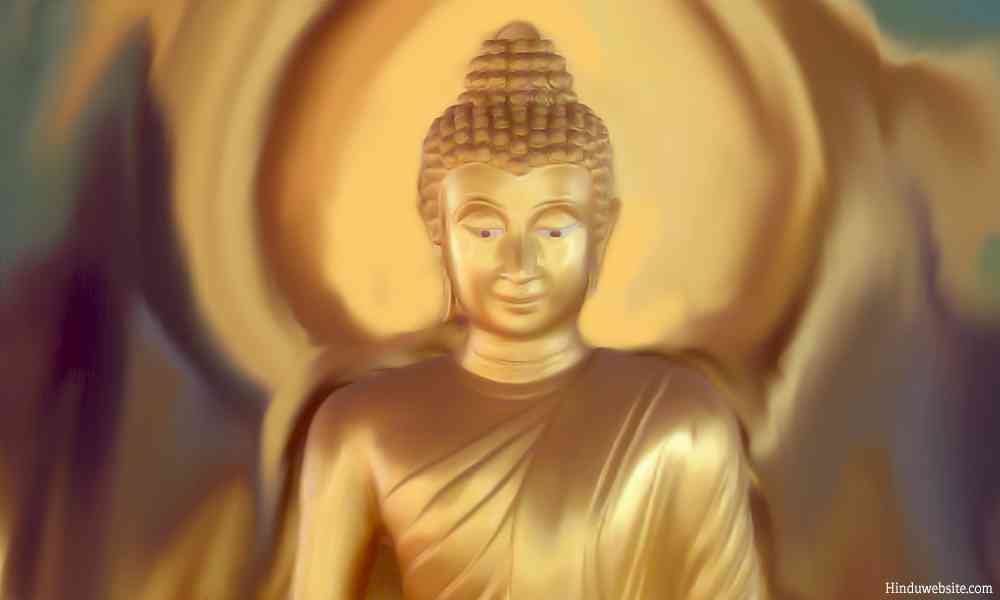
Dai-o (1235-I308), Daito (1282-1336), and Kwanzan (1277-1360) are the three outstanding luminaries in the history of the Japanese Rinzai school of Zen. All the masters of this school now in Japan are their descendants. Dai-o went to China and studied under Kido (Hsu-t'ang) in southern China, whose high expectations of the foreign disciple were fully justified as we can testify in the Japanese history of Zen.
Daito is the founder of Daitokuji monastery and Kwanzan that of the Myoshinji, both Kyoto. Muso (1273-1351) who followed another lineage of the Zen masters was versatile in artistic accomplishments. There are many noted gardens designed by him which are still well preserved. He was the founder of many Zen temples throughout Japan which the most notable one is Tenryuji at Saga, near Kyoto. Hakuin (1685-1768) is the father of modern Rinzai Zen. Without him it would be hard to tell the fate of Zen in Japan. He was no founder of a temple of any ecclesiastical importance; he lived his unpretentious life in a small temple in Suruga province, devoting himself to the bringing up of Zen monks and to the propagation of his teaching among laymen.
I
DAI-O KOKUSHI "ON ZEN"
There is a reality even prior to heaven and earth;
Indeed,
it has no form, much less a name;
Eyes fail to see it; It
has no voice for ears to detect;
To call it Mind or Buddha
violates its nature,
For it then becomes like a visionary
flower in the air;
It is not Mind, nor Buddha;
Absolutely
quiet, and yet illuminating in a mysterious way,
It allows
itself to be perceived only by the clear-eyed.
It is Dharma
truly beyond form and sound;
It is Tao having nothing to
do with words.
Wishing to entice the blind,
The Buddha
has playfully let words escape his golden mouth;
Heaven and
earth are ever since filled with entangling briars.
O my
good worthy friends gathered here,
If you desire to listen
to the thunderous voice of the Dharma,
Exhaust your words,
empty your thoughts,
For then you may come to recognize this
One Essence.
Says Hui the Brother, "The Buddha's Dharma
Is not to be given up to mere human sentiments."
2
DAI-O KOKUSHI'S ADMONITION[1]
Those who enter the gate of Buddhism should first of all cherish a firm faith in the dignity and respectability of monkhood, for it is the path leading them away from poverty and humbleness. Its dignity is that of the sonship of the Dharmaraja of the triple world; no princely dignity which extends only over a limited area of the earth compares with it. Its respectability is that of the fatherhood of all sentient beings; no parental respectability belonging Only to the head of a little family group equals it. When the monk finds himself in this position of dignity and respectability, living in the rock-cave of the Dharma where he enjoys the greatest happiness of a spiritual life, under the blissful protection of all the guardian gods of the Triple Treasure, is there any form of happiness that can surpass his?
The shaven head and the dyed garment are the noble symbols of Bodhisattvahood; the temple-buildings with all their ornamental fixtures are the honorific emblems of Buddhist virtue. They have nothing to do with mere decorative effects.
[1. Left to his disciples as his last words when he was about to pass away.]
That the monk, now taking on himself these forms of dignity and respectability, is the recipient of all kinds of offerings from his followers; that he is quietly allowed to pursue his study of the Truth, not troubling himself with worldly labours and occupations-this is indeed due to the loving thoughts of Buddhas and Fathers. If the monk fails in this life to cross the stream of birth-and-death, when does expect to requite all the kindly feelings bestowed upon him by his predecessors? We are ever liable as time goes on miss opportunities; let the monk, therefore, be always on e watch not to pass his days idly.
The one path leading up to the highest peak is the mysterious orthodox line of transmission established by Buddhas and Fathers, and to walk along this road is the essence of appreciating what they have done for us. When the monk fails to discipline himself along this road, he thereby departs from the dignity and respectability of monk-hood, laying himself down in the slums of poverty and misery. As I grow older I feel this to be my greatest regret, and, O monks, I have never been tired day and night of giving you strong admonitions on this point. Now, on the eve of my departure, my heart lingers with you, and my sincerest prayer is that you are never found lacking in the virtue of the monkish dignity and respectability, and that you ever be mindful of what properly belongs to monkhood. Pray, pray, 'be mindful of this, O monks!
This is the motherly advice of Nampo;[1] old monk-mendicant of Kencho Monastery.
3
DAITO KOKUSHI'S ADMONITION
O you, monks, who are in this mountain monastery, remember that you are gathered here for the sake of religion and not for the sake of clothes and food. As long as you have
[1. This is Dai-o Kokushi's own name, Dai-o being his posthumous honorary title.]
shoulders [that is, the body], you will have clothes to wear, and as long as you have a mouth, you will have food to eat. Be ever mindful, throughout the twelve hours of the day, to apply yourselves to the study of the Unthinkable. Time passes like an arrow, never let your minds be disturbed by worldly cares. Ever, ever be on the look-out. After my departure, some of you may preside over five temples in prosperous conditions, with towers and halls and holy books all decorated in gold and silver, and devotees may noisily crowd into the grounds; some may pass hours in reading the sutras and reciting the dharanis, and sitting long in contemplation may not give themselves up to sleep; they may, eating once a day and observing the fastdays, and, throughout the six periods of the day, practise all the religious deeds. Even when they are thus devoted to the cause, if their thoughts are not really dwelling on the mysterious and untransmissible Way of the Buddhas and Fathers, they may yet come to ignore the law o moral causation, ending in a complete downfall of the true religion. All such belong to the family of evil spirits; however long my departure from the world may be, they are not to be called my descendants. Let, however, there be just one individual, who may be living in the wilderness in a hut thatched with one bundle of straw and passing his days by eating the roots of wild herbs cooked in a pot with broken legs; but if he single-mindedly applies himself to the study of his own [spiritual] affairs, he is the very one who has a daily interview with me and knows how to be grateful for his life. Who should ever despise such a one? O monks, be diligent, be diligent.[1]
DAITO KOKUSHI'S LAST POEM
Buddhas and Fathers cut to pieces--
The sword is ever
kept sharpened!
Where the wheel turns,
The void gnashes
its teeth.
[1. In those monasteries which are connected in some way with the author of this admonition, it is read or rather chanted before a lecture or Teisho begins.]
IV
KWANZAN KOKUSHI'S ADMONITION[1]
It was in the Shogen period (1259) that our forefather venerable Dai-o crossed the stormy waves of the great ocean in order to study Zen in Sung. He interviewed Hsu-t'ang (Kido) the great Zen master at Ching-tz'u (Jinzu) and under him Dai-o whole-heartedly devoted himself to the realization of Zen experience. Finally at Ching-shan (Kinzan) he was able to master all the secrets longing to it. For this reason he was praised by his master as "having once more gone over the path", and the prophecy was also given him that his "descendants would ever be increasing." That the rightful lineage of the Yang-ch'i, (Yogi) school was transported to this country of ours is to be ascribed to the merit of our venerable forefather.
Daito, my old venerable teacher, followed the steps of Dai-o who stayed in the western part of the capital; personally attending on him, he was in close contact with the "Master during his residence at Manju in Kyoto and at Kencho in Kamakura. Throughout the many years of attendance Daito never laid himself on a bed for sleep. He reminds us in many respects of the ancient worthies. When finally he mastered Zen, the venerable Dai-o gave him his testimony but ordered him to mature his experience for twenty years in quiet retirement. Surely enough, he proved to be a great successor truly worthy of his illustrious master, Dai-o. He resuscitated Zen which had been in a state of decline; he left an admonition for his followers to be ever mindful of keeping vigorously alive the true spirit of Zen discipline; all this is his merit.
[1. Muso Daishi is the honorific title posthumously given by an Emperor to Kwanzan Kokushi, the founder of Myoshinji, Kyoto, which is one of the most important Zen headquarters in Japan. All the Zen masters of the present day in Japan are his descendants. Some doubt is cherished about the genuineness of this Admonition as penned by Kwanzan himself, on the ground that the Content is too "grandmotherly".]
That in obedience to the august order of his Holiness the Ex-Emperor Hanazono I have come to establish this monastery, is due to the motherly love of my late master who chewed food for his helpless baby. O my followers, you may some day forget me, but if you should forget the loving thoughts of Dai-o and Daito, you are not my descendants. I pray you to strive to grasp the origin of things. Po-yun (Hakuun) was impressed with the great merit of Pai-chang (Hyakjo), and Hu-ch'iu (Kokyu) was touched with the words of warning given by Po-yun (Hakuun). Such are our precedents. You will do well not to commit the fault of picking leaves or of searching for branches, [instead of taking hold of the root itself].
V
MUSO KOKUSHI'S ADMONITION
I have three kinds of disciples: those who, vigorously shaking off all entangling circumstances, and with singleness of thought apply themselves to the study of their own [spiritual] affairs, are of the first class. Those who are not so single-minded in the study, but scattering their attention are fond of book-learning, are of the second. Those who, covering their own spiritual brightness, are only occupied with the dribblings of the Buddhas and Fathers are called the lowest. As to those minds that are intoxicated by secular literature and engaged in establishing themselves as men of letters and are simply laymen with shaven heads, they do not belong even to the lowest. As regards those who think only of indulging in food and sleep and give themselves up to indolence-could such be called members of the Black Robe? They are truly, as were designated by an old master, clothes-racks and rice-bags. Inasmuch as they are not monks, they ought not to be permitted to call themselves my disciples and enter the monastery and sub-temples as well; even a temporary sojourn is to be prohibited, not to speak of their application as student-monks. When an old man like myself speaks thus, you may think he is lacking in all-embracing love, but the main thing is to let them know of their own faults, and, reforming themselves, to become growing plants in the patriarchal gardens.
VI
HAKUIN'S "SONG OF MEDITATION"
Sentient beings are primarily all Buddhas:
It is like
ice and water,
Apart from water no ice can exist;
Outside
sentient beings, where do we find the Buddhas?
Not knowing
how near the Truth is,
People seek it far away,--what a pity!
They are like him who, in the midst of water,
Cries in thirst
so imploringly;
They are like the son of a rich man
Who
wandered away among the poor.
The reason why we transmigrate
through the six worlds
Is because we are lost in the darkness
of ignorance;
Going astray further and further in the darkness,
When are we able to get away from birth-and-death?
As regards the Meditation practised in the Mahayana,
We
have no words to praise it fully:
The virtues of perfection
such as charity, morality, etc.,
And the invocation of the
Buddha's name, confession, and ascetic discipline,
And many
other good deeds of merit,--
All these issue from the practice
of Meditation;
Even those who have practised it just for
one sitting
Will see all their evil karma wiped clean;
Nowhere will they find the evil paths,
But the Pure Land
will be near at hand.
With a reverential heart, let them
to this Truth
Listen even for once,
And let them praise
it, and gladly embrace it,
And they will surely be blessed
most infinitely.
For such as, reflecting within themselves,
Testify to
the truth of Self-nature,
To the truth that Self-nature is
no-nature,
They have really gone beyond the ken of sophistry.
For them opens the gate of the oneness of cause and effect,
And straight runs the path of non-duality and non-trinity.
Abiding with the not-particular which is in particulars,
Whether going or returning, they remain for ever unmoved;
Taking hold of the not-thought which lies in thoughts,
In
every act of theirs they hear the voice of the truth.
How
boundless the sky of Samadhi unfettered!
How transparent
the perfect moon-light of the fourfold Wisdom!
At that moment
what do they lack?
As the Truth eternally calm reveals itself
to them,
This very earth is the Lotus Land of Purity,
And this body is the body of the Buddha.
Suggestions for Further Reading
- Essays On Dharma
- Esoteric Mystic Hinduism
- Introduction to Hinduism
- Hindu Way of Life
- Essays On Karma
- Hindu Rites and Rituals
- The Origin of The Sanskrit Language
- Symbolism in Hinduism
- Essays on The Upanishads
- Concepts of Hinduism
- Essays on Atman
- Hindu Festivals
- Spiritual Practice
- Right Living
- Yoga of Sorrow
- Happiness
- Mental Health
- Concepts of Buddhism
- General Essays
Source: From the Manual of Zen Buddhism by Daisetz Teitaro Suzuki, D. Litt., one of the most popular 20th century writers about Zen Buddhism