
Yoga's Best Kept Secrets
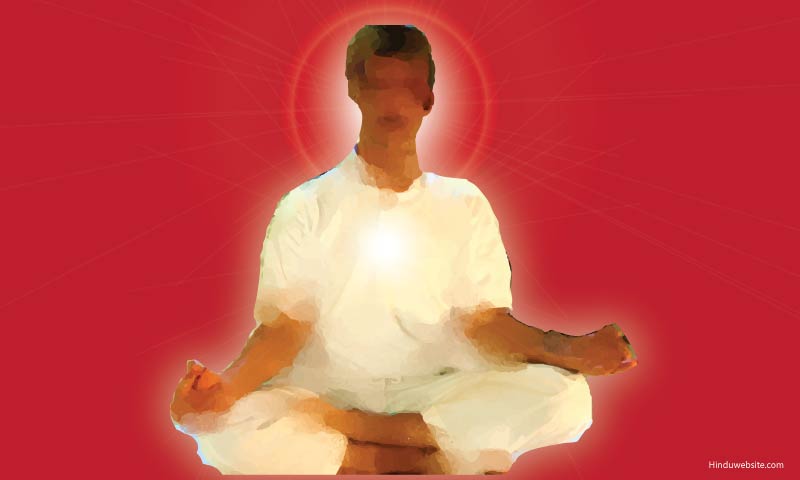
The Purpose of yoga and the nature of citta
The purpose of yoga is to prevent the modifications or afflictions of the citta. These modifications arise because of the outgoing nature of the senses and our desire for sense objects. The citta which the Yoga speaks about is not the same as the mind we know in the modern science. Manas is perhaps a more appropriate word for it, although there are some serious fundamental differences between the two. For example the mind in Hinduism is a receptacle that does not create thoughts. It rather receives various thought forms from the universal consciousness according to its receptivity and transmits them back into it according to its intentions and inclination.
The citta, which yoga refers, is a complex internal mechanism, chiefly responsible for our perception, cognition, memory and intelligence. It is not a product of electric impulses or brain mechanism, but a luminous substance made up of fine particles of energy and consciousness. It is difficult to translate the word citta into English because of the complexity of its structure and functions. Each living being is permeated with the substance of citta not just in its head region but its entire body and also around it. The citta serves as the substratum or support for other agencies of a living being, namely intellect (buddhi), mind (manas), senses (indriyas), ego (aham) and the five elements (mahabhutas). Together they are often called the internal organ (antahkarana).
Although it is difficult to translate the word "citta" into English we may loosely translate it as dynamic consciousness formed by the association of the cit (pure consciousness) with shakti (pure energy). The citta constitutes the waters of life from which further creation comes forth. It should not be mistaken as an extension of the brain because it has the ability to travel long distances at unimaginable speeds and interact with the objects it perceives through the senses and replicates them exactly in itself. In other words the citta is not just a perceiving mechanism but an interactive mechanism in which it acts both as the perceiver and the replicator of the things perceived. All the three qualities or gunas, namely sattva, rajas and tamas are present in it. Sattva plays an important role by providing it the luminoisity to perceive things clearly, while the other two keep it in different states of activity and inertia.
The citta has different states (bhumis) which arise in a being according to its level of evolution. It has the ability to expand or contract, depending upon the type of being and its state of evolution. It has a working component called karyacitta, which dies with the being and a causative component called karana citta which survives death and becomes a blueprint for the next life of the soul. The citta is susceptible to five different types of modifications or whirls known as citta vrittis caused by different types of perception, namely correct perception, wrong perception, imagination, sleep and memory. The purpose of yoga is to control the whirls and stabilize the citta so that one is able to perceive things clearly and find one's own own essence hidden in everything. This is accomplished through progressive stages of purification in which the quality of sattva in the consciousness is increased while rajas and tamas are proportionately reduced or suppressed.
The two way process of perception
Modern science affirms that perception is an inward process. That is, outside objects make their impressions upon the mind through the senses. Various schools of Hinduism do not think so. They believe that perception is mostly an outward process. The senses are called agents of Indra (Indriyas) because they serve their master (indra represented by the mind in the human body) as his work horses or spies. They go out to gather information about the objects they grasp and feed it to the mind. While the senses are moving among the objects the citta also moves with them replicating the objects grasped by the senses internally in itself. This replication is responsible for the modifications (vrittis) of the citta resulting in both perception and cognition.
The citta functions like a multi dimensional copier and recorder with an ability to absorb itself in the object of its concentration and become that which it concentrates upon. Thus perception is not just a reflective process but a truly creative and bidirectional process in which the world is internalized in the citta and the citta is externalized in the world. The citta does not always reflect and recreate the objects of the world faithfully. It depends upon whether the perception has taken place correctly or incorrectly.
Patanjali describes the mirroring as the modifications of the citta (citta vrittis). He identifies five types of modifications arising from five types of perception, namely right perception, (pramana), wrong perception (viparyaya), imagination (vikapla), unconscious perception (nidra) and perception influenced by memory (smriti). The citta is attached to the body, but it has the ability to extend itself freely wherever the senses can go. It actually keeps wandering all the time in the objective world following the senses and their activities. This outward movement of the citta and the senses give rise to suffering, restlessness, attachment and the like, which yoga aims to resolve through various means.
The problem of suffering and its solution
Classical yoga holds that our suffering (klesa) arises from two sources: from our present actions and from the latent impressions (samskaras) that are stored in our consciousness. Suffering is present in every aspect of our existence because of the instability and impermanence that is weaved into it and the objects we interact with which in themselves impermanent and destructible. Even the seemingly happy moments are laced with a shadow of suffering. Our lives vacillate between the extremities of suffering and happiness, despair and hope and many similar pairs of opposites with which we are familiar.
According to the Yogasutra, for a discerning yogi (vivekin) everything appears to be suffering , because of the evolving and transforming nature of the things of the world, the ever changing composition of the qualities of Nature (gunas) and the modifications arising in the citta due to various kinds of perception. Ordinary people with untrained minds, may not even notice the suffering underlying what we consider normal and daily routine, because a great deal of our suffering happens in the unconscious and subconscious layers of our consciousness. But a discerning yogi finds it everywhere and knows its true significance.
Dukha
Dukha is another word used in yoga to denote suffering. Dukha means bad (du) axle hole (kha). Etymologically dukha means any suffering that arises from the various apertures and weaknesses present in the body and the mind. Indian schools of philosophy recognize three forms of human suffering:
- suffering caused by oneself,
- suffering caused by others and
- suffering caused by gods.
Each person creates suffering for himself thorough his own egoism, ignorance, vices, weaknesses, desires, thinking and actions. This is suffering caused by oneself. Some times suffering is brought upon us by other people, such as our friends, colleagues, acquaintances, family members, strangers and government authorities and creatures like poisonous snakes, insects, dogs, tigers, lions and elephants. This is suffering caused by others. Finally, we also suffer from the actions of gods when they intervene in our lives in the form of fate, planetary influences, unforeseen obstructions, accidents, death and natural calamities. When in His unbound love God bestows favors upon evil characters like Ravana everyone suffers.
Desires as the root cause of our suffering
Long ago our ancient thinkers identified desires as the root of our suffering. Hinduism, Jainism and Buddhism are unanimous on this point, although they differ in their interpretation of its nature and cure. According to classical yoga, desires arise from the activity of the senses and the outgoing nature of citta, which result in passion (raga). Passion leads to the preponderance of rajas and rajas which lead to the five common problems of human existence, namely sexual desire (kama), anger (krodha), pride (mada), matsarya (envy) and greed (lobha). They in turn give rise to ignorance (avidya), delusion (moha) egoism (asmita) and bondage to the cycle of births and deaths.
Since the citta and the senses are primarily responsible for our suffering, a person can alleviate his suffering by withdrawing them from the objects and moving them in the direction of his inner self inwardly. The eightfold practice of yoga and the self-purification that arises from it in the form of increase in the quality of sattva results in equanimity, which is the foundation to achieve more stable states (bhumis) of citta and experience self-absorption (samadhi).
Establishing equanimity in the citta, however, is not an easy process. Distractions (citta vikshepas) arise in the consciousness in the form of suffering and mental disturbances, as a yogi strives to control his mind and body. Sometimes it leads to more acute problems like sickness, mental turmoil, negative thoughts, nightmares and the like, which require the intervention of his guru or a divinity. Except for a few blessed souls who have achieved progress on the path of yoga in their previous lives, many who practice yoga have to be perseverant, follow years of discipline and practice (abhyasa) intense methods of self-purification to change the habitual modes of their minds and bodies to become stabilized in themselves. For them Patanjali prescribes:
- study (svadhyaya),
- discrimination (viveka),
- devotion to self (Isvara),
- detachment (vairagya), self-purification and
- constant muttering (japa) of the sound Aum (pranava).
Even after all this effort their suffering may not cease, because the latent impressions (samskaras) present in their cittas have to work themselves out in their own time and space.
Samkhya and Yoga - their ancient connection
Classical yoga shares many metaphysical concepts of the ancient Samkhya school (800 BC-300 BC), which seems to have its roots both in the speculative theistic thought of the early upanishads as well the realistic and materialistic schools of the later Vedic period. According to both Samkhya and Yoga school, the world is inhabited by two primary components: Purusha, the individual Soul and Prakriti the primeval Nature. They are the the two facets of our existential reality, hidden in all animate and inanimate objects.
Purusha and Prakriti
Purusha is the first principle. It is an absolutely independent and eternally free entity, which is neither created nor creates, which is neither cause nor effect and which has neither "before" nor "after". There is not one but innumerable souls (purushas) floating in the universe. Purusha is described in Hindu theistic schools as the single principle (eka tattva), soul, space (akasa), emptiness (sunya), light, consciousness, pure, knowledge, eternal, indivisible, indestructible, Lord or God (Isvara), immutable, real,, the knower and One.
Prakriti is the second principle. It is the primeval energy, which is also uncreated, eternal and indestructible. It is not created but it creates. It is independent, but for the purpose of manifestation it has to depend upon the souls. As the cause it is invisible, but its presence can be inferred through the effects it produces. Prakriti is described as Nature, matter, energy, force, movement, life, intelligence, eternal, mechanical, divisible, indestructible, mutable, real, divided and the known. All the causes are hidden in Prakriti and all the effects in turn are latent in their respective causes. In other words, technically, Prakriti does not create anything new. In reality, its creation is an unfolding process, which results in the evolution and transformation of its energy and its various components and aggregations. Their permutations and combinations manifest as the animate and inanimate objects of the world.
When they both come into contact with each other, Prakriti creates the embodied souls or Jivas with the help of its 24 principles or evolutes (tattvas). At the core of Prakriti are its three principles known as qualities (gunas) namely sattva, rajas and tamas. They are the primordial qualities of Nature, which impart specificity and properties to the objects and their movements by their presence. They play an important role in the evolution and transformation of Prakriti
What's Self? Is it space, consciousness or mere emptiness?
Imagine an empty space. Some one builds a house around it. Now that empty space becomes the house. When you look at a house you usually think of the building, the walls, the windows and the rooms, but not the empty space around which and in which it is built. Apparently a house is recognized by its location, form and shape. But the truth is it could not have existed physically and perceived at all, without the space which holds it and which is also present in it.
Preoccupied as we are with the things of the world, we hardly pay attention to the space and its value in our existence. When we think of an object we think of its form or shape, but not the space hidden in it. We either take the space for granted or simply ignore its silent but persistent presence in every moment and aspect of our lives.
Something similar to it happens to the Soul (Purusha), as Nature (Prarktiti) builds a house (body) around it, using its own material called the principles (tattvas). We call this house a living being (jiva) and recognize it by its name, appearance or form. In reality, Purusha is the space and Prakriti is its outer covering. Purusha is the real stuff and Prakriti is a mere package. It is our tendency to identify ourselves with our names, looks, features and possessions, but not the space with in us, because we can neither distinguish the space nor give it a proper name. In truth, forms and things cannot exist without the space. The space is the bearer, the upholder of the entire universe and everything that exists in it. Nothing can exist outside the space, even from a scientific point of view. It is a universal truth which neither science nor religion can dispute.
Is it Self or Not-Self? Is it everything or nothing?
Now for centuries Indian scholars have debated, discussed, argued and quarreled among themselves what this space might be. Is it mere nothingness, emptiness, pure consciousness, a self aware intelligence, an individual entity of unimaginable dimensions or simply the universal space? The seekers of Truth wondered for centuries in this manner in the ancient world of India, offering different explanations and interpretations. Unfortunately, no commonly acceptable solution has ever come out of it.
With regard to the nature of soul, there are mainly two basic arguments. One holds it to be mere nothingness or emptiness and the other believes it to be a spacious and endless consciousness. The Buddhist believe that there is nothing that is stable and subject to no change inside a living being except perhaps mere emptiness or nothingness. Everything is in a state of flux and subject to change. Every living being, without exception, is a formation of compound elements. Formation and decomposition, this is the order of life. The theory of origination (pratitya samutpada), propounded in Buddhism, visualizes this process happening through 12 stages. Starting with ignorance (avidya), it passes through phases like activity (samskara), consciousness (vijnana), name and form (nama rupa), contact (sparsha), feeling (samvega), craving (trshna), grasping (udapana, becoming (bhava), and ends with aging and death (jara marana). Individuality, thus, is a mere illusion caused by the play of the senses and the ignorance of our consciousness with no external agency like a Creator involved. As is evident by now, the Buddhists do not believe in the existence of an eternal and unchangeable self and call that nothingness as not-self (anatma).
Jainism and some schools of Hinduism including classical yoga consider the inner space (akasa) to be the absolute, indivisible, indestructible, eternal and absolute Self, limited when held by Nature in the body and detached, self-absorbed, blissful and unlimited when it is completely free from Nature.
There is also no unanimity on whether the Self in its absolute state exercises any will of its own. Some believe it has no will of its own while some hold the opposite view. Some describe the individual soul in its absolute state as either the creator God (Isvara) or a personal God. Some even contend that there is no such phenomena as God but just individual souls existing in different states of freedom or bondage. They are either free from Prakriti for ever or free after they became liberated or still bound by it. Here Prakriti is the encroacher, who trespasses into the space of the passive soul and builds her nest around it.
Some theistic traditions describe the Self as both the Universal Self (God or Brahman) and individual Self (Soul or Atman). They explain that the One Creator God becomes many to support His manifestation and enjoy the myriad objects of His own creation. They describe Prakriti as the dynamic energy of God and God as the Enjoyer of His creation. Shankara upheld the belief that the only reality ever existed was Brahman or the Universal Self and that the diversity which we would experience through our senses was mere illusion. He considered the individual soul also as an illusion because in reality everything was Brahman.
From Shankara's perspective, the space inside a house or body was not different from the space outside of it or anywhere else. So when the barriers that isolated and created a distinct form in the universal space disappeared, the notion of individuality disappeared with it forever and the space alone remained. Shankara's space was however not mere nothingness. It was permeated with the presence of Isvara, the Supreme Lord and Truth consciousness. Modern Hinduism generally accepts the theory that the individual self is stable and unchangeable, while Prakriti envelops the souls and builds itself around it undergoing transformation and evolution, using the soul as the support, just like a bird which builds its nest on a tree or a support for its progeny.
Classical Yoga
Classical yoga of Patanjali holds that the inner space is both the witnessing Self (purusha) and the absolute Self (Isvara), the latter having the ability, as a personal God, to free the former from the cycle of births and deaths as a result of the practice of yoga. The purpose of yoga is described to be to unwind the evolution of Nature, through purification, and set the soul free from the cycle of births and deaths. Yoga considers the body, the mind and other constituents of Nature that are formed around the soul as the impurities. They veil the soul and prevent it from being free.
Classical yoga aims to remove the impurities through a prolonged process of purification and transformation of the mind and the body. To achieve this end, it recommends the eightfold approach, popularly known in the yoga circles as the eight the limbs of yoga. Hence classical yoga also goes by the name Ashtanga Yoga (eight limbed yoga). Not all yogas, however, follow this approach.
There are many types of yoga like Jain yoga, Buddhist yoga, hatha yoga, karma yoga, jnana yoga, bhakti yoga, mantra yoga, tantra yoga and so on. In each of these categories there are many further subdivisions. But eightfold yoga is called classical yoga because it is based on the Yogasutra of Patanjali, which is by far the most ancient text available on yoga, composed around 200 BC, as a source book of a popular tradition that was already in practice several centuries before Patanjali.
The eightfold Practice
The eightfold practice of yoga consists of yamas (restraints or don'ts), niyamas (observations or dos), asanas (postures), pranayama (regulated breathing), pratyahara (withdrawal of the senses), dharana (concentration), dhyana (meditation or contemplation) and samadhi (higher states of self absorption). Patanjali suggests that through regular practice (abhyasa), detachment (vairagya), constant muttering of Aum (japa), inwardness of the mind (pratyak cetana) and purification of the citta one can make progress on the path of yoga and achieve liberation.
From Patanjali's Yogasutras and scriptures of Tantra we learn that an embodied soul is a prisoner of its own body and mind. It is subject to the limitations of space (niyati), time (kaala), knowledge (vidya), passion (raga) and power or skill (kala). Its spiritual journey begins when it realizes the distinction between the Self (Purusha) and the Nature (Prakriti) and identifies itself with the imperishable space or the consciousness or the nothingness that exists in it and around it rather than the mind and body. In other words what is needed is an out of the box thinking (thinking of the space instead of the form) and a new paradigm (that one is the pure soul not the mind and the body) to break through centuries of old habits and deluded thinking to look at oneself anew and experience oneself as an eternal and radiant being.
Yoga is all about identifying yourself with your inmost Self (Isvara), concentrating and contemplating upon it constantly to become absorbed in it with the help of a guru. From the eightfold practice of yoga arises equanimity of the mind and detachment from the worldly objects. It will lead to purification of the mind and body, culminating in the highest state of Samadhi in which all distinctions and duality will disappear forever resulting in your liberation.
Suggestions for Further Reading
- Om, Aum, Pranava or Nada in Mantra and Yoga Traditions
- Brahmacharya or Celibacy in Hinduism
- Atheism and Materialism in Ancient India
- Solving the Hindu Caste System
- How To Choose Your Spiritual Guru?
- Creation in Hinduism As a Transformative Evolutionary Process
- Wealth and Duty in Hinduism
- Do You Have Any Plans For Your Rebirth or Reincarnation?
- Understanding Death and Impermanence
- Lessons from the Dance of Kali, the Mother Nature
- Letting your God live in You - The True Essence of the Hindu Way of Life
- prajnanam brahma - Brahman is Intelligence
- Maslow's Hierarchy Of Needs From The Perspective Of Hinduism
- The Defintion and Concept of Maya in Hinduism
- The Meaning of Nirvana
- Self-knowledge, Difficulties in Knowing Yourself
- Hinduism - Sex and Gurus
- The Construction of Hinduism
- The Meaning and Significance of Heart in Hinduism
- The Origin and Significance of the Epic Mahabharata
- The True Meaning of Prakriti in Hinduism
- Three Myths about Hinduism
- What is Your Notion of God?
- Why Hinduism is a Preferred Choice for Educated Hindus
- Essays On Dharma
- Esoteric Mystic Hinduism
- Introduction to Hinduism
- Hindu Way of Life
- Essays On Karma
- Hindu Rites and Rituals
- The Origin of The Sanskrit Language
- Symbolism in Hinduism
- Essays on The Upanishads
- Concepts of Hinduism
- Essays on Atman
- Hindu Festivals
- Spiritual Practice
- Right Living
- Yoga of Sorrow
- Happiness
- Mental Health
- Concepts of Buddhism
- General Essays