
Atheism and Materialism in Ancient India
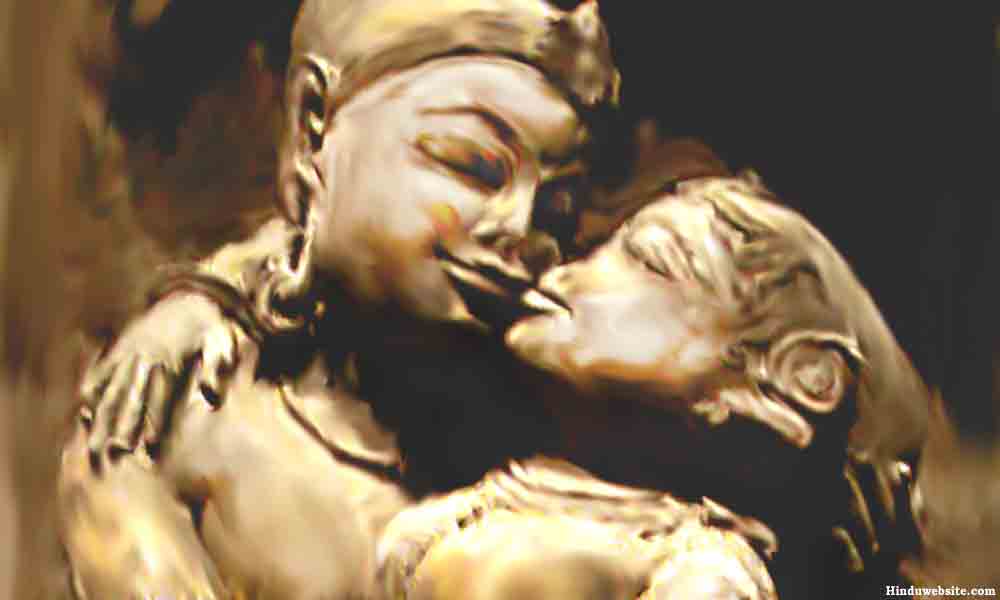
"Lokayata is always the only sastra; in it only perceptual evidence is authority; the elements are earth, water, fire and air; wealth and enjoyment are the objects of human existence. Matter can think. There is no other world. Death is the end of it all." - Prabodhachandrodaya
"When attempts are made to smother the intellectual curiosity of people, the mind of man rebels against it, and the inevitable reaction shows itself in an impatience of all formal authority and wild outbreak of the emotional life long repressed by the discipline of the ceremonial religion." - S Radhakrishnan
"Perception is our only knowledge or real religion. Talking about our soul for ages will never make us know it. There is no difference between theism and atheism. In fact, the atheist is the truer man." - Swami Vivekananda
"Veiled by My Yogamaya, I am not seen by all. Hence these foolish men do not know Me as the unborn and imperishable Supreme Self - The Bhagavadgita (Ch 6.25).
During the post Vedic period, around the time some of the principal Upanishads were composed, ancient India witnessed the rise of many heterodox schools, which were mostly atheistic or materialistic or agnostic in nature and enjoyed a strong following of their own. They questioned the religious authority of the Vedas and challenged the prevailing beliefs and practices of the orthodox schools of Hinduism based on the empirical evaluation of their sensory perceptions and rejection of the traditional means of knowledge. They thrived in an environment of religious and intellectual freedom, which was characteristic of Indian society since ancient times. The heterodox schools emerged partly in response to the growing weight of the Vedic ceremonies and weaknesses of the Vedic society which relied heavily upon ceremonial fare and privileges based upon hereditary rights. As S.Radhakrishnan stated, it was the time during which the "faith of centuries was dissolving like a dream," as the "hold of the authority" was loosening and "traditional bonds" were weakening.
Ancient Indian society was not without its own shackles. People had to live within the framework of the caste system and cope with the dominance of priestly families, who wielded enormous religious authority based on scriptural knowledge to keep the rulers and the people alike within certain bounds. There was also the fear of retribution and the possibility of social disapproval, which kept people adhere to their ancient gods and ways of life. But the Vedic tradition was oppressive enough only when people were willing to remain within its rigid confines and adhere to the beliefs and practices it advocated. Those who were bold enough to break out of the orthodox and the traditional mindset and challenge the excesses of the Vedic puritanism had enough opportunities outside its pale of influence to explore new ways of experimenting with the truth and cultivating their distinct worldviews.
Ancient India was a like a melting pot of diverse thoughts and cultures as is the USA today where new age religions and experimental philosophies seem to sprout like mushrooms after a rainy day. India was then a land of opportunity and religious freedom, with layers upon layers of complexity built into its social structure and religious milieu that made it difficult for any religious or political authority to thrive without opposition and fair amount of critical evaluation. The organic growth of religious institutions and the existence of diverse linguistic and racial groups ensured that the rulers would be better off if they remained above partisanship in social and religious matters. The rulers were mostly religious, but prudent enough to confine themselves to temporal matters and limit their interference in the religious beliefs of the people they ruled. Sometimes if they tried to enact the role of divine authority, they did so with tolerance and humility. They worshipped gods, promoted religious debates, prized the advice of the priests and supported religious institutions according to their beliefs and values, but did not deem it necessary to enforce their own beliefs and thoughts upon others. They considered it prudent to let people work for their own salvation in their own individual ways or according to the divine law (dharma), rather than according to the wishes of their temporal authority which they found to be too fragile in times of war and unrest to replace the law of God (dharma).
Religious freedom and freedom of enquiry led to a great churning of human thought in ancient India and culminated in the rise of many heterodox schools of philosophy around 6th Century B.C.E. Some of them rejected speculative philosophies and relied exclusively upon sensory experience to make sense of the world and find solutions to the problems of human life purely in human terms. They rejected all notions of speculation and imagination and relied upon tangible proof and rationale methods to arrive at truth, an approach that is very similar to the one followed by the scientists of the modern world.
The paradox of religion
A million theories exist today as to the nature of God, after life, soul, heaven and hell. People get emotional, societies dissolve into turmoil, nations go to war and crowds turn into frenzy because of differences in beliefs that cannot be resolved peacefully through debate or discussion. Each religion or school of philosophy holds on to its own specific beliefs and practices tenaciously and relies upon faith rather than rationality to perpetuate itself. In this conflicting medley of thoughts and emotions, people are simply confused and lost because they do not know what to follow and whether it is worthwhile to spend their valuable time for some future good or use it here and now for their own enjoyment.
People faced similar dilemmas in the past also. The conflict between self-interest and moral responsibility, or enjoyment and enlightenment, has always been present ever since man became civilized and established social and religious institutions. Religions thrive on faith and belief. Religions promote unconditional submission and obedience to scriptures and divine authority. Religions offer future rewards for present actions and try to bridle the inhuman in human so that transformation can be accomplished within the personality and new vistas of spiritual experience may present themselves to the adherents. But when man exercises his reason truthfully, all religions begin to crumble. When people begin to explore and enquire, faith without conviction begins to shake and the scriptures show deep crevices in their presentation of theological and spiritual truths.
This is a problem with which mankind has been battling since the earliest times. Reason is what sets man apart and reason is what pits him against established traditions of religious institutions, especially when they demand unconditional surrender and unquestionable loyalty, without satisfying the intellectual curiosity of educated minds. It is a significant dilemma that cannot be resolved without the exercise of fear or hope. We need proof to have faith and we cannot have proof unless we have faith. This is a paradox that has no simple solutions, till spiritual transformation and transcendental states of consciousness become more frequent, common and verifiable among a vast number of human beings.
From nature's perspective, religion is unnatural because it dictates man to deny himself or undo himself by sacrificing his own interests and assume social and moral responsibility for the world and the people in general with no immediate and apparent gains in return. Religion is a dull and dry subject to which we do not turn easily. It does not actually appeal to our base emotions or interests, unless we are shaken by some disturbing developments in our lives. It is hard to be religious or spiritual, because religion seems to unsettle us by demanding changes in our thinking and behavior to which we are not accustomed. It aims to reengineer our lives or reverse the process of creation by subjecting us to an arduous process of transformation and reconditioning. From a materialistic perspective, it looks regressive and depressing to make personal sacrifices for some ultimate good that is not quantifiable in material terms.
When you practice religion, you swim against the currents of life with no certainty of you ever reaching the shore. We do not turn to religion seriously, unless it adds some meaning and value to our lives. People like to be part of some religion outwardly because it helps them identify with certain religious values and feel affinity with certain groups. When religions fail to provide these, people begin to look for alternatives and move towards more radical solutions that are less taxing upon their minds and bodies. No wonder, in ancient India atheism was considered to be the way of the world or the most popular public opinion because it demanded no austerities or the rigors of the ascetic life. Most important of all, it castigated vedic caste system and birth based social privileges.
The heterodox schools
The Buddhist texts mention the names of a few heterodox teachers such as the following who rose to prominence during the post Vedic period of ancient India.
- Sanjaya who questioned the existence of soul and focused on attainment of peace.
- Purana Kasyapa who believed in creation without cause, moral relativism and passive nature of soul.
- Ajita Kesa Kambali who proposed a materialistic philosophy discrediting intuitive knowledge, Vedic rituals and enlightenment of perfected teachers, and acknowledged only four elements, earth, water, fire and air.
- Gosala who preached fatalism and predetermined progression of events over which men had no control.
- The Carvakas, an atheistic and materialistic school, who acknowledged only sense perception (pratyaksha) and considered happiness or enjoyment as the ultimate goal of human life.
- Prakhadu Katyana who identified soul as the sixth element and considered pain and pleasure stemmed from the permutation and combination of the elements.
The Carvakas
Of them the Carvakas were the most prominent. They proposed a down to earth approach to the enjoyment of life that stood in stark contrast to the theological and other worldly idealism of spiritual philosophies which suggested self-negation and sacrifices as the means to liberation. They rose to prominence some time during the post Rigvedic period, but certainly before the birth of the Buddha (567 B.C.E). The Carvakas got their name for their sophistry and polemical disputation. The word "carvaka" means sweet tongued or those who chew their words carefully. They were vehemently opposed to the Vedic establishment and its single-minded preoccupation with the appeasement of divinities through sacrificial ceremonies. We cannot call the Carvakas aspiritual in the modern sense because they believed in the existence of a soul that lived for a lifetime and died, in contrast to the Vedic belief in the existence of an immortal soul or the Buddhist belief in the non-existence of soul. They considered the sole purpose of human existence ought to be happiness and harmony by avoiding pain and suffering to the extent possible. For them spiritual practice meant keeping the mind and the body stable and healthy by maximizing pleasure and enjoyment and minimizing pain and suffering not only to oneself but to others. Because of their popularity, materialism and worldly orientation, the Carvakas were also called Lokayatas (proponents of worldliness).
We do not know much about how the school of Carvakas came into existence. According to tradition it was originally founded by Brihaspati and made popular by Carvaka, after whom the school got its name. Brihaspati (of the Vedic pantheon) was probably a mythical figure while Carvaka seems to be a historical person with a following of his own. The teachings of this school were compiled into Carvaka Sutra or the Lokayata Sutra. It might have been composed by Carvaka or his followers. But we are not sure of its authorship. Unfortunately the text is presently unavailable. The Carvaka philosophy was distinctly Indian, although it shared some common features with the theories of Ionians, Atomists and the Sophists who flourished in Greece between 6th and 4th Century B.C.E.
Our knowledge of Carvakas comes to us mostly from four traditional works: Krsna Misra's Prabodha Chandrodaya, Madchavacharya's Sarva Darsana Samgraha, Sankara's Sarva Siddhanta Samgraha and Jayarasi Bhatta's Tattvopaplavasimha. These works were composed long after the Carvakas ceased to be a force to reckon with in the social mileu of ancient India. Excluding Jayarasi, the authors of these texts had a strong contempt for the Carvakas and referred to them in their works either to refute their ideas or present them in a contrasting way so that they could present their own philosophies in a meaningful manner. They are therefore not very helpful to understand the true significance of the Carvakas and their role in the development of Indian philosophy. The very fact that the philosophy of the Carvakas was often used for juxtaposition (purvavada) proves the extent of their influence and importance in the intellectual circles of ancient India.
The philosophy of the Carvakas
The Charvakas rejected the authority of the Vedas, which they declared to be the work of "buffoons, knaves and demons." They vehemently opposed the sacrificial ceremonies and the notion of subjecting the mind and the body to suffering for spiritual advancement. They argued that there was neither God nor Soul. Creation was without cause and objects of the world come into existence because of material processes involving the aggregation and segregation of the four elements, namely earth, fire, water and air. This was in contrast to the traditional belief that the elements were five in number, including ether (akasa), the fifth element, which the Carvakas rejected because it was imperceptible and immaterial.
The Carvakas considered death to be the end of all life. According to them, there was nothing beyond death. Karma, gods and goddesses, heaven and hell were mere illusions of the human mind, invented by "the imposters of other schools of thought," to mislead the humanity. Direct perception was the only way of knowing things. All other means of knowing, such as inference (anumana), testimony (sabda pramana) of the scriptures, intuition and dreams, were false, unreliable and erroneous. The senses were the only reliable means of true and sure knowledge. They recognized two kinds of perception, the external and the internal. In the external perception the senses were in direct contact with the objects of the world, while in the internal perception the mind intercepted the knowledge presented by the senses. The Carvakas' rejection of inference and testimony were widely criticized by the scholars of various schools of Hinduism and Buddhism and is considered to be one of its main weaknesses.
The Carvakas denied the existence of an immortal soul or atman that transmigrated from birth to birth. According to them, the soul was mortal (dehatma), and not separate or independent from the body. It perished at the time of death. The living body was but the soul and it was subject to death and disintegration. The mind or consciousness was an extension or secretion of the matter, just as the wine of fermented grains, while thoughts, feelings and emotions were expressions of the body like the color or scent of a flower.
The Carvakas broke with the tradition completely and advocated against caste system, performance of sacrificial rituals, wearing of religious marks and observation of religious duties. Since they did not believe in the existence of karma or heaven and hell, they asked people to disregard moral scruples and make enjoyment the sole purpose of their lives. Since enjoyment cannot thrive in a sea of suffering, they implied social responsibility by asking the adherents to practice non-violence and non-grievous attitude towards others. The Savra Siddhanta Samgraha summarizes the Carvakas' emphasis on enjoyment in the following words1.
The heaven of enjoyment lies in eating delicious food, keeping company of young women, using fine clothes, perfumes, garlands, sandal paste, etc.
The pain of hell lies in the troubles that arise from enemies, weapons, diseases, while liberation (moksha) is death which is the cessation of life-breath.
The wise therefore ought not to take pains on account of that (liberation); it is only the fool who wears himself out by penances, fasts, etc.
Chastity and other such ordinances are laid down by clever weaklings. Gifts of gold and land, the pleasure of invitations to dinner, are devised by indigent people with stomachs lean with hunger.
The construction of temples, houses for water supply, tanks, wells, resting places and the like, is praised only by travelers not by others.
The Agnihotra ritual, the three Vedas, the triple staff carried by the priests, the ash-smearing, are the ways of gaining livelihood for those who are lacking in intellect and energy.
If a beast slain in the Jyotistoma rite will itself go to heaven, why then does the sacrificer not offer his own father immediately?
While life remains let a man live happily, let him eat ghee (clarified butter), even if he runs into debt. When the body turns to ashes how can it ever return again?
The wise should enjoy the pleasures of this world through the proper visible means of agriculture, keeping cattle, trade, political administration, etc.
The Carvakas were the most well organized and vehement proponents of atheism, materialism, naturalism, liberalism and individualism of the ancient world. They were not skeptical about their beliefs. Hence we cannot label them as agnostic. They enjoyed popular support. Although their literature and way of life are lost to us, their influence upon ancient Indian society can be seen in the rise of heterodox schools such as Jainism and Buddhism which were essentially atheistic in nature and shared some beliefs of the Carvakas. The Carvakas were one of the multitude of sects that thrived in ancient India as a reaction against established religious traditions that lost their shine due to certain excesses and decadence. They advocated a philosophy that was rooted in the immediate experience and evolved as a natural and practical response to the fragile and flitting nature of life in general.
Conclusion
It may be surprising to know for many in the west that the ancient Indian philosophies were not particularly religious or theistic. This was because till the emergence of Buddhism the concept of organized and monolithic religion was alien to the Indian tradition. The Carvaka, Mimansa, Samkhya schools were particularly atheistic, just as Buddhism was, while some like the classical Yoga and Jainism did not acknowledge a creator God. The Vedas focused on the worship of a multitude of individual deities, where as the Upanishads envisioned Brahman, a Supreme God of universal dimensions, who was also identified as the Creator God who inhabited and encompassed the worlds He created as the One and all. Saivism and Vaishnavism personified Brahman as Siva and Vishnu respectively and advocated bhakti or single minded devotion as the best means to liberation. Worshippers of Shakti on the other hand, saw the Mother Goddess as the supreme, eternal, universal and primeval matter and energy dynamic, encompassing and inhabiting all the manifestation, and capable of suffusing the human mind and body with higher forms of energy and consciousness. Some of these schools encouraged free enquiry to overcome the barriers of conditioned thinking and blind adherence to religious authority.
We cannot judge the Carvakas on the merits or demerits of their religious beliefs, simply because they did not believe in the existence of God. The Carvakas played a significant role in the evolution of religious thought in ancient India. They exposed the weaknesses of Vedic religion and the need for reform and retrospection. Most of us, at some point of time in our lives, suffer from self-doubt and despair and question the validity of our religious beliefs. On such occasions, when our faith wavers, we temporarily embrace the skepticism of the atheists. Our reaction on such occasions may be momentary or long lasting, but the fact remains that from time to time people have to cope with the conflicting demands of faith and reason.
A person who considers himself to be a person of faith, but is insincere and dishonest to himself and God is not different from an atheist in religious temperament. There are many in this world who practice religion with a demonic mindset, which is delineated in the Bhagavadgita, and for reasons that are directly in conflict with its chief purpose, which is to cultivate divine qualities and personal purity (sattva) through the practice of divine law (dharma) that would ultimately lead to our spiritual transformation (moksha) and final liberation. An atheist is probably more sincere and honest towards his beliefs and worldview than such people.
Of the four aims of human life (purusharthas) projected by the Vedic religion, the Carvakas aimed for only two, artha (wealth) and kama (sexual pleasure) and ignored the other two, dharma (religious duty) and moksha (liberation). There are many who profess to be religious, but spend their entire lives in pursuit of the same two aims (wealth and pleasure) with the assumption that they can practice the remaining two (religious duty and liberation) at some time in future when they are old and retired. They are not different from the Carvakas, except that they live in a state of denial.
Atheism is a phase in the evolution of life and intelligence. The animals have no religion, but according to Hindu, Jain and Buddhist beliefs they continue to evolve according to their deeds. Human beings are not judged by the religion they practice but by the deeds they perform. Pleasure is not a sin. Even by Hindu standards, it is one of the four aims of human life. The Carvakas preached enjoyment as the main purpose of human life. But they also recommended non-violence and responsible living by practicing normal occupations that were conducive to both personal enjoyment and social welfare. We arrive at theism through atheism. This is an established fact. It is why we have initiation ceremonies in almost all traditions.
The atheists and materialists of ancient India were against moral pretentions and exploitation of human sentiment with the use of speculative theology. But they were not against humanity or indiscriminately hedonistic. They preached non-violence and avoidance of harm and suffering to others because one could not truly enjoy life by inflicting suffering upon others. They were also not entirely indifferent to the need for moral and social responsibility as the outcome of evil and immoral behavior was within the grasp of the mind and the senses and universally verifiable through direct perception. They preached against blind faith and superstition and relied upon empirical evidence to arrive at the truths concerning life, which is also the hallmark of modern science. The Carvakas may not be correct in their interpretation of God and soul and their rejection of inference, testimony and other means of knowledge, because from experience we know that our senses have their own limitations, but their reliance upon objectivity to arrive at truths concerning human life cannot be disregarded nor their criticism of the excesses of traditional religions, precipitated frequently by the corruption of the human mind.
Suggestions for Further Reading
- The Role of Asceticism in the Development of Hinduism
- Atheism in ancient India
- Secularism in ancient India
- Was Bhakti Movement Anti Women?
- Caste system the bane of Hinduism
- Ashrama Dharma in Hinduism, Brahmacharya, Grihastha, Vanaprastha, Sanyasa
- Dharma, Artha, Kama and Moksha, the Four Purusharthas
- Hinduism and religious tolerance
- The Ajivika Sect of Ancient India
- Dharma, the Moral and Religious Laws of Hinduism
- Concept of Death, Hell and Afterlife in Hinduism
- Letting your God live in You - The True Essence of the Hindu Way of Life
- prajnanam brahma - Brahman is Intelligence
- Maslow's Hierarchy Of Needs From The Perspective Of Hinduism
- The Defintion and Concept of Maya in Hinduism
- The Meaning of Nirvana
- Self-knowledge, Difficulties in Knowing Yourself
- Hinduism - Sex and Gurus
- The Construction of Hinduism
- The Meaning and Significance of Heart in Hinduism
- The Origin and Significance of the Epic Mahabharata
- The True Meaning of Prakriti in Hinduism
- Three Myths about Hinduism
- What is Your Notion of God?
- Why Hinduism is a Preferred Choice for Educated Hindus
- Essays On Dharma
- Esoteric Mystic Hinduism
- Introduction to Hinduism
- Hindu Way of Life
- Essays On Karma
- Hindu Rites and Rituals
- The Origin of The Sanskrit Language
- Symbolism in Hinduism
- Essays on The Upanishads
- Concepts of Hinduism
- Essays on Atman
- Hindu Festivals
- Spiritual Practice
- Right Living
- Yoga of Sorrow
- Happiness
- Mental Health
- Concepts of Buddhism
- General Essays