
Jivanmukti, the state of Liberation
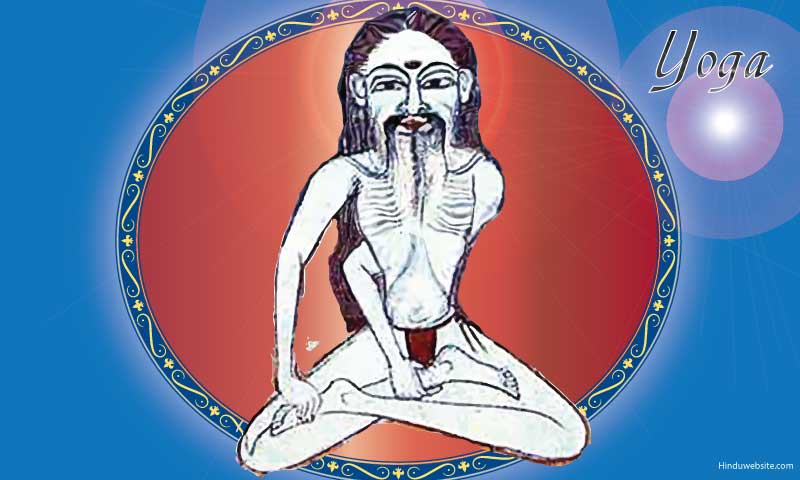
This paper will attempt to present the Jivanmukti concept in Hindu Thought, the origination of the concept and its development will be discussed. Much attention will be paid to the characteristics and features of a person being in the Jivanmukti state, such an accomplished person being known as a Jivanmukta. The paper will develop concepts leading to the Jivanmukti state mainly from vedic and tantric traditions. Fundamental concepts will be extracted from Jivanmukti Viveka work (vide infra). An attempt will be made to present the relevance today of existence of Jivanmukta people, an evolutionary perspective as is understood by scholars of religious studies, scientists and people of high visions of human life purpose.
According to Mumme P. (Fort A., 1996, pp. 247-248) the roots of the concept of Jivanmukti have to be found in germ form in the Upanishads (note 1) as they were linked to the karma (‘action and its accomplishments’) issue. It is on this account that liberation can be obtained by ‘burning’ karma and avoid accumulation of more actions. On Mumme’s account, the term itself was used for the first time in works of Advaita Vedanta school around the time of Shankara and Mandana Mishra, famous scholars of this philosophical school around 8th century AD. The term was definitively a subject of scholastic discussions after being popularized by the classical yoga work Yoga Vasishtha in the 11th century AD. The terminology has later penetrated most of the branches of the Indian spiritual thought, and it is seen today as a concept able to integrate them into a unifying soteriology.
Scholars will agree that the first attempt (known so far) to synthesize the Jivanmukti concept was done by Swami Vidyaranya, a 14th century siddha (‘saint’) who has managed to put together the core of the issues of jivanmukti, by using primary resources available at his time. His work Jivanmukti Viveka (‘knowledge of jivanmukti’) presents in a comprehensive manner, fundamental quotes and commentaries from works and categories of works like Upanishads, Dharma Shastras (‘scripture of virtues’), Puranas (note 2), Smritis (note 3), Bhagavad Gita (note 4), and the quintessence of yoga, the Yoga Vasishtha. JV deals systematically with the subject of jivanmukti in its five chapters (prakaranas). The first chapter describes the two kinds of sannyasa, vividisha sannyasa (‘renunciation of the seeker’) and vidvat sannyasa, (‘renunciation of the knower’) the evidence of the jivanmukti state and the characteristics of a jivanmukta are presented from many traditional scriptures.
The second and third chapters deal with the means to jivanmukti and videhamukti (note 5) the tattva jnana (‘the knowledge of Reality’) and vasana kshaya (‘the effacement of latent desires’) as well as the issue of the dissolution of the mind. The forth chapter brings into attention the important issue of the purpose of jivanmukti. Here are presented the five purposes, jnana raksha (‘preservation of knowledge’), tapas (‘penance’ or ‘austerity’ performed in order to step up the seven stages (steps) of yoga known as sapta yoga bhumis), visamvadabhava (‘absence of controversy’), duhkha nasha (‘cessation of pain’) and finally sukhavirbhava (‘manifestation of bliss/ serenity’). The fifth chapter deals at length with vidvad sannyasa (‘renunciation of the knower’) as a final stage. Information is brought step by step to construct a spiritual path of somebody starting from preliminary stages, to perform various activities suitable for that stage of spiritual development to the final stage of liberation itself, i.e. the attainment of jivanmukti state.
Four spiritual stages are enumerated by Vidyaranya (1996, p. 2), as kuticaka (‘one who stays in the hut’), bahudaka (‘one who works extensively doing his best’), hamsa (‘one who has attained a strong desire for liberation’) and paramahamsa (‘one who has attained one of the two kinds of final renunciation’). Swami Vidyaranya, makes a clear distinction between the two paramahamsa kinds of renunciation (ibid., pp. 4-16), vividisha sannyasa (‘renunciation of the seeker’) as the means to acquire knowledge (jnana) and vidvat sannyasa, (‘renunciation of the knower’) as the means to acquire final liberation (jivanmukti). Thus, the first one is a prelude to the second one, a jnani (‘knower’) could become a jivanmukta (‘liberated while living’).]
The JV gives abundant information of who is a jivanmukta as a dialogue between Shri Rama who ask questions, and Vasishtha, a Brahman (note 6) who answers to the questions. On this account Vidyaranya writes:
‘Vasishtha : He is the jivanmukta to whom this world of senses has ceased to exist although he lives and moves in it, and only the all-pervading vyoman i.e. Knowledge exists’ (Vidyaranya, 1996, p. 35).
‘Vasishtha: He is called a jivanmukta who is awake though in deep sleep, for whom there is no waking state, and whose knowledge is devoid of desires’ (ibid., p. 36).
‘Vasishtha: He is the jivanmukta who, although responsive to the spurs of love, hate, fear and the like, is absolutely pure in heart as the akasha (ibid., p. 37).‘
It has to be observed that the dominant issue becomes related to the mind. It is here where the practitioner has to focus attention and become alert. This is how Crangle summarises what is actually the relation Brahman/ mind/ liberation:
‘Thus the object of meditation, a perceptible or an imperceptible symbol of Brahman (note 7) determines the quality and nature of liberation. Liberation is sought via the control of thoughts to such an extent that they cease. Therefore, the Upanishadic belief system, it appears, decides the character of release. In verses 6.34 (ref. MaU), thoughts are known as samsara (‘transmigratory existence’). Mind, being the realm of thought, is both the means of bondage and the means to liberation.’ (Crangle, 1994, p. 129).
Thus ‘samadhi is attained when the worshipper, whilst meditating on a symbol of Brahman, loses awareness of his separate existence. As a result, individuality (i.e. subject-object consciousness) is absorbed into the all-pervading, unitary existence of Brahman.’ (ibid., 1994, p. 120 MaU, 6.18-20;34 is cited).
Vedic tradition is rich indeed of many accounts of liberation and means to acquire it. In parallel, the Indian thought is also profoundly penetrated by the tantric tradition.
Tantra tradition is equally rich in the concept of ‘liberation in life’. About an accomplished yogi (note 8), this is what Arthur Avalon (note 9) writes:
‘The ecstasy, which he calls "Liberation while yet living" (jivanmukti), is not a state like that of real liberation. He may be still subject to a suffering body, from which he escapes only at death, when he is liberated. His ecstasy is in the nature of a meditation which passes into the void (bhavana samadhi) effected through negation of thought (citta vritti) and detachment from the world.’ (Avalon, 1975, p. 289)
Tantra is very much a practical way of achieving liberation for which elaborated techniques of the yogic nature are employed. There is a methodology to acquire those extra qualities for somebody to qualify to be a jivanmukta, the techniques are generally known as yoga (note 10). The extended literature on the subject of yoga brings elaborated methods in order to optimise body and mind. A yoga practitioner is involved in postures (Asanas), breath exercises (Pranayama), gesture of integration/ unity (Mudras), contractions (Bandhas), various practices of meditation (Dhyana) etc. This is how Eliade (1975, pp. 199-200) writes in the subject of yoga:
‘The ideal of yoga, the state of a jivanmukta, is to live in an "eternal present", outside time. "The man liberated in life" no longer possesses a personal consciousness – that is, nourished in his own history – but a witnessing consciousness, which is pure lucidity and spontaneity.’
Yoga techniques are very much interrelated with tantric techniques. It is in Tantra (note 11) that the concept of kundalini is firmly established. Kundalini is seen as the evolutionary energy as power/ force resting at the base of the spinal column where is described as being coiled three and a half times around svayambhu linga. When kundalini is raised up through the sushumna nadi the higher levels of consciousness are experienced as the cakras are activated until kundalini reaches sahasrara cakra in order to be united with Shiva, the end of the journey (note12). This can be a terrifying experience. Swami Satyananda (1985, p. 119) gives a basic kundalini experience as kundalini (known also as ‘the serpent power’) arises thus:
‘The serpent power is filled with divine powers at the time of awakening; when aroused it remains in an angry mood; in its waking, the state of the individual self is suppressed; in that state, the force moves unobstructed. At the time of its awakening, visions of gods are seen; visions of spirits are seen; the past is seen, impurities are visualized.’
Furthermore when kundalini merges in sahasrara chakra ‘great peace and contentment are experienced; the sadhaka feels full within; no desires remain; no actions remain; no attachment, no sentiments’ (ibid., p. 120). Avalon (1975, pp. 282-283) describes what follows thus:
‘After union with Shiva, kundalini makes Her return journey. After She has repeatedly gone to Him, She makes a journey from which, at the will of the yogi, there is no return. Then the sadhaka is a jivanmukta.’
For a jivanmukta the ordinary perception is by far overcome, the accomplished sadhaka is not an ordinary person anymore. The sadhaka obtains a multilevel perception of space and is able to have a deep communion with the whole environment of human, animal or vegetarian kinds, a typical pantheistic credo and a soteriological approach to consciousness downloading. Brahman is thus internalized (White D. G., 1996, p. 212) in a practical analogy.
Classical accounts on the jivanmukti issue are very rich. The question arising is the one or their relevance today. To what degree the modern man can benefit from such knowledge? Put it in a more practical content, can a man of the 21st century be a jivanmukta? I will try to make a point on these questions.
To start with, it will be another question. All the elaborated methodology both practical and theoretical, to acquire a certain state of life awareness, does this make sense for the modern man? In my view, it is much so. For, all the efforts of the naked ascetics in the forests of India have to be relevant to the modern man, the cyber-man, as we are marked today by the computer revolution and the explosion of knowledge. As biology says, we are the only biological branch still evolving, as such the brain is subject to transformation as new functions of the brain are added. From the accounts above, a jivanmukta is able to exercise extra function of the brain. One book that attracts my attention through its visionary insight is by Vasile Andru (note 13). Andru (1989, p. 153) says about the biological possibility of the evolution of a 4th human brain:
‘It was launched the hypothesis of the emergence of a 4th human brain. This brain will be more complex than the cortex, and has great capacities to handle space and time. This brain will perform specific functions, but will work in cooperation with the other three main parts of the brain. As the evolutionary development of the cortex did not eliminate the functions of the other ‘brains’, so the 4th brain will not diminish their functions but reintegrate them in a new synthesis of functionality.’
It looks to me a correct and logical statement, the above issue of jivanmukti is a clear possibility of exercising functions prior to the creation of the organ itself, as modern biology claims.
Conclusion
To conclude this paper is to say that both vedic and tantric traditions are rich in bringing the issue of jivanmukti into light. The concept evolved in time culminating with the synthesis done by Swami Vidyaranya in his work Jivanmukti Viveka. There are elaborated techniques to walk step by step on the path of becoming a jivanmukta. Kundalini concept is very elaborated and presents a clear description of experiences that can be fearful. Accomplished yogis have given details on methodology of becoming a jivanmukta.
The concept that has preoccupied the Indian mind for a long time is relevant today, as science comes up with valid arguments in sustaining the issue of evolution. It is here that the rich information regarding liberation, the stepping up over the present human boundaries, do make sense. I hope a point was made in this paper, and information has presented prospects of future study (note 14).
Suggestions for Further Reading
- Om, Aum, Pranava or Nada in Mantra and Yoga Traditions
- Brahmacharya or Celibacy in Hinduism
- Atheism and Materialism in Ancient India
- Solving the Hindu Caste System
- How To Choose Your Spiritual Guru?
- Creation in Hinduism As a Transformative Evolutionary Process
- Wealth and Duty in Hinduism
- Do You Have Any Plans For Your Rebirth or Reincarnation?
- Understanding Death and Impermanence
- Lessons from the Dance of Kali, the Mother Nature
- Letting your God live in You - The True Essence of the Hindu Way of Life
- prajnanam brahma - Brahman is Intelligence
- Maslow's Hierarchy Of Needs From The Perspective Of Hinduism
- The Defintion and Concept of Maya in Hinduism
- The Meaning of Nirvana
- Self-knowledge, Difficulties in Knowing Yourself
- Hinduism - Sex and Gurus
- The Construction of Hinduism
- The Meaning and Significance of Heart in Hinduism
- The Origin and Significance of the Epic Mahabharata
- The True Meaning of Prakriti in Hinduism
- Three Myths about Hinduism
- What is Your Notion of God?
- Why Hinduism is a Preferred Choice for Educated Hindus
- Essays On Dharma
- Esoteric Mystic Hinduism
- Introduction to Hinduism
- Hindu Way of Life
- Essays On Karma
- Hindu Rites and Rituals
- The Origin of The Sanskrit Language
- Symbolism in Hinduism
- Essays on The Upanishads
- Concepts of Hinduism
- Essays on Atman
- Hindu Festivals
- Spiritual Practice
- Right Living
- Yoga of Sorrow
- Happiness
- Mental Health
- Concepts of Buddhism
- General Essays
NOTES
-
1. Upanishad (Lit. 'sitting by the side') A class of philosophical works exposing the secret doctrine. They are regarded as a source of Vedanta, Samkya and Yoga philosophies, the secret knowledge acquired by sitting near the master.
-
2. Lit. 'ancient' A class of Sanskrit scriptures of stories about gods as manifestations of one reality. Puranas are written in a popular manner and considered part of sacred books of Hinduism.
-
3. Lit. 'memory' Works in Hinduism that come from memory as opposed to Shrutis i.e. knowledge received by revelation from the Divine. Vedas are considered to be Shrutis.
-
4. Bhagavad Gita ‘The Song of the Lord’ A famous Yoga work, a synthesis of Vedanta, Yoga, Samkhya teachings believed to be composed in the third or fourth century B.C.
-
5. videhamukti This concept is beyond the purpose of this paper. The state of videhamukti is basically the one of liberation without body consciousness. JV deals extensively with this subject.
-
6. A Brahman (is this context) is one of the four vedic priests (Ritvijas) the one who chants the hymns of the Atharva Veda while performing incantations (Mantras).
-
7. Brahman (is this context) is what is known in Vedanta as the impersonal Universal Spirit known in Tantra as Shiva.
-
8. yogi A male practitioner of yoga; ascetic; one who has attained Yoga
-
9. alias Sir John Woodroffe
-
10. Yoga (from the root Yuj i.e. to connect) Lit. 'joining, yoking' The state of union with the Divine; one of the Shad Darshanas (the six Indian schools of philosophy); disunion between Purusha and Prakriti. Yoga consists of different physiological, mental and spiritual practices of union, knowledge, awareness and understanding leading to self-discovery of the individual nature as well as the higher nature or cosmic Self. Traditionally Lord Shiva was the first yogi who taught the Yoga Vidya as part of Tantra to his wife Parvati, the first Shishya (disciple). Any conscious step spiritually upwards is yoga. There are many classifications of yogas depending of kinds of practices. The main paths are considered to be Jnana Yoga, Karma Yoga and Bhakti Yoga as described in the Bhagavad Gita (vide note 4) by Lord Krishna.
-
See Hari, R.M. Shri Yoga Vasishtha, H.M. Damodar, Shanti Nagar, 1995, for a comprehensive concept of yoga.
-
11. Tantra Lit. 'liberation through extension' Tan means to extend, stretch, spread; Tra means threefold and stands for liberation as the path to liberation is threefold. In other words the meaning of the word Tantra is to expand consciousness and liberate energy which has the same significance as Brahman in the Vedas. Tantra can be understood as system, doctrine, teaching, science.
-
Some texts equate Tantra with Atharva Veda. Tantra is considered to be the scripture (Shastra) of the Kali Yuga. Many of the Tantras called Agamas are taught to the world by Lord Shiva in the form of dialogues between Him and Devi as Durga or Parvati. When the dialogue is addressed by Parvati to Shiva, the form of Tantra is called Nigama. Another form of Tantra is Yamala.
-
The doctrine of Tantra emphasises on unity in duality and duality in unity, the ultimate Reality being both static (Shiva as Prakasha aspect) and dynamic (Shakti as Vimarsha aspect). Tantra treats five subjects: the creation of the world, the absorption of the world, the worship of gods, the attainment of desires, union with the Divine.
-
The Indian Tantra and other similar practices developed in many parts of the world have evolved from taboos, superstitions and agricultural rituals of the primitive people. Even the Rig Veda contains chants to ensure success in agriculture. The symbolism of Tantra is in the form of animal or human figures.
-
Tantric symbols are found in the Indus Valley Civilisation (c. 3000 BC) on non-Indo-Aryan origin, however many later tantric practices are based on vedic practices, including those from Upanishads and Puranas (vide note 2). It can be said there is a closed connection between Tantras and Vedas as parallel concepts.
-
The principal sects or branches of Tantra are Shaivas (worshippers of Shiva, Vaishnavas (worshippers of Vishnu) and Shaktas (worshippers of Shakti).
-
For literature see Banerji, S.C. A Brief History of Tantra Literature, Naya Prakash, Calcutta, 1988
-
12. see Gopi Krishna in his book The Evolution of Higher Consciousness, BSS Publishers’ Distributors Ltd., New Delhi, 1996
-
13. Vasile Andru’s book published in Romanian is the fruit of long philosophical and spiritual debates of a group of people gathered in various circles of cultural research under ‘The Romanian Academy’ government body. To mention just o few of the subjects in debate are: chaos and divine order, seen and unseen body, informational universe, inner and outer integral man.
-
14. For French readers, excellent information is found in Oberhammer, G. La délivrance, dès cette vie (Jivanmukti), Collège de France, Paris, 1994.
REFERENCES
-
Andru, V. Viata si semn, Cartea Romaneasca, Bucuresti, 1989
-
Avalon, A. The Serpent Power, Dover Publications Inc., New York, 1975
-
Crangle, E. F. The Origin and Development of Early Indian Contemplative Practices, Harrassowitz Verlag, Wiesbaden, 1994
-
Eliade, M. Patanjali and Yoga, Schocken Books, New York, 1975
-
Fort, A. & Mumme P. (editors) Living Liberation in Hindu Thought, State University of New York Press, Albany, 1996
-
Satyananda Saraswati, Swami. Taming the Kundalini, Satyananda Ashram, Gosford, 1985
-
Vidyaranya, S. Jivanmukti Viveka, Advaita Ashrama, Calcutta, 1996
-
White D. G. The Alchemical Body, The University of Chicago, Chicago, 1996
-
LIST OF ABBREVIATIONS
-
JV Jivanmukti Viveka
-
MaU Maitri Upanishad
-
YV Yoga Vasishtha
Source: ©Octavian Sarbatoare Email - Australia This article is copyright-protected and published with the permission of its author. You can visit his website from here to read more of his articles and research material or send him an Email with this link if you need any information or clarification.