
A Glossory of Buddhist Terms and Concepts
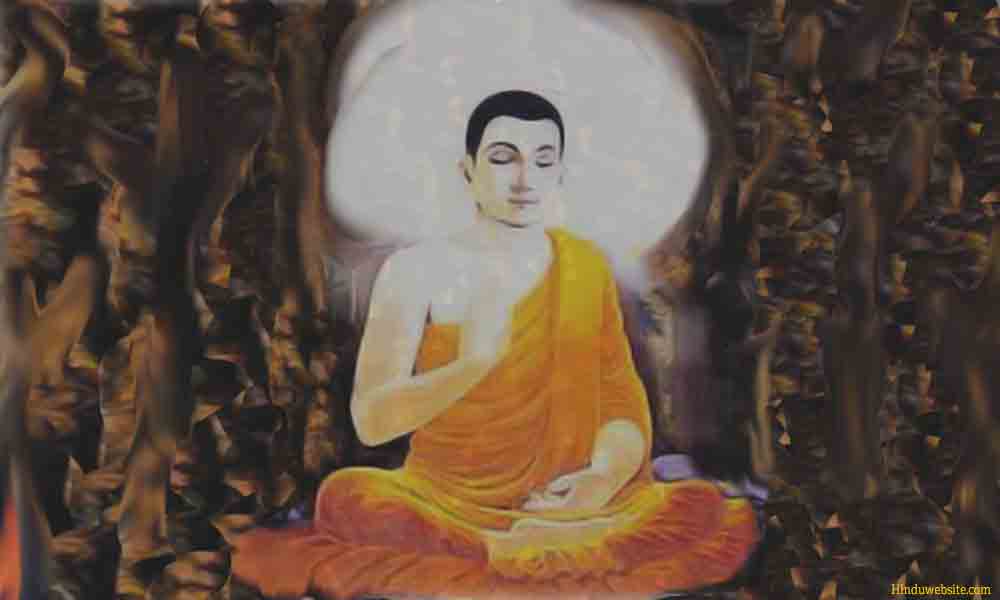
This glossary of Buddhist terms covers many common Pali words and concepts which are frequently used in Buddhism and Buddhist teachings. The most common spellings are listed first, followed by alternates. The phonetic (Velthuis) spelling of the Pali is given in the square brackets, immediately following the headword.
|| A || B || C || D || E || F || G || H || I || J || K || L || M || N || O || PQ || R || S || T || U || V || WXYZ|
Abhidhamma [abhidhamma]: (1) In the discourses of the Pali canon, this term simply means "higher Dhamma," and a systematic attempt to define the Buddha's teachings and understand their interrelationships. (2) A later collection of analytical treatises based on lists of categories drawn from the teachings in the discourses, added to the Canon several centuries after the Buddha's life.
abhiñña [abhi~n~naa]: Intuitive powers that come from the practice of concentration: the ability to display psychic powers, clairvoyance, clairaudience, the ability to know the thoughts of others, recollection of past lifetimes, and the knowledge that does away with mental effluents (see asava).
acariya [aacariya]: Teacher; mentor. See kalyanamitta.
adhitthana [adhi.t.thaana]: Determination; resolution. One of the ten perfections (paramis).
ajaan, ajahn, achaan, etc.: (Thai). Teacher; mentor. Equivalent to the Pali acariya.
akaliko [akaaliko]: Timeless; unconditioned by time or season.
akusala [akusala]: Unwholesome, unskillful, demeritorious. See its opposite, kusala.
anagami [anaagaamii]: Non-returner. A person who has abandoned the five lower fetters that bind the mind to the cycle of rebirth (see samyojana), and who after death will appear in one of the Brahma worlds called the Pure Abodes, there to attain nibbana, never again to return to this world.
anapanasati [aanaapaanasati]: Mindfulness of breathing. A meditation practice in which one maintains one's attention and mindfulness on the sensations of breathing.
anatta [anattaa]: Not-self; ownerless.
anicca [anicca]: Inconstant; unsteady; impermanent.
anupadisesa-nibbana [anupaadisesa-nibbaana]: Nibbana with no fuel remaining (the analogy is to an extinguished fire whose embers are cold) — the nibbana of the arahant after his passing away. Cf. sa-upadisesa-nibbana.
anupubbi-katha [aanupubbii-kathaa]: Gradual instruction. The Buddha's method of teaching Dhamma that guides his listeners progressively through increasingly advanced topics: generosity (see dana), virtue (see sila), heavens, drawbacks, renunciation, and the four noble truths.
anusaya [anusaya]: Obsesssion; underlying tendency. (The etymology of this term means "lying down with"; in actual usage, the related verb (anuseti) means to be obsessed.) There are seven major obsessions to which the mind returns over and over again: obsession with sensual passion (kama-raganusaya), with resistance (patighanusaya), with views (ditthanusaya), with uncertainty (vicikicchanusaya), with conceit (manusaya), with passion for becoming (bhava-raganusaya), and with ignorance (avijjanusaya). Compare samyojana.
apaya-bhumi [apaaya-bhuumi]: State of deprivation; the four lower levels of existence into which one might be reborn as a result of past unskillful actions (see kamma): rebirth in hell, as a hungry ghost (see peta), as an angry demon (see Asura), or as a common animal. None of these states is permanent. Compare sugati.
appamada [appamaada]: Heedfulness; diligence; zeal. The cornerstone of all skillful mental states, and one of such fundamental import that the Buddha's stressed it in his parting words to his disciples:"All fabrications are subject to decay. Bring about completion by being heedful!" (appamaadena sampaadetha).
arahant [arahant]: A "worthy one" or "pure one"; a person whose mind is free of defilement (see kilesa), who has abandoned all ten of the fetters that bind the mind to the cycle of rebirth (see samyojana), whose heart is free of mental effluents (see asava), and who is thus not destined for further rebirth. A title for the Buddha and the highest level of his noble disciples.
arammana [aaramma.na]: Preoccupation; mental object.
ariya [ariya]: Noble, ideal. Also, a "Noble One" (see ariya-puggala).
ariyadhana [ariyadhana]: Noble Wealth; qualities that serve as 'capital' in the quest for liberation: conviction (see saddha), virtue (see sila), conscience, fear of evil, erudition, generosity (see dana), and discernment (see pañña).
ariya-puggala [ariya-puggala]: Noble person; enlightened individual. An individual who has realized at least the lowest of the four noble paths (see magga) or their fruitions (see phala). Compare puthujjana (worldling).
ariya-sacca [ariya-sacca]: Noble Truth. The word "ariya" (noble) can also mean ideal or standard, and in this context means "objective" or "universal" truth. There are four: stress, the origin of stress, the disbanding of stress, and the path of practice leading to the disbanding of stress.
asava [aasava]: Mental effluent, pollutant, or fermentation. Four qualities — sensuality, views, becoming, and ignorance — that "flow out" of the mind and create the flood of the round of death and rebirth.
asubha [asubha]: Unattractiveness, loathsomeness, foulness. The Buddha recommends contemplation of this aspect of the body as an antidote to lust and complacency. See also kayagata-sati.
Asura [asura]: A race of beings who, like the Titans of Greek mythology, fought the devas for sovereignty over the heavens and lost. See apaya-bhumi.
avijja [avijjaa]: Unawareness; ignorance; obscured awareness; delusion about the nature of the mind. See also moha.
ayatana [aayatana]: Sense medium. The inner sense media are the sense organs: eyes, ears, nose, tongue, body, and mind. The outer sense media are their respective objects.
--------------------------------------------------------------------------------

bhante [bhante]: Venerable sir; often used when addressing a Buddhist monk.
bhava [bhava]: Becoming. States of being that develop first in the mind and can then be experienced as internal worlds and/or as worlds on an external level. There are three levels of becoming: on the sensual level, the level of form, and the level of formlessness.
bhavana [bhaavanaa]: Mental cultivation or development; meditation. The third of the three grounds for meritorious action. See also dana and sila.
bhikkhu [bhikkhu]: A Buddhist monk; a man who has given up the householder's life to live a life of heightened virtue (see sila) in accordance with the Vinaya in general, and the Patimokkha rules in particular. See sangha, parisa, upasampada.
bhikkhuni [bhikkhunii]: A Buddhist nun; a man (woman) who has given up the householder's life to live a life of heightened virtue (see sila) in accordance with the Vinaya in general, and the Patimokkha rules in particular. See sangha, parisa, upasampada.
bodhi-pakkhiya-dhamma [bodhi-pakkhiya-dhammaa]: "Wings to Awakening" — seven sets of principles that are conducive to Awakening and that, according to the Buddha, form the heart of his teaching: [1] the four frames of reference (see satipatthana); [2] four right exertions (sammappadhana) — the effort to prevent unskillful states from arising in the mind, to abandon whatever unskillful states have already arisen, to give rise to the good, and to maintain the good that has arisen; [3] four bases of success (iddhipada) — desire, persistence, intentness, circumspection; [4] five dominant factors (indriya) — conviction, persistence, mindfulness, concentration, discernment; [5] five strengths (bala) — identical with [4]; [6] seven factors for Awakening (bojjhanga) — mindfulness, investigation of phenomena, persistence, rapture (see piti), serenity, concentration, equanimity; and [7] the eightfold path (magga) — Right View, Right Attitude, Right Speech, Right Activity, Right Livelihood, Right Effort, Right Mindfulness, Right Concentration.
bodhisatta [bodhisatta]: "A being (striving) for Awakening"; the term used to describe the Buddha before he actually become Buddha, from his first aspiration to Buddhahood until the time of his full Awakening. Sanskrit form: Bodhisattva.
brahma [brahma, brahmaa]: "Great One" — an inhabitant of the non-sensual heavens of form or formlessness.
brahma-vihara [brahma-vihaara]: The four "sublime" or "divine" abodes that are attained through the development of boundless metta (goodwill), karuna (compassion), mudita (appreciative joy), and upekkha (equanimity).
brahman (from Pali braahmaa.na): The brahman (brahmin) caste of India has long maintained that its members, by their birth, are worthy of the highest respect. Buddhism borrowed the term brahman to apply to those who have attained the goal, to show that respect is earned not by birth, race, or caste, but by spiritual attainment. Used in the Buddhist sense, this term is synonymous with arahant.
buddho [buddho]: Awake; enlightened. An epithet for the Buddha.
Buddha [buddha]: The name given to one who rediscovers for himself the liberating path of Dhamma, after a long period of its having been forgotten by the world. According to tradition, a long line of Buddhas stretches off into the distant past. The most recent Buddha was born Siddhattha Gotama in India in the sixth century BCE. A well-educated and wealthy young man, he relinquished his family and his princely inheritance in the prime of his life to search for true freedom and an end to suffering (dukkha). After seven years of austerities in the forest, he rediscovered the "middle way" and achieved his goal, becoming Buddha.
--------------------------------------------------------------------------------
cankama [cankama]: Walking meditation, usually in the form of walking back and forth along a prescribed path.
cetasika [cetasika]: Mental concomitant (see vedana, sañña, and sankhara).
ceto-vimutti [ceto-vimutti]: See vimutti.
citta [citta]: Mind; heart; state of consciousness.
--------------------------------------------------------------------------------
dana [daana]: Giving, liberality; offering, alms. Specifically, giving of any of the four requisites to the monastic order. More generally, the inclination to give, without expecting any form of repayment from the recipient. Dana is the first theme in the Buddha's system of gradual training (see anupubbi-katha), the first of the ten paramis, one of the seven treasures (see dhana), and the first of the three grounds for meritorious action (see sila and bhavana).
deva; devata [deva, devataa]: Literally, "shining one" — an inhabitant of the heavenly realms (see sagga and sugati).
Devadatta [devadatta]: A cousin of the Buddha who tried to effect a schism in the sangha and who has since become emblematic for all Buddhists who work knowingly or unknowingly to undermine the religion from within.
dhamma [dhamma; Skt. dharma]: (1) Event; a phenomenon in and of itself; (2) mental quality; (3) doctrine, teaching; (4) nibbana. Also, principles of behavior that human beings ought to follow so as to fit in with the right natural order of things; qualities of mind they should develop so as to realize the inherent quality of the mind in and of itself. By extension, "Dhamma" (usu. capitalized) is used also to denote any doctrine that teaches such things. Thus the Dhamma of the Buddha denotes both his teachings and the direct experience of nibbana, the quality at which those teachings are aimed.
Dhamma-vinaya [dhamma-vinaya]: "doctrine (dhamma) and discipline (vinaya)." The Buddha's own name for the religion he founded.
dhana [dhana]: Treasure(s). The seven qualities of conviction, virtue (see sila), conscience & concern, learning, generosity (see dana), and wisdom.
dhatu [dhaatu]: Element; property, impersonal condition. The four physical elements or properties are earth (solidity), water (liquidity), wind (motion), and fire (heat). The six elements include the above four plus space and consciousness.
dhutanga [dhutaanga]: Voluntary ascetic practices that monks and other meditators may undertake from time to time or as a long-term commitment in order to cultivate renunciation and contentment, and to stir up energy. For the monks, there are thirteen such practices:(1) using only patched-up robes; (2) using only one set of three robes; (3) going for alms; (4) not by-passing any donors on one's alms path; (5) eating no more than one meal a day; (6) eating only from the alms-bowl; (7) refusing any food offered after the alms-round; (8) living in the forest; (9) living under a tree; (10) living under the open sky; (11) living in a cemetery; (12) being content with whatever dwelling one has; (13) not lying down.
dosa [dosa]: Aversion; hatred; anger. One of three unwholesome roots (mula) in the mind.
dukkha [dukkha]: Stress; suffering; pain; distress; discontent.
--------------------------------------------------------------------------------
effluents: See asava.
ekaggatarammana [ekagattaa.rammana]: Singleness of preoccupation; "one-pointedness." In meditation, the mental quality that allows one's attention to remain collected and focused on the chosen meditation object. Ekaggatarammana reaches full maturity upon the development of the fourth level of jhana.
ekayana-magga [ekaayana-magga]: A unified path; a direct path. An epithet for the practice of being mindful of the four frames of reference: body, feelings, mind, and mental qualities.
evam [eva.m]: Thus; in this way. This term is used in Thailand as a formal closing to a sermon.
--------------------------------------------------------------------------------
foundation of mindfulness: see Satipatthana.
frame of reference: see Satipatthana.
--------------------------------------------------------------------------------
gotrabhu-ñana [gotrabhuu-~naana]: "Change of lineage knowledge": The glimpse of nibbana that changes one from an ordinary person (puthujjana) to a Noble One (ariya-puggala).
--------------------------------------------------------------------------------
Hinayana [hiinayaana]: "Inferior Vehicle," originally a pejorative term — coined by a group who called themselves followers of the Mahayana, the "Great Vehicle" — to denote the path of practice of those who adhered only to the earliest discourses as the word of the Buddha. Hinayanists refused to recognize the later discourses, composed by the Mahayanists, that claimed to contain teachings that the Buddha felt were too deep for his first generation of disciples, and which he thus secretly entrusted to underground serpents. The Theravada school of today is a descendent of the Hinayana.
hiri-ottappa [hiri-ottappa]: "Conscience and concern"; "moral shame and moral dread." These twin emotions — the "guardians of the world" — are associated with all skillful actions. Hiri is an inner conscience that restrains us from doing deeds that would jeopardize our own self-respect; ottappa is a healthy fear of committing unskillful deeds that might bring about harm to ourselves or others. See kamma.
--------------------------------------------------------------------------------
idappaccayata [idappaccayataa]: This/that conditionality. This name for the causal principle the Buddha discovered on the night of his Awakening stresses the point that, for the purposes of ending suffering and stress, the processes of causality can be understood entirely in terms of forces and conditions that are experienced in the realm of direct experience, with no need to refer to forces operating outside of that realm.
indriya [indriya]: Faculties; mental factors. In the suttas the term can refer either to the six sense media (ayatana) or to the five mental factors of saddha (conviction), viriya (persistence), sati (mindfulness), samadhi (concentration), and pañña (discernment); see bodhi-pakkhiya-dhamma.
--------------------------------------------------------------------------------
jhana [jhaana; Skt. dhyana]: Mental absorption. A state of strong concentration focused on a single physical sensation (resulting in rupa jhana) or mental notion (resulting in arupa jhana). Development of jhana arises from the temporary suspension of the five hindrances (see nivarana) through the development of five mental factors: vitakka (directed thought), vicara (evaluation), piti (rapture), sukha (pleasure), and ekaggatarammana (singleness of preoccupation).
--------------------------------------------------------------------------------
kalyanamitta [kalyaa.namitta]: Admirable friend; a mentor or teacher of Dhamma.
kamaguna [kaamagu.na]: Strings of sensuality. The objects of the five physical senses: visible objects, sounds, aromas, flavors, and tactile sensations. Usually refers to sense experiences that, like the strings (guna) of a lute when plucked, give rise to pleasurable feelings (vedana).
kamma [kamma; Skt. karma]: Intentional acts that result in states of being and birth.
kammatthana [kamma.t.thaana]: Literally, "basis of work" or "place of work." The word refers to the "occupation" of a meditating monk: namely, the contemplation of certain meditation themes by which the forces of defilement (kilesa), craving (tanha), and ignorance (avijja) may be uprooted from the mind. In the ordination procedure, every new monk is taught five basic kammatthana that form the basis for contemplation of the body: hair of the head (kesa), hair of the body (loma), nails (nakha), teeth (danta), and skin (taco). By extension, the kammatthana include all the forty classical meditation themes. Although every meditator may be said to engage in kammatthana, the term is most often used to identify the particular Thai forest tradition lineage that was founded by Phra Ajaan Mun and Phra Ajaan Sao.
karuna [karu.naa]: Compassion; sympathy; the aspiration to find a way to be truly helpful to oneself and others. One of the ten perfections (paramis) and one of the four "sublime abodes" (brahma-vihara).
kathina [ka.thina]: A ceremony, held in the fourth month of the rainy season, in which a sangha of bhikkhus receives a gift of cloth from lay people, bestows it on one of their members, and then makes it into a robe before dawn of the following day.
kaya [kaaya]: Body. Usually refers to the physical body (rupa-kaya; see rupa), but sometimes refers to the mental body (nama-kaya; see nama).
kayagata-sati [kaayagataa-sati]: Mindfulness immersed in the body. This is a blanket term covering several meditation themes: keeping the breath in mind; being mindful of the body's posture; being mindful of one's activities; analyzing the body into its parts; analyzing the body into its physical properties (see dhatu); contemplating the fact that the body is inevitably subject to death and disintegration.
khandha [khandha]: Heap; group; aggregate. Physical and mental components of the personality and of sensory experience in general. The five bases of clinging (see upadana). See: nama (mental phenomenon), rupa (physical phenomenon), vedana (feeling), sañña (perception), sankhara (mental fashionings), and viññana (consciousness).
khanti [khanti]: Patience; forbearance. One of the ten perfections (paramis).
kilesa [kilesa]: Defilement — lobha (passion), dosa (aversion), and moha (delusion) in their various forms, which include such things as greed, malevolence, anger, rancor, hypocrisy, arrogance, envy, miserliness, dishonesty, boastfulness, obstinacy, violence, pride, conceit, intoxication, and complacency.
kusala [kusala]: Wholesome, skillful, good, meritorious. An action characterized by this moral quality (kusala-kamma) is bound to result (eventually) in happiness and a favorable outcome. Actions characterized by its opposite (akusala-kamma) lead to sorrow. See kamma.
--------------------------------------------------------------------------------
lakkhana [lakkha.na]: See ti-lakkhana.
lobha [lobha]: Greed; passion; unskillful desire. Also raga. One of three unwholesome roots (mula) in the mind.
loka-dhamma [loka-dhamma]: Affairs or phenomena of the world. The standard list gives eight:wealth, loss of wealth, status, loss of status, praise, criticism, pleasure, and pain.
lokavidu [lokaviduu]: Knower of the cosmos. An epithet for the Buddha.
lokuttara [lokuttara]: Transcendent; supramundane (see magga, phala, and nibbana).
--------------------------------------------------------------------------------
magga [magga]: Path. Specifically, the path to the cessation of suffering and stress. The four transcendent paths — or rather, one path with four levels of refinement — are the path to stream-entry (entering the stream to nibbana, which ensures that one will be reborn at most only seven more times), the path to once-returning, the path to non-returning, and the path to arahantship. See phala.
mahathera [mahaathera]: "Great elder." An honorific title automatically conferred upon a bhikkhu of at least twenty years' standing. Compare thera.
majjhima [majjhima]: Middle; appropriate; just right.
Mara [maara]: The personification of evil and temptation.
metta [mettaa]: Loving-kindness; goodwill. One of the ten perfections (paramis) and one of the four "sublime abodes" (brahma-vihara).
moha [moha]: Delusion; ignorance (avijja).. One of three unwholesome roots (mula) in the mind.
mudita [muditaa]: Appreciative/sympathetic joy. Taking delight in one's own goodness and that of others. One of the four "sublime abodes" (brahma-vihara).
mula [muula]: Literally, "root." The fundamental conditions in the mind that determine the moral quality — skillful (kusala) or unskillful (akusala) — of one's intentional actions (see kamma). The three unskillful roots are lobha (greed), dosa (aversion), and moha (delusion); the skillful roots are their opposites. See kilesa (defilements).
--------------------------------------------------------------------------------
naga [naaga]: A term commonly used to refer to strong, stately, and heroic animals, such as elephants and magical serpents. In Buddhism, it is also used to refer to those who have attained the goal of the practice.
nama [naama]: Mental phenomena. This term refers to the mental components of the five khandhas, and includes: vedana (feeling), sañña (perception), sankhara (mental fashionings), and viññana (consciousness). Compare rupa.
nama-rupa [naama-ruupa]: Name-and-form; mind-and-matter; mentality-physicality. The union of mental phenomena (nama) and physical phenomena (rupa) that constitutes the five aggregates (khandha), and which lies at a crucial link in the causal chain of dependent co-arising (paticca-samuppada).
nekkhamma [nekkhamma]: Renunciation; literally, "freedom from sensual lust." One of the ten paramis.
nibbana [nibbaana; Skt. nirvana]: Liberation; literally, the "unbinding" of the mind from the mental effluents (see asava), defilements (see kilesa), and the round of rebirth (see vatta), and from all that can be described or defined. As this term also denotes the extinguishing of a fire, it carries the connotations of stilling, cooling, and peace. (According to the physics taught at the time of the Buddha, a burning fire seizes or adheres to its fuel; when extinguished, it is unbound.) "Total nibbana" in some contexts denotes the experience of Awakening; in others, the final passing away of an arahant.
nibbida [nibbidaa;]: Disenchantment; aversion; disgust; weariness. The skillful turning-away of the mind from the conditioned samsaric world towards the unconditoned, the transcendent — nibbana
nimitta [nimitta]: Mental sign, image, or vision that may arise in meditation. Uggaha nimitta refers to any image that arises spontaneously in the course of meditation. Paribhaga nimitta refers to an image that has been subjected to mental manipulation.
nirodha [nirodha]: Cessation; disbanding; stopping.
nivarana [niivara.na]: Hindrances to concentration — sensual desire, ill will, sloth & drowsiness, restlessness & anxiety, and uncertainty.
--------------------------------------------------------------------------------
opanayiko [opanayiko]: Referring inwardly; to be brought inward. An epithet for the Dhamma.
--------------------------------------------------------------------------------
pabbajja [pabbajjaa]: "Going forth (from home to the homeless life)"; ordination as a samanera (samaneri), or novice monk (nun). See upasampada.
paccattam [paccatta.m]: Personal; individual.
paccekabuddha [paccekabuddha]: Private Buddha. One who, like a Buddha, has gained Awakening without the benefit of a teacher, but who lacks the requisite store of paramis to teach others the practice that leads to Awakening. On attaining the goal, a paccekabuddha lives a solitary life.
Pali [paali, paa.li]: The canon of texts (see Tipitaka) preserved by the Theravada school and, by extension, the language in which those texts are composed.
pañña [pa~n~naa]: Discernment; insight; wisdom; intelligence; common sense; ingenuity. One of the ten perfections (paramis).
pañña-vimutti [pa~n~naa-vimutti]: See vimutti.
papañca [papa~nca]: Complication, proliferation. The tendency of the mind to proliferate issues from the sense of "self." This term can also be translated as self-reflexive thinking, reification, falsification, distortion, elaboration, or exaggeration. In the discourses, it is frequently used in analyses of the psychology of conflict.
parami, paramita [paaramii, paaramitaa]: Perfection of the character. A group of ten qualities developed over many lifetimes by a bodhisatta, which appear as a group in the Pali canon only in the Jataka ("Birth Stories"): generosity (dana), virtue (sila), renunciation (nekkhamma), discernment (pañña), energy/persistence (viriya), patience/forbearance (khanti), truthfulness (sacca), determination (adhitthana), good will (metta), and equanimity (upekkha).
parinibbana [parinibbaana]: Total Unbinding; the complete cessation of the khandhas that occurs upon the death of an arahant.
parisa [parisaa]: Following; assembly. The four groups of the Buddha's following that include monks, nuns, laymen, and laywomen. Compare sangha. See bhikkhu, bhikkhuni, upasaka/upasika.
pariyatti [pariyatti]: Theoretical understanding of Dhamma obtained through reading, study, and learning. See patipatti and pativedha.
paticca-samuppada [pa.ticca-samuppaada]: Dependent co-arising; dependent origination. A map showing the way the aggregates (khandha) and sense media (ayatana) interact with ignorance (avijja) and craving (tanha) to bring about stress and suffering (dukkha). As the interactions are complex, there are several different versions of paticca samuppada given in the suttas. In the most common one, the map starts with ignorance. In another common one, the map starts with the interrelation between name (nama) and form (rupa) on the one hand, and sensory consciousness (viññana) on the other. [MORE: SN 12.2, DN 15 ]
Patimokkha [paatimokkha]: The basic code of monastic discipline, consisting of 227 rules for monks (bhikkhus) and 311 for nuns (bhikkhunis). See Vinaya.
patipada [pa.tipadaa]: Road, path, way; the means of reaching a goal or destination. The "Middle way" (majjhima-patipada) taught by the Buddha; the path of practice described in the fourth noble truth (dukkhanirodhagamini-patipada).
patipatti [pa.tipatti]: The practice of Dhamma, as opposed to mere theoretical knowledge (pariyatti). See also pativedha.
pativedha [pa.tivedha]: Direct, first-hand realization of the Dhamma. See also pariyatti and patipatti.
Peta [peta; Skt. preta]: A "hungry shade" or "hungry ghost" — one of a class of beings in the lower realms, sometimes capable of appearing to human beings. The petas are often depicted in Buddhist art as starving beings with pinhole-sized mouths through which they can never pass enough food to ease their hunger.
phala [phala]: Fruition. Specifically, the fruition of any of the four transcendent paths (see magga).
phra: (Thai). Venerable. Used as a prefix to the name of a monk (bhikkhu).
piti [piiti]: Rapture; bliss; delight. In meditation, a pleasurable quality in the mind that reaches full maturity upon the development of the second level of jhana.
puja [puujaa]: Honor; respect; devotional observance. Most commonly, the devotional observances that are conducted at monasteries daily (morning and evening), on uposatha days, or on other special occasions.
puñña [pu~n~na]: Merit; worth; the inner sense of well-being that comes from having acted rightly or well and that enables one to continue acting well.
puthujjana [puthujjana]: One of the many-folk; a "worlding" or run-of-the-mill person. An ordinary person who has not yet realized any of the four stages of Awakening (see magga). Compare ariya-puggala.
--------------------------------------------------------------------------------
raga [raaga]: Lust; greed. See lobha.
run-of-the-mill person: See puthujjana.
rupa [ruupa]: Body; physical phenomenon; sense datum. The basic meaning of this word is "appearance" or "form." It is used, however, in a number of different contexts, taking on different shades of meaning in each. In lists of the objects of the senses, it is given as the object of the sense of sight. As one of the khandha, it refers to physical phenomena or sensations (visible appearance or form being the defining characteristics of what is physical). This is also the meaning it carries when opposed to nama, or mental phenomena.
--------------------------------------------------------------------------------
sabhava-dhamma [sabhaava-dhamma]: Condition of nature; any phenomenon, event, property, or quality as experienced in and of itself.
sacca [sacca]: Truthfulness. One of the ten perfections (paramis).
saddha [saddhaa]: Conviction, faith. A confidence in the Buddha that gives one the willingness to put his teachings into practice. Conviction becomes unshakeable upon the attainment of stream-entry (see sotapanna).
sadhu [saadhu]: (exclamation) "It is well"; an expression showing appreciation or agreement.
sagga [sagga]: Heaven, heavenly realm. The dwelling place of the devas. Rebirth in the heavens is said to be one of the rewards for practicing generosity (see dana) and virtue (see sila). Like all waystations in samsara, however, rebirth here is temporary. See also sugati.
sakadagami [sakadaagaamii]: Once-returner. A person who has abandoned the first three of the fetters that bind the mind to the cycle of rebirth (see samyojana), has weakened the fetters of sensual passion and resistance, and who after death is destined to be reborn in this world only once more.
sakkaya-ditthi [sakkaaya-di.t.thi]: Self-identification view. The view that mistakenly identifies any of the khandha as "self"; the first of the ten fetters (samyojana). Abandonment of sakkaya-ditthi is one of the hallmarks of stream-entry (see sotapanna).
Sakyamuni [saakyamuni]: "Sage of the Sakyans"; an epithet for the Buddha.
sakya-putta [saakya-putta]: Son of the Sakyan. An epithet for Buddhist monks, the Buddha having been a native of the Sakyan Republic.
sallekha-dhamma [sallekha-dhamma]: Topics of effacement (effacing defilement) — having few wants, being content with what one has, seclusion, uninvolvement in companionship, persistence, virtue (see sila), concentration, discernment, release, and the direct knowing and seeing of release.
samadhi [samaadhi]: Concentration; the practice of centering the mind in a single sensation or preoccupation, usually to the point of jhana.
samana [sama.na]: Contemplative. Literally, a person who abandons the conventional obligations of social life in order to find a way of life more "in tune" (sama) with the ways of nature.
samanera (samaneri): Literally, a small samana; a novice monk (nun) who observes ten precepts and who is a candidate for admission to the order of bhikkhus (bhikkhunis). See pabbajja.
sambhavesin [sambhavesin]: (A being) searching for a place to take birth.
sammati [sammati]: Conventional reality; convention; relative truth; supposition; anything conjured into being by the mind.
sampajañña [samoaja~n~na]: Alertness; self-awareness; presence of mind; clear comprehension. See sati.
samsara [sa.msaara]: Transmigration; the round of death and rebirth. See vatta.
samvega [sa.mvega]: The oppressive sense of shock, dismay, and alienation that comes with realizing the futility and meaninglessness of life as it's normally lived; a chastening sense of one's own complacency and foolishness in having let oneself live so blindly; and an anxious sense of urgency in trying to find a way out of the meaningless cycle.
samyojana, sanyojana [sa.myojana]: Fetter that binds the mind to the cycle of rebirth (see vatta) — self-identification views (sakkaya-ditthi), uncertainty (vicikiccha), grasping at precepts and practices (silabbata-paramasa); sensual passion (kama-raga), resistance (vyapada); passion for form (rupa-raga), passion for formless phenomena (arupa-raga), conceit (mana), restlessness (uddhacca), and unawareness (avijja). Compare anusaya.
sanditthiko [sandi.t.thiko]: Self-evident; immediately apparent; visible here and now. An epithet for the Dhamma.
sangha [sangha]: On the conventional (sammati) level, this term denotes the communities of Buddhist monks and nuns; on the ideal (ariya) level, it denotes those followers of the Buddha, lay or ordained, who have attained at least stream-entry (see sotapanna), the first of the transcendent paths (see magga) culminating in nibbana. Recently, particularly in the West, the term "sangha" has been popularly adapted to mean the wider sense of "community of followers on the Buddhist path," although this usage finds no basis in the Pali canon. The term "parisa" may be more appropriate for this much broader meaning.
sankhara [sankhaara]: Formation, compound, fashioning, fabrication — the forces and factors that fashion things (physical or mental), the process of fashioning, and the fashioned things that result. Sankhara can refer to anything formed or fashioned by conditions, or, more specifically, (as one of the five khandhas) thought-formations within the mind.
sañña [sa~n~naa]: Label; perception; allusion; act of memory or recognition; interpretation. See khandha.
sanyojana: See samyojana.
sasana [saasana]: Literally, "message." The dispensation, doctrine, and legacy of the Buddha; the Buddhist religion (see Dhamma-vinaya).
sati [sati]: Mindfulness, self-collectedness, powers of reference and retention. In some contexts, the word sati when used alone covers alertness (sampajañña) as well.
satipatthana [satipa.t.thaana]: Foundation of mindfulness; frame of reference — body, feelings, mind, and mental events, viewed in and of themselves as they occur.
sa-upadisesa-nibbana [sa-upaadisesa-nibbaana]: Nibbana with fuel remaining (the analogy is to an extinguished fire whose embers are still glowing) — liberation as experienced in this lifetime by an arahant. Cf. anupadisesa-nibbana.
savaka [saavaka]: Literally, "hearer." A disciple of the Buddha, especially a noble disciple (see ariya-puggala.)
sayadaw: (Burmese). Venerable teacher; an honorific title and form of address for a senior or eminent bhikkhu.
sekha [sekha]: A "learner" or "one in training"; a noble disciple (ariya-puggala) who has not yet attained arahantship.
sila [siila]: Virtue, morality. The quality of ethical and moral purity that prevents one from falling away from the eightfold path. Also, the training precepts that restrain one from performing unskillful actions. Sila is the second theme in the gradual training (see anupubbi-katha), one of the ten paramis, the second of the seven treasures (see dhana), and the first of the three grounds for meritorious action (see dana and bhavana).
sima [siima]: Boundary or territory within which the monastic sangha's formal acts (upasampada, patimokkha recitation, settling of disputes, etc.) must be performed in order to be valid.
sotapanna [sotaapanna]: Stream winner. A person who has abandoned the first three of the fetters that bind the mind to the cycle of rebirth (see samyojana) and has thus entered the "stream" flowing inexorably to nibbana, ensuring that one will be reborn at most only seven more times, and only into human or higher realms.
stream-entry, stream-winner: see sotapanna.
stress: See dukkha.
stupa (Pali thupa (thuupa)): Originally, a tumulus or burial mound enshrining relics of a holy person — such as the Buddha — or objects associated with his life. Over the centuries this has developed into the tall, spired monuments familiar in temples in Thailand, Sri Lanka, and Burma; and into the pagodas of China, Korea, and Japan.
"such": See tadi.
sugati [sugati]: Happy destinations; the two higher levels of existence into which one might be reborn as a result of past skillful actions (see kamma): rebirth in the human world or in the heavens (See sagga). None of these states is permanent. Compare apaya-bhumi.
sugato [sugato]: Well-faring; going (or gone) to a good destination. An epithet for the Buddha.
sukha [sukha]: Pleasure; ease; satisfaction. In meditation, a mental quality that reaches full maturity upon the development of the third level of jhana.
sutta [sutta; Skt. sutra]: Literally, "thread"; a discourse or sermon by the Buddha or his contemporary disciples. After the Buddha's death the suttas were passed down in the Pali language according to a well-established oral tradition, and were finally committed to written form in Sri Lanka around 100 BCE. More than 10,000 suttas are collected in the Sutta Pitaka, one of the principal bodies of scriptural literature in Theravada Buddhism. The Pali Suttas are widely regarded as the earliest record of the Buddha's teachings.
--------------------------------------------------------------------------------
tadi [taadi]: "Such," an adjective to describe one who has attained the goal. It indicates that the person's state is indefinable but not subject to change or influences of any sort.
tanha [ta.nhaa]: Craving — for sensuality, for becoming, or for not-becoming (see bhava). See also lobha (greed; passion)
tapas [taapas]: The purifying "heat" of meditative practice.
Tathagata [tathaagatha]: Literally, "one who has truly gone (tatha-gata)" or "one who has become authentic "(tatha-agata)," an epithet used in ancient India for a person who has attained the highest spiritual goal. In Buddhism, it usually denotes the Buddha, although occasionally it also denotes any of his arahant disciples.
than, tan: (Thai). Reverend, venerable.
thera [thera]: "Elder." An honorific title automatically conferred upon a bhikkhu of at least ten years' standing. Compare mahathera.
Theravada [theravaada]: The "Doctrine of the Elders" — the only one of the early schools of Buddhism to have survived into the present; currently the dominant form of Buddhism in Thailand, Sri Lanka, and Burma. See also Hinayana.
ti-lakkhana [ti-lakkha.na]: Three characteristics inherent in all conditioned phenomena — being inconstant, stressful, and not-self.
tipitaka [tipi.taka; Skt. tripitaka]: The Buddhist (Pali) Canon. Literally, "three baskets," in reference to the three principal divisions of the Canon: the Vinaya Pitaka (disciplinary rules); Sutta Pitaka (discourses); and Abhidhamma Pitaka (abstract philosophical treatises).
tiratana [tiratana]: The "Triple Gem" consisting of the Buddha, Dhamma, and Sangha — ideals to which all Buddhists turn for refuge. See tisarana.
tisarana [tisara.na]: The "Threefold Refuge" — the Buddha, Dhamma, and Sangha. See tiratana.
--------------------------------------------------------------------------------
ugghatitaññu [uggha.tita~n~nu]: Of swift understanding. After the Buddha attained Awakening and was considering whether or not to teach the Dhamma, he perceived that there were four categories of beings: those of swift understanding, who would gain Awakening after a short explanation of the Dhamma; those who would gain Awakening only after a lengthy explanation (vipacitaññu); those who would gain Awakening only after being led through the practice (neyya); and those who, instead of gaining Awakening, would at best gain only a verbal understanding of the Dhamma (padaparama).
Unbinding: See nibbana.
upadana [upaadaana]: Clinging; attachment; sustenance for becoming and birth — attachment to sensuality, to views, to precepts and practices, and to theories of the self.
upasampada [upasampadaa]: Acceptance; full ordination as a bhikkhu or bhikkhuni. See pabbajja.
upasaka/upasika [upaasaka/upaasikaa]: A male/female lay follower of the Buddha. Compare parisa.
upekkha [upekkhaa]: Equanimity. One of the ten perfections (paramis) and one of the four "sublime abodes" (brahma-vihara).
uposatha [uposatha]: Observance day, corresponding to the phases of the moon, on which Buddhist lay people gather to listen to the Dhamma and to observe special precepts. On the new-moon and full-moon uposatha days monks assemble to recite the Patimokkha rules.
--------------------------------------------------------------------------------
vassa [vassaa]: Rains Retreat. A period from July to October, corresponding roughly to the rainy season, in which each monk is required to live settled in a single place and not wander freely about.
vatta [va.t.ta]: The cycle of birth, death, and rebirth. This denotes both the death and rebirth of living beings and the death and rebirth of defilement (kilesa) within the mind. See samsara.
vedana [vedanaa]: Feeling — pleasure (ease), pain (stress), or neither pleasure nor pain. See khandha.
Vesak, Vesakha, Visakha, Wesak, etc. [visaakha]: The ancient name for the Indian lunar month in spring corresponding to our April-May. According to tradition, the Buddha's birth, Awakening, and Parinibbana each took place on the full-moon night in the month of Visakha. These events are commemorated on that day in the Visakha festival, which is celebrated annually throughout the world of Theravada Buddhism.
vicara [vicaara]: Evaluation; sustained thought. In meditation, vicara is the mental factor that allows one's attention to shift and move about in relation to the chosen meditation object. Vicara and its companion factor vitakka reach full maturity upon the development of the first level of jhana.
vijja [vijjaa]: Clear knowledge; genuine awareness; science (specifically, the cognitive powers developed through the practice of concentration and discernment).
vijja-carana-sampanno [vijjaa-cara.na-sampanno]: Consummate in knowledge and conduct; accomplished in the conduct leading to awareness or cognitive skill. An epithet for the Buddha.
vimutti [vimutti]: Release; freedom from the fabrications and conventions of the mind. The suttas distinguish between two kinds of release. Discernment-release (pañña-vimutti) describes the mind of the arahant, which is free of the asavas. Awareness-release (ceto-vimutti) is used to describe either the mundane suppression of the kilesas during the practice of jhana and the four brahma-viharas [see AN 6.13], or the supramundane state of concentration in the asava-free mind of the arahant.
Vinaya [vinaya]: The monastic discipline, spanning six volumes in printed text, whose rules and traditions define every aspect of the bhikkhus' and bhikkhunis' way of life. The essence of the rules for monastics is contained in the Patimokkha. The conjunction of the Dhamma with the Vinaya forms the core of the Buddhist religion: "Dhamma-vinaya" — "the doctrine and discipline" — is the name the Buddha gave to the religion he founded.
viññana [vi~n~naa.na]: Consciousness; cognizance; the act of taking note of sense data and ideas as they occur. There is also a type of consciousness that lies outside of the khandhas — called consciousness without feature (viññanam anidassanam) — which is not related to the six senses at all. See khandha.
vipaka [vipaaka]: The consequence and result of a past volitional action (kamma).
vipassana [vipassanaa]: Clear intuitive insight into physical and mental phenomena as they arise and disappear, seeing them for what they actually are — in and of themselves — in terms of the three characteristics (see ti-lakkhana) and in terms of stress, its origin, its disbanding, and the way leading to its disbanding (see ariya-sacca).
vipassanupakkilesa [vipassanuupakkilesa]: Corruption of insight; intense experiences that can happen in the course of meditation and can lead one to believe that one has completed the path. The standard list includes ten: light, psychic knowledge, rapture, serenity, pleasure, extreme conviction, excessive effort, obsession, indifference, and contentment.
viriya [viriya]: Persistence; energy. One of the ten perfections (paramis), the five faculties (bala; see bodhi-pakkhiya-dhamma), and the five strengths/dominant factors (indriya; see bodhi-pakkhiya-dhamma).
vitakka [vitakka]: Directed thought. In meditation, vitakka is the mental factor by which one's attention is applied to the chosen meditation object. Vitakka and its companion factor vicara reach full maturity upon the development of the first level of jhana.
--------------------------------------------------------------------------------
yakkha [yakkha]: One of a special class of powerful "non-human" beings — sometimes kindly, sometimes murderous and cruel — corresponding roughly to the fairies and ogres of Western fairy tales. The female (yakkhini) is generally considered more treacherous than the male.
Suggestions for Further Reading
- Buddhism - The Concept of Anatta or No Self
- Anatta or Anatma in Buddhism
- Anicca or Anitya in Buddhism
- The Buddha on God
- The Buddha on Avijja or Ignorance and on the Origin of Life
- The Buddha On the Self And Anatta, the Not-Self
- History Of The Four Buddhist Councils
- Chinese Buddhism
- The Eightfold Path Of Buddhism
- The Four Noble Truths of Buddhism
- Four Stages of Progress on the Middle Way in Buddhism
- The Practice of Friendliness, Kalyanamittata, in Buddhism
- Karma or Kamma In Buddhism
- Mahayana Buddhism
- Buddha's Last Days and Final Words
- Buddhism - The Middle Way
- The Buddha's Teaching on Right Mindfulness
- The Meaning and Practice of Mindfulness
- Buddhism - Vinaya or Monastic Discipline
- Right Conduct For Lay Buddhists
- Nirvana or Nibbana in Buddhism
- Buddhism - Objects of Meditation and Subjects for Meditation
- Buddhism - Right Speech and Mind Training
- Buddhism - Right Living On The Eightfold Path
- Handbook for the Relief of Suffering by Ajaan Lee
- Theravada Buddhism
- Meat Eating or Vegetarianism in Buddhism
- Essays On Dharma
- Esoteric Mystic Hinduism
- Introduction to Hinduism
- Hindu Way of Life
- Essays On Karma
- Hindu Rites and Rituals
- The Origin of The Sanskrit Language
- Symbolism in Hinduism
- Essays on The Upanishads
- Concepts of Hinduism
- Essays on Atman
- Hindu Festivals
- Spiritual Practice
- Right Living
- Yoga of Sorrow
- Happiness
- Mental Health
- Concepts of Buddhism
- General Essays