The Sun as the Supreme Source of Light and Life
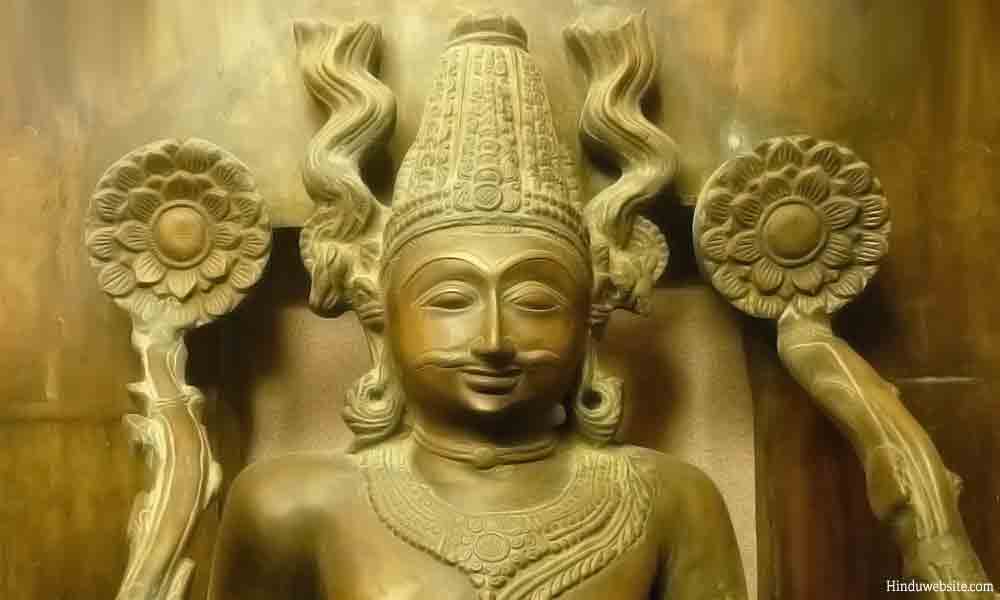
Summary: Hindu tradition recognizes the sun as the most direct manifestation of divine brilliance accessible to human perception. This exploration reveals how scripture identifies solar radiance with pure consciousness itself, describes the sun's realm as the destination of liberated souls, and honors this celestial fire as the unwavering witness sustaining all existence. As the constant source of warmth and illumination, the sun becomes the supreme symbol of that unchanging reality underlying all temporal change.
In Hinduism, the sun is extolled as the highest god Brahman, the first being (adi-bhuta), the light of all souls, and the brightest of all gods. He symbolizes light, wisdom, truth, knowledge, intelligence, highest heaven, golden egg, disc, jewel in the sky, wakeful consciousness, existence, continuity, immortality, stability, divinity, purity, the quality of sattva, gold, mental brilliance, the eye, witness, fire, sacrificial fuel, and the highest heaven (parandhama).
The shining disc in the sky is also an opening to the highest world of manifested Brahman as well as unmanifested Brahman. As the god who awakens the worlds and nourishes all beings with compassion, he is also described as the source of all prana. He is the Self of all that exists and makes things grow. All the gods and glowing bodies in the manifested world are his aspects only. He is the supreme sacrificer who sacrifices himself to nourish the worlds and keep them going. He is also a personification of Death who scorches the earth and dries things up.
In the hymns addressed to him such as Aditya Hrdayam, he is compared to Shiva, Vishnu, Isvara, Brahma, Rudra, Aditya by worshipping whom one becomes free from the darkness of sorrow, suffering, sin, sickness, poverty, enemies, mortality and incurable diseases. Some hymns describe the sun as one of the solar deities (Adityas), and son of Aditi, the mother of all gods, who represents the infinite, primordial space. His awakening, creative, and procreative power is personified by Savitr, to whom the Gayatri Mantra is addressed, and his nourishing, protecting and life-enhancing quality by Pusan, the god of cattle, fertility, and all living creatures.
The Sun god occupies an important place in Hinduism. Vedic religion has its roots in Sun worship which even today is an integral part of Vedic ritual tradition. Making oblations to the Sun with water in the morning, afternoon and evening is standard priestly tradition of Hinduism. Since he symbolizes Brahman himself, he is worshipped for the illumination of the mind and flowering of self-knowledge.
Just as Brahman has triple aspects, namely Brahma, Vishnu and Shiva, Surya has triple aspects. In the morning, he is verily Brahma (golden yellow); in the afternoon, Maheshvara (bright white); and in the evening, Vishnu (dark blue). He is the one wheeled chariot who travels in the sky and illumines the seven worlds. In some hymns he is described as the god of the sky, who rides from east to west in a golden chariot drawn by seven horses.
According to the Vedas, the immortal world of Brahman is located in the sun. Liberated souls travel by the path of gods (devayana) and reach it from where they will never return. If the sun is Brahman, the sun rays (rashmi) are the individual souls. The light from the sun is indestructible but it can be blocked by the clouds, just as the light from the soul is blocked by the impurities of consciousness.