History of Shaivism, Lord Shiva in Vedic Literature and Recorded History
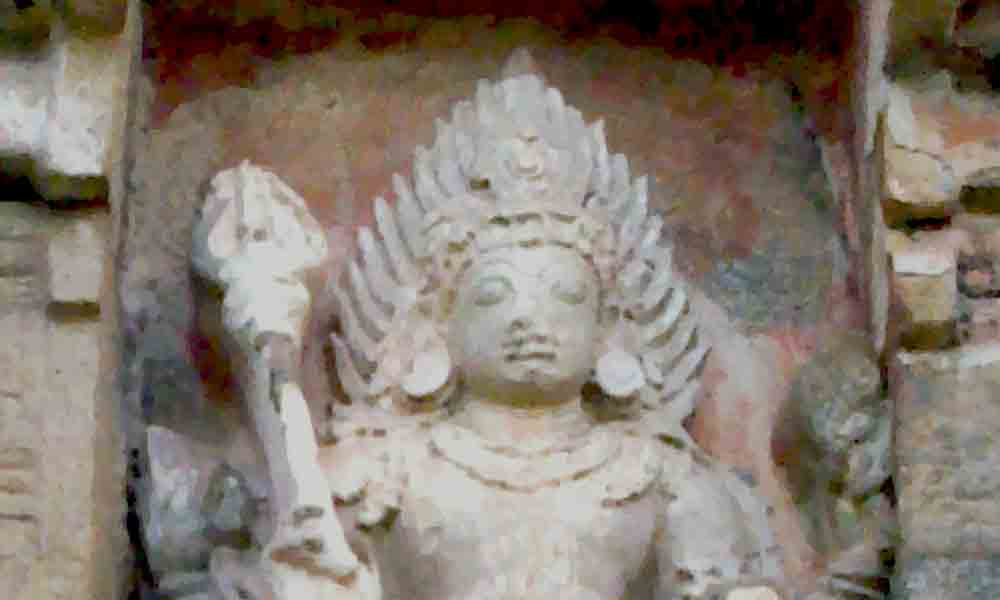
Summary: Vedic people initially worshipped Rudra, a fierce storm deity distinct from later Shiva conceptions. Early hymns reflect ambivalent attitudes mixing fear and reverence. As Vedic religion evolved eastward, Shiva worship from indigenous traditions merged with Brahmanical practice. Archaeological evidence and literary references suggest Shiva veneration predates Vedic civilization. Gradual integration transformed him from outsider deity into Hinduism's central figure, ultimately recognized as Supreme Brahman in later Upanishads.
Shiva ( Siva) as we know him today was unknown to the Vedic people. They knew a form of Shiva who was different from the Shiva who was worshipped elsewhere in the Indian subcontinent. They worshipped a deity who personified their fears and anxieties in an unfamiliar territory surrounded by hostile tribes and an unfavorable nature.
We know Shiva as part of the Trinity, as indweller of the world of Kailash, as the yogi seated on the top of a snowy mountain somewhere in the Himalayas, watching the worlds above and below with his inner eye. We know him to be the source of all knowledge, arts and crafts, and the life force that flows down from the heavens in the form of an eternal river, by coming into contact with which all our karmas are neutralized. We know him as the father of Lord Ganesha and Kumara, the husband of both Parvathi and Ganga, who rides the bull Nandi. We worship him both in his image form and symbolically as a Shivalinga. We worship him ritually, extolling his virtues and invoking him with his thousand names.
But the Vedic people had a different concept of Shiva. They were not very familiar with his peaceful or adorable forms. They perceived him mostly as a god of anger, death, and destruction, and feared him most. Uttering his very name on some occasions was considered inauspicious and necessitated the performance of certain rituals. He was relatively unknown in the early Vedic period, but as time went on, he superseded most of the Vedic gods and was recognized not only as Brahman or the highest of all gods but also as part of the Hindu Trinity as the destroyer, along with Brahma, the Creator god, and Vishnu, the preserver.
Prior to his integration into the Vedic religion, Lord Shiva was worshipped mainly outside the Vedic society by people with whom they were not very familiar. Even today, we find Lord Shiva being exceptionally popular among many ancient tribes of India, such as the Chenchus and the Malavans, who live in the remote areas of South India and consider Shiva not only as a hunter and a forest deity but also as the ancestor of their tribes.
The integration of Shiva into Vedic religion took place over a long period of time, probably as a result of the coming together of diverse groups of people speaking different languages and practicing different religious traditions. Crucial to this integration was probably the role played by the kings, who usually preferred to worship many deities and followed a policy of religious tolerance. From the many tribes whom the Vedic people either feared or hated, they picked up certain beliefs and practices that appealed to them. They picked many practices and traditions from Shaivism, such as image worship, puja, or the act of ritual worship of God with flowers, incense, water, smoke, food, and self, and some temple rituals aimed to express one's love, awe, surrender, reverence, and devotion to God. Vedic people originally did not favor the practice of worshipping Shiva lingas, but subsequently incorporated it into their ritual practices. Since then, it has become an essential practice of Hindu domestic and temple worship.
Shiva In The Vedic Texts
Shiva is mentioned in the Rigveda in three hymns as the fearful and vengeful Rudra. He is described as the god of sickness, disease, death, destruction, and calamity. For Vedic people, his very name invoked fear. They believed that the best way to avoid trouble was by seeking protection from him through appeasement because only Rudra would save them from the wrath of Rudra. Hence, they implored him not to harm anyone, not to hurt pregnancies, not to vilify the dead, and not to slay their heroes in the war.
The Satarudriyam invocation in the Yajurveda is perhaps the most discussed and analyzed hymn. It is part of an invocation offered to the god Agni to avert his wrath and pacify him after he transforms himself into Rudra. The hymn depicts him both as terrifying and pleasing. The prayer is offered to Rudra to bring health and prosperity to the people as a divine physician and also to save them from his own wrath. It eulogizes him as the lord of all beings while simultaneously referring to him as a cheat and the lord of thieves. It also describes him as a dwarf as well as a giant. According to some scholars, Satarudriyam was probably a part of several invocations adapted from the prevailing Saiva literature into the Vedas, or it was probably a part of a much longer hymn, which was lost to us.
We find in the Atharvaveda more references to this deity than in the Rigveda, which is suggestive of his growing popularity. Rudra is implored in the hymns of the Veda not to harm cattle and people. The Atharvaveda as well as the Yajurveda extol him variously as Sarva, Bhava, Nilakantha, Pasupathi, Nilagriva, Sitkantha, and Sobhya. While these names are presumed to be his epithets, in some hymns, we find that these names, Rudra, Sarva, and Bhava, refer to different gods. Some hymns invoke not one Rudra but several Rudras associated with storms and violent winds.
The Satapatha Brahmana mentions eight names of Rudra. In one place, he is mentioned as Rudra- Shiva. In some cases, he is also identified with Agni. Here we come to know how Shiva got his name as Rudra. It was because he, as Manyu or wrath, clung to the Prajapathi, when the latter was disjointed, while all other divinities fled. He remained inside and cried, and from the tears that flowed out of him originated Rudras in thousands. When the gods saw Rudra as a god of hunger and wrath, with innumerable heads, a strong bow, and arrows fitted to it, the gods were afraid of him. The same Brahmana also alludes to his connection with animal sacrifices and snakes.
In the Svetasvatara Upanishad, Lord Shiva was elevated to the status of Brahman by the sage who composed it, after he had a vision of Lord Shiva as the Absolute and Supreme Brahman. He is described as the god who wields the power of maya or delusion by which he controls the world. He is also the indweller (antaratman) of all. Some basic concepts of Shaivism are clearly mentioned in the Upanishad. Another important Upanishad, though belonging to a much later date than the Svetasvatara Upanishad, is the Atharvasira Upanishad, which mentions the many names of Shiva and recommends the performance of certain rituals, such as smearing of the ashes to obtain the grace of Shiva and achieve liberation from earthly life. Brhajjabala Upanishad and Bhasmajabala Upanishad are other minor Saiva Upanishads dealing with some important concepts and aspects of worship of Shiva.
The integration of Yoga and Samkhya Schools of philosophy, the rise of bhakti movement and the growing popularity of ascetic traditions as a reaction against caste prejudices and empty ritualism, coupled with the emergence of Buddhism and Jainism as contemplative and reflective religions with their emphasis on physical and mental practices to achieve self-control contributed to the growing popularity of Shiva and the emergence of Shaivism as a important part of mainstream Hinduism.
Shiva in the Epics and the Puranas
Shiva is mentioned in both the Ramayana and the Mahabharata. In the Ramayana, he is described as Sitikantha, Mahadeva, Rudra, Trayambaka, Pasupathi, and Shankara. We find in the epic references to the sacrifice of Daksha, the marriage between Shiva and Parvathi, the account of Shiva saving the worlds by drinking the poison that emerged during the churning of the oceans, the slaying of the demon Andhaka, and the destruction of the three cities (Tripura) with the help of Lord Vishnu. The demon king Ravana is described as a great devotee of Lord Shiva, and the Ramayana itself is a narration by Shiva to Parvati. Anjaneya, who was instrumental in finding Sita and destroying many demons, is the son or an aspect of Shiva only, born under strange circumstances as a part of the plan associated with the incarnation of Lord Vishnu as Sri Rama.
In the Mahabharata, we find more detailed references to Lord Shiva in several chapters. In the Anusasana Parva, we are told how Lord Krishna was initiated by Lord Shiva into Shiva bhakti or devotion to Shiva. In the Santhi Parvan, the narration goes on to show that both Hari and Hara are the same. In the same chapter, we also find some epithets of Shiva included in the list of the thousand names of Vishnu. According to a narrative account in the epic, after a brief but intense encounter with Arjuna in a forest, Lord Shiva gifted him a powerful weapon for use in the epic war that followed.
In the Puranas, we find a very detailed treatment of many concepts of Shaivism in a language and imagery familiar to the masses. Some of the Puranas deal exclusively with Shiva and Shaivism. They are categorized as Shiva Puranas in contrast to the Vishnu Puranas, Devi Puranas, and Brahma Puranas. The Shiva Puranas describe Shiva as the highest and Supreme Being, and other gods and divinities subordinate to him as a part of his vast creation. Vayu Purana is considered to be one of the oldest of the Shiva Puranas, composed probably around the 2nd Century BC. Other important Shiva Puranas are the Matsya Purana, the Brahmanda Purana, the Skanda Purana, the Linga Purana, the Vamana Purana, and, of course, the Shiva Purana. While the Vishnu Puranas depict Brahma as originating from the navel of Vishnu, the Shiva Puranas inform us that Brahma became a creator and Vishnu became a preserver by virtue of their devotion to Shiva and meritorious deeds in their previous lives.
Three Different World Views
Contrary to popular belief, Shaivism seems much older than Brahmanism and Jainism, with its antecedents dating back to may be prehistoric times. These three ancient traditions share some common beliefs, such as dharma, rebirth or reincarnation of souls, karma, maya, existence of heavenly worlds, and moksha or liberation. The concepts of karma, maya, and reincarnation were not well-known or kept secret in the early Vedic religion but became integrated into popular theology and common beliefs through Shaivism.
The worship of the Father God and the Mother Goddess, which might have been the original basis of Shaivism, was practiced by many prehistoric cultures with some variations, including the practice of worshipping stone images and fertility symbols associated with such beliefs.
The clay tablets or seals found in the Indus Valley excavations suggest that the Indus people probably worshipped a deity who had some affinity or resemblance to the earliest forms of Lord Shiva, including his association with the animal kingdom and his propensity for meditation and yoga.
The Core Philosophy of Shaivism
Shaivism depicts an absolute God who is both pure consciousness and soul consciousness, and both actively passive and unconditionally dynamic. It projects a vision in which there is a place for both the individual will and divine will. However, it does not view fate as a critical factor in human lives. Fate or destiny is man's own making through his desires and binding actions. Karma is the relentless law that makes the exercise of free will both a blessing and a curse. According to its tenets, divine will is the inviolable law that usually manifests as the grace of Shiva. It has the power to neutralize individual karmas and grant the souls freedom from birth and rebirth. But this would happen only under exceptional circumstances, usually through the intervention of an enlightened master of a guru who has become one with the consciousness of Shiva.
In God's wondrous creation, individuals have the freedom to disobey the divine will and suffer from the consequences. It does not matter to Shiva whether the beings obey or disobey His laws. Being an absolute entity, He created universal laws to deal with the conflict between divine will and free will. Because He is free and disinterested, with no particular attachment to anything, He would not interfere with our lives minutely or punish us instantly for our daily transgressions. He would also not consider it necessary to incarnate Himself upon earth to set things right because, as the knower of all and lord of the universe, he would not let things go out of control without His prior knowledge. Yet we cannot say that He is permissive, indifferent, or unresponsive. He listens and responds to our prayers. He willingly takes upon Himself the task of destroying the evil and the delusion that exists in the manifest creation and our own consciousness.
Having manifested the worlds through His dynamic energy, He remains in the background, as a knower of the past, the present, and the future, watching the events unfold and letting things go by. For the mortals, He is there, yet He is not there. He is with us, and yet He is not with us. He is the same, and yet He is different. He hides himself behind a thick veil of ignorance, beyond the senses, the mind, and the objective world. He willfully permits Prakriti or Shakti to do her work. He is the master of the worlds, and yet He obeys His own laws for the sake of good order.
This conception of God-centric cosmic drama, in which the destiny of individual beings stretched beyond time and space, made Shaivism particularly popular among inquisitive minds in the ancient world. This knowledge was not, however, available to the public freely. It was kept behind a facade of weird practices and rituals to keep the weak and the unprepared from entering it and being overwhelmed by it. In the same vein, with its emphasis on a Universal and supreme God as the absolute reality and the cause of all creation, with Prakriti or Nature as his dynamic energy, Shaivism offered a world view that was contrary to the atheistic and agnostic standpoints of Jainism and Buddhism and the henotheistic position of Brahmanism, which relied upon rituals to appease a multitude of atmospheric and elemental gods and obtain favors from them. However, the integration between Brahmanism and Shaivism did not happen instantly.
Shaivism In The Vedic Times
During the pre-Vedic period, some ancient cults of Shaivism were in vogue in the Indian subcontinent. We have references to believe that Shiva or his aspects were worshipped by some ancient communities outside India in faraway places such as the Mediterranean, Africa, Central Asia, and Europe. According to some, the name Shiva is of Dravidian origin, derived from the word Chivan or Shivan, meaning red color. Sambhu, another name of Lord Shiva, is also said to have been of Dravidian origin, derived from the word Chembu, or Chempu or Sembu, meaning copper or red metal. According to some, the phallic symbol of Shiva is of Austric origin, and so is the name linga.
When we study the ancient Celtic gods like Norse Odin and the Celtic Cernunnos, we cannot miss some similarities between them and Shiva. Some scholars also find parallels between the Tantric practices of Shaivism and the magical-religious practices of Shamanism of the Mexican, American Indian, Inuit, and Australian Aboriginal peoples. The similarities might be due to the fact that the religious beliefs of ancient cultures emerged mainly from the fertility rites and the father god and mother god traditions of prehistoric times.
According to some scholars, Shaktism, Samkhya, Yoga, and Tantrism were not new concepts that developed in the post Vedic India, but very ancient traditions which were subsequently revived and integrated into the religious life of the subcontinent. Some of these beliefs and practices of Shaivism gradually found their way into Brahmanism and Buddhism. Many magical rituals, fertility rites, and left-hand techniques and practices of Shaktism and Tantrism aimed to cultivate detachment and gain control over the senses and the mind were incorporated with some variations into Brahmanism and subsequently into Vajrayana Buddhism. The mentally unsettling and provocative imagery of Tantrism found its way into Vajrayana Buddhism.
During the Vedic period, Shiva was worshipped mostly by non-Vedic tribes, such as the Sibis, who lived on the fringes of the Vedic society and were hardly understood by the Vedic people. The Mahabharata mentions the name of Pasupathas, one of the most ancient and secretive sects of Shaivism. Kapalikas and Kalamukhas were other prominent sects of Shaivism in ancient India. Followers of the Ajivikas sect also probably worshiped Lord Shiva or a deity who was similar to him.
Shaivism In The Recorded History
Megasthanese noted the worship of Shiva in his book Indika. He thought that the deity whom Indians worshipped was Dionysus, a Greek god who had some affinity with Shiva. From Patanjali's Yoga Sutras, we understand that images of Shiva were in use, probably for religious worship. In the Ashtadhyayi of Panini, we have references to Shiva Bhagats, an ancient Saiva cult. Gautama, the author of the Nyaya sutras, and Kanada, the founder of the Vaishesika school of philosophy, which proposed atomic theory, were, according to Haribhadra, followers of Lord Shiva.
A great devotee of Shiva named Lakulisa lived sometime during the early or pre-Christian era. He played an important role in the revival of Shaivism under the name of Pasupata (the way of the animal). Not much is known about the details of his life and work. He probably belonged to the Kalamukha sect before he established the Pasupatha Shaivism. He opposed Jainism, Buddhism, and the Ajivaka sect for their conflicting standpoints. Believed by his followers to be a manifestation of Shiva himself, Lakulisa revived the ancient practices of Hathayoga and Tantrism and probably reintroduced the practice of human and animal sacrifices. The revival of Shaivism that began during his period was subsequently continued by the Bharashivas and the Vakatakas.
The Satavahanas ruled a vast territory in the south for over 400 years in the post-Mauryan era. They patronized Vedic religion and worshipped many gods, including Shiva and Skanda. They worshipped Shiva under such popular names as Shiva, Mahadeva, Bhava, and Bhutapala. They also worshipped his vehicle Nandi, and his son Skanda, both as individual deities and in association with Shiva. Some of the foreign dynasties that established their rule in the Indian subcontinent, such as the Sakas, the Pahlavas, and the Kushanas, often turned to Shaivism. The Kushanas worshipped many native and foreign deities, including Shiva and Skanda. Kadhaphises II was a follower of Shiva. His successor Kanishka was a worshipper of Shiva and Skanda. In the latter part of his life, he converted to Buddhism.
The Bharashivas ruled parts of central and northern India from the 2nd Century AD. They were also known in history as the Nagas. The Bharashivas reestablished Hindu traditions. They were great devotees of Lord Shiva, a tradition that was continued later by the Vakatakas and the Guptas. They played a very significant role in the revival of Hinduism at a time when the Indian subcontinent was facing a series of foreign invasions, and Buddhism was on the rise. According to scholars, Hinduism would not have been what it is today but for the patronage of the Bharashivas in the north and the Satavahanas in the south during a critical period when it was facing challenges from several directions. It is said that the Huna king Mihirakula was also a follower of Shiva.
Shaivism rose to prominence during the Gupta period. The Guptas were mainly followers of Vishnu, but inscriptions belonging to their period show that they also worshipped Lord Shiva, Skanda, and Parvati. They erected temples in their honor. Ganesha was a popular deity, but probably not as popular as Skanda. The inscriptions of the Gupta period bear many epithets of Shiva and Parvathi and suggests to the extent of their popularity. The Gupta rule also witnessed the composition of many Hindu sacred texts and new developments in Hindu art and architecture. Ujjain rose to prominence as an important Saivite center. Many sacred texts of Shaivism were composed during this period, which included Agamas, Tantras, and Puranas connected with Lord Shiva and the Mother Goddess. Famous Sanskrit scholars Kalidasa, Vishnu Sharma, and Bharavi, astronomers Aryabhata, Varahamihira, and Brahmagupta, and the Buddhist philosopher Vasubandhu lived during this period. They contributed to the development of astronomy, medicine, and Sanskrit literature. Kalidasa was a worshipper of Kali, the mother goddess. He excelled in Sanskrit drama.
Shaivism continued to flourish during the post-Gupta period despite the fact that many rulers like Harshavardhana continued to patronize Buddhism. There were, however, some pockets of Hindu influence, such as the Chandelas of Bundelkhand (9th century AD), who built 30 or so temples of Shiva and other deities at Khajuraho. During the same period elsewhere, the Rajput rulers also built many temples in honor of Shiva and Shakti.
In the south, the Chalukyas, the Pallavas, and the Cholas built many temples in Shiva’s honor. Prominent among them are the cave temple of Shiva at Badami, the Kailashnath temple at Kanchi, and the Brihadiswara temple at Tanjore. All three dynasties were great patrons of Hinduism. The Pallava kings witnessed the development of the Saiva literature of the Tamils. It was also the period during which the bhakti movement became popular in the south. Sundara Murthy lived during this period and worked for the reformation of many Saiva traditions. Kanchi became a prominent center of religious education to which royal families sent their children. The Cholas were also great devotees of Shiva. They built many temples in his honor. They were instrumental in the creation of a greater Hindu civilization that extended beyond the Indian subcontinent to Cambodia and adjoining territories.
The Nayanars
The Nayanars of the south lived between the 6th and 8th centuries AD. They were poet saints who spread the awareness of Shiva and Shaivism, expressing their intense love and devotion by visiting various parts of the country and singing devotional songs in public at holy places, temples, and pilgrimage centers. They also countered the growing influence of Buddhism, Jainism, and Vaishnavism through their discourses and compositions, rendered not in Sanskrit but in Tamil, the language of the common people. Saiva literature records the names of 63 Nayanars, a few of whom were women. They came from different backgrounds, from the highest to the lowest strata of society, including the caste of untouchables. The most prominent Nayanars are considered to be Appar, Sambanthar, and Sundarar. In the eleventh century, Nambi Andar Nambi composed Tirumurai, in which he recorded the lives of all the 63 saints. It has immense historical and spiritual value and is considered an important text of the Saiva canon.
The Growth of the Sectarian Movements within Shaivism
Between the 9th and 13th centuries, a new movement now known as Kashmiri Shaivism grew into prominence. It gained popularity in parts of northern India, especially Kashmir, because of the teachings and compositions of eminent personalities like Vasugupta, Somananda, Utpaladeva, Abhinavagupta, and Kshemaraja. Kashmiri Shaivism follows Advaita or the philosophy of nondualism. It regards Shiva as the Supreme Lord and the only reality, by realizing whom people are liberated forever from their state of bondage to identity, delusion, and karma. With its emphasis on master (guru) and disciple relationship, awakening of kundalini energy, and the teaching of Pratyabhijna or realization of Shiva as one's hidden self, Kashmiri Shaivism caught the attention of many, including some Buddhists and Muslims, during the medieval period.
Saiva Siddhanta was another school of Shaivism that grew into prominence in southern India. It was inspired by the compositions of the Nayanars and others like Manikkavachakar, author of the famous Tiruvachakam (10th century), and Mekyandar, the composer of Shivajnanabodhanam (13th century). The Saiva Siddhanta school follows dvaita or dualism. It regards Shiva as the Supreme Lord of all but acknowledges a marked distinction between the Supreme Self and the individual selves. According to it, when individual selves are liberated from the bonds of karma, egoism, and delusion, they do not merge with Shiva. They attain the same consciousness as Shiva and continue to remain as free souls forever.
In the 13th century, another school of Shaivism, known as the Virasaiva movement, rose to prominence in Karnataka. It was influenced by the bhakti movement that swept across the country during the medieval period. It was initiated by the legendary religious leader Basavanna, who was not only a religious leader but also a social reformer as well. He opposed the orthodox elements of society by castigating the prevailing caste and gender prejudices and the excessive emphasis on rituals. Some of the salient features of Vira Shaivism include the importance of guru, lingam, Jangamas (wandering teacher), grace of God, holy ash, rudraksha beads, and the sacred mantra ‘Om Namah Shivayah.’ For several centuries, followers of Vira Shaivism continued the ideas and ideals of Basavanana against heavy odds. The movement still enjoys a good following in the south.
The Gorakshanatha or Gorak-Natha school of Shaivism is considered the most esoteric traditional school of Shaivism. It combines the philosophical doctrines and concepts of the Sect with magical beliefs and rituals of the tantric schools, some of which verge on the supernatural. They are kept mostly secret from the general public and revealed only to the chosen few. Also known as the Natha yoga sect, it was said to have been founded originally by Matsyendranatha and brought to prominence by Gorakshanath, who lived in 12the century. Followers of this sect believe he is still alive physically because of his supernatural yogic powers and makes himself visible occasionally to a chosen few. They also believe that it is possible to prolong human life and even achieve immortality in the physical body (kayasiddhi) through the practice of hatha yoga and self-control. They also practice magic and use certain chemicals and substances to gain supernatural powers. These practices are usually kept secret from the public. Gorakshanatha Shaivism is a variation of the ancient Kapalika and Kalamukha traditions. Conceptually, it follows qualified monism, accepting Shiva as both the transcendental and immanent reality. Followers of this sect indulge in antisocial behavior purposefully to invite criticism and public ridicule.
Shaivism In The Contemporary World
Although Shaivism is probably the most ancient of all schools of Hinduism and contributed greatly to the development of the body of Hindu rituals, which are now practiced in most of the Hindu temples, presently it is not as popular as Vaishnavism. According to some estimates, almost two-thirds of the Hindus are followers of Vaishnavism and worshippers of Vishnu or his various incarnations and aspects. It is true that many Hindus worship several gods and goddesses nonexclusively. But even while worshipping many deities, they will have faith in one family god (kula devata) or favorite god (Ishta devata). For many, it is Vishnu or his various incarnations.
Popularity-wise, among the gods of the Hindu trinity, Lord Vishnu enjoys considerable following among the Hindus, probably because of his role as the preserver and rescuer, his association with the goddess of wealth, and his identification with several popular incarnations who, in many ways, are perhaps more popular than he himself. The popularity of the Vishnu Puranas, the Bhagavadgita and the epics, the Ramayana and the Mahabharata, also plays a significant role in keeping his appeal intact among the masses. The Ramayana and the Bhagavadgita are found in almost every household, and there is hardly any Hindu who is familiar with these texts.
Lord Shiva has an immense appeal among Hindus of all sections. However, in comparison, he comes next to Vishnu, with a devoted following that is probably less than one-fourth of the latter. Undoubtedly, his position is far better than that of Brahma, who is not at all worshipped in Hindu temples and has but a few temples built in his honor. Historically, Lord Shiva was the most popular god in ancient and medieval times. He is still a popular deity, with a mass following throughout the Indian subcontinent. He is worshipped daily in thousands of temples all over the country and in many parts of the world. Other deities of Shaivism, such as Lord Ganesha, Kumaraswami, Nandi, and his associate goddesses, also enjoy widespread popularity and are also immensely popular in folk memory.
It is also true that many popular pilgrim centers of Hinduism, such as Benares and Amarnath, and some most frequented temples, such as the Jyotirlinga temples in various parts of India, remind people that the country has witnessed a very long tradition of worshipping Shiva across many cultures and geographic barriers. Many ancient temples of India are also Shaiva temples only. However, if asked to choose between Shiva and Vishnu, more Hindus may choose Vishnu rather than Shiva. His description as a destroyer, his fierce forms, his identification with the quality of tamas, his formal association with graveyards, death, and destruction and his role in the practice of intense forms of tantric rituals and yogic practices and the rigors of discipline expected of the followers of various schools of Shaivism prevent many people from entering the spiritual paths of Shaivism and the asceticism it advocates. Today, people worship Shiva in his most benign forms. They visit his temples and offer him prayers. They sing songs and bhajans extolling his virtues and qualities. But few are familiar with the various schools of Shaivism or the philosophical truths, concepts, and practices associated with them.