Famous Saints of Saivism
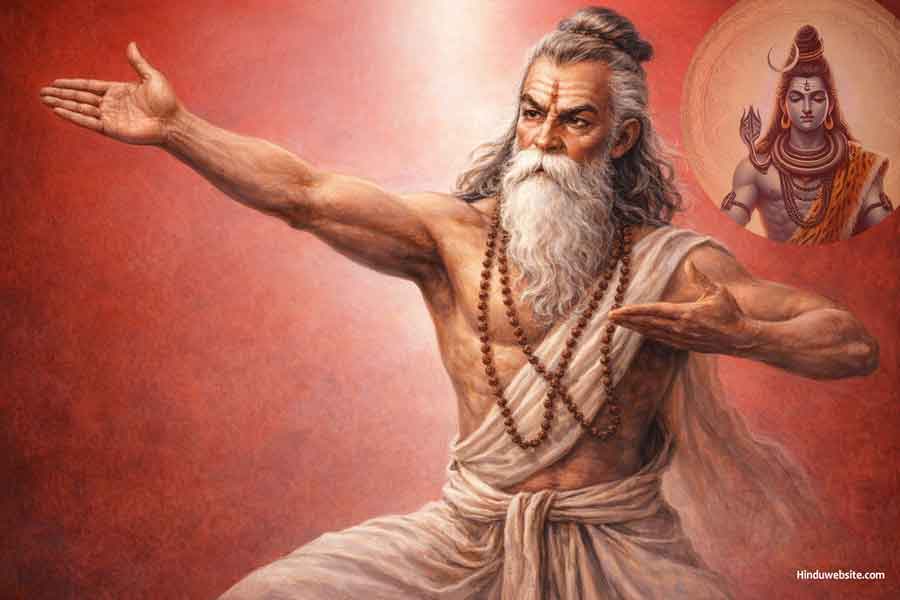
Summary: Shaivism flourished primarily in South India through dedicated saints who revolutionized Hindu practice. These Tamil devotees created vast devotional literature, democratizing religion by teaching salvation through selfless devotion rather than exclusive ritual. They successfully countered Buddhist and Jain influences while transforming Hinduism from priestly domain into mass movement. Their passionate compositions and exemplary lives made Shiva worship accessible to all castes, fundamentally reshaping Hindu spiritual landscape.
Saivism is a very ancient sect of Hinduism with a known history of at least 3000 years. It is a historical fact that though Saivism found its adherents in the early Vedic works, such as the Svetavatara Upanishad, it took shape mainly in southern India in the remote past. Many great devotees of Lord Siva who hailed from the land of the Tamils enriched Saivism with their devotional fervor and meritorious religious compositions.
They brought Hinduism out of the orthodox constraints of Brahminism and the exclusive confinement of knowledge and teachings to higher castes, into the open, by taking religion to the masses and teaching them the path of selfless devotion as a way of salvation. They countered the attacks from monastic religions like Buddhism and Jainism, and defied the social order of their times by often initiating people from the lowest castes into Saivism.
These Saiva saints created a body of entirely new religious literature, of great devotional merit and deep philosophical truths. Just like many aspects of ancient Indian history, we have little information about the early Saiva saints who shaped Saivism into a great religious movement. We come across a few names like the famous sage Agastya, Nakkiar, and Kannappa. They probably lived during the post Rigvedic and later Vedic periods. They were ardent devotees of Lord Siva and remembered in the scriptures for their devotion and contribution to Saivism.
Kannappa
Kannappa (Early historic Saiva period - traditionally before the 7th century A.D.) stands as one of the most powerful symbols of pure, unconditional bhakti (devotion) in Saivism. Born as a hunter in the forests near present‑day Kalahasti, he had no formal religious training and did not follow ritual conventions. Yet, his devotion to Lord Siva was instinctive, raw, and overwhelmingly sincere. He worshipped the Siva lingam daily, offering whatever he possessed, including forest produce and meat, seeing no distinction between sacred and ordinary when love was involved. Kannappa’s devotion reached its climax in the famous episode where, seeing blood flowing from the eyes of the Siva lingam, he plucked out one of his own eyes to stop the bleeding. When the second eye of the lingam began to bleed, he prepared to offer his remaining eye, marking the spot with his toe. At this moment, Lord Siva appeared and stopped him, granting him liberation. Kannappa’s life teaches that intensity of love surpasses ritual purity, and he remains an eternal model of self‑surrender in the Saiva tradition.
Tirumular
Tirumular (Traditionally placed around 6th century A.D.) is revered not only as a saint but also as a mystic philosopher and yogi of exceptional depth. Tradition holds that he attained profound mastery over yogic powers, including the ability to enter another body, through which he remained in the world to fulfill his spiritual mission. His greatest contribution is the Tirumantiram, a monumental Tamil work of around 3,000 verses.The Tirumantiram bridges Saiva Siddhanta, yoga, tantra, ethics, medicine, and philosophy, making Tirumular a unique synthesizer of spiritual knowledge. He emphasized that God is to be realized both within and without, and that the human body itself is a sacred temple. His teachings stressed discipline, compassion, restraint, and inner realization, leaving an enduring impact on later Saiva philosophy and Tamil spiritual literature.
Manikkavachaka
Manikkavachaka 6th–7th century A.D., Pandya period) is celebrated as one of the most emotionally intense devotional poets of Saivism. Born with extraordinary intelligence, he served as a high minister under a Pandya king. A divine encounter with Lord Siva transformed his life completely, leading him to renounce power, wealth, and status in pursuit of spiritual truth. His masterpiece, Tiruvachakam, is revered for its lyrical beauty and depth of devotion, so much so that it is said, “Those who are unmoved by Tiruvachakam are unmoved by anything.” His compositions explore repentance, surrender, longing, and divine grace with unmatched emotional force. Manikkavachaka firmly established inner transformation and truth (sat marga) as the heart of the Saiva path.
Appar
A contemporary of the Pallava King Mahendra 1 (7th century A.D., Pallava period) , and reckoned as the second greatest ancient teacher of Saivism, he lived about the 7th Century A.D. His life is a powerful story of spiritual reversal and redemption. Initially a follower of Jainism, he later embraced devotion to Lord Siva after a profound personal experience. Facing persecution, illness, and hostility, Appar remained steadfast, earning renown for his humility, courage, and devotion. He emphasized dasa marga, the path of the servant, teaching that service to God and His devotees is the highest form of worship. Appar personally cleaned temples, carried stones, and rendered physical service, seeing labor itself as devotion. His hymns combine philosophical clarity with profound humility and helped anchor temple‑centered Saivism across South India.
Jnana Sambandha
Jnana Sambandhar (7th century A.D.) is remembered as a divine child prodigy, infused with spiritual wisdom from an early age through the grace of Lord Siva and Parvati. Despite his young age, his hymns display remarkable theological clarity, poetic elegance, and devotion. Traveling with Appar, Sambandhar played a crucial role in reviving Saivism in regions influenced by Jainism and Buddhism. His emphasis on satputra marga, the path of the son, highlighted loving intimacy with God rather than fear or austerity. His life reflects purity, devotion, and divine inspiration unburdened by worldly attachments. He composed many beautiful poems extolling Siva and Parvathi. But only a few poems are available today. If Sambandha had a great teacher in the form of Appar, he also had a great disciple in the form of Tirunilakanda Yalpanar, who accompanied him always in his tours and sang along with him.
Sundaramurthi
Sundaramurthi (Late 7th – early 8th century A.D.) represents the most human and intimate form of devotion, founding saha marga, the path of friendship with God. His relationship with Lord Siva was marked by emotional closeness, humor, complaint, and affection, treating God as a personal companion. He is the last among the four greatest ancient teachers of Saivism. He led a very unusual life. He became a renunciate just before his marriage and thereafter traveled to many places singing songs in praise of Lord Siva. But strangely, after some time, he married a beautiful non-Brahmana maiden named Paravai. He stayed with her for some time as she was also a great devotee of Lord Siva. But their association did not last for long. A few miles north of Chennai, he married again, this time to a Brahim virgin. Subsequently, he lost vision in both of his eyes and said to have suffered greatly. But he regained his lost vision through intense spiritual discipline and devotion. He composed many thousands of devotional poems, of which very few are available today. Thus, his life was unconventional, filled with dramatic turns, personal struggles, marriages, loss of sight, and eventual spiritual renewal. Through intense devotion, he regained his sight, symbolizing inner illumination. His hymns are warm, personal, and conversational, bringing God close to everyday human experience.
Ammaiyar from Karikkal
Karaikkal Ammaiyar (6th–7th century A.D.) is one of the earliest and most radical women saints of Saivism. Renouncing worldly identity entirely, she chose a life of complete devotion, even embracing an ascetic form devoted solely to God. Her devotion to Lord Siva can be compared in some ways with that of Mira Bai, the famous devotee of Lord Krishna. Born into a princely family, she was married to a wealthy merchant at an early age. Seeing her devotional fervor and spiritual yearning, her husband decided to leave her to herself and married another woman. But Ammaiyar, though devoted to Lord Siva from an early age, could not overcome her traditional respect and love for her husband initially. But seeing her husband in his new role, she overcame that afterward and dedicated her life completely to Lord Siva. She also composed many devotional poems, which reflect the depth of her devotion to Lord Siva. Her poetry reflects profound love, humility, and detachment, portraying herself as unworthy yet entirely surrendered. She is uniquely remembered for requesting not beauty or liberation, but the eternal privilege of witnessing Siva’s cosmic dance. Her life stands as a bold statement of female spiritual autonomy in early Tamil religion.
Auvai
Avvaiyar (Classical Tamil period, early centuries A.D.) was a towering figure of wisdom, ethics, and devotion, revered across Tamil culture. Endowed with sharp intellect and literary brilliance, she composed verses that conveyed moral truths in simple, memorable language. Another famous woman saint of Saivism, she was endowed with great literary talents and devotional fervor. She composed many verses that immortalized her name in Tamil religious literature. Her compositions transcend sectarian boundaries, teaching humility, righteousness, and spiritual awareness. As a woman saint and poet, Avvaiyar became a cultural symbol of wisdom, respected equally by kings and commoners, scholars and devotees.
Meypporul Nayanar
Born a king, Meypporul Nayanar Early medieval period, around 7th–8th century A.D.) represents ultimate loyalty to divine truth over worldly power. Even when assassinated by an enemy disguised as a devotee, he welcomed death without anger, valuing devotion to Siva above personal safety. His life reflects the Saiva ideal that true kingship lies in self‑sacrifice and righteousness, not authority.
Sakya Nayanar
Originally a Buddhist monk, Sakya Nayanar (Early medieval period) later embraced Saivism through deep inner conviction. His transformation symbolizes religious reconciliation rather than conflict. He retained the ascetic discipline of monastic life while devoting himself fully to Lord Siva, ultimately receiving a divine vision. His life illustrates the universality of devotion beyond sectarian boundaries.
Nandanar
The life of Nandanar (Early medieval period) is one of the most socially transformative narratives in Saivism. Born into an oppressed caste, his devotion and moral purity transcended rigid social barriers of his time. Through grace and perseverance, he gained entry into sacred spaces denied to him by society, becoming a symbol of spiritual equality and divine justice. His life profoundly influenced later social reform movements within the Saiva tradition.
Meykandar
Meykandar (13th century A.D.) was initiated into Saivism at the early age of three by a sage. Credited with the composition of the famous work Siva-Jnana-bodham, which contains twelve famous Siva Sutras or aphorisms, Meykandar stands as the intellectual pillar of Saiva Siddhanta philosophy. Initiated at a young age of three, he synthesized devotion and metaphysical clarity in Siva‑Jnana‑Bodham, which contains twelve famous Siva Sutras or aphorisms. His work systematically explains the relationship between the soul, God, and bondage, forming the foundation for later philosophical developments in Saivism. Meykandar exemplifies the harmony of jnana (knowledge) and bhakti (devotion). Therefore, he is known in the history of Saivism as the seer of Truth, and his life is a shining example of knowledge and devotion coming together in total dedication to God.
Arundai Sivachariar
Arundai Sivachariar (13th century A.D.) became a devoted disciple of Meykandar after the latter opened his eyes in a famous encounter with the world of devotion and self-surrender. He composed Siva‑Jnana‑Siddhiyar , according to the wishes of his guru, explaining the metaphysical ideas hidden in the aphorisms of the Siva‑Jnana‑Bodham. He embodied humility, surrender, and scholarly devotion, ensuring the transmission of Saiva Siddhanta to future generations.
Marai-Jnanasambandar
Arundai Sivachariar is also remembered in the Saiva tradition for his initiation of Marai-Jnanasambandar into Saivism. Blessed with great literary talent and devotional fervor, after his initiation, Marai‑Jnanasambandar overcame social barriers through spiritual excellence. His literary ability and devotion reaffirmed Saiva Siddhanta’s openness to sincere seekers regardless of birth.
Umapathi Sivam
Marai-Jnanasambandar, in turn, initiated another famous Saiva saint, named Umapathi Sivam Late 13th century A.D.), and helped him attain self-realization. Umapathi Sivam contributed greatly to Saiva literature in Tamil. He wrote eight philosophical treatises on Saivism, apart from a short biographical work on the famous 63 Saiva saints. His works represent the mature culmination of classical Saiva theology.
Pattinathar
Pattinathar (10th century A.D.) was a wealthy merchant by birth. After realizing that all his wealth would not accompany him beyond his death, he turned to spiritualism and renounced worldly life in strange circumstances. With his princely friend Bhadragiri, he composed many devotional poems, exhorting people to renounce their worldly ways and enter the world of devotion and self-surrender. His poetry is marked by sharp detachment, wit, and spiritual insight. He urged people to abandon illusion and seek liberation through devotion and renunciation.
Arunagiri
Arunagirinathar lived during the 15th century A.D., a period of renewed devotional expression in Tamil Saivism. Early in his life, he led a very sinful life, giving himself up entirely to the pleasures of the world. But later, a great transformation took place in him, and he became a great devotee of Lord Murugan, the first divine child of Lord Siva. Tiruppugal is one of his famous compositions, which is known for its lyrical beauty and devotional depths and spiritual fervor.
Tayumanavar
A philosopher‑saint, Tayumanavar (17th century A.D.) sought to reconcile Vedantic non‑duality with Saiva devotion, emphasizing self‑inquiry, detachment, and inner discipline. He lived in the seventeenth century and belonged to the priestly family that was attached to the Siva temple at Vedaranyam, in Tamil Nadu. He lived and worked for some time at the court of a Naik ruler from Tiruchinapalli, before he renounced his worldly life and became a great devotee of Lord Siva. He expounded the philosophy of Saivism from a Vedantic point of view and tried to reconcile the existing contradictions.
Lingayat Saints
Mention may also be made of the five famous Lingayat Saints of the Virashaivism sect (17th century A.D.), namely Sivaprakasa 1, Santalinga, Kumaradeva, and Sivaprakasa 2. They were men of great religious and spiritual merit who lived during the seventeenth century and composed many religious songs and treatises. They emphasized personal experience of God, rejection of caste distinctions, and inner purity. Through poetry and social reform, they extended Saiva spirituality into lived ethical practice.
Attribution: Image for this article created with AI