Prana and its Connection with Karma and Dharma
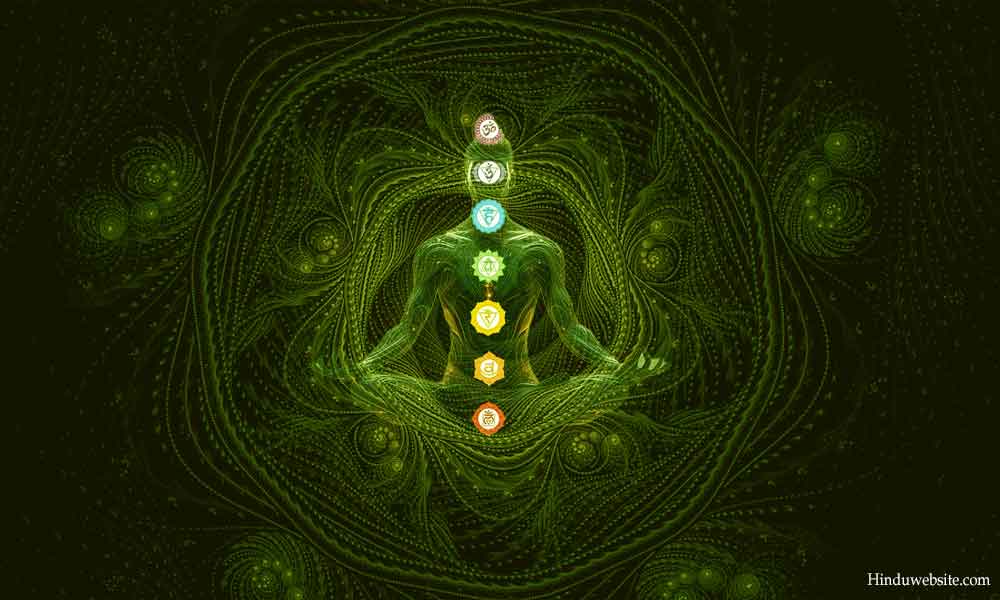
Summary:This essay clarifies the concept of Prana, explaining it not merely as breath but as vital energy pervading the universe and sustaining all life. It explores the five directions of Prana flow in the body, its role as the essence of all material things, its connection to the cosmic forces of creation and destruction, and how it relates to karma, dharma, and obligatory duties in Hindu philosophy.
Prana is frequently mentioned in several Hindu texts and Hindu spiritual and yogic practices. The Upanishads, the Bhagavadgita, and all the Yoga texts contain numerous references to it. Many yoga and tantric practices are centered on controlling and regulating the flow of prana in the body. However, many Hindus do not have a proper understanding of what it means.
For most people, prana means respiration, breath, or the air we breathe. They do not know that it also means vital or subtle energy, life force, the Self or soul, energy, vigor, strength, a dear person, and so on. In the early Upanishads, it was equated with Brahman, the Self, the support of all organs, and the Lord in the body. The Brihadaranyaka Upanishad begins with the declaration that prana (vatah) is Brahman’s vital breath. Twice in the Upanishad, we find the declaration that it is superior to all other organs in the body. It is superior because it cannot be pierced by the evils of desires and selfishness and is not under anyone’s control. Further, all other organs depend upon it and cannot survive if it leaves the body. Prana is indestructible. Hence, all the deities who preside over the organs in the body take refuge in it when the Self leaves the body and departs to the next world.
Whether you practice yoga or any spiritual method, it is crucial to understand that prana is not just the air we breathe. It is the sum of the energy present in the body and the entire universe, connecting us to a larger whole. This universal energy is present in every movement, every action, every thought. When you eat food, it is the prana you eat. Your very survival depends upon the energy that flows in your body. Your body is healthy, and your mind and intelligence work effectively only when prana flows in your body uninterruptedly without impurities. The air we breathe is equated with it because breathing is the most obvious connection we have with the outside world. However, it is not the only means by which we energize our minds and bodies. The transfer of energy to and from the body happens in numerous other ways, such as eating, touching, sleeping, speaking, listening, reading, thinking, chanting, praying, meditating, etc. This understanding of prana's universality can make you feel connected to a larger whole, enhancing your spiritual journey.
Prana is the essence of all material things
Prana (energy) is the universal food since everything is made up of it or derived from it. The same prana pervades everything as Brahman’s vital force, present in everything and nourishes everything. Hence, the Brihadaranyaka Upanishad declares it to be Ayasa Angirasa, the essence (rasa) of the limbs (angas). It also states that Prajapati created seven types of food (energies) from it. One (food) of them is common to all. He gave two (liquid and solid offerings in sacrifices) to gods. One (milk) he gave to animals. Three (the mind, speech, and breath) he made for himself. Thus, we can see that prana is not just the air we breathe but the vital force that sustains our bodies and actions. Our scriptures also state that this prana (subtle or vital energy) in our bodies flows in five different directions, and each of them has a specific name: Prana (in breath), Vyana (diffused breath), Apana (down breath), Udana (upward breath), and Samana (middle breath). If Prana is simply the air we breathe, only two directions would be possible: in breath and outward breath. The principal source of this prana is the food we eat. It is digested in the stomach by Vaisvanara fire, and the energy so produced is distributed throughout the body through a web of numerous channels called Nadis. Thus, according to our scriptures, human bodies have two skeletons. The gross skeleton is made up of bones, and the subtle skeleton is made up of numerous energy channels.
Prana is the force of creation, preservation, and destruction
From these descriptions, it is apparent that each jiva is certainly made up of prana (energy), sustained by prana, and eventually destroyed by prana. It is also the subtle force hidden in the Wheel of Creation, Time (Kala), and the Lord of Death. Hence, when it departs from the body, the person’s life comes to an end, and the body returns to Prana through decay or cremation. All jivas are personifications of prana only. The energy (prana) that flows in the body is both static and active. The active flow of prana is induced by the person (the Self) in the body, be it a human, an insect, or an animal. However, it is not confined to living things only. The whole universe is pervaded by prana in different forms. For instance, the wind that blows, the fire that burns, the water that flows, and the earth that sustains life - these are all manifestations of Prana only. Even inanimate objects are also made up of them and contain them. However, unlike in animate things, its movements are induced by natural actions rather than self-induced actions. Since the source of all energy is Brahman only, he is considered the source and support of all. We may attribute all energy to Prakriti or Shakti. However, in almost all theistic traditions of Hinduism, be they Vaishnava or Shaiva, Prakrit or Shakti is considered an integral and inseparable part of Brahman only. It remains inactive and unmanifested until he wakes up and manifests or projects a new cycle of creation.
Understanding Prana’s Connection with Karma and Dharma
Almost every action we perform results in the exchange of energy. It is why karma arises from them for better or worse. If we use our energies for selfish purposes and engage in desire-ridden actions to benefit ourselves, obviously, we will accumulate sinful karma. Hence, our scriptures caution us against selfishness and advise us to perform actions selflessly as a sacrifice to God and offer their fruit to God only. The idea behind this is that the energy that is present in us and which we use to perform actions does not belong to us but to the universe or the Supreme Brahman, who personifies it. He is its source. Hence, we should not act as if we are its source and claim ownership or doership. The same holds true: everything we have, be it wealth, the food we eat, the life we enjoy, or the joys and sorrows that we experience. By understanding and embracing this principle, we can find inspiration and motivation to align our actions with the greater good, contributing positively to our karma and the world around us.
For the same reason, prana is connected to Dharma, which means obligatory duties. As the Bhagavadgita declares, we must perform our obligatory duties as a sacrifice without desiring their fruit. If we perform them solely for our enjoyment, we will incur sinful karma and remain bound. Brahma prescribed charity as the highest virtue for humans. It is because, through charity, we gift prana (energy) to others in the form of money, food, service, etc. By that giving, we nourish them or help them sustain themselves. Therefore, it is a very beneficial act and a sacrifice in itself. Understanding this connection between Prana and Dharma can enlighten us and guide us in our actions.