Should We Call Hinduism Sanatana Dharma?
Summary:Names and forms hold little significance in a tradition teaching that all phenomena prove ultimately illusory. Before Muslim and Christian arrivals, practitioners simply called their path Dharma, without concern for formal labels. True spiritual progress depends on conduct and character rather than terminology debates. Modern fixation on erasing colonial linguistic influences while simultaneously embracing Western lifestyles reveals deeper confusion about authentic cultural identity. Liberation remains the goal, transcending all temporary designations including religious affiliation itself. Attachment to particular names contradicts the very essence of non-attachment that defines genuine spiritual understanding.
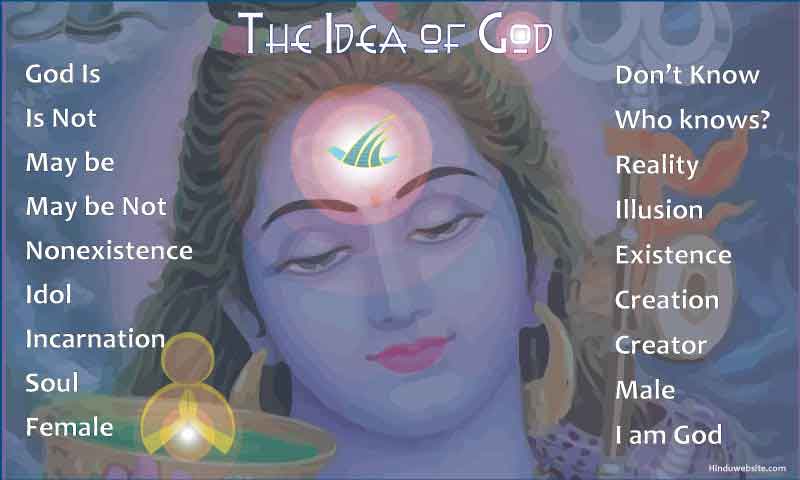
I often receive comments from readers that I should not call our tradition Hinduism but Sanatana Dharma or Vedic dharma, because Hinduism is a foreign word not found in any of our scriptures. The truth is that, prior to the arrival of Muslims and later Christians, Hinduism had no particular name by which it was identified by common people. People called it Dharma, with a prefix to distinguish it from other Dharmas. Sanatana Dharma was used in some contexts, but it was not a universal term. Indeed, almost all the Dharmas that prevailed in India considered themselves eternal or Sanatana Dharma. The Vedic tradition was known as Vaidika Dharma or simply Dharma. One of the reasons for this is that Hinduism places little importance on names and forms. Nama and rupa are considered illusory. They represent diversity and are part of the objective realm. Attachment to them is a form of bondage and a source of suffering. Therefore, spiritual aspirants are advised to transcend them and merge their identities in the absolute Brahman, who is beyond names and forms.
Religious identity in the past
When I was a child, no one in our village proclaimed their religious identities. They knew which religions they practiced, but did not make that a public conversation since they depended on each other to ensure their survival. Perhaps some among them remembered the horrors of the 1947 partitions, but it seemed everyone tried to forget them and move on. Communal tensions prevailed, amidst sporadic outbreaks of communal violence in some parts of the country, but religious identity was still not a public issue that divided communities in most areas.
Growing up, I did not hear anyone talking in terms of “us and them” or using their religious identities in public conversations in my family, the village, or the places I visited. Religious identities and communal discord became more common and frequent later. In fact, in villages, where Hindus were the majority, caste conflicts were more common than communal violence.
It was not that the people in these villages were less religious or not much concerned about their religious beliefs. Most villages had temples, churches, and mosques, where people practiced their different faiths. People from all backgrounds attended fairs and festivities during festivals like Shivaratri. Festivals helped people to remember their gods and the need to adhere to age-old traditions and moral values, while rekindling their faith and religious or devotional fervor. They also reminded them of their shared values and beliefs and established a sense of unity and continuity.
Even on such occasions, people used to focus on festivities and cultural activities rather than engaging in religious rivalry or asserting their religious identities. Muslims and Christians who lived in such villages went about their lives normally and kept their religious beliefs and practices to themselves.
Across the religious diversity of those communities, one could clearly discern two main groups: theists and atheists, or those who believed in God and those who did not. The latter seemed to prevail among the more educated, as an aberration modern education seemed to have etched in their minds. I had some relations who were atheists and had an opportunity to witness serious conversations around that subject, which almost always ended in an impasse. Interestingly, I did not see anyone treating the atheists as sinners or calling them names. My impression in those days, maybe due to cultural influences and my growing up in a disciplined environment, was that all those who believed in God were on one side and probably worshipped the same God with different names. For me, it made perfect sense because I did not see people quarrelling about their faiths.
What I experienced as a child was not unique to me. It had been India’s tradition for a very long time, until religious division became deeper and villages became infected with political, communal, and caste divisions.
Should we discard the name Hinduism?
The words Hindu and Hinduism are not a part of our lexicon, just as India and Hindustan. They have a shared history, and they do introduce Hindus to the rest of the world. There is nothing inglorious or inferior about them. Every name in the world is derived from some historic event or process, and there is no point in quarreling about them. Therefore, personally, I do not see any issues with these names, which have been a part of the Hindu tradition for hundreds of years. I am neither ashamed of them nor proud of them. I treat them as a part of shared cultural and religious heritage. Changing these names does not change the history and complexity of Hindu tradition or improve our memory of it.
It may just satisfy the whims of a few who have perhaps other interests in their hearts rather than a genuine concern for the Dharma. When they insist that the name Hinduism should be discarded for reasons they find offensive or demeaning and want to replace it with traditional names such as Sanatana Dharma, they overlook the fact that the tradition itself does not give much importance to names and forms and regards attachment to them as delusion and ignorance. If we truly adhere to the tenets of Hinduism, they do not become serious problems at all.
When I was living in India, neither my first name nor my last name was an issue. They were familiar names in many parts of the country. However, after I moved to the USA, I see that people have a serious problem pronouncing them. That does not mean that I should change it. I stick to them and help people learn to pronounce them correctly. It is a reliable way to introduce an alien culture to the people in foreign lands where they had no prior interaction with foreign cultures.
Don't we learn from the same tradition that we are not here to form attachment to things that are impermanent and illusory?
One of the questions which I cannot answer with certainty is whether a Hindu will be born forever as a Hindu only in all births, or he will also be born as a Christian, Muslim, Buddhist, or an atheist in some births.
People use the words Hinduism and Hindu because they are well-known and commonly used. Whether we like it or not, they are here to stay, and that is how our tradition will be known to people in various parts of the world.
We rely upon names and words for our convenience to relate to the phenomenal world and its complexity. If you are a true follower of Sanatana dharma, you will not be attached to anything in particular, including your notions of what your religion is or what your country or nationality is.
What matters most is whether you are a good human being and whether you are progressing in the right direction towards light and liberation. Liberation is our goal, not heavenly life. For liberation, we need to focus on conduct and character.
Every other indulgence is a mere waste of time, a retrogressive step in the direction of darkness (tamas), death (mrityu), and egoism (rajas) or a continuation of the state of ignorance and delusion.
Foreign place-names vs. imitating foreign cultures
India occupies a unique place in the history of the world, because it is the birth place of four distinct world religions. It has a continuing civilization that is at least 7000 years old. As some historians are now increasingly inclined to believe, it is also probably the cradle of the human civilization.
Equally fascinating among the nations of the world is the USA, which is the most modern, currently the most powerful and the most advanced.
While the two nations share some common values, there is one fundamental difference between them, which is worth studying. It is with regard to how they cope with their past and preserve their identities.
A majority of Indians, especially the educated intellectuals, are very confused and ambivalent about their attitude towards their identity as a nation; while the Americans deal with the same problem with greater clarity, purpose, leadership and understanding.
For example in the name of nationalism, Indians changed many place names to erase the memories of their colonial past. (Yesterday someone said on twitter that one should not call the government " sarkar" because it sounds very British!"
Even street names were not spared. However despite this animosity, they continue to follow western ideals and western lifestyles. You will find in the same streets, whose names have been changed, many shop bearing names and brand names that are distinctly western.
In contrast, many places in the USA bear an odd mixture of English, Spanish, African, European and even Chinese and Indian street names and place names.
They let all types of people come and settle in the country. Practically everyone who lives in the country legally is an American because the law does not discriminate.
This does not mean that the Americans have no pride in their nation, or as a friend of mine once argued that they have no identity of their own. Without trying to repaint their history, they asserted their independence and uniqueness in several distinct and profound ways.
For example, the Americans do not play cricket, not because it is an uninteresting game, but because it is rooted in the class hierarchy of the British society which the Americans do not favor.
In the days of British colonialism, cricket was essentially a game of the aristocrats and the nobility who had ample wealth and time to indulge in the game, while the rest of the world toiled in the factories and shipyards to keep the British Empire rich and powerful.
As a show of their independence, therefore they rejected cricket and came up with baseball, a game that represented their temperament and attitude much better.
Again, the Americans took to football rather than soccer, because it was a game where you ignored all the gentlemanly niceties of British etiquette and mannerisms and pushed people around with brute power.
The US also maintained its independence by following a federal system, rather than the British Parliamentary system, by adapting to metric system in weights and measurements, by introducing left side driving rather than right side and following its own standards in the use of electricity, housing, business practices, judicial system and communications.
In social matters, they devised their own rules of etiquette and manners often to the amusement of the Victorian England. Although the early settlers were mostly English speaking people, they evolved their own form of English with distinct spelling and pronunciation. America's success in the field of innovation and creativity, largely stemmed from this distinct individuality they promoted and preserved.
Identity through self-expression and uniqueness
Against this backdrop, think of what happens in India normally. People might have changed place and street names, but have they ceases to blindly follow foreign cultures and their ways of life? Cricket consumes the lives of people. Most of the films and creative work is based on borrowed or copied ideas from the west.
Many best works of Indian film and music industry are rather the poor imitations of the original works from the western world. There is no respect for intellectual property rights. People who copy the original art forms of the west are well rewarded with national and popular awards.
Historically, the British were the last foreign power to rule India. So, logically it makes no sense why the people should be obsessed only with the British names associated with the places and monuments in the country.
They have to go all the way to the Bactrian Greeks and the Kushanas or perhaps to the early settlers of the Indus Valley civilization, who seems to have come from outside during the early waves of migrations from Africa, when the Saharan region was drying up and becoming a desert or when food became sparse due to climatic changes and forced people to migrate.
The best that we can do with regard to history is to accept it and learn from it, without the compulsion to tamper with it or rationalize it to suit our modern ideologies or current beliefs.
Hinduism may be a foreign word. Yet, its value is not diminished if we use it or refer to it. It does not and should not hurt our self-esteem or our religious identities. There are over 10000 languages and dialects in the world and in every language an object goes with different names and yet remains the same in its essential nature.
An ocean is an ocean whether you call it the Indian ocean or the great Hindu Mahasagar. Whether you call Him Brahman or God, in deep sleep you do not know what you call Him.