The Bhagavadgita on Divine Reciprocation: How God Answers Prayers
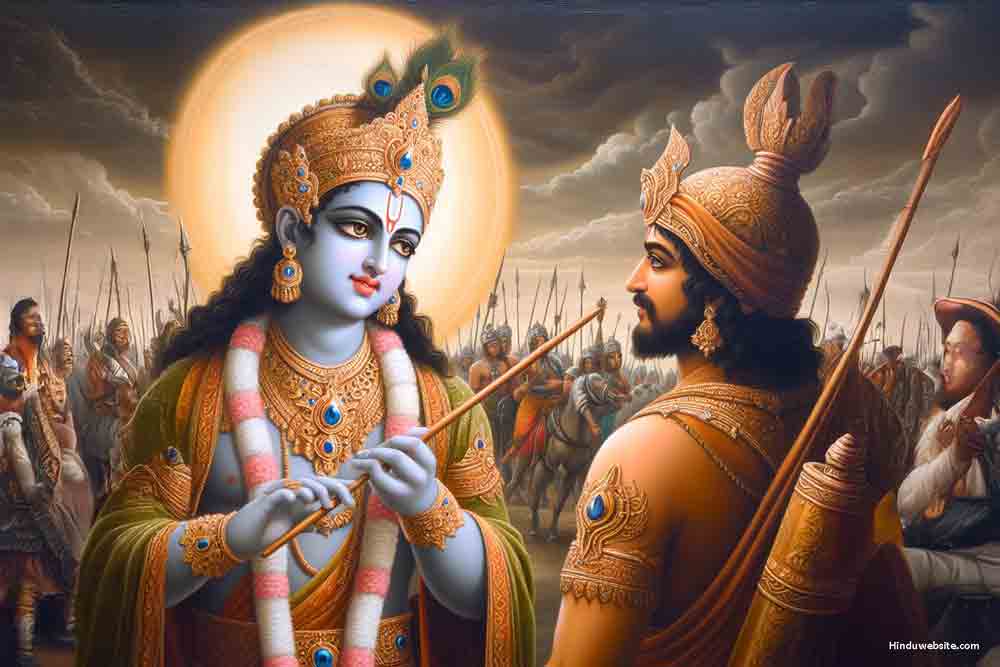
Krishna Arjuna Samvadam - Image: Al
Summary: Commentary on Bhagavadgita Chapter 4, Verse 11 explaining how the Supreme Lord responds to devotees according to their faith, devotion, and approach without imposing conditions or favoring specific groups. Discusses karma yogis receiving wish fulfillment, jnana yogis gaining wisdom, renunciants finding peace, and exclusive devotees attaining liberation. Emphasizes that unanswered prayers reflect devotee's confusion or uncertainty rather than divine indifference, and God manifests even negativity for atheists and evil worshippers.
Chapter 4 - Sloka 11
ye yathā mām prapadyante tāms tathaiva bhajāmy aham
mama vartmānuvartante manusyāh pārtha sarvaśah
Translation
ye = who; yatha = in whatever; mam = to Me; prapadyante = they approach; tan = them; tatha = in the same manner; eva = even; bhajami = reward; aham = I; mama = My; vartma = path; anuvartante = do follow; manusyah = human beings; partha = Partha; sarvasah = in every way, in all respects. .
Meaning
" In whatever (manner) they approach Me, in the same manner, I reward them, O Partha, human beings follow My path in every way.
Commentary
The Supreme Lord has no favorites but loves his devotees as much as they do and rewards them suitably according to their faith and devotion and how they approach him. Your devotion determines his response. He grants the wishes of karma yogis who worship him to fulfill their desires. He grants knowledge and wisdom to jnana yogis to cultivate discernment and find him within themselves through contemplative means. To the renunciants, he gives strength and fortitude to withstand the rigors of renunciation and find peace and tranquility within themselves. However, if they worship him exclusively without desires and attachments, establishing their minds in him, he liberates them from samsara and keeps them closer to him. The Supreme Being is like a mirror. He reflects your thoughts, desires, and attitudes by granting you whatever you desire or wish. He will not decide what to give you or influence what you should want or choose for yourself. That responsibility rests with you. It is up to you how you approach him, whether with love and devotion or desire. Whatever want, wish, or need you express to him with conviction, he will manifest that for you if your aspiration is sincere, your faith is strong, and your devotion is free from conflicts and doubts. Even sinners are redeemed if they sincerely aspire, seek forgiveness, and change their ways.
Hidden in this verse is the subtle message that the Lord does not favor or prefer certain groups, nations, and religions. He is not saying here that if you follow this religion, that prophet, scripture, or guru, you will be liberated or helped. He is not saying that you must follow him and obey him or fear him for him to fulfill your wishes. He clearly said that he would not impose any conditions upon his devotees. He would reciprocate the manner in which they worship him or approach him. They have to knock on his door with love and devotion, expressing their wish, and they will be rewarded. He will not decide the reward. You must seek that by stating clearly what you want or need without doubt or confusion, or you must let it go if liberation is your aim.
Those who blame God for not getting what they want should remember these words. If their prayers are unanswered, they must look within themselves to see what is coming in the way and what they need to correct. A lot depends on the devotees in their relationship with the Lord. If they are confused, confusion will prevail. If they are uncertain, uncertainty will manifest; if they fear him, their fear of him will grow and intensify; if they approach him as a friend, he will reciprocate as their friend; if they treat him as their guru and worship him with devotion, he will become their teacher and grant them knowledge and discernment. He may not do it personally, directly, or instantly, but he makes sure that the wishes are granted. He reciprocates the actions and wishes of even those who detest him, envy him, or disbelieve in him by manifesting their negativity. He strengthens the faith of atheists in his nonexistence by becoming completely silent. Our Puranas illustrate that he grants boons to evil people if they worship him with devotion. However, he does not stop them from destroying themselves with those boons if they wish to misuse them.
The Lord is the path as well as the destination. Devotees who practice jnana, karma, and sannyasa yogas with exclusive devotion attain ecstatic union with him. Wise men on the path of knowledge attain knowledge of the Self and enter pure consciousness to become dissolved in oneness. Householders on the path of karma yoga experience fulfillment in their lives and lay the foundation for a better life in the next birth or attain liberation from the cycle of births and deaths. All these people who spend their lives in his service and variously worship him eventually end up in the highest heaven as his closest associates and devotees. God is the manifesting power who would not deny any request and is always willing to help his worshippers in whatever way they approach him. He is the giver and the benefactor who rewards his devotees, whether good or bad, according to their desires, thoughts, fears, and aspirations. Since there are no limits to what you may ask and what he may give, you must be careful about your prayers and wishes because what you seek may affect your karma. If your intentions are clouded, you may also pay the price.