Four Preliminary Conditions of Brahman According to Vidyaranyaswami
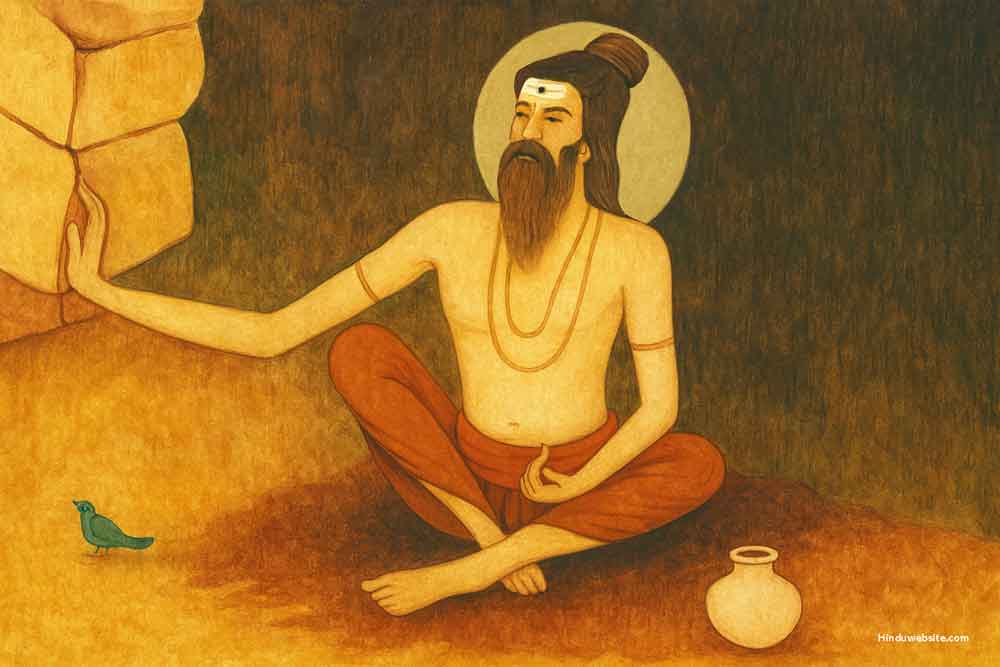
Brahma Jnani - Knower of Brahman
Summary: Brief exposition of Vidyaranya's Pancadasi teaching on Brahman's four manifestations in macrocosm (Isvara, Brahman, Hiranyagarbha, Virat) and their relationship to intelligence levels. Explains Avidya (ignorance) as mistaking worldly existence for supreme reality, true knowledge as perceiving Brahman as source of all, and how everything rests upon Supreme Brahman like images on canvas sharing the same substratum.
The Upanishads extol Brahman and consider Him the source of all existence. They described as a great engima difficult to comprehend. Some also described His numerous forms and manifestations. Of them, four are considered His highest manifestations.
- Brahman
- Isvara
- Hiranyagarbha
- Virat
Brahman represents the absolute state, the Supreme Self, and absolute reality, indistinguishable, eternal, indestructible, without form, unknown, and beyond the reach of the mind and senses. All creation arises from Him and dissolves in Him. Isvara is His highest manifested form, the Lord of the Universe. According to some, He is with Form, with Nature, with qualities, modes, and attributes, and He actually acts as Creator, performing five distinct functions: Creation, Preservation, Concealment, Revelation, and Destruction, often symbolized in Hindu iconography as the five faces of Brahma, Vishnu, and Shiva. He is the source of all creation, including gods, humans, celestial beings, and asuras.
Hiranyagarbha, meaning the Golden Germ, is the Cosmic Self, the Purusha, or the hidden Self in all beings and the entire creation. He is the golden orb, the shining sun, who illuminates all while remaining self-illuminated. It is difficult to say whether He is the same Self in all or manifests as different Selves. Both views are supported by the doctrines of the Dvaita and Advaita schools.
Virat is the manifested world or material universe (jagat), which is illuminated by the Cosmic Self, Hiranyagarbha. Isvara does not participate in creation and is not a part of the manifested reality, but watches over it. Some consider Virat as manifested Prakriti (Sambhuta).
Thus, we have a clear distinction and gradation of existential reality from the highest to the lowest and from the absolute to relative with increasing diversity and devolution of consciousness. Brahman is the absolute Space in which this whole cosmic drama happens. Just as everything in a painting rests upon the canvass, everything in creation rests upon the Supreme Brahman. Just as the different images in the painting share the same canvas and are identical with it, all beings in creation share the same intelligence of Brahman, which acts as the substratum.
Brahman's conditions or states
In his work Pancadasi (section 6) Vidyaranyaswami speaks about the four preliminary conditions of Brahman. They are unassociated intelligence, intelligence associated with Maya, intelligence of the intellect, and intelligence associated with the gross bodies.
He also explains what Avidya means. Accepting the worldly existence as the supreme object of life and mistaking it as related to Brahman is an error or ignorance. It is removed only by knowledge.
True knowledge is perceiving Brahman as the source of all and the underlying truth of all. Suck knowledge destroys ignorance. With such knowledge one becomes aware of the impermanence of things and the transience of mortal life.
A brief note on Pancadasi: Pancadasi is a medieval work on the Vedanta. It was authored by Swami Vidyaranya who lived in the 14th century and served as the teacher and family priest of Bukka Raya. Prior to his renunciation, he was known as Madhava, Madhavarya, Madhvacharya, and Madhavamatya. Swami Vidyaranya was a great proponent of Advaita, the philosophy of non-duality or monism. Pancadasi reflects his belief in the unitary nature of existence and Brahmas as the only reality.
Attribution: The image for this article has been generated by AI