The Meaning and Significance of Pravritti and Nivritti
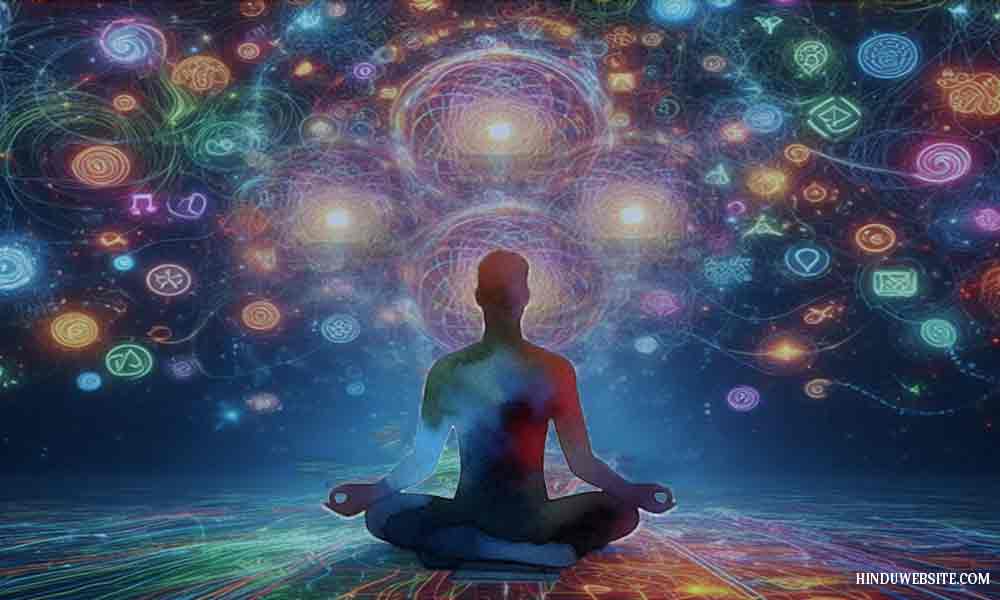
Summary: Explore the two basis processes that govern our lives and every aspect of our existence. According to modern science, expansion and contraction are the two major processes in the universe, setting in motion the creation and cessation of its very existence. Pravritti results in the outward manifestation of life on earth, and nivrtti results in its absorption. Similarly, birth is pravritti, the outward expression of Nature and its tattvas, and death is nivrtti, the dissolution and disintegration of the body and its aspects. Life appears and disappears because of these two essential processes. Pravritti results in bondage and suffering due to the outward movement of the senses, and nivrtti results in the withdrawal of the mind and senses from the external world through yoga and leads to liberation.
Pravritti (or prvritti) means tendency, inclination, activity, behavior, progress, advance, process, and so on. In spirituality, it means to be continuously engaged in worldly activities or actively drawn into worldly matters. Pravritti also means to manifest. For example, in the eleventh chapter of the Bhagavadgita (verse 31), Arjuna says humbly to Mahakala, the universal form Lord Krishna reveals to him, “na hi prajānāmi tava pravṛttim,” which means, surely, I do not know your tendencies. In reply, Lord Krishna replies, “ kālosmi lokakṣayakṛt pravṛddho lokān samāhartum iha pravṛttaḥ,” which means “I am Kala, the vast and mighty Destroyer of the worlds. I manifest to destroy the worlds.” The same scripture (14.12) attributes prvritti to the predominance of rajas. In Verse 46 of the eighteenth chapter, prvritti is used in reference to God’s creation to mean issue forth. “yataḥ pravṛttir bhūtānāṃ yena sarvam idaṃ tatamm,” which means “He from whom issue forth all the living beings (and) by whom all this is pervaded.”
Thus pravritti, with multiple meanings, can be used differently in different contexts. Etymologically, ‘pra’ means intense or excessive, ‘vritti’ means mode, state, condition, action, conduct, occupation, livelihood, mode of action, etc. Thus, pravritti refers to the particular mode of action, tendency, behavior, or state of something. Another associate word is pravartanam, which means moving around, behavior, conduct, etc.
Nivritti, on the other hand, is the absence of pravritti. It is not the antonym of prvritti because its antonym is aprvritti (inactivity). Nivritti is the ending of the concluding phase of some activity, enterprise, initiative, tendency, program, or activity. When something is withdrawn, silenced, restrained, or ended, it is called nivritti. Both words are commonly used to refer to the activity of the mind and sense organs. Their natural tendency is to be outgoing and move among the sense objects or worldly objects, which results in desires, attachments, desire-ridden actions, and passions such as anger, envy, etc., sinful karma, bondage, and suffering.
Both words are found in the same sloka (22) in the fourteenth chapter of the Bhagavadgita when Lord Krishna describes the state of sameness achieved by a skillful yogi who transcends the triple gunas in the following words, “prakāśaṃ ca pravṛttiṃ ca moham eva ca pāṇḍava na dveṣṭi saṃpravṛttāni na nivṛttāni kāṅkṣati,” which means “not disliking when illumination, sense activity, and delusion arise nor desiring when they cease to exist.” They are also found in another sloka in the sixteenth chapter when Lord Krishna describes the nature of evil people (asuras) who lack discernment. He says, “pravṛttiṃ ca nivṛttiṃ ca janā na vidur āsurāḥ.” It means, “Evil people do not know when to engage in actions and when to withdraw or when to perform actions and when not to.”