Ashtavakra Samhita Chapter 10 Verse 3 - Know that wherever desire manifests, there indeed is samsara
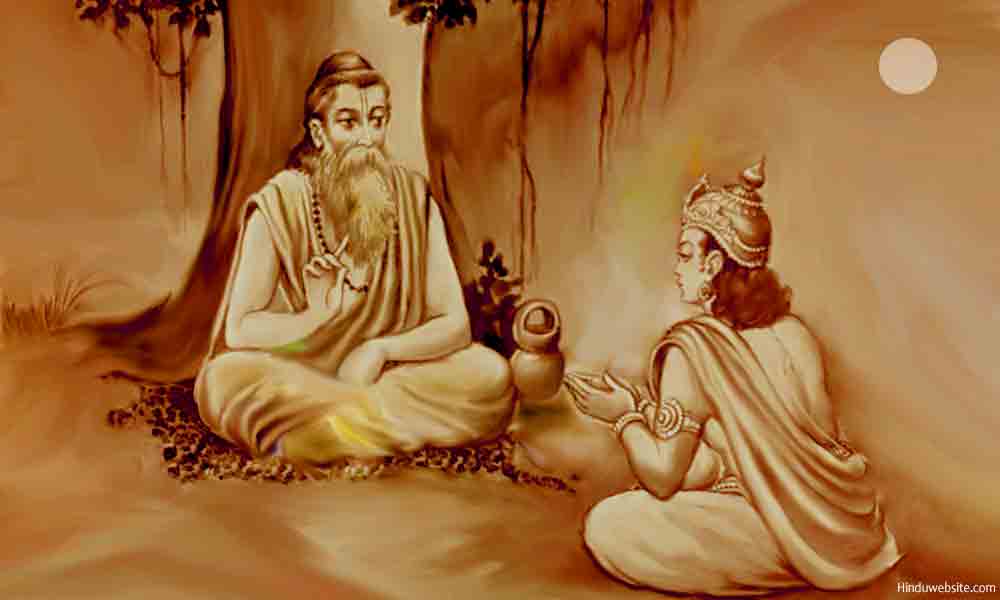
Summary: Know that wherever desire manifests, there indeed is samsara. Taking refuge in firm detachment and indifference, you should free yourself from that desire and be happy. Trishna is not just a desire but a strong desire that induces attachment, avarice, and craving. In the first verse of this chapter, Akshavakra used the word Kama in a general sense in the context of the triple aims of human life: Dharma, Artha, and Kama. Dharma refers to righteous living and duty, Artha...
Verse 03
yatra yatra bhavettrishnaa samsaaram viddhi
tatra vai
praudhavairaagyamaashritya veeatrishna sukhI bhava
Translation
Know that wherever desire manifests, there indeed is samsara. Taking refuge in firm detachment and indifference, you should free yourself from that desire and be happy.
Trishna is not just a desire but a strong desire that induces attachment, avarice, and craving. In the first verse of this chapter, Akshavakra used the word Kama in a general sense in the context of the triple aims of human life: Dharma, Artha, and Kama. Dharma refers to righteous living and duty, Artha to wealth and prosperity, and Kama to desires and pleasures. He said that Kama, which is the enemy of peace and tranquility, Artha, which is responsible for sinful actions, and Dharma, which induces both, should be given up to cultivate indifference. Here, he mentioned desire specifically as the source of samsara. He said that one should be happy (sukhibhava) by renouncing desires. The worldly belief is that one becomes happy by fulfilling desires or by achieving the triple aims of Dharma, Artha, and Kama. One may achieve temporary happiness by that, but if Moksha is the aim, one must give up desires and, along with that, the pursuit of Dharma and Artha.
Samsara, a term with multiple meanings, refers to the cycle of births and deaths and the world. The jivas, or individual souls, develop an attachment to the world (samsara) due to persistent desires (trishna) or longing for worldly things or pleasures. These attachments result in desire-ridden actions, leading to sin and bondage to the cycle of births and deaths. This bondage is responsible for the suffering of the jivas in the mortal world. Ashtavakra's statement that samsara arises wherever desire manifests implies that desires are the root cause of our existence in the world and our inability to attain permanent freedom and happiness. We exist because of desires and our world (objective reality) exists because of desires. It is because the mind remains active when desires are active, and easily falls into absorption when they are absent. This clarification of the concept of samsara serves to enlighten and inform those seeking spiritual understanding.
The state of final liberation (Moksha) is the absolute state of complete freedom from everything. It means the seeker of liberation should not desire anything, not even the goal of liberation, depend upon anything, or possess anything. Nothing should limit him, disturb him, draw him into temptation, or involve him in any action, effort, or undertaking. To reach this austere goal, he must renounce desires and attachment and become indifferent to everything through detachment (vairagyam). The importance of vairagya is emphasized in the Yogasutras, the Bhagavadgita, and several Upanishads. It is foundational to practice all yogas, be it jnana yoga, karma yoga, bhakti yoga, or sannyasa yoga, and to overcome desires and attachments.
In the Bhagavadgita, Lord Krishna acknowledges the formidable nature of desires, stating that they are indeed difficult to overcome. However, he offers a path to transcend them through persistent practice (abhyasa) and detachment (vairagyam). Vairagyam, the absence of passions (raga), is the key. When one is free from them, through detachment, one overcomes attraction and aversion and becomes indifferent to the dualities of life. This state of indifference, also known as the state of sameness, is the Supreme State (yoga) that Lord Krishna describes. It is attained by withdrawing the mind and senses from the sense objects, establishing the mind in the contemplation of the Self, and practicing detachment and renunciation. This path, though challenging, offers hope for those seeking liberation.
It is important to note that Ashtavakragita is meant for those who undertake the vows of renunciation and pursue liberation. Renunciation here refers to the complete detachment from worldly possessions, relationships, and desires. Ordinary householders cannot renounce Dharma, Artha, and Kama since they have an obligation to serve the aims of creation through sacrificial actions. It is also difficult for them to abandon their families, duties, property, and worldly pursuits (as suggested by Ashtavakra in the previous verse), treat the world as a dreamlike illusion (svapnendrajalam), and live in seclusion, practicing detachment and renunciation. They cannot end the world (Samsara) just on a whim. The world is God’s creation, and it has a purpose to serve. Hence, these instructions make sense only in the context of the complete renunciation of worldly life practiced by traditional renunciants. They give up everything to attain liberation. They must practice detachment and indifference to become free from desires and everything that binds them or leads them to Samsara.