Sanskrit Studies - Beset Selected Websites
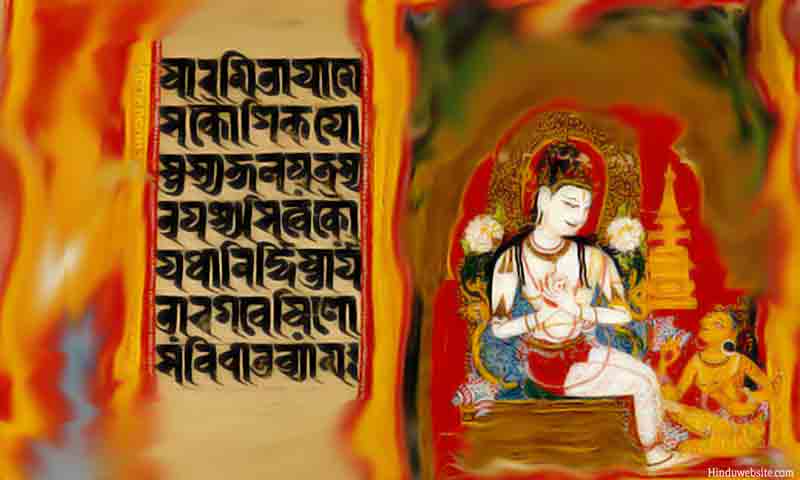
Summary: This page presents a curated collection of high‑quality online resources for studying Sanskrit and its linguistic heritage. It includes links to tools for grammar, pronunciation, dictionaries, computational linguistics, and comparative philology, along with materials on Indo‑European language history and related research. Readers will find scholarly articles, language family trees, demonstrations of linguistic laws, and resources exploring Sanskrit’s cultural and religious significance. Designed for students, researchers, and enthusiasts, this guide offers a reliable starting point for deeper exploration of Sanskrit and its broader linguistic context.
We have included here a curated list of onlline resources for further study and insight into the origin and development of Sanskrit and its early connection with other Indo European Languages.
Numerals and Numbers' History and Curiosity: The European number nouns (most of them) take their origin from the Indo-European language. Although various numeration systems existed (duodecimal, vigesimal and sexagesimal numerations), the decimal system survived all of them.
Sanskrit alphabet, pronunciation and language: Sanskrit is the classical language of Indian and the liturgical language of Hinduism, Buddhism, and Jainism. It is also one of the 22 official languages of India. The name Sanskrit means "refined", "consecrated" and "sanctified". It has always been regarded as the 'high' language and used mainly for religious and scientific discourse.
Sanskrit Pronunciation and Diacritic Guide: This article attempts to provide a simple way to transliterate and pronounce Sanskrit words, with certain limitations, based on the system used by Encyclopedia Britannica.
Classical Languages, Earliest Civilizations, the Steppe, Vedas, and the Upanishads: Geographic distribution, history and information about the Languages with more than 30,000,000 Speakers as of 2005, classified by Civilization. Of the 40 languages listed below, no less than 18 are spoken in India (including Pakistan and Bangladesh) or China. Of the remaining 22 languages, 9 are European in origin, 3 were in the ancient cultural sphere of influence of China (Japanese, Korean, & Vietnamese)...
Indo-European Languages: Indo-European Languages: Evolution and Locale Maps. This page sketches the evolution of the Indo-European language families to modern times. Tables illustrate the evolutionary sequences of ancient to modern Indo-European languages, with approximate dates. Links to maps show the homeland areas of each Indo-European language family. Links are provided to Indo-European language lessons with texts.
Home - Sanskrit Studies An Integrated Approach to Sanskrit, Meditation & Yoga Philosophy. Study the Sanskrit Tradition. Gain Wisdom. Cultivate Confidence. Committed to teaching the technical aspects of the Sanskrit language, as well as its beauty. In this way, yoga teachers and students gain confidence in Sanskrit and Yoga philosophy and integrate this understanding in order to live a happy, enriched and fulfilled life.
Wikipedia Resources - Sanskrit Studies - Sanskrit grammarians - Sanskrit literature - Sanskrit prosody - Invading the Sacred - comparative linguistics - Indo-European languages
Sanskrit Studies - Hindu University of America features immersive study of the Sanskrit language in Sanskrit medium, starting from basic familiarity, moving towards proficiency and takes the students deep into the world of mastery of Sanskrit. Underscoring the importance of Sanskrit for the study of the source texts of the Vedas, Vedanta, Yoga, Ayurveda, and Shastras,
International Association Of Sanskrit Studies The main task of the IASS is organizing of a World Sanskrit Conference at different venues around the world. The 1972 International Sanskrit Conference in New Delhi was recognised retrospectively as the First World Sanskrit Conference.
Sanskrit – South Asian Studies: The main task of the IASS was agreed to be the organizing of a World Sanskrit Conference at different venues around the world. The 1972 International Sanskrit Conference in New Delhi was recognised retrospectively as the First World Sanskrit Conference.
Sanskrit | Department of Asian Studies
External Links Disclaimer
Important Notice: External links are provided for convenience and informational purposes only. Hinduwebsite.com does not control, endorse, or assume responsibility for the content, accuracy, privacy practices, or availability of external websites.
Your use of external sites is at your own risk and subject to their respective terms and conditions. For questions about external content, please contact those sites directly.